

That striking white stone with the ink-black matrix often sits right next to the blue and green cabochons in a jewelry case, but it doesn't share their chemical DNA. A rare find. A quiet, monochrome beauty. At Wildflower Artisans, we often hear collectors ask is white buffalo real turquoise, and the answer is more nuanced than a simple yes or no. You might have felt a bit of hesitation while browsing for a new ring, wondering if the name is just a marketing trick or a true geological classification. While it's found in the same hills as some of our favorite blue stones, it's actually a distinct mineral treasure all its own.
Understanding the difference is about more than just labels. It's about knowing exactly what you're wearing and how to care for it. This guide will walk you through the geological truth behind this rare Nevada stone, explaining exactly how it differs from traditional turquoise and how to spot the difference between genuine White Buffalo and common imitations like howlite or magnesite. We will look at the specific hardness of the stone, its unique origin near Tonopah, and what to look for when you're ready to invest in a handcrafted sterling silver piece for your collection. It's a journey of discovery. A way to feel confident in the art you choose to wear.
Key Takeaways
- Learn why the answer to is white buffalo real turquoise is technically no, as this stone has none of the copper that makes turquoise.
- Discover the single source of authentic White Buffalo in Tonopah, Nevada, making it one of the rarest finds in Southwestern jewelry.
- Identify genuine stones by examining the organic black chert matrix and verifying the stone hardness on the Mohs scale.
- Master the specific care techniques required to keep your sterling silver and hand-cut cabochons clean without damaging the stone.
What is White Buffalo stone and is it turquoise?
White Buffalo is not turquoise. Turquoise is built around copper, and White Buffalo has none. While it is often marketed alongside Southwestern gems, it lacks the copper content required to create the characteristic blue and green hues found in traditional turquoise. When collectors ask is white buffalo real turquoise, the answer is grounded in chemistry. It's a different mineral that simply grew in the same environment as its blue neighbors.
It's a common point of confusion. When you look at a piece of White Buffalo jewelry, you see the same kind of matrix and organic patterns you'd expect from a good turquoise cabochon. It gets cut and set the same way, and it comes from the same Nevada mining country, so the trade name stuck. Ours comes from our family's claim at the White Buffalo mine near Tonopah, Nevada. At Wildflower, we treat it with the same care as our King's Manassa pieces.
To better understand this concept, watch this helpful video:
The mineralogy of White Buffalo
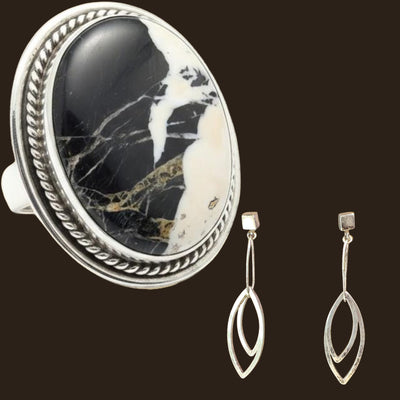
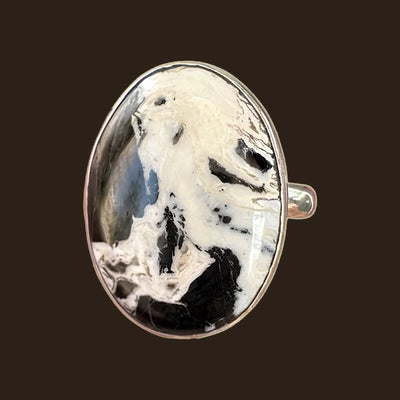
What makes it white is what it lacks. In turquoise, copper and iron set the color. White Buffalo formed without them, so you get a clean white or creamy background. The dark lines that weave through it are matrix, and Greg highlights them through his specialized lapidary work. When we set these hand-cut stones in a sterling silver bezel, we let the stone's natural shape and pattern lead.
Why the turquoise name persists
Some people have called it "albino turquoise," which is a nice image and technically wrong. Minerals don't have albinism. It is simply a different stone that shares turquoise's neighborhood and its look. The debate over whether is white buffalo real turquoise usually comes from that naming history. It's also worth knowing how to tell it from Howlite and Wild Horse magnesite. Wild Horse has a similar white base, but its matrix runs brown or reddish instead of sharp black. Our small batch collections tell you where each stone came from, and our page on White Buffalo stone origins tells the rest.
Where does authentic White Buffalo come from?
White Buffalo comes from the high desert near Tonopah, Nevada, an area known for its turquoise mining history. Our family holds a claim at the White Buffalo mine there. While some collectors still ask is white buffalo real turquoise, the honest answer is that it is its own stone, and a scarce one. Blue turquoise turns up in dozens of places across the Southwest. Good White Buffalo does not.
The Nevada landscape is a rugged, mineral-rich environment where shifting geological forces created the perfect conditions for this stone to form. In this arid region, the lack of copper and iron allowed the white stone to stay white, while black chert filled the fissures to create the ink-like matrix we see today. It takes a discerning eye to spot these white veins among the more common blue and green deposits. Because the supply is so limited, finding genuine pieces requires a direct connection to the source or to collectors who understand the White Buffalo stone origins.
Our family's claim near Tonopah
The White Buffalo we cut ourselves comes from our family's claim at the White Buffalo mine near Tonopah. Greg sources the rough, and it is cut at Cutting Edge Turquoise, our family's lapidary business. The name points to rarity: a white buffalo is famously rare, and so is a clean white stone with a crisp black matrix. In our studio, we set it as a cabochon, a stone shaped and polished into a smooth, rounded form rather than faceted like a diamond.
The artistry of the cut
Raw White Buffalo from the Nevada desert requires a master's touch to become a piece of wearable art. The stone is relatively soft, making the cutting process a delicate balance of precision and intuition. We rely on Greg Cordova's specialized lapidary work to transform these rough rocks into the refined gems you see in our collections. A skilled lapidary must navigate the stone's natural structure to preserve the delicate spiderweb matrix patterns. If the cut is too shallow, the pattern disappears. If it is too deep, the stone may lose its structural integrity. This careful hand-cut process ensures that every piece of White Buffalo jewelry tells the story of its origin. If you are looking for a unique addition to your collection, you can explore our latest artisan-made pieces to see this craftsmanship in person.
How to identify real White Buffalo jewelry
Spotting a genuine piece of jewelry starts with a close look at the stone's character. While the question of is white buffalo real turquoise is settled by its mineral makeup, the market is unfortunately filled with imitations that try to mimic its sophisticated monochrome look. Authentic White Buffalo is defined by its matrix, which consists of black or dark brown chert. Chert is a hard, dense sedimentary rock that creates sharp, crisp lines against the white background. These patterns should always appear irregular and organic, like the branching of a tree or the cracks in a dry lake bed. If the pattern looks too symmetrical or repeats across several different rings, you're likely looking at a mass-produced imitation rather than a hand-cut stone.
Hardness is another technical marker that separates the real from the fake. White Buffalo is a sturdy stone, ranking between 5.5 and 6 on the Mohs scale. The Mohs scale is a system used to measure the scratch resistance of minerals. This rating makes it significantly harder than many of its common lookalikes, meaning it won't scratch as easily during daily wear. When we work with these stones in the studio, we look for that density. It allows for a high polish that stays bright over time, whereas softer imitations often look dull or "plastic" after a few months of use. To help you identify quality, keep these markers in mind:
- Matrix: Look for sharp, black chert rather than blurry grey veins.
- Hardness: Genuine stones sit between 5.5 and 6 on the Mohs scale.
- Settings: Authentic pieces use hand-fitted sterling silver bezels rather than pre-cast mystery metal molds.
- Symmetry: Avoid repetitive or "perfect" patterns that suggest a printed or synthetic origin.
White Buffalo vs. Howlite and Magnesite
The most common substitute you'll find in the market is howlite. Howlite is a porous, white mineral that naturally features a "blurry" grey matrix. Because it's inexpensive and easy to dye, it's often sold under misleading names like "white turquoise" or even mislabeled as White Buffalo. You can usually tell the difference by looking at the color of the veins. If the matrix is a soft grey rather than a deep, inky black, it's likely howlite. We also see a lot of stabilized stone in mass-produced jewelry. A stabilized stone is a mineral that has been injected with clear resin or plastic to increase its durability or change its color. At Wildflower, we believe in a stone-first approach. We prioritize natural, untreated materials where the earth's original work is left to speak for itself without chemical interference.
Signs of artisan-made quality
The metalwork surrounding the stone tells its own story of authenticity. High-quality Southwestern style jewelry is almost always set in a hand-fitted bezel. A bezel is the thin strip of sterling silver that's soldered to the base of the piece and then pushed over the edges of the cabochon to secure it. Because every hand-cut stone has a slightly different height and curve, an artisan must fit each bezel by hand. Mass-produced pieces often use pre-cast settings that don't quite hug the stone correctly. We never use mystery metals or silver-plated alloys. Every ring or pendant in our one-of-a-kind collection is crafted with genuine sterling silver, providing a heavy, durable frame that matches the rarity of the White Buffalo it holds.
Why is White Buffalo so popular in Southwestern style?
The rise of White Buffalo in Southwestern style isn't just a fleeting trend. It represents a shift toward a more versatile, modern aesthetic that fits into a contemporary wardrobe. While the traditional blues and greens of the desert will always have their place, the monochrome palette of White Buffalo offers a sophisticated alternative. Collectors often start their journey by asking is white buffalo real turquoise, but they stay for the unique visual impact that blue stones simply can't provide. The high contrast between the creamy white stone and the inky black matrix creates a bold look that feels both grounded and refined.
In our studio, we find that the appeal often lies in how the stone interacts with the metal. We frequently pair these hand-cut cabochons with oxidized silver to enhance the narrative of the stone. Oxidized silver is a jewelry-making process where the surface of the sterling silver is intentionally darkened with a chemical solution to mimic natural aging. This dark finish makes the white stone pop and ties the metalwork directly to the black chert matrix. It creates a piece of jewelry that looks like it has a history, even when it's brand new.
A monochrome staple for the jewelry box
Many jewelry lovers find that blue-green stones can sometimes feel too specific for every outfit. White Buffalo solves this by acting as a neutral. Its black and white tones allow it to pair seamlessly with almost any color, making it a reliable choice for daily wear. You can easily layer these pieces with our everyday essentials to create a look that feels curated rather than cluttered. It's a quiet form of sophistication. It doesn't demand attention through bright colors, but rather through its clean lines and organic patterns.
The value of rarity
The popularity of this stone also stems from its origin story. Because it comes from just one location in Nevada, owning a piece feels like holding a small part of a very limited geological event. In a world of mass-produced fashion, there's a growing desire for small batch jewelry that emphasizes the stone first. We focus on these limited runs because it allows us to prioritize the character of the material over the volume of the sales. While the technical question of is white buffalo real turquoise might be a common entry point for new collectors, the artistic value of the stone is what makes it a permanent fixture in Southwestern style circles.
If you're ready to add this monochrome classic to your own jewelry box, you can browse our current collection of handcrafted pieces to find a stone that speaks to you.

How to care for your White Buffalo and sterling silver jewelry
Caring for a piece of handcrafted jewelry is an act of preservation that honors both the artisan's work and the earth's raw materials. While the technical debate over is white buffalo real turquoise often centers on its value, the practical reality is that this stone deserves the same level of respect as any high-quality Southwestern gem. Because White Buffalo is a natural mineral, it's sensitive to the environment around it. Maintaining its crisp white surface and dark matrix requires a gentle touch and a few specific habits that will keep the piece looking as clear as the day it left our studio.
The first rule of thumb is to keep your jewelry away from harsh chemicals and excessive moisture. Perfumes, lotions, and even hairsprays contain oils and alcohols that can slowly dull the polished finish of a cabochon. We recommend putting your jewelry on last, after your beauty routine is finished and any products have dried on your skin. When you aren't wearing your pieces, store them individually in soft pouches or separate compartments. This prevents the harder sterling silver components of one piece from scratching the surface of another stone. It's a simple habit. One that pays off for decades.
Protecting the stone's surface
As we've noted, White Buffalo sits between 5.5 and 6 on the Mohs scale, which means it's durable enough for daily wear but not indestructible. You should avoid using ultrasonic cleaners or steam machines, as the intense vibrations and heat can cause micro-fractures in the organic matrix or even loosen the stone from its bezel. To keep the sterling silver bright, use a soft polishing cloth rather than liquid chemical dips. These dips can be too aggressive for natural stones and may strip away the intentional oxidation we use to highlight the matrix. Over time, your silver may develop a patina. Patina is the thin layer of oxidation that naturally develops on the surface of sterling silver, giving it a darker, antique appearance. Many collectors prefer this look, but a quick rub with a dry cloth will easily restore the original shine.
Professional maintenance and repair
Quality jewelry is an investment in a narrative that can last for years with the right attention. Every few months, take a moment to inspect your pieces for any signs of wear, such as a slightly bent bezel or a stone that feels loose when touched. If you notice the silver has shifted or the stone is rattling, it's time to seek professional help rather than trying to tighten it yourself. We've put together a comprehensive care and repair guide to help you navigate the long-term health of your collection. Whether it's a ring Greg Cordova cut or a pendant Kimberly curated, these pieces are designed to be worn and loved. They are vessels for emotion. By following these small steps, you ensure that the fleeting beauty of the natural world remains a permanent part of your story.
Finding Your Own Nevada Treasure
Navigating the nuances of Southwestern gems is about more than just a name. It's about a connection to the high desert and the hands that shape its offerings. We've explored the geological reality that while the answer to is white buffalo real turquoise is technically no, its rarity as a Nevada stone makes it a sophisticated treasure in its own right. Authentic pieces are defined by that crisp black chert matrix and the weight of genuine sterling silver. It's a stone that demands honesty from the miner and precision from the lapidary.
Every piece in our studio is built around this stone-first philosophy. We work with authentic Nevada-sourced White Buffalo and feature hand-cut stones by Greg Cordova to ensure the character of the mine is preserved in every bezel. These aren't mass-produced trinkets. They're small batch reflections of a specific place and time. Browse our latest studio arrivals to find your next handcrafted White Buffalo piece or visit our Etsy shop for more Southwestern style inspiration. We're here to help you find a piece that feels as rare and intentional as the stone itself.
Frequently Asked Questions
Is White Buffalo turquoise rare?
Yes, it is exceptionally rare because it is found in only one specific location in the world. While blue turquoise appears in dozens of mines across the American Southwest, this white stone is limited to a single mine in Nevada. When people ask is white buffalo real turquoise, they are often surprised to learn it is a different stone found in only one place. This scarcity makes it a prized material for one of a kind artisan pieces.
What is the difference between White Buffalo and Wild Horse stone?
The primary difference is the color of the matrix and the mineral makeup. White Buffalo features a striking black or dark brown chert matrix against a white background. Wild Horse is actually a magnesite stone, and it usually displays a reddish brown or chocolate colored matrix. Both stones have a beautiful white base, but the matrix color is the easiest way to tell them apart at a glance when browsing Southwestern style jewelry.
Can White Buffalo stone get wet?
It is best to keep your stone dry to preserve its natural finish. While an occasional splash won't hurt it, you shouldn't wear your jewelry while swimming, showering, or doing dishes. Chemicals in tap water or pools can seep into the pores of the stone and dull the polish over time. Taking a moment to remove your rings before washing up is a simple way to protect your investment for the long term.
How can you tell if White Buffalo is real or fake?
You can identify the real stone by its crisp black chert matrix and its hardness. When collectors ask is white buffalo real turquoise, the answer involves looking at the matrix. Real stones have sharp black chert lines, while fakes like dyed howlite often show blurry grey veins. Authentic pieces are also set in hand fitted sterling silver bezels, unlike mass produced imitations that use pre cast mystery metal molds for their settings.
Does White Buffalo stone change color over time?
No, it generally does not change color like some blue turquoise might. Blue turquoise can shift to green as it absorbs skin oils, but White Buffalo lacks the copper content responsible for that reaction. As long as you avoid exposing it to harsh chemicals or dyes, the crisp white color and dark matrix should stay exactly as they were the day the cabochon was first cut in the studio.
Why is White Buffalo stone so expensive compared to other white stones?
The cost is driven by the fact that it comes from a single source in Nevada. Common white stones like howlite are found in abundance, but the supply of genuine White Buffalo is very limited. When you combine that scarcity with the labor required for specialized lapidary work, the value increases. You are paying for a rare geological find rather than a mass market material that is easily replaced or sourced.
Is White Buffalo harder than traditional blue turquoise?
It is generally on the higher end of the hardness scale for these types of stones, ranking between 5.5 and 6 on the Mohs scale. Traditional blue turquoise typically ranges from 5 to 6. This makes it a durable choice for everyday jewelry like rings. It holds a high polish well and resists scratches better than softer white minerals that are often used as imitations in lower quality jewelry pieces.
Where is the White Buffalo mine located?
White Buffalo comes from the White Buffalo mine near Tonopah, Nevada, where our family holds a claim. The veins are thin and the deposit is small, so every piece carries a real sense of place. We name the source on the pieces we cut ourselves so you never have to guess.

Article by
Kimberly Cordova
Kimberly Cordova is the founder and creative director of Wildflower Artisans, a handmade jewelry brand rooted in Santa Fe. Real turquoise, solid sterling silver, and a small line set in solid 14K gold. She built Wildflower around a simple belief: the best jewelry is the kind you actually reach for, not the kind you save for someday.
The collection is built three ways. Some pieces are made in-house, cut by her husband Greg from stones he sources himself, including rough from the family's King's Manassa Mine in Colorado and White Buffalo Mine in Nevada. Some are designed by Kimberly and fabricated by a trusted circle of Santa Fe silversmiths. And some are finished work she curates from artisan makers whose craft meets the same standard, because building a real collection means knowing when to make and when to look.
Turquoise leads, joined by White Buffalo, Wild Horse, Lapis Lazuli, Spiny Oyster, Black Onyx, Opal, and other genuine semi-precious stones. No shortcuts on the stone, the silver, or the story behind either.
Her writing covers everything she has learned along the way: how turquoise forms, how to tell natural from stabilized, what makes one mine different from another, how to read a bezel, and how to shop with confidence in a market that is not always straightforward. It is the kind of plainspoken information she wished someone had laid out for her when she was starting out.
Browse the collection at wildflowerartisans.com. Questions about a stone, a setting, or a specific piece are welcome any time.


0 comments