

The most captivating white stone in a Southwestern collection is often not turquoise at all, but a rare gift from a single, quiet corner of the Arizona desert. A polished cabochon of this material reveals creamy white clouds drifting across a landscape of deep cocoa brown, a pattern that mimics the wild spirit of its namesake. Incorporating wild horse stone jewelry into your personal style offers a grounded, earthy aesthetic that stands apart from the bright blues of traditional mines. Many collectors feel a sense of hesitation. They often worry about accidentally purchasing a plastic imitation or a mass-produced substitute.
At Wildflower Artisans, we understand the desire for clarity when you're investing in authentic work. This guide will help you understand the history of the Gila Wilderness origin and the geological difference between magnesite and turquoise. We will also look at matrix patterns in small batch pieces. The matrix is the host rock that remains visible within a finished stone, creating the intricate chocolate-colored lines that define this material. You'll discover how to spot high-quality stones and why the mine's short life makes these pieces a finite treasure for any jewelry lover.
Key Takeaways
- Understand the geological difference between magnesite and turquoise and why this Arizona stone is a unique treasure in its own right.
- Learn to spot the markings of authentic wild horse stone jewelry, from high-contrast color shifts to the intricate lines of a spiderweb matrix.
- Discover the history of the Gila Wilderness mine and why its limited production period contributes to the rarity of these stones today.
- Find practical tips for caring for your jewelry and pairing its neutral, earthy tones with your existing wardrobe.
- See how our small batch approach prioritizes the organic shape and pattern of each hand-cut stone to create a one-of-a-kind piece.
What is wild horse stone?
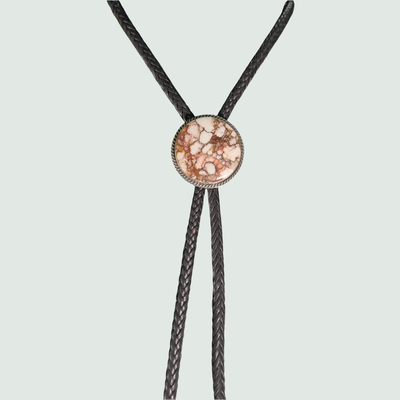
Wild horse stone is a unique mineral found in the copper-rich soil of southern Arizona, specifically near the Gila Wilderness. While it is often found alongside turquoise deposits, it is not actually a variety of turquoise, but rather a combination of magnesite and hematite. This stone is easily identified by its creamy white base and the rich, chocolate brown matrix that winds through its surface. Its name draws inspiration from the spotted coats of Appaloosa or paint horses, capturing a sense of untamed, natural beauty. Choosing wild horse stone jewelry allows you to wear a piece of the high desert landscape, characterized by high contrast and earthy sophistication.
To better understand how these stones are shaped into wearable art, watch this helpful video showing the transition from raw material to a finished boutique piece:
We believe every stone tells a story of its origin. This particular material was discovered in the mid-1990s near the Globe copper mine and was only pulled from the earth for a few short years. This limited availability makes the existing supply a finite resource for artisans today. Because it lacks the blue and green hues of traditional turquoise, it offers a distinct alternative for those who appreciate the structural beauty of the stone itself. You can find more details about its specific history on our wild horse stone origins page.
The mineral composition of magnesite
Geologically speaking, Magnesite is a carbonate mineral that typically forms in earthy, microcrystalline masses. In the case of wild horse stone, the presence of hematite or limonite is what creates those deep brown or reddish veins. We refer to these veins as the matrix. The matrix is simply the host rock or the mineral veins that weave through the primary stone, providing a visual narrative of how the mineral formed over centuries within the earth. When a lapidary artist cuts a cabochon, they carefully choose which parts of this matrix to highlight, ensuring the final piece of wild horse stone jewelry balances the white space with these darker, organic lines. The result is a stone that feels as though it was painted by nature itself.
Wild horse vs. white buffalo stone
It's common for collectors to confuse these two stones because they both offer a striking white and neutral palette. However, they are chemically distinct. White buffalo is actually a combination of aragonite and calcite, while wild horse is primarily magnesite. You can often tell them apart by looking closely at the matrix colors. Wild horse typically features warm brown or cocoa-toned veins. In contrast, white buffalo is known for its stark black matrix. Both stones are highly valued in Southwestern style for their ability to complement a wide range of colors without the traditional blue of turquoise. We often select these stones for our artisan collection because their neutral tones allow the sterling silver craftsmanship and hand-cut bezel work to truly take center stage.
The origin of the Gila Wilderness mine
The Gila Wilderness in southern Arizona is a place of deep silence and rugged beauty. It's here, tucked away near the Globe copper mine, that the primary source of wild horse stone was discovered. Unlike the century-old turquoise mines that have shaped Southwestern style for generations, this deposit was only found in the mid-1990s. Its remote location makes large-scale industrial mining impossible. Instead, workers often pull the magnesite from the earth by hand to ensure the delicate brown matrix remains intact. This manual process is exactly why wild horse stone jewelry maintains its small batch, artisan character. You can read more about the specific history of this site on our wild horse stone origins page.
While it's a relatively young discovery in the jewelry world, the mineral itself is well-documented. According to U.S. Geological Survey data on magnesite, this mineral is a significant magnesium ore, but the specific aesthetic of the Gila deposit is what makes it a treasure for creators. The high contrast between the white carbonate and the dark host rock creates a painterly effect that is difficult to find in other regions.
A recent discovery in Southwestern mining
For decades, miners in the Gila region walked right past these white and brown stones. They were searching for the vibrant blues and greens of turquoise, viewing the cream-colored magnesite as mere "leaverite" (leave it right there). It wasn't until the late 20th century that collector preferences began to shift. The move toward organic, neutral palettes brought this stone into the light. Because the mine was only active for a short period, the total output remains low. This scarcity ensures that every piece of jewelry feels personal and distinct.
Sourcing authentic rough stone
Authenticity is the heartbeat of a working studio. To ensure we are working with genuine material, we source rough stone directly from the mine owner whenever possible. Processing this rough magnesite into finished cabochons requires a steady hand and a deep understanding of the stone's structure. Much of this critical work is handled through Greg Cordova’s lapidary work, where the raw earth is carefully shaped to reveal its best patterns. Knowing the origin of the stone is the only way to avoid the stabilized or dyed imitations that often flood the mass market. If you're ready to see how these desert treasures look when finished, you can browse our current artisan pieces to find a stone that speaks to you.
How to identify quality wild horse stone jewelry
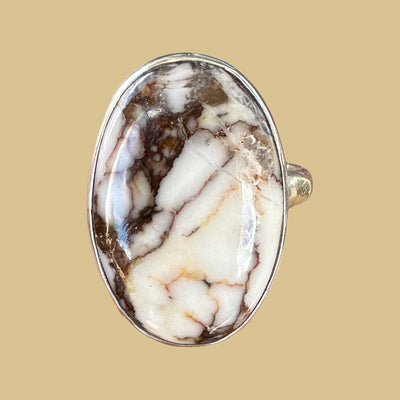
To identify high-quality wild horse stone jewelry, look for a sharp, clean contrast between the milky white magnesite and the deep cocoa-brown matrix. The finest examples showcase a delicate spiderweb pattern or bold, painterly asymmetry that feels intentional rather than cluttered.
Beyond the pattern, the physical finish tells you a lot about the artisan's skill. A high-quality stone should have a smooth, porcelain-like luster without any visible pits or dull spots. This reflects a careful polishing process that respects the natural properties and uses of magnesite. If you run your fingernail across the surface, it should feel consistent and glass-smooth. If the stone looks dry or has tiny holes in the matrix, it likely wasn't finished with the proper grit sequences. Quality stones should glow with a soft, internal light rather than looking like unfinished rock.
The importance of the cabochon cut
A cabochon is a stone that has been shaped and polished into a smooth, rounded form rather than being cut with flat facets like a diamond. This specific cut is vital for wild horse stone jewelry because it allows the lapidary artist to follow the natural movement of the brown veins. When we look at pieces featuring Greg Cordova’s lapidary work, we see how a hand-cut stone preserves the integrity of the pattern. Mass-produced stones often have flat spots or irregular curves that disrupt the visual flow of the matrix. A well-cut cabochon will have a symmetrical dome and a polished edge that sits perfectly within its setting.
Sterling silver craftsmanship and bezels
The setting is just as important as the stone itself. A bezel is the thin band of silver that wraps entirely around the edge of the stone to hold it securely in place. In our stone-first philosophy, we prioritize heavy-gauge sterling silver that feels substantial in your hand. Look for hand-stamped patterns or saw-cut details along the silver border. These small touches indicate a small batch approach where every piece is treated as an individual work of art. Avoid thin, flimsy settings that can bend easily, as these won't protect the stone over years of daily wear. High-quality artisan work will always have a smooth, tight bezel fit with no gaps between the silver and the cabochon.
Styling and caring for magnesite jewelry
The quiet beauty of a chocolate-and-cream palette makes wild horse stone jewelry a versatile staple for any wardrobe. Its neutral tones don't compete with your clothing. Instead, they ground your look with an earthy, organic sophistication. These stones feel particularly at home when paired with natural fibers like tumbled linen, raw silk, or lived-in denim. Because the matrix patterns are so distinct, a single piece can act as a bridge between different textures and colors in your outfit, making it a reliable choice for daily wear.
Magnesite is a relatively soft mineral, ranking between 3.5 and 4.5 on the Mohs scale of mineral hardness. For context, this means it's significantly softer than quartz or even most turquoise. It requires a bit more mindfulness from the wearer to prevent surface scratches or dulling of that porcelain-like finish we discussed earlier. Proper care ensures the stone's narrative remains clear and vibrant for years to come.
Everyday Southwestern style
Wearing these pieces is about embracing a sense of effortless composition. You might try layering a wild horse pendant on a simple sterling silver chain alongside your favorite turquoise pieces. The contrast between the sky-blue turquoise and the cocoa-brown magnesite creates a rich, mixed-stone aesthetic that feels modern yet rooted in tradition. If you prefer a more singular statement, a large cabochon ring serves as a perfect focal point against a neutral-toned sweater or a crisp white button-down. The high-contrast matrix provides enough visual interest to carry an entire look without the need for additional accessories.
Maintenance and cleaning tips
Keeping your jewelry beautiful starts with gentle handling. Never use ultrasonic cleaners or steam machines, as the intense vibrations and heat can damage the internal structure of magnesite. Avoid all harsh chemicals, including household soaps, perfumes, and hairsprays, which can seep into the stone and cause discoloration. A soft, damp cloth is all you need to wipe away dust or skin oils after a day of wear.
Storage is equally important for preserving the stone's integrity. We recommend storing your pieces in individual soft pouches or separate compartments in a jewelry box. This prevents the harder sterling silver settings of other pieces from rubbing against and scratching the softer face of the magnesite. For more detailed advice on preserving your collection, you can refer to our care and repair guide. If you're looking to add a new versatile piece to your rotation, you can browse our current artisan jewelry to find a stone that fits your rhythm.

The Wildflower approach to small batch jewelry
Our studio operates with a stone-first philosophy where the unique matrix and organic shape of each mineral dictate the final jewelry design. This approach ensures that every piece of wild horse stone jewelry we create is a one-of-a-kind celebration of the stone's natural character.
We believe that jewelry should be more than just an accessory; it's a vessel for the earth's history. Our collection brings together a specific set of skills to honor this belief. Kimberly curates each stone for its visual depth and narrative, while much of the technical shaping involves Greg Cordova’s lapidary work. By handling the stones ourselves, we can guarantee the authenticity of every piece. We strictly avoid mystery metals or dyed howlite, ensuring that what you wear is a genuine, hand-cut treasure from the Arizona desert. This small batch method allows us to focus on the fine details of every bezel and silver setting.
Curated for the modern collector
We select our cabochons based on the complexity of their matrix and the story they tell. A stone might feature a dense spiderweb pattern or a soft, painterly wash of cocoa brown against a cream background. This level of natural variation is what makes artisan-made quality so different from mass-produced fashion jewelry. We look for stones that have a personality of their own before they ever reach the workbench. For those who value owning a piece that cannot be replicated, our one-of-a-kind collection showcases our most recent wild horse creations. Each piece is handcrafted to highlight the specific beauty of the stone it holds.
Connecting with the Gila Wilderness
Understanding the stone origins of our magnesite is a vital part of our studio's identity. The Gila Wilderness mine was only active for a few short years in the 1990s, which means the supply of this material is finite. This history informs the Southwestern style of our work, grounding it in a specific time and place. When you own a piece of wild horse stone jewelry from Wildflower, you're holding a part of the American Southwest that is as unique as a thumbprint. We take pride in creating jewelry that respects the fleeting, natural beauty of these stones while providing the durability needed for a lifetime of wear.
Bringing the desert home
Choosing wild horse stone jewelry is an invitation to carry a piece of the high desert's quietest corners with you. This distinct magnesite from the Gila Wilderness serves as a reminder that beauty doesn't always need bright color to be striking. By understanding the mineral's history and the importance of a hand-cut cabochon, you can curate a collection that reflects a true appreciation for the artisan craft. Every stone we feature is a celebration of the earth's natural variation, held securely in heavy-gauge sterling silver that's built for a lifetime of wear. Whether you're drawn to the intricate spiderweb patterns or the bold cocoa-colored veins, these pieces offer a versatile, grounded aesthetic that pairs effortlessly with your most comfortable textures. We hope this guide helps you feel confident in recognizing the quality and care that goes into every small batch creation.
Browse our latest wild horse stone jewelry to find a piece that speaks to your style, or visit our Etsy shop for additional artisan-made selections.
Frequently Asked Questions
Is wild horse stone the same as turquoise?
No, wild horse stone is not turquoise. It is a distinct mineral combination of magnesite and hematite. While these stones are often found in the same copper-rich regions of Arizona, they have different chemical structures. Magnesite is a carbonate mineral, whereas turquoise is a phosphate of aluminum and copper. This difference gives wild horse stone its signature chocolate-and-cream palette rather than the blues and greens associated with traditional mines.
Can wild horse stone jewelry be worn every day?
You can certainly wear wild horse stone jewelry as part of your daily wardrobe, but it requires a bit of extra care. Since the stone is softer than quartz or turquoise, it is more susceptible to surface scratches. We recommend choosing pieces with sturdy bezel settings that wrap around the edge of the stone for protection. It's best to remove your rings or bracelets before doing heavy manual work or using household cleaners to preserve the polished finish.
How do I tell if my wild horse stone is real?
Real wild horse stone has a specific porcelain-like luster and a crisp, well-defined matrix. Many imitations are made from howlite that has been dyed to mimic the brown veins. You can often spot a fake by looking for "inky" or blurred lines in the pattern, whereas natural magnesite features sharp, organic transitions between the white stone and the brown host rock. Authentic stones also have a cool, heavy feel in the hand that plastic imitations can't replicate.
Does wild horse stone change color over time?
Magnesite is a stable mineral and generally won't change its internal color like some varieties of turquoise do when they oxidize. However, the stone is somewhat porous. If it's exposed to skin oils, perfumes, or lotions over a long period, the surface can take on a slightly dull or yellowish tint. Keeping the stone clean and dry will ensure that the stark white and deep brown contrast remains vibrant for the life of the piece.
What is the best way to clean wild horse jewelry?
The safest way to clean your jewelry is with a soft, damp cloth and nothing else. Avoid using ultrasonic cleaners, steam machines, or chemical dips, as these can be too aggressive for the stone's structure. If the sterling silver setting begins to tarnish, use a dedicated polishing cloth for the metal, taking care not to rub the stone itself. Storing your pieces in individual soft pouches will also prevent the silver from scratching the face of the cabochon.
Where is wild horse stone mined?
The primary source for this material is a specific mine located near the Gila Wilderness in southern Arizona. It was discovered near the Globe copper mine in the mid-1990s. Because this deposit was only worked for a few years, much of the wild horse stone jewelry available today comes from existing stashes of rough material. This limited geographical origin is a large part of why the stone is so highly prized by Southwestern collectors.
Why is it called wild horse stone?
The name was inspired by the stone's visual resemblance to the spotted or "pinto" coats of wild horses. The irregular, earthy patterns of the brown matrix against the white magnesite look very much like the markings on an Appaloosa. It's a fitting name for a stone that captures the rugged, untamed spirit of the Arizona landscape where it was first pulled from the earth. Collectors appreciate this organic, painterly aesthetic that feels connected to the natural world.
Is wild horse stone more expensive than turquoise?
Generally, wild horse stone is more accessible than high-grade turquoise from legendary mines like Bisbee or Lander Blue. However, its value has increased steadily because the original mine is no longer in active production. Stones that feature a rare spiderweb matrix or exceptionally high contrast can be priced similarly to mid-grade turquoise. The cost usually depends on the complexity of the pattern and the quality of the artisan-made sterling silver setting.
Article by
Kimberly Cordova
Kimberly Cordova is the founder and creative director of Wildflower Artisans, a handmade jewelry brand rooted in Santa Fe. Real turquoise, solid sterling silver, and a small line set in solid 14K gold. She built Wildflower around a simple belief: the best jewelry is the kind you actually reach for, not the kind you save for someday.
The collection is built three ways. Some pieces are made in-house, cut by her husband Greg from stones he sources himself, including rough from the family's King's Manassa Mine in Colorado and White Buffalo Mine in Nevada. Some are designed by Kimberly and fabricated by a trusted circle of Santa Fe silversmiths. And some are finished work she curates from artisan makers whose craft meets the same standard, because building a real collection means knowing when to make and when to look.
Turquoise leads, joined by White Buffalo, Wild Horse, Lapis Lazuli, Spiny Oyster, Black Onyx, Opal, and other genuine semi-precious stones. No shortcuts on the stone, the silver, or the story behind either.
Her writing covers everything she has learned along the way: how turquoise forms, how to tell natural from stabilized, what makes one mine different from another, how to read a bezel, and how to shop with confidence in a market that is not always straightforward. It is the kind of plainspoken information she wished someone had laid out for her when she was starting out.
Browse the collection at wildflowerartisans.com. Questions about a stone, a setting, or a specific piece are welcome any time.
0 comments