

To create a piece of tufa cast jewelry, an artisan must first commit an act of beautiful destruction. For those who seek silver with a soul, the search often leads to questions about the origins of these rugged, earthy textures. You may find yourself asking what is tufa cast jewelry and why it feels so much more substantial than the polished, uniform pieces found in a typical display case. At Wildflower Artisans, we understand the desire for jewelry that carries the weight of a story and the touch of the maker's hand.
We agree that a piece of jewelry should be as unrepeatable as a desert sunset. In this guide, we'll reveal the lyrical process where molten sterling silver and volcanic stone unite to create a single, textured masterpiece that can never be duplicated. We'll walk through the rhythmic steps of carving, pouring, and the eventual sacrifice of the mold, giving you the confidence to identify these artisan works and appreciate the deep labor poured into every grain of silver by the creators here at Wildflower.
Key Takeaways
- Understand the intimate process where molten sterling silver and volcanic ash unite to form a single, unrepeatable masterpiece.
- Learn to identify the signature granular surface that answers the question of what is tufa cast jewelry and distinguishes it from polished, factory-made pieces.
- Discover the ephemeral nature of the carving process, where each hand-cut tufa mold is sacrificed to the heat of the pour.
- Gain a deeper appreciation for the labor-intensive traditions of Southwestern silversmithing still practiced by our artisans in Santa Fe.
- Recognize the emotional value of owning a one-of-a-kind creation that carries the literal fingerprint of the ancient volcanic stone.
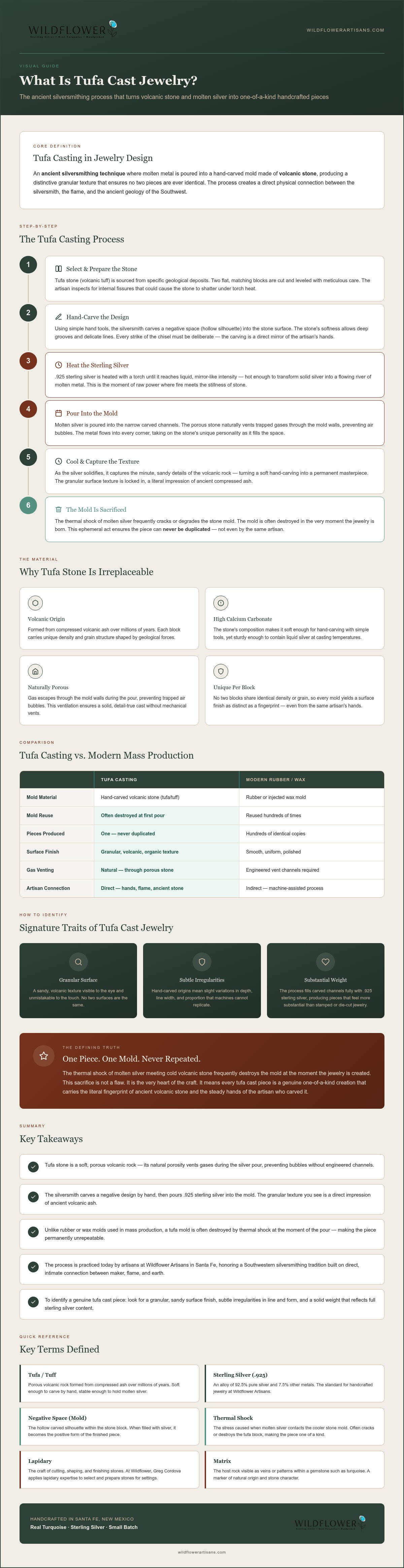
What is Tufa Casting in Jewelry Design?
Tufa casting is an ancient silversmithing technique where molten metal is poured into a hand-carved mold made of volcanic stone. This method produces a distinctive, granular texture that ensures no two one-of-a-kind pieces are ever identical, defining what is tufa cast jewelry through its connection to the landscape. At Wildflower Artisans, we view this process as a sacred conversation between the silversmiths and the earth. Tufa stone, also known as tuff, is a porous volcanic rock formed from compressed ash over millions of years. It is remarkably soft, allowing an artist to carve intricate patterns with simple hand tools, yet its fragility means every strike of the chisel must be deliberate and steady.
The silversmith begins by cutting the stone into two flat, matching blocks that fit together with seamless precision. Within these surfaces, they carve a negative space, which is the hollow silhouette that will soon hold the weight of the silver. Because the stone is so soft, the artist can create deep grooves or delicate lines, knowing that the metal will eventually find its way into every secret corner of the carving. This tactile beginning is essential to the craft, as the final piece is a literal reflection of the artist's hands working the stone.
The Moment of Creation
To understand what is tufa cast jewelry, one must witness the raw power of fire meeting the stillness of stone. Inside our Santa Fe studio, .925 sterling silver is heated until it glows with a liquid, mirror-like intensity, reaching temperatures high enough to turn solid sterling silver jewelry into a flowing river. When the silver is ready, the artisan pours the molten metal into the narrow channels of the stone mold. The metal flows with a rhythmic grace, filling the carved channels and greedily taking on the stone's unique personality. As it cools, the silver solidifies quickly, capturing the minute, sandy details of the volcanic rock and turning a soft carving into a permanent masterpiece.
The Artisan Perspective
Choosing this method is a commitment to the ephemeral and the authentic. Unlike modern casting that uses rubber or wax molds for mass production, tufa casting is an intimate, singular event. The thermal shock of the molten silver frequently causes the stone to crack or degrade, meaning the mold is often destroyed in the very moment the jewelry is created. This risk is exactly why makers remain devoted to the craft. It fosters a physical connection between the silversmith, the flame, and the ancient geology of the Southwest. Every piece becomes a vessel for emotion, celebrating a moment of beauty that can never be repeated by our team at Wildflower.
The Unique Properties of the Tufa Stone
Tufa stone is a soft, porous rock born from ancient volcanic ash that has been compressed over millions of years into a workable medium. This geological treasure allows silversmiths to carve designs directly into the stone by hand, creating a breathable mold that imparts a rugged, granular texture to the finished metal. This specific interaction between the volcanic ash and the silver is the defining characteristic of what is tufa cast jewelry, resulting in pieces that feel deeply connected to the high desert landscape.
The secret to the stone's utility lies in its high calcium carbonate content. This makes the rock soft enough for a jeweler to carve with simple hand tools, yet it remains sturdy enough to act as a vessel for molten sterling silver. Because the stone is naturally porous, it allows gases to escape through the mold during the pour. This ventilation is vital. It prevents trapped air from forming bubbles in the silver, ensuring a solid cast that remains true to the artist's original vision. No two stones possess the exact same density or grain, meaning every mold yields a surface finish as unique as a fingerprint.
Sourcing the Medium
Silversmiths in the Southwest traditionally gather tufa stone from specific geological deposits where the ash is most consistent and fine. Selecting the right block is a meditative process that requires a lapidary eye. The artisan looks for a lack of internal fissures that might cause the stone to shatter under the stress of the torch. Once a block is chosen, the surface is leveled and prepared with meticulous care. This preparation ensures the silver will flow smoothly across the face of the stone, capturing every intended detail of the carving.
A Stone-First Philosophy
At Wildflower Artisans, we approach the tufa mold with a philosophy that mirrors our respect for the gems we set. Just as we cherish the dark, intricate matrix found in a piece of natural turquoise, we value the organic character of the tufa stone itself. The relationship between the porous rock and the silver is one of mutual transformation. The stone gives its texture, and the silver gives its form. This dialogue results in jewelry that feels alive, carrying the memory of the earth within its weight.
The porous nature of the stone creates a surface that feels like a shared secret between the maker and the earth. This raw, organic energy is why our one-of-a-kind jewelry collection focuses on pieces that can never be replicated. You can explore these textures and more in our handcrafted jewelry gallery, where every piece tells its own geological story.
The Signature Texture of Tufa Cast Pieces
The most recognizable feature of any tufa cast creation is its distinct, granular surface texture. When someone asks what is tufa cast jewelry, the answer lies in this tactile fingerprint of the volcanic stone, which is permanently transferred to the metal at the moment of contact. Unlike the uniform smoothness of mass-produced pieces, tufa cast silver carries a rugged, sandy landscape across its surface. This organic finish often mirrors the matrix, which is the host rock or mother stone seen as intricate patterns within a turquoise jewelry cabochon. By leaving the silver in its raw, cast state, the artisan creates a piece that feels like it was unearthed rather than manufactured.
The contrast between a highly polished bezel and the raw, tufa cast band creates a sophisticated, artisanal look. This intentional juxtaposition highlights the maker's hand, showing a mastery of both the primitive pour and the refined finish. It is a celebration of the asymmetrical and the organic, ensuring that the silver itself becomes as much of a focal point as the stones we set at Wildflower Artisans.
Visual and Tactile Depth
This unique surface does more than provide a rugged look; it fundamentally changes how the piece interacts with light. While high-polish silver reflects light like a mirror, tufa cast silver diffuses it. This creates a soft, matte glow that feels quiet and grounded. Over time, as the piece is worn and handled, the texture continues to evolve. The high points of the grain may become slightly burnished by your skin, while the deeper crevices retain their dark, earthy character. It is a living finish that reminds the wearer of the silver's volcanic origins every time it touches the skin.
Artisan Details: Bezel and Finish
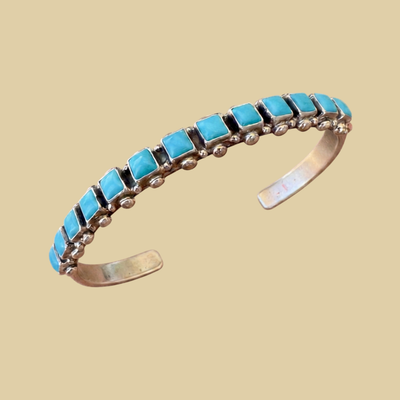
In our studio, we often use specific techniques to secure our hand-cut stones while honoring the cast texture. A bezel is the thin rim of metal that is folded over the edge of a stone to hold it securely. Silversmiths frequently combine tufa casting with traditional stamping or delicate wire work to add layers of narrative to a piece. You can see this harmony of textures in our handmade rings and cuffs, where certain areas are left raw while others are polished for contrast. These choices are never accidental. They are a deliberate way to balance the wild energy of the tufa stone with the refined elegance of handcrafted jewelry.
The Ephemeral Nature of the Tufa Mold
A tufa mold is typically destroyed during the silversmithing process, ensuring that every genuine creation is a true one-of-a-kind masterpiece. Unlike the reusable wax or rubber molds found in commercial jewelry production, the volcanic stone used in this method is fragile and fleeting. The extreme thermal shock of molten silver often causes the stone to crack or degrade after just a single use. This inherent fragility is a core part of what is tufa cast jewelry, as it guarantees that the specific texture of a piece can never be perfectly replicated by our team at Wildflower Artisans.
Even if an artisan attempts a second pour from the same stone, the fine details of the carving are inevitably lost. The porous surface of the tuff wears down under the intense heat, softening the crisp lines and sandy textures of the original design. Each piece becomes a singular record of a specific moment in the studio, a whisper of the earth that can only be heard once.
Why the Mold is Sacrificed
The physics of the pour are as violent as they are beautiful. When molten .925 sterling silver, heated to approximately 1763 degrees Fahrenheit, meets the cool, porous surface of the volcanic rock, the internal pressure is immense. There is an emotional weight to this moment in our Santa Fe studio. The silversmith must often break the stone apart to reveal the silver treasure hidden inside, a final act of destruction that completes the creative cycle. For the collector, there is immense value in owning the only version of a specific design, knowing that the very vessel used to shape it no longer exists.
A Singular Moment in Time
This process represents a profound rejection of the modern culture of mass production. In a world of infinite copies, tufa casting stands as a testament to the small batch philosophy practiced by our silversmiths. It requires a slow, deliberate pace that honors the material over the machine. Every piece we curate at Wildflower is a vessel for emotion, carrying the narrative of the stone from the earth to your hand.
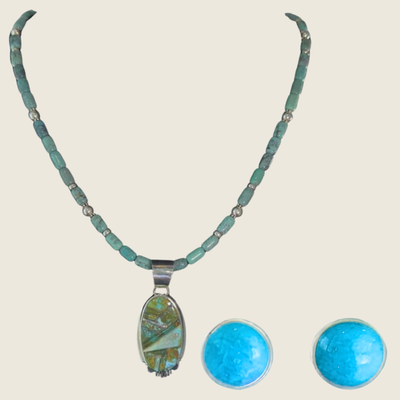
When a mold is broken, the piece it leaves behind becomes a singular moment in time. We often pair these textured bands with stones from our turquoise rings collection to ground the metal in vibrant color.
Honoring the Tradition of Tufa Casting Today
Tufa casting is a lineage of fire and stone. It is a technique that has been passed down through generations, finding its deepest roots in Navajo and Zuni silversmithing traditions. While the tools of the modern studio may have evolved, the core of the process remains unchanged. It requires a slow, meditative patience that rejects the speed of the modern world. When collectors ask what is tufa cast jewelry in a contemporary sense, they are looking for that bridge between ancient geological history and modern artistic expression. At Wildflower Artisans, we seek out makers who honor these intentional methods, ensuring that every piece carries the weight of its heritage.
Mastering this craft takes years of dedicated practice. A silversmith must learn the precise depth to carve into the volcanic stone, balancing the intricate lines of the design with the structural needs of the pour. If the carving is too shallow, the silver may not flow correctly. If it is too deep, the stone may shatter. This delicate balance is what makes one-of-a-kind artisan pieces so valuable. They are the result of a thousand quiet decisions made by a skilled hand, resulting in a piece that can never be truly replicated.
Cultural Respect and Attribution
We believe that the story of a piece is as important as the silver itself. Wildflower Artisans carries verified Navajo and Zuni silverwork, which we document piece by piece to ensure total transparency for our collectors. When we feature the work of named artists like Johnny Coonsis (Zuni) or Rick Tolino (Navajo), we repeat their attribution exactly as it appears in the documentation. The enduring Southwestern style has been shaped by these traditions, and we are committed to honoring the specific makers who keep these methods alive. This focus on individual silversmiths allows our audience to connect with the human spirit behind the textured silver.
The Future of the Craft
The future of tufa casting is being written by artisans who bring contemporary eyes to this ancient medium. They are experimenting with asymmetrical forms and bold, minimalist textures that feel fresh yet grounded. This evolution is supported by the work of lapidary experts like Greg Cordova, who provides the high-quality stones needed to complement such a rugged metal finish. Whether it is a piece of King's Manassa turquoise or a striking White Buffalo stone, the gem must be strong enough to stand alongside the character of the cast silver. The result is handcrafted jewelry that feels like it was born from the earth rather than made in a factory. It is a celebration of the fleeting, the natural, and the authentic.
Embracing the Singular Beauty of Tufa Cast Silver
Understanding what is tufa cast jewelry reveals a world where the rugged and the refined exist in perfect harmony. Every piece we create or curate at Wildflower Artisans is a vessel for emotion, carrying the weight of ancient volcanic history and the warmth of the maker's hand. By choosing these small batch, handcrafted designs, you're investing in a singular moment in time that can never be duplicated. Our family owned mines, including King's Manassa and White Buffalo, provide the hand selected stones that ground these textured masterpieces in vibrant color.
We invite you to find a piece that resonates with your own story, knowing it was born in our Santa Fe studio with a deep respect for the land and the craft. Every selection from Wildflower is guaranteed authentic, ensuring you can wear your story with confidence. These pieces are not merely accessories; they are celebrations of a fleeting, natural beauty that honors the soul of the Southwest.
May your chosen piece serve as a quiet, enduring reminder of the beauty found in the asymmetrical and the organic.
Frequently Asked Questions
What is the difference between tufa casting and sand casting?
Tufa casting relies on a hand-carved mold made from porous volcanic stone, while sand casting utilizes a compressed mixture of sand and clay. This difference in medium is central to what is tufa cast jewelry, as the volcanic tuff imparts a much deeper, more granular texture to the sterling silver than the finer grain produced by sand. While sand molds can sometimes be reused for multiple similar pieces, a tufa mold is usually sacrificed after a single pour.
Is tufa cast jewelry more valuable?
Pieces created through this method often carry a higher value for collectors because tufa casting is exceptionally labor-intensive and results in a guaranteed one-of-a-kind creation. When considering what is tufa cast jewelry, the rarity of the carving technique and the high level of skill required to manage the thermal shock of the pour contribute to the artisanal cost. At Wildflower Artisans, we believe the value also lies in the unique, earthy texture that cannot be replicated by modern industrial methods.
Why does my tufa cast ring look sandy?
That sandy appearance is the intentional signature of the volcanic tufa stone used to create the original mold. This granular surface is a hallmark of authenticity and a clear sign that your piece was handcrafted using traditional, small batch methods rather than being mass-produced. At Wildflower, we don't view this as a defect. Instead, it is a celebration of the stone's natural, organic grain and a tactile reminder of the silver's volcanic origins.
How should I care for tufa cast sterling silver?
You should clean your tufa cast pieces gently with a soft cloth and mild soap, being careful to avoid harsh chemicals that could settle into the deep texture. We recommend avoiding ultrasonic cleaners, as the vibrations can sometimes disturb the setting of genuine turquoise stones. Storing your silver in a dry place helps prevent tarnish from building up in the deep crevices of the cast texture, preserving the soft, matte glow of the metal.
Article by
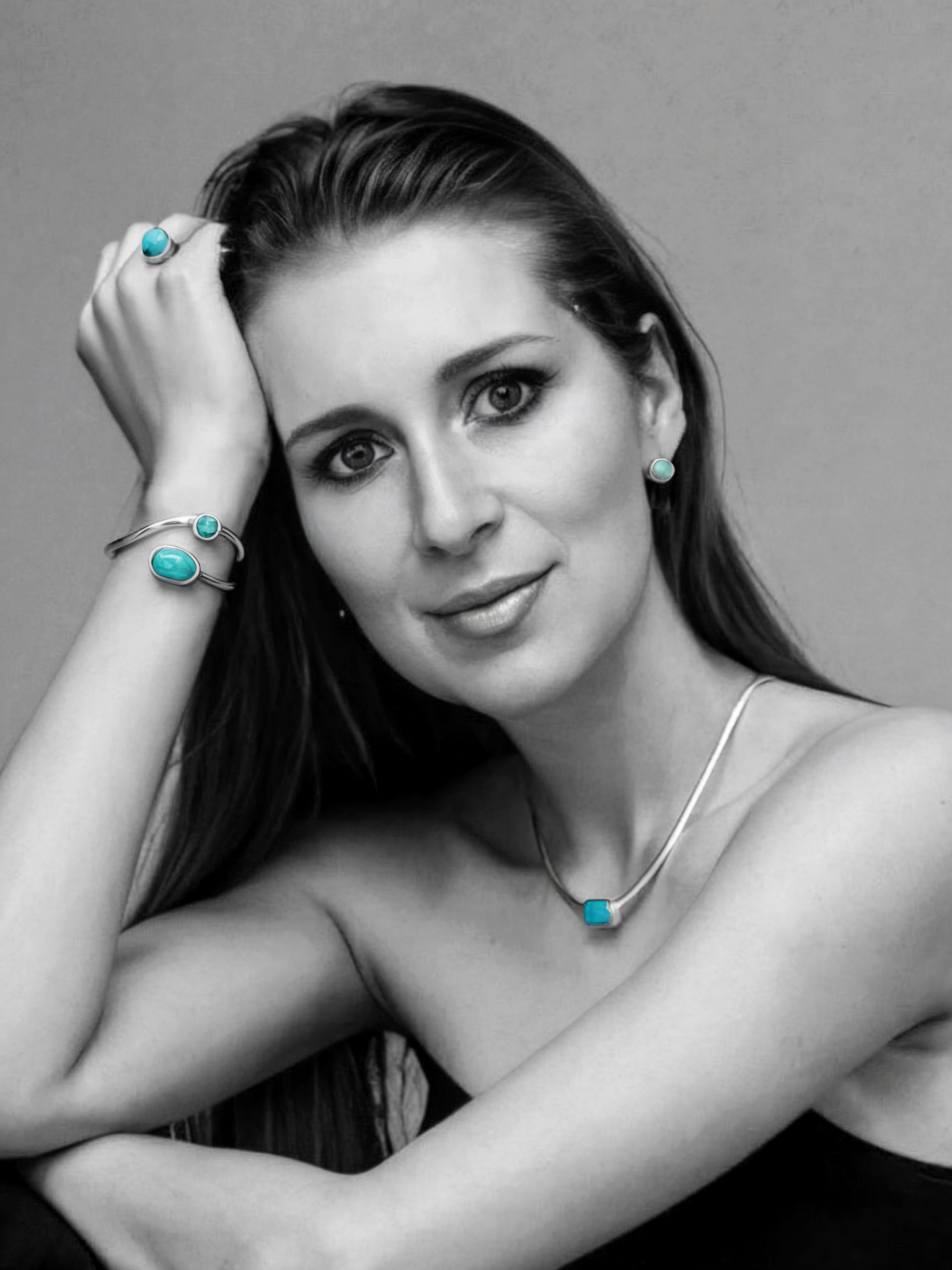
Kimberly Cordova
Kimberly Cordova is the founder and creative director of Wildflower Artisans, a handmade jewelry brand rooted in Santa Fe. Real turquoise, solid sterling silver, and a small line set in solid 14K gold. She built Wildflower around a simple belief: the best jewelry is the kind you actually reach for, not the kind you save for someday.
The collection is built three ways. Some pieces are made in-house, cut by her husband Greg from stones he sources himself, including rough from the family's King's Manassa Mine in Colorado and White Buffalo Mine in Nevada. Some are designed by Kimberly and fabricated by a trusted circle of Santa Fe silversmiths. And some are finished work she curates from artisan makers whose craft meets the same standard, because building a real collection means knowing when to make and when to look.
Turquoise leads, joined by White Buffalo, Wild Horse, Lapis Lazuli, Spiny Oyster, Black Onyx, Opal, and other genuine semi-precious stones. No shortcuts on the stone, the silver, or the story behind either.
Her writing covers everything she has learned along the way: how turquoise forms, how to tell natural from stabilized, what makes one mine different from another, how to read a bezel, and how to shop with confidence in a market that is not always straightforward. It is the kind of plainspoken information she wished someone had laid out for her when she was starting out.
Browse the collection at wildflowerartisans.com. Questions about a stone, a setting, or a specific piece are welcome any time.
0 comments