

The most profound beauty often emerges from the most humble elements, like the marriage of fine sand and molten metal. Many seekers of authentic beauty find themselves asking, what is sand casting for jewelry, as they search for pieces that carry the weight of a human story. You likely crave something more than a hollow, factory-made accessory. You want a piece that feels substantial, showing the delicate, sandy fingerprints of its own creation. At Wildflower Artisans, we understand that desire for a deeper connection to the objects you wear.
We invite you to discover the tactile beauty and the intricate process behind this ancient technique. It is a method that transforms molten .925 sterling silver into one-of-a-kind wearable art through a dance of fire and grit. This guide explores the rhythmic steps of the silversmithing process, providing you with the confidence to identify true handcrafted work. By the end, you will have a renewed appreciation for the artistic value of these small-batch treasures and the soulful narratives we cultivate at Wildflower. We believe that understanding the journey from earth to ornament only deepens the bond between the wearer and the work.
Key Takeaways
- Recognize the evocative, organic texture that defines sand cast pieces at Wildflower Artisans, marking them as authentic creations born from the marriage of earth and molten metal.
- Gain confidence in your search for quality by learning to spot the characteristic grain and solid density that distinguish these handcrafted works from mass-produced alternatives.
- Master the technical vocabulary to understand what is sand casting for jewelry and how it transforms .925 sterling silver into a vessel for artistic expression.
- Discover why this ancient method remains the ideal choice for the substantial, small-batch jewelry we create at Wildflower, designed to cradle the unique spirit of genuine stones.
The Art and Texture of Sand Casting for Jewelry
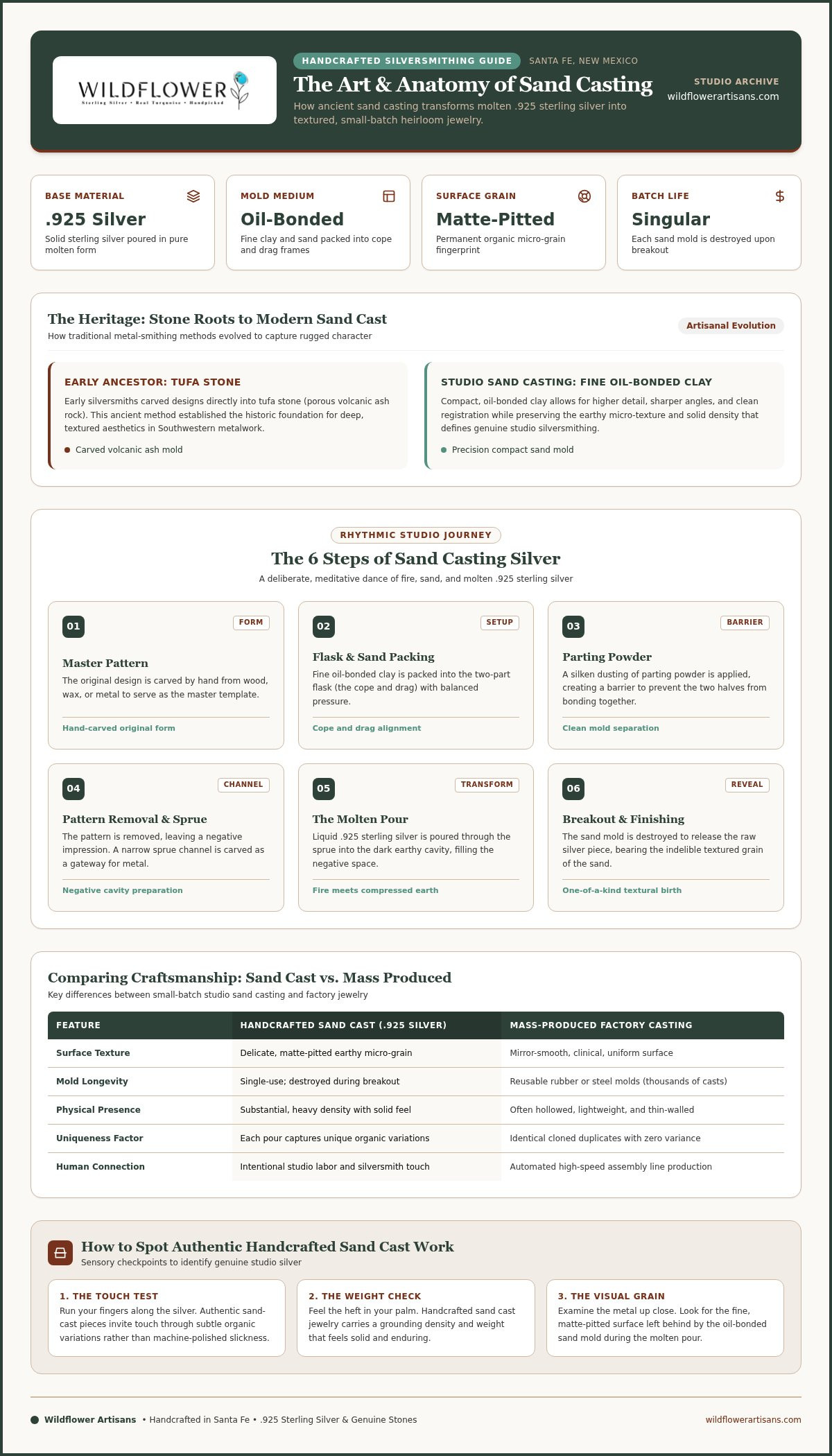
Deep within the heart of a working studio, there is a quiet, rhythmic beauty in the moment molten silver meets the earth. When we explore the question of what is sand casting for jewelry, we find ourselves looking back at an ancient art form that honors the raw and the refined in equal measure. This technique involves compacting fine, oil-bonded sand or clay into a two-part frame to create a negative impression of a master pattern. Once the molten .925 sterling silver is poured into this dark, earthy cavity, it takes on the very soul of the sand. The result is a piece of jewelry that feels alive, carrying a distinct, organic grain that no machine could ever replicate.
Artisans choose this method for its deliberate, slow nature. Because the sand mold is often destroyed during the breakout process, each creation becomes a unique signature of a single moment in time. This process creates a sense of weight and presence that modern, high-speed casting methods often lack. It is a choice to prioritize the tactile over the clinical, ensuring that every curve of a sterling silver cuff or ring tells a story of intentional labor. This substantial density is a hallmark of the craft, providing a grounded feeling that resonates with those who seek jewelry with a soul.
A Heritage of Artisanal Craft
The history of this craft is deeply woven into the lineage of traditional metal-smithing. Early silversmiths were masters of adaptation, using local materials to forge their visions and translate the natural world into wearable art. Before the widespread use of specialized casting sands, many utilized tufa stone, a porous volcanic ash rock, to create their molds. They would carve their designs directly into the stone, a practice that established a foundation for the textured aesthetics we admire today. Over time, the transition to sand casting allowed for more intricate detail while preserving that essential, rugged character. At Wildflower Artisans, we honor this legacy by continuing to use these grounding techniques in our studio, bridging the gap between historical tradition and contemporary elegance.
The Aesthetic of the Earthy Grain
To wear a sand-cast piece is to experience a physical connection to the elements. Unlike the mirror-smooth, sterile finish of mass-produced jewelry, sand-cast silver retains a delicate, matte-pitted texture. This micro-grain is a permanent part of the jewelry's narrative, a reminder of the fire and grit required to bring it into being. It offers a sensory contrast that invites the touch. When you run your fingers over the surface of our one-of-a-kind artisan pieces, you feel the subtle variations that mark a truly handmade object. This texture is not a flaw; it is a celebration of the asymmetrical and the organic, providing a grounded sophistication that honors the fleeting beauty of the natural world.
The Casting Process: Bringing Silver to Life in Sand
The journey from a vision to a tangible heirloom begins with the master pattern. This original form, often carved by hand from wood, wax, or metal, serves as the heart of the mold. To understand what is sand casting for jewelry, one must appreciate the delicate tension of the sand itself. We use a fine, oil-bonded clay that requires a precise balance of pressure and moisture. If the sand is too loose, the design collapses. If it's too packed, the silver cannot breathe. It's a meditative act of preparation that ensures the integrity of every curve and line.
This process is an exercise in patience and precision. Once the mold is set, the master pattern is removed, leaving behind a hollow ghost of its former self. This negative space is what will eventually cradle the molten metal. Unlike mass-manufacturing where molds are used thousands of times, this method is intimate and ephemeral. Each pour is a singular event, a celebration of the artisan's touch and the natural materials involved.
Preparing the Flask and Sand
The framework for this transformation is the flask, a sturdy frame divided into two halves known as the cope and the drag. We begin by nesting the master pattern within the sand of the first half, then dusting the surface with a fine parting powder. This silken barrier is essential; it prevents the two halves of the mold from bonding together into a single block. Once the second half is packed and the pattern is carefully removed, we carve the sprue. This narrow channel acts as a gateway, a path through which the molten silver will soon travel to fill the negative space left behind.
The Moment of the Pour
Inside the studio, the air grows heavy with the scent of heat as the .925 sterling silver reaches its liquid state. To ensure the metal flows into every crevice, it must reach a temperature between 1,832°F and 1,920°F. This is a fleeting window of opportunity. The pour must be steady and swift before the silver begins to cool and freeze. There is a profound silence that follows the pour as the metal settles into the cool embrace of the sand. We wait as the glowing silver returns to a solid state, hidden within its dark, earthy cocoon.
Once the silver has solidified, we reach the moment of the breakout. We pull the flask apart and destroy the sand mold to reveal the raw casting. It emerges dark and rough, still carrying the micro-grain of the earth. This raw form then requires hours of patient hand-finishing, filing, and polishing to reveal its true luster. This labor-intensive process is why each of our artist-made sterling silver pieces feels so deeply personal. It's a transformation that honors the raw materials and the hands that shape them.
Sand Casting vs. Modern Jewelry Techniques
While the modern world often favors the clinical precision of 3D printing and high-speed rubber molds, the artisan seeks a different rhythm. Understanding what is sand casting for jewelry requires a look at how we balance the ephemeral with the enduring. In lost wax casting, an artist can create thousands of identical copies from a single master. Sand casting, however, demands a more intimate commitment. Because the mold is destroyed to release the silver, each piece carries its own unique heartbeat. This method is the soul of small-batch craftsmanship, offering a rejection of the cookie-cutter aesthetic that dominates mass production.
Beyond the artistic choice, there is a quiet environmental harmony in this practice. Modern investment casting often involves chemical burnouts and gypsum waste. In our studio, we embrace a more closed-loop philosophy. The fine casting sand is over 90% reusable, and every scrap of .925 sterling silver can be remelted and poured again. It is a zero-waste approach that respects the earth from which our materials are drawn. This sustainability is not just a trend but a return to the intentional ways of the past.
The Difference in Detail
The lines created by 3D printing are often sharp and cold, revealing the mathematical nature of their origin. Sand casting offers a softer, more organic edge that feels as though it was grown rather than manufactured. The micro-grain of the sand adds a natural patina to the silver, a texture that speaks of the elements. Collectors often find a deeper connection to these imperfect details. They are not flaws, but rather the fingerprints of the earth. This tactile narrative is what gives a one-of-a-kind artisan piece its enduring charm, inviting a closer look at the subtle variations in the metal.
Weight and Durability
There is a palpable difference in the way a sand-cast piece rests against the skin. Because these items are poured as solid forms rather than being electroformed or hollow-stamped, they possess a significant density. This weight translates to a feeling of security and longevity. A turquoise pendant necklace created through this method is built to last for generations. The solid .925 sterling silver provides a durable foundation that resists the wear of daily life. It is a substantial presence, a grounded reminder of the artisanal labor that brought the piece to life. This density ensures the jewelry feels as significant as the memories it is intended to hold.
How to Identify Authentic Handcrafted Sand Cast Pieces
To hold a piece of sand-cast jewelry is to feel the weight of a deliberate artistic journey. When you are discerning what is sand casting for jewelry versus a mass-produced imitation, the most honest clues are hidden in the details. True sand-cast pieces carry a characteristic grain on their reverse or interior surfaces. This texture is a soft, uniform matte pitting, a direct echo of the sand matrix that once cradled the molten .925 sterling silver. Unlike the sterile, mirror-smooth backings of machine-made items, these surfaces feel organic and warm to the touch.
The weight of the piece is another vital anchor of authenticity. Because sand casting requires a solid pour of metal to fill the mold effectively, the resulting jewelry is rarely hollow or thin. It possesses a substantial density that feels reassuringly heavy against the skin. This durability is a hallmark of the craft, ensuring that your sterling silver cuff or ring can endure the passage of years. A genuine piece will also bear the .925 hallmark, a quiet promise of purity and quality that marks its value.
The Mark of the Artisan
Authenticity lives in the subtle asymmetries that no algorithm could conceive. A human hand carved the pattern; a human hand packed the sand. You might notice a slight variation in a curve or a unique tool mark left behind during the hand-finishing process. These are not errors. They are the signatures of a living creator. At Wildflower Artisans, we believe these marks tell a story of intentional labor that mass production cannot replicate. Choosing a trusted source like Wildflower ensures that the texture you see is a deliberate design choice rather than pitting, which is an accidental flaw caused by trapped air in a poor casting.
Evaluating the Finish
A master silversmith knows how to balance light and shadow within a single piece. In authentic sand-cast work, you will find high-polish highlights on the raised surfaces contrasted with dark, textured recesses. We often use a deep patina to emphasize this earthy grain, allowing the silver to reveal its narrative through shadow. Watch for machine-made imitations that attempt to mimic this look with printed, repetitive patterns. These copies lack the random, organic soul of true sand. The spirit of the work is found in the fleeting, unrepeatable details of the grit and the glow.
Why Sand Cast Sterling Silver Endures
The enduring appeal of this art form lies in its ability to bridge the gap between ancient tradition and modern style. When we ask what is sand casting for jewelry, we're really asking how a piece of silver can hold the weight of history while remaining timelessly relevant. These pieces often become cherished family heirlooms because of their solid construction and undeniable presence. In a fast-paced world, owning a sand-cast piece is a way to preserve a slow, intentional way of creating. It's a choice to value the human touch over the machine's efficiency, ensuring that the objects we wear carry a soul that resonates across generations.
This technique is not merely a method of production; it's a philosophy of permanence. Because the molten .925 sterling silver settles into the sand with such density, the resulting jewelry is remarkably durable. It lacks the fragility of hollow-stamped alternatives, offering a grounded feeling that provides comfort and security to the wearer. This substantial nature is why sand casting remains a cornerstone of artisanal work, providing a physical anchor in an increasingly ephemeral landscape.
A Canvas for Natural Stones
The rugged, earthy texture of sand-cast silver provides the perfect stage for the genuine stones we cut. This technique naturally supports our stone-first philosophy, where the silver is built to cradle the unique spirit of the cabochon. There is a profound harmony between an earth-made sand mold and an earth-mined stone. The micro-grain of the silver complements the intricate matrix found in Kingman or Royston turquoise. In this method, the bezel setting is often integrated directly into the cast design, creating a seamless union between metal and mineral. Whether it's the deep blue of a King's Manassa stone or the stark beauty of White Buffalo jewelry, the textured silver enhances the natural narrative of the stone.
Investing in Authentic Craftsmanship
The labor-intensive nature of this process justifies its value to the collector. Every sand-cast piece at Wildflower Artisans represents hours of focused effort, from the first packing of the flask to the final, meditative polish. We encourage you to look beyond the surface and appreciate the technical skill required to maintain such high standards in a small-batch studio. This is the heart of our commitment at Wildflower. We believe that jewelry should be more than an accessory; it should be a vessel for emotion and a celebration of natural beauty. By choosing handmade turquoise jewelry created through sand casting, you are investing in a legacy of craftsmanship that refuses to be rushed.
Embracing the Soul of Handcrafted Silver
Choosing a piece of jewelry is an act of storytelling. You've discovered how the marriage of fire and grit creates something truly unrepeatable. By now, you understand what is sand casting for jewelry and why it remains a cherished mark of the artisan's hand. This ancient technique offers a sensory connection to the earth through its delicate grain and substantial weight. It's a rejection of the mass-produced in favor of the meaningful, providing a grounded sophistication that honors the fleeting beauty of the natural world.
Every piece we create is handcrafted in our studio, where we honor the rhythms of the seasons and the integrity of our materials. We guarantee the use of genuine stones and .925 sterling silver, ensuring that your investment directly supports independent artisans and lapidaries. These are not mere accessories; they're vessels for emotion designed to last for generations. We invite you to find a design that resonates with your unique journey and speaks to your own narrative.
May you find beauty in the asymmetrical and the organic as you wear a piece of the earth's own story.
Common Inquiries About Sand Casting
Is sand casting the same as tufa casting?
Sand casting and tufa casting are distinct branches of the same ancestral tree. To understand what is sand casting for jewelry, one must look at the mold material. Tufa casting utilizes blocks of volcanic ash stone carved in reverse. Sand casting involves pressing a pattern into fine sand inside a metal frame. Both methods celebrate the organic, but sand casting allows for a more refined micro-grain while maintaining the substantial weight collectors love.
Can sand cast jewelry be resized easily?
Resizing sand-cast jewelry is possible, but it demands the touch of a skilled artisan. Because these pieces are solid .925 sterling silver, they can be cut and soldered like other fine jewelry. However, the challenge lies in blending the new silver with the existing sand-cast texture. A master smith will carefully file and finish the seam to ensure the organic narrative of the piece remains uninterrupted and the structural integrity is preserved.
Why does sand cast jewelry sometimes look grainy?
That delicate grain is the very heartbeat of the process. When you ask what is sand casting for jewelry, you are looking at the literal fingerprint of the earth. As the molten silver settles into the mold, it takes on the texture of the compacted sand. This matte pitting is a deliberate aesthetic choice that distinguishes handcrafted work from the sterile, mirror-smooth surfaces of mass-produced items. It adds a layer of poetic depth to every curve.
Is sand casting more expensive than other jewelry methods?
The value of sand-cast jewelry reflects the intentional labor and substantial materials involved. Unlike mass-manufactured pieces that use hollow stamping to save on costs, sand-cast items are poured as solid sterling silver. This requires a greater volume of precious metal and hours of patient hand-finishing in the studio. You aren't just purchasing an accessory; you're investing in a small-batch creation that honors the slow, soulful rhythms of traditional silversmithing.
How do I clean sand cast sterling silver without losing the texture?
To preserve the evocative texture of your silver, we recommend a gentle touch. Use a soft, lint-free cloth and mild soapy water to remove surface oils. Avoid heavy machine polishing or abrasive creams that might flatten the delicate sand grain over time. If your piece features a dark patina in the recesses, a light buffing on the raised areas will maintain that beautiful contrast of light and shadow that makes the work so vibrant.
Are all sand cast pieces unique?
Every sand-cast piece carries its own unrepeatable story. While an artisan might use the same master pattern multiple times, the sand mold itself is destroyed during the breakout process. This means the way the molten silver settles and the specific grain it captures from the earth will never be exactly the same twice. These subtle variations are a celebration of the asymmetrical and the organic, ensuring that your chosen piece is a singular treasure.
Article by
Kimberly Cordova
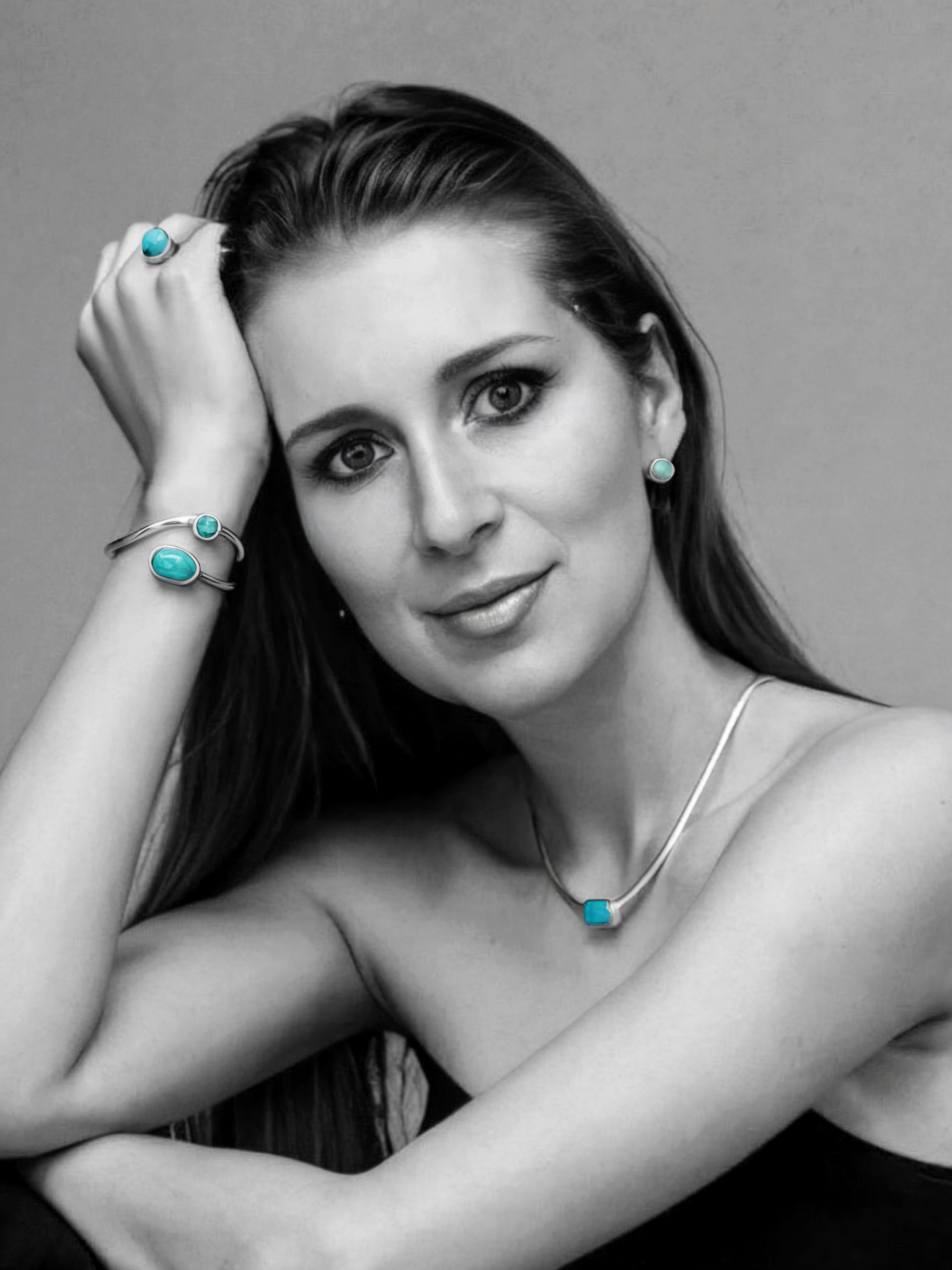
Kimberly Cordova is the founder and creative director of Wildflower Artisans, a handmade jewelry brand rooted in Santa Fe. Real turquoise, solid sterling silver, and a small line set in solid 14K gold. She built Wildflower around a simple belief: the best jewelry is the kind you actually reach for, not the kind you save for someday.
The collection is built three ways. Some pieces are made in-house, cut by her husband Greg from stones he sources himself, including rough from the family's King's Manassa Mine in Colorado and White Buffalo Mine in Nevada. Some are designed by Kimberly and fabricated by a trusted circle of Santa Fe silversmiths. And some are finished work she curates from artisan makers whose craft meets the same standard, because building a real collection means knowing when to make and when to look.
Turquoise leads, joined by White Buffalo, Wild Horse, Lapis Lazuli, Spiny Oyster, Black Onyx, Opal, and other genuine semi-precious stones. No shortcuts on the stone, the silver, or the story behind either.
Her writing covers everything she has learned along the way: how turquoise forms, how to tell natural from stabilized, what makes one mine different from another, how to read a bezel, and how to shop with confidence in a market that is not always straightforward. It is the kind of plainspoken information she wished someone had laid out for her when she was starting out.
Browse the collection at wildflowerartisans.com. Questions about a stone, a setting, or a specific piece are welcome any time.
0 comments