

The true character of a gemstone isn't found in its ability to reflect light, but in the stories told by its internal patterns and deep, saturated colors. When you hold a piece of high quality turquoise, you might notice it lacks the sharp, glittery facets of a diamond, opting instead for a smooth, domed surface. Understanding what is a cabochon starts with recognizing that some stones are meant to be felt as much as seen, using a shape that honors the matrix and unique character of every piece we set in sterling silver at Wildflower Artisans.
It's easy to feel overwhelmed by technical jewelry terms when you're simply looking for a piece of authentic Southwestern style that speaks to you. We'll help you look past the jargon to discover the technical beauty and artisanal history of the cabochon cut, which remains our preferred choice for showcasing genuine turquoise. You will learn to identify the anatomy of these smooth-cut stones, understand how a bezel holds them in place, and distinguish hand-cut quality from mass-produced beads. We'll also explain why certain materials like White Buffalo or King's Manassa are best suited for this ancient lapidary art. It's a deliberate choice to prioritize the stone's narrative.
Key Takeaways
- Learn what is a cabochon and why this smooth, domed cut is the ideal choice for showcasing the intricate matrix found in genuine turquoise.
- Gain confidence in identifying the parts of a stone, including the dome and girdle, which helps you understand the technical value of hand-cut lapidary work.
- Understand how a bezel setting works to secure a stone by wrapping a thin strip of sterling silver around its perimeter for a permanent seal.
- Learn to spot the signs of quality in a cabochon, such as a symmetrical shape and a mirror-like polish that indicates careful artisan craftsmanship.
What is a cabochon?
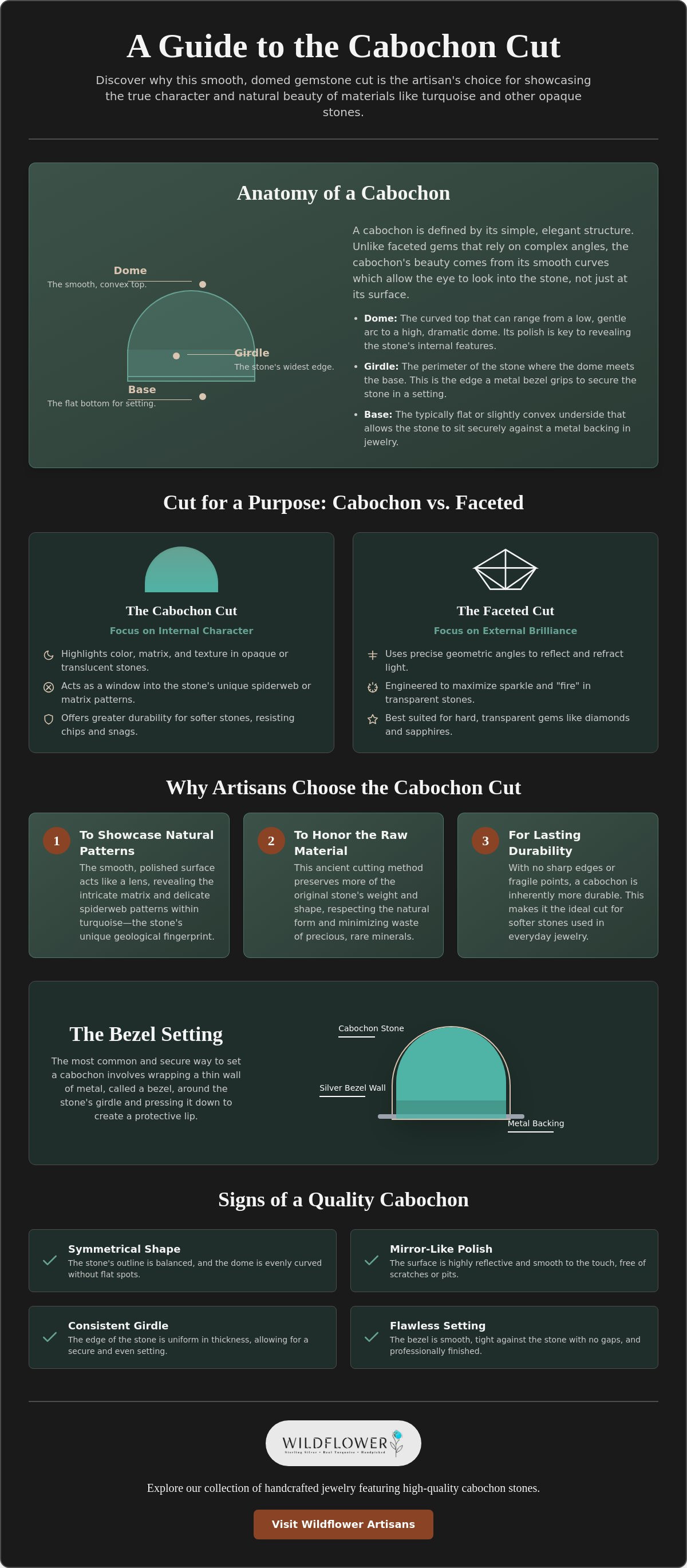
A cabochon is a gemstone that has been shaped and polished into a smooth, rounded surface rather than cut with flat facets. The term comes from the French word for head, referring to the stone's characteristic domed shape.
While most people associate jewelry with the glitter of faceted diamonds, many of the world's most evocative minerals are better served by this ancient, smooth finish. Understanding what is a cabochon requires looking at the stone's profile. This style typically features a highly polished, convex top and a flat or slightly curved underside. That flat base is a practical necessity; it allows the stone to sit flush against a metal backing, making it much easier to set in a ring or pendant. At Wildflower, we find that artisans choose this cut to emphasize the color, matrix, and texture of opaque or translucent minerals. This is why you'll often see this cut used for stones like lapis lazuli or spiny oyster, where the beauty is found in the richness of the material itself.
The difference between cabochons and faceted stones
When you look at a faceted gemstone, you are watching a dance of light. Faceting uses flat planes, or facets, to reflect light and create sparkle in transparent stones like diamonds or sapphires. This is a technical feat designed to maximize brilliance. However, cabochon cutting focuses on the surface character of the stone rather than light refraction. This cut is the traditional choice for organic and semi-precious materials found in Southwestern style jewelry. In a piece of turquoise jewelry, a facet would only distract from the intricate spiderweb patterns that make the stone unique. The smooth surface acts like a window into the stone's history.
A brief history of the rounded cut
This method of preparing stones predates the complex machinery required for modern faceting. It was the primary way gemstones were prepared for thousands of years across many cultures. Ancient artisans utilized this method to preserve as much of the original stone weight as possible, as faceting often requires grinding away a significant portion of the raw mineral to achieve the right angles. Modern artisans continue this tradition not just for efficiency, but to honor the natural growth patterns of the minerals. By following the natural contours of the rough stone, the cutter preserves the story that began millions of years ago underground. It's a slower, more meditative way of working that respects the history of the earth.
Why are certain stones cut as cabochons?
Stones are often cut as cabochons to highlight their internal patterns, color depth, or phenomenal optical effects like the soft glow of a moonstone. While a faceted diamond relies on light bouncing off its surfaces to create sparkle, an opaque mineral like turquoise relies on what's happening inside the stone to tell its story. Lapidary is the art of cutting and polishing stones, specifically referring to the work found at CuttingEdgeTurquoise.com. Experts like Greg Cordova utilize this style to preserve the integrity of rare materials, ensuring that every ounce of a precious find from mines like King's Manassa or White Buffalo is treated with respect. Understanding what is a cabochon helps you appreciate why we choose this cut for our artisan-made jewelry collections. It is a choice that favors the stone's history over artificial brilliance.
Showcasing the matrix and spiderweb patterns
The smooth surface of a cabochon acts as a clear lens for the viewer to see the intricate host rock patterns within turquoise. We use terms like spiderweb matrix to describe the fine, thin lines that crisscross a stone like a delicate lace. These markings are part of the stone's DNA, formed over millions of years as minerals seeped into the host rock. If we were to facet these materials, the sharp angles would chop up these patterns and destroy the visual flow. A polished dome acts as a quiet window into the geological history of the stone, inviting you to look closer at the earth's own art. It's a way of honoring the natural landscape of the mineral.
The role of stone hardness and durability
Many stones used in Southwestern style jewelry are lower on the Mohs scale, which measures mineral hardness. Because they are softer than diamonds or sapphires, a rounded edge is much more durable than a sharp, fragile facet. A cabochon is less prone to chipping or snagging on your favorite sweater during everyday wear. This practical benefit allows for a more substantial presence of the stone in rings and cuffs. It creates a piece that is as sturdy as it is beautiful, built to be worn through the rhythms of daily life rather than tucked away in a box. The dome provides a tactile, grounded quality that facets simply cannot match.
Understanding the shape and structure of a cabochon
A standard cabochon is more than just a smooth stone; it's a carefully engineered shape designed to fit perfectly within a metal setting. When we look at what is a cabochon from a technical perspective, we're identifying three specific parts: the dome, the girdle, and the base. The dome is the rounded top portion that gives the stone its visual height and personality. It's the part you see and touch. Below the dome is the girdle, which is the narrow edge where the top meets the bottom. This is the most critical part for a jeweler because the girdle provides the necessary surface for the metal to grip. Finally, the base is the flat underside. Having a flat base allows the stone to sit flush against a silver backing, ensuring stability in your turquoise rings or pendants.
The process of making cabochons requires a steady hand and a keen eye to ensure these three parts are symmetrical. If the girdle is too thin, the stone might chip when the silver is being pushed over it. If the base isn't perfectly flat, the stone will rock back and forth, which can lead to it falling out of the setting later. Every grind on the lapidary wheel is a deliberate move to balance the stone's natural beauty with the structural needs of the jewelry. It's a technical dance between the artisan and the mineral.
Dome heights and their aesthetic impact
The height of the dome completely changes how a piece of jewelry feels on your body. High domes create a bold, sculptural look that catches the light from every angle. We often use these for statement pieces where the stone is the undisputed star of the design. Low domes or flat cabochons offer a more subtle profile. These are ideal for everyday essentials like stud earrings that need to sit close to the earlobe. The choice of height often depends on the thickness of the original rough material. An artisan won't force a high dome if the stone's natural structure doesn't allow for it; instead, they listen to what the material is telling them.
Calibrated versus freeform cuts
In the world of mass-produced jewelry, you'll mostly find calibrated stones. These are cut to standard sizes, like 10x14mm, so they can fit into pre-made, factory-stamped settings. While this is efficient, it often results in a lot of wasted material as the cutter grinds away beautiful stone just to meet a specific measurement. At Wildflower, we prioritize freeform cuts. These cabochons follow the natural, organic shape of the rough stone rather than a ruler. This approach results in one-of-a-kind pieces that honor the unique character of each individual stone. It means the silver must be hand-fitted to the stone, rather than the other way around. This is a core part of our stone-first philosophy, ensuring that the stone dictates the final design.
How do artisans set cabochons in silver?
Setting a gemstone is the moment when the raw beauty of the earth finally finds its permanent home within the artisan's vision. To understand what is a cabochon in a practical sense, you have to look at how it interacts with the silver that holds it. While faceted stones are often suspended in prongs to let light in from below, cabochons require a more intimate connection with the metal. Artisans primarily use bezel settings to secure these smooth-cut stones, a technique that involves wrapping a thin strip of sterling silver around the entire perimeter of the material. This method doesn't just hold the stone; it frames it, protecting the hand-cut edges while highlighting the natural silhouette.
The bezel is pushed firmly over the girdle of the cabochon, creating a permanent and protective seal that keeps the stone from moving. Unlike prong settings that can snag on clothing or leave the edges of a softer stone exposed, a bezel offers a smooth, snag-free finish. It celebrates the stone's shape by following every organic curve of a freeform cut. If you're looking for a piece that balances this technical precision with natural character, you can browse our collection of artisan-made jewelry to see these settings in person. Each piece is a quiet celebration of the relationship between the mineral and the maker.
The technical process of the bezel
The journey from a loose stone to a finished ring requires immense patience and a very steady hand. A bezel setting is a metal rim that surrounds a gemstone to hold it in place. Before the first piece of silver is even cut, the artisan must carefully measure the height of the stone's girdle. This ensures the silver can be folded over securely without covering too much of the dome or leaving the stone loose. A well-executed bezel should be smooth to the touch and completely free of gaps between the metal and the stone. It's a technical feat that requires understanding what is a cabochon and how its specific proportions will behave under pressure. It's a promise of durability.
Decorative elements in cabochon settings
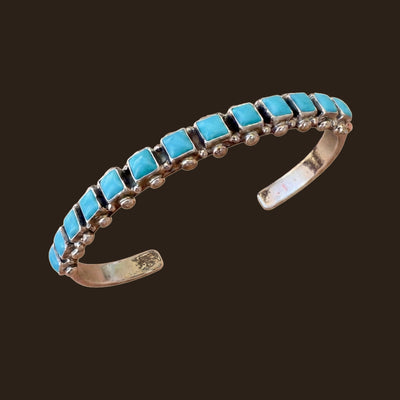
While the bezel provides the structural foundation, it also offers a canvas for storytelling through metalwork. Artisans often add twisted wire, small silver beads, or intricate saw-cut details around the base of the bezel to enhance the stone's presence. These details serve a dual purpose. They bridge the transition between the smooth surface of the stone and the textured silver work of the band or pendant. These elements are never meant to compete with the mineral. Instead, the setting is designed to support the stone, providing a grounded frame that allows the natural matrix and color of the turquoise to remain the focal point.
Selecting high quality cabochon jewelry for your collection
When you're ready to add a new piece to your collection, the first thing you should look for is the quality of the light reflected off the stone's surface. A high-quality cabochon should have a mirror-like finish without visible scratches, pits, or dull spots. This level of polish doesn't just look better; it acts as a protective barrier that helps prevent the stone from absorbing oils and dirt over time. Understanding what is a cabochon in terms of quality also means looking for symmetry in the dome. While we love the organic nature of natural materials, the curve should be intentional and smooth to the touch. At Wildflower, we prioritize stones that show a clear narrative through their matrix and hand-cut character. We believe the most beautiful stones aren't always the most "perfect" ones, but the ones that possess a distinct personality.
It's also a good habit to examine the back of the setting. A piece of jewelry should be finished with as much care on the underside as it is on the top. The stone should be seated properly against the silver without any rattling or unevenness. If you notice gaps between the stone and the bezel, it might indicate that the piece wasn't hand-fitted with the precision required for a long-lasting heirloom. Taking a moment to flip a ring or pendant over reveals the true level of craftsmanship involved in its creation.
Evaluating the stone origin and cut
Don't be afraid to ask questions about where your stone came from. Knowing if a stone is from a specific mine, such as Royston or Sleeping Beauty, adds a layer of geological history to your jewelry that mass-produced pieces simply can't match. You can explore our stone origins guide to learn more about the specific minerals we use in our studio. Remember that a hand-cut stone will often have slight asymmetries or unique shapes. These are marks of authenticity that indicate the stone was shaped by a person who was listening to the material rather than a machine following a template. These small variations are what make your piece truly one of a kind.
Caring for your cabochon jewelry
Because many of the stones used in Southwestern style jewelry are porous, they require a bit of gentle handling to stay beautiful for years to come. Avoid exposing your cabochons to harsh chemicals, perfumes, or ultrasonic cleaners, as these can seep into the stone and change its color or stability. A simple wipe with a soft, damp cloth after wearing is usually all it takes to remove skin oils and dust. For more detailed maintenance instructions, you can visit our care and repair page. Taking these small steps ensures that the soft glow of your stones remains as vibrant as the day you first put them on.
Embracing the Narrative of the Smooth-Cut Stone
Understanding what is a cabochon transforms how you view jewelry from a simple accessory into a vessel for geological history. You now recognize that the domed shape isn't just an aesthetic preference; it's a technical decision to protect softer minerals and showcase the intricate matrix of genuine turquoise. Whether it's the sculptural presence of a high dome or the subtle profile of a low cut, these stones represent a slower, more intentional approach to lapidary art that honors the earth's own patterns.
At Wildflower, we remain in awe of our medium, creating artist-made pieces in the Southwest using genuine stones from legendary mines like King Manassa and White Buffalo. We use no fake or mystery metals, ensuring every hand-cut stone is held in a secure, hand-fitted bezel that will stand the test of time. Explore our latest collection of one-of-a-kind cabochon jewelry at Wildflower or browse our curated selections on wildflowersantafe.etsy.com as an alternative for those who prefer Etsy's buyer protections. We invite you to find a piece that resonates with your own journey, knowing it was crafted with a deep respect for the fleeting beauty of the natural world.
Frequently Asked Questions
Is a cabochon a real gemstone?
Yes, a cabochon is a real gemstone that has been shaped and polished into a smooth dome rather than being faceted. Understanding what is a cabochon starts with realizing it is a description of the cut, not the material itself. This style is applied to genuine minerals like turquoise or lapis lazuli to highlight their natural color and internal patterns without the distraction of sharp angles.
What is the difference between a cabochon and a faceted stone?
The main difference lies in how the stone interacts with light. Faceted stones feature many flat planes called facets that reflect light to create sparkle. When you consider what is a cabochon, you are looking at a stone with a smooth, polished dome that emphasizes surface texture and matrix. This cut is the preferred way to showcase the unique landscape of opaque stones rather than their brilliance.
Can any stone be cut into a cabochon?
Technically, any mineral can be shaped this way, but the cut is usually reserved for opaque or translucent materials. Stones that are too soft to hold a sharp faceted edge or those with beautiful internal inclusions are the best candidates for this rounded style. You'll rarely see a diamond cut this way because the shape doesn't allow for the light refraction that makes clear stones famous.
Why do some cabochons have flat backs?
A flat back is a practical design choice that allows the stone to sit flush against a metal surface. This stability is essential for jewelry like turquoise rings or pendants where the stone is secured in a silver setting. If the back were rounded, the stone would be difficult to stabilize and would require much deeper, more complex metalwork to hold it in place.
How do you clean cabochon jewelry safely?
You should clean your jewelry using a soft, damp cloth and mild soap only when necessary. Many stones cut in this style, especially turquoise and malachite, are porous and can be damaged by harsh chemicals or ultrasonic cleaners. Avoid soaking the pieces; instead, a quick wipe to remove oils and dust will keep the polished surface looking its best for years.
What does the term double cabochon mean?
A double cabochon is a stone that has a polished dome on both the top and the bottom. While standard cuts have a flat base for setting in silver, double domes are often used in pieces where the stone is visible from both sides, such as in certain earring designs. This cut adds weight and a sculptural depth to the material that a flat back cannot provide.
Why is turquoise almost always cut as a cabochon?
Turquoise is almost always cut this way because its beauty lies in its rich color and complex matrix patterns. Faceting would break up the visual flow of a spiderweb matrix or the unique host rock inclusions that make each stone one of a kind. The smooth, domed surface acts as a window, allowing the observer to appreciate the geological story within the stone.
What should I look for in a quality bezel setting?
Look for a bezel that is smooth to the touch and pressed firmly against the stone's edges with no visible gaps. A high quality setting should wrap around the stone's girdle evenly, providing a protective seal that prevents the stone from rattling. The silver work should feel like a natural extension of the stone, framing it without distracting from its organic beauty.
Article by
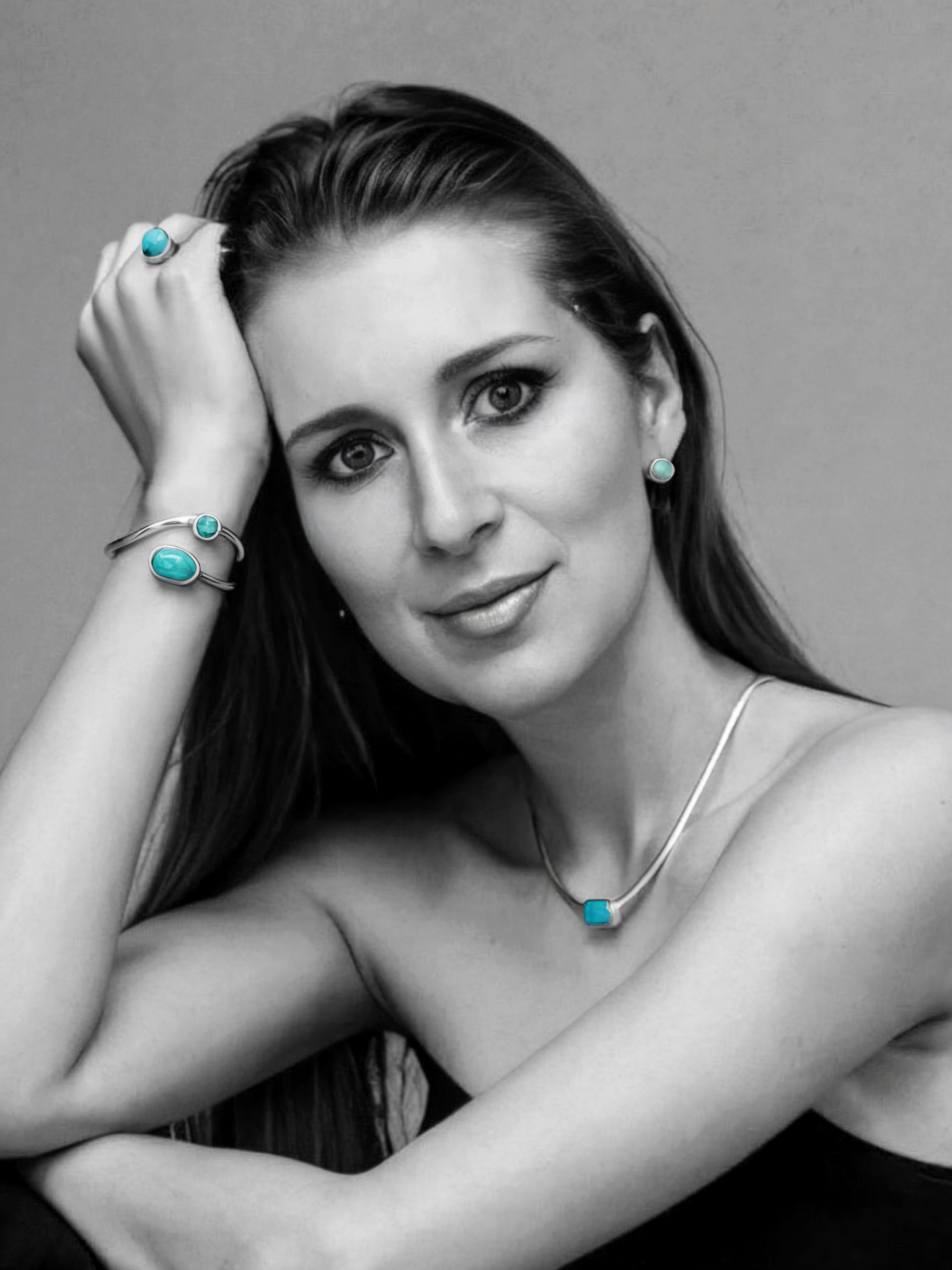
Kimberly Cordova
Kimberly Cordova is the founder and creative director of Wildflower Artisans, a handmade jewelry brand rooted in Santa Fe. Real turquoise, solid sterling silver, and a small line set in solid 14K gold. She built Wildflower around a simple belief: the best jewelry is the kind you actually reach for, not the kind you save for someday.
The collection is built three ways. Some pieces are made in-house, cut by her husband Greg from stones he sources himself, including rough from the family's King's Manassa Mine in Colorado and White Buffalo Mine in Nevada. Some are designed by Kimberly and fabricated by a trusted circle of Santa Fe silversmiths. And some are finished work she curates from artisan makers whose craft meets the same standard, because building a real collection means knowing when to make and when to look.
Turquoise leads, joined by White Buffalo, Wild Horse, Lapis Lazuli, Spiny Oyster, Black Onyx, Opal, and other genuine semi-precious stones. No shortcuts on the stone, the silver, or the story behind either.
Her writing covers everything she has learned along the way: how turquoise forms, how to tell natural from stabilized, what makes one mine different from another, how to read a bezel, and how to shop with confidence in a market that is not always straightforward. It is the kind of plainspoken information she wished someone had laid out for her when she was starting out.
Browse the collection at wildflowerartisans.com. Questions about a stone, a setting, or a specific piece are welcome any time.
0 comments