

What if “heishi” tells you more about a bead’s shape than what it’s made of? If you’ve seen the word on a jewelry listing and wondered whether it means shell, turquoise, or something else, you’re asking the right question. The phrase “what are heishi beads made of” doesn’t have one fixed material answer.
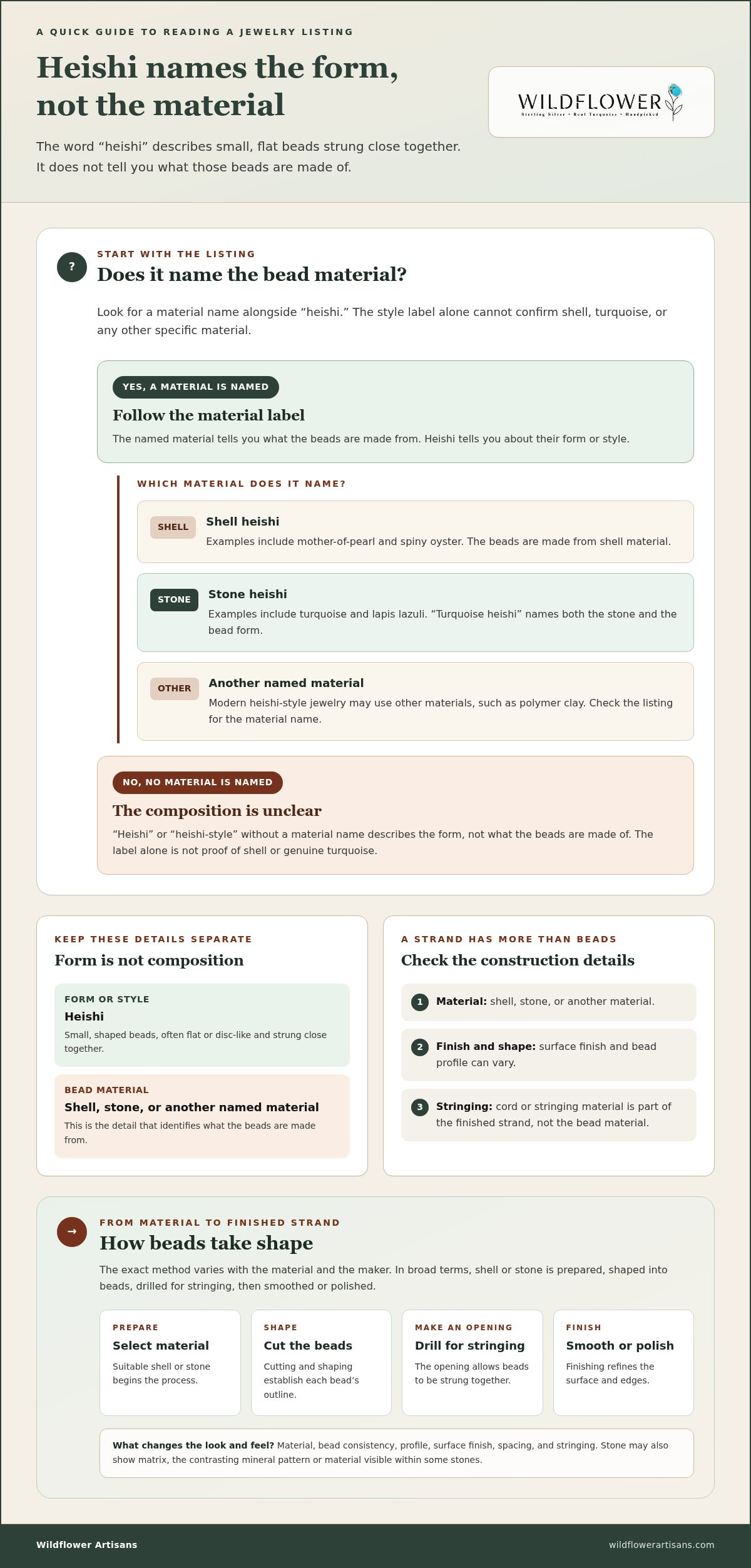
Heishi describes small, flat beads strung close together into a smooth strand. Depending on the piece, the beads may be shaped from shell or stone, while modern heishi-style designs can use other materials. The name alone doesn’t tell you what a finished necklace or bracelet contains.
Below, we’ll cover common material categories, how makers shape and string beads, and what to look for in a product description. We’ll also explain why material details and careful attribution matter when choosing artisan jewelry.
Key Takeaways
- Heishi describes a bead form or style, not one specific material. What heishi beads are made of depends on the individual strand.
- Shell and stone are common material categories, but the word heishi alone doesn’t identify a finished strand’s composition.
- Material selection, shaping, and finishing affect the consistency and feel of the beads.
- When reading a jewelry description, look for the named material, finish, strand components, and construction details.
- Turquoise is one stone that can be shaped into heishi beads, but the turquoise material and heishi form are separate details.
What Are Heishi Beads Made Of? The Direct Answer
Heishi describes small, shaped beads, often flat or disc-like and strung close together. It doesn’t name one exclusive material. So, what are heishi beads made of? It depends on the individual beads: they may be made from shell or stone, and the material should be identified separately from the heishi form.
That distinction matters when you’re reading a jewelry description. A strand can have a heishi style while its beads are made from a particular shell, a specific stone, or another material. The shape may look consistent from bead to bead, while composition, color, texture, and natural pattern vary with the material.
Which materials can heishi beads be made from?
Shell and stone are two distinct material families used for heishi beads. Shell examples include mother-of-pearl and spiny oyster. Stone examples include turquoise and lapis lazuli. These are examples, not a fixed recipe. Turquoise is one possible stone, not a requirement of heishi, and shell isn’t the only possible material.
The distinction is straightforward: shell beads are made from shell material, while stone beads are shaped from stone. Both can be made into small, flat beads, but the terms aren’t interchangeable. Modern heishi-style jewelry may use other materials, too, so a familiar silhouette can’t tell you what the beads are made of.
Does heishi mean shell beads specifically?
No. The term doesn’t identify one material in every use. Some people encounter heishi in connection with shell beads, while jewelry descriptions may also use it for beads made from stone or other materials. Look for the material name alongside the style label.
Heishi describes the bead’s form or style; shell, turquoise, and lapis lazuli describe what the bead is made of. For example, “turquoise heishi beads” names both the stone and the bead form. “Heishi-style beads” without a material name leaves the composition unclear, so the style label alone isn’t proof that a strand contains shell or genuine turquoise.
When turquoise is named, the description should make clear that it refers to the bead material, not just the color or overall look. Wildflower Artisans’ turquoise buying guide offers more context for reading turquoise jewelry descriptions. A few precise words can make the story of a strand easier to follow.
How Heishi Beads Take Shape: From Material to Finished Strand
Heishi beads take shape through material selection, cutting, drilling, shaping, and finishing, though the exact method varies with the material and the maker. Those steps help explain why beads that share a heishi style can still look and feel different.
At a broad level, a maker begins with suitable shell or stone, then prepares small pieces to shape into beads. The pieces are drilled so they can be strung, formed into a chosen profile, and smoothed or polished. Tools and finishing choices depend on the material, so not every strand follows an identical process.
How do makers shape small heishi beads?
Cutting and shaping establish each bead’s outline, while drilling creates the opening for the strand. Smoothing can soften the edges and refine the surface. Because shell and stone behave differently under tools, a maker may adjust the approach to suit the material. The finished strand reflects those choices.
Bead consistency affects how a strand sits and moves. Beads close in size and shape tend to create a more even line, while small variations can give a strand a less uniform, individually made appearance. Smooth edges matter, too: they help the beads sit comfortably together and reduce the rough feel that uneven finishing can leave.
What makes the finished beads feel and look different?
Material, shape, surface finish, and spacing all contribute to a strand’s character. A polished surface reflects light differently from a more matte one, while flatter or rounder profiles change how closely the beads sit together. The cord or stringing material is another part of the finished jewelry, but it isn’t the bead material. A description may name shell or stone for the beads and separately explain how the strand is assembled.
Stone can have its own pattern. Matrix is the contrasting mineral pattern or material visible within some stones. In turquoise, for example, matrix can create lines or patches that make one bead visually distinct from another. The pattern belongs to the stone; the bead’s shape and finish come from how it has been worked.
Those material details matter in finished jewelry, too. Wildflower Artisans’ Shop All Jewelry collection brings together handcrafted sterling silver and genuine-stone pieces, including designs where the stone’s color and pattern are part of the finished look.
Heishi, Turquoise, and Other Bead Materials: What Is the Difference?
Heishi names a bead form or style, while terms such as shell, turquoise, or lapis lazuli name the material. What heishi beads are made of depends on the specific strand, so its description should identify the material rather than relying on shape or color alone.
| Material category | Examples | What the label tells you |
|---|---|---|
| Shell | Mother-of-pearl, spiny oyster | The beads are made from shell material. |
| Stone | Turquoise, lapis lazuli | The beads are made from a named stone. Turquoise heishi, for example, describes turquoise shaped as heishi beads. |
| Other contemporary materials | Polymer clay | A heishi-style label may describe the bead form, but the listing should name the material. |
These categories aren’t interchangeable. A listing that says “heishi” but doesn’t name shell, stone, or another material tells you about the style, not the bead’s composition.
How does turquoise heishi differ from turquoise cabochon jewelry?
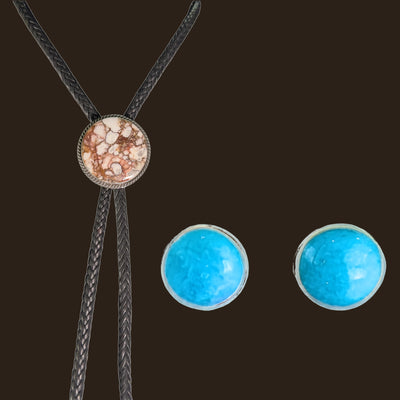
Turquoise heishi consists of small shaped beads strung together. A cabochon is a polished gemstone shaped with a domed top and flat back, often set as a focal stone in a ring, pendant, or pair of earrings. The material can be turquoise in both cases; the difference is the stone’s form and how it’s used in the jewelry.
Stabilized turquoise is turquoise treated to improve its durability or workability. When a description uses this term, it identifies a treatment, not a bead shape. Read material and treatment wording separately from terms such as heishi or cabochon.
Can color or pattern identify a bead material?
Color and visible pattern can offer clues, but they can’t confirm what a bead is made of on their own. Turquoise may show matrix, the contrasting mineral pattern or material visible within some stones, but appearances vary and other materials can resemble a stone’s color. Avoid treating visual inspection or a home test as conclusive, especially if it could scratch or damage the jewelry.
For a clearer picture, look for a description that names the material and any relevant treatment. Wildflower Artisans explains its approach to genuine stones on its jewelry authenticity page. Clear wording matters: a bead’s color may catch your eye, but the material description tells you what the listing says it is.
How to Read a Heishi Jewelry Description with Confidence
A clear heishi jewelry description separates the bead’s material from its style, finish, and stringing components. Use those details to understand what the strand is made of, how it’s assembled, and what the listing does and doesn’t tell you.
As you read, look for four details:
- Bead material: Does the description name shell, turquoise, lapis lazuli, or another specific material, rather than saying only “stone” or “natural-looking”?
- Strand components: Does it distinguish the beads from the cord, clasp, metal findings, or other parts of the jewelry?
- Finish: Does it describe a polished, matte, or other surface, if that information is provided?
- Construction: Does it explain how the beads are strung or how the strand is finished?
The word “heishi” by itself answers none of the material questions. A style label can’t establish whether beads are shell, turquoise, or another stone. Photographs may show color, spacing, and surface texture, but lighting and image quality affect what you see. Treat appearance as a visual clue, not proof of composition.
What details should a clear material description include?
Look for a specific material name, then read the rest of the description as separate information. Bead composition isn’t the same as the metal used in a clasp or the cord running through the strand. If a listing describes turquoise, check whether it also identifies treatment. Stabilized turquoise has been treated to improve durability or workability; untreated turquoise hasn’t undergone that treatment. These terms describe material treatments, not bead shapes.
For more help with turquoise wording, Wildflower Artisans’ authenticity information explains the studio’s approach to genuine stones. A glossary can also make unfamiliar stone terms easier to read, but the description for the individual piece remains essential.
How can readers approach cultural attribution responsibly?
Bead style alone doesn’t establish who made a piece, where it was made, or what cultural tradition it belongs to. Keep any cultural attribution tied to the specific item whose maker or origin is documented. Don’t extend wording from one piece to an entire brand or collection, and don’t infer an attribution from a stone, shape, or technique.
Careful attention to material and construction can also help you choose finished jewelry. Wildflower Artisans’ Shop All Jewelry collection brings together handcrafted sterling silver and genuine-stone jewelry, with each material contributing its own character.
What Heishi Materials Mean for Choosing Artisan Jewelry
Heishi names a bead form or style, not a single material. To understand what heishi beads are made of, look for a separate material description, then consider the finish and construction to picture how the completed strand may look and feel.
That distinction is useful when choosing artisan jewelry. A named material tells you more than a style label alone. Descriptions of surface finish, assembly, and other materials in a piece add context, helping you decide whether its character suits your taste and how you plan to wear it.
How can material knowledge guide a jewelry choice?
Start with the details that matter most to you. If you prefer a particular stone, look for its name rather than relying on color or a broad phrase such as “stone beads.” Consider texture and visual presence, too: a fine strand and a larger focal stone create different effects, even when they share a material.
For everyday wear, you might gravitate toward a piece that feels easy to pair with what you already own. For a more pronounced accent, consider how the stone, setting, and overall construction draw the eye. Neither approach is better. It comes down to the materials and forms you enjoy wearing.
Wildflower Artisans offers handcrafted sterling silver and genuine-stone jewelry, including turquoise, lapis lazuli, White Buffalo, and other named stones. Wildflower Artisans’ finished jewelry descriptions focus on the materials in each piece, rather than treating a bead-style term as a substitute for naming the stone.
Where can readers explore genuine-stone jewelry?
Clear material wording helps you understand a finished piece, especially when you’re buying for yourself or choosing a gift. If you’re considering turquoise jewelry, Wildflower Artisans’ authenticity information explains the studio’s approach to genuine stones. Read the individual piece description alongside it, paying attention to the named stone and the other materials in the design.
A heishi label can spark curiosity, but material, finish, and construction tell a fuller story. With those details in mind, you can choose jewelry with a clearer sense of what you’re bringing home and the qualities you’ll enjoy wearing.
Explore handcrafted sterling silver and genuine-stone jewelry in the Shop All Jewelry collection.
Choose Jewelry with a Clearer Eye
Heishi describes a bead form or style, not one fixed material. To understand what heishi beads are made of, look for the material named separately, then consider the finish and construction details that shape the finished strand. Color and pattern may catch your eye, but clear wording helps you understand the materials.
That same attention to detail can guide any jewelry choice. Wildflower Artisans brings together handcrafted sterling silver and genuine-stone jewelry, with material descriptions that help each piece tell its own story. Every item is guaranteed to be authentic and high quality.
Choose a piece by the stone, silver, and handwork you’ll enjoy wearing or giving. Explore the Shop All Jewelry collection to find handcrafted sterling silver and genuine-stone designs.
Frequently Asked Questions
What materials are heishi beads made from?
The material varies by bead or strand. Heishi beads may be made from shell, such as mother-of-pearl or spiny oyster, or from stone, such as turquoise or lapis lazuli. Some contemporary heishi-style beads use materials like polymer clay, so look for a separate material name.
Are heishi beads always made from shell?
No, heishi doesn’t identify one exclusive material. Shell is one possibility, while turquoise and lapis lazuli are examples of stones that can be shaped into heishi beads. A listing that says only “heishi” describes the style, not necessarily the bead composition.
Can heishi beads be made from turquoise?
Yes, turquoise can be shaped into heishi beads. In that description, turquoise names the material and heishi describes the bead’s form or style. A heishi label or blue-green color alone doesn’t confirm that the beads are turquoise.
How are heishi beads shaped?
In general, makers select a material, prepare small pieces, drill openings, shape the beads, and smooth or polish them before stringing. The precise steps vary with the material and the maker. Bead consistency, smooth edges, and spacing all influence how the finished strand looks and moves.
How can you tell what material heishi beads are made of?
Look for a description that names the bead material, such as shell, turquoise, or lapis lazuli, and separates it from the cord, clasp, or other components. Color and visible pattern may offer clues, but appearance and photographs alone can’t prove composition. Rely on specific material wording rather than the heishi label by itself.
Article by
Kimberly Cordova
Kimberly Cordova is the founder and creative director of Wildflower Artisans, a handmade jewelry brand rooted in Santa Fe. Real turquoise, solid sterling silver, and a small line set in solid 14K gold. She built Wildflower around a simple belief: the best jewelry is the kind you actually reach for, not the kind you save for someday.
The collection is built three ways. Some pieces are made in-house, cut by her husband Greg from stones he sources himself, including rough from the family's King's Manassa Mine in Colorado and White Buffalo Mine in Nevada. Some are designed by Kimberly and fabricated by a trusted circle of Santa Fe silversmiths. And some are finished work she curates from artisan makers whose craft meets the same standard, because building a real collection means knowing when to make and when to look.
Turquoise leads, joined by White Buffalo, Wild Horse, Lapis Lazuli, Spiny Oyster, Black Onyx, Opal, and other genuine semi-precious stones. No shortcuts on the stone, the silver, or the story behind either.
Her writing covers everything she has learned along the way: how turquoise forms, how to tell natural from stabilized, what makes one mine different from another, how to read a bezel, and how to shop with confidence in a market that is not always straightforward. It is the kind of plainspoken information she wished someone had laid out for her when she was starting out.
Browse the collection at wildflowerartisans.com. Questions about a stone, a setting, or a specific piece are welcome any time.
0 comments