

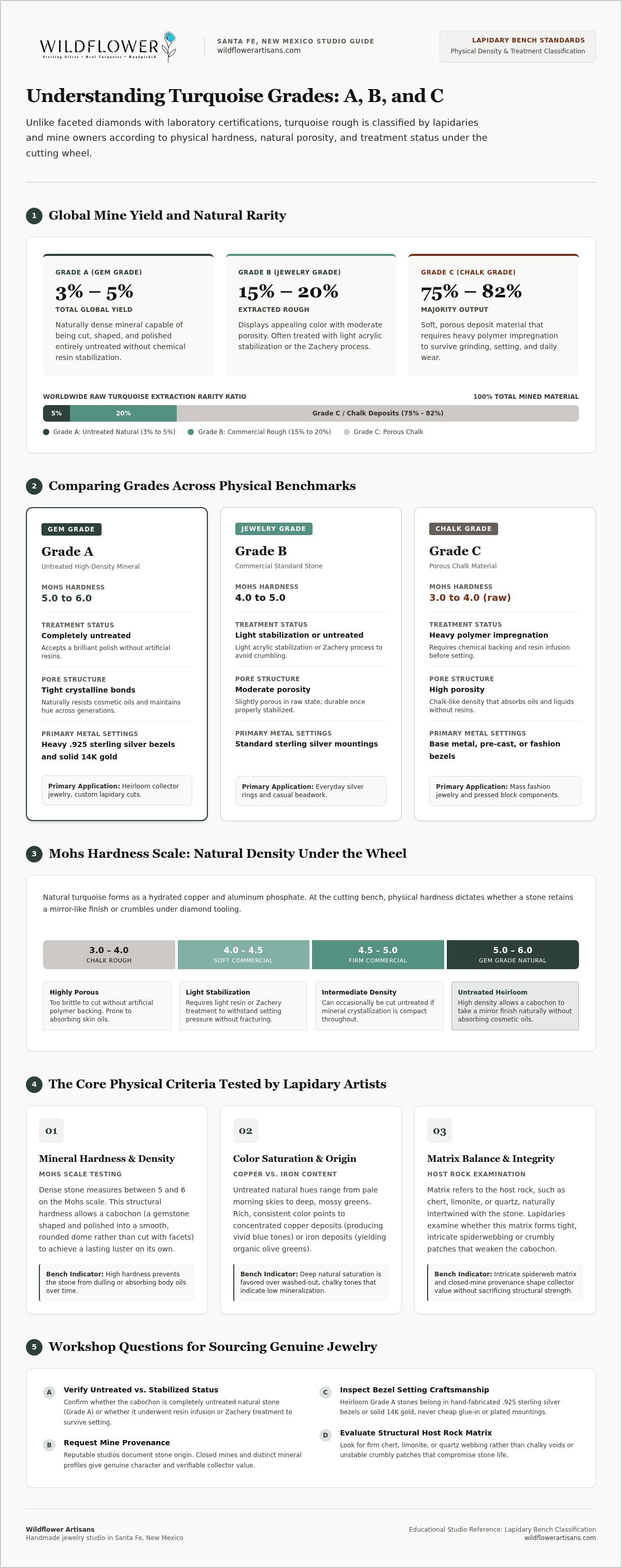
Only 3% to 5% of all raw turquoise mined across the globe is naturally dense enough to be cut, shaped, and polished without chemical stabilization. If you have ever felt puzzled comparing letter labels across different sellers, you are not alone. Because neither gemological institutes nor trade associations enforce an official letter standard, understanding turquoise grades A, B, C often feels like reading a map with shifting landmarks.
It is easy to worry about paying high-grade prices for soft, chalky stone masked by artificial resins, or to wonder whether an intricate web of matrix adds to or subtracts from a piece. Real stone quality comes down to physical hardness, vivid color saturation, and structural integrity. In this guide, we explore the exact physical criteria lapidary artists use at the bench, showing you how letter grades reflect natural density and treatment so you can evaluate handcrafted jewelry with calm, clear confidence.
Key Takeaways
- Gain clarity on commercial jewelry terms by understanding turquoise grades A, B, C through mineral hardness, porosity, and treatment rather than arbitrary labels.
- Discover why Grade A stones achieve true heirloom status as rare, untreated cabochons that take a rich polish entirely on their own.
- Learn how natural Mohs hardness separates durable daily-wear stones from softer chalk material that requires polymer stabilization to survive setting.
- Uncover how intricate spiderweb matrix and closed-mine provenance shape collector value, proving character and origin matter far more than uniform blue color.
- Master the questions to ask about stone origin, natural status, and bezel craftsmanship so you can choose handcrafted jewelry with quiet confidence.
What Does Understanding Turquoise Grades A, B, C Involve?
Turquoise grading evaluates a stone's natural mineral hardness, porosity, and color saturation to determine whether it can be cut untreated or requires artificial stabilization. Because colored gemstones lack a single global governing body, understanding turquoise grades A, B, C involves recognizing the informal commercial benchmarks established by lapidary artists and mine owners.
At the cutting bench, these tiers serve as a practical language. When an artisan handles rough material pulled from the earth, they inspect how the stone holds together under the diamond wheel. Only raw material with exceptional density earns the highest classification, while softer deposits require chemical backing or resin infusion before setting. You can discover our studio benchmarks in our turquoise glossary, which unpacks how workshop terminology translates to finished jewelry.
Why Turquoise Grading Differs from Diamond Grading
Unlike faceted diamonds, which rely on rigid four-C laboratory certificates, colored stones develop through varied volcanic and sedimentary conditions that defy single formulas. No central institution issues official report cards for turquoise rough. Reputable lapidaries and boutique jewelry studios assign letter grades based on physical performance during cutting and polishing. Grade designations communicate real mineral density rather than formal appraisal paperwork, making transparent sourcing and honest disclosure essential for every collector.
The Core Visual and Physical Criteria Evaluated
When assessing quality, lapidaries inspect three primary physical traits: hardness, color saturation, and matrix distribution. Natural turquoise forms as a hydrated copper and aluminum phosphate, creating physical properties and variations that differ dramatically across separate mineral veins.
- Mineral Hardness: Dense stone measures between 5 and 6 on the Mohs hardness scale. High hardness allows a cabochon (a gemstone shaped and polished into a smooth, rounded dome rather than cut with facets) to take a mirror-like polish without absorbing skin oils.
- Color Saturation: Untreated hues range from pale morning skies to deep, mossy greens. Rich, consistent color indicates concentrated copper or iron deposits, which lapidaries prize over washed-out, chalky tones.
- Matrix Balance: Matrix refers to the host rock, such as chert, limonite, or quartz, naturally intertwined with the turquoise. Lapidaries examine whether this matrix forms balanced, intricate webbing or crumbly patches that could weaken the finished stone.
By learning how these elements interact, understanding turquoise grades A, B, C shifts from deciphering confusing sales tags into appreciating the honest, raw character of the earth.
Comparing Turquoise Grades A, B, and C in Modern Jewelry
Grade designations distinguish completely untreated, dense mineral from softer stone requiring chemical intervention to survive daily wear. By understanding turquoise grades A, B, C, buyers can easily determine whether a cabochon owes its lustrous surface to natural mineral density or clear acrylic resin.
| Grade Tier | Mohs Hardness | Treatment Status | Primary Application |
|---|---|---|---|
| Grade A (Gem Grade) | 5.0 to 6.0 | Completely untreated | Heirloom silverwork and solid 14K gold settings |
| Grade B (Jewelry Grade) | 4.0 to 5.0 | Light stabilization or untreated | Everyday silver rings and casual beadwork |
| Grade C (Chalk Grade) | 3.0 to 4.0 (raw) | Heavy polymer impregnation | Mass fashion jewelry and pressed block components |
Grade A and Gem Grade Turquoise
Grade A natural turquoise is untreated, high-density mineral measuring 5 to 6 on the Mohs hardness scale that accepts a brilliant polish without resins. Representing less than 5% of worldwide mine yields, this material possesses exceptionally tight crystalline bonds. It naturally resists cosmetic oils, maintaining its pure hue across generations. Lapidaries reserve these rare cuts for heavy .925 sterling silver bezels and solid 14K gold, celebrating stone that honors natural lapidary quality factors without artificial help.
Grade B Commercial Turquoise
Grade B accounts for roughly 15% to 20% of extracted rough, displaying appealing color alongside moderate porosity. This stone typically measures between 4 and 5 on the Mohs scale. To prevent crumbling during grinding, lapidary workshops often treat Grade B with light acrylic stabilization or the Zachery process. Once stabilized, it becomes durable enough for daily silver rings, offering balanced wearability for those who appreciate honest craft at accessible values.
Grade C and Chalk Turquoise
Accounting for the vast majority of mined volume, Grade C consists of pale, crumbly material known across the American Southwest as chalk turquoise. In its raw condition, it scratches under a fingernail and quickly absorbs water. To render it usable, manufacturers submerge the porous chalk in heated polymer resins under high vacuum pressure. Because our studio works exclusively with genuine mineral integrity, we never cut or set Grade C composites.
A stone's grade directly shapes how an artisan frames it at the bench. That structural integrity is why every piece in our turquoise jewelry collection features hand-cut cabochons with documented mine origins, giving you complete clarity on genuine material. For those seeking varied Southwestern designs across genuine stones, you can also browse our wider artisan jewelry pieces to see how honest lapidary work transforms raw earth into wearable art.
Hardness, Porosity, and Stone Treatments Across Grades
Mineral hardness directly controls whether rough turquoise can survive the lapidary wheel without artificial reinforcement. Natural turquoise typically measures between 5 and 6 on the Mohs hardness scale, a dense crystalline formation that resists environmental wear without polymer fillers.
Porosity dictates how a stone interacts with the outside world. When raw mineral contains open microscopic pores, it absorbs skin oils, lotions, and moisture, gradually drifting from brilliant blue to dull olive green. Because understanding turquoise grades A, B, C is fundamentally about evaluating mineral density, testing rough before setting prevents soft, untreated stone from failing under pressure.
The Mohs Scale and Natural Mineral Density
Untreated gem-grade turquoise sits alongside window glass in relative hardness, offering enough resilience for lifetime wear in rings and cuffs. The mineral forms through secondary enrichment where copper-laden groundwater trickles through alumino-silicate host deposits over millennia. When this process occurs under ideal geological pressure, tight interlocking crystals emerge. Softer deposits, measuring only 3 to 4 Mohs, remain fragile sponges. At our studio bench, Greg Cordova tests rough density before cutting, ensuring each cabochon possesses structural integrity before setting.
Stabilization versus Imitation Materials
Stabilized turquoise refers to genuine porous turquoise hardened through pressurized infusion with clear epoxy or acrylic resin to prevent fracturing during cutting. Backed stone, by contrast, features a thin layer of epoxy applied strictly to the flat base of a cabochon for bench support during bezel setting.
- Stabilized Stone: Genuine mined mineral whose open pores are sealed with clear polymers. It maintains uniform color and resists moisture, making it durable for daily silver jewelry.
- Imitation Substitutes: Plastic blocks, dyed howlite, or reconstituted turquoise powder bonded with adhesives. These contain no natural gem structure and carry no lapidary value.
Honest terminology matters. A stone treated with resins must never be marketed as natural. While stabilization preserves genuine mineral that would otherwise crumble, collector appreciation remains highest for untreated rough that nature formed dense and pure. You can learn more about how we verify untreated stone in our stone-first philosophy.
Understanding turquoise grades A, B, C allows you to see past surface gloss and appreciate the honest geological journey behind every handcrafted bezel.
How Matrix and Mine Provenance Affect Turquoise Value
Matrix patterns and mine provenance fundamentally shape turquoise value, disproving the outdated myth that gem-grade material must always display solid, uniform blue. While early European jewelers preferred clear Persian stones, modern American lapidary traditions celebrate natural host rock as geological fingerprint and proof of untreated authenticity.
A stone's physical letter grade assesses hardness and density, but its character lives in its patterns and origin. Understanding turquoise grades A, B, C requires looking beyond simple color saturation to see how host rock and deposit rarity elevate individual cabochons into coveted collector pieces.
Understanding Matrix Patterns from Spiderweb to Quartz
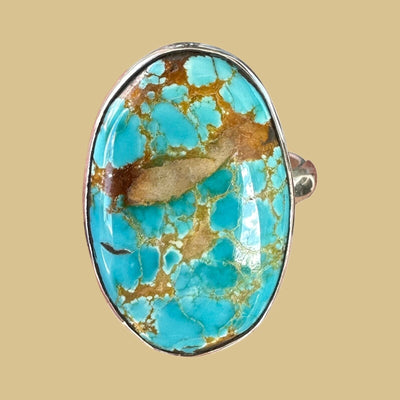
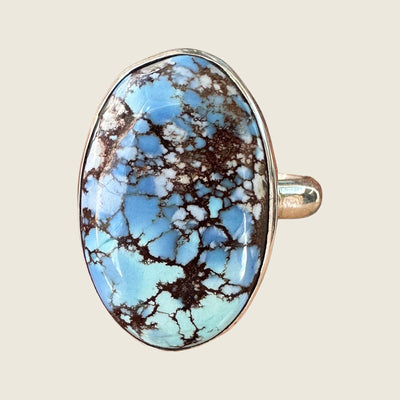
Matrix is the surrounding host rock, such as golden limonite, dark chert, or crystalline quartz, intertwined with the mineral deposit during formation. Rather than weakening a stone, fine webbing often indicates high density. Spiderweb matrix, characterized by fine, interconnected dark lines winding across vivid blue or green ground, represents one of the most sought-after patterns in Southwestern lapidary arts. When balanced spiderweb webbing appears across naturally hard Grade A mineral, lapidaries value the cabochon far higher than an ordinary matrix-free cut.
The Influence of Heritage Mine Provenance
Mine locality provides essential geographic identity. Historic American deposits carry unique mineral signatures that collectors immediately recognize:
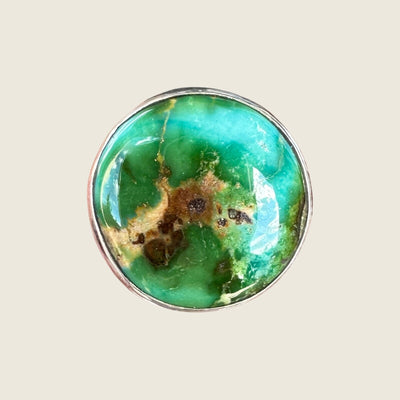
- King's Manassa: Prized for intense forest greens laced with golden and russet host matrix. Co-owned by lapidary Greg Cordova, this Colorado deposit produces distinctive, hard material shaped directly at our bench.
- Royston: Revered for two-tone cabochons where vibrant emerald greens bleed into soft sky blues, crossed with rich brown ironstone.
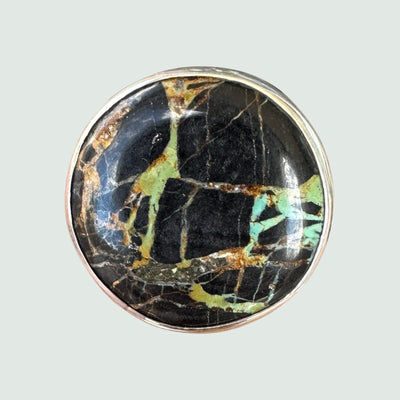
- Kingman: Arizona's primary active deposit, yielding clear high-grade blues as well as striking black-matrix patterns.
- Sleeping Beauty and Bisbee: Both closed to turquoise extraction for years, making untreated, natural Grade A cabochons from these legacy caches exceptionally rare.
When you explore our one-of-a-kind artisan pieces, each handcrafted sterling silver bezel highlights these unique mine signatures, pairing certified natural stones with Santa Fe bench craftsmanship.
Matrix balance and regional heritage reveal that understanding turquoise grades A, B, C is not just about laboratory hardness. It is about appreciating how natural earth formations create wearable heirloom art.
How to Evaluate Turquoise Grades When Shopping for Jewelry
To evaluate turquoise grades when shopping, examine the stone's surface luster under indirect natural light, verify whether it is untreated or stabilized, and inspect how securely it sits within its metal bezel. Beyond the seller's letter labels, physical inspection and direct questions reveal whether you are investing in genuine lapidary craft or commercial imitation.
Letters on a display tag cannot replace careful observation. In our Santa Fe workshop, understanding turquoise grades A, B, C means knowing how mineral structure interacts with bench silversmithing. A well-cut cabochon should show clean hand-finishing along its perimeter and sit flush in its mount, regardless of whether it is a rare Grade A gem or a lightly stabilized Grade B stone meant for everyday enjoyment.
Questions to Ask Your Jeweler Before Buying
When speaking with an artisan or curator, direct questions cut through confusing commercial language. Reputable studios always welcome inquiries about their bench inventory. Before making an investment, consider asking these foundational questions:
- Is the stone natural or stabilized? The seller should clearly confirm whether the stone is untreated natural turquoise or hardened with clear resins. You can consult our turquoise buying guide for specific questions to ask when vetting online collections.
- What is the specific mine origin? Authentic pieces usually carry documented deposit names like Royston, Kingman, or King's Manassa rather than vague regional labels.
- Is it a solid cut or reconstituted composite? Genuine jewelry features cabochons sliced directly from raw rough, whereas reconstituted stones are formed by bonding leftover turquoise dust with plastic adhesives.
Inspecting Settings and Surface Polish
Examine the stone's luster and setting construction closely. High-grade natural turquoise displays a gentle, waxy-to-subvitreous luster that feels cool against the skin, reflecting ambient light softly rather than with an oily plastic glare. Check the matrix seams under bright daylight for pooled color or rough adhesive lines, which often signal low-grade treated chalk.
Setting construction matters just as much as mineral density. A bezel (a secure rim of metal wrapped completely around the gemstone perimeter) fashioned from heavy .925 sterling silver shields the edges of softer stones from daily wear. When a maker burnishes clean silver snugly around the stone contour, the piece can endure for generations. Read through our authenticity standards to see how studio lapidaries verify genuine materials before setting.
With these practical vetting checks in hand, understanding turquoise grades A, B, C empowers you to choose jewelry that offers lasting beauty, honest craftsmanship, and real geological value.
Choosing Genuine Stone with Lasting Confidence
True stone quality is written directly in a mineral's natural density, crystalline structure, and matrix story rather than arbitrary marketing tags. Gaining clarity on these geological markers through understanding turquoise grades A, B, C frees you to choose jewelry that resonates with genuine character and lasting durability.
At Wildflower Artisans, Kimberly and Greg shape every design around stone integrity. Each cabochon is hand-selected and cut with lapidary care from reputable North American deposits, then set exclusively into .925 sterling silver or solid 14K gold bezels. Wearable art should celebrate the raw beauty of the earth without compromise or mystery.
Take your time finding a piece that speaks to you. When you know how a stone was formed and set, wearing it becomes a daily connection to authentic craft.
Frequently Asked Questions
Is Grade A turquoise always better than Grade B for everyday jewelry?
Grade A turquoise provides exceptional natural density, but lightly stabilized Grade B stone often proves more forgiving for everyday wear. Because Grade A stones remain untreated, direct exposure to cosmetics, oils, and hand soaps can gradually shift their hue over decades. Stabilized Grade B turquoise maintains consistent color and structural resistance against daily impacts, making it a dependable, practical option for everyday sterling silver rings and cuffs.
Does the presence of brown or black matrix mean turquoise is low grade?
Natural matrix does not reduce turquoise quality, and tight spiderweb patterns often command higher collector interest than plain blue stones. While early commercial trends favored uniform color, modern collectors prize chert, limonite, and quartz webbing as proof of natural geological formation. A dense Grade A cabochon with sharp, balanced matrix patterns represents some of the most valuable material in the lapidary arts.
Can you determine turquoise grades from an online photograph alone?
You cannot confirm turquoise grades from an online photograph alone because cameras cannot measure mineral hardness, density, or chemical treatments. In digital imagery, heavily treated chalk turquoise can look identical to untreated gem-grade rough. True grading requires testing physical density and verifying workshop provenance. That is why understanding turquoise grades A, B, C relies on transparent disclosure from trusted studios rather than visual guessing.
Is stabilized turquoise considered real turquoise in fine jewelry?
Stabilized turquoise is genuine turquoise that has undergone pressurized resin infusion to strengthen its structure and lock in color. It is real mineral rough, unlike synthetic blocks or dyed howlite substitutes. While reputable jewelers embrace stabilized turquoise for daily wear, federal trade regulations require clear disclosure at the point of sale. Responsible jewelers never describe stabilized or polymer-treated material as natural.
What is the difference between Grade A turquoise and gem grade stone?
In lapidary trade terms, Grade A and gem grade describe the same elite tier of untreated turquoise with superior density. These rare stones measure between 5 and 6 on the Mohs hardness scale and accept a brilliant polish naturally on the felt wheel. In understanding turquoise grades A, B, C, gem grade represents the top 3% to 5% of global mine yields, reserved for heirloom settings.
How do I know if my turquoise jewelry is untreated natural stone?
The surest way to confirm untreated status is through written provenance from a lapidary workshop or testing by an accredited gemological laboratory. Untreated natural turquoise feels cool to the touch and displays a soft, subvitreous luster rather than a plastic gloss. Inquire directly about mine origin and treatment history, as reputable makers will gladly verify whether their stones were cut without chemical stabilization.
Article by
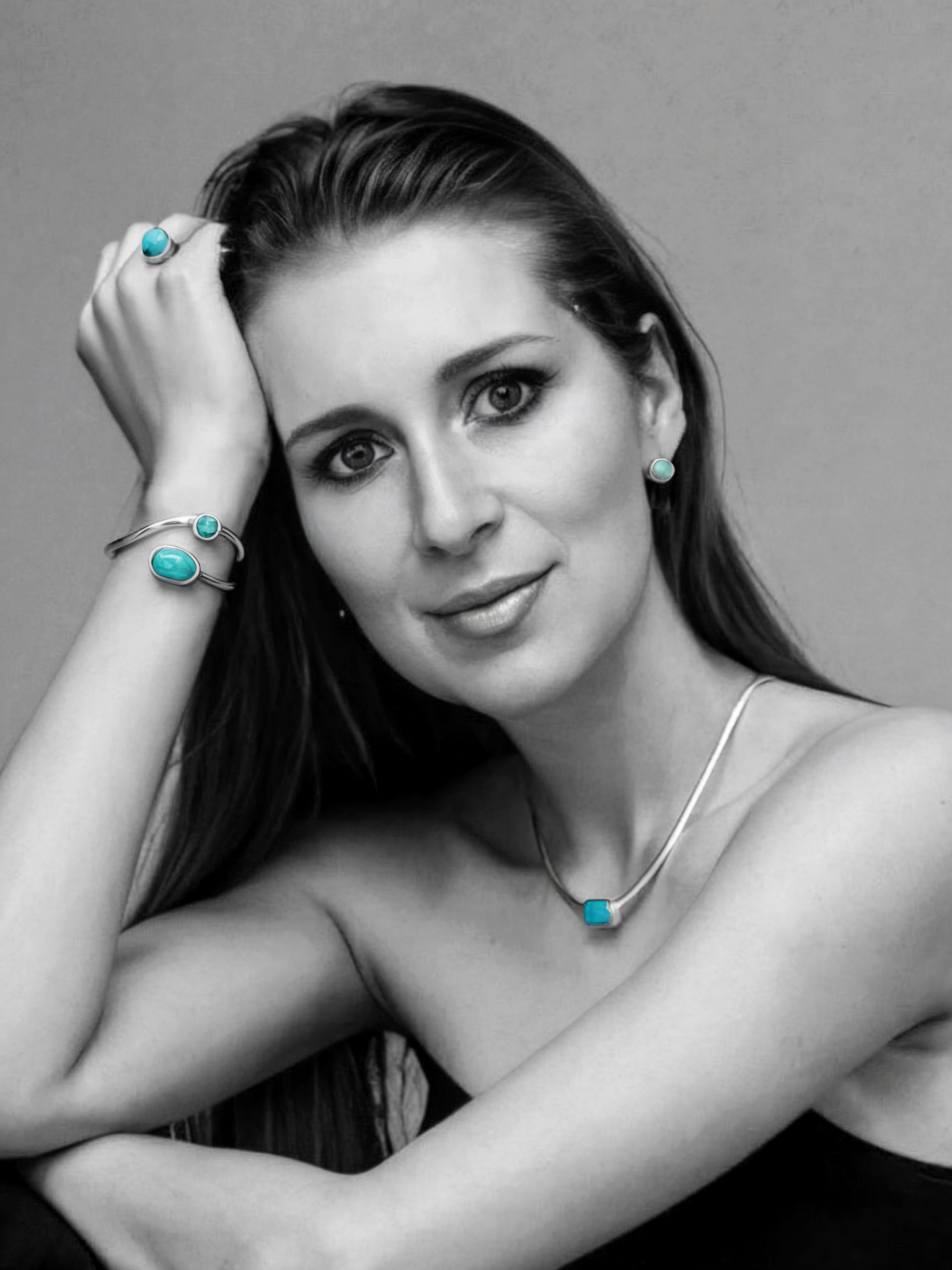
Kimberly Cordova
Kimberly Cordova is the founder and creative director of Wildflower Artisans, a handmade jewelry brand rooted in Santa Fe. Real turquoise, solid sterling silver, and a small line set in solid 14K gold. She built Wildflower around a simple belief: the best jewelry is the kind you actually reach for, not the kind you save for someday.
The collection is built three ways. Some pieces are made in-house, cut by her husband Greg from stones he sources himself, including rough from the family's King's Manassa Mine in Colorado and White Buffalo Mine in Nevada. Some are designed by Kimberly and fabricated by a trusted circle of Santa Fe silversmiths. And some are finished work she curates from artisan makers whose craft meets the same standard, because building a real collection means knowing when to make and when to look.
Turquoise leads, joined by White Buffalo, Wild Horse, Lapis Lazuli, Spiny Oyster, Black Onyx, Opal, and other genuine semi-precious stones. No shortcuts on the stone, the silver, or the story behind either.
Her writing covers everything she has learned along the way: how turquoise forms, how to tell natural from stabilized, what makes one mine different from another, how to read a bezel, and how to shop with confidence in a market that is not always straightforward. It is the kind of plainspoken information she wished someone had laid out for her when she was starting out.
Browse the collection at wildflowerartisans.com. Questions about a stone, a setting, or a specific piece are welcome any time.
0 comments