

What if the specific matrix and hue of your sterling silver turquoise dangle earrings served as a map to a hidden canyon, telling a geological story that spans centuries rather than just offering a fleeting splash of color? We understand the common hesitation of purchasing in a marketplace where dyed howlite and mystery metals often masquerade as genuine minerals, leaving you to wonder about the true authenticity of the materials and the specific origins of the stones. This guide from Wildflower Artisans will teach you how to evaluate the craftsmanship and stone quality of handcrafted jewelry, ensuring you possess the confidence to find a piece that reflects the grounded intentionality of our working studio. From identifying the unique fingerprints of specific mines to understanding the technical precision of hand-cut cabochons and bezel settings, we will provide the plainspoken expertise needed to build a collection of authentic Southwestern style jewelry that resonates with your personal style.
Key Takeaways
- Understand how the structural integrity of sterling silver (.925) provides a secure foundation for natural gemstones.
- Identify the unique narrative of your jewelry by observing the matrix patterns and color profiles of mine-specific stones like Kingman turquoise.
- Evaluate the artistry of sterling silver turquoise dangle earrings by examining the quality of hand-cut cabochons and the precision of the bezel settings.
- Select a drop length and weight that offers gentle movement while ensuring the piece remains comfortable for daily wear.
- Learn essential care tips for porous stones to prevent damage from chemicals and maintain the natural beauty of handcrafted silver.
Understanding the Foundation of Sterling Silver and Genuine Turquoise
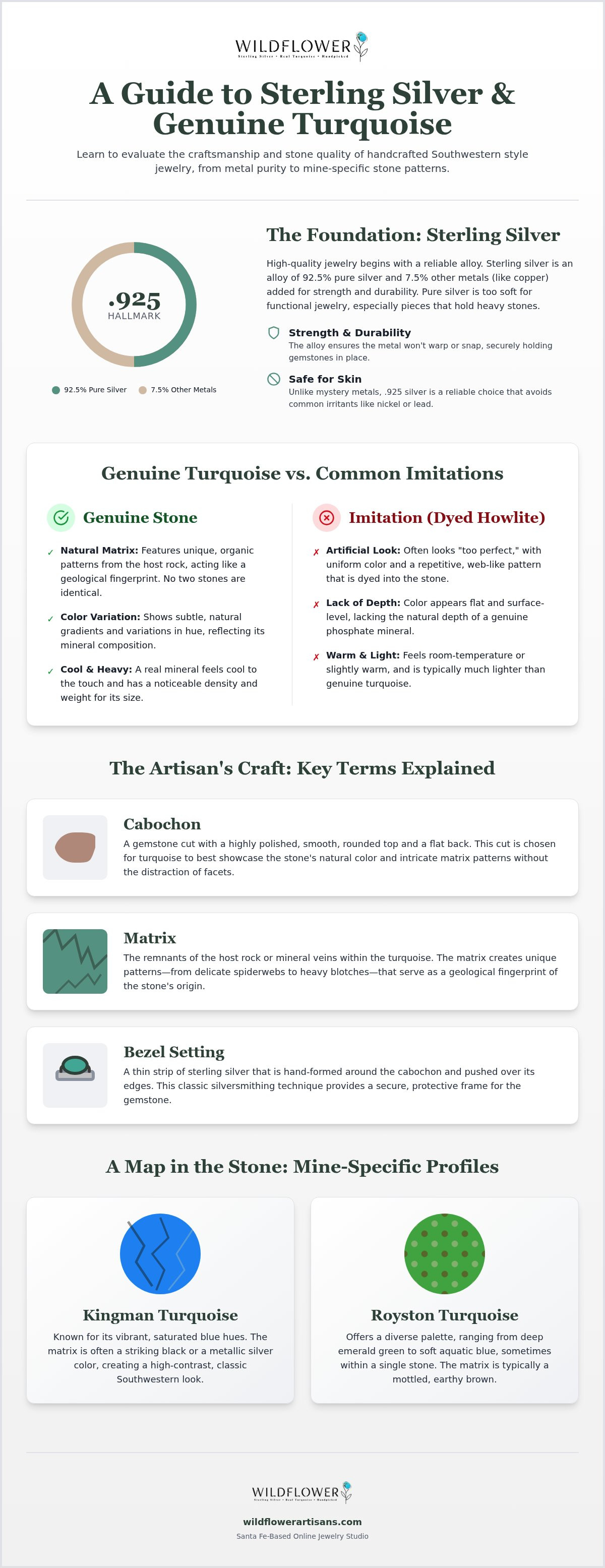
High-quality jewelry begins with a reliable alloy and a natural mineral specimen. Sterling silver (.925) provides the necessary strength to secure heavy stones while ensuring the piece remains safe for sensitive skin.
Sterling silver is an alloy containing 92.5 percent pure silver and 7.5 percent other metals, which are added specifically to provide durability and strength. Pure silver is far too soft for functional jewelry, particularly for sterling silver turquoise dangle earrings that must withstand the tension of movement and the weight of a hand-cut cabochon. By using a standardized alloy, we ensure that the metal won't warp or snap over time. Avoiding mystery metals is also a matter of health. Many mass-produced items contain nickel or lead, which can cause significant skin reactions, whereas our .925 silver is a reliable choice for long-term wear.
The Role of Sterling Silver in Artisan Jewelry
The bright, cool luster of silver provides a neutral backdrop that allows the natural variations of the stone to take center stage. Silversmiths in our studio rely on sterling silver because it is malleable enough to be shaped into intricate bezel settings, yet strong enough to hold its form once polished. A bezel is a thin strip of silver that is wrapped around the stone and pushed over the edges to secure it. You should always check for the .925 hallmark, typically found on the back of the earring or the ear wire, to verify the metal's quality. This hallmark serves as the professional standard for sterling silver turquoise dangle earrings and other high-grade Southwestern style jewelry.
Identifying Genuine Stones versus Imitations
genuine turquoise is a phosphate mineral that forms in arid regions, drawing its signature colors from the presence of copper and aluminum. Natural stones often feature a matrix, which refers to the host rock or mineral veins that create a unique, organic pattern across the surface. This matrix acts as a fingerprint, ensuring that no two stones are exactly alike. In contrast, dyed howlite and plastic imitations often look too perfect or lack the weight and cold temperature of a real mineral. An untreated turquoise stone is one that has not been altered by dyes or chemical infusions to artificially enhance its color or hardness. Choosing authentic materials ensures your jewelry retains its value and character, a philosophy we detail on our authenticity page.
Evaluating Mine-Specific Stones and Matrix Patterns
The matrix of a stone refers to the remnants of the host rock that remain visible within a turquoise cabochon, creating a complex visual narrative of its formation. Evaluating Mine-Specific Stones involves looking past the surface color to understand how mineral veins and rock fragments influence the character of the jewelry. These patterns are not flaws, but rather the geological fingerprints of the arid landscapes where the stones were born.
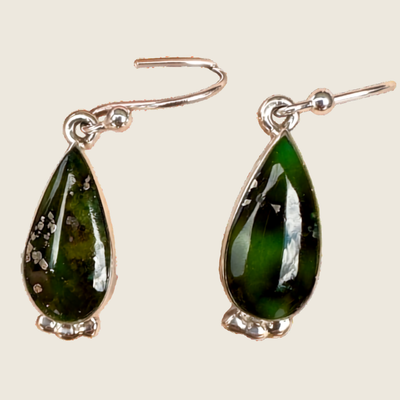
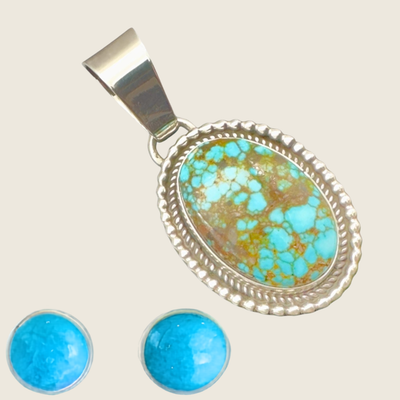
Collectors often seek out Kingman turquoise for its vibrant, saturated blue hue, which is frequently punctuated by a striking black or metallic silver-colored matrix. In contrast, Royston stones offer a diverse palette that can range from deep emerald green to soft, aquatic blue within a single hand-cut piece. The pattern of this matrix varies significantly, appearing as delicate spiderweb lines, mottled calico patches, or heavy, earthy blotches. Each variation affects the visual weight of sterling silver turquoise dangle earrings. A darker matrix can ground a piece and add a sense of rugged sophistication, while a clear, matrix-free stone feels light and airy. These choices allow you to find a piece that mirrors your own aesthetic preferences, whether you favor the order of fine lines or the chaos of organic mineral splashes.
The Significance of the Cabochon Cut
A cabochon is a stone that has been shaped and polished into a smooth, rounded surface rather than being cut with facets. This specific cut is preferred for turquoise because it highlights the natural color and intricate matrix without the distraction of artificial light play. When we create a pair of dangle earrings in our studio, we carefully select cabochons that are matched for both color and size. This intentional pairing ensures that the earrings feel balanced as they move. It’s a slow, deliberate process to find two stones that share the same soul. You can explore our full range of artist-made jewelry to see how these matched stones come together in finished designs.
Mine Origins and Their Aesthetic Influence
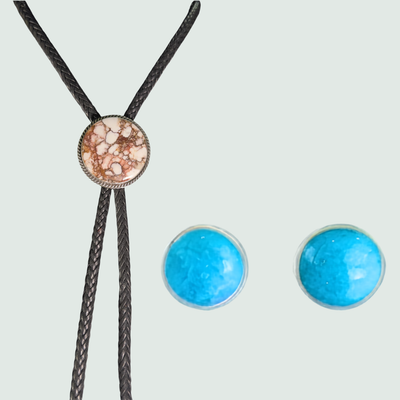
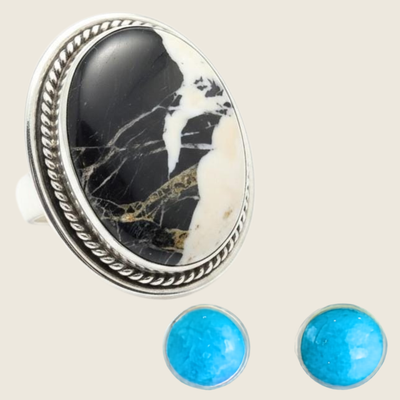
The origin of a stone significantly dictates its aesthetic profile and rarity. Sleeping Beauty turquoise is highly prized for its clear, sky-blue color that typically features little to no matrix. For those who prefer a monochromatic look, White Buffalo is often paired with dark turquoise or worn alone for a high-contrast, black-and-white effect. While technically a different mineral, White Buffalo is a staple of Southwestern style and provides a grounded, sophisticated alternative to traditional blues. Understanding these origins helps you appreciate the regional history behind every sterling silver turquoise dangle earring set.
Our studio focuses on the unique narrative of each stone, ensuring that every pair of earrings reflects the intentionality of the maker. If you are looking for a piece that captures this natural variety, browse our collection of Turquoise dangle and drop earrings to find a set that resonates with your story.
Selecting Dangle Earring Styles for Weight and Movement
Dangle earrings should offer a gentle sway that captures the light without causing discomfort or strain on the earlobe. Choosing the right style involves balancing the physical weight of the stone with the length of the drop to ensure the piece remains wearable throughout the day.
The way an earring moves is just as important as the stone it carries. In our studio, we think of movement as a conversation between the metal and the stone, utilizing the physical properties of the Foundation of Sterling Silver to provide a sturdy yet graceful frame. Southwestern style jewelry often employs ear wires or posts connected to a swinging jump ring, which allows for maximum articulation. Articulation is the mechanical point where different segments of the earring connect to allow for fluid motion. This movement is what gives sterling silver turquoise dangle earrings their characteristic life, allowing the natural colors of the stone to shift and catch the eye as you move through your day.
Everyday Drops versus Statement Designs
Small drops, typically measuring under one inch, are ideal for daily wear or professional environments where you want a subtle hint of color. These pieces usually feature a single, hand-cut cabochon in a simple bezel. In contrast, statement dangles are more ambitious, often featuring multiple stones or elaborate silver stampwork, like the pieces found in our one-of-a-kind artisan pieces collection. Stampwork is a technique where metal tools are used to hand-press decorative patterns into the silver surface. When selecting larger sterling silver turquoise dangle earrings, consider how the scale interacts with your hairstyle and other accessories. Heavier statement designs may require larger earring backs or specialized hooks to distribute the weight evenly across the earlobe, preventing the pulling effect that can lead to irritation.
The Mechanics of Earring Articulation
Articulation ensures that the earring doesn't feel stiff or static against the skin. High-quality silversmithing requires that every connection point is both secure and fluid. If a jump ring is too tight, the earring will hang at an awkward angle; if it’s too loose, the components might overlap or tangle. A well-balanced earring will hang straight and naturally return to its center point after you move. This balance is achieved by carefully calculating the center of gravity for each hand-cut stone within its bezel. You can see examples of these balanced designs in our everyday essentials collection, where we prioritize long-term comfort alongside artistry.
The Artisan Process: Hand-Cut Stones and Bezel Settings
Authentic jewelry is born from a series of intentional decisions made at the workbench rather than a factory assembly line. While mass-produced pieces rely on uniform components, the creation of sterling silver turquoise dangle earrings in a working studio focuses on the specific needs and silhouette of each individual stone.
A bezel is a thin strip of silver that is wrapped precisely around the stone and pushed over the edges to secure it in place. Unlike factory settings that may rely on glue or thin, fragile prongs, a properly constructed bezel provides a mechanical lock that keeps the stone safe for decades. Hand-cut stones are shaped individually by an artisan to follow the natural flow of the mineral's matrix and color. This stands in sharp contrast to calibrated stones, which are ground to exact, repeatable dimensions for mass consumption. When you hold a piece of artisan-made jewelry, you can feel the difference in the weight and the way the silver backplate has been crafted to support the stone’s unique profile. This backplate also serves as a canvas for the silversmith to add their hallmark or decorative stamps, marking the piece as a genuine creation from our studio.
The Precision of the Bezel Setting
Silversmiths choose between different bezel styles based on the desired aesthetic and the character of the turquoise. A serrated bezel adds a decorative, tooth-like texture that catches the light, while a smooth bezel offers a clean, modern finish that highlights the stone's edges. The silversmith must ensure the bezel is perfectly tight against the stone to prevent any rattling or the risk of the stone falling out. A properly set bezel protects the edges of the turquoise from chips and daily wear, acting as a protective silver wall around the delicate mineral.
Distinguishing Studio Work from Mass Production
Identifying handcrafted work requires an eye for the subtle variations that come from hand-tooling. Mass-produced castings often look sterile and perfectly symmetrical, lacking the soul of a piece that has been forged with heat and pressure. Studio pieces typically feature thicker gauges of sterling silver, providing a substantial feel that resists bending or warping. We follow a stone-first philosophy where the silver design is built entirely around the specific shape and height of the turquoise cabochon. This ensures that every pair of sterling silver turquoise dangle earrings is a unique expression of the earth's artistry.
View our full collection of artist-made jewelry
Our commitment to traditional silversmithing techniques ensures that every piece leaving our studio is built to last for generations. If you appreciate the contrast of dark stones against bright metal, explore our collection of White Buffalo stone jewelry to see how hand-cut precision brings out the best in every mineral.
Caring for Your Southwestern Style Silver Jewelry
Maintenance is a quiet act of appreciation for the geological history captured in your jewelry. Because turquoise is a porous phosphate mineral, it remains sensitive to its environment long after it has been shaped into a cabochon. Proper care ensures that your sterling silver turquoise dangle earrings remain as vibrant as the day they left our studio. Regular maintenance keeps the stones from absorbing harmful substances while ensuring the .925 silver retains its intended luster.
Sterling silver naturally tarnishes when it's exposed to sulfur in the air, creating a dark patina that can eventually dull the metal's bright surface. While some collectors appreciate the aged look of oxidized silver, others prefer the high-shine finish of a fresh polish. Regardless of your preference, you should avoid using ultrasonic cleaners or harsh chemical dips. The high-frequency vibrations and caustic solutions used in these machines can fracture the delicate structure of the turquoise or strip away the natural matrix, leading to permanent damage that cannot be reversed.
Routine Cleaning and Storage
Regular cleaning prevents the buildup of substances that can dull the character of your jewelry. We recommend wiping your earrings with a soft, dry cloth after every wear to remove trace amounts of skin oils, sweat, or dust. Store your pieces in a cool, dry place away from direct sunlight, as prolonged exposure to intense UV rays can cause certain turquoise varieties to fade or shift in color over time. For the metal components, a dedicated silver polishing cloth is effective for removing tarnish, but you must be careful to avoid rubbing the stone itself with these chemically treated fabrics. If you need more detailed instructions on maintaining your collection, our care and repair page offers specific guidance for handcrafted pieces.
Preserving the Integrity of the Stone
Protecting the stone starts with a simple daily routine. Always apply hairspray, lotion, and perfume before putting on your earrings to prevent these chemicals from being absorbed into the stone's pores. You should also remove your jewelry before swimming, bathing, or engaging in heavy exercise, as chlorine and salt are particularly damaging to both the silver and the mineral. Periodically inspect the physical structure of your sterling silver turquoise dangle earrings by checking the bezel and the ear wires for any signs of loosening. A bezel that has become slightly stressed can often be tightened by a professional before the stone is at risk of falling out. For a deeper understanding of the terms we use to describe these components, visit our turquoise glossary. Genuine turquoise jewelry is an investment in artisanal history, and these small habits preserve the narrative of the stone for years to come.
Choosing Your Next Heirloom Piece
Finding a pair of sterling silver turquoise dangle earrings that speaks to your personal style is a process of recognizing the intentionality behind the artist's bench. You now understand how to identify the unique matrix patterns of genuine stones from reputable mines. By prioritizing the structural integrity of .925 sterling silver construction and the precision of hand-cut cabochons, you ensure your jewelry is handcrafted by skilled artisans. These pieces are more than just accessories; they're a collaboration between geological history and studio expertise.
Maintaining the vibrancy of your collection requires simple care that protects the porous nature of the stone. When you choose jewelry crafted with a stone-first philosophy, you're investing in a narrative that will endure. We hope this knowledge gives you the confidence to select a piece that feels as authentic as the landscapes that inspired it.
Frequently Asked Questions
How can I tell if my sterling silver turquoise dangle earrings are real?
Genuine sterling silver turquoise dangle earrings exhibit a natural matrix and a cool, stony temperature when touched. Reputable artisans use .925 silver and hand-cut stones that show organic variation rather than the repetitive patterns found in dyed howlite or plastic imitations. You can verify the metal by locating the .925 hallmark, which is typically stamped on the back of the earring or the ear wire. This mechanical stamp serves as a professional guarantee of the silver's purity and structural integrity.
What does .925 mean on my silver earrings?
The .925 hallmark indicates that the jewelry is made of sterling silver, an alloy containing 92.5 percent pure silver and 7.5 percent other metals for strength. Pure silver is too soft to hold a bezel setting securely, so copper is added to ensure the metal can withstand the weight of natural stones. This standard ensures your jewelry won't warp or snap during daily wear. It is the baseline requirement for high-quality Southwestern style jewelry produced in a professional working studio like Wildflower.
Why does turquoise vary so much in color?
Turquoise color is determined by the specific mineral concentrations present in the earth where the stone formed. Copper deposits result in bright blue shades, while iron or aluminum creates the green and yellow hues found in many Southwestern style pieces. The unique conditions of each specific mine, such as Royston or Kingman, create a distinct palette and matrix pattern. This natural diversity ensures that every pair of sterling silver turquoise dangle earrings possesses a character that cannot be replicated by factory processes.
Is it okay to get turquoise earrings wet?
You should avoid getting turquoise wet because it is a porous stone that can absorb liquids and chemicals. Water, especially when treated with chlorine or soap, can seep into the mineral and cause permanent shifts in color or a loss of the polished surface luster. We recommend removing your jewelry before swimming, bathing, or heavy exercise to protect the stone's integrity. Taking these precautions prevents the absorption of oils and perfumes that could dull the natural beauty of the cabochon over time.
What is the difference between stabilized and treated turquoise?
Stabilized turquoise is infused with a clear resin to improve the stone's hardness, while treated turquoise has been dyed or chemically altered to change its appearance. Stabilization is a common practice that makes softer stones durable enough for daily wear without masking their natural matrix. We avoid treated or dyed stones because they lack the authenticity of genuine minerals. Understanding these terms helps you make informed decisions when investing in handcrafted jewelry that honors the true nature of the materials.
Article by
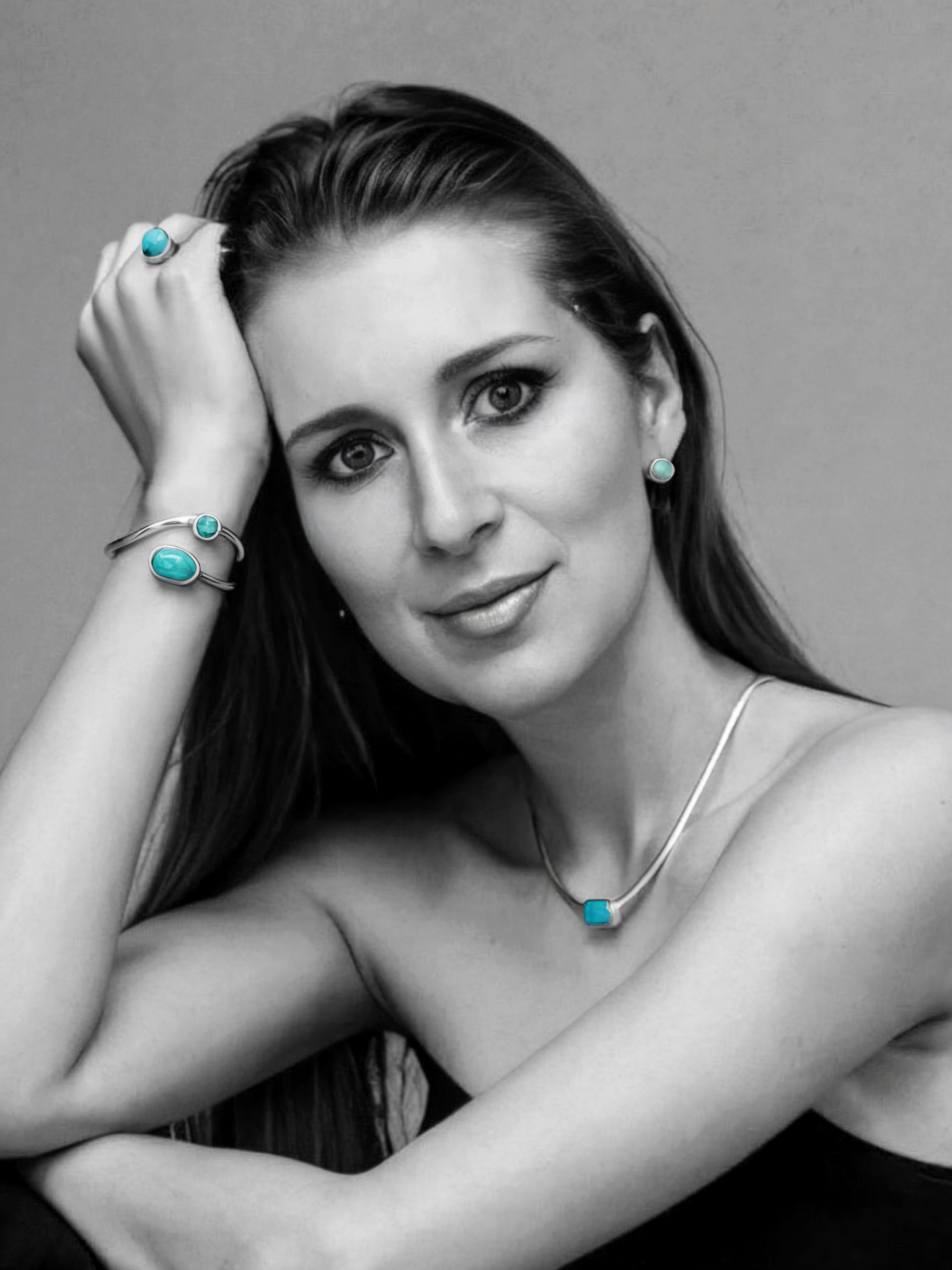
Kimberly Cordova
Kimberly Cordova is the founder and creative director of Wildflower Artisans, a handmade jewelry brand rooted in Santa Fe. Real turquoise, solid sterling silver, and a small line set in solid 14K gold. She built Wildflower around a simple belief: the best jewelry is the kind you actually reach for, not the kind you save for someday.
The collection is built three ways. Some pieces are made in-house, cut by her husband Greg from stones he sources himself, including rough from the family's King's Manassa Mine in Colorado and White Buffalo Mine in Nevada. Some are designed by Kimberly and fabricated by a trusted circle of Santa Fe silversmiths. And some are finished work she curates from artisan makers whose craft meets the same standard, because building a real collection means knowing when to make and when to look.
Turquoise leads, joined by White Buffalo, Wild Horse, Lapis Lazuli, Spiny Oyster, Black Onyx, Opal, and other genuine semi-precious stones. No shortcuts on the stone, the silver, or the story behind either.
Her writing covers everything she has learned along the way: how turquoise forms, how to tell natural from stabilized, what makes one mine different from another, how to read a bezel, and how to shop with confidence in a market that is not always straightforward. It is the kind of plainspoken information she wished someone had laid out for her when she was starting out.
Browse the collection at wildflowerartisans.com. Questions about a stone, a setting, or a specific piece are welcome any time.
0 comments