

A necklace should never feel like a hollow whisper of plastic against your skin. It should carry the quiet weight of the earth and the steady, intentional hand of the maker who gathered each stone. You likely recognize the specific disappointment of holding a piece that looks vibrant in a photograph but arrives feeling light and characterless. Finding a genuine sterling silver multi-strand turquoise necklace requires an eye for the small, honest details that mass production cannot replicate, especially when it's common to encounter dyed howlite and mystery alloys that tarnish as the seasons change.
At Wildflower Artisans, we view every hand-cut cabochon as a vessel for emotion and a celebration of natural beauty. We want to help you identify the markers of true Southwestern craftsmanship, from the specific matrix of the stone to the integrity of the .925 sterling silver findings. You'll learn the distinction between liquid silver and beaded strands, understand how to verify stone origins, and discover how to choose a piece of wearable art that remains a staple in your collection for decades.
Key Takeaways
- Learn to distinguish between liquid silver tubes and beaded strands to find a sterling silver multi-strand turquoise necklace that matches your personal aesthetic and movement.
- Identify the physical characteristics of genuine stones versus common imitations like dyed howlite or magnesite to ensure your piece is a true work of nature.
- Understand the importance of using .925 sterling silver components and artisan-made findings to ensure your jewelry remains a durable part of your collection.
- Determine the ideal length and strand count for your piece by balancing the physical weight of the stones against how they sit on the collarbone.
- Master the specific care techniques required for porous stones and precious metals to protect your jewelry from damage caused by oils or perfumes.
Understanding the Craft of Multi-Strand Turquoise Jewelry
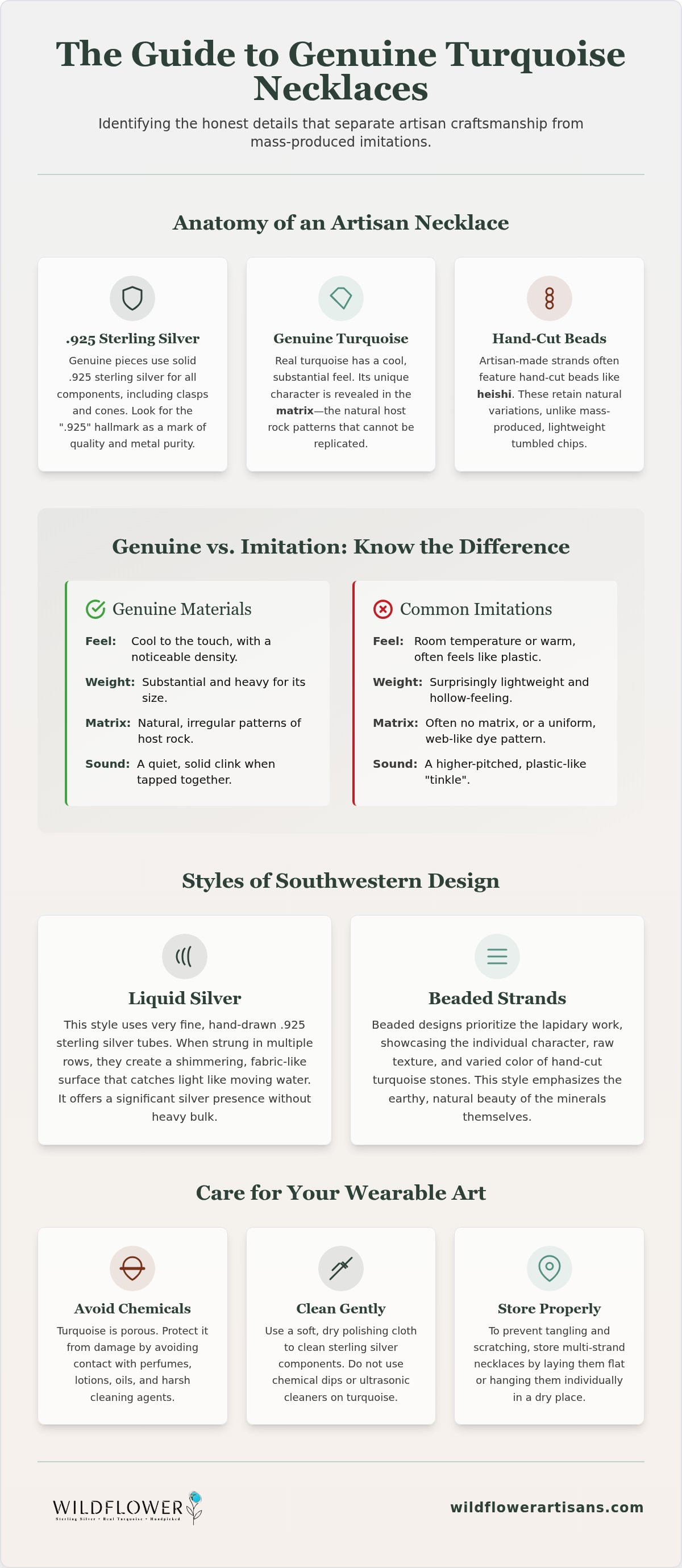
A sterling silver multi-strand turquoise necklace is a structural feat that gathers three or more rows of stones or silver beads into a single, cohesive statement of abundance. At Wildflower Artisans, we see these pieces as a marriage between the raw beauty of the earth and the technical skill of the silversmith. Unlike single-strand designs, the multi-strand approach requires a careful balance of weight and tension to ensure the strands drape naturally against the collarbone without tangling. Quality begins with the foundation of the materials, prioritizing solid .925 sterling silver and genuine minerals over the lightweight imitations common in mass-produced marketplaces.
The Importance of .925 Sterling Silver Components
A high-quality multi-strand piece relies on the structural integrity of its silver components to support the collective weight of the stones. We always look for the .925 hallmark on the cones and the clasp, which are the primary points of tension. Cones are the funnel-shaped silver ends that gather the multiple strands into a single point before connecting to the clasp. These components should be solid sterling silver rather than plated base metals, as plating will quickly wear away to reveal copper or mystery alloys. Every silver element should be hand-finished to ensure there are no sharp edges that could fray the stringing material over time. You can learn more about our commitment to material integrity on our authenticity page.
Hand-Cut Stones vs Mass-Produced Chips
The character of a sterling silver multi-strand turquoise necklace is defined by the quality of the beads. Artisan-made jewelry often utilizes hand-cut stones, such as heishi beads, which are small, disc-shaped beads shaped individually from rough turquoise. These stones retain their natural matrix, which refers to the host rock remnants visible within the turquoise that tell the story of where the stone was formed. In contrast, mass-produced necklaces often use tumbled chips, which are frequently the leftovers from larger projects and lack consistent density. Genuine stones will have a cool, substantial feel and a variety of textures that plastic or dyed imitations simply cannot replicate. We focus on these details because they ensure each strand contributes to the overall rhythm and visual depth of the piece.
When you hold a piece of quality turquoise jewelry, the weight should feel grounded and intentional. A necklace with five or ten strands of genuine turquoise and solid silver beads will have a palpable heaviness that indicates the use of dense, natural minerals. This weight isn't just a marker of quality; it's what allows the necklace to hang with a graceful, steady presence. If a piece feels light or makes a "tinkling" sound like plastic, it's a sign that the materials may not be authentic. Choosing a piece with documented stone origins and solid metal components is the only way to ensure your investment remains a wearable piece of art for years to come.
Liquid Silver vs Beaded Strands in Southwestern Design
The choice between liquid silver and beaded strands defines the rhythm and drape of a sterling silver multi-strand turquoise necklace. While liquid silver offers a shimmering, fabric-like fluidity, beaded strands emphasize the raw texture and varied color of the stones.
In our studio, we often see these two styles as distinct languages of Southwestern design. Liquid silver is a term for very fine, hand-drawn .925 sterling silver tubes that, when strung in multiple rows, create a surface that catches the light like moving water. Beaded strands, on the other hand, prioritize the lapidary work, showcasing the individual character of hand-cut turquoise beads. Many of our favorite pieces combine these elements, using the bright sheen of silver to frame the earthy blues and greens of the stones. This contrast creates a visual depth that is both sophisticated and deeply rooted in the natural world.
The Technical Construction of Liquid Silver
True liquid silver relies on the precision of each tiny tube to maintain its fluid appearance. Each tube is hand-cut and polished, ensuring the ends are smooth so they don't catch on clothing or irritate the skin. High-quality pieces use tubes with thicker walls, which prevents the strands from kinking or crushing during wear. A ten-strand liquid silver necklace provides a significant silver presence without the heavy bulk of solid beads, making it a comfortable choice for all-day wear. You can explore our everyday essentials for pieces that balance this delicate silver work with artisanal quality.
Beaded Strand Variations and Textures
Beaded strands allow the turquoise to take center stage, with each bead shape offering a different tactile experience. Heishi beads are flat, disc-shaped stones that, when strung together, create a smooth, pipe-like strand that feels remarkably soft against the skin. Heishi is a traditional term for beads made from organic shells or stones that have been ground into flat discs. Rondelle beads are slightly more faceted, increasing the surface area of the turquoise and allowing more of the natural matrix to be seen. For those who prefer a more organic feel, tumbled stones provide a rustic aesthetic that celebrates the asymmetrical growth of the mineral. Each variation changes how the necklace drapes, with heishi strands offering more flexibility than larger, rounded beads.
We believe the best jewelry is a vessel for emotion, carrying the quiet narrative of the stones and the maker's hands. If you're looking for a piece that captures this harmony, our turquoise jewelry collection features a variety of multi-strand designs that honor these traditional techniques.
Our studio specializes in pieces that honor the legacy of Southwestern style through intentional craftsmanship. You can find your next heirloom in our curated collection of Santa Fe sets, where we pair multi-strand necklaces with matching earrings for a cohesive look.
Identifying Genuine Stones and Avoiding Treated Imitations
Genuine turquoise is a hydrous phosphate of copper and aluminum that occurs naturally in arid regions where groundwater leaches these minerals into volcanic rock. Identifying authentic stones in a sterling silver multi-strand turquoise necklace requires a keen eye for the geological markers that distinguish true minerals from the dyed howlite or plastic blocks found in mass-produced jewelry. While imitation stones may mimic the color of the sky, they lack the cool weight and complex structural density of a stone formed over millennia.
Spotting Dyed Howlite and Plastic Blocks
The most common imitations are dyed howlite or magnesite, which are naturally white or gray minerals with their own distinct veining. When these stones are dyed to resemble turquoise, the pigment often concentrates in the matrix lines, creating dark pools of color that look unnatural under close inspection. Plastic or block turquoise is even easier to detect; it feels unnaturally warm to the touch and lacks the substantial presence of a real mineral. If you're unsure, a simple scratch test on an inconspicuous area can reveal a white interior, proving the color is merely a surface treatment rather than a through-and-through characteristic of the stone.
The Role of Matrix in Stone Identification
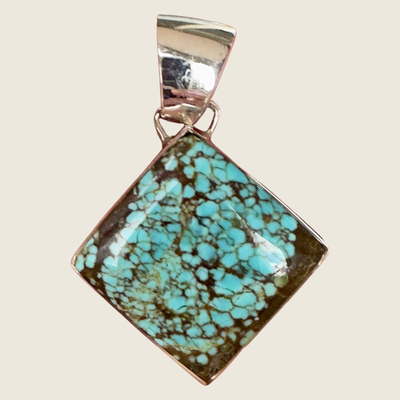
The matrix refers to the host rock remnants that remain within the turquoise, appearing as intricate spiderwebs or thick ribbons of iron pyrite, rhyolite, or quartz. These patterns act as a geological fingerprint, often hinting at the specific mine where the stone was gathered. For instance, Royston stones frequently showcase a rich brown or golden matrix against deep greens, while Kingman turquoise is known for its high-contrast black or silver-colored veins. Consult our turquoise buying guide to understand more about how these geological markers help us verify the origin of each stone we use in our studio.
Understanding the difference between untreated and stabilized stones is also vital for any collector. Untreated stones are completely natural, but they're exceptionally rare because turquoise is porous and can change color when it absorbs skin oils or perfumes. Most high-quality artisan jewelry uses stabilized stones, which have been bonded with a clear, colorless resin to harden the mineral and preserve its original hue. This process is an accepted standard in the industry that ensures your necklace remains as vibrant as the day it was made, unlike dyed imitations that will eventually fade or bleed. We believe in transparency regarding these processes, as it honors both the stone and the person who wears it.
Selecting the Right Length and Weight for Your Collection
Choosing the correct length and strand count for a sterling silver multi-strand turquoise necklace ensures the piece drapes with a natural rhythm while remaining comfortable for all-day wear. Multi-strand necklaces typically range from 16-inch chokers that hug the throat to 30-inch statement pieces that rest near the solar plexus. Shorter lengths require a secure .925 sterling silver toggle or lobster clasp to manage the tension of the gathered strands. In contrast, longer designs often utilize a slip-over-head construction, though a clasp is still preferred for pieces with high strand counts to prevent unnecessary stretching of the stringing material. Your choice should always consider the neckline of your clothing, as the number of strands will dictate how much visual space the jewelry occupies.
Strand Count and Visual Impact
Three to five strands offer a subtle, grounded aesthetic that layers beautifully with single-stone pendants or simple chains. When you move into the range of ten to twenty strands, the necklace becomes a bold statement piece that serves as the focal point of an outfit. These higher strand counts require larger sterling silver cones to gather the threads securely at the clasp. Cones are the funnel-shaped silver findings that transition the multiple strands into a single point of closure. Using solid .925 sterling silver for these components is essential, as they bear the full structural load of the mineral strands.
Weight Distribution and Comfort
A well-constructed necklace distributes its weight evenly across the back of the neck to prevent fatigue or strain. A sterling silver multi-strand turquoise necklace with ten or more rows requires a soft, flexible stringing material that allows each individual strand to move independently, mimicking the organic flow of a garden path. If you're sensitive to neck pressure, we recommend starting with a lower strand count or a shorter length to find your personal comfort threshold. Heavier pieces with twenty or more strands of genuine mineral are best reserved for shorter durations where their significant visual impact is most appreciated. The weight should feel like a quiet, intentional anchor, never a burden.
Finding the right balance between physical weight and visual style is a personal journey that begins with understanding your own comfort. You can explore our diverse range of lengths and strand counts in our collection of necklace pendants and multi-strand designs.
Caring for Sterling Silver and Genuine Turquoise Necklaces
Proper maintenance of a sterling silver multi-strand turquoise necklace involves protecting the porous stones from chemicals while keeping the .925 sterling silver free from tarnish. Because turquoise is a hydrous phosphate of copper and aluminum, it acts like a sponge, absorbing invisible elements from your daily routine such as perfumes, hairsprays, and natural skin oils. Over time, these substances can penetrate the stone and alter its color, shifting a vibrant sky blue toward a duller green. Protecting the integrity of the hand-cut beads and the silver findings ensures that the piece remains a vessel for your own narrative for decades. We recommend making your jewelry the last thing you put on in the morning and the first thing you take off at night to minimize exposure to cosmetic residue.
Cleaning Techniques for Stones and Metal
Maintaining the luster of your jewelry doesn't require complex tools, but it does demand a gentle touch to avoid damaging the mineral's structure. You should never use ultrasonic cleaners or liquid jewelry dips on turquoise. These methods use high-frequency sound waves or acidic solutions that can shatter the delicate matrix of a stone or strip away the stabilization that protects its color. Instead, use a soft, damp cloth to wipe the beads after each wear, removing any surface oils before they can be absorbed. For the .925 sterling silver components, a dedicated polishing cloth is the most effective tool. Be careful to apply the cloth only to the silver cones and clasps, as the polishing compounds can leave a gray residue if they get trapped in the pores of the turquoise. Always allow the necklace to air dry completely before storing it, as moisture can weaken the stringing cord over time. You can find more detailed guidance on our care and repair page.
Safe Storage Practices
The way you store your jewelry is just as vital as how you clean it to prevent physical damage and oxidation. Multi-strand necklaces are particularly susceptible to kinking or tangling if they are left in a heap in a jewelry box. We recommend storing the piece flat or hanging it on a soft hook to maintain the natural, fluid curve of the strands. Keep your jewelry in a cool, dry place away from direct sunlight, which can cause certain stones to become brittle or lose their saturation. Using a tarnish-resistant pouch for the silver components will significantly reduce the need for frequent polishing by limiting the metal's exposure to air. This simple step keeps the silver bright and ready for your next occasion without the need for abrasive cleaning. Taking these small, intentional steps honors the craftsmanship of the silversmith and the deep geological history of the stones themselves.
Embracing the Narrative of Authentic Southwestern Craftsmanship
Choosing a sterling silver multi-strand turquoise necklace is an intentional act of gathering the earth's quiet history into a single, wearable statement. By looking for the honest markers of a natural matrix and the structural integrity of .925 sterling silver, you ensure your piece is a true reflection of artisan skill rather than a mass-produced imitation. You've learned how to balance the physical weight of genuine minerals with the graceful drape of hand-cut beads, creating a connection to the land that plastic substitutes can never provide.
Our Santa Fe studio remains dedicated to the transparency of stone origins and the preservation of traditional silversmithing techniques. We believe every piece should be a vessel for emotion, carrying the weight of the minerals and the spirit of the maker into your daily life. Your journey toward owning a documented, mine-specific heirloom begins with a commitment to authenticity and fine detail.
We hope this guide helps you find a piece that resonates with your spirit and remains a cherished part of your collection for many years.
Frequently Asked Questions
How do I know if my turquoise is real?
Genuine stones carry a cool temperature and a distinct heft that plastic imitations simply can't mimic. When you examine a sterling silver multi-strand turquoise necklace, look for subtle variations in the matrix and color across the different rows. If every bead looks identical in pattern or shade, it's likely a mass-produced imitation or dyed stone. Nature rarely repeats itself so perfectly; those small asymmetries are actually proof of a stone's organic origin.
What is liquid silver?
Liquid silver is a term for very small, hand-drawn tubes made of .925 sterling silver. When hundreds of these fine tubes are strung together in multiple rows, they create a shimmering, fluid effect that catches the light like moving water. This technique is a traditional hallmark of Southwestern style jewelry, offering a delicate silver presence that drapes comfortably. It's an excellent choice for those who want a piece that feels light yet visually impactful.
Can I wear a multi-strand necklace every day?
You can certainly wear a well-made multi-strand necklace for your daily activities, provided the stones are properly stabilized. High-quality sterling silver and genuine minerals are durable, but they shouldn't be exposed to heavy physical activity or water. It's best to apply your lotions and perfumes before putting on your jewelry to prevent the porous stones from absorbing chemicals. Taking these small steps helps your piece remain a vibrant part of your wardrobe for decades.
How do I clean sterling silver without damaging the stones?
The safest way to clean your necklace is with a dedicated silver polishing cloth used strictly on the metal findings. Gently rub the silver cones, beads, and clasps, but be careful to avoid touching the turquoise stones directly. The compounds in the cloth can be abrasive to the mineral's surface. You should never submerge the piece in liquid silver cleaner or use ultrasonic machines, as these harsh methods can easily damage or discolor porous turquoise.
Article by
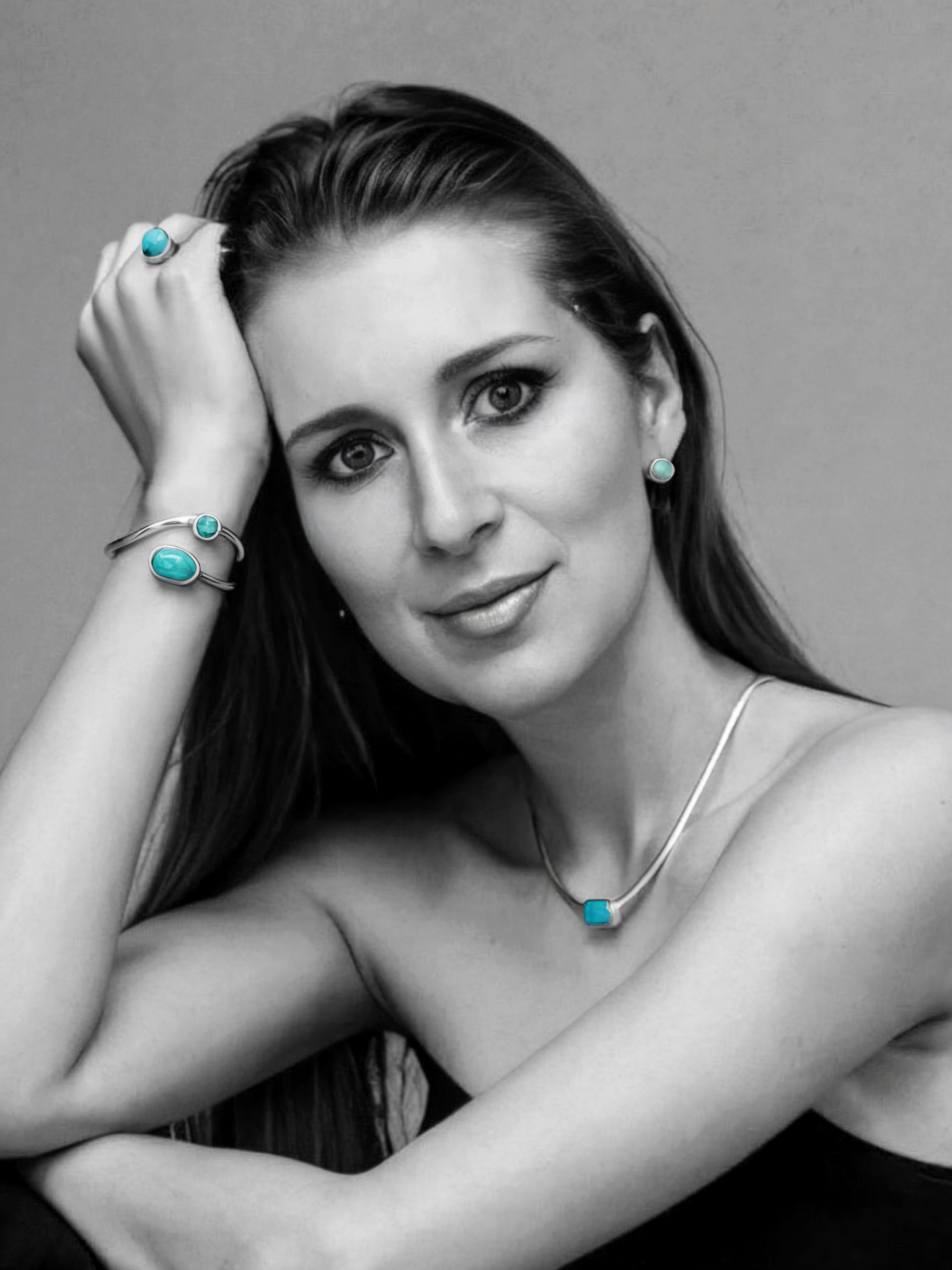
Kimberly Cordova
Kimberly Cordova is the founder and creative director of Wildflower Artisans, a handmade jewelry brand rooted in Santa Fe. Real turquoise, solid sterling silver, and a small line set in solid 14K gold. She built Wildflower around a simple belief: the best jewelry is the kind you actually reach for, not the kind you save for someday.
The collection is built three ways. Some pieces are made in-house, cut by her husband Greg from stones he sources himself, including rough from the family's King's Manassa Mine in Colorado and White Buffalo Mine in Nevada. Some are designed by Kimberly and fabricated by a trusted circle of Santa Fe silversmiths. And some are finished work she curates from artisan makers whose craft meets the same standard, because building a real collection means knowing when to make and when to look.
Turquoise leads, joined by White Buffalo, Wild Horse, Lapis Lazuli, Spiny Oyster, Black Onyx, Opal, and other genuine semi-precious stones. No shortcuts on the stone, the silver, or the story behind either.
Her writing covers everything she has learned along the way: how turquoise forms, how to tell natural from stabilized, what makes one mine different from another, how to read a bezel, and how to shop with confidence in a market that is not always straightforward. It is the kind of plainspoken information she wished someone had laid out for her when she was starting out.
Browse the collection at wildflowerartisans.com. Questions about a stone, a setting, or a specific piece are welcome any time.
0 comments