

Imagine standing in our Santa Fe studio, holding a piece that captures the vibrant orange of a Baja sunset against the cool, steady blue of a high-desert sky. It's easy to fall in love with the striking contrast of a spiny oyster and turquoise bracelet, but we know that hesitation often follows the initial spark of wonder. You might worry about the authenticity of the stones or the durability of the silver, wondering if what you see online is a genuine artisan piece or a mass-produced imitation made of treated materials. We believe your jewelry should be a vessel for emotion, grounded in the reality of the earth.
We understand that finding authentic Southwestern jewelry requires a discerning eye for both geological rarity and technical silversmithing. This guide will teach you how to identify high-quality stone pairings, evaluate the integrity of a .925 sterling silver bezel, and choose a piece that reflects genuine craftsmanship. We'll explore the nuances of hand-cut cabochons and professional settings, giving you the knowledge to select a one-of-a-kind heirloom that you can wear with confidence and pride.
Key Takeaways
- Learn to distinguish between genuine Spondylus shell and imitation materials by understanding the natural ridges and vivid color variations inherent in high-quality specimens.
- Discover how to evaluate the structural integrity of a spiny oyster and turquoise bracelet by examining the quality of the .925 sterling silver bezel and the precision of hand-cut cabochons.
- Understand the significance of the matrix in turquoise stones and how these unique host rock remains act as a natural fingerprint for every handcrafted piece.
- Identify the differences between rigid cuff bracelets and articulated link designs to find a style that provides both aesthetic harmony and a secure, professional fit.
- Gain insights into the studio process of selecting one-of-a-kind stones that honor Southwestern style through a stone-first design philosophy.
The Appeal of the Spiny Oyster and Turquoise Bracelet
A spiny oyster and turquoise bracelet represents a striking union between the vibrant, sun-drenched hues of the ocean and the grounded, cool tones of the high desert. This pairing is a cornerstone of Southwestern style jewelry, celebrated for its high-contrast aesthetic and deep roots in regional history.
The visual impact of these two materials together is undeniable. We often see the fiery oranges and deep reds of the spiny oyster shell acting as a warm counterpoint to the calming blues or greens of genuine turquoise. It's a dialogue between elements. Collectors prize this combination not just for its beauty, but for the way it captures the essence of the landscape and the sea in a single, wearable piece. In our Santa Fe studio, we see these bracelets as more than accessories; they are small, handheld landscapes that tell a story of trade and tradition. The intentional choice of a high-contrast matrix in the turquoise can further elevate the orange of the shell, creating a piece that feels alive with movement and color.
Tradition in Southwestern Style Jewelry
Long before modern silversmithing techniques reached the high desert, these materials were prized commodities. Shell from the Gulf of California and turquoise from regional mines were traded across vast distances, often appearing together in traditional beadwork and mosaic patterns. This pairing wasn't just about color; it was about the harmony of disparate worlds. In our working studio, we honor this history by transitioning those ancient palettes into contemporary settings. While the methods have evolved from hand-strung beads to precise bezel settings, the core aesthetic of a spiny oyster and turquoise bracelet remains a testament to centuries of artisan-made work. The shift to using .925 sterling silver has allowed for more intricate designs, yet the focus remains where it should be: on the raw, natural beauty of the stones.
Why Authenticity Matters to Collectors
In a market flooded with mass-produced alternatives, the integrity of your materials defines the value of your collection. Many retailers offer "block turquoise" or dyed howlite, which are merely plastic or crushed stone imitations designed to mimic the look of the real thing. We believe an heirloom piece must be honest. When you choose spiny oyster jewelry or genuine turquoise, you are investing in the geological history of the Earth. Authentic materials possess a natural matrix and color variation that cannot be replicated in a factory. Furthermore, we strictly use .925 sterling silver, avoiding the mystery metals or plated finishes that eventually flake or irritate the skin. Knowing the specific origin of your stones adds a layer of narrative and value that treated materials simply lack.
- Natural Variation: Genuine stones feature unique patterns and inclusions that tell the story of their formation.
- Structural Integrity: Solid .925 sterling silver provides a secure foundation for heavy cabochons.
- Long-term Value: Authentic artisan pieces retain their beauty and significance over generations.
Understanding the Materials: Spondylus Shell and Genuine Turquoise
To create a durable spiny oyster and turquoise bracelet, we must first respect the raw nature of the materials. Spiny oyster comes from the Spondylus shell, a bivalve mollusk found in the warm waters of the Sea of Cortez and the Pacific. These shells are known for their vivid natural colors and distinct, spiky ridges that require careful grinding to reveal the smooth, saturated color beneath. Spondylus princeps is the primary species used in high-end lapidary work. Turquoise, by contrast, is a hydrous phosphate of copper and aluminum that forms over millions of years in arid climates. Its final hue is a direct result of the mineral content in the surrounding host rock. Copper creates the iconic blues we love, while iron or aluminum shifts the stone toward shades of green and lime.
Working with these two materials together presents a unique challenge for the silversmith. We have to balance different hardness levels on the Mohs scale, which is a system used to measure a mineral's resistance to scratching. Turquoise typically sits between a 5 and 6, while spiny oyster is softer, usually ranging from 3.5 to 4. This means the shaping and polishing process must be handled with a steady, experienced hand to ensure neither material is over-cut or damaged. It's a delicate dance in the studio, ensuring the bezel is tight enough to secure the stone without putting undue pressure on the more fragile shell. A bezel is a thin strip of silver that we hand-fit around the stone's perimeter to provide a permanent, protective seat. The combination within a spiny oyster and turquoise bracelet requires this level of technical precision to ensure the piece lasts as a wearable heirloom.
Colors and Varieties of Spiny Oyster
The palette of the Spondylus shell is surprisingly diverse, ranging from sun-bleached oranges to regal purples. Generally, the depth of color indicates the depth at which the shell was harvested. Orange shells are found in shallower waters, while the rarer purple varieties thrive in much deeper, cooler environments. When you look at a genuine shell, you'll see natural variations in shade and white striations. These aren't flaws; they're the organic fingerprints of the sea, proving that the material hasn't been dyed or stabilized with artificial pigments. In our Santa Fe studio, we prefer working with these untreated colors because they offer a depth and soul that mass-produced imitations can't replicate.
Matching Turquoise Mines to Shell Hues
Achieving aesthetic harmony in a bracelet often comes down to matching the specific mine's character with the shell's intensity. For instance, the clear, "robin's egg" blue of Sleeping Beauty turquoise provides a classic, high-contrast look when paired with deep red spiny oyster. If you prefer a more earthy, autumnal feel, the mossy greens and golden matrix found in Royston or Carico Lake turquoise beautifully complement the warm glow of orange shell. For a deeper dive into these mine-specific characteristics, you can explore our turquoise buying guide to see how different stones might speak to your personal style.
If you are ready to find a piece that resonates with your own style, we invite you to browse our latest collection of spiny oyster jewelry. Each bracelet is crafted in our Santa Fe studio using hand-selected stones and .925 sterling silver.
Design Styles and Aesthetic Harmony in Southwestern Jewelry
Artisan-made bracelets generally fall into three distinct categories: rigid cuffs, articulated links, or hand-strung beads. Each construction method offers a unique way to present the vibrant pairing of Spondylus shell and genuine turquoise while maintaining the structural integrity required for daily wear. Choosing the right style is often a matter of balancing personal comfort with the visual weight of the stones. In our studio, we consider how the metalwork supports the stones without overshadowing their natural character. If a stone is particularly large or has a heavy matrix, a wider cuff provides the necessary balance. Conversely, smaller, more delicate hand-cut stones often look best in a link or beaded format, where the repetition of color creates a rhythmic, meditative effect.
Cuff bracelets serve as a broad, stable canvas for elaborate silverwork and larger cabochons. A cabochon is a stone that has been shaped and polished into a smooth, rounded surface rather than faceted. Because cuffs are rigid, they can support the weight of multiple stones or one significant centerpiece without the risk of the setting shifting or twisting. We often favor the cuff for its ability to showcase the intricate matrix of the turquoise alongside the bold striations of the spiny oyster. Link bracelets offer an articulated alternative for those who prefer a more fluid, draped fit. Articulated jewelry is made of segments connected by flexible joints. This style allows the spiny oyster and turquoise bracelet to move with the wearer, making it a practical choice for a busy lifestyle. Beaded designs focus on the raw, tactile texture of the materials, often interspersed with .925 sterling silver accents to highlight the organic beauty of the shell and stone in their most elemental form.
The Structural Integrity of Cuffs
A well-made cuff must balance weight with wearability. We utilize split shanks or heavy-gauge .925 sterling silver to provide a sturdy foundation for the stones. A split shank is a bracelet frame that divides into two or more sections as it approaches the stone setting. The silver must be thick enough to resist bending while remaining resilient. Many handcrafted cuff bracelets also feature hand-stamped details, adding a layer of artisan-made character that mass-produced pieces lack. These impressions are made using custom steel stamps, creating a unique texture on the silver.
Link and Beaded Variations
For women who prefer a lighter feel, link and beaded styles provide elegance without the bulk of a heavy cuff. The longevity of a link bracelet depends on the quality of its connections, such as hinges or jump rings. Jump rings are small metal loops used to join jewelry components together. Our hand-strung beaded pieces are finished with a secure .925 sterling silver clasp to ensure the bracelet stays exactly where it belongs. These styles allow the vibrant colors of artisan-made jewelry to move naturally with the wearer throughout the day.
Technical Details: Bezels, Matrix, and Hallmarks
Checking the technical markers of quality ensures your spiny oyster and turquoise bracelet is a lasting investment rather than a temporary accessory. We look for specific signs of silversmithing excellence, such as the security of the stone settings and the clarity of the metal stamps.
The Importance of the Bezel Setting
A secure bezel setting is essential for protecting the edges of both spiny oyster and turquoise stones from daily wear. A bezel is a strip of metal that wraps around the stone to hold it in place. A tight, flush fit where the silver meets the stone without any visible gaps is a sign of superior silversmithing. This precision prevents the stones from rattling or becoming loose over time. In our studio, we hand-burnish the silver to ensure it sits perfectly against the cabochon, creating a protective frame. If you can see light between the stone and the silver, the setting is insecure. A serrated bezel offers additional grip and a decorative edge for softer stones.
Reading the Stone Matrix and Purity Marks
The matrix and hallmark stamps serve as the definitive records of a stone's origin and the metal's purity. The matrix refers to the host rock remains within the turquoise, which provides a unique fingerprint for every stone. These patterns can range from fine "spiderweb" lines to heavy, chocolate-colored patches of host rock. These details help collectors verify that a stone is natural rather than a synthetic imitation often found in mass-produced turquoise jewelry. Authentic artisan pieces will always be stamped with a hallmark and a metal purity mark such as .925. The .925 stamp confirms the piece is made of sterling silver, containing 92.5 percent pure silver mixed with copper for durability. A hallmark identifies the specific studio or silversmith responsible for the work, acting as a signature of authenticity. We've found that collectors often look for these marks as a first step in verifying a piece's history.
We apply these rigorous standards to every piece that leaves our workbench to ensure they become cherished heirlooms. You can explore our latest work and see these details firsthand in our collection of one-of-a-kind artisan pieces.
Selecting Your One-of-a-Kind Wildflower Bracelet
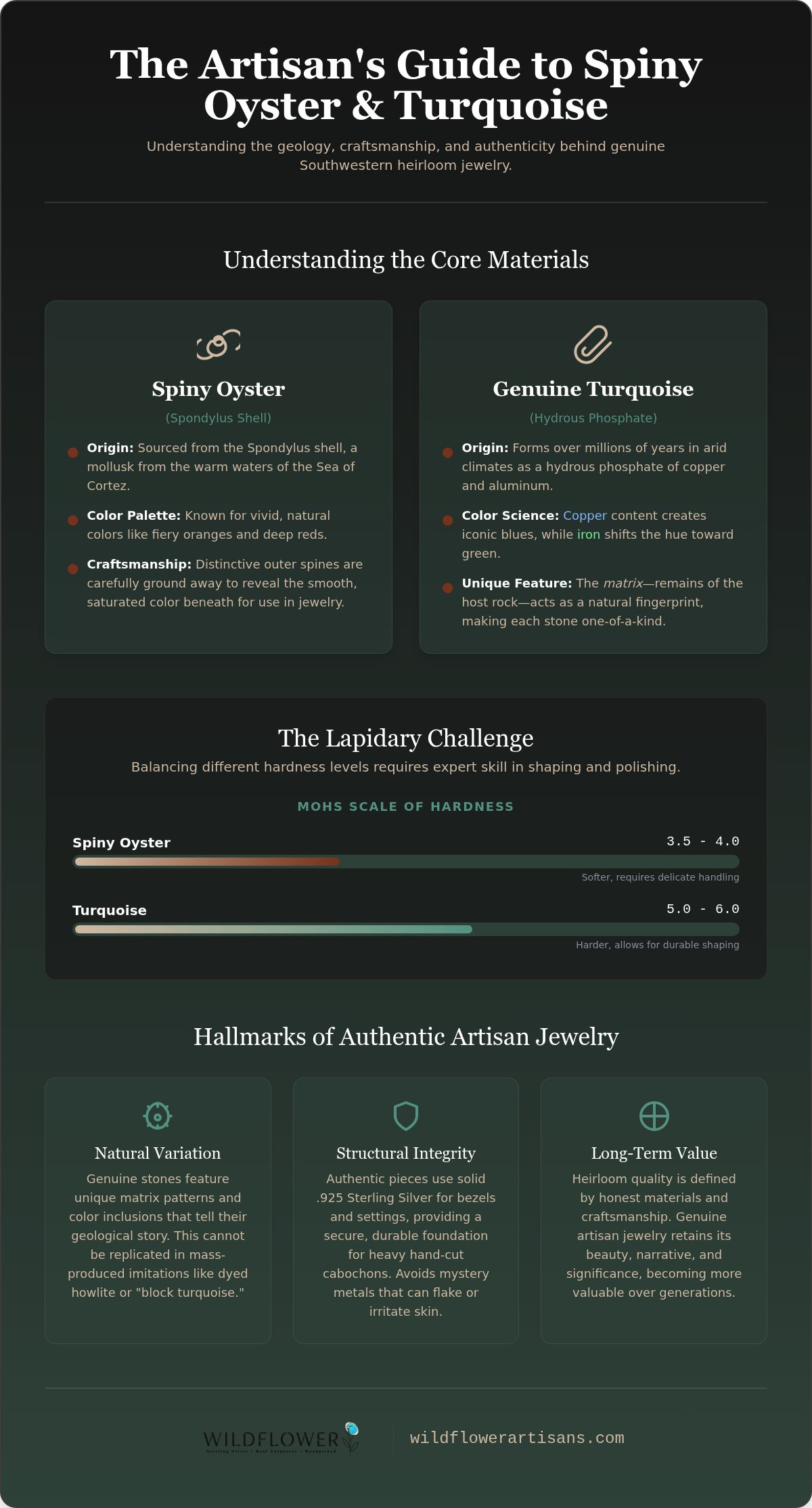
Choosing a piece from Wildflower Artisans means selecting a design where the natural character of the stone takes precedence over the silver frame. In our studio, we prioritize hand-selected cabochons that exhibit the most compelling color and matrix from reputable mines. We follow a stone-first philosophy, ensuring the silverwork acts as a quiet support for the raw material. Every spiny oyster and turquoise bracelet we create is a direct response to these organic elements. By supporting our studio, you're helping maintain traditional artisan-made techniques in a modern context, ensuring that Southwestern style remains rooted in authentic craftsmanship. You can see this dedication to material in our full range of handcrafted jewelry.
Determining Your Correct Wrist Size
Finding a comfortable fit is the final step in your journey to owning a handcrafted heirloom. To measure your wrist, wrap a flexible tape measure or a simple piece of string around the area where you want the bracelet to sit. Mark the point where the ends meet and measure that length against a ruler to find your total circumference. When you choose a cuff style, you must account for the gap. The gap is the open space between the two ends of the silver frame that allows you to slip the bracelet over your wrist. Most cuffs have a gap of approximately one inch. Subtract this gap from your total wrist measurement to determine the inner circumference of the silver you need. If you're between sizes or have questions about a specific piece, we suggest checking our shipping and returns policy for details on sizing exchanges.
The Wildflower Stone-First Philosophy
Our commitment to authenticity begins at the source, where we select materials for their natural integrity and narrative. We source stones like Kingman turquoise and vibrant Spondylus shell directly from reputable suppliers. We avoid treated or stabilized stones whenever possible. Stabilization is a common industry process where resins are injected into soft stones to artificially harden them or deepen their color, but we prefer the honest, raw texture of the earth. This dedication to natural materials means every piece has its own soul and unique fingerprint. We invite you to browse our one-of-a-kind collection to find a spiny oyster and turquoise bracelet that resonates with your personal aesthetic and values.
Finding Your Next Heirloom Piece
We've explored the technical and aesthetic nuances that define high-quality Southwestern style jewelry. By now, you should feel confident in your ability to evaluate a spiny oyster and turquoise bracelet for structural integrity and material authenticity. You know that a secure, hand-burnished bezel and a clear .925 hallmark aren't just minor details; they're the signatures of a dedicated silversmith. These markers ensure that the piece you choose is as durable as it is beautiful.
Our studio remains committed to a stone-first philosophy. We use only guaranteed genuine Spondylus shell and hand-selected turquoise from reputable mines, ensuring that every cabochon tells its own story. We prioritize solid .925 sterling silver construction because we want your chosen piece to withstand the rhythms of daily wear while maintaining its character for generations. Authenticity is the foundation of everything we build, and we're honored to share these traditional techniques with you.
We hope this guide serves as a helpful companion as you look for a piece that truly resonates with your personal style. Finding jewelry that connects you to the natural world is a special experience, and we're here to help you make a choice you'll cherish.
Frequently Asked Questions
How can I tell if the spiny oyster in my bracelet is real?
You can identify genuine spiny oyster by looking for natural striations, tiny pits, and organic color shifts rather than a perfectly uniform plastic appearance. Real shell feels cool against the skin and possesses a distinct, earthy weight that imitations lack. We also recommend examining the setting. High-quality shells are hand-fitted into a professional bezel rather than simply glued into a mass-produced frame.
Is turquoise and spiny oyster jewelry durable for daily wear?
Turquoise and spiny oyster are durable for thoughtful daily wear, though both materials are relatively soft, ranking between 5 and 6 on the Mohs scale. While our sterling silver construction is sturdy, we suggest removing your jewelry during heavy manual labor or when using harsh chemicals. Preserving the natural luster of your spiny oyster and turquoise bracelet requires a gentle approach. Always take it off before swimming or cleaning to protect the stones.
What does the matrix in a turquoise stone indicate?
The matrix in a turquoise stone is the host rock that remains embedded within the mineral, appearing as black, brown, or golden veins. These patterns indicate the specific geological conditions where the stone formed and often help us identify its mine of origin. A natural matrix acts as a unique fingerprint. It is a reliable sign of authenticity because these intricate, rambling patterns are difficult to replicate in synthetic or block materials.
Why is sterling silver (.925) used instead of plated metals?
We use .925 sterling silver because it offers the necessary strength for jewelry while maintaining a high precious metal purity. Plated metals eventually wear away to reveal a base metal that can irritate your skin and lose its visual appeal. Choosing sterling silver ensures your piece remains a lasting heirloom. It can be polished, resized, or repaired by a professional silversmith, which is rarely possible with treated or plated alternatives.
How do I measure my wrist for a cuff bracelet?
To measure your wrist for a cuff, wrap a flexible tape measure or a piece of string around your wrist bone to find the exact circumference. You generally want the total inner circumference, including the gap, to be about 1/8 to 1/4 inch larger than your actual wrist size. This ensures the cuff sits securely without pinching. Knowing this measurement helps us find a piece that feels grounded and comfortable for all-day wear.
Can spiny oyster shell vary in color within a single bracelet?
Natural Spondylus shell often features a beautiful gradient of color, shifting from deep orange to creamy white within a single cabochon. These variations are a hallmark of genuine material and highlight the one-of-a-kind nature of artisan-made jewelry. We often select stones with these complementary shifts to create a balanced, visually interesting spiny oyster and turquoise bracelet. Every shell has its own narrative, making every piece of jewelry a celebration of natural beauty.
Article by
Kimberly Cordova
Kimberly Cordova is the founder and creative director of Wildflower Artisans, a handmade jewelry brand rooted in Santa Fe. Real turquoise, solid sterling silver, and a small line set in solid 14K gold. She built Wildflower around a simple belief: the best jewelry is the kind you actually reach for, not the kind you save for someday.
The collection is built three ways. Some pieces are made in-house, cut by her husband Greg from stones he sources himself, including rough from the family's King's Manassa Mine in Colorado and White Buffalo Mine in Nevada. Some are designed by Kimberly and fabricated by a trusted circle of Santa Fe silversmiths. And some are finished work she curates from artisan makers whose craft meets the same standard, because building a real collection means knowing when to make and when to look.
Turquoise leads, joined by White Buffalo, Wild Horse, Lapis Lazuli, Spiny Oyster, Black Onyx, Opal, and other genuine semi-precious stones. No shortcuts on the stone, the silver, or the story behind either.
Her writing covers everything she has learned along the way: how turquoise forms, how to tell natural from stabilized, what makes one mine different from another, how to read a bezel, and how to shop with confidence in a market that is not always straightforward. It is the kind of plainspoken information she wished someone had laid out for her when she was starting out.
Browse the collection at wildflowerartisans.com. Questions about a stone, a setting, or a specific piece are welcome any time.
0 comments