

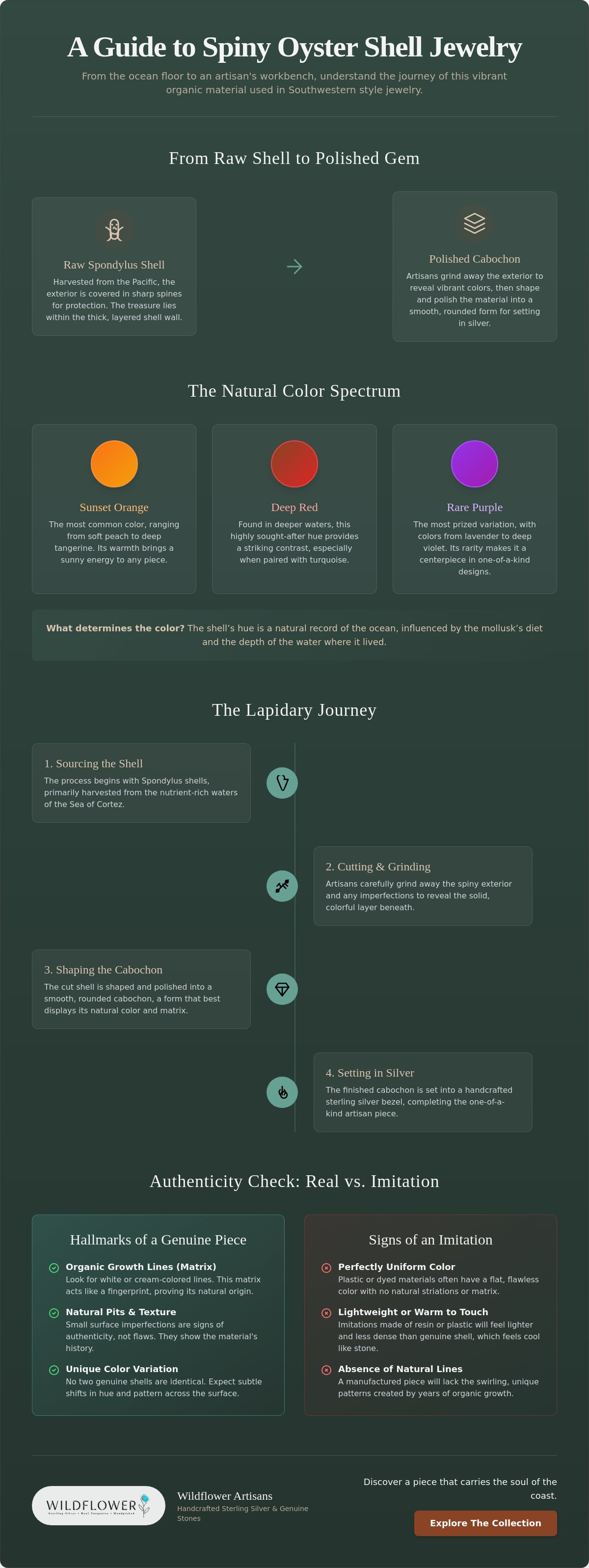
The most striking colors in the high desert don't come from the earth, but from the sea. A raw Spondylus shell looks more like a weathered, barnacle-covered rock than a treasure, hidden beneath the sharp, protective needles that define spiny oyster shell jewelry. It's only after an expert artisan carefully grinds away the rough, calcified exterior that the deep reds, sunset oranges, and rare purples are finally revealed, offering the brilliant, saturated colors of a desert sunset found at the bottom of the ocean. These organic materials have been traded across the Southwest for centuries, valued for a natural vibrancy that remains unmatched by any land-based stone.
You've likely admired these swirling patterns and textures while worrying if the piece you're considering is a genuine gift from the tide or a simple plastic imitation. At Wildflower Artisans, we believe that choosing a new piece for your collection should be a moment of discovery rather than a gamble. This guide will help you explore the rich history of the Spondylus shell and the specific artisan techniques used to create handcrafted sterling silver settings. We'll help you understand color variations and recognize quality lapidary work so you can find a unique piece that carries the soul of the coast into your jewelry collection.
Key Takeaways
- Learn how genuine spiny oyster shell jewelry is crafted from Spondylus mollusks found in the Pacific and the Sea of Cortez.
- Understand how water depth and diet create the distinctive natural palette of orange, red, and purple hues.
- Identify artisan quality by looking for organic growth lines and natural pits that distinguish real shell from plastic imitations.
- Discover the technical skill required to cut and set these delicate organic materials without cracking the raw shell.
- Master the proper care techniques to protect the luster of your jewelry from harsh chemicals and everyday wear.
What is spiny oyster shell jewelry?
Spiny oyster shell jewelry is a style of handcrafted ornamentation that features the vibrant, hand-cut shells of the Spondylus mollusk set in sterling silver. These shells are primarily harvested from the warm, nutrient-rich waters of the Sea of Cortez and the Pacific coast. While the raw shell is covered in sharp, protective spines, the inner layers reveal a spectrum of natural colors that have captivated artists for generations. The Spondylus genus includes several species, though Spondylus calcifer and Spondylus princeps are the most common varieties found in these designs.
Artisans value this material for its dense structure and the natural striations that run through the shell. It is often used alongside turquoise in multi-stone designs because the warm oranges and reds create a striking contrast with the cool blues of the desert. To better understand how these raw materials look before they are polished, watch this brief overview of the shell's natural state:
The history of shell in Southwestern style
Long before the arrival of silverwork, shell was a primary form of currency and trade between coastal and inland regions. Coastal communities brought these vibrant materials inland, where they were shaped into beads or used as ceremonial objects. For those living in the arid high desert, the shell served as a symbol of water and abundance. As silversmithing techniques evolved, artisans began to cut the shell into refined cabochons. A cabochon is a stone or shell that has been shaped and polished into a smooth, rounded form rather than faceted. Today, the material remains a staple of one-of-a-kind artisan pieces, bridging the gap between ancient tradition and modern aesthetics.
Biological properties of the Spondylus shell
The name spiny oyster is actually a bit of a misnomer. While they are bivalve mollusks, they are more closely related to scallops than true oysters. The exterior of the shell is covered in long, needle-like spines that protect the mollusk from predators. These spines give the shell its common name, but they are ground away during the lapidary process. Lapidary refers to the art of cutting and polishing stones or organic materials for jewelry. Artisans specifically look for the thickest parts of the shell wall to create cabochons. This thickness allows for the deep, saturated color density that makes spiny oyster shell jewelry so distinctive and durable for everyday wear.
Exploring the natural colors of Spondylus shells
The color of spiny oyster shell is determined by the depth of the water and the specific diet of the mollusk. Most spiny oyster shell jewelry features one of three primary color profiles: orange, red, or purple. These hues are not merely surface colors; they are baked into the very structure of the shell through years of organic growth. When an artisan polishes a raw shell, they reveal a natural record of the ocean's chemistry, with colors that range from sun-bleached pastels to deep, saturated jewel tones.
Natural variations often include white or cream-colored lines that add a distinct character to each piece. We refer to these patterns as the matrix. Matrix is the host material or veins of color that run through a stone or shell. In spiny oyster, these lines act like a fingerprint, ensuring that no two cabochons are ever exactly alike. They provide visual proof of the shell's organic origin, which helps collectors distinguish genuine material from mass-produced or dyed imitations. These growth lines often swirl across the surface, creating a sense of movement within the solid material.
Orange and red variations
Orange is the most common color, ranging from soft peach to deep tangerine. These shades are favorites for everyday wear because they bring a warm, sunny energy to any outfit. Red shell is found in deeper waters and is highly sought after for its intensity. Artisans often pair these colors with Kingman or Royston turquoise for a balanced contrast. This combination highlights the natural striations while grounding the piece in a classic Southwestern style. Using these warm tones alongside blue stones creates a visual bridge between the desert and the sea.
The rarity of purple spiny oyster
Purple shell comes from the very edge of the Spondylus limbatus shell and is the most valuable variation. Because the purple "limb" is quite thin, it requires expert lapidary skill to cut a cabochon without breaking the material. Historically, these shells were prized for demonstrating high social status and wealth among coastal cultures. Modern premium earrings often showcase these deep violet and plum tones, making them a rare addition to any collection. If you are ready to find a piece that speaks to you, feel free to explore our latest artisan arrivals to see these colors in person.
The lapidary process and artisan craftsmanship
Artisan craftsmanship in spiny oyster shell jewelry involves a meticulous lapidary process where raw shells are hand-cut and polished before being set into custom sterling silver bezels. This delicate balance of technical skill and artistic vision ensures the brittle organic material remains intact while revealing its vibrant natural colors. The journey of a single piece begins long before the silver is touched, starting with experts like Greg Cordova who select the raw shell. He looks for portions with the highest color density, ensuring that the finished piece will have that deep, saturated glow our collectors expect. It's a matter of looking past the jagged, calcified exterior to find the vibrant heart hidden within.
Every cabochon we feature is hand-cut and polished to reveal the hidden luster that the ocean spent years creating. This isn't a job for a machine. An artisan must follow the natural curves and striations of the shell, making decisions in real-time about where to cut and where to preserve. Once the shell is shaped, it's ready for its custom sterling silver setting. These bezels are built specifically for each unique cabochon, ensuring a perfect fit that protects the shell for decades of wear. This level of attention is what defines one-of-a-kind artisan pieces in the Southwestern tradition.
Cutting the cabochon
A cabochon is an organic material or gemstone that has been shaped and polished into a smooth, rounded form rather than being cut with flat facets. To reach this stage, the lapidary artist uses a series of increasingly fine grinding wheels to remove the sharp outer spines. This process requires a constant flow of water to keep the shell cool and prevent dust. Greg Cordova’s expert lapidary work ensures the integrity of Type 1 pieces by identifying and stabilizing any natural micro-fractures before the final polish. This technical expertise is the difference between a piece that lasts a lifetime and one that fails after a few months of wear.
Sterling silver settings and finishing
Once the shell is polished, the silversmith takes over to create a custom home for the material. We use a bezel, which is a thin band of sterling silver that is hand-fitted to wrap around the exact perimeter of the shell cabochon. This hand-cut band is then soldered to a base plate, creating a secure cup for the shell. Using high-quality sterling silver is non-negotiable for us, as it prevents skin irritation and provides the strength needed for a lasting setting. The final step is a high-speed polish that brings out the creamy, almost porcelain-like texture of the shell. It's a meditative end to a process that turns a rugged ocean shell into a refined piece of wearable art.
How to choose high quality shell jewelry?
High quality spiny oyster shell jewelry is identified by its distinct organic textures, significant weight, and the presence of natural growth lines that imitations cannot replicate. Genuine pieces will feel cool to the touch and exhibit subtle imperfections, like tiny pits or striations, that prove the material came from a living mollusk. These natural markers are the fingerprint of the sea, ensuring that your piece is a genuine product of the Pacific or the Sea of Cortez rather than a factory-made substitute.
When you're looking for a new addition to your collection, the first thing to check is the color consistency. Nature rarely produces perfectly uniform shades across an entire cabochon. If a stone looks too consistent or the color seems to pool darkly in the cracks, it might be dyed howlite or a composite resin. These fakes often feel light and warm like plastic, lacking the substantial, stony feel of a real Spondylus shell. Collectors should prioritize pieces that show a range of tones, as this depth is a hallmark of artisan-quality material.
Recognizing genuine shell vs. imitations
Spotting a fake often comes down to a simple tactile test. Hold the piece in your palm and notice the temperature. Real shell has a density that feels grounded and stays cool until it absorbs your body heat. If you look closely at the matrix, the color should be part of the shell's biological structure. Dyed materials often show darker concentrations of ink in the natural fissures of the stone, which is a clear sign of a treated imitation. Another indicator of quality is the silverwork itself. Genuine Southwestern style jewelry focuses on durability and detail, usually featuring hand-stamped patterns or carefully soldered bezels that mass-produced pieces lack.
The importance of silver hallmarks
A hallmark is an official mark stamped on the back or inside of a metal piece to certify its purity. For quality handcrafted jewelry, you should always look for the .925 stamp. This indicates that the piece is made of sterling silver, which is 92.5% pure silver mixed with 7.5% other metals, usually copper, to provide the necessary strength for daily wear. This standard is essential for preventing skin irritation and ensuring your jewelry doesn't bend or tarnish prematurely. You can see examples of these standards in the Wildflower jewelry collection, where we prioritize material integrity in every piece we curate.
Finding a piece that is both authentic and well-crafted is about trusting your senses and knowing the technical markers of quality. If you're ready to add a genuine, artisan-made piece to your collection, browse our shop to find a design that speaks to you.
Maintaining the luster of your sterling silver pieces
Spiny oyster shell is an organic material that requires gentler handling than mineral-based stones like turquoise or agate. To keep your jewelry looking its best, you should avoid exposing it to harsh chemicals and clean the silver elements only with a dedicated polishing cloth. Because shell was once part of a living mollusk, it is porous, which means the material has minute spaces or holes through which liquid or air can pass. This biological structure makes it vulnerable to absorbing substances that can cause permanent staining or dull the natural vibrancy of the colors.
One of the biggest threats to spiny oyster shell jewelry is the collection of everyday products we use. Perfumes, hairsprays, and even certain lotions contain alcohols and acids that can eat away at the polished surface of the shell, leaving it looking chalky. We always recommend putting your jewelry on as the very last step of your morning routine. This simple habit prevents the mist from your sprays from settling on the shell and clouding the deep reds and oranges you love.
Safe cleaning techniques
Cleaning these organic pieces doesn't require expensive solutions or equipment. In fact, you should never use ultrasonic cleaners for organic materials like shell. The high-frequency vibrations and heat can cause the shell to crack or even delaminate from its sterling silver setting. Instead, use a soft, damp cloth to gently wipe the shell portion after you wear it. If the material begins to look particularly dry or loses its glow, you can apply a tiny drop of USP-grade mineral oil to a cotton swab and lightly buff the surface. This helps restore the natural luster, but you must be careful to wipe away any excess oil immediately so it doesn't attract dust.
For the silver elements of your jewelry, a soft polishing cloth is your best tool for removing tarnish. Avoid using liquid silver dips at all costs. These harsh chemicals can seep into the pores of the shell and cause irreversible discoloration. A light touch with a dry cloth is usually all it takes to bring back the shine of the silver without risking the integrity of the handcrafted shell cabochon.
Storage and longevity
Proper storage is the final piece of the puzzle for maintaining your collection. We suggest using individual soft pouches to prevent the silver from scratching the shell surface when the pieces are tucked away. Extreme humidity or intense heat can also take a toll, as organic materials can become brittle if they dry out too much. If you live in an especially arid climate, keeping your jewelry in a cool, dark place helps preserve the moisture balance within the shell. For more detailed instructions on preserving the life of your favorite pieces, you can visit the Wildflower care and repair page.
Finding the right piece of spiny oyster shell jewelry is about more than just aesthetics; it's about connecting with a material that has a story of its own. You can explore our full collection of one-of-a-kind, artisan-made designs at wildflowerartisans.com. If you prefer the familiar protections of a larger marketplace, we also offer a selection of our work at wildflowersantafe.etsy.com.
Finding a piece that tells your story
Choosing a new addition for your collection is a personal journey that connects you to the natural world and the hands that shaped it. We've explored how to identify the subtle growth lines of genuine material and the importance of choosing handcrafted settings that protect these delicate organic treasures. You now have the tools to distinguish between mass-produced imitations and the vibrant, sunset hues of authentic spiny oyster shell jewelry. By prioritizing high-quality .925 sterling silver and expert lapidary work, you ensure that your piece remains a durable part of your wardrobe for decades.
Every design in our studio is artist-made in Santa Fe with guaranteed genuine stones and shells. Explore our latest collection of handcrafted spiny oyster and turquoise jewelry to find a piece that speaks to you, or visit our Etsy shop for additional buyer protections. We look forward to helping you find a unique treasure that captures the soul of the Southwest.
Frequently Asked Questions
Is spiny oyster shell jewelry made from real oysters?
Technically, these pieces are made from bivalve mollusks in the Spondylus genus, which are more closely related to scallops than the edible oysters found on restaurant menus. While the name oyster is common in the jewelry trade, these creatures live in much deeper, warmer waters than true oysters. Their thick, protective shells provide the dense, colorful material that artisans grind and polish into the cabochons used in Southwestern style designs.
How can I tell if my spiny oyster jewelry is authentic?
Authentic spiny oyster shell jewelry will exhibit organic growth lines, natural striations, and a cool, stony temperature when you first touch it. If the material feels light, stays warm like plastic, or looks perfectly uniform in color, it is likely a resin or dyed imitation. You should also look for small natural pits or imperfections on the surface, which indicate the shell's biological origin rather than a factory-molded composite stone.
Why does spiny oyster shell come in different colors like purple and orange?
The color of the shell is determined by the depth of the water where the mollusk lived and its specific diet of plankton and minerals. Orange shells typically come from shallower waters, while the prized reds and purples are found at much greater depths. Purple is specifically harvested from the thin outer lip or edge of the Spondylus shell, making it the rarest and most difficult color to cut into a cabochon without breaking the material.
Can I wear my spiny oyster shell jewelry in water?
You should avoid wearing your jewelry in water, especially in chlorinated pools, hot tubs, or the ocean. While the shell originated in the sea, the polished material is porous and sensitive to chemicals and temperature changes. Constant exposure to water can weaken the bond between the shell and the sterling silver bezel, and chemicals like chlorine can dull the natural luster and permanently discolor the organic surface.
Is spiny oyster shell a protected species?
Most species of Spondylus used in the jewelry trade are not currently listed as endangered, but they are subject to local harvesting regulations to ensure sustainability. We source our materials from reputable suppliers who follow legal guidelines for harvesting in the Sea of Cortez and the Pacific. Because these mollusks grow slowly, artisans prioritize using every part of the shell to respect the natural resource and minimize waste in the studio.
What is the difference between spiny oyster and turquoise?
Spiny oyster is an organic material harvested from the sea, while turquoise is a mineral gemstone formed in the earth through a chemical reaction of water, aluminum, and copper. They are frequently paired together in spiny oyster shell jewelry because their contrasting colors represent the traditional meeting of the sky and the sea. While turquoise is a stone, the shell is the remains of a living creature, making it softer and more porous than its mineral counterparts.
How should I store my Southwestern style jewelry to prevent tarnishing?
Store your pieces in a cool, dry place inside individual soft cloth pouches or airtight bags to minimize exposure to oxygen and sulfur. Since sterling silver naturally reacts with elements in the air to create tarnish, keeping your jewelry sealed helps maintain its shine between wearings. Avoid storing your shell jewelry in high-humidity areas like bathrooms, as extreme moisture can eventually make the organic material brittle or cause it to expand within the setting.
Why is red spiny oyster more expensive than orange?
Red shell is generally more expensive because it is found in deeper, more dangerous waters, which makes it harder for divers to harvest. The deep red color is also less common in the Spondylus population compared to the more abundant orange and yellow variations. Because the demand for these intense, saturated tones is high and the supply is naturally limited, red cabochons often command a higher price in the artisan market.

Article by
Kimberly Cordova
Kimberly Cordova is the founder and creative director of Wildflower Artisans, a handmade jewelry brand rooted in Santa Fe. Real turquoise, solid sterling silver, and a small line set in solid 14K gold. She built Wildflower around a simple belief: the best jewelry is the kind you actually reach for, not the kind you save for someday.
The collection is built three ways. Some pieces are made in-house, cut by her husband Greg from stones he sources himself, including rough from the family's King's Manassa Mine in Colorado and White Buffalo Mine in Nevada. Some are designed by Kimberly and fabricated by a trusted circle of Santa Fe silversmiths. And some are finished work she curates from artisan makers whose craft meets the same standard, because building a real collection means knowing when to make and when to look.
Turquoise leads, joined by White Buffalo, Wild Horse, Lapis Lazuli, Spiny Oyster, Black Onyx, Opal, and other genuine semi-precious stones. No shortcuts on the stone, the silver, or the story behind either.
Her writing covers everything she has learned along the way: how turquoise forms, how to tell natural from stabilized, what makes one mine different from another, how to read a bezel, and how to shop with confidence in a market that is not always straightforward. It is the kind of plainspoken information she wished someone had laid out for her when she was starting out.
Browse the collection at wildflowerartisans.com. Questions about a stone, a setting, or a specific piece are welcome any time.

0 comments