

Imagine holding a piece of living history in your palm, feeling the cool, substantial weight of a Navajo sterling silver bolo tie that carries the ancient story of the high desert within its intricate matrix. This is more than a simple accessory. It is a vessel for emotion and a celebration of natural beauty shaped by hands that respect the earth and its many rhythms. Every curve of the silver and every fleck of the stone tells a narrative of patience and artisanal skill that cannot be replicated by a machine.
We know that choosing such a significant piece often comes with a quiet hesitation. You might worry about distinguishing genuine turquoise from dyed howlite or feel confused by the subtle language of silver hallmarks. It is natural to seek a deep connection with your jewelry while wanting absolute certainty in its origin. You deserve to feel confident that your investment is a true work of art. In this guide, we will share the knowledge needed to identify authentic artisan craftsmanship by exploring the history of the bolo, the standards of sterling silver, and the delicate lapidary process that transforms a raw stone into a one-of-a-kind heirloom.
Key Takeaways
- Learn to identify a genuine Navajo sterling silver bolo tie by examining the unique hallmarks and the precision of hand-stamped patterns on .925 silver.
- Discover why the stone is the heart of every piece, prioritizing the natural matrix and color of earth-mined stones over mass-produced imitations.
- Understand the specialized lapidary process and the essential care techniques required to maintain the luster of porous stones like turquoise.
- Gain the confidence to select a style that balances your personal frame while appreciating the narrative behind every handcrafted Southwestern design.
Defining the Navajo Sterling Silver Bolo Tie
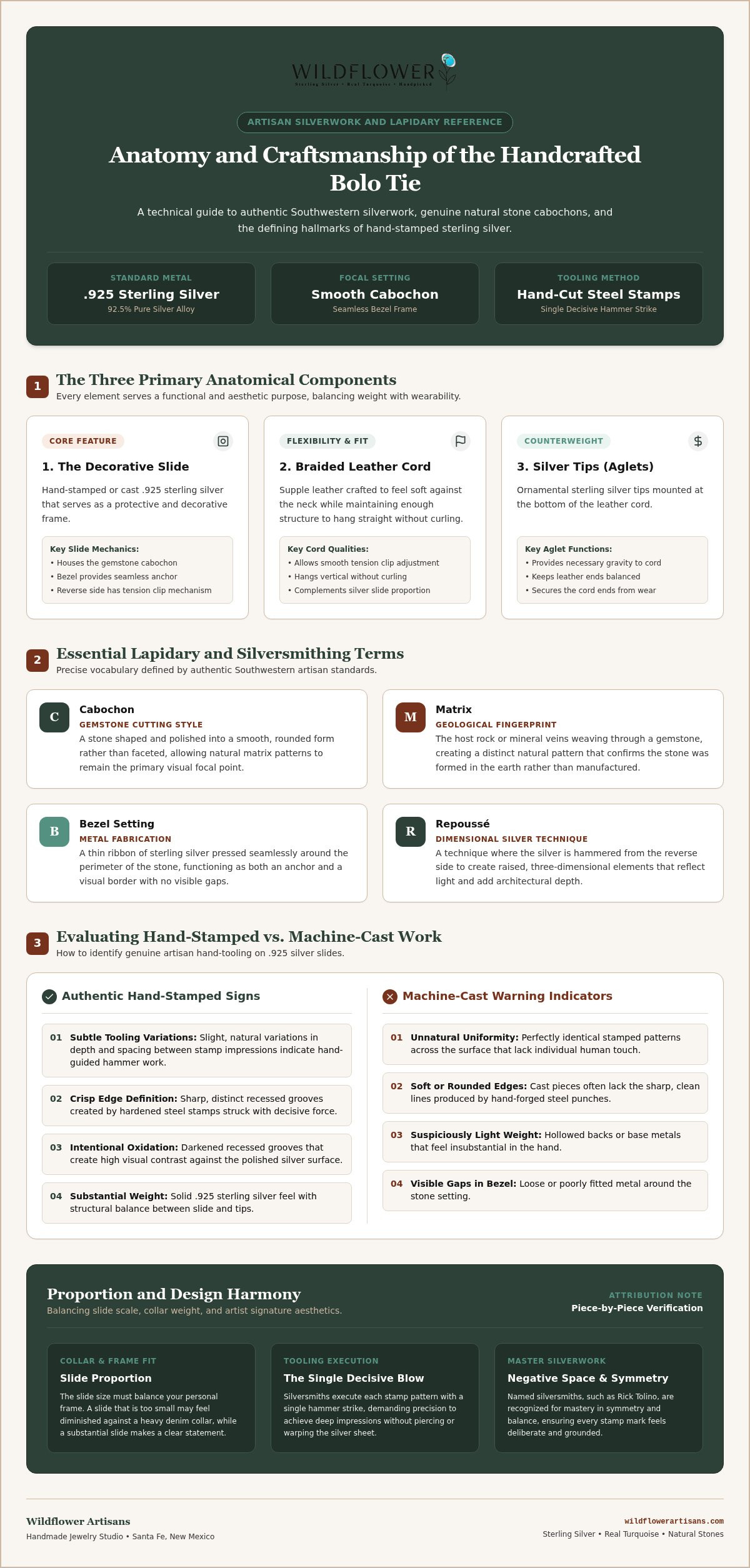
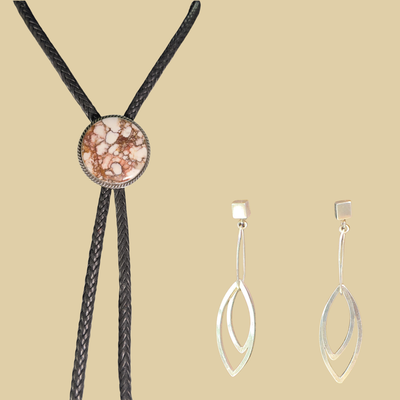
A Navajo sterling silver bolo tie is a functional sculpture that captures the intersection of Western utility and refined Southwestern artistry. At its most fundamental level, this piece of jewelry consists of three primary elements: a decorative slide, a supple leather cord, and ornamental silver tips, which are often called aglets. The slide itself is typically a hand-stamped or cast piece of .925 sterling silver, serving as a protective and decorative frame for a genuine gemstone cabochon. A cabochon is a stone that has been shaped and polished into a smooth, rounded form rather than faceted, a technique that allows the natural matrix to remain the focal point. Matrix refers to the host rock or mineral veins that weave through a gemstone, creating a unique fingerprint that proves the stone was born of the earth rather than a factory.
Anatomy of a Handcrafted Bolo
Every element of a handcrafted bolo tie serves a specific purpose, balancing weight with wearability. On the reverse side of the silver slide, a tension clip or slide mechanism allows the wearer to adjust the piece along the braided leather cord. This cord should feel soft against the neck yet possess enough structure to hang straight without curling. The silver tips at the bottom are not merely decorative; they provide the necessary gravity to keep the cord ends secure and balanced. When you are selecting a piece, the proportion of the slide to your frame is an essential aesthetic choice. A slide that is too small may feel diminished against a heavy denim collar, while a larger, more substantial slide makes a confident statement of artisanal appreciation.
The Role of Sterling Silver in Navajo Tradition
In the world of Southwestern silversmithing, sterling silver is the standard of excellence. This metal is an alloy containing 92.5 percent pure silver, offering the perfect balance of brilliant luster and the durability needed for daily wear. For many makers, the silver is far more than a simple backing; it is a vessel for emotion and a celebration of the natural world. Hand-stamping is a signature technique of this tradition. Artisans often create their own custom steel stamps to impress rhythmic patterns into the metal, ensuring that no two pieces are ever identical. Exploring the bolo tie history and cultural origins reveals how these ties evolved from practical neckwear into sophisticated symbols of regional identity. At Wildflower Artisans, we curate a selection of Bolo Ties that honor these material standards, ensuring every piece reflects the intentionality and skill of the artist. The silver acts as a quiet, strong housing that cradles the stone, preserving its beauty for generations to come.
Technical Features of Navajo Stamped Silverwork
Authentic Navajo stamped silverwork is defined by the use of hand-cut steel tools and a precise striking technique that creates deep, rhythmic patterns in .925 silver. This process is a soulful dialogue between the artist and the metal, requiring both physical strength and artistic restraint. Navajo silversmiths often forge their own stamps from reclaimed tool steel, carving unique geometric or botanical motifs that become their artistic signature. When creating a Navajo sterling silver bolo tie, the artisan must execute each stamp with a single, decisive blow of the hammer. This requires a meditative focus, as the strike must be strong enough to leave a clear impression but controlled enough to avoid piercing or warping the metal. To enhance these patterns, oxidation is used to darken the recessed areas, providing a rich contrast against the polished surface. Some pieces also feature repoussé, a technique where the silver is hammered from the reverse side to create elegant, raised dimensions that catch the light with every movement.
Identifying Hand-Stamping vs. Machine Casting
A machine can repeat a pattern, but it can't replicate the breath of a human hand. When evaluating a slide, look for slight variations in the depth or spacing of the stamps, which signal an authentic, hand-forged piece. Machine-cast items often feel suspiciously light and lack the crisp, sharp edges found in hand-stamped designs. Master silversmiths like Rick Tolino are known for their exceptional use of symmetry and negative space, ensuring that every mark on the silver feels intentional and grounded. You can explore our full range of handcrafted artisan jewelry to see how these techniques are applied across different styles of rings and cuffs.
The Art of the Bezel Setting
The bezel is the thin ribbon of silver that wraps around the stone, acting as both a physical anchor and a visual frame. In a high-quality Navajo sterling silver bolo tie, the bezel should be pressed seamlessly against the turquoise cabochon with no visible gaps. Whether the artist chooses a smooth, clean edge or a serrated 'scalloped' design, the fit must be secure to protect the stone from movement. This technical precision is what allows the natural beauty of the lapidary work to shine through without distraction.
The marriage of precise silverwork and hand-cut stones is what makes each of our Bolo Ties a true heirloom. Every piece in this collection is documented to ensure the artist's hand-stamping and the stone's origin are fully honored.
Evaluating Authenticity and Materials in Bolo Ties
A genuine Navajo sterling silver bolo tie is defined by the marriage of .925 sterling silver and earth-mined, natural stones. These pieces carry a weight and a warmth that mass-produced imitations simply cannot replicate. When you hold an authentic slide, you're holding a material promise that excludes mystery metals, lead, or nickel. Every element is intentional, from the purity of the silver to the unique matrix of the stone. Matrix refers to the host rock remains found within a turquoise stone, often appearing as intricate brown or black veins that tell the story of the stone's formation over millennia. This natural fingerprint ensures that your piece is as unique as the landscape from which it was pulled.
Spotting Real Turquoise
Distinguishing between a genuine stone and a clever imitation requires a keen, patient eye. A uniform, plastic-looking color is often a red flag for dyed howlite or stabilized block turquoise, which lacks the soulful depth of natural material. Authentic stones are celebrated for their character and origin, coming from storied locations like the King's Manassa or Royston mines. To deepen your understanding of stone hardness and the differences between various mines, we invite you to explore our turquoise buying guide. This knowledge transforms a purchase into a meaningful connection with the earth's quiet, enduring beauty.
Understanding Silver Hallmarks and Artist Signatures
On the reverse side of the silver slide, you'll often find small stamps known as hallmarks that serve as a signature of authenticity. Common marks include 'Sterling' or the specific initials of the maker, such as the stamp of P. Yazzie. While these marks are valuable markers of origin, a lack of a hallmark on vintage pieces doesn't always mean it's fake. Many older artisans didn't prioritize stamping their work, focusing instead on the rhythm of the hammer. At Wildflower Artisans, we document our collection piece by piece to ensure every attribution is verified. This process provides the confidence you need when investing in a one-of-a-kind heirloom. Knowing the story of the maker and the metal adds a layer of heart to the jewelry you wear every day.
How to Choose a Bolo Tie Style
Selecting a Navajo sterling silver bolo tie is an exercise in finding harmony between the raw beauty of the earth and your own personal narrative. You should look for a stone that speaks to your existing wardrobe, considering how the specific matrix and hue of the cabochon will interact with the colors you wear most often. Beyond the stone, the physical proportions of the slide are vital for a balanced aesthetic. A slide that is too large can overwhelm a light linen shirt, while a piece that is too small may lose its voice against a heavy denim jacket. Choosing a piece is about more than just fashion; it is about finding a vessel for emotion that resonates with your daily rhythms.
Cord length is another practical consideration that impacts the overall silhouette and comfort of the piece. Ideally, the braided leather cord should be long enough so that the silver aglets rest comfortably at the mid-chest level. This placement ensures the piece feels grounded and intentional rather than appearing as a fleeting afterthought. While turquoise remains the most recognizable choice, many collectors now look toward alternative stones like White Buffalo or Black Onyx to create a different emotional resonance. The weight of the silver tips should provide a gentle pull, allowing the cord to hang with a natural, straight grace that mirrors the organic growth of the landscape.
Matching Stone to Occasion
The stone you choose sets the tone for the entire ensemble and reflects the intentionality of the wearer. For a sophisticated evening look, the deep, light-absorbing depth of Black Onyx jewelry provides a refined alternative to traditional bright blues. If you are seeking a classic Southwestern statement, a vibrant Kingman turquoise with a delicate spiderweb matrix offers a timeless connection to the high desert sky. For those who prefer a more muted, artisan aesthetic, the rare white and black patterns of White Buffalo stone offer a neutral palette that pairs beautifully with almost any color, finding beauty in the asymmetrical and the organic.
Bolo Ties as Modern Essentials
Modern styling has moved beyond the rigid constraints of formal Western wear, inviting a sense of whimsical wonder into everyday dressing. You can wear a Navajo sterling silver bolo tie loosely with an open collar for a relaxed, creative appearance that feels approachable and warm. This accessory has become a gender-neutral staple, celebrated for the small-batch craftsmanship that sets it apart from mass-produced fashion. Pairing artisan silver with natural fabrics like denim or high-quality linens allows the textures of the handmade work to shine. It is a celebration of natural, fleeting beauty that adapts to your personal style.
The relationship between the artist's hand-stamping and the natural character of the stone is the hallmark of the Wildflower Artisans philosophy. Our Bolo Ties collection includes verified Navajo silverwork, with each piece documented to ensure the stone's origin and the maker's skill are fully honored.
Caring for Your Handcrafted Sterling Silver Jewelry
Caring for a Navajo sterling silver bolo tie involves a delicate balance of preserving the earth-mined stones and maintaining the integrity of the hand-worked metal. Because turquoise is a porous stone, it can absorb oils, soaps, and moisture, which may alter its natural color over time. Proper maintenance ensures that the story held within the silver and stone remains vibrant for generations. Sterling silver naturally develops a patina, a soft darkening that many collectors believe adds depth and character to the piece. This oxidation often settles into the deep grooves of the hand-stamping, making the patterns stand out with more clarity. To keep the leather cord from kinking or developing permanent bends, we recommend storing your bolo tie by hanging it from a hook or laying it perfectly flat in a jewelry drawer.
Preserving the Stone and Silver
Turquoise and other semi-precious stones are sensitive to the chemistry of our daily lives. You should always apply perfumes, hairsprays, and lotions before putting on your jewelry, allowing these products to dry completely. When the silver begins to dull, use a soft polishing cloth specifically designed for jewelry. Only buff the raised silver surfaces, being careful to avoid the stone and the recessed areas where the artist intended for the silver to remain dark. If a stone becomes loose or the silver sustains damage, it is best to seek professional care and repair to protect the structural integrity of the handcrafted work. This intentional care honors the labor of the silversmith and the natural beauty of the materials.
Maintaining the Leather Cord
The leather cord is the silent anchor of the bolo, and it requires its own rhythm of care. Over time, leather can become dry or brittle, especially in arid climates. A very light application of high-quality leather conditioner will keep the braid supple and prevent cracking. When moving the slide, do so with a gentle, steady hand. Forcing the tension mechanism can scuff the leather or cause the braid to fray. If you notice the cord becoming thin or the aglets feel insecure, it may be time for a replacement cord to ensure your slide remains safe. At Wildflower Artisans, we believe that the beauty of a piece grows as it is worn, provided it is treated with the respect a handmade heirloom deserves.
Embracing the Legacy of Southwestern Artistry
Choosing a Navajo sterling silver bolo tie is an act of preservation, a way to carry the quiet strength of the desert and the rhythmic pulse of the artisan's hammer into your everyday life. We have explored how to distinguish the deep, intentional marks of hand-stamping from the hollow repetition of machines, and how to read the unique matrix of a stone as a testament to its earthly origin. By prioritizing verified hallmarks and genuine .925 silver, you ensure your piece remains a vessel for emotion rather than a fleeting accessory.
At Wildflower Artisans, every stone is hand-selected for its unique matrix and character. We strictly exclude fake jewelry and mystery metals, offering only pieces handcrafted in small batches by skilled silversmiths. This commitment to authenticity protects the narrative of the work and the confidence of the collector.
May your chosen bolo serve as a grounded anchor in your wardrobe, a small but powerful celebration of natural beauty that grows more meaningful with every season.
Frequently Asked Questions
How do I know if my Navajo bolo tie is real sterling silver?
You can identify genuine sterling silver by looking for a ".925" or "Sterling" hallmark stamped onto the reverse side of the slide. This mark indicates that the piece contains 92.5 percent pure silver, which is the artisanal standard for a Navajo sterling silver bolo tie. While a magnet test can help because silver is not magnetic, it is not definitive. For absolute certainty, we recommend a professional acid test or purchasing from Wildflower Artisans to guarantee metal purity.
What is White Buffalo turquoise and is it actually turquoise?
White Buffalo is a distinct mineral characterized by its striking white color and dark chert matrix, rather than being a technical variety of turquoise. Although it is often referred to as white turquoise in casual conversation, it is technically a rare stone found in the Dry Hills of Nevada. At Wildflower, we value this stone for its stark, poetic contrast when set in silver. It offers a sophisticated, neutral alternative for those who appreciate the unique narratives of earth-mined stones.
Can I wear a bolo tie with a casual outfit?
A bolo tie is a remarkably versatile accessory that transitions easily into casual, everyday wear. You can pair it with a simple button-down shirt and your favorite denim for a look that feels both grounded and intentional. To achieve a more relaxed aesthetic, try wearing the slide lower on the chest instead of cinching it tightly at the collar. This styling choice creates a sense of whimsical wonder while celebrating handcrafted Southwestern craftsmanship in any modern setting.
What should I look for in a Navajo artist's signature?
An authentic artist's signature, often called a hallmark, should be clear and consistent with the established marks of that specific maker. These stamps are a physical anchor to the person who shaped the metal. At Wildflower Artisans, we maintain a list of verified silversmiths to ensure every Navajo sterling silver bolo tie in our collection has a traceable heritage. Checking these marks provides the confidence that you are investing in a true piece of artisan-made history.
Why does some turquoise have brown or black veins?
These intricate veins are known as matrix, which represents the remains of the host rock where the turquoise originally formed. Far from being a flaw, the matrix tells the story of the stone's journey through time, adding a layer of poetic depth to its appearance. A delicate spiderweb matrix can significantly increase the value and character of a stone. Many collectors seek out these unique patterns as a celebration of the asymmetrical and the organic beauty found in nature.
Article by
Kimberly Cordova
Kimberly Cordova is the founder and creative director of Wildflower Artisans, a handmade jewelry brand rooted in Santa Fe. Real turquoise, solid sterling silver, and a small line set in solid 14K gold. She built Wildflower around a simple belief: the best jewelry is the kind you actually reach for, not the kind you save for someday.
The collection is built three ways. Some pieces are made in-house, cut by her husband Greg from stones he sources himself, including rough from the family's King's Manassa Mine in Colorado and White Buffalo Mine in Nevada. Some are designed by Kimberly and fabricated by a trusted circle of Santa Fe silversmiths. And some are finished work she curates from artisan makers whose craft meets the same standard, because building a real collection means knowing when to make and when to look.
Turquoise leads, joined by White Buffalo, Wild Horse, Lapis Lazuli, Spiny Oyster, Black Onyx, Opal, and other genuine semi-precious stones. No shortcuts on the stone, the silver, or the story behind either.
Her writing covers everything she has learned along the way: how turquoise forms, how to tell natural from stabilized, what makes one mine different from another, how to read a bezel, and how to shop with confidence in a market that is not always straightforward. It is the kind of plainspoken information she wished someone had laid out for her when she was starting out.
Browse the collection at wildflowerartisans.com. Questions about a stone, a setting, or a specific piece are welcome any time.
0 comments