

The most prized stone in a collector's cabinet isn't always the vibrant blue of a desert morning, but rather the mossy, deep green found in the heart of the Colorado mountains. It is a color that feels rooted in the earth, carrying a history that stretches back long before the Lick Skillet mine was rediscovered in 1890. If you have ever felt a pull toward jewelry that tells a story of the land, you have likely encountered the rare beauty of King's Manassa turquoise. Finding a genuine piece can feel difficult when the market is crowded with treated stones and uncertain origins. Authenticity matters.
We understand the desire to own something truly authentic that connects you to the heritage of the Southwest. This guide will help you identify the distinctive golden matrix and forest hues that set these stones apart from more common varieties. You will learn about the legacy of the King family and gain the knowledge needed to select high-quality, artisan-made jewelry for your personal collection. By observing the fine details of a hand-cut cabochon, you can appreciate the craftsmanship that defines this historic Colorado treasure.
Key Takeaways
- Learn to identify the deep forest green colors and golden-brown matrix that distinguish King's Manassa turquoise from other regional varieties.
- Explore the 1890 rediscovery of the Lick Skillet Mine and the enduring legacy of the King family in southern Colorado.
- Understand how artisans orient each cabochon to highlight the natural host rock before setting them in sterling silver.
- Gain confidence in spotting high-quality stones by checking for a natural polish and the absence of artificial dyes or stabilization.
- Follow professional care tips to prevent color changes in your porous stones and keep your small batch jewelry in excellent condition.
What defines King’s Manassa turquoise?
King's Manassa turquoise is a rare, high-quality stone from southern Colorado known for its deep emerald and forest green hues. Its most striking feature is a hard, golden-brown matrix that frequently forms a delicate spiderweb pattern across the face of the stone.
While many people associate Turquoise with the bright, clear sky of the desert, the deposits found in the San Luis Valley offer a different narrative. This variety is highly collectible because the mine is no longer in active, large-scale production. Most of the material available today comes from existing stock or small-scale efforts in the mine dumps. This scarcity makes each hand-cut stone a significant find for those who appreciate the history of King's Manassa turquoise. Because the mine is owned by the King family, the provenance is often easier to trace than other varieties, especially when sourcing stones through Greg Cordova’s lapidary work, as he maintains a direct connection to the mine's legacy.
The unique color profile of Colorado stones
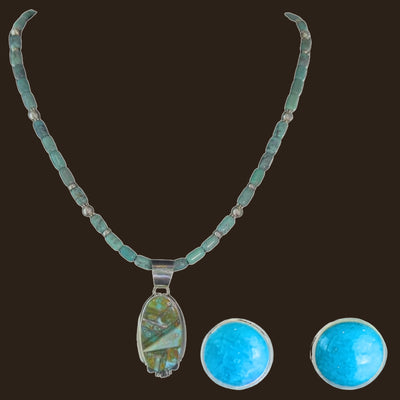
The palette of these stones is a departure from the typical Southwestern blue. When iron is present in higher concentrations than copper during the mineral's formation, the stone shifts away from the classic robin's egg blue toward a rich, organic green. Within a single deposit, you might find a transition from pale seafoam to a saturated forest green. Most of these stones are finished as a cabochon. A cabochon is a gemstone that has been shaped and polished into a smooth, rounded top without any faceted edges. This style of cutting is essential for showcasing the depth of color and the intricate patterns that occur naturally within the stone.
Understanding the golden matrix
The matrix is what gives each piece of jewelry its unique fingerprint. The matrix refers to the remains of the host rock that are naturally interspersed within the turquoise stone during its growth. In stones from the Manassa mine, this host rock is remarkably hard and takes a high polish, which prevents the stone from wearing down unevenly over time. You can distinguish these pieces by several key visual markers:
- Spiderwebbing: Fine, interconnected lines of golden-brown host rock that crisscross the green surface.
- Host Rock Patches: Larger, solid areas of rhyolite or limonite that provide a grounded, earthy contrast to the vibrant green.
- Golden Hue: Unlike the black or dark brown matrix found in Nevada mines, Colorado stones favor a warm, honey-toned or metallic brown.
This golden-brown matrix is a hallmark of the mine. It creates a warmth that pairs beautifully with sterling silver, making it a favorite for those who prefer Southwestern style jewelry that feels both sophisticated and connected to the natural world.
What is the history of the King’s Manassa mine?
The King’s Manassa mine is one of Colorado’s most historic deposits, originally rediscovered in 1890 by I.P. King near the town of Manassa. It has been a family-operated site for over a century, known for producing high-quality stones that range from sky blue to deep forest green.
The site was known as the Lick Skillet Mine before the King family established their modern legacy. While the area had been worked for centuries, it wasn't until I.P. King happened upon the deposit in 1890 that it entered the modern market. This history is deeply tied to the land of southern Colorado. The town of Manassa sits just miles away from the excavation site, providing the mine with its recognizable name.
The legacy of the King family
Preserving a mine for over 130 years requires a deep commitment to the stone itself. For generations, the King family managed every aspect of the process, from extraction to the final polish. This careful stewardship ensured that the reputation of the mine remained untarnished. Bill King, known to many as "The Turquoise King," passed away on January 28, 2024, leaving behind a legacy that now reaches into the seventh generation. Today, the connection to this historic site continues through Greg Cordova’s lapidary work. Lapidary refers to the art of cutting, shaping, and polishing stones into finished gemstones. Greg’s ownership of the mine allows for a direct line from the earth to the studio, ensuring that the stones we use are handled with the same respect the family has shown for decades.
Why is this turquoise considered rare today?
King's Manassa turquoise is increasingly difficult to find because the mine is not currently in active production. Most of what reaches the market today comes from existing stockpiles or the careful sifting of old mine dumps. This limited supply naturally increases the value of artisan pieces. Sourcing natural, untreated stones is a challenge for many collectors, as the deep green variety is often imitated using dyed materials. Because the mine is no longer producing large quantities, the stones found in vintage and small-batch jewelry are finite. This creates a sense of appreciation for collectors who value the specific color and history of this Colorado deposit. If you are looking for a piece that carries this sense of history, you can shop the collection to see our latest artisan-made designs.
How do artisans work with Manassa turquoise?
Artisans work with this stone by prioritizing its natural shape and intricate matrix patterns, typically using a bezel setting to secure the cabochon. This approach ensures that the distinctive green hues of King's Manassa turquoise are highlighted through intentional, small-batch jewelry design.
At Wildflower Artisans, we follow a stone-first philosophy. This means we don't force a stone into a pre-made mold or a generic factory setting. Instead, the specific curves, thickness, and inclusions of the turquoise dictate the final form of the sterling silver work. When working with such a limited resource, every millimeter of the stone is respected. The goal is to create a vessel for the stone's narrative, allowing the organic beauty of the Colorado landscape to shine through the finished piece. This method requires more time and a higher level of skill than standard jewelry making, but it results in a piece that feels grounded and authentic.
The lapidary process with Greg Cordova
The journey of a finished piece begins at the lapidary wheel. Hand-cutting a stone is a slow, meditative process that requires a sharp eye for the face of the turquoise. Unlike mass-produced jewelry where stones are calibrated to uniform, machine-cut sizes, our pieces vary in height and contour. We categorize our work to be precise about the origins of the lapidary work. Type 1 pieces feature stones cut by Greg Cordova. Because Greg owns the mine, he has an intimate understanding of how to orient the rough material to reveal the best spiderweb matrix. Type 2 pieces are those where Kimberly has curated the stones from other trusted sources, ensuring they meet our standards for color and hardness. Both types are secured in a bezel setting. A bezel is a thin strip of sterling silver that is hand-shaped to wrap around the edge of the stone, holding it firmly in place. This technique is more durable than prong settings and protects the edges of the turquoise from daily wear. You can learn more about this level of craftsmanship by exploring Greg Cordova’s lapidary work and his commitment to the stone.
Southwestern style design elements
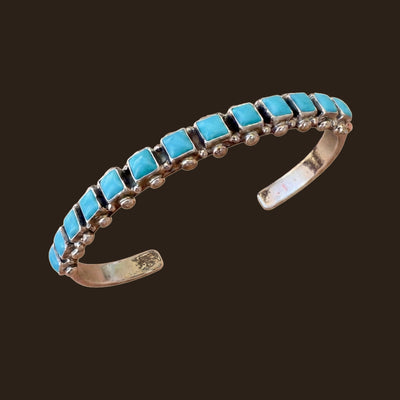
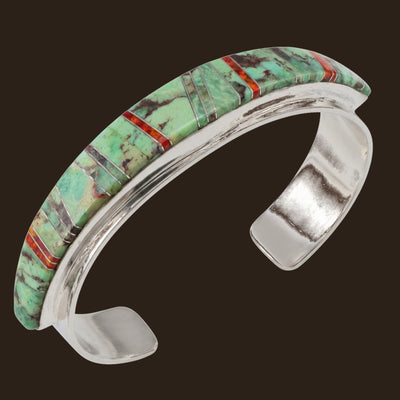
The deep greens of Colorado turquoise find their perfect partner in high-quality sterling silver. The cool, reflective surface of the metal provides a crisp contrast to the mossy, organic tones of the King's Manassa turquoise. In our rings and cuffs, we aim for a balance between the raw beauty of the earth and the polished sophistication of artisan metalwork. Wildflower avoids the repetitive patterns of factory-made items, opting instead for hand-stamped details or simple, clean lines that don't distract from the stone. Each piece is a unique composition that celebrates the fleeting beauty of the natural world. If you appreciate this level of individual detail, you can explore our one of a kind collection to see how these elements come together in our latest studio creations.
What should you look for when buying Manassa jewelry?
When purchasing jewelry with King's Manassa turquoise, you should prioritize stones with a hard, glass-like polish and a clearly defined golden-brown matrix. Genuine Southwestern style pieces will always be set in sterling silver and should feature a maker's mark or hallmark to verify their artisan origin.
The golden-brown host rock is more than just a visual marker; it's a testament to the stone's geological journey in the Colorado mountains. Unlike some softer varieties that require artificial hardening to be wearable, high-grade Manassa material is naturally durable and dense. When you examine a piece, look closely at the surface. It should feel cool and smooth, taking a high shine that reflects light evenly. You should also check the back of the sterling silver setting for a hallmark. A hallmark is a small stamped mark that identifies the maker or the metal purity, such as .925 for sterling silver. We recommend avoiding pieces that feel unusually lightweight or use plated metals, as these often indicate mass-produced items that lack the longevity of small batch artisan work.
Identifying natural vs. treated stones
Natural turquoise refers to a stone that has not been chemically altered, dyed, or infused with plastic resins to enhance its color or hardness. Because King's Manassa turquoise is increasingly rare, the market often sees imitations like dyed howlite or composite materials. Howlite is a naturally white, porous mineral that easily absorbs green dye to mimic the look of Colorado stones. These imitations often look too uniform and lack the subtle color variations of a genuine stone. To protect your investment, you can consult our turquoise buying guide for a deeper look at how to distinguish genuine material from factory-made lookalikes. We never use dyed or stabilized stones in our studio, as we believe the stone should be appreciated in its organic state.
Evaluating the matrix and color
While color is often a matter of personal preference, the pattern of the matrix significantly influences the value and character of a stone. A spiderweb matrix, which features fine, interconnected lines of host rock, is particularly prized by collectors due to the skill required to cut it without breaking the intricate pattern. You might find yourself drawn to the deep emerald greens that are the hallmark of this mine, or perhaps you prefer the lighter, mossy tones. Both are authentic expressions of the deposit. The key is to find a stone that resonates with your individual style and feels like a natural connection to the landscape. If you are ready to find a piece that truly speaks to you, we invite you to shop our collection of handcrafted jewelry and discover the unique beauty of these Colorado treasures.

How do you care for handcrafted turquoise jewelry?
You can care for handcrafted turquoise jewelry by cleaning the sterling silver with a soft cloth and keeping the stone away from harsh chemicals, oils, and ultrasonic cleaners. Storing your pieces in a dry, cool place ensures the natural color remains vibrant for years to come.
A piece of jewelry is a living thing that changes alongside the wearer. This is especially true for natural King's Manassa turquoise, which hasn't been sealed with plastic resins or chemical stabilizers. To keep the deep greens and golden matrix looking their best, you should treat each piece with a gentle hand. We recommend wiping down your jewelry after each wear to remove any surface dust or moisture. Store your pieces in a dedicated jewelry box or a soft pouch to prevent the metal from scratching the stone's surface. Avoid leaving your jewelry on a bathroom counter where humidity can accelerate the tarnishing of the sterling silver.
When it comes to cleaning, simplicity is your best tool. You don't need harsh chemicals or specialized silver dips to maintain the luster of your metalwork. A soft, non-abrasive polishing cloth is usually enough to remove light tarnish from the silver without affecting the stone. Wildflower avoids liquid cleaners because they can seep into the pores of the turquoise and cause permanent damage. If the stone itself needs cleaning, a damp cloth with a tiny amount of mild soap is sufficient, provided you dry it immediately.
Protecting the stone’s integrity
The porosity of the stone means it can absorb what it touches. Over time, skin oils, perfumes, and lotions can seep into the mineral, often causing the color to shift from a bright green to a deeper, more olive tone. This is part of the stone's natural maturation, but you can slow the process by applying beauty products before putting on your jewelry. Never place your turquoise in an ultrasonic cleaner or use a steam cleaner. These devices use high-frequency vibrations or intense heat that can shatter the delicate internal structure of the stone. For more detailed instructions on keeping your pieces in top condition, you can visit our care and repair page.
Daily wear considerations
While King's Manassa turquoise is durable enough for daily enjoyment, it does have limits. We suggest removing your rings and cuffs before gardening, swimming in chlorinated pools, or performing heavy manual work. Chemicals like chlorine can strip the natural luster from the stone and weaken the sterling silver over time. For those who want pieces that can handle the rhythms of a busy life, our everyday essentials collection features designs that balance durability with the organic beauty of the Southwest. Remember that your jewelry is an organic material that matures with you, developing a unique character over the years.
If you're ready to add a piece of Colorado history to your collection, you can explore our latest handcrafted designs at wildflowerartisans.com. Our studio focuses on pieces that celebrate the natural world while remaining practical for your daily life.
Carry a piece of Colorado history
Owning a piece of this stone is more than just wearing jewelry; it's a way to connect with a century of family history and the unique geology of the San Luis Valley. You now have the tools to identify the characteristic emerald green and golden host rock that makes King's Manassa turquoise so distinct from the sky-blue stones of neighboring states. By choosing natural, untreated stones and avoiding harsh chemicals, you ensure that your jewelry remains a vibrant celebration of the earth for decades. We believe these stones carry their own narratives, and we're honored to help you find one that resonates with your own.
We operate as a small batch artisan studio where authenticity is the foundation of everything we create. Every stone is guaranteed authentic and hand-cut by expert lapidaries who understand how to honor the natural shape of the turquoise. Explore our collection of handcrafted turquoise rings and one-of-a-kind pieces at wildflowerartisans.com..etsy.com. We look forward to helping you discover a piece that feels like it was made just for you.
Frequently Asked Questions
Is King’s Manassa turquoise still being mined?
The King’s Manassa mine is not currently in active production. While the site was operated for generations, current activity is limited to working the existing mine dumps for leftover material. This finite supply makes King's Manassa turquoise a rare find. Most available stones today come from older private collections or existing studio stock.
What color is King’s Manassa turquoise?
This variety is primarily recognized for its deep emerald and forest green colors. While other Colorado mines might produce blues, the San Luis Valley deposit is famous for these mossy, organic hues. These greens are almost always paired with a golden-brown matrix that creates a grounded, earthy appearance in finished jewelry.
How can you tell if Manassa turquoise is real?
You can tell if a stone is authentic by examining its density and the specific characteristics of the host rock. Genuine stones from this mine are remarkably hard and take a high polish without the need for artificial hardening. If a stone feels lightweight or the color appears too uniform, it may be a dyed imitation like howlite.
Why is Manassa turquoise more expensive than other types?
The higher cost of this variety is due to its scarcity and the fact that the mine is no longer producing new material. As a finite resource, the value of these stones increases as the available supply diminishes. Collectors also value the direct provenance associated with the King family legacy and the high quality of the raw material.
What is a spiderweb matrix in turquoise?
A spiderweb matrix is a pattern of fine, interconnected lines of host rock that crisscross the turquoise. In King's Manassa stones, this webbing is typically honey-toned or metallic brown. It is a highly prized feature because it requires a skilled lapidary to orient the stone correctly to showcase the intricate, natural network.
Can Manassa turquoise be blue instead of green?
While green is the hallmark of the mine, King's Manassa turquoise can occasionally be found in blue or blue-green shades. These variations occur based on the mineral content of the specific pocket where the stone formed. Even in blue stones, the characteristic golden-brown matrix remains a key identifying feature of the Colorado deposit.
What is the difference between natural and stabilized turquoise?
Natural turquoise refers to a stone that is completely untreated and has not been chemically altered or infused with resins. Stabilized turquoise has been treated with epoxy or plastic to harden soft, porous material so it can be used in jewelry. At Wildflower, we prioritize stones that are hard enough to remain in their natural, untreated state.
Who is the King family in turquoise history?
The King family has owned and operated the mine near Manassa, Colorado, since its rediscovery in 1890. For over a century, they have served as the stewards of this historic deposit, maintaining a reputation for high-quality stones. This legacy continues today through the work of artisans like Greg Cordova, who preserve the family’s stone-first philosophy and his connection to the mine through Greg Cordova’s lapidary work.

Article by
Kimberly Cordova
Kimberly Cordova is the founder and creative director of Wildflower Artisans, a handmade Turquoise and sterling silver jewelry brand rooted in Santa Fe. She built Wildflower around a simple belief: the best jewelry is the kind you actually reach for, not the kind you save for someday.
Kimberly designs pieces made by hand with a trusted circle of Santa Fe silversmiths, works alongside her husband Greg on in-house pieces with stones he cuts, both from the family's King's Manassa Mine in Colorado and White Buffalo Mine in Nevada and from rough he sources from other mines, and curates finished work from artisan makers whose craft meets the same standard. Turquoise leads the collection, joined by White Buffalo, Wild Horse, Lapis Lazuli, Spiny Oyster, and other genuine semi-precious stones. The result is a collection with real range and no shortcuts on the stone, the silver, or the story behind either.
Her writing covers everything she has learned along the way: how Turquoise forms, how to tell natural from stabilized, what makes one mine different from another, how to read a bezel, and how to shop with confidence in a market that is not always straightforward. It is the kind of plainspoken information she wished someone had laid out for her when she was starting out.
Browse the collection at wildflowerartisans.com. Questions about a stone, a setting, or a specific piece are welcome any time.
0 comments