

A turquoise cabochon can hold an uneven sweep of color that feels less like a symbol and more like a place, a person, or a season you carry with you. That’s what makes jewelry that tells a story feel personal: the stone and the hands that shaped it matter, but so does the meaning you give it. If generic birthstone meanings or vague online descriptions leave you unsure what a piece represents, look more closely at its materials, construction, and description. This guide explains how genuine stones, thoughtful handwork, and clear material details can help you choose jewelry with a story of its own, whether you’re marking a moment for yourself or choosing a considered gift. You don’t need a prescribed meaning to make a piece meaningful. Sometimes the story begins with what drew you to it, then grows with every day you wear it.
Key Takeaways
- Look beyond generic symbolism: jewelry that tells a story can connect a stone’s character, its making, and the meaning you bring to it.
- Notice a stone’s color and pattern. In turquoise, matrix describes contrasting patterns or host material visible within or around the stone.
- When evaluating a piece, look for clearly named materials and item-specific information about its maker or origin instead of relying on broad claims.
- Start with the story you want to honor, then consider the material, how you’ll wear the piece, and the details that help you choose with confidence.
- For yourself or as a gift, let the materials and handwork guide you without expecting the piece to carry a prescribed meaning.
Why Jewelry That Tells a Story Feels More Personal
A stone can call up a place, a person, or a turning point simply because its color or shape brings a memory close. Jewelry that tells a story feels personal when its materials and making meet the meaning its wearer brings to it.
Story-rich jewelry is connected to its material, how it was made, a memory, or a personal choice. Those connections don’t need to be grand or easy to explain. A piece can become meaningful through a gift, the way it reflects your sense of self, or the small ritual of choosing it each morning.
What makes a piece of jewelry feel meaningful?
Memory, gift-giving, identity, and daily wear can each give a piece personal meaning. It doesn’t need to mark a dramatic life event or carry a fixed symbol. Imagine choosing a pendant because its shape reminds you of leaves on a tree outside your childhood home. That’s an illustration, not a customer story, and the association belongs to the wearer.
A gift can hold the thought behind choosing something for a person you know well. A self-purchase can reflect what you’re drawn to now. Neither needs a formal occasion. Sometimes the connection grows quietly through a piece that simply feels like you.
Personal story versus product storytelling
Your personal story is the meaning you attach to a piece. Product storytelling is the information a maker or seller shares about its materials and making. Both can matter, but they answer different questions. A color may remind you of a landscape you love, while a product description should tell you what the stone is and what details are known about it.
Broad symbolism can be evocative, but it shouldn’t replace accurate product details or be presented as a universal truth. Use clear descriptions to understand what is known, then decide which details connect with your own experience. For example, explore the turquoise jewelry collection and notice what draws your eye without needing a prescribed meaning for the stone.
The story doesn’t have to be written for you. It can begin with what you notice and deepen with time.
How Stone, Silver, and Handwork Shape a Jewelry Story
A stone’s color, pattern, and shape can make it feel distinctive, while the way it’s cut and set influences what you notice first. In jewelry that tells a story, these physical details give you something real to look at. Personal associations can grow from there.
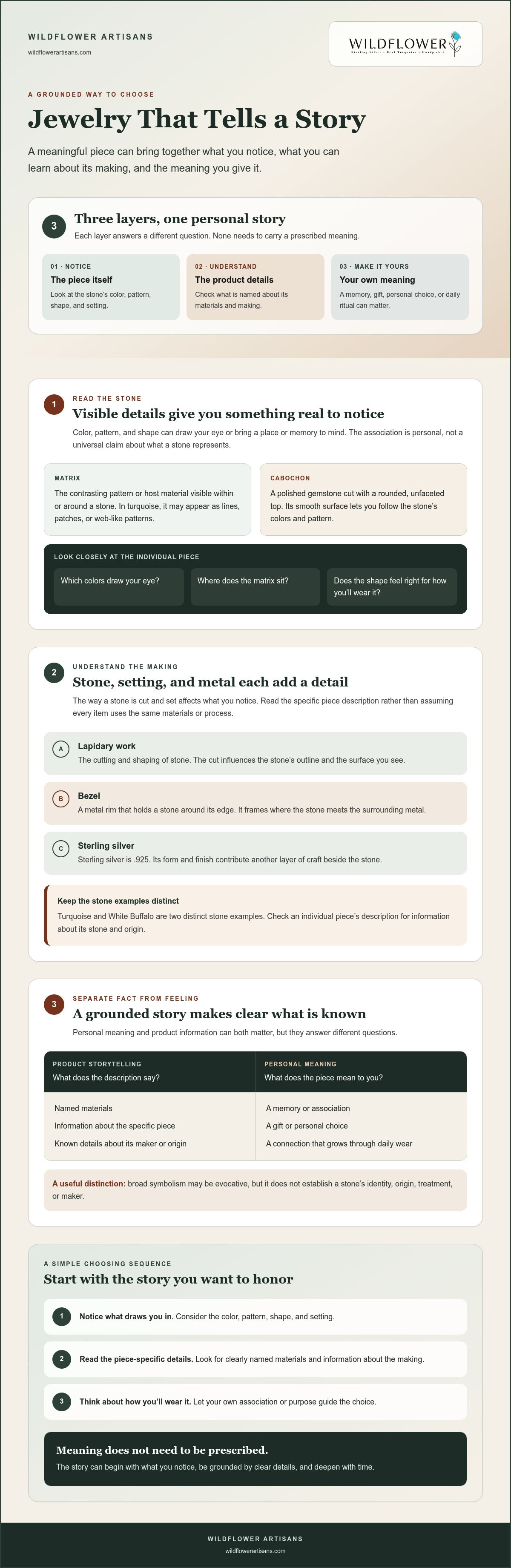
Matrix is the contrasting pattern or host material visible within or around a stone. In turquoise, matrix can create lines, patches, or web-like patterns against the stone’s color. A cabochon is a polished gemstone cut with a rounded, unfaceted top. Its smooth surface lets the eye follow the stone’s colors and pattern without the sparkle of facets.
A stone’s visible character can hold a memory
Color, matrix, and shape may remind one person of open sky, while another sees a familiar landscape or simply likes the way the pattern moves across the stone. These associations can be meaningful without becoming universal claims about what a stone represents. Turquoise and White Buffalo are two distinct stone examples to explore. Check an individual piece’s description for information about its stone and origin rather than assuming every piece has the same story.
Visible variation can make a stone feel individual, but it doesn’t guarantee a piece is one of a kind. Look closely at the piece itself: Which colors draw your eye? Where does the matrix sit? Does the shape feel right for how you’ll wear it?
How lapidary work and a bezel frame the stone
Lapidary work is the cutting and shaping of stone. A bezel is a metal rim that holds a stone around its edge. Together, the cut and setting affect how much of the stone is visible and how its outline meets the surrounding metal. A rounded cabochon may draw attention to the surface pattern, while the bezel frames its edge.
Sterling silver is .925. Its form and finish contribute another layer of craft beside the stone. When you’re considering a particular piece, check its description for information about the materials and making rather than assuming that every item uses the same process.
For a closer look at genuine stones and silver across Wildflower Artisans' collection, browse the Shop All Jewelry collection. It includes artist-made sterling silver jewelry with genuine stones. Compare the color, pattern, and setting at your own pace.
How to Tell a Grounded Jewelry Story from a Generic Claim
A grounded product story gives you details you can check, such as the named material and information about the specific piece. Broad symbolism may be evocative, but it isn’t evidence of a stone’s identity, origin, treatment, or maker.
Keep that distinction in mind as you read descriptions. A piece can hold personal meaning while its product details remain clear about what is known.
| Grounded detail | Generic claim |
|---|---|
| “Sterling silver,” which identifies the metal as .925 | “Fine metal,” without naming the material |
| A named stone, with treatment details stated when confirmed | “A stone of strength,” without material specifics |
| A maker or stone origin identified for that individual piece | A broad maker or origin claim not tied to the item |
Details that make a product story more specific
Start with the materials. Is the metal clearly named? Is the stone identified? Then check whether statements about the maker, origin, or treatment apply to the specific piece you’re considering. Evocative language can describe a feeling or style, but it shouldn’t stand in for product facts. Look for clear details that help you understand what the piece is and what is known about it.
Wildflower identifies its sterling silver as .925 and guarantees the quality and authenticity of its items. The shop excludes fake jewelry, dyed howlite, and mystery metals. These standards can help you narrow your search, while the individual item description remains the place to check details about a specific piece.
Questions to ask when a description feels vague
Ask what the piece is made from and which details are confirmed. If a description names a maker or origin, check whether the claim applies to the individual item rather than a style or broader group of pieces. These distinctions keep a compelling story grounded in the information provided.
If an important detail is missing, seek clarification instead of inferring it from styling, symbolism, or appearance. Your own associations can still make a piece meaningful, but they’re separate from claims about its materials, maker, or history.
Choose Story-Rich Jewelry by Starting with Your Own Meaning
Choose meaningful jewelry by naming the story, selecting a material that speaks to you, considering how you’ll wear it, and checking the details of the individual piece. This sequence works for a self-purchase, a gift, an everyday piece, or a milestone.
- Name the story. Think of a person, moment, place, or quality you want to keep close.
- Choose a material. Look for a stone or metal that genuinely appeals to you, not one you feel you’re supposed to choose.
- Consider how you’ll wear it. Decide whether you want a subtle detail or a visible focal point, and how often you expect to reach for it.
- Review the details. Check the product description for materials, fit, and any maker or origin information specific to that piece.
Start with a memory, person, or feeling
Begin with a small, clear prompt: What do I want this piece to remind me of? Perhaps a stone’s color brings to mind a place you return to, or a particular shape feels like the right way to mark a personal change. Let that association guide you without expecting a material to carry a fixed meaning.
For a gift, consider what the recipient already wears. Do they favor silver, small earrings, or a pendant they can layer? A thoughtful choice starts with their style, not an assumption about what a symbol should mean to them.
Match meaning with a form you will reach for
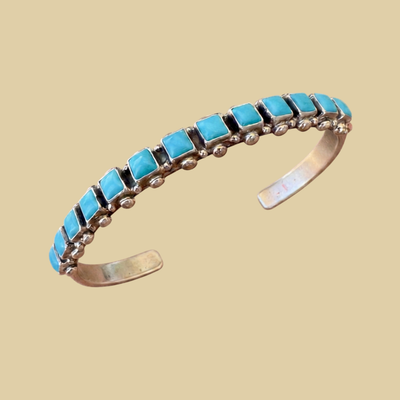
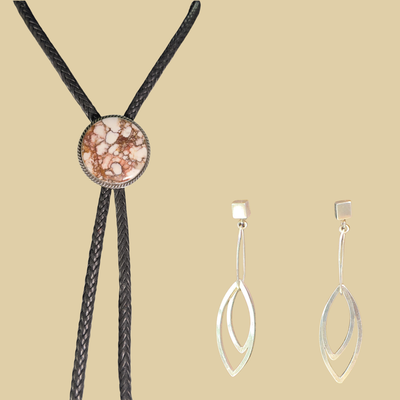
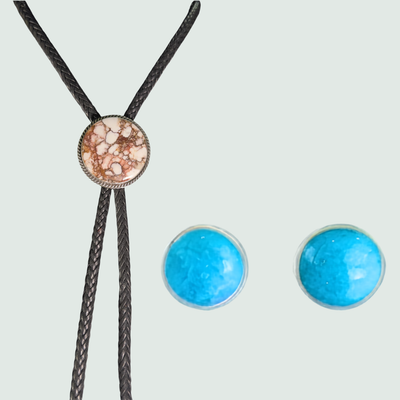
The form affects how the story becomes part of daily life. Rings keep a detail in view; earrings add a small accent; pendants rest near the heart; cuffs make a more visible statement; bolo ties offer another way to wear a focal stone. Think about comfort, clothing, and how noticeable you want the piece to feel.
Before deciding, check the item page for fit and material information, along with any details about the specific stone or maker. Meaning matters, and so does choosing a piece that suits your habits. A keepsake you’ll wear often may call for a different form than one chosen for an occasional milestone.
For a starting point in everyday wear, Wildflower’s Everyday Essentials collection includes jewelry selected for daily use. Review the details on each piece as you compare options.
Find Jewelry That Tells a Story in Its Materials and Making
A meaningful piece brings together what it’s made from, the choices involved in making it, and the story its wearer gives it. As you browse, check the item’s details, then notice what draws your eye and feels connected to your life.
What to notice when browsing artisan-made jewelry
Start with the individual item description. Check the stated metal and stone instead of assuming every piece uses the same materials. Look for maker, origin, or treatment details where they’re provided, and keep those claims specific to the piece rather than extending them to an entire collection. Clear information gives you a grounded starting point. It doesn’t dictate what the jewelry must mean to you.
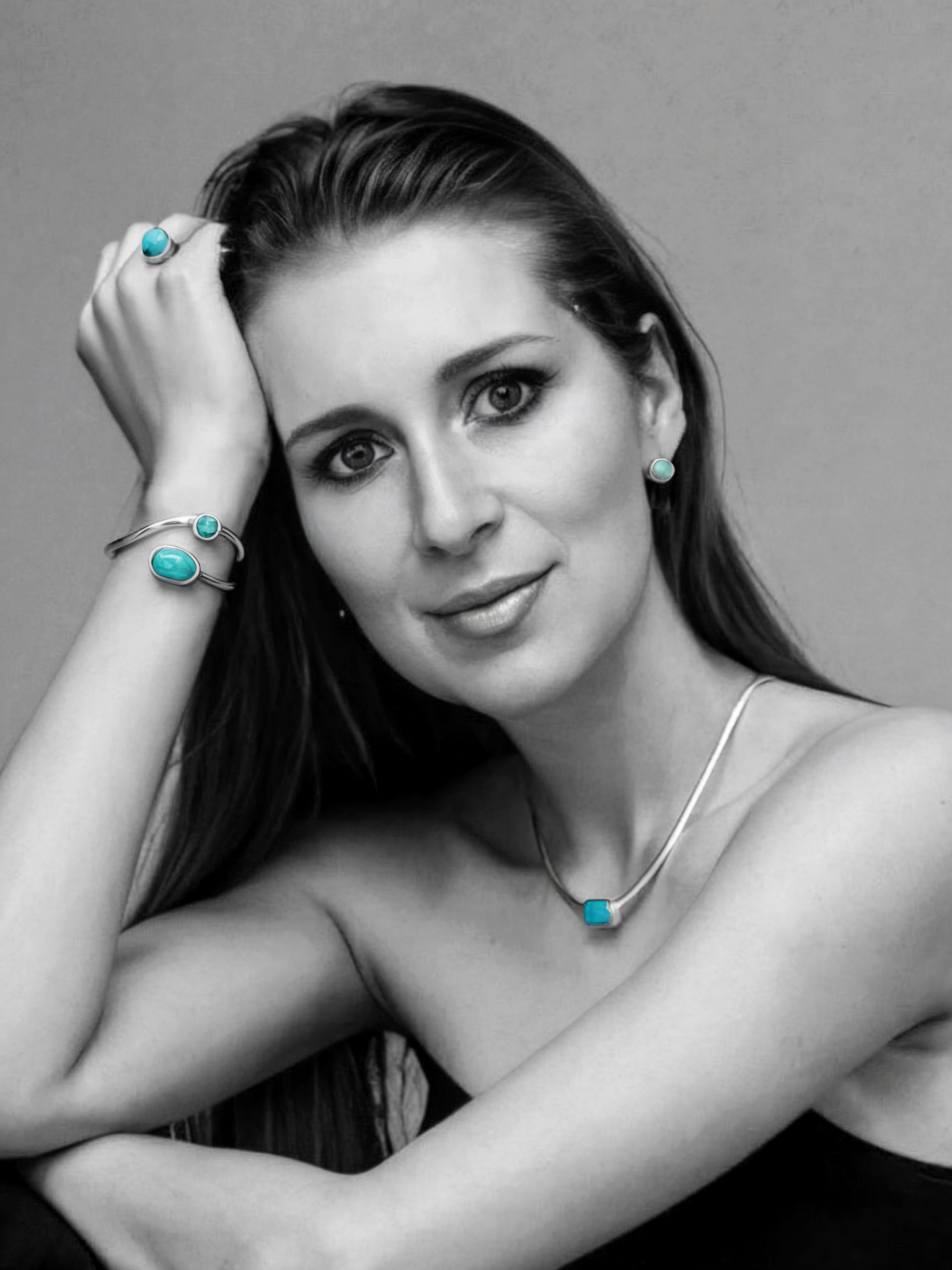
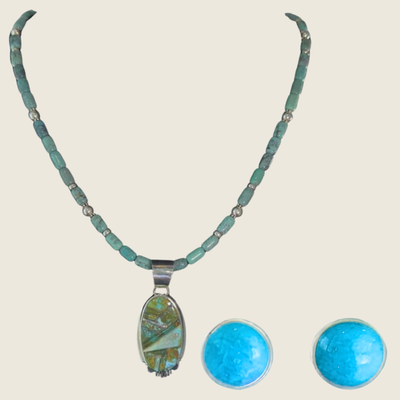
Wildflower offers artist-made sterling silver jewelry with genuine stones, including handmade rings, earrings, cuff bracelets, and bolo ties. Its curated selection includes Native American and one-of-a-kind pieces, from everyday essentials to statement designs. Read each description on its own, and notice the stone’s color and pattern, the silverwork, and the details that first caught your attention.
Let the wearer complete the story
No single symbolic meaning is required for jewelry to feel personal. A stone might remind you of a place, a gift might mark a relationship, or a piece might simply fit the way you like to dress. The meaning can be quiet and still matter. It can deepen with wear as an everyday piece becomes part of ordinary moments.
For yourself or someone you love, let the wearer’s preferred style have a say. Consider whether they reach for rings, earrings, pendants, or a more visible statement, and whether the piece feels comfortable for the way they’ll wear it. Then return to the product details to confirm the materials and any item-specific information that matters to your choice.
At Wildflower, the stone, silver, and handwork offer details to appreciate, while the wearer brings the memories that make a piece their own. Browse with curiosity, trust what resonates, and let the story take shape in its own time.
Choose a Piece That Feels Like Your Story
A piece of jewelry that tells a story brings together three things: the character of its materials, the care involved in its making, and the meaning you give it. As you choose, look for clear details about the individual piece, then ask what draws you to its stone, shape, or handwork. Personal meaning doesn’t need a prescribed symbol or a grand occasion. It can begin with a memory, a gift, or a piece you simply enjoy wearing.
Wildflower offers artist-made sterling silver jewelry with genuine stones, including King’s Manassa and White Buffalo turquoise. The collection features handmade rings, earrings, cuff bracelets, and bolo ties, with options ranging from everyday essentials to distinctive statement pieces. Check each item’s description for details about its specific materials.
Take your time browsing. The right piece is one whose materials and making speak to you, and whose story you’re glad to carry forward.
Frequently Asked Questions
What does it mean when jewelry tells a story?
Jewelry tells a story when its materials, making, or the wearer’s memories give it personal significance. A piece might remind you of someone who gave it to you, reflect a style you’ve chosen for yourself, or become part of a meaningful occasion. Jewelry that tells a story doesn’t need a prescribed symbol or dramatic backstory. Its meaning can grow naturally through the connection you make with it.
How can a gemstone make jewelry feel personal?
A gemstone can feel personal because its color, shape, or visible pattern brings a particular memory or feeling to mind. One wearer might see a turquoise stone and recall a beloved landscape; another might simply enjoy its color against sterling silver. These associations are individual, not universal meanings or proof of a stone’s history. Let the stone’s appearance draw you in, then check the item description for confirmed material details.
Is handmade jewelry more meaningful than mass-produced jewelry?
Not automatically. Handmade jewelry may make choices in shaping, setting, or finish more visible, which some wearers appreciate, but personal meaning depends on the wearer, not only on how an item was made. Consider whether you connect with the piece’s design and materials, and whether its description clearly explains what is known about its making. A piece becomes meaningful through the value and memories you attach to it.
How can I tell whether a jewelry story is supported by the product details?
Look for specific, checkable information: the named metal, the stone, and any maker, origin, or treatment details stated for that individual piece. For example, “sterling silver” identifies a specific metal standard, .925. Broad symbolic language can express a mood, but it doesn’t verify materials or provenance. If a description leaves an important detail unclear, ask for clarification rather than inferring it from the stone’s appearance or the piece’s style.
Article by
Kimberly Cordova
Kimberly Cordova is the founder and creative director of Wildflower Artisans, a handmade jewelry brand rooted in Santa Fe. Real turquoise, solid sterling silver, and a small line set in solid 14K gold. She built Wildflower around a simple belief: the best jewelry is the kind you actually reach for, not the kind you save for someday.
The collection is built three ways. Some pieces are made in-house, cut by her husband Greg from stones he sources himself, including rough from the family's King's Manassa Mine in Colorado and White Buffalo Mine in Nevada. Some are designed by Kimberly and fabricated by a trusted circle of Santa Fe silversmiths. And some are finished work she curates from artisan makers whose craft meets the same standard, because building a real collection means knowing when to make and when to look.
Turquoise leads, joined by White Buffalo, Wild Horse, Lapis Lazuli, Spiny Oyster, Black Onyx, Opal, and other genuine semi-precious stones. No shortcuts on the stone, the silver, or the story behind either.
Her writing covers everything she has learned along the way: how turquoise forms, how to tell natural from stabilized, what makes one mine different from another, how to read a bezel, and how to shop with confidence in a market that is not always straightforward. It is the kind of plainspoken information she wished someone had laid out for her when she was starting out.
Browse the collection at wildflowerartisans.com. Questions about a stone, a setting, or a specific piece are welcome any time.
0 comments