

You stand before a mirror while a heavy silver cuff catches the afternoon light, but the beauty of the turquoise is suddenly clouded by a quiet, nagging doubt. Many of us have paused to ask, is it cultural appropriation to wear Native American designs, or is it a sincere act of appreciation for a living art form? It's a question born from a place of deep respect and a genuine desire to honor the hands that shaped the metal. At Wildflower Artisans, we understand the hesitation that comes when you value the history held within a hand-cut cabochon or a hand-stamped sterling silver bezel.
This exploration will help you navigate those nuances with clarity and confidence. You'll learn how to distinguish between mass-produced imitations and the soulful, documented work of individual artisans. We'll walk through a clear framework for ethical purchasing, the importance of knowing a stone's mine origin, and the specific traditions of silversmithing that make each piece a unique narrative of the Southwest. By the end, you'll feel empowered to choose jewelry that celebrates craftsmanship while directly supporting the makers who keep these traditions vibrant.
Key Takeaways
- Distinguish between appropriation and appreciation by focusing on the intentional act of honoring a tradition through education and direct support of the hands that shaped the silver.
- Learn why determining if is it cultural appropriation to wear Native American designs hinges on the transparency of the maker and the ethical journey of the materials from the mine to the studio.
- Develop the skills to recognize genuine artisan craftsmanship by asking deep questions about stone origins and seeking documentation that connects a piece to its specific creator.
- Understand how choosing small batch, handcrafted jewelry over mass-produced factory imitations preserves the cultural integrity and economic livelihood of artisan communities.
- Gain clarity on how to wear Southwestern style jewelry as a respectful celebration of beauty while remaining mindful of the distinction between art and ceremonial regalia.
Defining Appreciation versus Appropriation in Southwestern Style Jewelry
The difference between appreciation and appropriation in the jewelry world centers on the relationship between the wearer and the maker. Appreciation is an active practice of education and direct financial support of artisans, while appropriation involves the extraction of cultural motifs for profit without regard for the community of origin. The quiet weight of a silver cuff against the wrist carries more than just aesthetic value; it holds the breath of the studio and the history of the high desert. When considering if is it cultural appropriation to wear Native American designs, the answer often rests in the transparency of the transaction and the depth of the wearer's understanding. This Cultural Appropriation Explained provides a foundation for seeing how taking elements from a marginalized culture without compensation or permission becomes problematic. Southwestern style jewelry is a collaborative history of materials like sterling silver (.925) and turquoise, where the distinction lies in whether the wearer understands the narrative behind the cabochon and the silversmith.
The Role of Intent and Education
Appreciation begins when we look past the surface of an accessory and see it as a vessel for a story. It's about learning the specific history of the silversmithing techniques used in the piece, such as the labor-intensive process of hand-sawing a silver plate or the patient polishing of a stone. Respectful wearers don't treat these pieces as costumes. They treat them as celebrations of individual craftsmanship. When you know the name of the artist and the story of the mine, you move from a place of mere consumption to a place of stewardship. Wearing a piece as a costume is appropriation, while wearing it as a celebration of craftsmanship is appreciation.
Why Terminology Matters in the Jewelry Studio
In our studio at Wildflower Artisans, we believe that precise language is a form of respect. We avoid generalizations like tribal, opting instead for terms like handcrafted or Southwestern style. Southwestern style is a regional tradition of silver and stone work that reflects the unique intersection of cultures and landscapes in the American Southwest. Using technical terms further honors the lapidary process. A bezel is a thin strip of metal, often sterling silver, that is wrapped around a stone and folded over the edges to hold it securely in its setting. The matrix is the natural host rock, such as iron or quartz, that creates the intricate web-like patterns seen within a turquoise cabochon. Defining these details shows respect for the lapidary process and ensures that the question of whether is it cultural appropriation to wear Native American designs is answered through a commitment to authenticity. Wildflower prioritizes this clarity to ensure every piece is valued for its true origin.
The Importance of Verifying Artisan Origins and Material Authenticity
Authenticity serves as the most effective safeguard against unintentional harm, ensuring that the economic and cultural value of a piece remains with the creator. When you prioritize genuine work, you move from a place of extraction to one of partnership and respect. This is why the question of whether is it cultural appropriation to wear Native American designs often finds its answer in the provenance of the jewelry. A respectful purchase should carry a clear lineage, providing documentation that names both the individual artist and the specific mine where the stone was unearthed. Mass-produced items often flood the market with dyed howlite or mystery metals, which devalues the traditional craft and misleads the wearer. By contrast, knowing a silversmith by name transforms a piece of jewelry into a meaningful connection with a working studio.
Documenting the Silversmith
At Wildflower Artisans, we believe that every curve of silver and every stamp mark carries the heartbeat of its maker. We emphasize the importance of piece by piece documentation, particularly for verified Navajo and Zuni silverwork that we curate for our collection. The Indian Arts and Crafts Act provides a necessary legal framework to prevent the misrepresentation of artisan work, but true appreciation goes beyond mere compliance. You should look for specific hallmarks or detailed artist biographies rather than accepting generalized regional labels. Artist-made jewelry carries the signature of the individual's hand, visible in the slight, beautiful variations of a hand-stamped border or the deliberate aesthetic choices made during the silversmithing process.
Identifying Genuine Materials
Quality begins with the raw elements of the earth, and understanding these materials is a form of respect for the lapidary arts. Sterling silver (.925) remains the standard for high-quality Southwestern style work, offering a durable and lustrous foundation that ages gracefully with the wearer. Genuine stones like Kingman turquoise or White Buffalo possess distinct matrix patterns, the host rock webbed through the gem, that plastic imitations simply cannot replicate. A cabochon is a stone that has been shaped and polished into a smooth, rounded form rather than being cut with the geometric planes of a faceted gemstone. These hand-cut stones allow the natural character and history of the mineral to remain the focal point of the design.
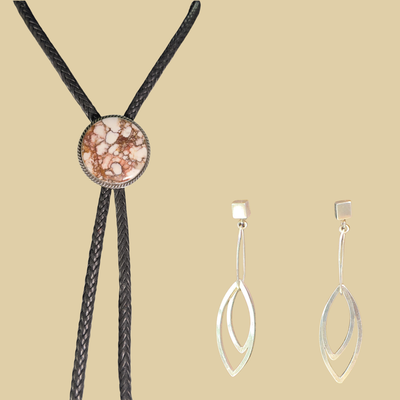
This commitment to material truth is why we document the origin of every stone we set in our studio. It is the reason each piece in our White Buffalo jewelry collection features genuine stones from the Nevada mines co-owned by Greg Cordova, each secured in a hand-fitted sterling silver bezel.
Choosing jewelry with a verified history ensures your collection is built on a foundation of integrity and long-term value. You can explore our full range of handcrafted artisan jewelry to find pieces that celebrate these deep connections to the land and its makers.
Distinguishing Between Mass-Produced Imitations and Genuine Handcrafted Pieces
Mass-production often acts as the shadow of the jewelry industry, serving as the primary vehicle for cultural appropriation by turning sacred or significant motifs into hollow commodities. When people ask, is it cultural appropriation to wear Native American designs, the concern often stems from these machine-made replicas that flood big-box retailers. Factories replicate traditional motifs using high-speed presses, stripping the design of its cultural context and the artisan's individual voice. In contrast, genuine handcrafted pieces are defined by the presence of the human hand, visible in the hand-cut stones and unique hand-stamped silver work that a machine simply cannot emulate. The price difference in gallery-quality jewelry reflects the cost of genuine materials and fair compensation for skilled labor, ensuring the art form continues to flourish for generations. At Wildflower Artisans, we believe that by prioritizing the narrative of the maker, you transform the act of wearing jewelry into a gesture of cultural stewardship and respect. When you choose a piece from a working studio, you're not just buying an accessory; you're investing in the preservation of a legacy. Our turquoise buying guide provides the tools to recognize these differences, helping you navigate the market with an eye for authenticity and ethical craftsmanship.
The Harm of Imitation Jewelry
Imitation jewelry often relies on stolen designs, which directly harms the economic stability of traditional silversmiths who rely on their craft for survival. These mass-produced items frequently use mystery metals or stabilized stones that lack the longevity and value of sterling silver (.925) and untreated turquoise. Supporting these imitations reinforces a cycle of exploitation rather than a cycle of appreciation. This is why gallery-quality jewelry costs more; it represents a commitment to the artist's time and the integrity of the materials.
The Beauty of the Asymmetrical and Organic
Handcrafted jewelry features natural variations in the stone and subtle marks left by silversmithing tools. These details are evidence of a living process. A hand-set bezel, tailored to the specific curve of a unique cabochon, reflects a level of care that a machine setting can't achieve. You can find these intentional details throughout our Wildflower collection of artisan-made jewelry, which helps answer the question, is it cultural appropriation to wear Native American designs, through the lens of genuine appreciation.
How to Support Artisan Communities Through Ethical Purchasing
Ethical purchasing is an intentional act that transforms a simple transaction into a gesture of respect and sustainability. When you choose to buy directly from reputable galleries or studios that document their artists, you ensure that the value of the work returns to the hands that created it. This practice provides a clear answer when you wonder, is it cultural appropriation to wear Native American designs, as it replaces extraction with direct economic support. We recommend asking specific questions about stone origins, such as whether a piece features turquoise from the Kingman or Royston mines. Prioritizing high-quality materials like sterling silver (.925) or solid 14K gold over plated alternatives also honors the longevity of the craft. It is equally important to avoid items marketed as costumes or those that use sacred symbols out of context, as these lack the artisanal integrity of genuine work.
This transparency is why we provide the specific mine origin for every stone in our turquoise jewelry collection. It is why we document the silversmith for every curated piece from the Navajo or Zuni traditions, ensuring you know exactly whose hands shaped your silver.
Questions to Ask Before You Buy
Before you commit to a piece, take a moment to engage with the seller about its history. Is the silversmith who made this piece documented by name? Knowing the artist's identity is the first step in verifying the authenticity of the work. You should also ask if the turquoise is genuine and untreated, as many mass-market pieces use stabilized stones that have been chemically hardened. Finally, ask if the seller has a direct relationship with the working studio or the artist. A seller who knows the maker can speak to the specific aesthetic choices and techniques used, providing you with a deeper connection to the piece's narrative.
The Impact of Your Purchase
Your choice to invest in authentic work has a ripple effect that extends far beyond your own collection. Ethical purchasing ensures that traditional silversmithing remains a viable career for future generations, allowing younger makers to see a path forward in their craft. Your investment also supports the preservation of lapidary skills and the protection of domestic turquoise mines that might otherwise be lost to industrial or commercial development. Buying artist-made jewelry functions as an act of cultural preservation by ensuring that traditional skills remain economically sustainable.
Respectful Styling for Non-Indigenous Wearers
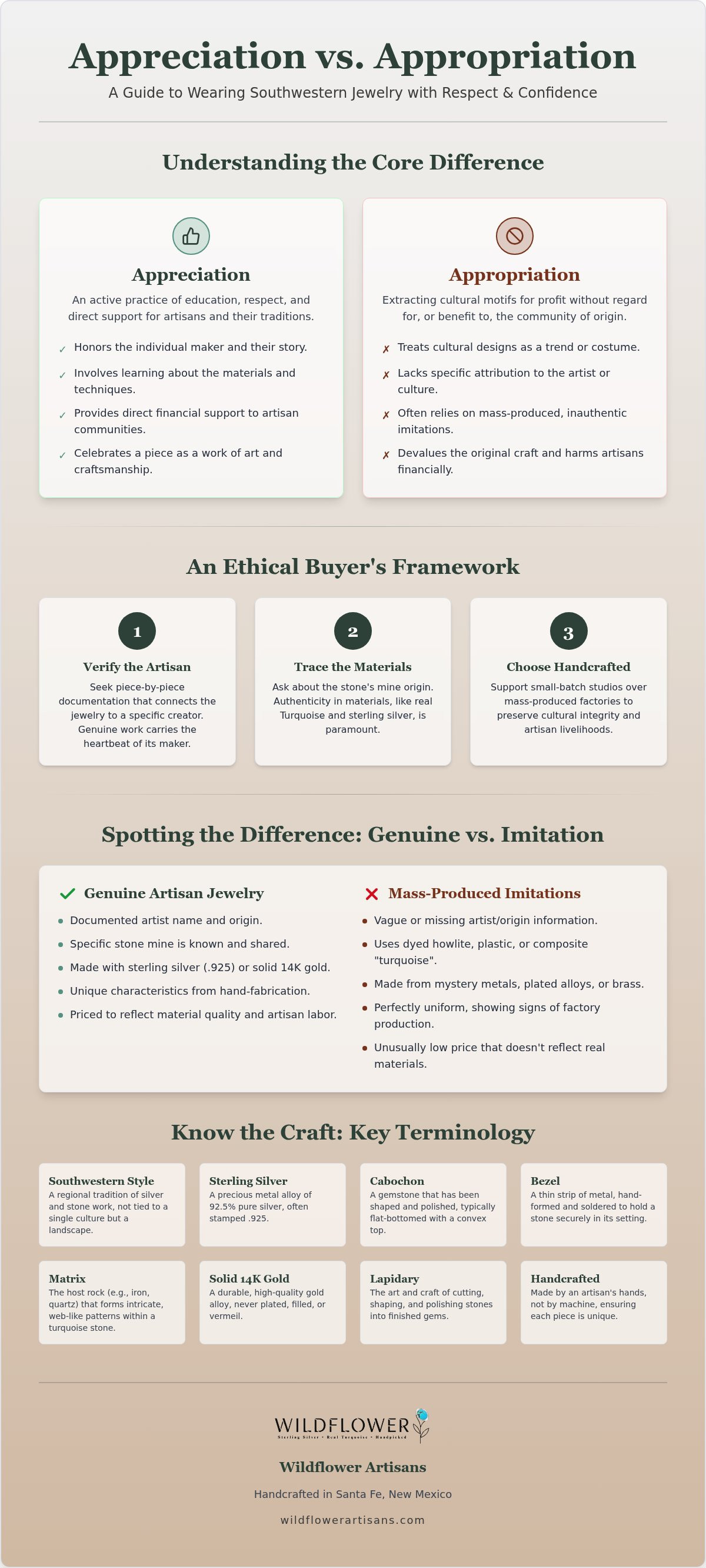
Styling Southwestern jewelry is a deeply personal act, one that allows you to weave the organic textures of the high desert into your own daily narrative. When you choose a piece for its artisanal quality, you aren't just selecting an accessory; you're celebrating a specific composition of silver and stone. This intentionality is key when navigating the question of whether is it cultural appropriation to wear Native American designs. By focusing on the craftsmanship and the story of the maker, you move from a place of mere fashion into a space of genuine appreciation. We find that the most respectful way to wear these pieces is to integrate them into your wardrobe as everyday essentials, allowing the natural beauty of the materials to speak for themselves.
Everyday Wear versus Ceremonial Designs
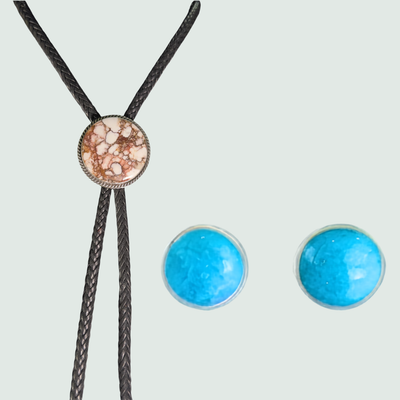
It is helpful to distinguish between items created for the commercial market and those intended for ceremonial purposes. Most jewelry found in reputable galleries and studios, such as the rings, earrings, and sterling silver cuffs we offer at Wildflower Artisans, is designed for daily wear and public appreciation. These pieces are expressions of an artist's personal style and technical skill. In contrast, ceremonial regalia or specific types of headdresses hold sacred meanings within a culture and are rarely sold in ethical commercial spaces. Understanding that is it cultural appropriation to wear Native American designs often comes down to the context of the piece and the intent of the wearer. By focusing on the aesthetic harmony of the stone and the silversmithing, you ensure your styling remains a tribute to the art form rather than an encroachment on sacred traditions. Incorporating simple turquoise studs or a delicate silver band allows you to carry a piece of Santa Fe with you while maintaining a respectful boundary.
Caring for Your Handcrafted Jewelry
Treating each piece with the care its craftsmanship deserves is a final, vital form of respect for the artist's labor. Because genuine stones and sterling silver (.925) are organic materials, they respond to their environment and the way they are handled. Proper care and repair ensures that the narrative of the piece continues for years to come. We recommend avoiding harsh chemicals or ultrasonic cleaners, especially when wearing turquoise, as these can damage the natural character of the stone. Sterling silver should be polished gently with a soft cloth to maintain its luster without disturbing the hand-set bezel or the delicate matrix of the cabochon. Storing your jewelry in a dry, soft-lined space prevents the silver from tarnishing and protects the stones from scratches. This level of stewardship honors the fleeting beauty of the earth and the enduring skill of the hands that shaped it.
Choosing a Path of Cultural Stewardship
Embracing the beauty of the Southwest is a journey of intentionality and respect. By seeking out documented origins and verifying the hands behind the silver, you ensure your collection is built on a foundation of integrity. Understanding the nuance of whether is it cultural appropriation to wear Native American designs allows you to move forward with confidence. It is an active choice to value the individual artist over mass-produced imitations.
Every piece we create or curate in our Santa Fe studio reflects this commitment to material truth. We prioritize genuine stones with documented origins, set securely in sterling silver (.925) or solid 14K gold. This focus on authenticity transforms a simple purchase into a lasting celebration of artisanal tradition and the natural world.
Wear your chosen pieces as a reflection of your own narrative while honoring the living history they represent. We invite you to step into our world and find beauty in the genuine, the asymmetrical, and the handcrafted.
Frequently Asked Questions
Is it disrespectful to wear a squash blossom necklace?
Wearing a squash blossom necklace is generally considered an act of appreciation if the piece is authentic and handcrafted. These necklaces represent a significant chapter in Southwestern jewelry history. Non-Indigenous people can wear them respectfully by acknowledging their origin and directly supporting the artist. It's vital to avoid mass-produced versions that exploit these designs without benefiting the silversmith. Choosing an artist-made piece ensures the tradition remains vibrant and economically sustainable for the maker.
Can I wear Southwestern jewelry if I am not from the Southwest?
You can absolutely wear Southwestern jewelry regardless of where you live. This art form is widely appreciated across the country for its connection to the earth and human skill. The key is to focus on the craftsmanship and materials like genuine turquoise and sterling silver. You don't need to be from a specific region to value the beauty of a hand-cut cabochon. By wearing these pieces, you help share the artisan's story with a broader audience.
How do I know if a piece of jewelry is ethically sourced?
Ethical sourcing is verified through transparency regarding the artist and the materials. A reputable seller will provide the name of the silversmith and the specific mine where the stone was found. Look for markers like the .925 stamp for sterling silver. Avoid sellers using vague terms like tribal or Indigenous-style. This transparency helps you determine if is it cultural appropriation to wear Native American designs by ensuring the economic benefit reaches the creator rather than a factory.
Article by
Kimberly Cordova
Kimberly Cordova is the founder and creative director of Wildflower Artisans, a handmade jewelry brand rooted in Santa Fe. Real turquoise, solid sterling silver, and a small line set in solid 14K gold. She built Wildflower around a simple belief: the best jewelry is the kind you actually reach for, not the kind you save for someday.
The collection is built three ways. Some pieces are made in-house, cut by her husband Greg from stones he sources himself, including rough from the family's King's Manassa Mine in Colorado and White Buffalo Mine in Nevada. Some are designed by Kimberly and fabricated by a trusted circle of Santa Fe silversmiths. And some are finished work she curates from artisan makers whose craft meets the same standard, because building a real collection means knowing when to make and when to look.
Turquoise leads, joined by White Buffalo, Wild Horse, Lapis Lazuli, Spiny Oyster, Black Onyx, Opal, and other genuine semi-precious stones. No shortcuts on the stone, the silver, or the story behind either.
Her writing covers everything she has learned along the way: how turquoise forms, how to tell natural from stabilized, what makes one mine different from another, how to read a bezel, and how to shop with confidence in a market that is not always straightforward. It is the kind of plainspoken information she wished someone had laid out for her when she was starting out.
Browse the collection at wildflowerartisans.com. Questions about a stone, a setting, or a specific piece are welcome any time.
0 comments