

What if the vibrant blue stone in your favorite ring isn't a gift from the earth, but a piece of dyed plastic from a factory floor? It's a common worry for those of us who appreciate the weight of sterling silver (.925) and the unique character of a natural stone. You likely feel that frustration when browsing for Rare Gemstone Cabochons for Jewelry Making, only to find vague descriptions and mystery metals that lack a soul. We understand that finding a piece you can trust is about more than just aesthetics. It's about a connection to the land and the hands that shaped it.
In this guide, we'll show you how to identify genuine rare stones, from the distinct matrix of a Kingman cabochon to the snowy patterns of White Buffalo. You'll gain the confidence to evaluate hand-cut artisan pieces and understand why the origin of a stone matters just as much as its color. We're going to explore the technical details of lapidary work and the specific markers of authenticity that set artisan jewelry apart from the mass-produced crowd. By the end, you'll know exactly what to look for in a secure bezel setting and how to spot a stone that carries its own narrative.
Key Takeaways
- Learn why a hand-cut cabochon is the heart of artisan jewelry, dictating both the design and the structural integrity of the final piece.
- Discover how to use the matrix, or the host rock veins, to verify a stone's authenticity and separate natural minerals from mass-produced imitations.
- Master the techniques for identifying Rare Gemstone Cabochons for Jewelry Making by looking for mine-specific traits like the sky blue of Kingman or the deep greens of Royston.
- Understand the unique mineral makeup of White Buffalo and Wild Horse Magnesite to ensure you're getting rare, single-source stones rather than mislabeled alternatives.
- Identify high-quality craftsmanship by looking for secure bezel settings in sterling silver (.925) that protect and highlight the natural beauty of the stone.
Understanding the Role of Rare Gemstone Cabochons in Artisan Jewelry
A rare cabochon is the anchor of handcrafted jewelry, dictating the metalwork's structure and the piece's overall narrative. Unlike mass-produced beads, these stones are individually selected for their unique geological history and hand-cut to showcase their most vibrant features. In our studio, we start with the stone. It's a philosophy we call stone-first design, where the silversmith listens to the mineral before ever picking up a torch. When looking for Rare Gemstone Cabochons for Jewelry Making, you aren't just looking for a pretty color; you're looking for a piece of the earth that has been shaped to tell a story. Understanding what is a cabochon is the first step: it's a gemstone that has been shaped and polished into a smooth, domed surface with a flat back rather than being faceted with flat planes. This cut allows the natural matrix, those intricate veins of host rock, to take center stage. The stone is the soul of the work.
The Anatomy of a High Quality Cabochon
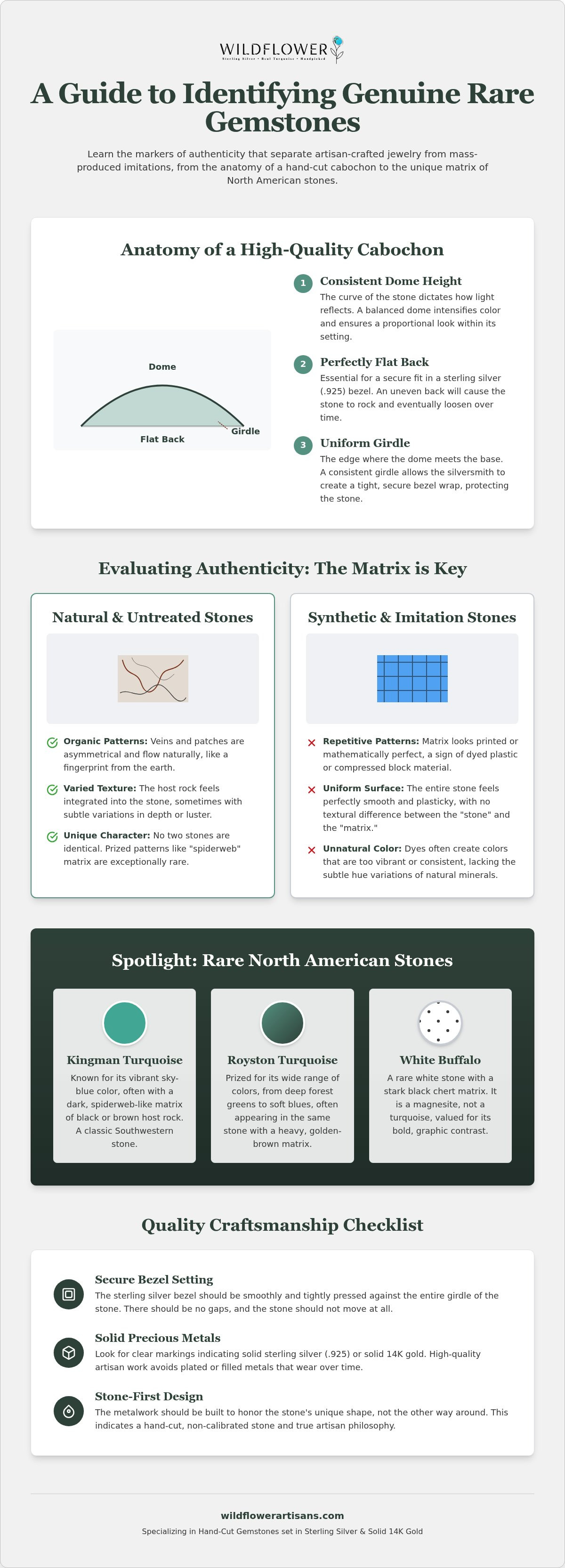
A well-crafted cabochon features a consistent girdle and a balanced dome height to ensure a secure fit within a silver setting. These technical details are what allow a stone to sit flush against the skin while capturing the light beautifully. When we evaluate stones in the studio, we look for several key markers:
- Dome Height: The curve of the stone influences how light moves through the mineral. A high dome can intensify the color of a translucent stone, while a lower dome often suits opaque stones with heavy matrix patterns.
- The Flat Back: This is essential for a flush fit in a sterling silver (.925) bezel. If the back isn't perfectly flat, the stone will rock, eventually loosening the setting over time.
- The Girdle: This is the edge where the dome meets the flat base. In artisan work, a consistent girdle allows the silversmith to wrap the bezel wire tightly, ensuring the stone stays put for a lifetime.
Why Rare Stones Define the Character of a Piece
Rarity in gemstones is often a result of limited geological pockets or mines that have long since closed. These stones carry an emotional weight because they represent a fleeting moment in nature that cannot be replicated. When you hold a piece of jewelry featuring a rare stone, you're holding something that won't be found in a mall or a big-box store. Rarity often comes from "extinct" mines, like certain veins of turquoise that haven't been pulled from the ground in decades. Because we use hand-cut stones rather than calibrated ones, the jewelry must be built around the gem's specific, often asymmetrical, shape. This process honors the natural variation of the mineral. No two stones are identical, and that's exactly the point. It's a celebration of the organic, the slightly imperfect, and the deeply authentic.
Evaluating Authenticity Through Matrix and Hand-Cut Quality
The matrix is the host rock that remains visible within a gemstone, appearing as intricate veins or patches of color that tell the story of the stone's formation. When you examine natural stones, the matrix should feel like an integrated part of the mineral, often showing subtle variations in texture that suggest a life lived in the earth. If a stone looks too perfect or the patterns repeat with mathematical precision, you're likely looking at a synthetic block or dyed material. True authenticity is found in the slight asymmetries and the organic flow of the veins. It's a fingerprint left by the earth itself. We look for stones where the matrix adds depth rather than just a surface pattern.
Identifying Natural Matrix Patterns
Natural matrix patterns are as diverse as the landscapes they come from. A spiderweb matrix, characterized by fine, interlocking veins that mimic a web, is exceptionally rare and prized by collectors. These veins can appear as metallic glints of pyrite, deep chocolate browns, or stark black chert. For those seeking the highest quality, an untreated stone is the ultimate goal. An untreated stone is a mineral that has not been dyed, stabilized with plastic resins, or chemically altered to change its appearance. This preservation is vital for maintaining gemstone rarity and durability over time. Using untreated Rare Gemstone Cabochons for Jewelry Making ensures that the color you see today is the color that will remain for generations.
The Difference Between Hand-Cut and Calibrated Stones
In the jewelry world, calibrated stones are mass-produced gems cut to specific, uniform dimensions like 10x8mm or 12x10mm. These are designed to fit into pre-cast, factory-made settings. While efficient, this approach often sacrifices the most interesting parts of a mineral just to meet a measurement. Hand-cutting is a different path entirely. It allows a lapidary artist to follow the natural strength and beauty of the raw stone, resulting in one of a kind shapes that require a custom-built setting. Artisan studios prefer hand-cut cabochons because they allow the stone to dictate the design, rather than the other way around. It's a slower process, but it's the only way to truly honor a rare find.
At Wildflower Artisans, we honor this artisanal process by selecting stones that speak for themselves. Wildflower Artisans' commitment to genuine materials means we never use mystery metals or imitation blocks. You can find these unique, hand-selected pieces in our collection of handcrafted sterling silver jewelry, where every setting is built to protect the soul of the stone.
Rare North American Turquoise Varieties for Jewelry Collectors
Rarity in turquoise is tied directly to the specific patch of earth it came from. When we source Rare Gemstone Cabochons for Jewelry Making, we focus heavily on the mine of origin. This provenance tells us almost everything we need to know about the stone's hardness, color saturation, and the likelihood of its value increasing over time. Authentic turquoise jewelry should always be accompanied by clear information regarding the stone's origin and treatment status. Collectors often look for stones that haven't been stabilized, meaning they are naturally hard enough to be cut and polished without the addition of resins. This natural state is the gold standard for those who value the raw, unadulterated beauty of the mineral.
Kingman and Royston Turquoise Characteristics
Royston turquoise is famous for its incredible color spectrum. You'll see everything from deep emerald greens to soft, sky blues, often swirling together within the same cabochon. Kingman turquoise, sourced from one of the oldest and most productive North American mines, is celebrated for its high-grade blue hues and classic copper-colored matrix. These stones have defined a distinctive and beloved jewelry aesthetic for generations. When evaluating turquoise quality, collectors look for that perfect balance of color and matrix stability that only these historic mines can provide. The matrix in a Kingman stone often provides a beautiful contrast that highlights the intensity of the blue.
The Rarity of Closed Mines
Some of the most prized stones come from mines that have long since stopped production. The Sleeping Beauty mine is a prime example of a highly sought-after source. Its clear, robin's egg blue color is world-renowned because it often lacks a heavy matrix, offering a pure, solid canvas of color that is hard to find elsewhere. Another treasure is King's Manassa turquoise, celebrated for its distinct green hues and golden-brown matrix, a combination that feels earthy and grounded. Once a mine closes, the cabochons already in circulation become finite treasures. They are no longer being pulled from the ground, so every piece of jewelry featuring these stones becomes a part of a limited geological legacy. When we find a parcel from a closed mine, we treat it with extra care in the studio. Each cabochon is a piece of history that cannot be replaced. The silversmith must ensure the bezel is perfectly fitted to protect these rare specimens for decades to come.
Exploring Rare White Buffalo and Wild Horse Magnesite Stones
White Buffalo and Wild Horse are rare minerals from specific Southwestern mines that offer a striking monochromatic alternative to traditional turquoise. These stones are valued for their high contrast and are frequently set in sterling silver (.925) to highlight their natural patterns, which range from stark lightning-bolt veins to earthy pinto-style patches. While they're often found in the same circles as turquoise, they have their own distinct chemical identities and geological stories that make them finite treasures for collectors.
The Striking Contrast of White Buffalo
White Buffalo isn't turquoise, though you'll often hear it called "white turquoise" in casual conversation. It lacks the copper and aluminum that give turquoise its blue and green hues. Instead, it's a rare mineral composed primarily of dolomite and calcite, found in just one location near Tonopah, Nevada. The visual impact of these Rare Gemstone Cabochons for Jewelry Making comes from the sharp contrast between the white stone and the black chert matrix. We find that women who value a grounded, sophisticated look gravitate toward White Buffalo because it offers a bold monochromatic palette that pairs beautifully with any wardrobe. Because the mine is a single-source location, the supply is naturally limited, making every high-grade cabochon a true collector's item.
Understanding Wild Horse Magnesite
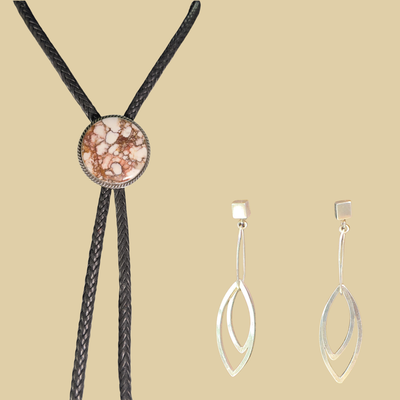
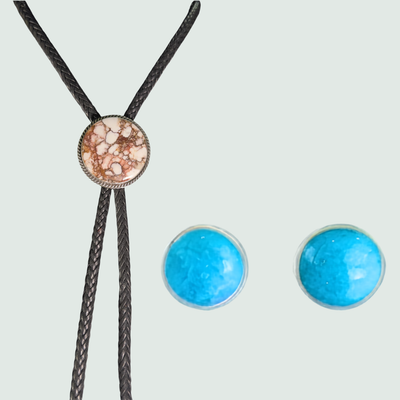
Wild Horse is a specific variety of magnesite that features beautiful reddish-brown inclusions of hematite. These patterns are so distinct that they resemble the coat of a pinto horse, which is how the stone got its name near Globe, Arizona. It has an organic, earthy feel that feels less formal than traditional blue stones, making it a favorite for daily wear. The mining location for this material is remote, often requiring the stone to be hiked out by hand, which only adds to its rarity in the artisan market. Because magnesite is a porous mineral, you have to be careful of imitations. We see a lot of dyed howlite being sold as "Wild Horse," but the genuine stone has a depth of color and a specific matrix texture that factory-dyed stones simply can't replicate. We always recommend verifying the source to ensure you're getting a genuine piece of the Arizona wilderness.
We invite you to explore our current studio selections and see how these high-contrast stones come to life in silver. You can find our latest one of a kind artisan pieces in the shop, each one selected for its exceptional matrix and hand-cut quality.
Choosing Jewelry That Highlights the Natural Beauty of Rare Cabochons
Selecting the right setting is about more than just style; it's the final step in protecting the investment you've made in a rare stone. High-quality artisan jewelry relies on structural techniques like the bezel setting to ensure the gem remains secure through years of daily wear. When you're browsing, look for clean metalwork and a balanced scale that allows the stone to remain the center of attention. The way a piece is finished on the back often tells you more about the silversmith's skill than the front does. A well-made piece feels substantial and intentional, reflecting the care put into the lapidary work.
The Importance of a Secure Sterling Silver Bezel
A bezel is a thin strip of sterling silver (.925) that a silversmith wraps entirely around the base of a stone to hold it in place. This method is far superior to using glue, which can degrade over time when exposed to heat or moisture. A mechanical hold is always the goal in our studio. You will often see different styles of these settings, including:
- Smooth Bezels: A clean, polished band of silver that offers a modern look and doesn't snag on clothing.
- Serrated Bezels: A decorative edge with small teeth that adds texture and a traditional Southwestern feel.
- Scalloped Bezels: A soft, wavy edge that provides a more feminine or ornate frame for the stone.
The hallmark of a professional setting is the burnishing. This is the process of rubbing the metal firmly over the stone's girdle, the widest part of the cabochon, until the fit is perfectly flush. If there's a gap between the silver and the stone, it wasn't finished correctly.
Matching Stone Hardness to Jewelry Style
We use the Mohs scale, a standard for mineral hardness, to determine which Rare Gemstone Cabochons for Jewelry Making are best suited for specific pieces. Turquoise and magnesite generally land between 5 and 6 on this scale. They are durable enough for life's adventures, but they aren't indestructible. For rings and cuff bracelets, which tend to take the most impact during the day, we recommend choosing harder, more compact stones. These pieces are more likely to hit a countertop or a doorway, so a sturdy stone is a must. Pendants and earrings are the perfect place for more delicate specimens or stones with intricate, fragile matrix patterns. Since these pieces rest against your skin or clothing, they're much less likely to be scratched. Always feel free to ask about the origins of our stones to better understand their specific characteristics and ensure you're investing in a piece that fits your lifestyle.
Building Your Collection of Genuine Artisan Jewelry
You now have the knowledge to recognize the true value of Rare Gemstone Cabochons for Jewelry Making. By focusing on the natural matrix and the mine of origin, you can distinguish a factory imitation from a genuine piece of the earth. Whether it's the sky blue of a Kingman stone or the snowy contrast of White Buffalo, these stones carry a narrative that can't be mass-produced. A secure bezel setting in sterling silver (.925) or solid 14K gold ensures your stone stays protected for years of daily wear.
Every piece we create in our studio is built on authenticity. We guarantee that every stone is untreated and sourced from specific mines, making each one a finite treasure. It's about honoring the geological history and the artisan technique that brings it to life. We invite you to find the stone that speaks to your story and appreciate the beauty of a natural, fleeting find.
We look forward to helping you find a piece that feels as grounded and authentic as the landscape it came from.
Frequently Asked Questions
What is a cabochon in jewelry making?
A cabochon is a gemstone that has been shaped and polished into a smooth, domed top with a flat base rather than being faceted with geometric planes. This specific cut is the standard for Rare Gemstone Cabochons for Jewelry Making because it highlights the natural matrix and color of opaque stones. It allows the artisan to showcase the mineral's organic narrative and internal patterns without the distraction of light-reflecting facets.
How can I tell if a turquoise cabochon is real?
Genuine turquoise is identified by its cool temperature to the touch and the presence of an integrated, natural matrix that varies in texture. If a stone feels like plastic or has a perfectly uniform color with repeating patterns, it's likely dyed howlite or a synthetic block. Authentic stones always show slight variations in hue and depth that prove they were formed by the earth's natural rhythms over millions of years.
What does matrix mean in a gemstone?
The matrix is the host rock in which a gemstone originally formed, appearing as intricate veins or webbing throughout the mineral. These patterns of brown, black, or metallic color provide a unique fingerprint that proves a stone is a natural product of the earth. In artisan work, the matrix is celebrated as a vital part of the gem's story and geological history rather than being seen as an imperfection.
Why are hand-cut stones preferred over calibrated ones?
Hand-cut stones are preferred because an artisan shapes them to follow the unique beauty and structural strengths of the raw mineral. Unlike calibrated stones, which are mass-produced to fit factory settings, hand-cut Rare Gemstone Cabochons for Jewelry Making result in one of a kind pieces. This process ensures that the final jewelry honors the gem's specific character and shape instead of forcing it into a standard, pre-made size.
Is White Buffalo a type of turquoise?
White Buffalo is technically a rare combination of calcite and dolomite rather than a variety of turquoise. While it shares a similar aesthetic and is found in the same Southwestern regions, it lacks the copper and aluminum that give turquoise its blue and green colors. Prized for its brilliant white color and deep black chert matrix, it's a rare find from a single mine near Tonopah, Nevada.
How should I care for jewelry with rare gemstone cabochons?
You should care for rare stones by keeping them away from harsh chemicals, perfumes, and excessive moisture that can damage the mineral's surface. To maintain the luster of your sterling silver, use a soft polishing cloth and store your jewelry in a dry place. These simple steps prevent tarnishing and protect the delicate integrity of the cabochon, ensuring the piece remains a vessel for your memories for decades to come.
Article by
Kimberly Cordova
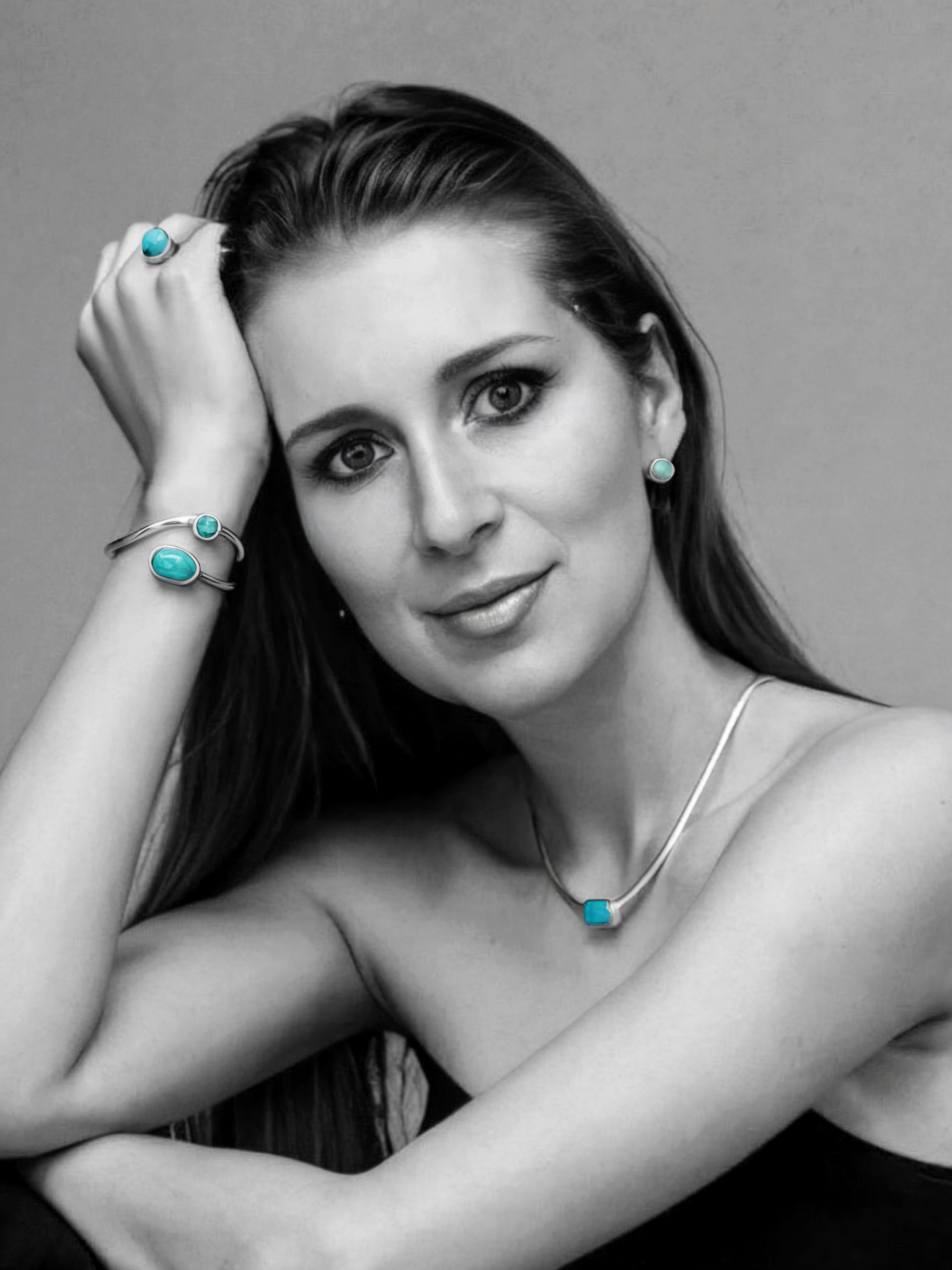
Kimberly Cordova is the founder and creative director of Wildflower Artisans, a handmade jewelry brand rooted in Santa Fe. Real turquoise, solid sterling silver, and a small line set in solid 14K gold. She built Wildflower around a simple belief: the best jewelry is the kind you actually reach for, not the kind you save for someday.
The collection is built three ways. Some pieces are made in-house, cut by her husband Greg from stones he sources himself, including rough from the family's King's Manassa Mine in Colorado and White Buffalo Mine in Nevada. Some are designed by Kimberly and fabricated by a trusted circle of Santa Fe silversmiths. And some are finished work she curates from artisan makers whose craft meets the same standard, because building a real collection means knowing when to make and when to look.
Turquoise leads, joined by White Buffalo, Wild Horse, Lapis Lazuli, Spiny Oyster, Black Onyx, Opal, and other genuine semi-precious stones. No shortcuts on the stone, the silver, or the story behind either.
Her writing covers everything she has learned along the way: how turquoise forms, how to tell natural from stabilized, what makes one mine different from another, how to read a bezel, and how to shop with confidence in a market that is not always straightforward. It is the kind of plainspoken information she wished someone had laid out for her when she was starting out.
Browse the collection at wildflowerartisans.com. Questions about a stone, a setting, or a specific piece are welcome any time.
0 comments