

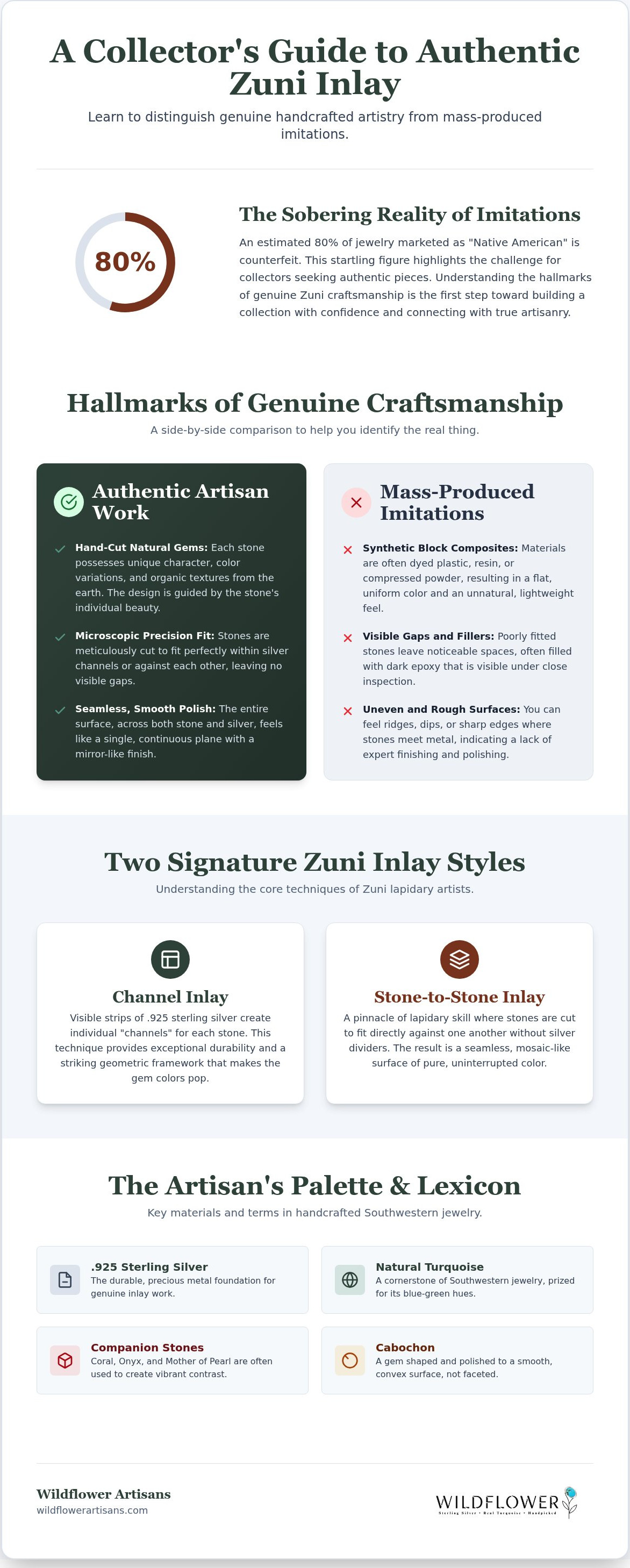
Did you know that nearly eighty percent of the jewelry marketed as Native American is estimated to be counterfeit? It's a startling reality that can turn a moment of discovery into a source of deep anxiety for collectors who value the soul of a piece. We understand that hesitation, that quiet fear of holding a fragment of dyed plastic when you were seeking a connection to the desert floor. Identifying authentic Zuni inlay jewelry requires a keen eye for the deliberate, patient labor that a machine simply cannot replicate.
At Wildflower Artisans, we believe every stone carries its own narrative, shaped by the hands of makers who respect the stone's original spirit. In this guide, we'll walk you through the precise hallmarks of genuine Zuni craftsmanship, teaching you how to distinguish natural, hand-cut stones from mass-produced block imitations. You'll learn to recognize the technical artistry of verified creators like Johnny Coonsis and understand the subtle, organic variations that signal a truly handmade treasure. We'll explore the weight of sterling silver and the microscopic precision of stone joints so you can verify artist marks with confidence. It's a journey into the rhythmic beauty of genuine lapidary work.
Key Takeaways
- Discover the stone-first philosophy where the unique character of hand-cut gems guides the structural design of the sterling silver setting.
- Gain confidence in identifying authentic Zuni inlay jewelry by looking for the microscopic, gap-free precision where stones meet their silver channels.
- Learn to distinguish the vibrant, varied textures of natural turquoise from the flat, mass-produced look of synthetic block composites.
- Identify expert finishing techniques by checking for a smooth, continuous polish that transitions seamlessly between the gemstone and the metal surface.
- Understand how to prioritize transparent artist attribution when selecting handcrafted pieces for your personal collection.
Understanding the Heritage of Zuni Inlay Techniques
Zuni inlay is a sophisticated lapidary technique where hand-cut gemstones are meticulously fitted into silver channels or against one another to create a seamless, mosaic-like surface. Authenticity begins in the quiet, focused space where a stone meets a wheel. Unlike mass-produced items where stones are cast into pre-made molds, identifying authentic Zuni inlay jewelry requires looking for evidence of the artist's touch. Every piece starts with the raw material. At Wildflower Artisans, we follow a stone-first philosophy where the final design is dictated by the precise cut and personality of the gemstone rather than a predetermined pattern.
The traditional palette of this craft is a celebration of natural contrast. Deep blue turquoise, vibrant red coral, shimmering mother of pearl, and rich black onyx are common elements in these wearable narratives. The true value of these creations lies in the immense lapidary labor involved. Every sliver of stone must be shaped with such precision that it sits perfectly flush within its setting. This level of detail creates a surface that feels like a single, continuous silk ribbon of color and light.
The Role of the Lapidary Artist
In our Santa Fe studio, the process is deeply personal. Greg Cordova, our lapidary expert and mine owner, understands that the soul of the work is in the cut. A cabochon is a gemstone that has been shaped and polished into a smooth surface rather than being cut with the sharp facets seen in diamond jewelry. In Zuni inlay, these cabochons are often cut into tiny, precise slivers. Identifying authentic Zuni inlay jewelry means looking for the absence of space. There should be no visible gaps between the stone and the silver bezel. This level of precision ensures the stones are held securely by the metal itself, a testament to the skill of the maker.
Cultural Significance of the Craft
The history of stone-cutting in the Zuni Pueblo is a story of enduring patience and artistic evolution. These Zuni jewelry-making dates reflect centuries of refining techniques that have been passed down through generations of artisan families. Each piece of jewelry is more than an accessory; it is a vessel for a specific narrative. When we carry work by artists like Johnny Coonsis (Zuni), we are sharing a piece of that lineage. The asymmetrical beauty and organic textures found in these handcrafted items offer a connection to the rhythms of the land and the hands that shaped them.
Differentiating Channel Inlay from Stone-to-Stone Designs
Channel inlay is defined by the visible strips of .925 sterling silver that separate each stone, while stone-to-stone inlay features gems fitted directly against one another for a seamless look. Identifying authentic Zuni inlay jewelry requires a close inspection of these boundaries to appreciate the level of grinding precision involved in the artisan's process. Both techniques use sterling silver as a structural foundation, providing a durable home for the delicate hand-cut stones that make up the final composition.
Identifying authentic Zuni inlay jewelry involves looking for these flush boundaries where the metal and stone meet without a whisper of a gap. This level of craftsmanship is a hallmark of the working studio, where every sliver of turquoise or shell is treated with the same reverence as the silver that holds it. Whether the design uses silver partitions or relies on the friction of stone against stone, the result is a piece that feels remarkably smooth to the touch, reflecting a mirror-like finish across the entire surface.
The Mechanics of Channel Inlay
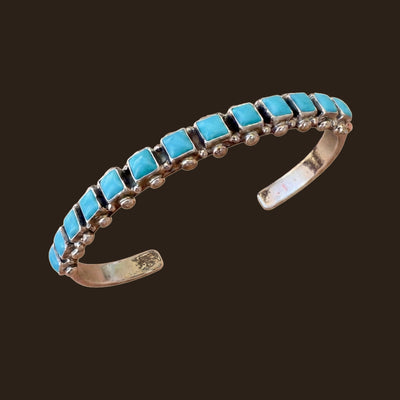
To create a channel inlay piece, an artist first solders tiny silver walls or dividers into a base, creating individual cells for the stones. Each gemstone must then be cut to the exact dimensions of its specific cell, a process that leaves no room for error. This method is often considered Zuni jewelry's most striking feature because it highlights the rhythmic contrast between the bright metal and the vibrant gems. Because each stone is individually encased, channel inlay provides exceptional durability for pieces that might see daily movement, such as rings or cuffs. The silver dividers not only add structural strength but also create a geometric framework that allows the colors of the stones to pop against the polished sterling silver.
The Artistry of Stone-to-Stone Fitting
Stone-to-stone inlay represents a pinnacle of technical skill, resulting in a seamless mosaic where the silver disappears beneath the gemstones. This style requires a much higher level of grinding precision because even a hair-thin gap will disrupt the visual flow of the piece. Some artists take this further with mosaic inlay, a variation where stones of varying heights are used to create a textured, three-dimensional surface. This intense labor results in a piece that feels more like a sculpture than a flat decoration. The final polish is applied across the entire surface, ensuring that the transition between different stones like lapis and spiny oyster is felt only by the eyes, not the fingertips. You can find examples of this intricate work in our turquoise jewelry, where different shades of natural stone are paired to mimic the shifting colors of a desert horizon.
This meticulous structural integrity is what gives our everyday essentials collection its enduring charm, featuring handcrafted pieces where the silver and stone remain perfectly flush through years of wear. Each stud and pendant in this curated selection is designed to ensure the delicate inlay remains secure within its hand-soldered frame.
Recognizing Natural Gemstones vs Synthetic Block Materials
The journey of identifying authentic Zuni inlay jewelry begins with a deep appreciation for the earth's own imperfections. Natural turquoise is stone that is earth-mined and remains untreated by plastic resins, carrying the weight and temperature of the high desert. In contrast, block turquoise is an industrial composite, a mixture of plastic, dye, and stone dust designed to mimic nature's palette without its soul. While synthetic materials offer a flat, predictable surface, genuine stones possess a quiet depth that changes with the light. We believe that these organic variations are what make a piece truly come alive.
Beyond the stones themselves, the structural integrity of the piece is found in its metal. We warn against mystery metals that lack a clear pedigree. Every handcrafted piece should carry the .925 hallmark, confirming it is made of genuine sterling silver. This stamp is more than a technical requirement; it's a promise of quality that ensures the silver will age gracefully alongside the stones it protects. Without this mark, the longevity of the inlay is often at risk, as base metals can corrode or react with the delicate stones over time.
The Visual Markers of Authentic Stones
When observing a piece, look for the matrix, which is the host rock or spiderweb patterns that occur naturally within a stone. These inclusions are the fingerprints of the earth, offering proof that the material was once part of a larger geological story. A perfectly uniform, bright blue color often signals a synthetic or stabilized product, as nature rarely produces such startling consistency. Genuine spiny oyster shell or lapis lazuli will also show unique natural textures, from the subtle growth rings of the shell to the golden flecks of pyrite in the stone. The Center for the Study of Southwestern Jewelry provides resources that highlight the dazzling intricacy of these lapidary works, where the organic variance of the material is celebrated rather than hidden.
The Importance of Mine Provenance
Knowing the specific origin of a stone, such as the Kingman or White Buffalo mines, adds a layer of narrative to your collection. This provenance is a vital tool for identifying authentic Zuni inlay jewelry, as it connects the finished piece back to the very soil from which it was pulled. Artisan-made jewelry often comes with documentation regarding the stone origin, reflecting a transparent relationship between the lapidary artist and the collector. We believe that understanding these origins fosters a deeper connection to the work. You can explore our commitment to these genuine materials through the Wildflower authenticity story, which details our process of documenting every piece individually to ensure its lineage is preserved.
Examining Precision and Finishing in Handcrafted Inlay
Identifying authentic Zuni inlay jewelry requires a discerning eye for the microscopic details of the finishing process, specifically the presence of gap-free joints where the stone meets the silver. In a piece crafted by a master lapidary, the transition between the gemstone and the sterling silver bezel should be virtually invisible to the naked eye. This level of precision is achieved through hours of patient grinding and polishing, resulting in a mirror-like surface that reflects light uniformly across both the metal and the stone. When you run your finger across the inlay, it should feel like a single, unbroken plane of cool silk.
The physical weight of the jewelry serves as another vital clue in the process of identifying authentic Zuni inlay jewelry. Genuine .925 sterling silver and earth-mined stones possess a substantial density that feels grounded in the hand. If a piece feels unexpectedly light or hollow, it may be an indication of block materials or base metals. While we strive for technical perfection, subtle asymmetries often whisper the truth of a human maker. A machine can produce thousands of identical shapes, but a handcrafted piece carries the organic variations that indicate a stone was cut to fit its specific silver home. These tiny deviations are the hallmarks of a soul at work.
Hallmarks and Artist Signatures
Turning a piece over often reveals the final chapter of its story through an artist's signature or a specific hallmark. Master Zuni craftsmen, such as Johnny Coonsis, often sign their work as a point of pride and lineage. While these marks are significant, they should always be viewed as secondary to the quality of the inlay itself. A hallmark can be forged, but the technical mastery required to fit dozens of tiny stones without a single gap is much harder to replicate. We recommend using a jeweler's loupe to inspect the reverse side for the .925 stamp, ensuring the foundation is as genuine as the artistry on the surface.
The Temperature and Feel of Real Materials
Natural materials possess a unique thermal character that plastic imitations simply cannot mimic. Real stone and sterling silver are naturally cool to the touch, pulling heat away from the skin and warming only slowly as they are worn. This initial chill is a sensory confirmation of density and authenticity. In contrast, resin-based block turquoise feels warm and light almost immediately upon contact. Trusting your physical senses provides a layer of confidence that goes beyond visual inspection. The weight, the temperature, and the tactile smoothness of the finish all work together to tell the story of a piece's origin.
This level of mirror-like finishing is why we document every angle of the pieces in our one-of-a-kind artisan pieces. It ensures you can see the gap-free precision of the stones before they ever reach your door.
Choosing Authentic Artisan Inlay for Your Collection
Choosing a piece of jewelry is an intimate decision, a search for a vessel that mirrors your own appreciation for the natural world. When identifying authentic Zuni inlay jewelry, look for a story that is told with total transparency. A reputable creator will always share the origin of the stones and the hand that shaped them. This openness is why gallery jewelry costs more than mass-produced alternatives; you are investing in the specialized, technical labor that machine-made items simply lack. We encourage a quality over quantity mindset, finding beauty in the singular and the handmade.
Every genuine piece carries the weight of the artist's intent and the earth's history. Identifying authentic Zuni inlay jewelry means recognizing that you are not just buying an accessory, but a fragment of a living tradition. We believe in building a collection slowly, allowing each piece to find its place in your narrative. Whether it is the subtle shimmer of mother of pearl or the deep sky of a Royston stone, the authenticity is found in the details that only a human hand can produce.
Building a Collection with Intention
We often suggest starting with smaller, intentional pieces like those found in the everyday stud edit. These smaller works allow you to appreciate the precision of the inlay on a personal scale before moving toward more complex statement cuffs or large pendants. Pairing these vibrant, inlaid stones with simple sterling silver staples highlights the natural movement of the lapidary work without overwhelming the eye. One of a kind pieces are more than just jewelry; they are potential heirlooms that carry their own quiet strength. For those seeking guidance on how to begin their journey, our Wildflower gift guide offers curated selection tips to help you choose pieces that resonate with your personal style.
Long-Term Care for Inlay Jewelry
Inlay jewelry is a delicate assembly of many lives, each stone held in a precise, rhythmic balance. Because these pieces are composed of multiple hand-cut gems fitted into a structural framework, they require a gentle touch and mindful preservation. We advise against the use of ultrasonic cleaners, as the high frequency vibrations can loosen the delicate bond between the stones and their silver channels. Sudden changes in temperature or immersion in harsh chemicals can also disrupt the integrity of the setting. For detailed preservation steps to ensure your treasures remain vibrant for generations, please visit our care and repair page. Taking the time to care for your jewelry is a final act of respect for the artisan's labor and the natural beauty of the stones.
Embracing the Legacy of Handcrafted Artistry
Identifying authentic Zuni inlay jewelry is a process of slowing down to appreciate the quiet labor of the lapidary wheel. It's found in the gap-free precision of the stone joints and the natural, cooling touch of genuine turquoise against your skin. By prioritizing transparent artist attribution and the substantial weight of .925 sterling silver, you ensure that your collection is built on a foundation of truth. Every piece at Wildflower Artisans is verified for stone authenticity, whether it's handcrafted in our Santa Fe studio or curated from documented Zuni and Navajo artists. These are not merely objects; they are vessels for emotion and celebrations of natural, fleeting beauty. Wildflower invites you to find a piece that speaks to your own narrative, knowing that each genuine, earth-mined stone was cut with intention and respect for its origin.
May your journey into the world of artisan-made jewelry be filled with the same wonder that inspired its creation.
Frequently Asked Questions
How can you tell if Zuni inlay is real?
Real Zuni inlay is distinguished by the microscopic precision of the stone joints and the absence of gaps between the gems and the sterling silver framework. Identifying authentic Zuni inlay jewelry requires a close inspection of the stones themselves, which should exhibit natural color variations and matrix patterns. Unlike the flat uniformity of plastic block imitations, genuine earth-mined stones possess a unique depth and stay cool to the touch before warming against your skin.
What materials are traditionally used in Zuni inlay jewelry?
The traditional palette of Zuni inlay is rooted in a four-color harmony of blue turquoise, red coral, white mother of pearl, and black onyx. These materials represent a deep connection to the natural world and are often paired with solid .925 sterling silver. Modern artisans frequently expand this creative language to include other genuine stones like spiny oyster shell, lapis lazuli, and malachite, each cut with the same rhythmic precision that defines the craft.
Do all authentic Zuni inlay pieces have a hallmark?
Not every authentic piece carries an artist's hallmark, especially if it is a vintage or very small creation. While master craftsmen like Johnny Coonsis frequently sign their work, identifying authentic Zuni inlay jewelry often relies more on observing the technical labor involved. Look for the .925 stamp on the sterling silver and the unmistakable quality of hand-cut stones, as these technical details are more reliable indicators of authenticity than a signature alone.
What is the difference between stabilized and natural turquoise in inlay?
Natural turquoise remains in its raw, porous state exactly as it was pulled from the earth, while stabilized turquoise has been infused with a clear resin to increase its durability. This stabilization process prevents the stone from absorbing oils or changing color over time, making it a practical choice for daily wear. Both materials are used in genuine handcrafted jewelry, provided they are earth-mined stones rather than synthetic composites or dyed plastic imitations.
Is Zuni inlay jewelry durable enough for daily wear?
Handcrafted inlay jewelry is remarkably durable for daily life, though it requires a more gentle approach than solid stone settings. Because the design consists of many small stones fitted together, you should avoid submerging these pieces in water or using ultrasonic cleaners that might loosen the bonds. By protecting the stones from harsh chemicals and sudden impacts, you ensure these artisan treasures remain vibrant vessels of emotion for many years to come.
Article by
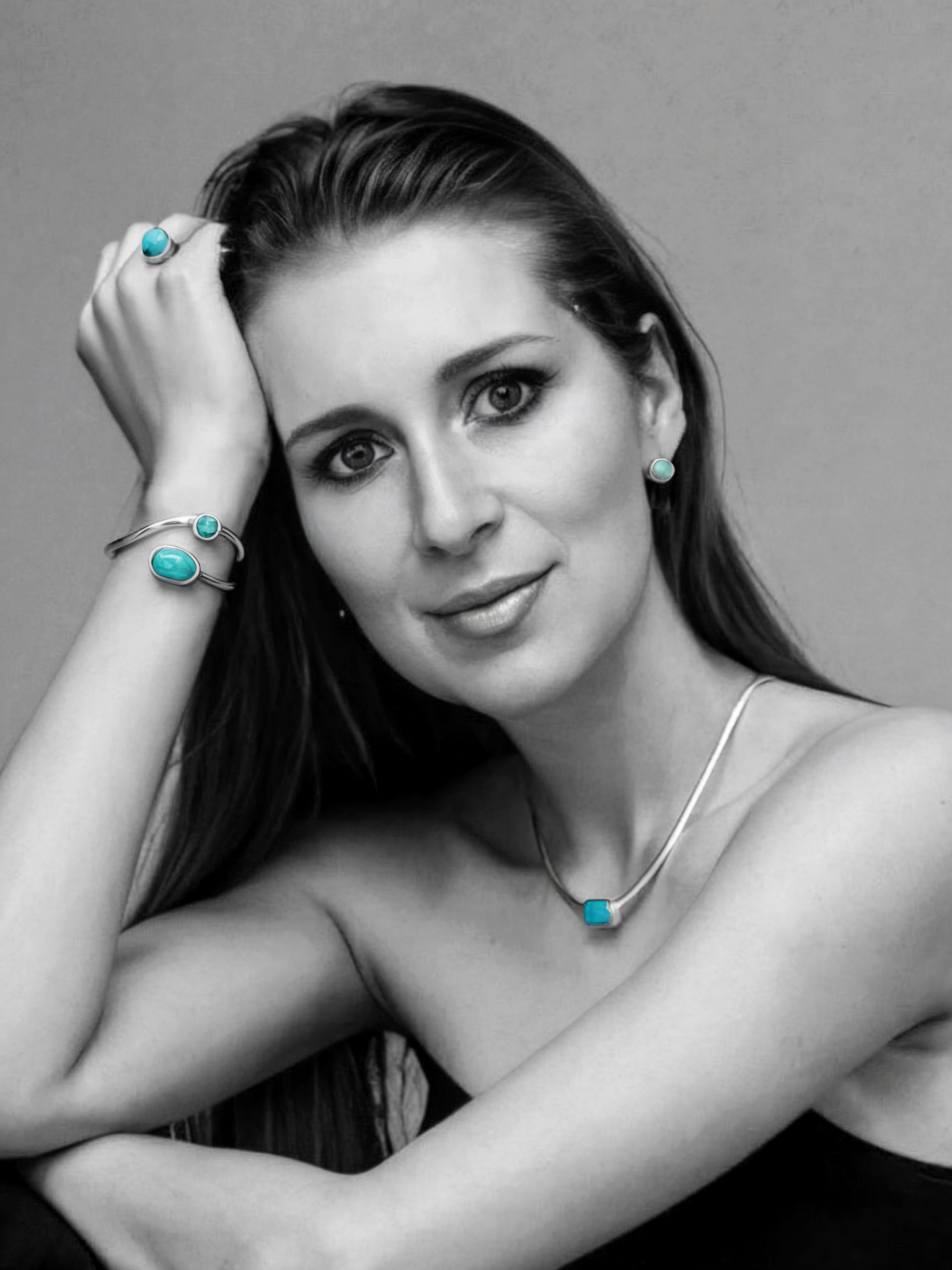
Kimberly Cordova
Kimberly Cordova is the founder and creative director of Wildflower Artisans, a handmade jewelry brand rooted in Santa Fe. Real turquoise, solid sterling silver, and a small line set in solid 14K gold. She built Wildflower around a simple belief: the best jewelry is the kind you actually reach for, not the kind you save for someday.
The collection is built three ways. Some pieces are made in-house, cut by her husband Greg from stones he sources himself, including rough from the family's King's Manassa Mine in Colorado and White Buffalo Mine in Nevada. Some are designed by Kimberly and fabricated by a trusted circle of Santa Fe silversmiths. And some are finished work she curates from artisan makers whose craft meets the same standard, because building a real collection means knowing when to make and when to look.
Turquoise leads, joined by White Buffalo, Wild Horse, Lapis Lazuli, Spiny Oyster, Black Onyx, Opal, and other genuine semi-precious stones. No shortcuts on the stone, the silver, or the story behind either.
Her writing covers everything she has learned along the way: how turquoise forms, how to tell natural from stabilized, what makes one mine different from another, how to read a bezel, and how to shop with confidence in a market that is not always straightforward. It is the kind of plainspoken information she wished someone had laid out for her when she was starting out.
Browse the collection at wildflowerartisans.com. Questions about a stone, a setting, or a specific piece are welcome any time.
0 comments