

The weight of sterling silver (.925) against your skin should feel like a steady, intentional pulse rather than a frantic clatter of metal. Learning how to stack turquoise cuffs requires an appreciation for the individual character of each stone, from the intricate matrix of a Royston cabochon to the clear sky tones of Kingman. Many collectors at Wildflower Artisans hesitate to layer their favorite pieces because they fear the silver might scratch or that the arrangement will feel physically heavy and noisy. It's a common frustration to feel that your jewelry is wearing you, rather than the other way around. We understand the desire for a look that feels both grounded and curated.
This guide provides the professional techniques needed to create a balanced, intentional stack that highlights artisanal craftsmanship. You'll learn the studio secrets for pairing different mines and varying bezel styles to create a cohesive, comfortable arrangement. We will walk through the process of selecting an anchor piece and layering smaller bands to ensure your collection remains a source of quiet joy. By understanding the technical balance of weights and widths, you can build a collection that feels like a natural extension of your own story.
Key Takeaways
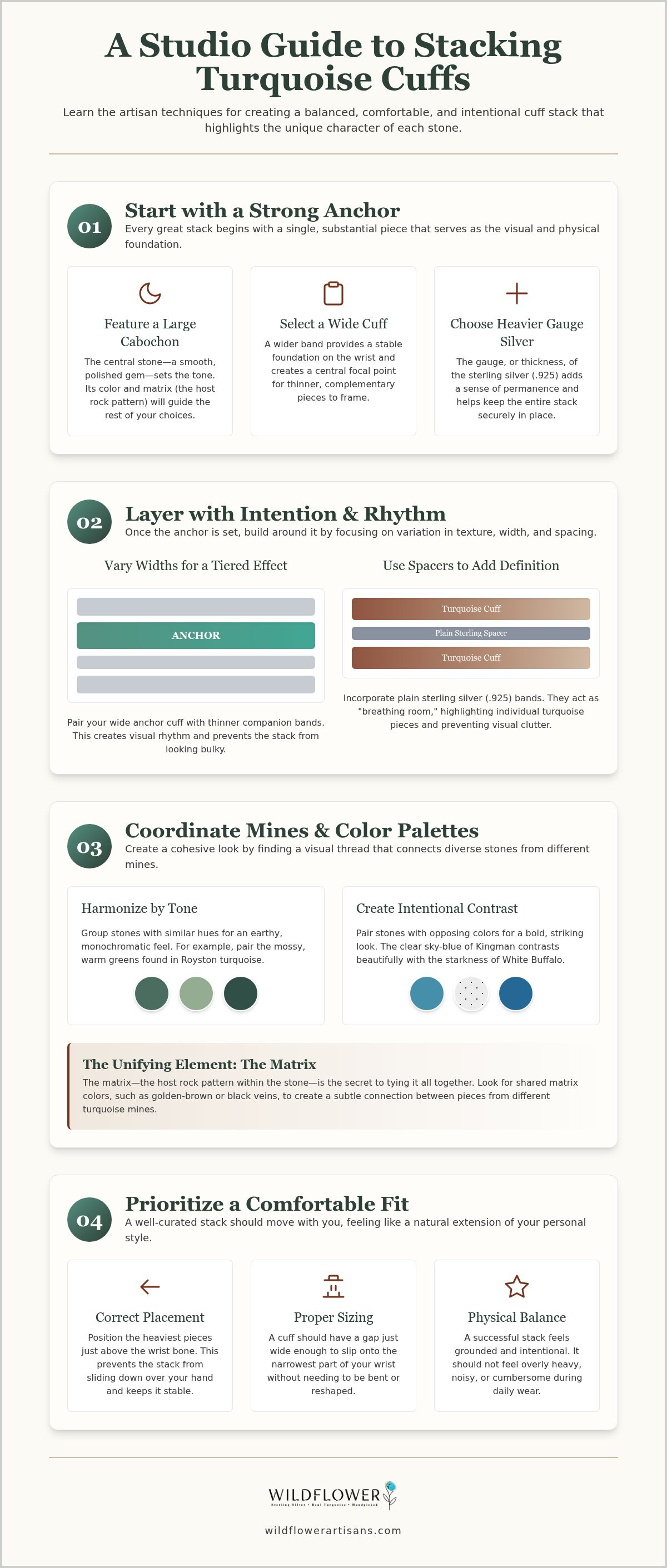
- Identify a substantial anchor piece featuring a hand-cut cabochon to serve as the intentional centerpiece of your wrist collection.
- Master the art of how to stack turquoise cuffs by layering pieces with varying silverwork textures and stone sizes to create a balanced visual rhythm.
- Learn to coordinate different mines by grouping stones with similar matrix colors or creating intentional contrast between deep blues and stark whites.
- Incorporate plain sterling silver (.925) bands as functional spacers to highlight the beauty of the turquoise while preventing the stack from feeling cluttered.
- Prioritize physical comfort by measuring your wrist circumference and selecting cuffs with appropriate gaps to ensure the jewelry moves harmoniously with your body.
Selecting the Anchor Piece for Your Turquoise Stack
Selecting an anchor piece involves choosing a substantial, wide cuff that serves as the visual and physical foundation for your entire jewelry arrangement. This central piece dictates the color palette and silver textures for the rest of the stack. When learning how to stack turquoise cuffs, start with a piece featuring a substantial cabochon. A cabochon is a gemstone that has been shaped and polished into a smooth, rounded surface rather than faceted. These Turquoise gemstone properties vary wildly between mines, but the matrix should guide your choices. The matrix is the host rock pattern that weaves through the turquoise mineral. Whether you are drawn to the vibrant greens of King's Manassa or the crisp contrast of White Buffalo, your anchor stone sets the tone for every other piece you add.
Evaluating Cuff Width and Weight
Choosing a heavier gauge sterling silver (.925) for your anchor provides a physical foundation. Gauge refers to the thickness of the metal, and a thicker silver band creates a sense of permanence on the wrist. A wide statement piece works best when paired with thinner companion pieces, creating a tiered visual effect that draws the eye toward the center. If you have a cuff with a particularly large stone, balance it with simpler, unadorned silver bands to avoid a look that feels cluttered or heavy. This tiered approach allows you to highlight the artisan craftsmanship of each individual piece without overwhelming the natural line of your arm. The physical weight also helps the stack feel intentional rather than haphazard.
Positioning for Visual Impact
Where the anchor sits determines how the entire stack moves throughout the day. We recommend placing the largest piece closest to the hand or in the center of an odd-numbered group, such as a set of three. A secure fit on the widest part of the wrist is vital. It prevents the other bracelets from sliding over the hand or clashing together in a noisy way. The weight of this primary cuff acts as a literal anchor, keeping lighter pieces from shifting. Pay attention to the bezel, which is the silver rim or frame that securely holds a stone in place. A high-quality bezel should be smooth and sit comfortably against the skin, ensuring the beauty of the piece doesn't come at the cost of physical ease. We find that focusing on the gap, the opening at the back of the cuff, helps in securing the piece firmly above the wrist bone for the best stability.
Mixing Turquoise Mines and Color Palettes
Mixing different mines is a process of finding a visual thread that ties diverse stones together through shared matrix tones or intentional color contrast. This approach ensures that a collection of varied stones feels like a deliberate gallery rather than a random assortment.
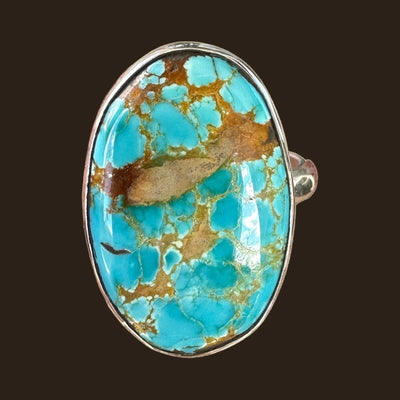
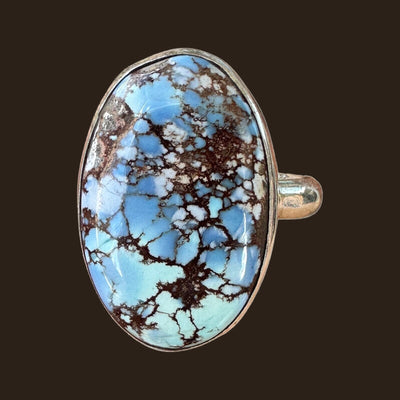
Coordinate your stack by tone by grouping green-leaning stones like Royston with other warm-toned varieties. This creates a harmonious, earthy feel that reflects the natural landscape. Alternatively, you can create a striking look by pairing the stark white and black of White Buffalo with the deep blue of Kingman turquoise. Incorporating Wild Horse magnesite or Lapis Lazuli adds a necessary layer of depth. These stones break up the turquoise monochrome and prevent the eye from becoming overwhelmed by a single shade of blue. If you're looking for how to stack turquoise cuffs with diverse origins, always search for shared matrix colors, such as golden or brown host rock, to tie the different mines together.
Harmonizing Kingman and Royston Tones
Kingman turquoise often features bright, sky-blue hues that pop against the mossy, earthy greens found in Royston stones. To make this mix look intentional, select pieces where the sterling silver (.925) work is consistent. Similar hand-stamped patterns or bezel styles provide a unifying language across the different mine origins. You can also use a neutral stone like White Buffalo to bridge the gap between high-contrast colors, acting as a visual palate cleanser between the blue and green stones.
The Role of the Matrix in Coordination
The matrix is the host rock that remains within the turquoise stone, often appearing as veins or patterns. This feature provides secondary colors that you can use to pull a stack together. For instance, pairing a heavy chocolate matrix with copper-toned turquoise creates a warm, Southwestern style. However, we suggest you avoid stacking stones with competing heavy matrices unless the silverwork is very minimal. Too much visual noise from both the stone and the metal can make the stack feel cluttered. If you're ready to find your next pairing, we invite you to explore our collection of artist-made pieces.
Our studio focuses on the unique character of every hand-cut stone we set in sterling silver (.925). You can explore our diverse selection of handmade turquoise jewelry to find the specific mine and matrix that balances your collection.
Incorporating Texture and Handcrafted Silverwork
Texture in silversmithing refers to the physical feel and visual patterns of the metal, such as stamping, fluting, or twisted wire. By mixing these handcrafted details, you ensure that each piece in your collection remains visually distinct rather than blending into a single mass of silver. When learning how to stack turquoise cuffs, the variety of these surface treatments is what creates a rhythmic, curated look. Layering a smooth, high-polish cuff against a heavily stamped piece highlights the artisan details of both through intentional contrast. You can find more definitions for these techniques in our turquoise glossary.
Stamping and Repoussé Details
Hand-stamped patterns are a direct reflection of the individual touch of the silversmith, as each geometric mark is made with a steel tool and a hammer. This process requires a steady hand to create a consistent narrative along the length of the sterling silver (.925). You can combine different stamps to create a rhythmic pattern along the arm, perhaps pairing crescent shapes with linear fluting. Repoussé is a metalworking technique where the silver is hammered into relief from the reverse side to create a raised, three-dimensional design on the front. This adds a sculptural quality to the stack, allowing certain pieces to catch the light differently than their flatter counterparts. These variations in depth are essential for a collection that feels curated over time.
Wire Work and Border Finishes
Twisted wire or 'rope' details are a classic element of Southwestern style that adds a vintage feel to even a modern stack. These borders often wrap around a bezel, which is the silver collar that holds a stone in place, providing a textured frame for the turquoise cabochon. Fine-gauge wire cuffs are excellent for filling small gaps between larger bracelets. They act as spacers that prevent the stack from feeling too rigid or physically uncomfortable. If your collection is dominated by heavy square bands, consider adding a cuff with scalloped edges. This softer silhouette can break up the harsh lines of thicker pieces and add a sense of organic movement to the wrist. Our working silversmiths often use these border finishes to give each piece a unique signature.
Varying the silver gauges within your stack is a technical necessity. Gauge is the standard measurement used to determine the thickness of the metal sheet or wire. Using only heavy gauges can make the stack feel physically burdensome and visually overwhelming. We recommend mixing thin, flexible bands with your wider anchor pieces to ensure the stack retains its movement. This balance prevents the jewelry from looking like a single, wide band and instead highlights the individual craftsmanship of each artist-made piece.
Balancing the Stack with Plain Sterling Cuffs
Plain sterling silver (.925) cuffs act as essential visual spacers that allow the vibrant colors of your turquoise collection to stand out with clarity. These unadorned bands provide a necessary pause in color, ensuring the overall stack feels sophisticated rather than cluttered. When learning how to stack turquoise cuffs, the absence of a stone is often as important as the presence of one. By incorporating a simple brushed or hammered silver band, you break up a sequence of stones and give the eye a place to rest. This intentional use of metal highlights the artisanal quality of the surrounding pieces while creating a more grounded, balanced look on the wrist.
Using Silver as a Visual Spacer
A thoughtful arrangement often relies on the "rule of three," where a stack of three bracelets looks most balanced with two stone pieces and one plain metal piece. Placing a slim silver cuff between two larger stone pieces helps define each individual bracelet, preventing them from blending into a single, indistinguishable mass. Consider the finish of your silver spacers to match the mood of your collection. A satin or brushed finish offers a soft, muted glow, while oxidized silver provides a vintage feel. Oxidized silver is a process where the metal is intentionally darkened to highlight recessed details and provide a weathered patina. High-shine silver, conversely, offers a crisp contrast that can make the blue hues of a Kingman cabochon appear even more vivid.
Protecting Your Stones
Beyond aesthetics, solid silver pieces serve a technical purpose by acting as a physical buffer to protect fragile turquoise settings from impact. Turquoise is a relatively porous and delicate stone, and constant contact with other hard surfaces can lead to chips or loosened bezels. Selecting cuffs with slightly different diameters is a practical way to keep them from overlapping or "nesting" too tightly. Nesting occurs when two cuffs of similar size slide into one another, which can lead to metal scratching or stones knocking together. Ensure that no sharp silver edges or heavy stampings are resting directly against a cabochon to maintain the integrity of your collection over time. This protective layering ensures your artist-made pieces remain vessels for emotion for years to come.
Our studio creates everyday essentials designed to serve as the foundation for your jewelry journey. You can explore our collection of sterling silver jewelry to find the perfect spacer pieces for your unique stack.
Practical Sizing and Comfortable Placement
Achieving a comfortable fit while learning how to stack turquoise cuffs requires an understanding of how multiple bands interact on the arm. A successful stack should feel like a natural extension of your movement, sitting securely without pinching the skin or rattling excessively throughout the day. By measuring carefully and layering from the wrist bone upward, you ensure that each artist-made piece remains in its intended position.
Measuring for a Layered Fit
Start by measuring the circumference of your wrist at the narrowest point using a flexible tape to establish your base size. It's important to remember that a cuff that fits perfectly on its own might become uncomfortably tight when pushed further up the forearm. Your arm naturally widens as it approaches the elbow; therefore, pieces intended for the top of a stack often need a slightly larger diameter. You should also account for the thickness of the silver gauge. Gauge is the technical term for the thickness of the metal sheet or wire used in the cuff's construction. Heavier metal takes up more internal space, which can make a cuff feel smaller than a thin wire band of the same measurement. We suggest leaving approximately a half-inch to one-inch gap at the back of the cuff. This gap allows for easy removal and prevents you from having to bend the sterling silver (.925) every time you put it on.
Managing Weight and Movement
Strategic weight distribution prevents a heavy stack from becoming a physical burden. We recommend placing a smaller, tighter cuff at the bottom of the stack to act as a stopper. This foundation piece keeps larger, heavier cuffs from sliding down over the wrist bone and into the palm. When you arrange your pieces, layer them from the wrist bone upward toward the elbow for the most secure fit. When you understand how to stack turquoise cuffs for comfort, you can wear your collection for hours without irritation. If you need to adjust the tension of a new cuff, do so carefully and only once. Repeatedly bending the silver back and forth causes metal fatigue, which can lead to structural failure or a loosened bezel. A properly adjusted cuff should match the oval contour of your wrist rather than being a perfect circle. Once the stack is assembled, move your arm through its full range of motion to ensure the pieces don't clatter against each other in a way that could damage a delicate hand-cut cabochon. For those building their collection, our cuffs and bangles collection offers a variety of widths and weights to help you find that perfect balance. If you're concerned about finding the right fit, you can review our shipping and returns page for more information on our exchange process.
Cultivating Your Personal Jewelry Narrative
Building a collection that reflects your history requires patience and a discerning eye for detail. By selecting a substantial anchor piece and balancing its weight with plain sterling silver (.925) spacers, you create a visual rhythm that honors the individual craftsmanship of each artist. Coordinating stones through shared matrix tones or intentional color contrasts ensures your stack remains a cohesive celebration of the natural world rather than a cluttered assortment. We believe that every piece should feel like a grounded extension of your own story.
Mastering how to stack turquoise cuffs is not about following rigid rules; it's about listening to the stories told by genuine, mine-specific stones. Whether you're drawn to the deep blues of Kingman or the mossy greens of Royston, each hand-cut cabochon brings its own unique character to your wrist. Our studio-made pieces are crafted with a focus on authenticity, ensuring that the sterling silver (.925) guarantee and the quality of the stones remain the foundation of your jewelry journey.
We invite you to trust your intuition as you piece together a collection that feels entirely your own, finding beauty in the organic and the intentional.
Frequently Asked Questions
How many turquoise cuffs should I wear in one stack?
A classic jewelry stack typically consists of three to five artist-made pieces. Starting with an odd number allows you to establish a natural focal point with a central anchor piece. While two cuffs of varied widths can offer a minimal look, layering five or more bracelets creates the bold statement often associated with Southwestern styles. The most important factor is your physical comfort; you should be able to move your wrist throughout the day without the silver feeling restrictive.
Can I mix turquoise from different mines in the same stack?
You can certainly mix turquoise from different mines like Kingman, Royston, and King's Manassa within a single arrangement. Learning how to stack turquoise cuffs with diverse stone origins adds a layer of narrative depth to your collection. To keep the look intentional, search for a common thread such as a similar matrix color or matching hand-stamped silverwork. This approach celebrates the unique character of each hand-cut stone rather than relying on a perfectly matched set.
How do I prevent my turquoise bracelets from scratching each other?
To protect your genuine stones, avoid stacking bracelets with sharp, protruding prongs or rough edges that might catch on adjacent pieces. Using plain sterling silver (.925) cuffs as spacers between stone-heavy bracelets provides a necessary physical buffer. It is also vital to ensure each cuff is sized correctly for your arm. When bracelets are fitted properly, they don't slide over one another, which is the primary cause of surface scratches on the silver and cabochons.
Is it okay to mix sterling silver and 14K gold in a turquoise stack?
Mixing metals is a sophisticated way to add warmth and contrast to your jewelry. Many artisan pieces feature solid 14K gold bezels on sterling silver (.925) bands, creating a natural bridge between the two materials. When you are deciding how to stack turquoise cuffs with mixed metals, try to repeat the gold element in at least two pieces. This makes the combination look deliberate. Solid 14K gold spacers can also beautifully highlight the golden tones found in a stone's matrix.
Should I wear a stack on both wrists or just one?
Styling is a personal choice, but many collectors prefer a single 'power wrist' for a heavy stack while keeping the other arm minimal. This creates a balanced silhouette that doesn't feel overwhelmed by metal. If you choose to wear jewelry on both wrists, consider a curated stack on one side and a single, simple cuff or a watch on the other. This prevents a cluttered appearance and allows the intricate details of your artist-made pieces to remain the focus.
Article by
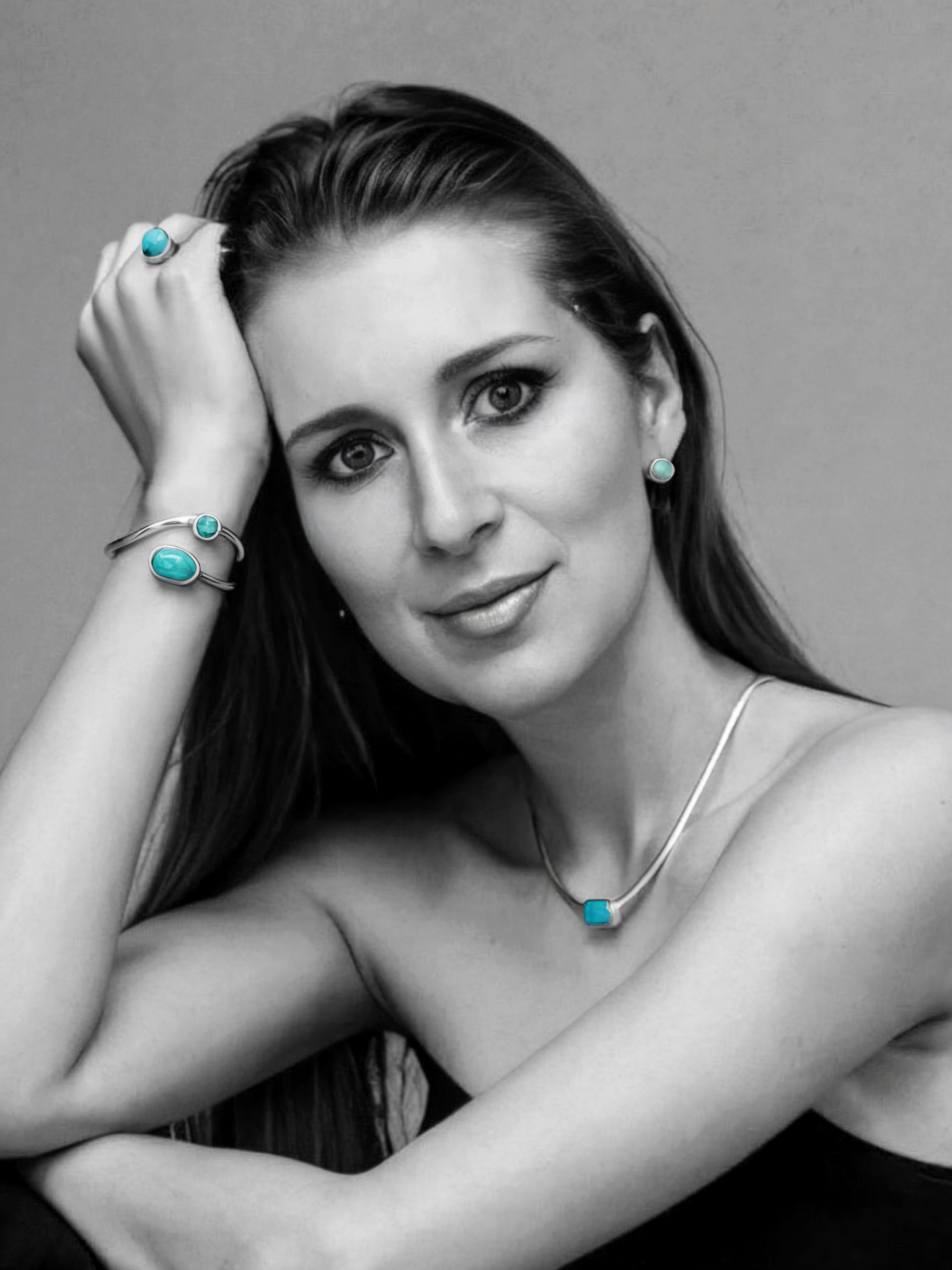
Kimberly Cordova
Kimberly Cordova is the founder and creative director of Wildflower Artisans, a handmade jewelry brand rooted in Santa Fe. Real turquoise, solid sterling silver, and a small line set in solid 14K gold. She built Wildflower around a simple belief: the best jewelry is the kind you actually reach for, not the kind you save for someday.
The collection is built three ways. Some pieces are made in-house, cut by her husband Greg from stones he sources himself, including rough from the family's King's Manassa Mine in Colorado and White Buffalo Mine in Nevada. Some are designed by Kimberly and fabricated by a trusted circle of Santa Fe silversmiths. And some are finished work she curates from artisan makers whose craft meets the same standard, because building a real collection means knowing when to make and when to look.
Turquoise leads, joined by White Buffalo, Wild Horse, Lapis Lazuli, Spiny Oyster, Black Onyx, Opal, and other genuine semi-precious stones. No shortcuts on the stone, the silver, or the story behind either.
Her writing covers everything she has learned along the way: how turquoise forms, how to tell natural from stabilized, what makes one mine different from another, how to read a bezel, and how to shop with confidence in a market that is not always straightforward. It is the kind of plainspoken information she wished someone had laid out for her when she was starting out.
Browse the collection at wildflowerartisans.com. Questions about a stone, a setting, or a specific piece are welcome any time.
0 comments