

H1: How to Insure Turquoise Jewelry: A Practical Guide
Meta title: How to Insure Turquoise Jewelry: Practical Coverage Guide
Meta description: Learn how to insure turquoise jewelry with clear records, useful appraisal questions, and practical prompts for checking your policy before relying on its coverage.
Slug: how-to-insure-turquoise-jewelry
Alt text: how to insure turquoise jewelry with clear item records
A turquoise cabochon may have a one-of-a-kind pattern, set by hand in silver that shows the maker’s touch. Learning how to insure turquoise jewelry starts with keeping a clear record and speaking directly with your insurer. A homeowners or renters policy may not provide the protection you expect.
This guide explains how to document a piece, what to ask before arranging an appraisal, and how to compare insurance options by their written terms. With your records organized, you can check the details before relying on a policy.
Key Takeaways
- To understand how to insure turquoise jewelry, ask your insurer what your current policy covers and what documentation it requires.
- Gather purchase records and clear photographs, then describe the stone and setting using details you can verify.
- Before arranging an appraisal, ask about the appraiser’s jewelry experience, the report contents, and whether your insurer accepts the report.
- Compare your current policy with a separate jewelry insurance option. Check coverage terms, limits, exclusions, deductibles, and required documents.
- Keep a secure copy of your records separate from the jewelry, so you can find the details if you need them.
How to Insure Turquoise Jewelry: Start With Your Existing Policy
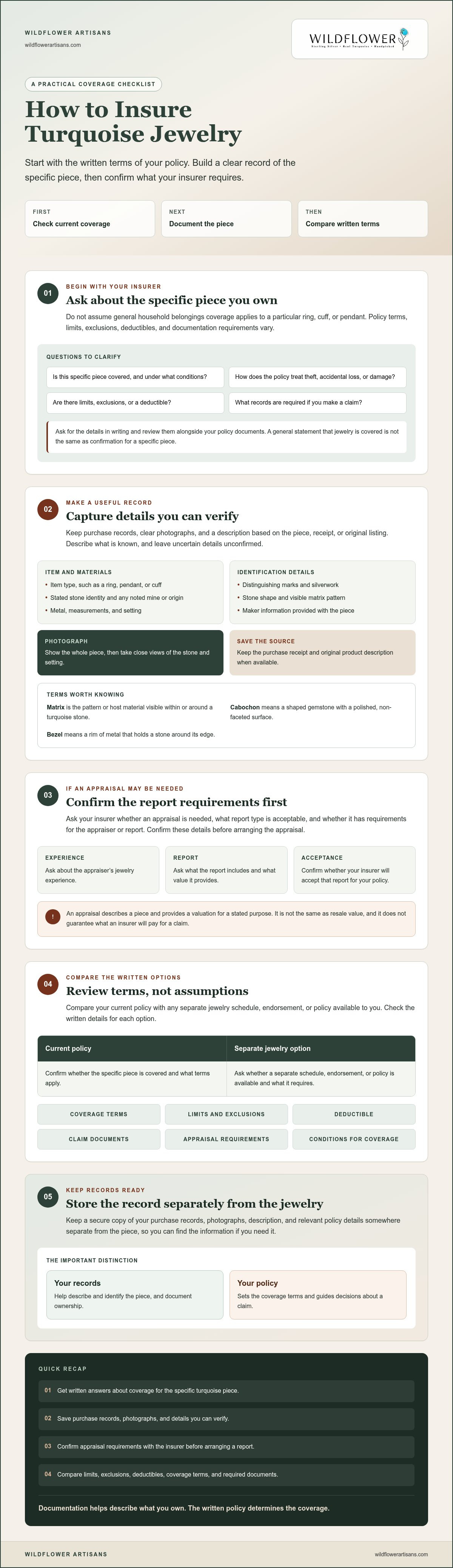
Start by asking your insurer what your current policy covers for the specific turquoise piece you own. Policy terms, limits, exclusions, deductibles, and documentation requirements vary. Don’t assume that general coverage for household belongings applies to a particular ring, cuff, or pendant. Ask for the details in writing and review them alongside your policy documents.
Keep two questions separate: what records help identify and establish ownership of the piece, and what coverage the insurer has agreed to provide. A receipt, photographs, and a clear description can help document your jewelry, but they don’t determine whether a loss is covered or what a claim would pay. The policy terms guide those decisions.
What should you ask your insurer about turquoise jewelry?
Ask whether your specific piece is covered and under what conditions. Clarify how the policy treats the situations you want to understand, such as theft, accidental loss, or damage. Don’t rely on a general statement that jewelry is covered.
Ask whether a separate jewelry schedule, endorsement, or policy is available. Confirm any applicable limits, exclusions, deductible, and claim documentation requirements directly with the insurer. If an appraisal may be needed, ask whether it’s required, what kind is acceptable, and whether the insurer has requirements for the appraiser or report. Requirements vary by insurer, so confirm them before commissioning a report.
Why does a turquoise piece need a clear description?
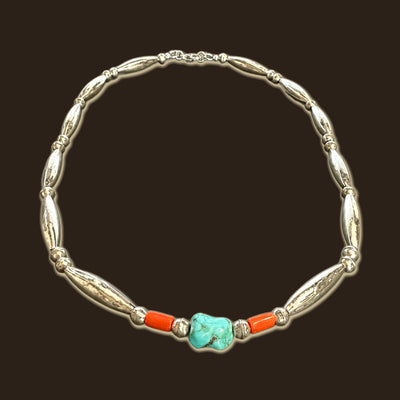
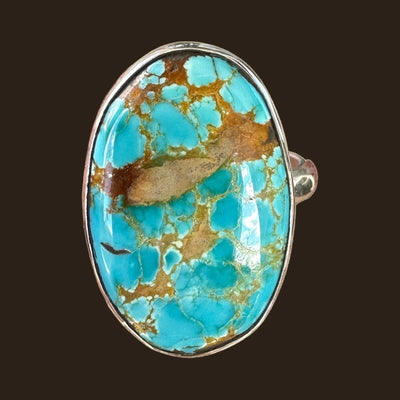
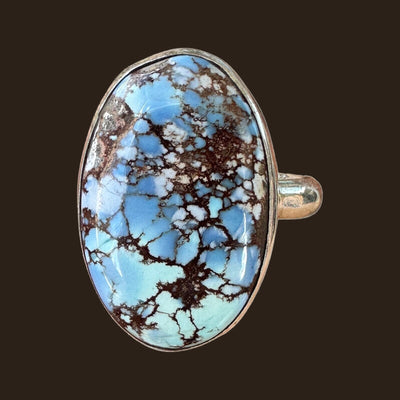
A useful record describes more than color. Turquoise varies in shade and pattern, and handmade settings can have details that distinguish one piece from another. Matrix is the pattern or host material visible within or around a turquoise stone. Record the stone description as stated by the seller, the metal, the setting, any maker information provided, and identifying features such as the stone’s shape, matrix, or distinctive silverwork.
Save the original product description when available. A listing can provide a reference for stated materials and construction, but it isn’t an appraisal or confirmation of insurance coverage. For help with turquoise terms, consult Wildflower Artisans’ turquoise glossary.
These details help you describe what you own, but they don’t establish what a future claim will be worth. Ask your insurer what evidence it accepts for ownership and identification, and follow its instructions before deciding whether an appraisal is appropriate. This keeps your records useful without confusing documentation with coverage.
How to Get Turquoise Jewelry Appraised and Documented
Before arranging an appraisal, gather purchase records, photograph the piece, and write down its known details. Then ask your insurer whether an appraisal is needed. Requirements vary, so confirm the requested report type and valuation basis with the insurer before hiring an appraiser.
An appraisal describes a piece and provides a valuation for a stated purpose. It isn’t the same as resale value, and it doesn’t guarantee what an insurer will pay for a claim. Ask what value the report provides, how that value is determined, and whether the insurer will accept it for your policy.
What details belong in an appraisal or jewelry record?
Include details you can verify from the piece, receipt, or original listing. Useful information includes:
- Item type, such as a ring, pendant, or cuff
- Stated stone identity and any noted mine or origin
- Metal, measurements, setting, and distinguishing marks
- Photographs showing the whole piece and close views of the stone and setting
A cabochon is a shaped gemstone with a polished, non-faceted surface. A bezel is a rim of metal that holds a stone around its edge. If you don’t know a detail, leave it unconfirmed rather than guessing. Save the purchase receipt and product description with your notes, and photograph the piece in clear light from more than one angle.
How should you choose an appraiser for turquoise jewelry?
Ask prospective appraisers about their experience with colored stones, turquoise, and handmade jewelry. Find out what the written report identifies, what valuation purpose and basis it states, and whether it includes the details your insurer requires. Before booking, send the insurer a description of the proposed report and ask whether it will accept that appraiser and format.
Keep the process simple: assemble what you already have, photograph and describe the jewelry, then confirm appraisal requirements with the insurer. This can help you avoid paying for a report that doesn’t meet the policy’s requirements. For a piece with a one-of-a-kind stone or handmade setting, make sure its individual features are described rather than relying on color alone.
Clear listing details can also give you a useful starting point for your own record. Wildflower Artisans offers handmade turquoise jewelry in its turquoise jewelry collection, where item descriptions can help identify stated materials and construction. You can also view more jewelry categories in the full jewelry collection.
Compare Insurance Routes for a Turquoise Piece Without Assuming Coverage
Compare insurance options by asking what each would cover for your specific piece and what conditions apply. Homeowners or renters coverage and a separate jewelry option can have different terms. Which is suitable depends on your policy, the item’s documentation, and the insurer’s written terms.
Can homeowners or renters insurance cover turquoise jewelry?
It may, but coverage depends on the policy and the insurer’s terms. Ask whether jewelry-specific limits, exclusions, or conditions apply to your piece, and what kinds of loss or damage the policy addresses. Don’t assume a general statement about personal belongings means your particular turquoise ring, cuff, or pendant is covered as you expect.
When should you ask about separate jewelry coverage?
Ask your insurer whether a separate jewelry option is available and whether it fits the piece and your needs. Compare the written terms, required documents, deductible, and claim process with your current policy. Rather than choosing by label, understand what each option says and what you would need to do if you made a claim.
Use the comparison below to guide your conversation with the insurer. Get answers for your actual piece, then check them against the policy documents.
| Policy route | Questions to ask | Documents to confirm | Insurer-specific details |
|---|---|---|---|
| Existing homeowners or renters policy | Is this specific piece covered, and under what conditions? Do jewelry limits, exclusions, or other conditions apply? | What proof of ownership, item description, photographs, or appraisal does the insurer require? | Confirm applicable limits, exclusions, deductible, and claim documentation requirements in the policy. |
| Separate jewelry option | Is a separate policy or other jewelry coverage available for this piece? What losses or damage does it address? | Does the insurer require a receipt, photographs, appraisal, or particular report format? | Review the written terms, deductible, and claim process. Ask how the insurer handles the valuation and any changes to the record. |
An appraisal or detailed description can help identify the jewelry, but neither determines what coverage applies. That decision comes from the insurer’s terms. When learning how to insure turquoise jewelry, keep the piece’s records and the policy’s promises distinct. Ask follow-up questions wherever the wording is unclear.
Wildflower offers handmade turquoise jewelry, not insurance or appraisal services. If you’re choosing a piece and want to review its listed details, the handmade jewelry collection includes the shop’s jewelry offerings.
How to Keep Turquoise Jewelry Records Ready for a Claim
Keep a current record of each turquoise piece in a secure, accessible place separate from the jewelry itself. Store purchase and item details together, and ask your insurer how and when it expects records or valuations to be updated. These documents can support identification and ownership, but they don’t guarantee coverage or a claim outcome.
A simple digital or paper file can keep details from becoming scattered. Include:
- The purchase record and seller information
- The original item description, including stated stone, metal, setting, and identifying features
- Clear photographs of the full piece and close views of the stone, setting, and identifying marks
- An appraisal report, if you obtained one and your insurer requests or accepts it
- Relevant policy correspondence and instructions from the insurer
Photograph the piece from more than one angle in clear light, so the stone’s matrix and setting details are visible. Keep the images with the written description instead of relying on photographs alone. If your insurer specifies what evidence it needs, organize your records to match those instructions.
When should you review your jewelry insurance records?
Ask your insurer whether it requires updated records, a new appraisal, or scheduled reviews, and follow the policy’s instructions. Revisit your file if ownership, item details, or policy circumstances change. There isn’t one review interval for every policy, so check what your insurer expects rather than assuming an older report will always be sufficient.
Records help identify and document the piece, while the insurer’s terms determine coverage and claim handling. Save new receipts or policy messages with the item’s existing file. Well-kept details can make it easier to describe the jewelry if needed.
Wildflower’s turquoise jewelry collection features handmade pieces with details that can help you understand what to record about a specific item. Keep the listing information for the piece you choose alongside its photographs and purchase documentation.
Choose Turquoise Jewelry With Clear Details, Then Confirm Your Coverage
Keep the item details, ask your insurer what coverage applies, and follow its requirements for records or an appraisal. A clear product description can help you identify a handmade piece, but it isn’t a promise of insurance value or coverage.
What details can help you record a handmade turquoise piece?
Use the information stated on the specific item listing, such as the stone and metal, and save that description with your purchase documentation and photographs. If the listing identifies a setting or maker, keep those details too. Don’t infer a mine, treatment status, cultural attribution, or maker based on appearance. A careful record distinguishes what’s confirmed from what remains unknown.
Wildflower makes handmade jewelry, not insurance or appraisal services. Its turquoise authenticity information explains Wildflower’s approach to materials, but it isn’t an appraisal, insurance valuation, or guarantee of coverage. For an individual piece, rely on its own listing and records, then ask your insurer what it needs to assess the item under your policy.
What should you do before relying on a policy?
Ask the insurer to confirm in writing whether the specific piece is covered and what conditions apply. Compare that response and the policy wording with the item description, photographs, purchase record, and appraisal report, if you have one. Check whether the insurer requires a particular report or other documents, then follow its instructions. Your records help identify the jewelry, but they don’t determine coverage or guarantee a claim outcome.
That’s the practical heart of how to insure turquoise jewelry: preserve the details, verify the policy, and keep the two distinct. A one-of-a-kind stone and handmade setting deserve an accurate description, while the insurer’s written terms determine what protection applies. Wildflower offers handmade turquoise jewelry, not insurance or appraisal services.
View the turquoise jewelry collection
Keep the Details Close and Choose With Confidence
Knowing how to insure turquoise jewelry comes down to a few careful steps: save the purchase details and clear photographs, ask your insurer what coverage applies, and follow its requirements for appraisals and records. An appraisal or product description can help identify a piece, but only the insurer’s written terms explain what protection applies.
Wildflower is a retailer specializing in handmade jewelry with genuine stones and sterling silver. Its authenticity information explains the shop’s approach to materials, but it isn’t an appraisal or insurance valuation. Keep the details of any piece you choose, and confirm coverage directly with your insurer.
With clear records and a confirmed policy, you can enjoy the character of your turquoise piece with greater peace of mind.
Frequently Asked Questions
Does homeowners insurance cover turquoise jewelry?
It depends on the terms of your homeowners policy and how it treats jewelry. Ask your insurer whether your specific turquoise piece is covered and whether jewelry limits, exclusions, or conditions apply. Confirm which kinds of loss or damage are addressed, what deductible applies, and what documentation would be needed for a claim. Don’t assume general coverage for personal belongings protects every piece in the same way.
Do I need an appraisal to insure turquoise jewelry?
You may need one, but the requirement depends on the insurer and the coverage option. Ask whether an appraisal is required, what purpose and valuation basis the report should state, and whether the insurer accepts the appraiser and report format. A receipt, description, and photographs can help identify the piece, but they don’t automatically replace an appraisal if your insurer asks for one.
How do I get turquoise jewelry appraised for insurance?
First, ask your insurer what kind of appraisal it requires and what details the report should include. Then ask prospective appraisers about their experience with turquoise, colored stones, and handmade jewelry, and confirm with your insurer that it accepts their report format. Provide purchase records and clear photographs if requested. An appraisal’s stated value isn’t resale value or a guaranteed claim payment.
Can I insure a handmade or one-of-a-kind turquoise piece?
Ask an insurer whether it offers coverage for your specific handmade or one-of-a-kind piece. Acceptance and terms depend on that insurer. Keep the item’s original description, purchase information, and clear photos of the stone, setting, and distinctive details. Ask what appraisal or other documentation it requires, then review the written terms to understand what coverage applies and how a claim is handled.
What records should I keep for turquoise jewelry insurance?
Keep the purchase record, seller and item information, original product description, clear photographs, any appraisal report, and relevant policy correspondence. Photograph the entire piece as well as close details of the stone, setting, and identifying marks. Store copies securely in a place separate from the jewelry, but accessible when needed. Ask your insurer whether it wants records updated and what documents it requires for a claim.

Article by
Kimberly Cordova
Kimberly Cordova is the founder and creative director of Wildflower Artisans, a handmade jewelry brand rooted in Santa Fe. Real turquoise, solid sterling silver, and a small line set in solid 14K gold. She built Wildflower around a simple belief: the best jewelry is the kind you actually reach for, not the kind you save for someday.
The collection is built three ways. Some pieces are made in-house, cut by her husband Greg from stones he sources himself, including rough from the family's King's Manassa Mine in Colorado and White Buffalo Mine in Nevada. Some are designed by Kimberly and fabricated by a trusted circle of Santa Fe silversmiths. And some are finished work she curates from artisan makers whose craft meets the same standard, because building a real collection means knowing when to make and when to look.
Turquoise leads, joined by White Buffalo, Wild Horse, Lapis Lazuli, Spiny Oyster, Black Onyx, Opal, and other genuine semi-precious stones. No shortcuts on the stone, the silver, or the story behind either.
Her writing covers everything she has learned along the way: how turquoise forms, how to tell natural from stabilized, what makes one mine different from another, how to read a bezel, and how to shop with confidence in a market that is not always straightforward. It is the kind of plainspoken information she wished someone had laid out for her when she was starting out.
Browse the collection at wildflowerartisans.com. Questions about a stone, a setting, or a specific piece are welcome any time.

0 comments