

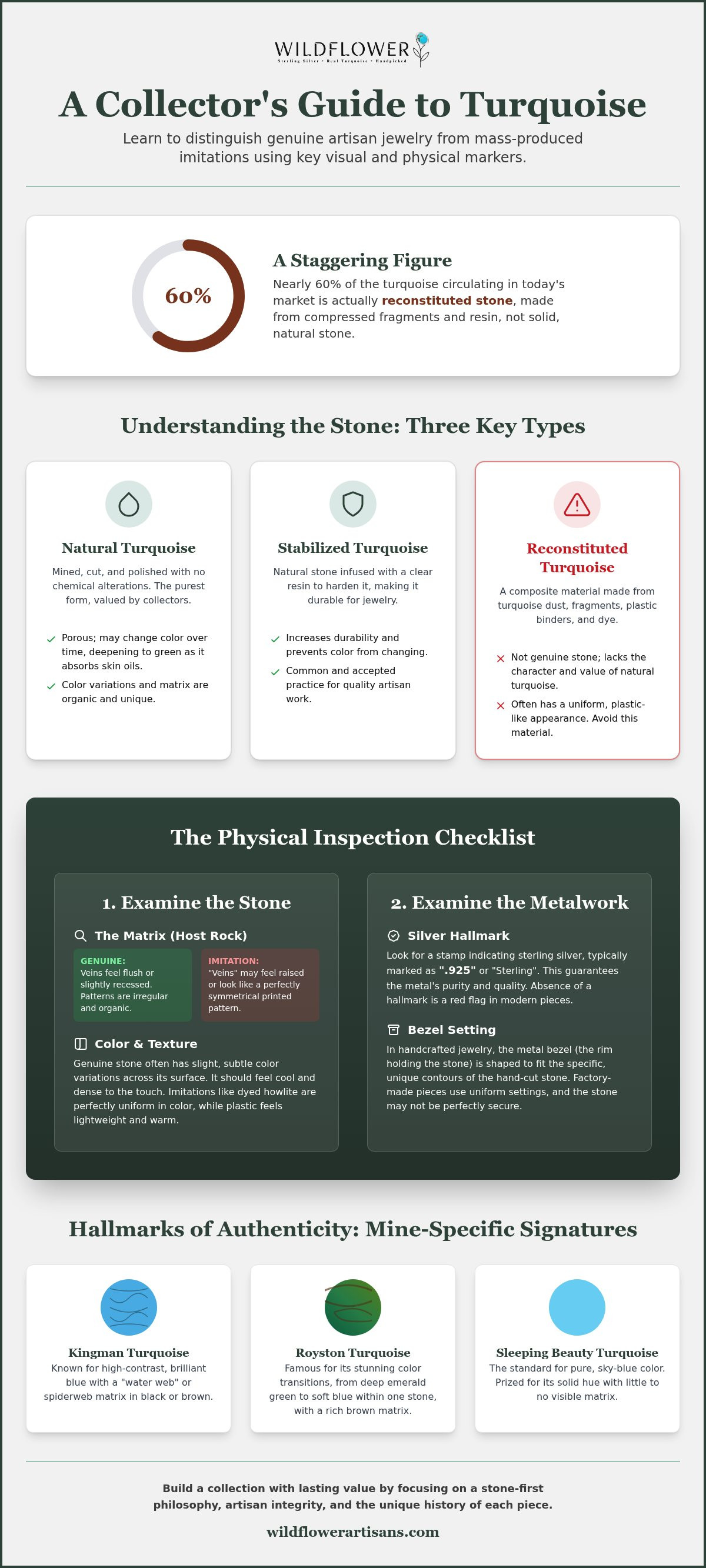
Did you know that nearly 60 percent of the turquoise circulating in today's market is actually reconstituted stone made from resin and compressed fragments? It's a staggering figure that makes any collector pause, especially when you're trying to learn how to identify authentic native american turquoise jewelry without falling for a clever imitation. We understand the hesitation you feel when admiring a vibrant blue cabochon or an intricate silver bezel. You want a piece that carries the soul of the Southwest, not a mass-produced imitation made of dyed howlite or plastic.
At Wildflower Artisans, we believe finding a true artisan-made treasure should feel like a discovery, not a gamble. Wildflower is here to help you build your knowledge with the quiet confidence of a seasoned collector. By understanding the specific markers of genuine hand-cut stones and artisan-worked sterling silver (.925), you'll ensure your next investment is a legitimate piece of heritage. We'll walk through a physical inspection checklist, explore the unique matrix patterns of specific mines like Royston or King's Manassa, and show you how to distinguish the intentional "imperfections" of a handcrafted piece from the sterile uniformity of a factory casting.
Key Takeaways
- Understand the difference between natural turquoise and chemically altered stones to ensure your collection reflects true Southwestern style.
- Learn how to inspect the stone matrix for natural textures and recessed veins that indicate the host rock is genuine.
- Identify quality artisan metalwork by looking for sterling silver (.925) hallmarks and hand-wrought bezel settings that secure the cabochon.
- Discover how to identify authentic native american turquoise jewelry by spotting the warning signs of synthetic block turquoise and dyed howlite.
- Focus on the stone-first philosophy and documented artist history to build a collection with high integrity and lasting value.
Understanding the Foundation of Southwestern Style Jewelry
Authentic Southwestern style jewelry is defined by the marriage of natural gemstones and hand-wrought precious metals. This tradition relies on the raw beauty of the earth paired with the deliberate skill of a maker.
Learning how to identify authentic native american turquoise jewelry begins with a deep look at the materials themselves. Natural turquoise is stone that has been mined, cut, and polished without chemical alterations to its color or structure. Unlike factory pieces, artisan-made jewelry is built through individual construction rather than assembly-line manufacturing. Every bezel is shaped to fit a specific stone, and every cabochon is hand-cut. For a comprehensive overview of Native American jewelry history and the evolution of these techniques, it's helpful to look at how different regions developed their distinct styles. We prioritize sterling silver (.925) and solid 14K gold because these metals provide the structural integrity required for a piece that lasts for decades.
The Difference Between Natural and Treated Stones
Natural turquoise is naturally porous, meaning it has tiny holes that can absorb substances over time. Over many years, a natural stone might change color as it reacts with oils from your skin, often shifting from a bright blue to a deeper green. This shift isn't a flaw; it's a sign of the stone's organic nature. Stabilized turquoise refers to natural stone that has been infused with a clear resin to harden it for jewelry use. This process makes the stone more durable and prevents the color from shifting. Reconstituted turquoise, on the other hand, is made from stone dust mixed with plastic binders. This material lacks the character of genuine stone and isn't used in high-quality artisan work.
Why Handcrafted Integrity Matters
Hand-fabricated jewelry carries the unique tool marks and intentionality of its creator. When we look at a piece, we see the artist's hand in the way the silver is stamped or the way a stone sits in its setting. Mass-produced items often rely on mystery metals or thin plating that can cause skin irritation or tarnish within weeks. Authentic pieces made from .925 sterling silver or 14K gold are built to maintain their structural integrity across generations of wear. Understanding how to identify authentic native american turquoise jewelry involves looking past the surface to see the soul of the work. Investing in authentic turquoise jewelry means choosing a piece that honors the stone's narrative and the maker's skill.
Examing the Stone for Natural Matrix and Texture
The stone itself holds the most honest evidence of its origin through the intricate patterns of its matrix and its unique physical response to touch. When you're learning how to identify authentic native american turquoise jewelry, the texture and depth of the stone are your most reliable guides. The matrix is the host rock visible within the turquoise, often appearing as black, brown, or gold veins that tell the story of the stone's formation. In a genuine piece, this matrix should feel flush with the stone surface or slightly recessed. If the veins feel raised or look perfectly symmetrical like a printed pattern, the stone may be an imitation. Most traditional jewelry features a cabochon, which is a stone that has been shaped and polished into a smooth, rounded top rather than faceted like a diamond. Look for color depth where the hue varies slightly across the surface. This organic variation is a hallmark of the earth's own art, and it is protected by the Indian Arts and Crafts Act of 1990, which ensures that pieces marketed as artisan-made truly honor their heritage.
Identifying Mine-Specific Characteristics
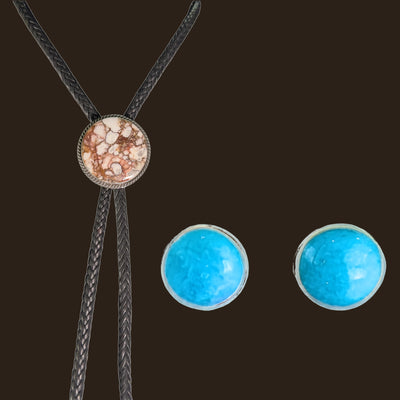
Every mine has a signature that acts as a fingerprint for the stone. Kingman turquoise often features a high-contrast blue with a beautiful water web matrix, creating a dappled effect that looks like sunlight on a pool. Royston stones are known for their stunning transition from deep emerald green to soft blue within a single piece, often held together by a rich brown matrix. If you prefer a solid, clear sky-blue color with little to no matrix, Sleeping Beauty turquoise is the standard. These variations help collectors trace a piece back to its origin and confirm its authenticity. You can see these distinct personalities in our handcrafted jewelry, where we let the character of each stone dictate the final design.
The Sensory Test for Genuine Turquoise
Genuine stone feels cool to the touch and warms slowly when held in the hand. If a piece feels like room-temperature plastic immediately, it's a sign to look closer. You can also tap the stone gently against your teeth; real stone produces a solid click while plastic sounds dull and hollow. Examine the luster carefully. Natural turquoise has a waxy to sub-vitreous shine rather than the high-gloss, oily look of plastic or resin. These subtle physical cues are essential when determining how to identify authentic native american turquoise jewelry in person. We find that once you hold a genuine stone, the weight and temperature of the material become unmistakable markers of quality.
Seeing these mine-specific details in person helps you appreciate the stone-first philosophy we practice in our studio. You can explore these natural variations for yourself in our collection of authentic turquoise jewelry, where each piece highlights the unique matrix of its source mine.
Identifying Quality in Sterling Silver and Artisan Metalwork
While the stone often captures the eye first, the silverwork provides the structural poetry that holds the narrative together. Authentic artisan jewelry almost exclusively utilizes sterling silver (.925), which is a specific alloy consisting of 92.5 percent silver and 7.5 percent copper. This blend ensures the metal is hard enough for daily wear while remaining soft enough for an artist to stamp and shape. When you're discovering how to identify authentic native american turquoise jewelry, the weight of the piece is a primary indicator of quality. Genuine handcrafted work uses a heavy gauge silver that feels substantial and cool in the palm of your hand. If a ring or cuff feels light like tinfoil or bends with the slightest pressure, it's likely a mass-produced casting made from inferior "mystery metals" rather than solid sterling.
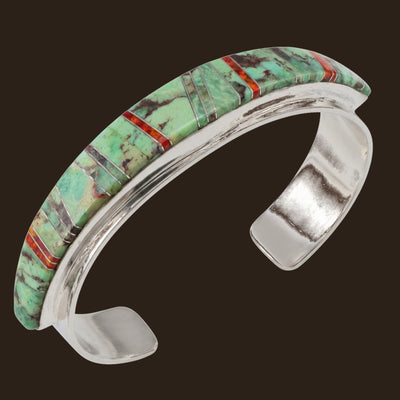
The construction of the setting also reveals the maker's hand. A bezel is the thin strip of metal that wraps around the stone to hold it securely in place, and in artisan-made pieces, these are often hand-cut to fit the specific height and curve of the cabochon. We look for slight variations in the thickness of the bezel or a small, nearly invisible seam where the metal was joined. These aren't flaws; they're the fingerprints of the studio. Machine-made settings are perfectly uniform and often lack the tight, seamless fit that a skilled silversmith achieves through patient filing and burnishing. You can see this dedication to craftsmanship in our handcrafted jewelry, where every setting is built to honor the stone it holds.
The Role of Hallmarks and Artist Marks
A hallmark is a stamped mark, usually found on the back or interior of a piece, that indicates the purity of the metal. You'll typically see ".925" or the word "Sterling" stamped into the silver. Many creators also include a personal signature or a unique symbol, known as an artist mark, to claim their work. While these stamps offer a layer of reassurance, the absence of a hallmark doesn't always mean a piece is inauthentic. Many older vintage pieces were never stamped, so we must rely on the physical construction and the "Stone-First" philosophy to verify the work. If you're unsure, checking our authenticity guide can help you understand what to look for on the reverse side of your jewelry.
Inspecting Solder Joints and Finishing
The soul of a piece is often hidden where the metal meets. Solder joints on authentic jewelry should be clean and precise, showing that the artist used just enough heat and material to create a permanent bond without leaving large globs of excess metal. We always suggest turning a piece over to inspect the back. A true artisan finishes the reverse side with the same care as the front, ensuring the silver is polished and smooth against the skin. Look for hand-stamped or hand-chiseled details on the shank or the edges of a pendant. These marks require significant physical force and intent, leaving deep, crisp impressions that you simply won't find on thin, mass-produced items. This level of detail is what defines the work of dedicated silversmiths who treat every piece as a vessel for emotion.
Spotting Imitations and Treated Turquoise Materials
Identifying fakes requires a keen eye for chemical dyes and industrial manufacturing marks that never appear in artisan work. The market is unfortunately flooded with clever imitations that can deceive even an eager eye if you don't know what to look for. One of the most common substitutes is dyed howlite, which is a naturally white stone with dark veins that takes blue dye quite easily. While it might look convincing at a distance, a closer look often reveals a bleeding effect where the pigment has pooled in the deeper crevices of the matrix. This lack of color consistency is a major red flag when you're trying to learn how to identify authentic native american turquoise jewelry. Another frequent culprit is block turquoise. This isn't stone at all, but rather a synthetic mixture of plastic resins and dyes pressed into a mold to create a uniform look. Even the metal settings can be deceptive. Many mass-produced pieces use plated brass or mystery metals that will eventually flake or show a copper-colored underlayer as the surface wears down. Mystery metals refer to undisclosed base-metal alloys often found in mass-produced jewelry that can cause skin irritation.
The Acetone Test for Dyed Stones
A simple way to check for surface dyes is the acetone test. By applying a small amount of acetone to a cotton swab and gently wiping an inconspicuous area, you can sometimes see the blue tint transfer to the cotton. Natural turquoise will not lose its color during this process because its hue is a fundamental part of the stone's mineral structure. We always suggest performing this on the back of the cabochon to ensure you don't affect the luster of the visible stone. If you see blue or green on your swab, the stone has been chemically treated and is not a natural specimen.
Identifying Mold Marks in Mass-Produced Jewelry
Industrial manufacturing leaves behind specific signatures that are the opposite of artisan intentionality. Mass-produced block jewelry often features perfectly identical matrix patterns across dozens of pieces, which is impossible with natural stone. You should also look for tiny flash lines or thin seams on the silver work. Flash lines are the thin ridges of excess metal left behind where the two halves of a casting mold meet. These marks indicate the piece was cast in a mold rather than hand-fabricated from sheet silver and wire. Plastic or resin stones also give themselves away through temperature; they feel significantly lighter and warmer to the touch than a genuine mineral, which always carries a slight, earthy chill. Mastering these details is a vital part of how to identify authentic native american turquoise jewelry.
We believe that every stone should be as unique as the person wearing it, which is why we never use synthetic or treated materials in our work. You can find the honest beauty of earth-mined stones in our collection of one-of-a-kind artisan pieces, where the natural character of the turquoise is always the primary focus.
Building a Collection with Artist-Made Integrity
Building a collection with integrity means prioritizing transparency and documented history over vague marketing claims. When you are learning how to identify authentic native american turquoise jewelry, you must look for specific cultural attributions rather than broad generalizations. At Wildflower, we only attribute a piece to Navajo or Zuni artists when we have the documented artist information to support it. Generalizing these tribal affiliations without proof is a common mistake in the market. Instead, look for descriptions like "Southwestern style" or "handcrafted" that honestly reflect the maker's process. We believe that a piece of jewelry is a vessel for emotion, and that emotion is most palpable when the materials and the maker's hand are fully disclosed.
We practice a stone-first philosophy, which is the method of allowing the unique shape, color, and matrix of a specific stone to dictate the final silver setting. This approach ensures that every piece is a unique narrative of the earth. By building a relationship with a working studio, you gain direct access to the history of the stone origins and the specific silver techniques used. One-of-a-kind pieces offer an artistic narrative and a level of exclusivity that mass-market items simply cannot replicate. You can explore our stone-first philosophy to see how we prioritize the natural beauty of the material in every creation.
Questions to Ask Before You Buy
Before making an investment, always ask for specific details regarding the stone's treatment and origin to ensure the piece meets artisan standards. You should ask the seller specifically if the stone is natural, stabilized, or treated in any way. Inquire about the specific mine the turquoise came from, such as Kingman, Royston, or Sleeping Beauty, as this information is vital for determining rarity and value. Finally, confirm that the metal is solid sterling silver (.925) or solid 14K gold rather than a plated alternative. These questions help you navigate the nuances of how to identify authentic native american turquoise jewelry with the clarity and confidence of an expert collector.
The Value of Small Batch Production
Small batch production ensures that every ring, pendant, and cuff receives the individual attention of a skilled silversmith, preserving the character of the handmade process. This method stands in stark contrast to the frantic pace of industrial retail, opting instead for a deliberate pace that honors traditional Southwestern techniques. Even our everyday essentials like simple studs or bands carry the hallmark of artisan quality because they are crafted in a studio environment. Investing in artist-made work supports the continuation of these skills and ensures that the beauty of natural turquoise is preserved for future generations. Our collection of one-of-a-kind artisan pieces highlights the deep intentionality and soulful craft that defines the Wildflower studio.
Investing in Your Personal Southwestern Legacy
Understanding how to identify authentic native american turquoise jewelry transforms a simple purchase into a meaningful investment in heritage. You now have the tools to look for the cool touch of a genuine cabochon and the intentional tool marks of a hand-cut bezel. These specific markers are the physical evidence of a maker's soul and the earth's own narrative. By prioritizing natural matrix patterns and the substantial weight of solid .925 sterling silver, you ensure that your collection carries the integrity of true artisan work.
At Wildflower, we remain in awe of our medium and the historic American turquoise mines that provide our stones. Every piece is handcrafted in our working studio with a deep respect for traditional techniques. We guarantee the use of genuine materials, from the stones we select to the high-quality silver we shape by hand. Choosing a piece that resonates with you is about finding a vessel for emotion that honors the natural world and the hands that shaped it.
We invite you to carry these stories forward with the quiet confidence of a seasoned collector. Your appreciation for fine details keeps the spirit of Southwestern craftsmanship alive and thriving.
Frequently Asked Questions
How can you tell if turquoise is real or plastic?
Real turquoise is a mineral that feels cool to the touch and has a distinct weightiness compared to plastic. You can perform a simple hot needle test on an inconspicuous area; a needle won't penetrate real stone, but it will melt or create a plastic smell on an imitation. Additionally, natural stone has a varied luster, while plastic often looks uniform and unnaturally shiny. These physical markers are essential for anyone learning how to identify authentic native american turquoise jewelry.
What does the .925 stamp mean on turquoise jewelry?
The .925 stamp is a hallmark indicating that the metal is sterling silver, which is the industry standard for high-quality artisan jewelry. This means the piece is composed of 92.5 percent pure silver and 7.5 percent other metals, usually copper, to provide strength and durability. Authentic Southwestern style jewelry will almost always use this metal to ensure the piece lasts for years without the flaking associated with plated metals.
Is stabilized turquoise considered fake?
Stabilized turquoise is not fake, but it is treated. Because turquoise is naturally a soft and porous stone, many mines infuse the raw material with a clear resin to make it hard enough to cut into cabochons and wear in jewelry. This process preserves the natural color and prevents the stone from absorbing oils. While it's widely accepted in the industry, it should always be disclosed by the seller to maintain transparency and trust with the collector.
Why is some turquoise jewelry so much more expensive than others?
The price of turquoise jewelry is determined by the rarity of the stone, the complexity of the silver work, and the reputation of the artist. Stones from closed mines like Sleeping Beauty or Number 8 command a premium because the supply is finite. Additionally, hand-fabricated jewelry requires significantly more time and skill than mass-produced pieces, reflecting the value of the artisan's labor and expertise. Understanding these factors is vital when learning how to identify authentic native american turquoise jewelry of high value.
Can I identify a Native American artist by their hallmark alone?
While a hallmark is a helpful clue, it's not a definitive proof of identity on its own, as stamps can be copied or shared within families. To properly identify an artist, you should look for a combination of their specific hallmark, their signature design style, and documentation from a reputable seller. Many collectors use reference books or digital databases to cross-reference marks with known artisan names to ensure the integrity of their collection.
What is the matrix in a turquoise stone?
The matrix refers to the remnants of the host rock that are interspersed within the turquoise. This host rock can appear as veins, webs, or splotches of black, brown, gold, or even white material. For many collectors, the matrix adds character and proves the stone is a natural product of the earth. Some mines are famous for their specific matrix patterns, such as the chocolate brown webbing found in Royston turquoise or the high-contrast black matrix of Kingman stones.
Article by
Kimberly Cordova
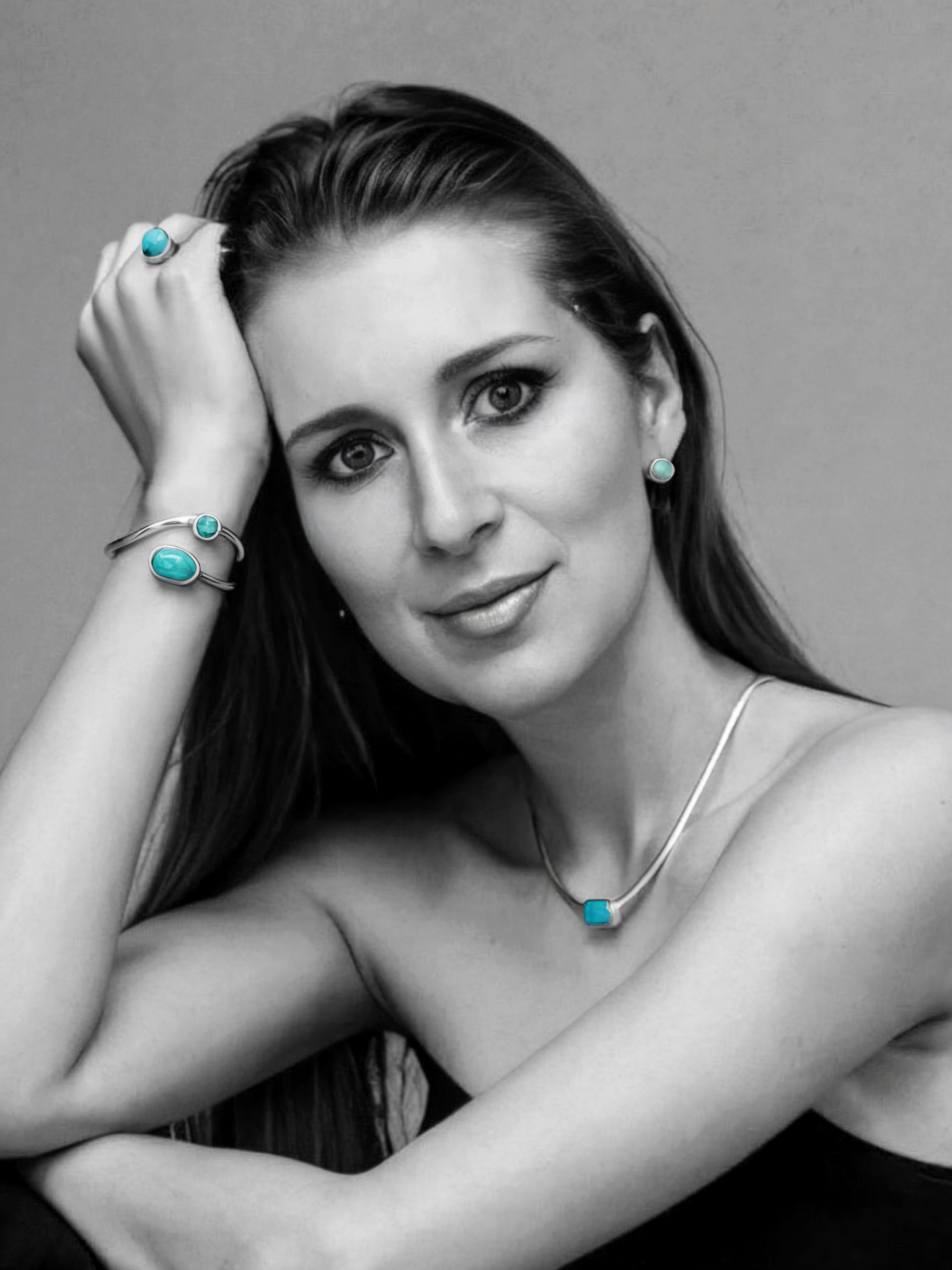
Kimberly Cordova is the founder and creative director of Wildflower Artisans, a handmade jewelry brand rooted in Santa Fe. Real turquoise, solid sterling silver, and a small line set in solid 14K gold. She built Wildflower around a simple belief: the best jewelry is the kind you actually reach for, not the kind you save for someday.
The collection is built three ways. Some pieces are made in-house, cut by her husband Greg from stones he sources himself, including rough from the family's King's Manassa Mine in Colorado and White Buffalo Mine in Nevada. Some are designed by Kimberly and fabricated by a trusted circle of Santa Fe silversmiths. And some are finished work she curates from artisan makers whose craft meets the same standard, because building a real collection means knowing when to make and when to look.
Turquoise leads, joined by White Buffalo, Wild Horse, Lapis Lazuli, Spiny Oyster, Black Onyx, Opal, and other genuine semi-precious stones. No shortcuts on the stone, the silver, or the story behind either.
Her writing covers everything she has learned along the way: how turquoise forms, how to tell natural from stabilized, what makes one mine different from another, how to read a bezel, and how to shop with confidence in a market that is not always straightforward. It is the kind of plainspoken information she wished someone had laid out for her when she was starting out.
Browse the collection at wildflowerartisans.com. Questions about a stone, a setting, or a specific piece are welcome any time.
0 comments