

A piece of turquoise isn't a static object but a porous, living record of the earth that continues to evolve long after it leaves the artisan bench. This soft, semi-precious stone carries a Mohs hardness of only 5 to 6, making it sensitive to the world around it. You likely chose your handcrafted jewelry because of a specific, vibrant matrix or that rare sky-blue hue, so it's natural to feel a sense of protectiveness over its future. We at Wildflower Artisans understand the worry that comes with seeing a favorite ring change color or watching your sterling silver (.925) grow dull and shadowed with tarnish. Learning How to Care for Turquoise Jewelry: Keeping Your Sterling Silver Pieces Beautiful is the first step in honoring the story of your artisan-made pieces.
This process is a quiet, meditative act of preservation rather than a chore. We promise to show you how to protect the integrity of every hand-cut cabochon and delicate silver bezel using gentle, professional techniques. In this guide, we'll explore the vital differences between caring for natural and treated stones, the safest ways to cleanse your pieces, and the storage secrets that keep the silver bright. We're moving away from harsh chemicals and toward a rhythm of care that respects the organic nature of these Southwestern style treasures.
Key Takeaways
- Understand that turquoise is a porous stone with a Mohs hardness of 5 to 6, which means it can absorb oils and chemicals that permanently alter its natural color.
- Master the essential "last on, first off" daily habit for How to Care for Turquoise Jewelry: Keeping Your Sterling Silver Pieces Beautiful to protect your artisan-made pieces from cosmetic damage.
- Learn to safely clean your hand-cut cabochons and sterling silver (.925) settings using only soft cloths and mild methods while avoiding harmful ultrasonic cleaners.
- Discover how to properly store your jewelry in individual soft pouches to prevent scratches and shield your stones from the drying effects of direct sunlight.
- Identify the subtle signs of a loose stone and learn when to consult a professional silversmith for a bezel tightening to ensure your jewelry remains secure.
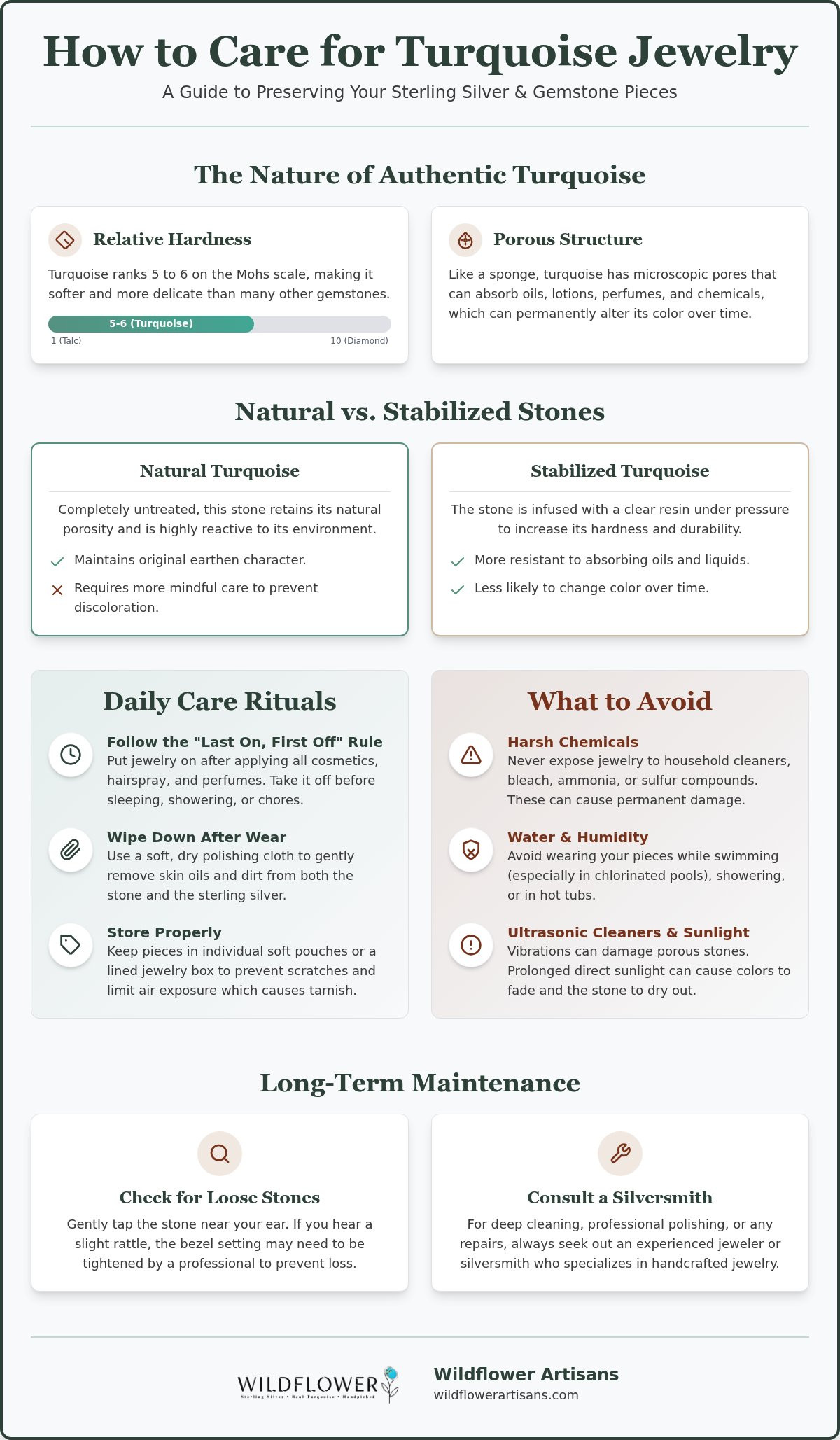
Understanding the Porous Nature of Authentic Turquoise
Turquoise is more than a simple gem. It is a hydrous phosphate of copper and aluminum that carries the breath of the earth within its structure. Ranking between 5 and 6 on the Mohs scale of mineral hardness, it occupies a delicate space between resilience and vulnerability. The Mohs scale is a qualitative scale that characterizes the scratch resistance of various minerals through the ability of a harder material to scratch a softer one. This internal architecture is defined by the porous nature of turquoise, meaning the stone contains microscopic openings that act like a sponge. For those learning How to Care for Turquoise Jewelry: Keeping Your Sterling Silver Pieces Beautiful, recognizing this physical trait is the first step in protecting your investment from permanent discoloration.
Wildflower Artisans (referred to as Wildflower) guarantees that every stone in our collection is genuine, which means we must respect the stone's reactive nature. A cabochon is a gemstone that has been shaped and polished into a smooth, rounded form rather than faceted. Natural stones from specific locations, such as King Manassa or White Buffalo, are especially sensitive to their surroundings. Oils from your skin, perfumes, and even pollutants in the air can seep into the stone over time. This absorption often leads to a shift in color, turning a bright sky blue into a deeper, murkier green. It is a natural process, but one that can be slowed with intentional care and a grounded understanding of lapidary science.
The Difference Between Natural and Stabilized Stones
Natural turquoise remains in the same state it was in when it was pulled from the ground, only changed by hand-cut shaping. It retains its full porosity and is highly reactive to its environment. Stabilized turquoise has undergone a process where clear resin is pressured into the stone to harden it. While both varieties belong in a collection, natural stones require a more disciplined approach to care because they lack a resin barrier. Protecting the luster of your sterling silver (.925) settings is easier when you know exactly what kind of stone they hold.
How Porosity Affects the Gemstone Matrix
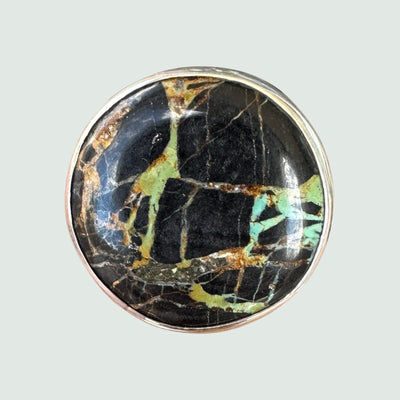
The matrix is the host rock or vein material that weaves through the turquoise, creating those intricate patterns of brown or black. These veins are often softer than the turquoise itself. Chemicals from household cleaners can seep into these areas, causing the matrix to soften or crumble. A bezel is the thin metal rim that surrounds a stone to hold it securely in place. When wearing a hand-cut stone with a heavy matrix, be mindful of how moisture interacts with this setting. Understanding How to Care for Turquoise Jewelry: Keeping Your Sterling Silver Pieces Beautiful starts with respecting the physical limits of the earth's creation.
Daily Habits for Preserving Sterling Silver and Gemstone Luster
Establishing a thoughtful daily rhythm is the heart of How to Care for Turquoise Jewelry: Keeping Your Sterling Silver Pieces Beautiful. The "last on, first off" rule isn't just a suggestion; it's a ritual of respect for the materials. While the natural oils of your skin provide a gentle barrier against tarnish for your sterling silver (.925) bands, those same oils can eventually migrate into the pores of a natural cabochon. Over years of constant contact, this can shift the stone's hue from a bright sky-blue to a rich, organic green. This change is part of the stone's history, but managing it requires intention.
Household chores and leisure time require a brief parting from your pieces. Harsh cleaners containing sulfur or bleach will rapidly oxidize silver, turning the bright metal dark and potentially damaging the stone's surface. Similarly, the chlorine in swimming pools and the concentrated minerals in hot tubs are too aggressive for Southwestern style jewelry. For more detailed advice on preventing tarnish through the seasons, you can look into long-term maintenance for sterling silver to keep your collection bright. If you are looking for sturdy pieces built for these daily rhythms, you might explore our shop all jewelry gallery to find your next favorite staple.
Protecting Stones from Cosmetic Chemicals
Modern beauty products are often the silent culprits behind a dull stone. Hairspray, perfume, and lotion create a film on the surface of the turquoise that traps dust and obscures its natural fire. We recommend waiting at least ten minutes after your morning routine before reaching for your jewelry. This allows alcohols and oils to evaporate or absorb into your skin rather than your stone. If a stray mist of spray lands on your pendant, a quick wipe with a damp, soft cloth can prevent the chemical from settling into the stone's matrix.
Managing Physical Impact and Stress
Because turquoise sits at a 5 to 6 on the Mohs scale, it is susceptible to physical trauma. A sharp knock against a granite countertop or a metal door frame can cause a hand-cut stone to chip or crack. It's best to remove your rings before engaging in activities like gardening or weightlifting that put direct pressure on the hands. Periodically inspect the bezel, which is the metal rim holding the stone, to ensure it hasn't been bent or pulled away from the cabochon edge. A secure bezel is the best defense against losing a one-of-a-kind stone.
Our studio focuses on creating pieces that balance this delicate nature with durable craftsmanship. You can see this intentional design in our Everyday Essentials collection, which features silver-heavy settings made for frequent wear.
Safe Cleaning Methods for Hand-Cut Cabochons and Silver Settings
Cleaning your jewelry should feel like a quiet, intentional act of preservation rather than a heavy chore. For the stone itself, less is always more. Use a soft, dry cloth or one slightly dampened with plain, lukewarm water to gently wipe the surface. We advise that you never submerge your jewelry in water for extended periods. Moisture that finds its way behind a cabochon in a bezel setting can become trapped, potentially causing the stone to change color or the setting to weaken over time. This gentle approach is essential for How to Care for Turquoise Jewelry: Keeping Your Sterling Silver Pieces Beautiful.
The danger of modern cleaning technology cannot be overstated for artisan-made pieces. You must avoid all chemical dips, ultrasonic cleaners, and steam cleaners. Ultrasonic machines use high-frequency vibrations that can cause a hand-cut stone to shatter along its natural matrix lines. Steam is equally risky, as the intense heat can cause the stone to expand and crack. Chemical dips are far too aggressive; they strip away the natural luster of the stone and can even dissolve the stabilization resins used in some varieties. Always finish your cleaning session by drying the piece thoroughly with a lint-free towel to ensure no lingering moisture remains near the metal. You can find more detailed guidance on our care and repair page.
Polishing Sterling Silver (.925) Settings
When the metal begins to shadow or lose its brightness, use a dedicated silver polishing cloth specifically for sterling silver (.925). Focus your efforts on the metal, moving in long, straight strokes. Circular motions can actually highlight small scratches in the silver surface, while straight lines follow the natural grain of the metal. Be careful to keep the cloth away from the turquoise. Many polishing cloths are treated with mild abrasives or chemicals that are fine for silver but can dull the delicate surface of a porous gemstone.
Removing Dirt from Around the Bezel
The area where the stone meets the metal is a natural collector for dust, skin cells, and atmospheric debris. To clean this crevice, use a very soft, dry toothbrush to gently whisk the particles away. This is particularly important for Southwestern style pieces with deep bezels or intricate stamp work where grime can hide. Brush with a very light hand. Stiff bristles can scratch the surface of softer turquoise varieties. Focus only on the metal edges and avoid applying direct pressure to the stone itself. If the stone feels loose during this process, it may be time to consult one of our professional silversmiths for a bezel tightening.
Proper Storage and Environmental Protection for Artisan Jewelry
Proper storage acts as a silent guardian for your jewelry, shielding it from the physical friction and environmental shifts that cause tarnish or stone damage. Thoughtful organization is the most effective way to prevent the chemical reactions that lead to dull stones and dark metal.
Every piece of Southwestern style jewelry should be kept in its own soft pouch or a separate, lined compartment. Because turquoise is relatively soft, sitting at a 5 to 6 on the Mohs scale, it can easily be scratched by harder gemstones or even other metal pieces. A cabochon is a stone that has been shaped and polished rather than faceted. Keeping these cabochons isolated ensures the polished surface of your hand-cut stones remains smooth and vibrant over years of wear.
Temperature and light are the next considerations for any collector. As we discussed in the opening of this guide, turquoise is a hydrous stone, meaning it contains water molecules within its physical structure. Exposure to direct sunlight on a windowsill or extreme heat from a radiator can cause this moisture to evaporate. When the stone dries out, it becomes brittle and may eventually develop fine cracks or a chalky appearance that cannot be reversed.
Mastering How to Care for Turquoise Jewelry: Keeping Your Sterling Silver Pieces Beautiful involves managing the air around your sterling silver (.925). We recommend placing a small anti-tarnish strip inside your jewelry box to absorb the sulfur gases that cause silver to oxidize. While it might be tempting to use airtight plastic bags, avoid this for long-term storage. Some natural stones need a small amount of air circulation to maintain their structural integrity, and plastic can sometimes trap moisture that leads to unsightly spotting on the metal.
Managing Humidity and Air Quality
High humidity is a primary catalyst for the tarnishing of sterling silver (.925), so it is best to store your collection in a climate-controlled room. Avoid keeping your jewelry in the bathroom. The steam from a shower creates a damp environment that leads to rapid oxidation of the metal and can even affect the bond of the bezel setting. If you live in a coastal area, the salt in the air adds another layer of risk, making a protective, lined box an absolute necessity for your artisan-made pieces.
Safe Travel Practices for Jewelry
Travel requires a more portable version of your home storage routine. Use a padded jewelry roll to keep your turquoise pendant necklaces from tangling and to prevent rings from rubbing together. Always keep your jewelry in your carry-on luggage. Checked bags are subject to extreme temperature shifts and rough handling that can shatter a delicate stone matrix. Pack a small microfiber cloth to wipe away skin oils at the end of each day, ensuring your pieces return home as bright as they left.
Once you've established a safe storage routine, you can feel confident investing in rarer, more delicate stones. Our one-of-a-kind artisan pieces feature hand-cut stones that benefit from this level of dedicated care and protection.
Long-Term Maintenance and Recognizing When to Consult a Silversmith
Even with the most disciplined storage and cleaning routines, your jewelry will eventually show signs of a life well-lived. Long-term maintenance is about observing these subtle changes and knowing when a simple wipe-down isn't enough. Learning How to Care for Turquoise Jewelry: Keeping Your Sterling Silver Pieces Beautiful means becoming an active steward of your collection. We recommend a monthly inspection of every bezel and stone to catch minor issues before they lead to the loss of a hand-cut cabochon.
The fingernail test is the most reliable way to check the security of your settings. Gently press on the very edge of the stone where it meets the metal. If you hear a faint clicking sound or feel the stone shift beneath your touch, the bezel has likely stretched or been bumped. This movement is a signal that it's time to visit a professional silversmith. A loose stone will eventually wear down the metal from the inside or fall out entirely. While some owners worry about the darkening of their sterling silver (.925), we often encourage embracing the natural patina that settles into the stamped grooves and around the matrix. It adds a grounded, historical depth to Southwestern style pieces that bright, factory-polished metal simply cannot replicate.
The Evolution of Natural Turquoise Color
A common concern for new collectors is the realization that their natural turquoise is shifting in hue. Because the stone is porous, it slowly absorbs the narrative of your life through skin oils and environmental contact. A bright blue stone might lean toward a deep, mossy green after a decade of wear. This transition isn't a flaw; it's the signature of an untreated, authentic stone. Collectors of vintage artisan-made jewelry often seek out these "green" pieces because they prove the stone's natural origin. You must never attempt to bleach or chemically "fix" this color change. Such treatments will destroy the stone's structural integrity and strip away its value.
When to Seek a Professional Repair
Certain issues require the specialized tools of a working studio rather than home remedies. If a stone develops a significant crack or a silver solder joint fails, professional intervention is necessary. One of the most damaging mistakes a collector can make is attempting to glue a loose stone back into its bezel. Most commercial adhesives contain chemicals that will eat away at the stone's backing or seep into the pores of the turquoise, causing permanent staining. If your jewelry sustains a hard blow or shows signs of structural fatigue, consult our care and repair page for guidance on finding a qualified silversmith to restore your piece.
Preserving the Narrative of Your Handcrafted Pieces
Caring for your jewelry is a gentle continuation of the artist's work. By understanding the porous nature of these stones and adopting simple rituals like the "last on, first off" rule, you ensure your collection remains vibrant. Mastering How to Care for Turquoise Jewelry: Keeping Your Sterling Silver Pieces Beautiful allows you to embrace the natural evolution of your stones while maintaining the luster of the metal. These small, intentional acts prevent the dulling effects of cosmetics and protect the structural integrity of every hand-cut cabochon.
At Wildflower, we remain dedicated to the integrity of every piece that leaves our studio. Every stone is guaranteed authentic, and each setting is handcrafted in the United States by artisans specializing in sterling silver (.925) and genuine turquoise. We don't just sell jewelry; we share a piece of the earth's history. These aren't just accessories but vessels for personal stories that deserve a lifetime of intentional care and respect.
We hope these practices help you feel more connected to the organic beauty of your jewelry as it ages gracefully alongside you.
Frequently Asked Questions
Can I wear my turquoise jewelry in the shower?
You should avoid wearing turquoise in the shower because soaps and shampoos can leave a stubborn film on the stone and seep into its delicate pores. The combination of heat and consistent moisture can also weaken the bond between the stone and the setting over time. Always remove your rings and necklaces before bathing to keep the silver bright and the stone vibrant. This simple habit prevents chemical buildup from clouding the natural fire of your cabochon.
How do I clean tarnished sterling silver (.925) without hurting the turquoise?
The safest method for cleaning metal is to use a silver polishing cloth specifically designed for jewelry. Rub only the metal parts of the piece and take care to avoid touching the turquoise cabochon with the cloth. For heavy tarnish in tight spots, a professional silversmith can safely polish the piece using specialized tools. This approach is essential when learning How to Care for Turquoise Jewelry: Keeping Your Sterling Silver Pieces Beautiful without risking the stone's integrity.
Why is my turquoise stone turning green?
Natural turquoise is porous and can absorb oils from your skin or lotions, which reacts with the copper in the stone to change its color over time. This shift from blue to green is a natural process for many untreated stones and is not a sign of a fake stone. To slow this process, wipe your jewelry with a clean, damp cloth after every wear. It's a hallmark of authenticity that many collectors of Southwestern style pieces actually prize.
What is the best way to store turquoise jewelry to prevent tarnish?
Store your jewelry in a cool, dry place away from direct sunlight, ideally in individual cloth pouches. Adding an anti-tarnish strip to your jewelry box can help keep the sterling silver (.925) from oxidizing by absorbing sulfur in the air. Separate your pieces to ensure that harder gemstones do not scratch the surface of your softer turquoise. This organization is a key part of How to Care for Turquoise Jewelry: Keeping Your Sterling Silver Pieces Beautiful over the long term.
Is it safe to use a toothbrush on my turquoise ring?
A toothbrush is safe only if it has very soft bristles and is used gently without any soap or harsh chemicals. Use the brush dry or with a tiny amount of plain water to remove dust from around the bezel or matrix. Never scrub the stone itself, as even a soft brush can cause micro-scratches on some varieties of turquoise. Focus your cleaning only on the crevices where the silver meets the stone to maintain a clean setting.

Article by
Kimberly Cordova
Kimberly Cordova is the founder and creative director of Wildflower Artisans, a handmade jewelry brand rooted in Santa Fe. Real turquoise, solid sterling silver, and a small line set in solid 14K gold. She built Wildflower around a simple belief: the best jewelry is the kind you actually reach for, not the kind you save for someday.
The collection is built three ways. Some pieces are made in-house, cut by her husband Greg from stones he sources himself, including rough from the family's King's Manassa Mine in Colorado and White Buffalo Mine in Nevada. Some are designed by Kimberly and fabricated by a trusted circle of Santa Fe silversmiths. And some are finished work she curates from artisan makers whose craft meets the same standard, because building a real collection means knowing when to make and when to look.
Turquoise leads, joined by White Buffalo, Wild Horse, Lapis Lazuli, Spiny Oyster, Black Onyx, Opal, and other genuine semi-precious stones. No shortcuts on the stone, the silver, or the story behind either.
Her writing covers everything she has learned along the way: how turquoise forms, how to tell natural from stabilized, what makes one mine different from another, how to read a bezel, and how to shop with confidence in a market that is not always straightforward. It is the kind of plainspoken information she wished someone had laid out for her when she was starting out.
Browse the collection at wildflowerartisans.com. Questions about a stone, a setting, or a specific piece are welcome any time.
0 comments