

What if the vibrant sky-blue of your favorite ring isn't just a static color, but a sign of a living mineral that breathes alongside you? Many collectors feel a deep pang of worry when they notice their jewelry beginning to shift toward a dull green or losing its original luster. Understanding the nuances of Turquoise Cabochon Care and Maintenance: Preserve Your Gemstone's Beauty is the first step in protecting these porous treasures. It's natural to feel protective of an artisan piece that holds so much personal meaning and history within its intricate matrix.
At Wildflower Artisans, we view these stones as vessels for emotion and celebrations of a natural beauty that deserves our stewardship. We provide this guide as a gentle, studio-tested approach to keeping your stones as vivid as the day they left the bench. You'll learn the essential techniques for cleaning and storing your jewelry to ensure these porous gemstones remain vibrant for a lifetime. We will walk through the delicate balance of cleaning sterling silver (.925) or solid 14K gold without harming the stone, and share the quiet rituals of storage that protect the natural hydration of your hand-cut cabochons.
Key Takeaways
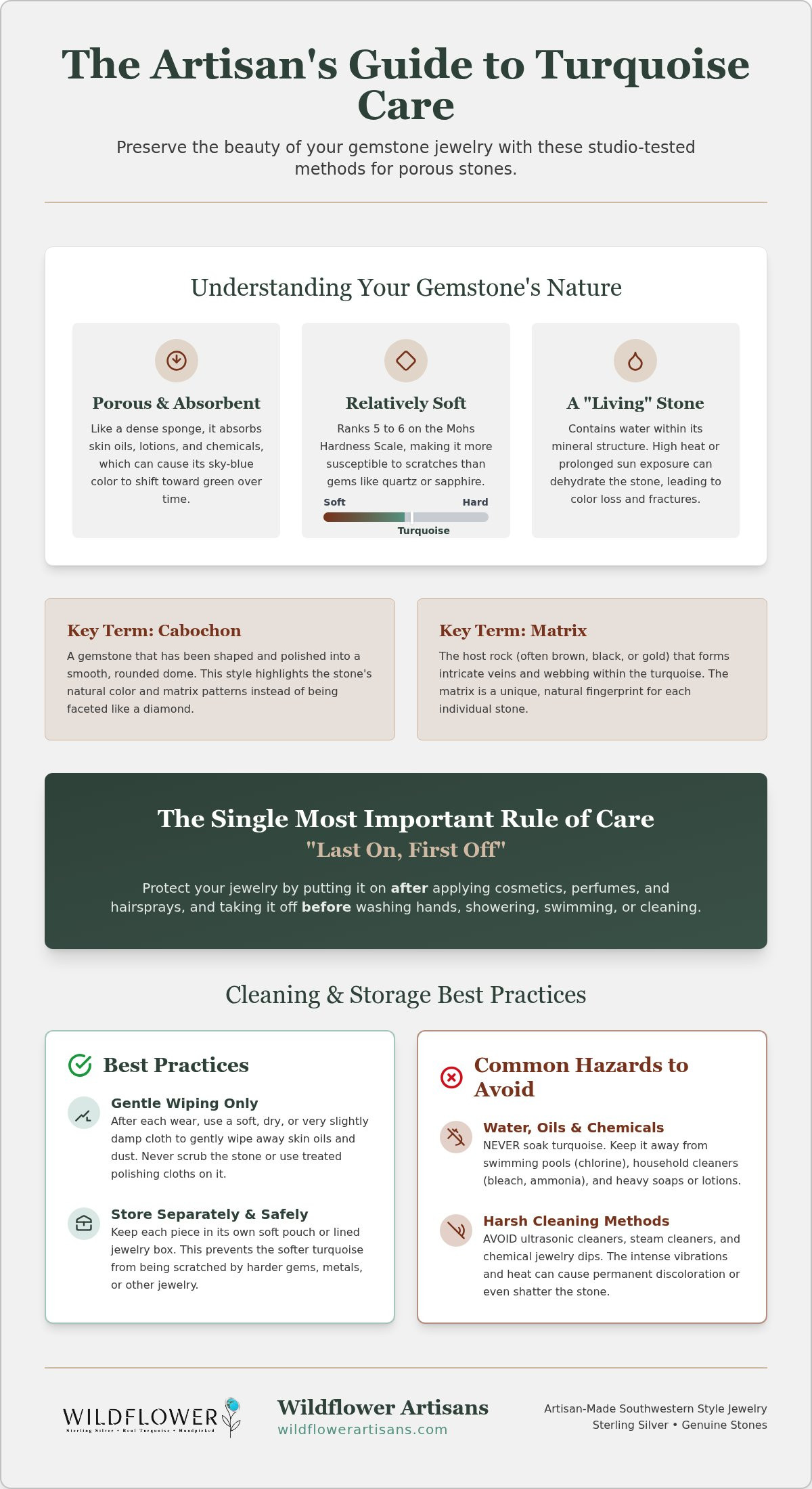
- Turquoise is a living, porous mineral that ranks 5 to 6 on the Mohs scale, making it susceptible to absorbing oils and chemicals from its environment.
- Mastering Turquoise Cabochon Care and Maintenance: Preserve Your Gemstone's Beauty starts with the "last on, first off" rule to protect your artisan-made pieces from perfumes and hairsprays.
- Cleaning should always involve the gentle wipe method using only a soft, damp cloth, as ultrasonic or steam cleaners can permanently discolor or shatter the stone.
- Storing each piece of Southwestern style jewelry in its own separate pouch prevents physical scratches and protects the delicate surface from environmental degradation.
- Avoiding common misconceptions like soaking gemstones in oil or water ensures the long-term preservation of the stone's natural color and structural integrity.
Understanding the Porous Nature of Turquoise Cabochons
Turquoise is a porous, hydrated mineral that naturally absorbs environmental elements like skin oils, perfumes, and moisture. It ranks between 5 and 6 on the Mohs scale, which means it's significantly softer than many other jewelry stones like quartz or sapphire. Most of the pieces we handle at Wildflower are finished as a cabochon. A cabochon is a stone that has been shaped and polished into a smooth, rounded dome rather than cut with the flat facets you see on a diamond. This smooth surface celebrates the stone's natural character, but it also leaves its microscopic structure open to the world. Understanding these physical traits is essential for Turquoise Cabochon Care and Maintenance: Preserve Your Gemstone's Beauty.
Unlike many gemstones that are purely crystalline, turquoise contains water molecules as part of its actual mineral structure. This internal hydration is what keeps the color vibrant and the stone structurally sound. If the stone loses this moisture or replaces it with foreign liquids, the appearance changes. Mastering Turquoise Cabochon Care and Maintenance: Preserve Your Gemstone's Beauty requires a respect for this living quality. You aren't just wearing a rock. You're wearing a piece of the earth that continues to interact with its surroundings.
The mineral composition of hydrated stones
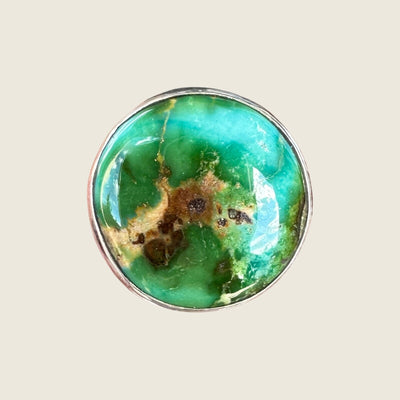
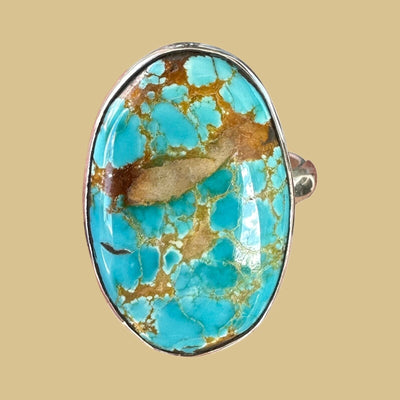
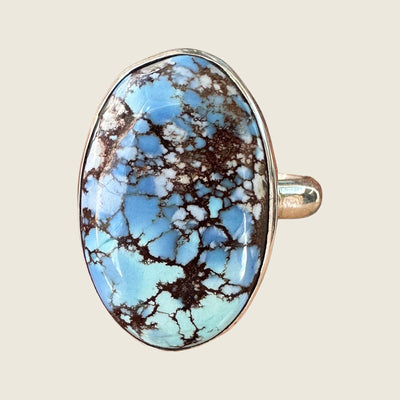
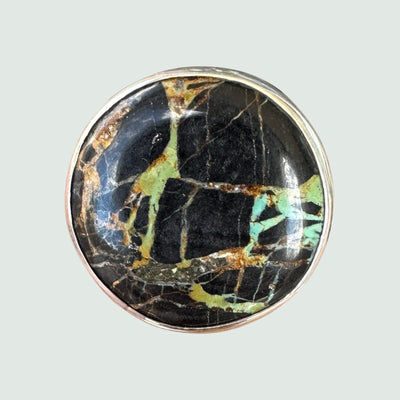
The captivating hues we admire in high-quality turquoise come from a specific chemical arrangement. A combination of copper and aluminum phosphate creates the spectrum of sky blues and mossy greens found in our artisan-made pieces. Because of this chemistry, the stone is naturally reactive to external liquids. For a deeper look at these physical characteristics, Understanding Turquoise Properties reveals how environmental factors influence the stone over time. Many of our hand-cut pieces also feature a matrix. The matrix is the host rock, often seen as dark veins or webbing, that remains within the cabochon. This host rock has its own density and can influence how the stone reacts to wear.
Porosity and the absorption of external liquids
Think of a turquoise stone as a very dense, slow-acting sponge. It contains millions of microscopic pores that can pull in oils from your skin, soaps, or even household cleaners. Once these liquids penetrate deep into the stone, the resulting discoloration or "greening" is often irreversible. A bright blue stone might shift toward a murky olive as it absorbs skin oils over several years. We recommend reading our turquoise buying guide to understand how different stone densities affect long-term wear. Knowing how your specific stone was formed helps you anticipate its needs. It ensures your cleaning routine is effective for the long haul.
Safe Handling Practices for Southwestern Style Jewelry
Prevention is the most effective form of maintenance for artisan-made jewelry. It's often easier to protect a stone from damage than it is to reverse a stain or repair a chemical burn on the metal. We always recommend the last on, first off rule. This means your jewelry should be the final touch after your perfume has dried and your hairspray has settled. By following these simple habits, you're practicing essential Turquoise Cabochon Care and Maintenance: Preserve Your Gemstone's Beauty.
Daily activities that seem harmless can quietly impact the integrity of your pieces. Household cleaners containing bleach or ammonia can react poorly with a sterling silver (.925) setting. These chemicals don't just tarnish the metal; they can actually weaken the bezel over time. The bezel is the thin band of metal that wraps around the stone to hold it in place. If this metal becomes brittle, you risk the stone becoming loose or falling out. Additionally, removal is mandatory before you step into a swimming pool or a hot tub. Chlorine is a harsh oxidant that can strip the natural luster from turquoise and cause the metal to pit.
Avoiding chemicals and cosmetic residues
Many daily rituals involve substances that are quietly hostile to a hand-cut stone. Lotions, soaps, and even heavy sunscreens can settle into the microscopic pores of the stone, eventually dulling the high polish of the cabochon. Over time, these residues can build up around the edges of the setting, making the piece look cloudy. This buildup is more than just an aesthetic issue; it can trap moisture against the stone, leading to unexpected color changes. Protecting your handcrafted jewelry from these common chemicals ensures the stone remains as vibrant as the day it was mined.
The impact of skin oils and perspiration
While a stone is meant to be worn and loved, prolonged contact with skin oils and perspiration can lead to a gradual shift in color. This is especially true for untreated stones that are naturally absorbent. Over months of consistent wear against the skin, a bright blue stone may begin to pull in oils, shifting the hue toward a deeper green. To prevent this, develop a habit of wiping your piece down with a soft cloth after a full day of wear. This removes any acidic residues before they have a chance to penetrate the matrix. If you're looking for pieces that balance this delicate nature with daily wearability, exploring our collection of turquoise jewelry can help you find designs that sit comfortably and safely against the skin.
Caring for your jewelry is a way of honoring the artisan who shaped the stone and the earth that produced it. If you are looking for a new piece to treasure, our authentic turquoise jewelry collection features hand-selected stones from various American mines.
Cleaning Your Gemstones with the Gentle Wipe Method
Turquoise Cabochon Care and Maintenance: Preserve Your Gemstone's Beauty relies on a minimalist approach that avoids harsh chemicals and excessive moisture. The gentle wipe method is the industry standard for cleaning porous stones, utilizing a soft, slightly damp cloth to lift away surface debris without compromising the stone's internal hydration. This practice ensures that your jewelry remains a vibrant reflection of the natural world for years to come. It's a quiet, meditative ritual that honors the artisan's work and the stone's journey from the earth to your collection.
Modern cleaning technology is often the greatest enemy of a hand-cut cabochon. You must never use ultrasonic or steam cleaners on your jewelry, as these machines use high-frequency sound waves or intense heat that can shatter the stone or cause permanent discoloration. Untreated turquoise is particularly sensitive and should never be submerged in water. Moisture can seep into the microscopic pores of the stone, leading to structural instability or undesirable color shifts. Always dry your jewelry immediately after cleaning with a fresh, dry section of your cloth to prevent any lingering dampness from settling into the matrix.
Step by step cleaning for untreated stones
Cleaning untreated stones requires a steady hand and a minimalist touch to avoid over-saturating the mineral's pores. Start with a clean microfiber cloth and dampen a small corner with room-temperature water. Gently buff the surface of the cabochon without applying excessive pressure, focusing on areas where dust or skin oils may have gathered. Once the stone looks clear, immediately use the dry part of the cloth to buff it until every trace of moisture is gone. Pay close attention to the area where the stone meets the metal to ensure no moisture remains trapped between the stone and the bezel. For more detailed guidance on maintaining your collection, you can visit our care and repair page.
Managing the sterling silver (.925) setting
Maintaining the luster of a sterling silver (.925) setting involves a focused polishing technique that protects the stone from chemical contact. Use a dedicated silver polishing cloth for the metal parts only, as these cloths are treated with compounds specifically designed to lift tarnish from silver. You must avoid touching the stone with these polishing compounds or silver liquids, as the chemicals can strip the natural oils from the turquoise or cause it to turn a muddy color. When navigating a tight bezel, fold your cloth into a sharp point to reach the silver without grazing the cabochon. Whether you are cleaning intricate turquoise rings or substantial necklace pendants, a slow and deliberate pace is the best way to ensure the metal shines while the stone stays protected.
Storing and Protecting Handcrafted Turquoise Pieces
Proper storage is a vital act of stewardship that prevents physical scratches and environmental degradation of your gemstones. While it is tempting to keep your collection in a single open tray, Southwestern style jewelry requires a more intentional approach to ensure long term beauty. Each piece should live in its own separate pouch or compartment to avoid the friction of daily life. This careful isolation is a core pillar of Turquoise Cabochon Care and Maintenance: Preserve Your Gemstone's Beauty.
Environmental stressors are often invisible until the damage is already done. Direct sunlight is a significant threat, as prolonged exposure to UV rays can eventually sap the moisture from the stone, leading to a brittle texture and faded color. Similarly, extreme temperature changes can be catastrophic. Moving a piece from a freezing winter morning into a high heat environment can cause the mineral structure to expand or contract too quickly. This thermal shock often results in hairline fractures that compromise the integrity of the hand-cut stone.
Proper storage for individual artisan pieces
We recommend using soft fabric-lined boxes or individual suede pouches for every item in your collection. Because turquoise sits at a 5 to 6 on the Mohs scale, it is easily damaged by harder stones like quartz, topaz, or even the sharp edges of other sterling silver (.925) settings. When stones rub together, the harder material will always win, leaving dull patches or deep gouges on the polished cabochon. Our one-of-a-kind artisan pieces are unique expressions of the earth and deserve dedicated storage to preserve their specific value and character.
Environmental factors and light exposure
Light exposure and humidity levels play a quiet but persistent role in the health of your jewelry. While some stones are more stable than others, intense UV rays can cause certain varieties of turquoise to lose their saturated blues and greens over several years. Adopting a consistent routine for Turquoise Cabochon Care and Maintenance: Preserve Your Gemstone's Beauty includes finding a sanctuary for your jewelry that is away from windows. Storing your jewelry in high-humidity areas like a bathroom is also a common mistake. The constant moisture in the air can accelerate the tarnishing of the sterling silver (.925) and may even encourage the stone to absorb unwanted water. A cool, dry environment, such as a dresser drawer in a climate-controlled room, is the best sanctuary for long-term preservation.
Our studio works with rare stones that carry their own history and spirit. If you are looking to add a new narrative to your collection, our authentic turquoise jewelry offers a range of mine-specific pieces that are as durable as they are beautiful.
Professional Maintenance and Common Care Misconceptions
Knowing when to seek professional help ensures that small issues do not become permanent damage. While daily Turquoise Cabochon Care and Maintenance: Preserve Your Gemstone's Beauty is your responsibility, certain situations require the tools and steady hands of a working studio. Developing a habit of inspecting your jewelry under a bright light can help you spot trouble before a stone is lost or a setting is ruined. It's a simple act of mindfulness that protects the narrative of your jewelry for the next generation.
One of the most persistent myths we hear is that soaking a dull stone in oil or water will restore its original shine. This "oil trick" is a misconception that can lead to the slow death of a beautiful cabochon. While the stone might look darker and more vibrant for a few days, the oil eventually turns rancid within the pores, causing the stone to turn a muddy green. Similarly, the belief that stabilized turquoise is indestructible is a risky assumption. Stabilization is a process where a stone is infused with clear resin to increase its hardness and color permanence. Even these treated stones remain susceptible to chemical damage and physical impact. Treating any stone as if it were a diamond is a shortcut to heartbreak.
Identifying natural vs stabilized care needs
Natural stones are raw, untreated pieces of the earth that remain far more sensitive to environmental changes than their stabilized counterparts. The stability of the matrix varies significantly between different sources. For example, the host rock in stones from the Royston mine may have a different density and absorption rate than the tighter structures found in King's Manassa turquoise. Understanding these differences is a key part of Turquoise Cabochon Care and Maintenance: Preserve Your Gemstone's Beauty. If you are unsure about the specific needs of your piece, visit our care and repair page for studio-led guidance on preserving untreated minerals.
When to consult a professional silversmith
You should consult a silversmith immediately if you notice the stone shifting or clicking within its setting. Over time, a sterling silver (.925) bezel can pull away from the stone due to accidental bumps or the natural expansion and contraction of the metal. A professional can safely tighten these settings or repair worn prongs to ensure your stone remains secure. Beyond structural repairs, a silversmith can perform professional buffing to remove surface scratches that a simple cloth cannot reach. Regular inspections of your sterling silver (.925) cuffs and rings are the best way to catch these minor issues early, keeping your artisan-made pieces in gallery-ready condition for a lifetime.
Honoring the Legacy of Your Artisan Jewelry
Caring for these stones is an act of stewardship for a natural narrative that began deep within the earth. By embracing a minimalist cleaning routine and being mindful of environmental stressors, you ensure your pieces remain a vibrant part of your story. Following the principles of Turquoise Cabochon Care and Maintenance: Preserve Your Gemstone's Beauty allows the stone to age with grace rather than succumb to irreversible staining.
Remember that the last on, first off rule is your strongest defense against daily cosmetics. Use only a soft, damp cloth for cleaning and avoid the temptation of ultrasonic machines or harsh chemicals that can shatter the stone or brittle the sterling silver (.925) bezel. Storing your hand-cut cabochons in separate, soft pouches will protect them from the physical impact of harder stones. At Wildflower, we offer guaranteed authentic stones and hand-cut cabochons from reputable mines, set in artist-made sterling silver (.925) and solid 14K gold.
Your collection is a living gallery. With these simple rituals, your jewelry will continue to reflect the natural world for a lifetime.
Frequently Asked Questions
Can I use ultrasonic cleaners on turquoise jewelry?
You should never use ultrasonic cleaners on turquoise jewelry because the high frequency vibrations can cause the porous stone to shatter or lose its color. These machines are designed for harder, non porous gemstones like diamonds. For proper Turquoise Cabochon Care and Maintenance: Preserve Your Gemstone's Beauty, stick to a soft, damp cloth. Heat and chemicals in ultrasonic solutions can also strip away natural oils or damage the matrix within the cabochon.
Why does turquoise sometimes change color over time?
Turquoise often shifts from blue to green because it absorbs external liquids like skin oils, lotions, and soaps through its microscopic pores. This process changes the mineral's chemistry, often leading to a permanent shift in hue. Untreated stones are particularly reactive to their environment. This natural evolution is part of the stone's narrative, but keeping it away from harsh chemicals helps maintain its original vibrancy for much longer.
Is it safe to wear turquoise while swimming or showering?
It is not safe to wear turquoise in a pool, hot tub, or shower. Chlorine is a harsh oxidant that can pit the sterling silver (.925) and bleach the color from a hand-cut stone. Soaps and shampoos also leave residues that dull the polish of the cabochon. Always remove your jewelry before any activity involving water or chemicals to prevent irreversible damage to the stone's porous structure.
How do I clean the sterling silver bezel without damaging the stone?
To clean a sterling silver (.925) bezel, use a dedicated polishing cloth folded into a small point to reach the metal without touching the stone. Avoid using liquid silver dips or pastes, as these chemicals will ruin the finish of a genuine cabochon. This focused approach is a vital part of Turquoise Cabochon Care and Maintenance: Preserve Your Gemstone's Beauty. Slow, deliberate movements ensure the metal shines while the stone remains protected.
What should I do if my turquoise cabochon gets wet?
If your turquoise jewelry gets wet, you should dry it immediately using a clean, soft cloth. Don't let it air dry, as moisture can become trapped between the stone and the bezel setting, potentially leading to discoloration. Use a gentle patting motion to remove water from the matrix and the surface of the cabochon. Ensuring the piece is completely dry before storing it in a separate pouch helps maintain its structural integrity.

Article by
Kimberly Cordova
Kimberly Cordova is the founder and creative director of Wildflower Artisans, a handmade jewelry brand rooted in Santa Fe. Real turquoise, solid sterling silver, and a small line set in solid 14K gold. She built Wildflower around a simple belief: the best jewelry is the kind you actually reach for, not the kind you save for someday.
The collection is built three ways. Some pieces are made in-house, cut by her husband Greg from stones he sources himself, including rough from the family's King's Manassa Mine in Colorado and White Buffalo Mine in Nevada. Some are designed by Kimberly and fabricated by a trusted circle of Santa Fe silversmiths. And some are finished work she curates from artisan makers whose craft meets the same standard, because building a real collection means knowing when to make and when to look.
Turquoise leads, joined by White Buffalo, Wild Horse, Lapis Lazuli, Spiny Oyster, Black Onyx, Opal, and other genuine semi-precious stones. No shortcuts on the stone, the silver, or the story behind either.
Her writing covers everything she has learned along the way: how turquoise forms, how to tell natural from stabilized, what makes one mine different from another, how to read a bezel, and how to shop with confidence in a market that is not always straightforward. It is the kind of plainspoken information she wished someone had laid out for her when she was starting out.
Browse the collection at wildflowerartisans.com. Questions about a stone, a setting, or a specific piece are welcome any time.
0 comments