

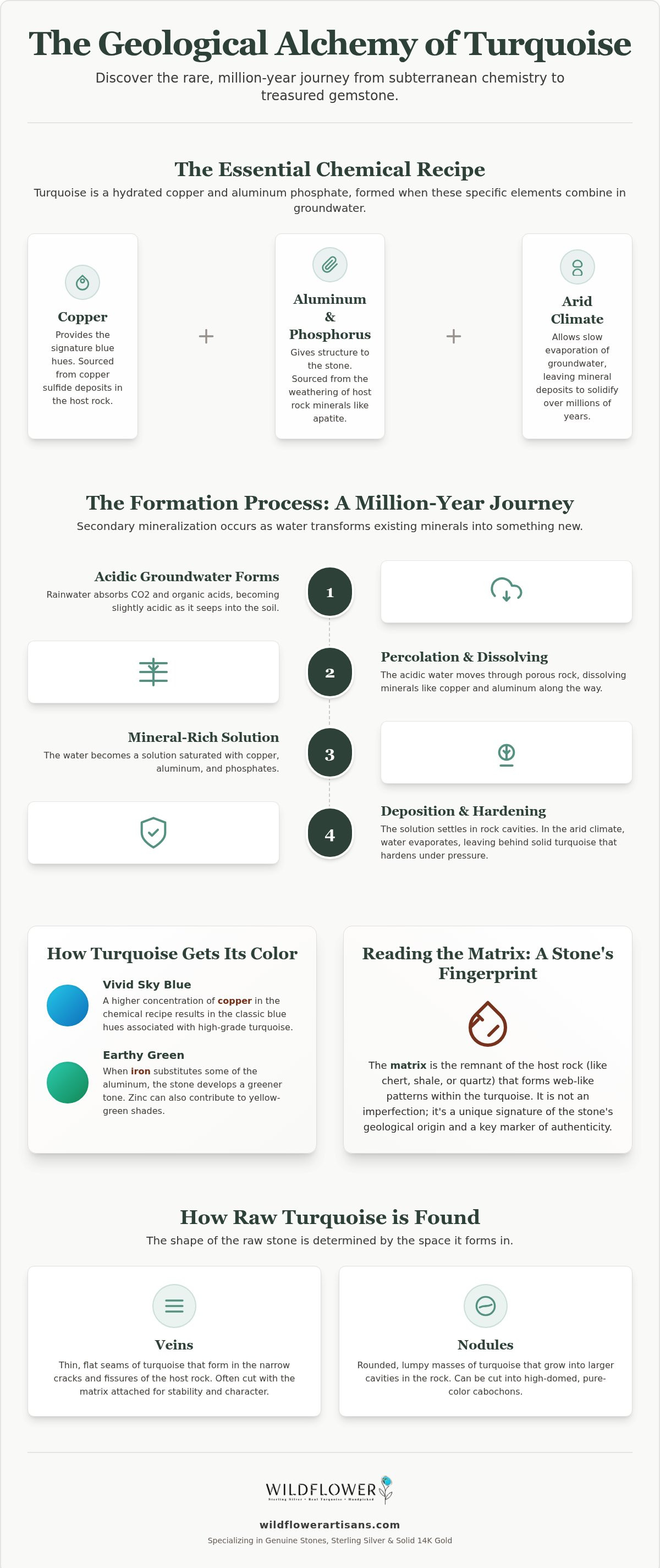
Understanding how is turquoise formed begins with a rare geological alchemy where acidic groundwater and copper deposits meet in the quiet, arid pockets of the earth over millions of years. Matrix is the term for the remains of the host rock that are visible within a finished stone. A cabochon is a stone that has been shaped and polished into a smooth, rounded form rather than faceted. Wildflower Artisans invites you to discover the subterranean chemistry and ancient processes that create these fleeting treasures so you can identify genuine stones and feel confident in the value of your collection.
Key Takeaways
- Understand the rare chemical recipe of copper and phosphorus to learn how is turquoise formed through the process of secondary mineralization.
- Learn to read the matrix, which is the remaining host rock within a stone, as a unique signature of geological history and a marker of authenticity.
- Identify how specific chemical elements like copper and iron determine whether a stone develops a vivid sky blue or an earthy green hue.
- Distinguish between natural, untreated stones and stabilized turquoise by understanding how geological density affects the durability of a finished cabochon.
- Explore why specific mines like Sleeping Beauty or Royston produce distinct geological fingerprints that make certain artisan pieces rare and collectible.
Understanding How Turquoise is Formed Through Secondary Mineralization
Turquoise is a secondary mineral that forms when water moves through a primary host rock and picks up specific chemical elements. Secondary mineralization is the process where a new mineral is created from the breakdown of pre-existing minerals. This rare geological event only occurs in regions with high copper concentrations in the soil and requires an arid or semi-arid climate where groundwater can evaporate. At Wildflower, we focus on the stone first because the geology dictates the design of the silverwork. We invite you to explore our authentic turquoise jewelry to see how these natural processes result in varied colors and textures.
The Essential Chemical Recipe for Genuine Stone
Nature requires a precise mix of copper, aluminum, and phosphorus to create the mineral. Copper provides the signature blue hues while aluminum adds structure to the stone. Phosphorus usually enters the mix through the weathering of apatite or other phosphate-rich minerals. Apatite is a common group of phosphate minerals found in many types of rock. When these elements combine in a hydrated state, they form a chemical compound known as hydrated copper and aluminum phosphate. This specific recipe is what separates genuine stones from the dyed howlite or plastic imitations often found in mass-produced pieces. If the groundwater contains more iron than aluminum, the stone will develop a greener tone. This chemical balance is a delicate dance that happens deep underground over vast geological timescales.
The Role of Arid Environments in Mineral Growth
Desert landscapes provide the necessary conditions for groundwater to seep into cracks and crevices within the earth. As the water evaporates in the dry heat, it leaves behind the mineral deposits that eventually harden into stone. The Turquoise formation process often takes millions of years to produce a solid vein of material thick enough to be used in jewelry. Arid environments are essential because high rainfall would wash away the delicate mineral solutions before they could solidify. This slow growth creates the density and durability required for a high-quality cabochon. We appreciate the patient rhythms of the seasons that contribute to the creation of these organic treasures. Because the climate must remain stable for such a long time, genuine turquoise is a relatively rare occurrence in the natural world. It is a vessel for history and a celebration of natural beauty.
The Role of Copper and Groundwater in the Formation Process
Percolation is the movement of water through the porous layers of the earth to dissolve minerals. This journey begins when rainwater absorbs carbon dioxide from the atmosphere or organic acids from the soil, becoming slightly acidic. As this water seeps downward, it reacts with copper sulfides, which are minerals containing copper and sulfur. This chemical reaction creates a mineral-rich solution that travels through the host rock until it finds a place to rest. Understanding how is turquoise formed involves looking at these subterranean pathways where water and stone interact for millennia. This solution eventually settles in pockets, seams, or nodules within the earth. Over time, the constant pressure of the surrounding rock helps to compress these deposits into the hard, dense material used for jewelry.
If you're looking for a piece that captures this natural history, you might enjoy browsing our artist-made jewelry, where we prioritize stones that show their natural character.
How Veins and Nodules Form in the Earth
The physical space available in the host rock determines the shape of the raw turquoise. Veins are thin layers of turquoise that form in the narrow cracks or fissures of a host rock. When the mineral solution finds a larger cavity or pocket, it grows into nodules, which are rounded, lumpy masses of turquoise. The shape of the raw stone dictates how a lapidary artist will cut the final cabochon. A thin vein might be left attached to its host rock to create a stable piece with a beautiful matrix, while a thick nodule can be shaped into a high-domed stone. These variations in how is turquoise formed provide the diversity of shapes we use in our studio work.
The Slow Pace of Geological Creation
Turquoise formation is a non-renewable process that happens over vast geological timescales, often spanning millions of years. Minor changes in water temperature, mineral concentration, or acidity can stop the formation process entirely. A University of Arizona study highlights how these complex environmental shifts influence the unique chemical fingerprints of different North American mines. The rarity of these specific conditions is why genuine turquoise remains a sought after material for collectors who value authenticity. Because these deposits are finite and take so long to develop, each stone is a fleeting gift from the earth. We treat every hand-cut stone as a vessel for this deep history.
The specific way a stone forms in the earth determines the best setting for its unique shape. Our collection of turquoise rings features hand-cut stones chosen for their structural integrity and natural beauty. Each piece is crafted in our studio to honor the millions of years it took for that specific stone to appear.
How Matrix Patterns and Host Rock Influence Turquoise Appearance
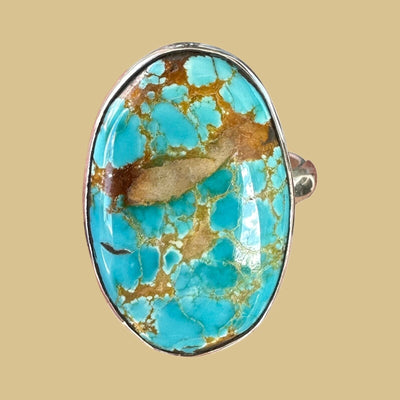
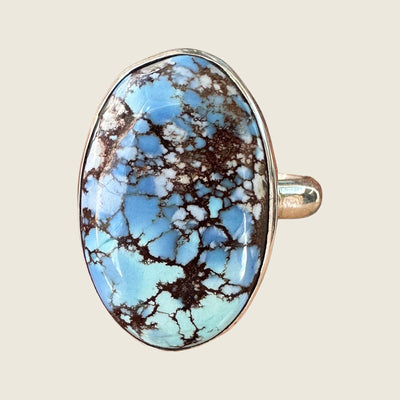
Matrix is the term for the remains of the host rock that are visible within a finished turquoise stone. It acts as a geological map that reveals the specific conditions of the earth where the mineral grew. The presence of iron or manganese in the host rock creates the dark brown or black patterns seen in many pieces. Limonite creates yellowish or brown matrix patterns while pyrite results in metallic, golden flecks. These inclusions are a roadmap of the subterranean world. Understanding how is turquoise formed means appreciating these impurities as essential parts of the stone's narrative. As the GIA explains regarding how turquoise is formed, these variations are what make natural stones so distinct from mass-produced imitations. Wildflower Artisans offers a curated selection of artist-made turquoise jewelry that highlights these natural matrix variations.
Identifying Spiderweb and Caliche Matrix
Spiderweb matrix occurs when the turquoise fills very fine, interconnected cracks in the host rock. This creates a delicate, net-like appearance that collectors prize for its complexity. Caliche refers to white or light-colored inclusions that are often found in stones from certain high-altitude regions. These patterns are unique signatures of the specific environment where the stone was formed. They are not flaws to be cut away. Instead, we see them as character marks that prove the stone was born of the earth rather than a factory. These details are vital for anyone wanting to verify the quality of their collection without relying on synthetic enhancements.
The Color Spectrum from Sky Blue to Deep Green
The blue color of turquoise is primarily derived from copper within the mineral structure. When iron or zinc is present during formation, the stone shifts toward a green or yellowish hue. This natural alchemy creates the mossy greens of the Royston mine or the vibrant lime of Carico Lake. Untreated stones will maintain their natural color as long as they are kept away from oils and harsh chemicals. A cabochon is a stone that has been shaped and polished into a smooth, rounded form rather than faceted. This style of cutting allows the matrix to speak for itself. It honors the stone's natural geometry and showcases the beauty of its origin. We prefer this grounded approach in our working studio, focusing on the stone first to ensure the silverwork complements the natural beauty of the geological process.
Geological Differences Between Famous North American Mines
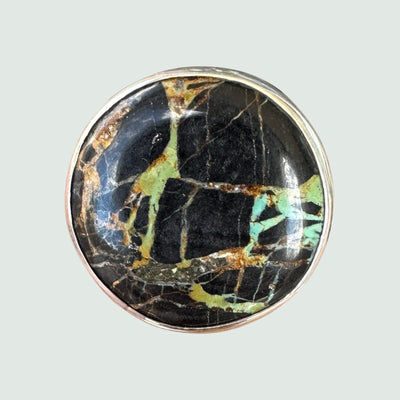
Every turquoise mine has a unique geological fingerprint based on the local mineral content found in its specific soil. While the general process of how is turquoise formed is the same across regions, the presence of different trace elements creates the colors we recognize. The Kingman mine in Arizona is known for its bright blue hues, while Royston turquoise from Nevada often displays vibrant greens and heavy brown matrix. White Buffalo is a white stone with black matrix that grows near turquoise deposits but lacks the copper needed for blue coloring. These variations are the result of millions of years of subterranean chemistry specific to each location.
The Rare Characteristics of Sleeping Beauty Turquoise
Sleeping Beauty turquoise is prized for its solid, sky-blue color with little to no matrix. A bezel is the metal rim that holds a stone securely in place within a piece of jewelry. This specific mine in Arizona produced stones that are world-renowned for their purity and robin's egg hue. Since the mine closed in 2012, these naturally formed stones have become increasingly rare and valuable. Wildflower treats these stones with great respect in our studio, often setting them in a clean bezel to highlight their natural perfection.
King's Manassa and the High Altitude Mines
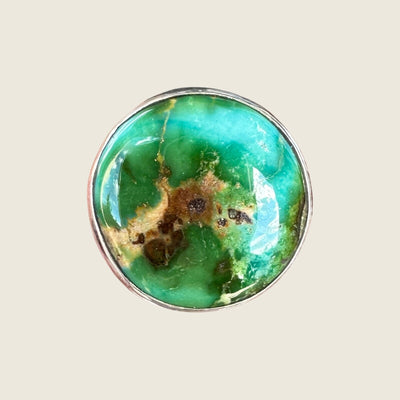
High altitude mines often produce harder stones due to the specific pressure and temperature of the environment. King's Manassa turquoise is known for its deep greens and golden-brown matrix that reflects the mineral-rich soil of Colorado. These stones are ideal for daily wear in sterling silver (.925) settings because their density makes them more resistant to absorbing oils. We value these harder stones for their durability and the earthy narrative they bring to artisan-made jewelry.
We prioritize sourcing stones that celebrate the unique geological diversity of these historic locations. Our collection of turquoise rings features hand-cut cabochons that capture the specific colors and matrix patterns of each mine. Each artisan-made piece is set in sterling silver (.925) to preserve the stone's natural character for years to come.
Distinguishing Formed Turquoise from Synthetic and Treated Materials
Distinguishing genuine stones from imitations requires an understanding of mineral density and the physical markers of the how is turquoise formed process. Genuine turquoise is a natural mineral, while imitations are often made of plastic or dyed howlite. Stabilization is a process where clear resin is added to soft, porous turquoise to make it hard enough for jewelry. This is a common and accepted practice for many stones, but it remains distinct from reconstituted turquoise. Reconstituted turquoise is made by mixing turquoise dust with resins and dyes to create a solid block. At Wildflower, we carefully set each stone in a bezel, which is the metal rim that holds a stone securely in place. This traditional setting method ensures the stone's natural edges are protected while showcasing the unique character of the hand-cut cabochon.
The Red Flags of Fake and Treated Stones
Dyed howlite often has a matrix that looks too uniform or sits only on the surface of the stone. If you look closely at the cracks of a suspect stone, the dye often pools in the deeper areas, creating an unnaturally dark and repetitive pattern. Plastic imitations will feel warm to the touch and lack the weight of a natural mineral. Real stone has a cool, grounding temperature when you first pick it up, reflecting its mineral density. If the price seems too low for a large, clear blue stone, it's likely not a naturally formed specimen. High-grade natural turquoise is a rare resource. We encourage you to consult our turquoise buying guide to help navigate these common market pitfalls. Recognizing these red flags is the best way to protect your investment in artisan-made jewelry.
Why Natural Formation Matters for Value
Naturally hard turquoise is rare and doesn't require stabilization to maintain its structural integrity. Collectors value the unique imperfections and variations in how is turquoise formed because they prove a stone was created by nature rather than a machine. Generally, less than 5% of mined material is of high enough quality to be used in its natural state without resin enhancement. Wildflower Artisans prioritizes untreated or minimally stabilized stones to ensure we provide the highest quality to our customers. Our commitment to authenticity means we avoid the block turquoise often found in mass-produced pieces. When you compare Wildflower vs. Etsy turquoise, the difference in stone density and color depth becomes clear. We believe that a stone should tell the story of the mine it came from, preserving the fleeting beauty of its geological origin.
Carry the Story of the Earth
Every stone you wear carries a narrative of millions of years. Understanding how is turquoise formed allows you to appreciate the rare intersection of copper, water, and arid landscapes that creates these specimens. Whether it is the robin's egg blue of Sleeping Beauty or the mossy greens of the Royston mine, these colors are geological accidents of the highest order. We know finding genuine stones can feel overwhelming given the abundance of dyed howlite and plastic imitations in the market. That's why Wildflower Artisans focuses on a stone-first philosophy, sourcing from historic North American mines and setting each hand-cut cabochon in sterling silver (.925) or solid 14K gold. Each artisan-made creation serves as a vessel for this deep history, inviting you to carry a piece of the Southwest with you.
By looking for the unique signatures of the matrix and the weight of natural mineral density, you can build a collection rooted in authenticity. We guarantee our stones are high quality and untreated whenever possible, preserving the fleeting beauty of the natural world. We hope this knowledge helps you find pieces that resonate with your personal style and appreciation for natural beauty.
Frequently Asked Questions
Is turquoise a mineral or a rock?
Turquoise is a mineral because it possesses a distinct chemical composition and a specific crystal structure. While you often see it embedded within a host rock, the turquoise itself is a separate mineral species known as a hydrous phosphate of copper and aluminum. This technical distinction is vital for collectors who value scientific authenticity. Rocks are typically aggregates of multiple minerals; however, turquoise is a singular result of secondary mineralization processes occurring deep underground.
Why is some turquoise green and some blue?
The specific color of a stone depends on the metals present during the time of its creation. Copper is the element responsible for the bright blue shades found in mines like Sleeping Beauty, whereas the presence of iron or zinc shifts the hue toward earthy greens or yellows. Understanding how is turquoise formed with these varying mineral concentrations helps you appreciate why a Royston stone looks so different from a Kingman cabochon despite sharing the same basic chemistry.
What is the black or brown spiderweb in turquoise?
The spiderweb pattern is known as the matrix, which consists of the original host rock where the turquoise developed. These intricate lines are usually formed by iron-rich minerals like limonite or manganese oxide that filled tiny fissures in the rock before the turquoise grew into them. We view these patterns as a geological map of the stone's history. They provide a unique signature that helps verify the stone is a natural product of the earth.
Does turquoise form in water?
Turquoise requires the movement of water to exist, but it is not a mineral that grows underwater. It forms when acidic groundwater percolates through mineral-rich soil, dissolving copper and aluminum along the way. This solution then settles into crevices in an arid environment where the water evaporates, leaving behind the solid mineral. This specific cycle of moisture and evaporation is the essential chemical recipe for how is turquoise formed in desert regions across the Southwest.
How long does it take for turquoise to form?
The creation of turquoise is a patient geological process that takes millions of years to complete. It requires a remarkably stable environment where mineral-rich water can slowly deposit thin layers of material into the host rock. This gradual accumulation eventually builds up into the solid veins or nodules that we cut into cabochons in our studio. Because this process happens over such vast timescales, natural turquoise is considered a non-renewable resource of the earth.
Article by
Kimberly Cordova
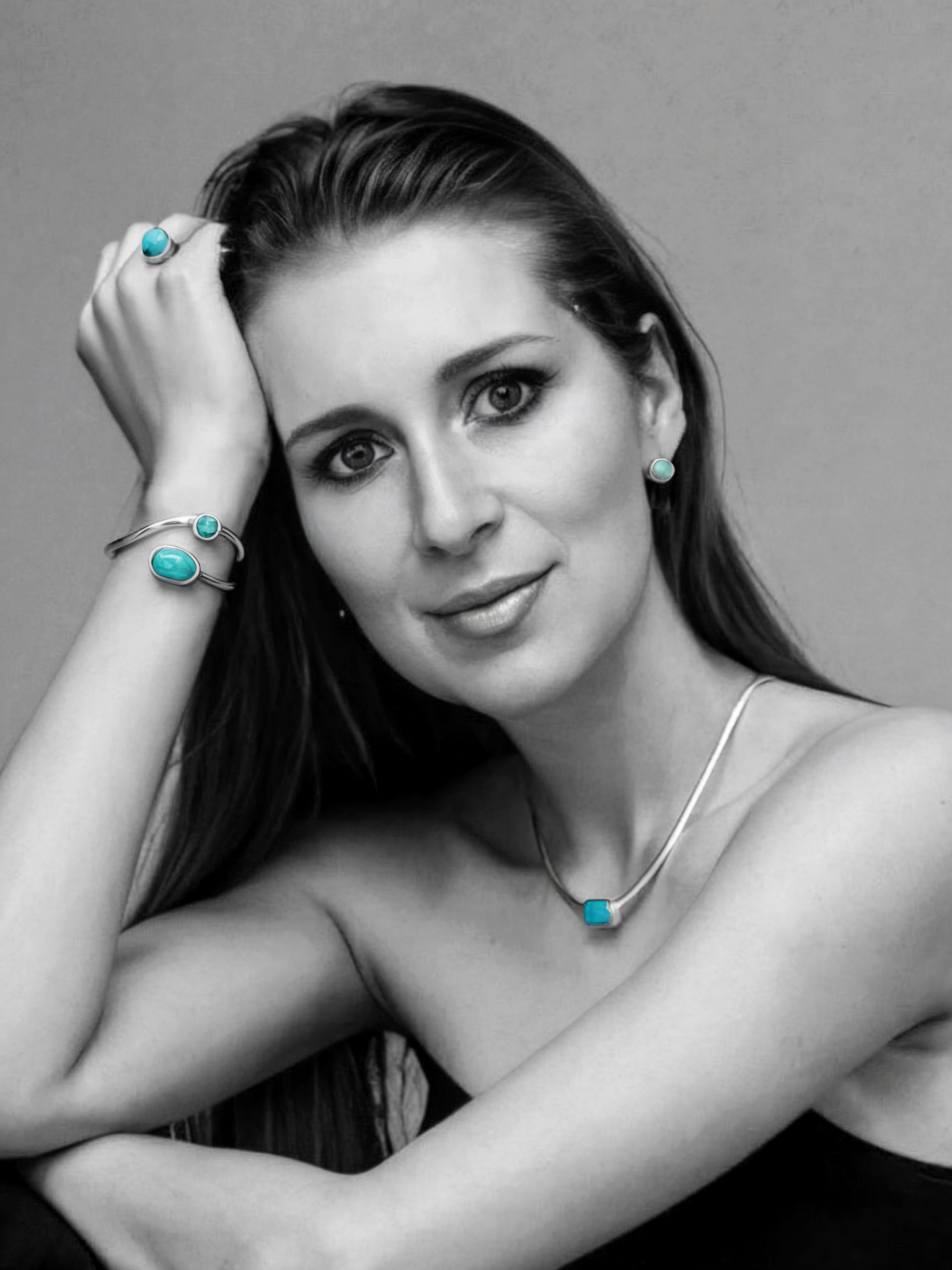
Kimberly Cordova is the founder and creative director of Wildflower Artisans, a handmade jewelry brand rooted in Santa Fe. Real turquoise, solid sterling silver, and a small line set in solid 14K gold. She built Wildflower around a simple belief: the best jewelry is the kind you actually reach for, not the kind you save for someday.
The collection is built three ways. Some pieces are made in-house, cut by her husband Greg from stones he sources himself, including rough from the family's King's Manassa Mine in Colorado and White Buffalo Mine in Nevada. Some are designed by Kimberly and fabricated by a trusted circle of Santa Fe silversmiths. And some are finished work she curates from artisan makers whose craft meets the same standard, because building a real collection means knowing when to make and when to look.
Turquoise leads, joined by White Buffalo, Wild Horse, Lapis Lazuli, Spiny Oyster, Black Onyx, Opal, and other genuine semi-precious stones. No shortcuts on the stone, the silver, or the story behind either.
Her writing covers everything she has learned along the way: how turquoise forms, how to tell natural from stabilized, what makes one mine different from another, how to read a bezel, and how to shop with confidence in a market that is not always straightforward. It is the kind of plainspoken information she wished someone had laid out for her when she was starting out.
Browse the collection at wildflowerartisans.com. Questions about a stone, a setting, or a specific piece are welcome any time.
0 comments