

Imagine the allure of a jeweler's bench, laden with a tray of exquisite stones that range from the clear sky blue of Sleeping Beauty to the deep, mossy greens of a Royston cabochon. It's common to feel a bit lost when trying to understand Popular Turquoise Varieties: Discover Iconic Gemstones for Jewelry Making, as each mine produces a stone with its own geological fingerprint. You aren't just selecting a color to set in a bezel, you're choosing a tangible piece of the high desert's history.
We know how difficult it is to separate genuine, hand-cut gems from the flood of treated or imitation materials found on the market today. You deserve to feel certain that the materials you choose for your sterling silver (.925) or solid 14K gold pieces are authentic and reflect the artisanal quality you strive for. This guide will walk you through the most celebrated mines, explaining the unique matrix patterns and color profiles that define Southwestern style. By the end, you'll have the knowledge to select the perfect stones for your jewelry with total confidence.
Key Takeaways
- Learn to distinguish between the clear, sky-blue tones of Sleeping Beauty and the complex matrix patterns of Kingman stones.
- Gain practical skills for identifying natural stones by examining the matrix and density, helping you avoid common imitations like dyed howlite or plastic.
- Explore Popular Turquoise Varieties: Discover Iconic Gemstones for Jewelry Making to understand how origin and geological history influence the value of your hand-cut gems.
- Discover how specific cabochon shapes and stone varieties can enhance the design of your sterling silver (.925) or solid 14K gold settings.
- Master the gentle cleaning and storage techniques required to preserve the vibrant color and integrity of your genuine gemstone collections.
What Is Turquoise?
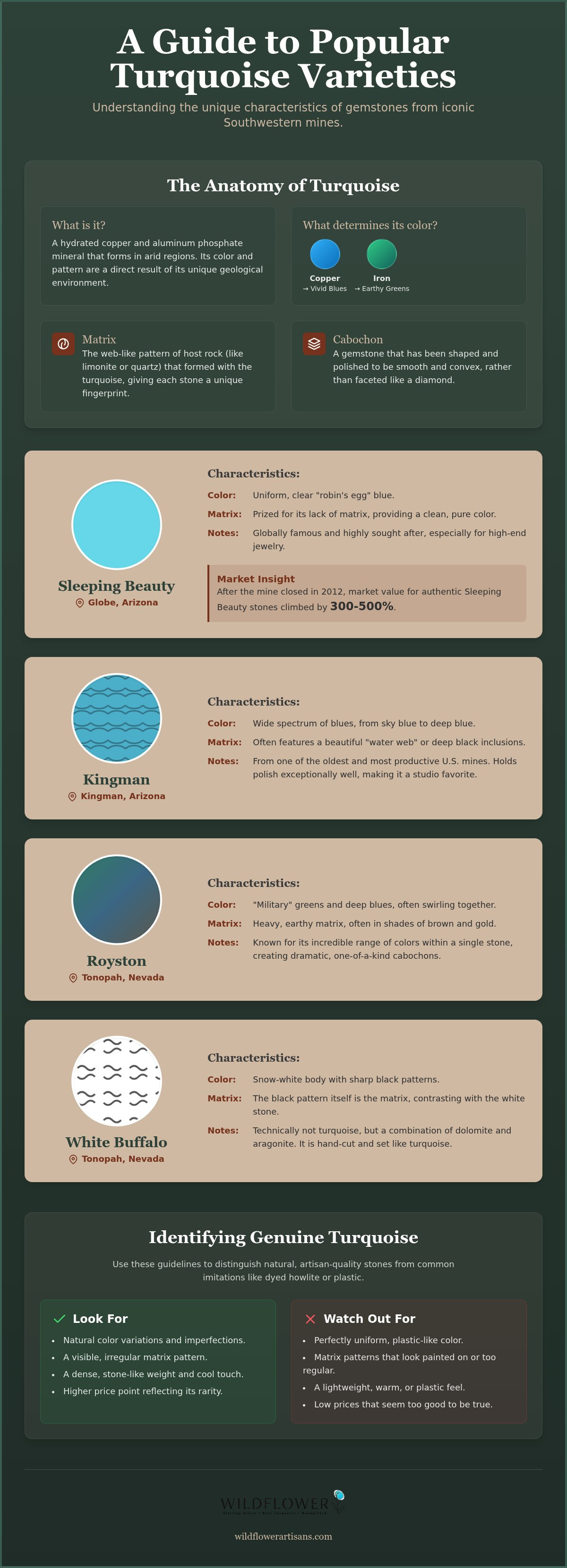
Turquoise is a hydrated copper and aluminum phosphate mineral that naturally forms in arid regions when groundwater reacts with copper-rich host rocks. This rare gemstone is prized for its spectrum of blues and greens, ranging from pale robin's egg to deep forest hues. When we talk about Popular Turquoise Varieties: Discover Iconic Gemstones for Jewelry Making, we're discussing stones that have been shaped by specific geological environments over millions of years. It's a secondary mineral, which means it only appears after other minerals have been broken down by weather and water.
The Geology of Turquoise
The specific color of a stone depends entirely on its mineral environment. Copper creates the vivid blue shades, while the presence of iron or aluminum shifts the color toward green or yellowish-green. This process happens in dry climates where rain or snowmelt seeps through the earth, dissolving minerals and depositing them into cracks and crevices. These deposits eventually harden into veins or nodules, which lapidary artists then shape into the cabochon (a stone that's been shaped and polished rather than faceted) shapes we use in our studio.
You'll often notice a web-like pattern in the stone known as the matrix. This is simply the host rock, such as limonite or quartz, that stayed attached to the turquoise as it formed. A heavy matrix can add incredible character to a piece, making every hand-cut stone a one-of-a-kind discovery. To understand the full scope of What is Turquoise?, one must appreciate these inclusions as a record of the stone's journey through the earth. Each mine produces a distinct signature, making the geology as much about geography as it is about chemistry.
Cultural Significance
Turquoise has held a place of honor in human history for over 6,000 years, appearing in the burial masks of pharaohs and the ceremonial regalia of ancient civilizations. In the American Southwest, it's deeply woven into the fabric of regional identity. Local artisans have perfected the art of setting these stones in sterling silver (.925), creating a style that's recognized globally. We see this influence in the authentic turquoise jewelry crafted today, where the focus remains on the stone's natural beauty rather than artificial treatments. For many collectors, these gems are vessels of tradition, representing a connection to the land and the skilled hands that shaped them.
Popular Varieties of Turquoise
Every turquoise mine across the Southwest produces a stone with a distinct geological personality, ranging from the clear blues of Arizona to the mossy greens of Nevada. Understanding Popular Turquoise Varieties: Discover Iconic Gemstones for Jewelry Making helps you appreciate why a specific cabochon might be more prized for its clarity or its intricate matrix patterns. These variations aren't just aesthetic; they tell the story of the mineral environment where the stone formed over millions of years.
Kingman's Characteristics
The Kingman mine in Arizona is one of the oldest and most productive sites in the United States, famous for its wide spectrum of blue hues. You'll often find Kingman stones with a beautiful "water web" matrix or deep black inclusions that provide a sharp contrast against the sky-blue host rock. Because of its consistent quality and durability, this variety is a favorite in our studio for pieces that are meant to be worn every day. Many artisans prefer Kingman because it holds a polish exceptionally well, making it a staple for both traditional Southwestern style and modern designs.
Sleeping Beauty Insights
Sleeping Beauty turquoise is perhaps the most famous variety in the world, known for its "clean" look and lack of heavy matrix. This mine in Globe, Arizona, closed its turquoise operations in 2012, which caused the market value of these stones to climb by 300 to 500 percent in the following years. It remains highly sought after for high-end jewelry because of its uniform, robin's egg blue color. In fact, less than 1% of turquoise found globally is considered "Superior" grade, a standard that the best Sleeping Beauty stones frequently met before the mine's closure.
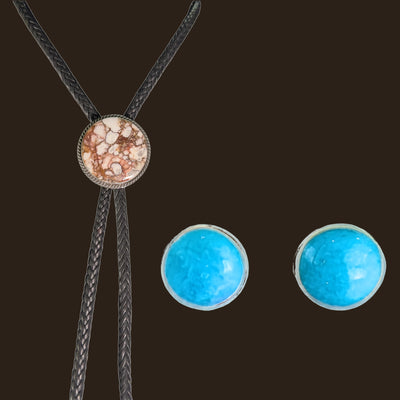
Beyond these famous Arizona mines, other varieties offer a completely different look. Royston turquoise from Nevada is loved for its "military" greens and deep blues, often swirling together in a single stone with a heavy, earthy matrix. If you prefer something truly rare, Number 8 turquoise is distinguished by its golden-brown spider web matrix, though it hasn't been actively mined for decades. For those who love high contrast, White Buffalo is a striking option. While technically a combination of dolomite and aragonite, it's hand-cut and set just like turquoise, featuring a snow-white body with sharp black patterns. When you are identifying authentic turquoise, knowing these mine-specific traits is your best defense against imitations. If you're curious to see how these different stones look when finished, you can shop all jewelry currently available in our Santa Fe studio.
At Wildflower Artisans, we take pride in sourcing stones that represent the best of these legendary mines. You can explore our latest hand-selected pieces and find your own favorite variety by visiting our collection of authentic turquoise jewelry.
Identifying Authentic Turquoise
Identifying authentic turquoise requires a close inspection of the stone's matrix, color depth, and surface texture to ensure it isn't a common imitation like dyed howlite. Genuine stones show subtle geological irregularities, such as varied color saturation and natural host rock inclusions, that mass-produced plastic or block materials cannot replicate. When you're exploring Popular Turquoise Varieties: Discover Iconic Gemstones for Jewelry Making, understanding these physical markers is the best way to ensure you're investing in a real piece of the Southwest.
At our Santa Fe studio, we often see "block turquoise," which is a deceptive material made from crushed stone and resin cast into a solid mass. While it might look uniform, it lacks the weight and coolness of a natural stone. A genuine hand-cut cabochon will feel substantial in your hand and will slowly warm to your body temperature. If a stone feels light or exceptionally warm immediately, it's likely a plastic or resin composite.
Matrix and Color Quality
The matrix is the host rock that threads through the gemstone, and its appearance is a major clue to authenticity. In a natural stone, the matrix should feel like an integral part of the mineral structure, sometimes even showing slight recesses where the host rock is softer than the turquoise. If the web-like pattern looks identical across multiple pieces of jewelry, or if the lines seem to sit on top of the stone rather than within it, you're likely looking at a manufactured imitation. Color should also have a sense of movement. Even the most vibrant Kingman or Royston stones will show slight shifts in hue across the surface, whereas dyed minerals often have a flat, overly saturated look that appears artificial.
Treatment Status
It's vital to understand the difference between stabilized and natural stones when assessing value. Stabilization is a process where clear resin is pressured into a porous stone to make it durable enough for a jewelry setting. This is a standard industry practice and results in a beautiful, wearable gem, but it's different from "natural" turquoise, which is hard enough to be cut and polished without any additives. Untreated stones are significantly more valuable because they are rare. Because turquoise is naturally porous, it can absorb skin oils and change color over time, a process many collectors appreciate as a sign of a "living" stone. We provide more details on these distinctions on our authenticity page. Always ask a seller for the treatment status and the mine of origin. If they can't provide those details, the stone may not be the authentic material you're looking for.
Creative Uses of Turquoise in Jewelry
Turquoise is a versatile gemstone that serves as a focal point in everything from bold statement cuffs to delicate everyday studs. Exploring Popular Turquoise Varieties: Discover Iconic Gemstones for Jewelry Making allows you to match the stone's specific character to the mood and function of the piece. In our Santa Fe studio, we treat each stone as a unique narrative, where the metalwork serves to protect and highlight the natural beauty of the hand-cut cabochon.
Designing with these stones often starts with the setting itself. A simple bezel (a thin metal rim that surrounds and secures a gemstone) allows a high-quality stone to speak for itself without distraction. For daily wear, we often lean toward smaller, clear blue stones set in solid 14K gold for a modern, refined look. When we create larger pieces, we might choose a stone with a heavy matrix to provide an earthy, grounded feel that stands up to the weight of sterling silver (.925).
Designing with Turquoise
Pairing turquoise with other semi-precious stones can create a striking visual dialogue. We often look to the high desert for color inspiration, pairing the sky-blue tones of Arizona mines with the deep, celestial blue of lapis lazuli or the vibrant orange of spiny oyster. These combinations are particularly effective in turquoise rings, where the movement of the hand catches the light across different textures. Size and cut also play a major role. A large, teardrop-shaped cabochon makes a perfect centerpiece for a necklace, while uniform rounds are ideal for creating a balanced, layered look in an earring stack.
Inspiration from Nature
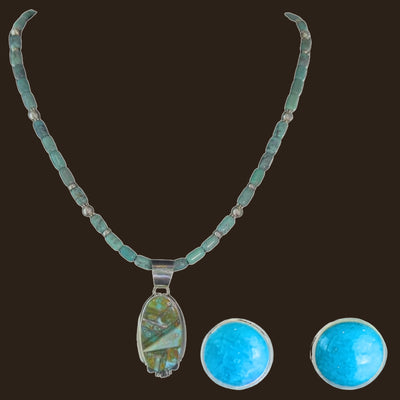
The natural landscapes of the Southwest provide a constant source of artistic concepts for our work. We see the dusty greens of sagebrush reflected in Royston stones and the clear winter skies in Sleeping Beauty varieties. These organic connections influence the silhouettes we choose, often favoring asymmetrical shapes that mirror the way turquoise is found in the earth. You can find these nature-inspired themes throughout our turquoise pendant necklaces, where the silver work often mimics the rambling growth of desert flora. By keeping the designs intentional and stone-focused, we honor the millions of years it took for these gems to form.
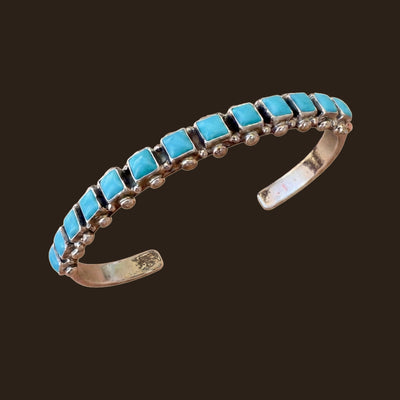
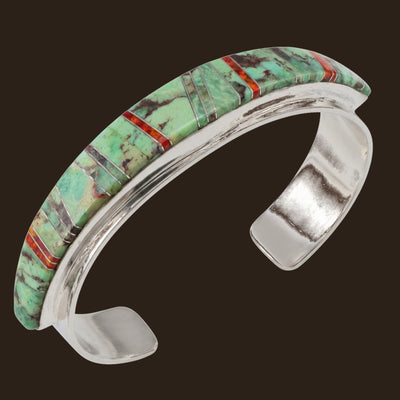
Our studio specializes in translating these natural inspirations into wearable art that lasts for generations. If you are looking for a piece that captures the bold spirit of the Southwest, we invite you to explore our selection of artisan-made turquoise cuff bracelets.
Caring for Your Turquoise Jewelry
Proper maintenance of turquoise jewelry involves protecting the stone's porous surface from chemicals and storing it away from abrasive materials to preserve its natural luster. Because these gems are softer than many other minerals, they require a gentle touch to ensure they remain as vibrant as the day they left the studio. When you explore Popular Turquoise Varieties: Discover Iconic Gemstones for Jewelry Making, you're investing in a piece of geological history that can change over time if not handled with care.
Turquoise is naturally porous, which means it contains microscopic openings that can absorb liquids, oils, and chemicals. This characteristic is why a hand-cut cabochon might shift in color after years of contact with skin lotions, perfumes, or hairsprays. We view these stones as living artifacts of the earth, and while some collectors appreciate the natural aging process, intentional care helps maintain the specific hue you first fell in love with.
Cleaning Techniques
The safest way to clean your jewelry is with a soft, dry cloth and a bit of patience. Avoid using ultrasonic cleaners or steam machines at all costs, as the intense vibrations and high temperatures can cause the stone to crack or lose its stabilization. Never submerge your pieces in liquid jewelry cleaners or harsh soaps. These chemicals can seep into the matrix and permanently alter the stone's appearance. If the silver around the bezel needs attention, use a specialized polishing cloth to gently buff the metal while avoiding direct contact with the stone itself.
Long-Term Care
Store your pieces in a lined jewelry box or individual soft pouches to prevent harder gemstones from scratching the turquoise surface. Environmental factors like extreme heat or prolonged direct sunlight can cause certain varieties to fade or become brittle. For your sterling silver (.925) jewelry, regular wear is often the best medicine, as the natural friction helps prevent tarnish, which is the dulling or darkening of the metal's surface caused by oxidation. If you notice a significant change in the stone's stability or the security of the setting, it may be time to seek a professional jeweler who understands the delicate nature of Southwestern style work. You can find more specific advice on our care and repair page.
Frequently Asked Questions About Turquoise
In our Santa Fe studio, we spend much of our time answering questions about stone origins and the best ways to distinguish natural gems from treated materials. Understanding Popular Turquoise Varieties: Discover Iconic Gemstones for Jewelry Making is the first step toward building a collection that you can trust and enjoy for a lifetime. These answers reflect the common curiosities we encounter while working at the jeweler's bench.
What is the best way to tell real turquoise from fake?
You can identify genuine turquoise by looking for geological irregularities in the matrix and checking the stone's temperature. Natural stones feel cool to the touch and warm up slowly, whereas plastic imitations or reconstituted turquoise (a material made by mixing crushed stone with resin) will feel warm almost immediately. If the web-like patterns look identical across multiple pieces of jewelry, it's a sign the material was mass-produced in a mold rather than hand-cut from a natural vein. For more detailed tips, you can visit our turquoise buying guide.
How does the value of turquoise vary by type?
The value of a stone is determined by its rarity, the specific mine it came from, and whether it's untreated or stabilized. Stones from closed mines like Sleeping Beauty or Bisbee carry a premium because the supply is finite and shrinking every year. Less than 1% of the turquoise found globally is considered Superior grade, which refers to stones that are naturally hard enough to be polished without any chemical stabilization. When exploring Popular Turquoise Varieties: Discover Iconic Gemstones for Jewelry Making, remember that a stone's value also lies in the artistry of the cut and the reputation of the studio sourcing it.
Can turquoise jewelry be worn every day?
Turquoise is suitable for daily wear as long as it's set in a protective bezel and kept away from oils or harsh cleaning agents. Because turquoise is a porous mineral, it can absorb substances it comes into contact with, which might lead to color shifts over several decades. We recommend putting your jewelry on last, after you've applied any lotions or perfumes, to keep the stone's surface clear. You'll find that many of our authentic turquoise jewelry pieces are designed specifically for this kind of regular, intentional use.
What are the most common treatments for turquoise?
Stabilization is the most frequent industry treatment, involving the use of clear resin to harden porous stones so they don't crack during the cutting process. This is a standard and accepted practice that makes the jewelry more durable for everyday life. However, you should avoid stones that have been dyed or "color-shot," as these treatments are often used to hide the low quality of the underlying mineral. If you're ever unsure about a term, our turquoise glossary defines the technical language used by lapidary professionals.
How do I choose the right turquoise for my jewelry?
Choosing the right stone is a personal decision that should balance your aesthetic preference for color with the intended style of the piece. If you're looking for a classic Southwestern style, you might lean toward stones with a heavy brown or black matrix from Nevada mines. For a more modern or minimalist look, clear blue stones from Arizona are often the preferred choice. The most important factor is ensuring the stone is genuine and that the silver work is high-quality sterling silver (.925) or solid 14K gold.
Embracing the Beauty of Genuine Turquoise
We've looked closely at the diverse landscapes that produce these gems, from the clear Arizona skies to the rich, mossy veins of Nevada. By learning about Popular Turquoise Varieties: Discover Iconic Gemstones for Jewelry Making, you're now better prepared to spot the subtle differences between a hand-cut cabochon and a mass-produced imitation. This knowledge helps you invest in pieces that are as genuine as the materials they're made from.
At Wildflower, we believe the stone should always be the focus of the design. Our artist-made pieces emphasize authenticity, featuring handcrafted settings in sterling silver (.925) or solid 14K gold. We maintain a steady commitment to quality and craftsmanship, ensuring that every genuine stone is set with care. These pieces are meant to be durable, tangible connections to the quiet history of the high desert.
We hope this guide gives you the confidence to choose a stone that truly speaks to you. There is a specific kind of joy in wearing a piece of the earth that took millions of years to form.
Article by
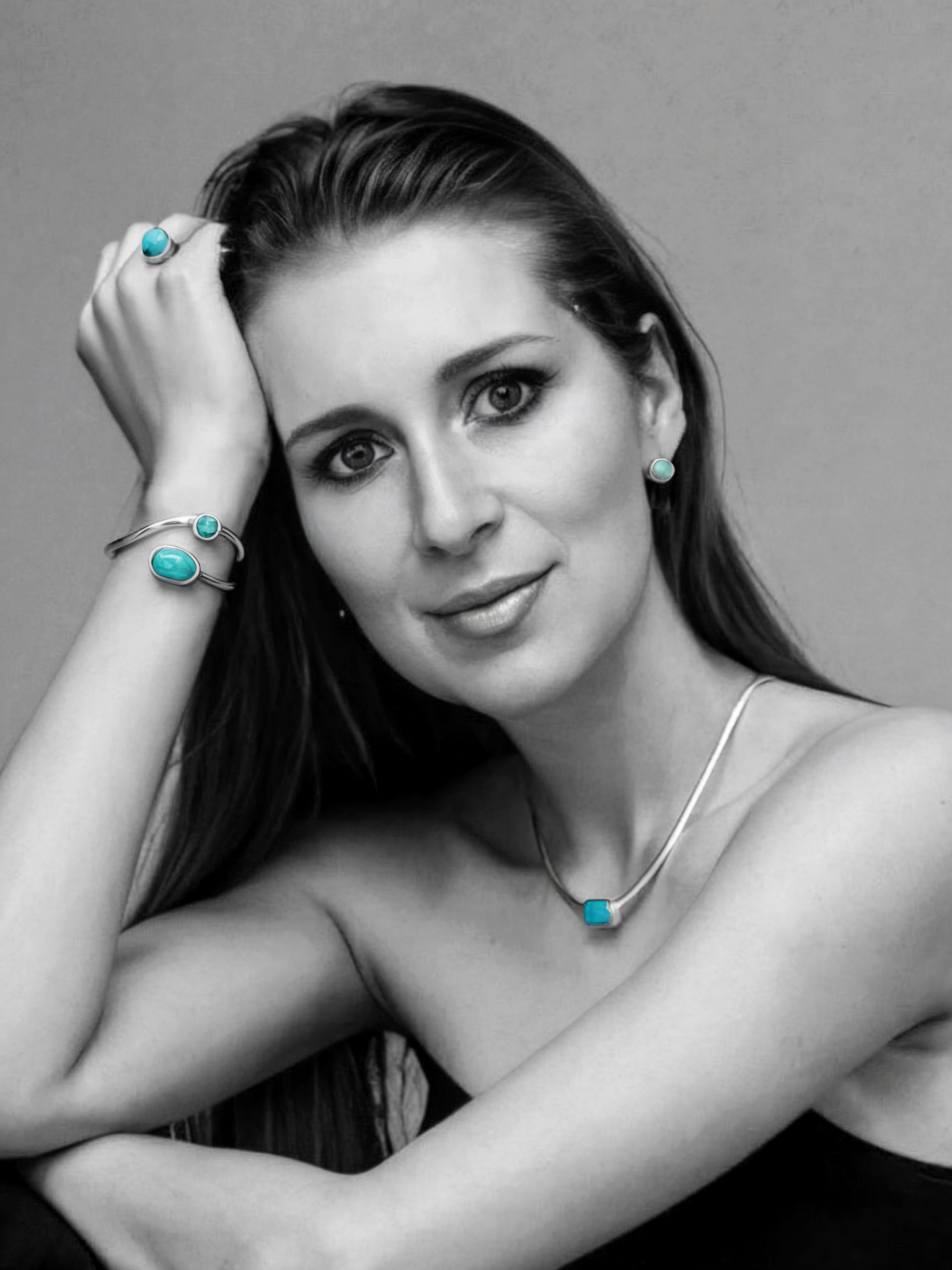
Kimberly Cordova
Kimberly Cordova is the founder and creative director of Wildflower Artisans, a handmade jewelry brand rooted in Santa Fe. Real turquoise, solid sterling silver, and a small line set in solid 14K gold. She built Wildflower around a simple belief: the best jewelry is the kind you actually reach for, not the kind you save for someday.
The collection is built three ways. Some pieces are made in-house, cut by her husband Greg from stones he sources himself, including rough from the family's King's Manassa Mine in Colorado and White Buffalo Mine in Nevada. Some are designed by Kimberly and fabricated by a trusted circle of Santa Fe silversmiths. And some are finished work she curates from artisan makers whose craft meets the same standard, because building a real collection means knowing when to make and when to look.
Turquoise leads, joined by White Buffalo, Wild Horse, Lapis Lazuli, Spiny Oyster, Black Onyx, Opal, and other genuine semi-precious stones. No shortcuts on the stone, the silver, or the story behind either.
Her writing covers everything she has learned along the way: how turquoise forms, how to tell natural from stabilized, what makes one mine different from another, how to read a bezel, and how to shop with confidence in a market that is not always straightforward. It is the kind of plainspoken information she wished someone had laid out for her when she was starting out.
Browse the collection at wildflowerartisans.com. Questions about a stone, a setting, or a specific piece are welcome any time.
0 comments