

The vibrant, robin's egg blue of a Sleeping Beauty stone isn't just a color choice. It's a piece of a closed chapter in geological history. Since the mine ceased operations in 2025, finding authentic sleeping beauty turquoise has become a pursuit of patience and precision for collectors and artisans alike. You might feel a bit of hesitation when looking at a perfectly clear blue stone, wondering if that uniform color is a gift from the earth or a result of a chemist's lab. At Wildflower Artisans, we understand that concern because we see it every day in our Santa Fe studio. It's difficult to seek out a genuine piece of the Southwest only to worry about dyed howlite or plastic imitations.
We want to help you move past that uncertainty by sharing the technical markers and history that make this specific Arizona mine so revered. In this guide, we'll explore the characteristics of high-quality blue stones, explain the difference between natural and stabilized treatments, and show you how to care for handcrafted sterling silver jewelry. You'll gain the confidence to identify true artisan work and understand why this finite resource continues to hold such a distinct place in the world of fine jewelry.
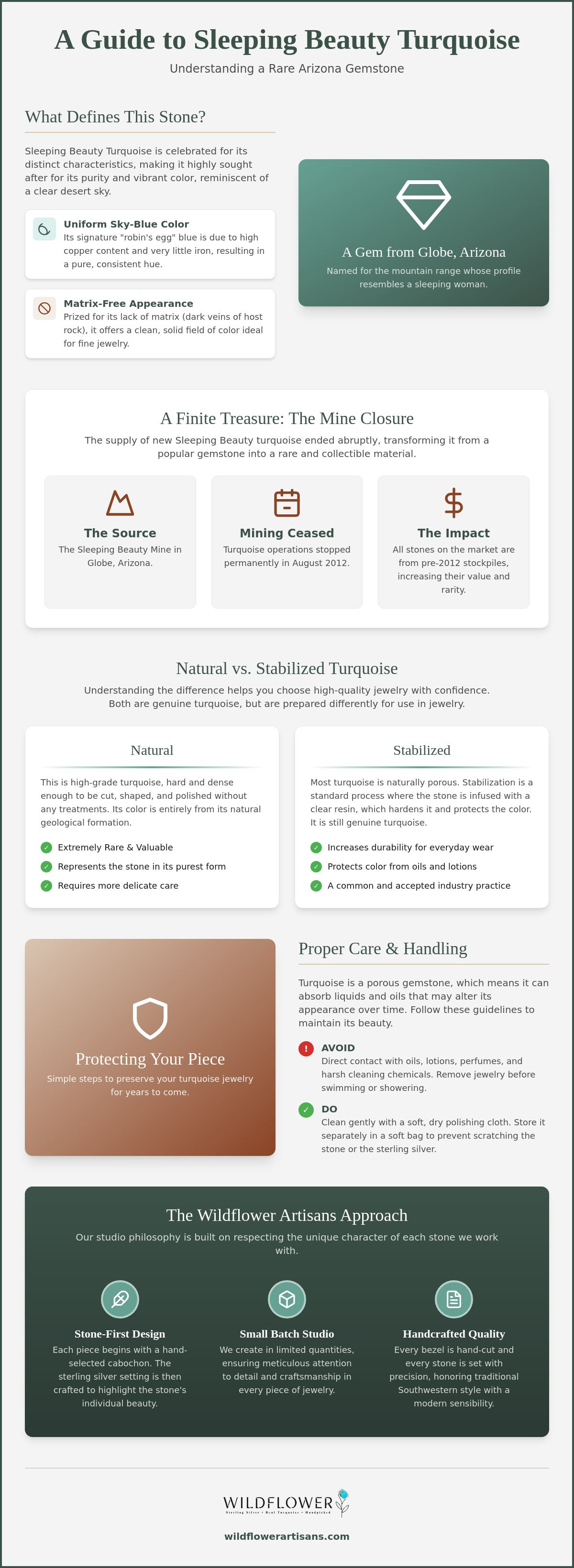
Key Takeaways
- Learn why the uniform sky-blue color of sleeping beauty turquoise is so rare and the reality of its limited availability now that the mine has closed.
- Understand the technical difference between natural stones and stabilized turquoise to help you choose high-quality jewelry with confidence.
- Discover how to protect your Southwestern style pieces from oils and chemicals that can alter the appearance of porous gemstones.
- Explore how a stone-first design approach ensures that each handcrafted cabochon is treated as a one-of-a-kind element in our small batch studio.
What defines Sleeping Beauty turquoise and its popularity in jewelry?
Sleeping Beauty turquoise is a distinct variety of the Turquoise mineral known for its solid, uniform sky-blue color and frequent lack of heavy matrix. A matrix is the host rock, often composed of quartz or pyrite, that appears as dark or metallic veins within the turquoise stone. This specific variety earned its name from the mountain range in Globe, Arizona, where the profile of the peaks resembles a sleeping woman. In our studio, we often find that people are drawn to this stone because of its visual cleanliness.
While many Southwestern stones are celebrated for their intricate, earthy patterns, the sleeping beauty turquoise offers a singular, vibrant blue that stands out against the cool luster of sterling silver. This purity made it a favorite for traditional needlepoint and inlay work, where small, matched stones are set close together to create a seamless field of color. Because the color is so consistent, artisans can create patterns that look unified and intentional. It's a look that feels both sophisticated and deeply rooted in the history of the region.
To better understand this concept, watch this helpful video:
The characteristic robin's egg blue hue
The vivid blue of this stone is a direct result of its high copper content. When you look at turquoise from different mines, you'll notice a spectrum ranging from deep forest green to bright azure. Iron-rich environments tend to produce greener stones, but the Globe deposit was uniquely low in iron. This geological quirk resulted in the pure robin's egg blue that became the gold standard for the industry. It's a color that feels light and airy. It captures the essence of a high-desert sky at noon.
Why matrix-free stone is the hallmark of this mine
Most turquoise grows in thin veins, but this variety often formed as nuggets within the host rock. This geological structure allowed lapidaries to cut a cabochon, which is a gemstone that has been shaped and polished into a smooth, rounded dome, without including any of the surrounding stone. This lack of matrix is what collectors look for first. However, a completely flawless stone can sometimes be a red flag for a synthetic imitation. Authentic pieces may still show tiny flecks of white quartz or bright pyrite. These small inclusions are like a thumbprint from the earth. They prove the stone was pulled from the ground rather than poured in a mold. We appreciate these subtle markers because they tell the story of the stone's journey from the Arizona mountain to our workbench. Each stone is secured in a hand-cut bezel to highlight the clean edges of the blue. You can learn more about these geological traits on our sleeping beauty turquoise origins page.
Is the Sleeping Beauty mine still producing turquoise today?
The Sleeping Beauty mine, located in Globe, Arizona, officially ceased its turquoise mining operations in August 2012. Since that time, the facility has focused exclusively on copper production, which offers a more stable and profitable return for the mine owners than gemstone extraction. Because no new material is being pulled from the earth, every piece of sleeping beauty turquoise you see on the market today comes from existing private stockpiles gathered before the gates closed. It's a finite resource. When a specific parcel of stone is gone, it cannot be replaced by the mine, which has turned this material into a geological heirloom.
The 2012 closure and its impact on the market
The decision to stop mining turquoise wasn't due to a lack of stone but was a calculated business choice. Copper is a primary component in many modern technologies, and the demand for it far outweighed the niche market for gemstones. As the supply of raw nuggets dwindled, the industry saw a rise in "investment grade" material. These are the highest quality stones that collectors hold onto as their market value continues to climb. Historically, this mine provided the vast majority of the sky-blue material used in Southwestern style needlepoint and petite point jewelry. If you look at older handcrafted pieces, you're likely seeing the fruit of this mine's peak production years. According to GIA's guide to turquoise quality, the value of such stones is often tied to their origin and the consistency of their color.
Understanding the mountain range origin in Globe, Arizona
The mine sits in a mineral-rich belt that has defined Arizona's economy for over a century. If you stand at a distance, the silhouette of the mountain looks like a woman lying on her back with her arms crossed, which is how the site earned its name. Arizona's soil is unique. The proximity to other legendary sites like the Kingman and Bisbee mines speaks to the geological "perfect storm" that occurred here. High concentrations of copper in the groundwater reacted with phosphorous and aluminum to create these blue treasures. While Kingman often shows a dark matrix and Bisbee is known for its deep smoky webbing, the Globe deposit was celebrated for its clarity and lack of host rock inclusions. Today, we carefully source our stones from trusted collectors who still hold these pre-closure parcels. If you're looking to add a piece of this history to your collection, you can browse our current artisan-made jewelry to find a stone that speaks to you.
How do you distinguish between natural and stabilized Sleeping Beauty turquoise?
Natural turquoise is stone that has been mined, cut, and polished without any chemical alterations or resin injections. Stabilization is a standard industry process where clear epoxy or resin is pressurized into the stone to increase its hardness and preserve its color.
Because sleeping beauty turquoise is naturally somewhat soft, a significant portion of the historical output was stabilized for durability. This isn't a flaw in the stone; it's a reflection of its geological origin. Stabilization is a process that prevents the stone from absorbing oils and changing color over time. When you look at the geological properties of Sleeping Beauty turquoise, you'll find that its porosity can make untreated stones vulnerable to the elements. By filling those microscopic gaps with resin, the stone becomes resilient enough for daily wear while keeping its vibrant blue locked in place.
The reality of stabilization in the jewelry industry
It's helpful to remember that stabilized stone is still genuine turquoise. It isn't a plastic "block" or a synthetic creation. In our studio, we use stabilized stones to create reliable pieces for our everyday essentials collection. These pieces offer the same visual beauty as untreated stones but with added peace of mind. We maintain a strict standard for our descriptions. Wildflower only uses the term "natural" for confirmed untreated stones. We believe in being direct about what you're buying so you can appreciate the craftsmanship without any guesswork.
Identifying dyed imitations and block turquoise
The high demand for this Arizona stone has led to many imitations. Dyed howlite and magnesite are common fakes used to mimic the clean look of sleeping beauty turquoise. You can often spot these by looking for "bleeding" where dye has settled into the natural cracks of the host mineral. These fakes are usually found in mass-produced jewelry made with mystery metals rather than sterling silver. Block turquoise is another imitation to watch for; it's a mixture of resin and stone dust that lacks the character of a real gemstone. A genuine artisan-made piece will always have subtle variations that a factory mold cannot reproduce. For more tips on spotting quality, you can visit our turquoise buying guide.
How should you care for your Southwestern style turquoise jewelry?
Turquoise is a porous gemstone that can absorb liquids, chemicals, and even skin oils, which may eventually alter its color. Unlike harder stones like diamonds or sapphires, a turquoise cabochon is sensitive to the environment it inhabits. Because it ranks lower on the Mohs scale of hardness, usually between a 5 and 6, it requires a gentle hand to maintain its original luster. If you own a piece of sleeping beauty turquoise, you're holding a stone that is particularly prized for its clear blue, and protecting that clarity is a simple but necessary task.
We always suggest a "last on, first off" rule for your jewelry. This means your rings and necklaces should be the very last thing you put on in the morning after your hairspray, perfume, and lotion have completely dried. These common household products contain oils and alcohols that can seep into the stone's surface. Over time, these substances can dull the finish or cause a permanent shift in the hue. When you're ready to retire for the evening, your jewelry should be the first thing you remove to prevent unnecessary contact with skin oils or accidental snags during sleep.
Protecting the stone from chemicals and oils
Natural turquoise is especially prone to changing color over the decades. When untreated stones are exposed to consistent skin contact, they can gradually transition from a bright blue to a deep, forest green as they absorb body oils. While some collectors appreciate this "greening" as a sign of a well-loved heirloom, most prefer to keep their sleeping beauty turquoise in its original state. To prevent this, we advise removing your rings before washing your hands or using any cleaning agents. If the stone looks a bit dusty, you can wipe it with a soft, damp cloth. Never use ultrasonic cleaners or harsh chemical dips, as the vibrations and acids can fracture the stone or strip away its natural polish.
Cleaning sterling silver bezels without damaging the cabochon
A bezel is the silver rim that holds the stone in place, wrapping around its edges to keep it secure. In our small batch studio, we take great care to ensure these settings are tight and smooth, but the sterling silver will naturally tarnish over time when exposed to air. To clean the metal without harming the gemstone, we recommend using a dedicated silver polishing cloth. Focus your efforts only on the silver parts, avoiding direct friction on the turquoise itself. For those who want to ensure their pieces last for generations, Wildflower offers care and repair guidance to help you navigate long-term maintenance. Storing your jewelry in a dry place, ideally in a separate soft pouch, will also prevent the silver of one piece from scratching the delicate surface of another stone. If you're ready to find a new heirloom to care for, you can explore our latest handcrafted turquoise jewelry to see our current studio work.
Choosing handcrafted Sleeping Beauty turquoise pieces from the Wildflower studio
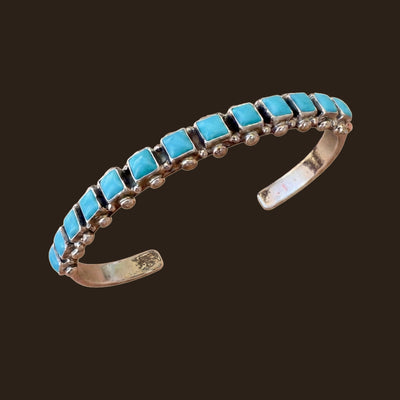
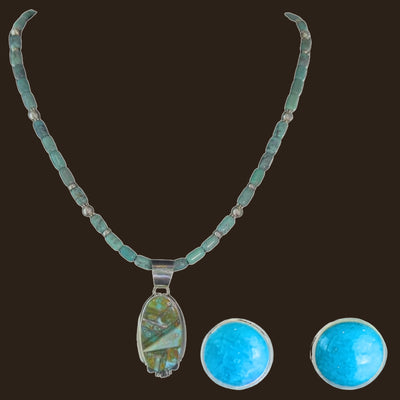
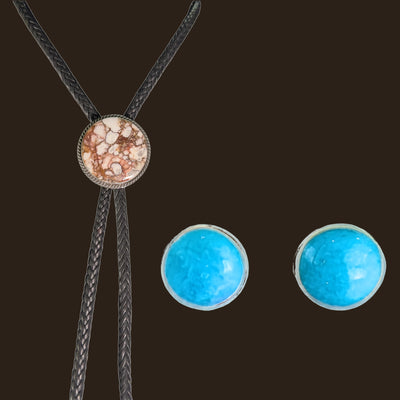
At Wildflower, we work within the quiet rhythms of a small batch studio. Our approach is rooted in a stone-first philosophy. This means we allow the weight, color, and shape of a cabochon to lead our design process rather than following a rigid template. In an era of mass retail, we choose to focus on the honest, grounded traditions of Southwestern style. Every piece is a result of a thoughtful conversation between the artisan and the material. We source our stones from individuals who have spent their lives in the industry, ensuring that the sleeping beauty turquoise we use is genuine and handled with respect for its history.
Because we prioritize the organic character of our materials, no two items in our collection are exactly alike. We avoid the frantic pace of commercial jewelry making in favor of a deliberate, meditative process. This allows us to ensure that the silver work, from the hand-cut bezel to the final polish, complements the specific stone it holds. We treat each piece as a vessel for emotion and a celebration of the natural world's fleeting beauty. Our goal is to provide jewelry that feels human and authentic, bridging the gap between the raw earth of Arizona and your personal collection.
Small batch jewelry curated by Kimberly
Kimberly plays a vital role in our studio by curating a selection of one-of-a-kind turquoise stones that meet our strict standards for color and clarity. She has a refined eye for identifying the subtle differences in hue that distinguish a superior stone from a common one. Her curation process is deeply intentional, focusing on pieces that tell a story of the high desert. To help our community understand the value of what they are wearing, she often points toward our Sleeping Beauty stone origins page for deeper education on this specific mine's legacy. Every piece she selects is intended to be a lasting heirloom that reflects a grounded, artisanal sophistication.
Hand-cut stones from Greg Cordova’s lapidary work
The technical beauty of a gemstone often depends on the skill of the person who cuts it. Greg Cordova brings a lifetime of experience to our studio, specializing in the delicate art of lapidary work. He often cuts sleeping beauty turquoise from his own private collection, which he has gathered over years of working in the Southwestern jewelry industry. His expertise ensures that each stone is shaped to maximize its vibrant blue color while maintaining the integrity of the mineral. You can see his specialized lapidary work and turquoise mine history at CuttingEdgeTurquoise.com. By working with stones Greg has hand-cut, we are able to offer jewelry that has a direct, transparent connection to the person who brought the stone to life. This level of craftsmanship is what defines the Wildflower experience.
Embracing the Legacy of Arizona's Sky Blue Stone
Finding a genuine piece of the Southwest is a journey of education and appreciation for the earth's rare gifts. You now understand the technical markers that set sleeping beauty turquoise apart, from its copper-rich sky-blue hue to the reality of its finite supply. By choosing stones with a clear history and practicing gentle care, you ensure these treasures remain vibrant for a lifetime. Our studio remains dedicated to this transparency, focusing on the honest relationship between the artisan's bench and the raw material. Authenticity is our foundation. Every design features hand-cut stones from Greg Cordova's private collection, set into small-batch, artist-made sterling silver settings. We guarantee your peace of mind by using only genuine materials; we never use fake stones or mystery metals.
We invite you to explore our current collection of handcrafted Sleeping Beauty turquoise jewelry at Wildflower, or visit our Etsy shop for additional artisan-made pieces backed by Etsy's buyer protections. We look forward to helping you find a stone that resonates with your own story.
Frequently Asked Questions
Is Sleeping Beauty turquoise rare?
This stone is considered rare because the mine officially ceased turquoise operations in August 2012 to focus on copper production. Since no new material is being pulled from the earth, the global supply is fixed and limited to existing private stockpiles. This scarcity has turned high-grade specimens into a finite geological treasure that becomes more difficult to source with each passing year.
Why is it called Sleeping Beauty turquoise?
The name originates from the mountain range in Globe, Arizona, where the stones were first discovered. When you view the mountain from a distance, the profile of the peaks looks like a woman lying on her back with her arms crossed. This poetic image has become synonymous with the clear, sky-blue sleeping beauty turquoise that collectors have prized for decades.
Can Sleeping Beauty turquoise have matrix?
Yes, it is possible for these stones to feature a matrix, though the mine is most famous for producing clean, uniform blue material. While many people prefer the solid robin's egg look, some stones contain a white quartz or black matrix. These natural inclusions are actually helpful markers of authenticity that distinguish a genuine earth-mined stone from a synthetic imitation or block material.
How can I tell if my Sleeping Beauty turquoise is real?
The best way to verify authenticity is to look for subtle natural variations and purchase from a studio that provides clear origin details. Genuine stones often have tiny flecks of pyrite or white quartz that dyed howlite and plastic fakes cannot replicate. You should also be cautious of pieces set in mystery metals or priced far below market value for a sleeping beauty turquoise specimen.
Does Sleeping Beauty turquoise change color over time?
Natural, untreated stones can shift toward a greener hue if they are exposed to skin oils, soaps, or perfumes over many years. Because turquoise is a porous mineral, it can absorb these substances, which eventually alters its chemical composition. You can prevent this by following a careful care routine, such as removing your rings before washing your hands or applying lotions.
Is all Sleeping Beauty turquoise stabilized?
Not all of it is stabilized, but a significant portion of the material was treated with resin to make it durable enough for jewelry. Natural stones are often too soft to be cut into a cabochon without crumbling, so stabilization is a standard industry process to ensure longevity. We always specify the treatment of our stones so you can choose between a natural or stabilized piece with confidence.
What is the best metal to pair with Sleeping Beauty turquoise?
Sterling silver is the traditional and most popular choice because its cool luster provides a clean contrast to the vibrant blue stone. In our studio, we use high-quality silver to create each bezel, which protects the edges of the stone while highlighting its color. This combination is a hallmark of Southwestern style and ensures the jewelry remains a durable part of your collection for generations.
Where is the Sleeping Beauty mine located?
The mine is located in Globe, Arizona, which sits in a region famous for its rich copper deposits. The unique mineral content of the soil in this specific part of Arizona is what created the vivid blue color that made this mine a global icon. Although the mine no longer produces turquoise, its location remains a point of pride for those who appreciate authentic Southwestern gemstones.

Article by
Kimberly Cordova
Kimberly Cordova is the founder and creative director of Wildflower Artisans, a handmade jewelry brand rooted in Santa Fe. Real turquoise, solid sterling silver, and a small line set in solid 14K gold. She built Wildflower around a simple belief: the best jewelry is the kind you actually reach for, not the kind you save for someday.
The collection is built three ways. Some pieces are made in-house, cut by her husband Greg from stones he sources himself, including rough from the family's King's Manassa Mine in Colorado and White Buffalo Mine in Nevada. Some are designed by Kimberly and fabricated by a trusted circle of Santa Fe silversmiths. And some are finished work she curates from artisan makers whose craft meets the same standard, because building a real collection means knowing when to make and when to look.
Turquoise leads, joined by White Buffalo, Wild Horse, Lapis Lazuli, Spiny Oyster, Black Onyx, Opal, and other genuine semi-precious stones. No shortcuts on the stone, the silver, or the story behind either.
Her writing covers everything she has learned along the way: how turquoise forms, how to tell natural from stabilized, what makes one mine different from another, how to read a bezel, and how to shop with confidence in a market that is not always straightforward. It is the kind of plainspoken information she wished someone had laid out for her when she was starting out.
Browse the collection at wildflowerartisans.com. Questions about a stone, a setting, or a specific piece are welcome any time.
0 comments