

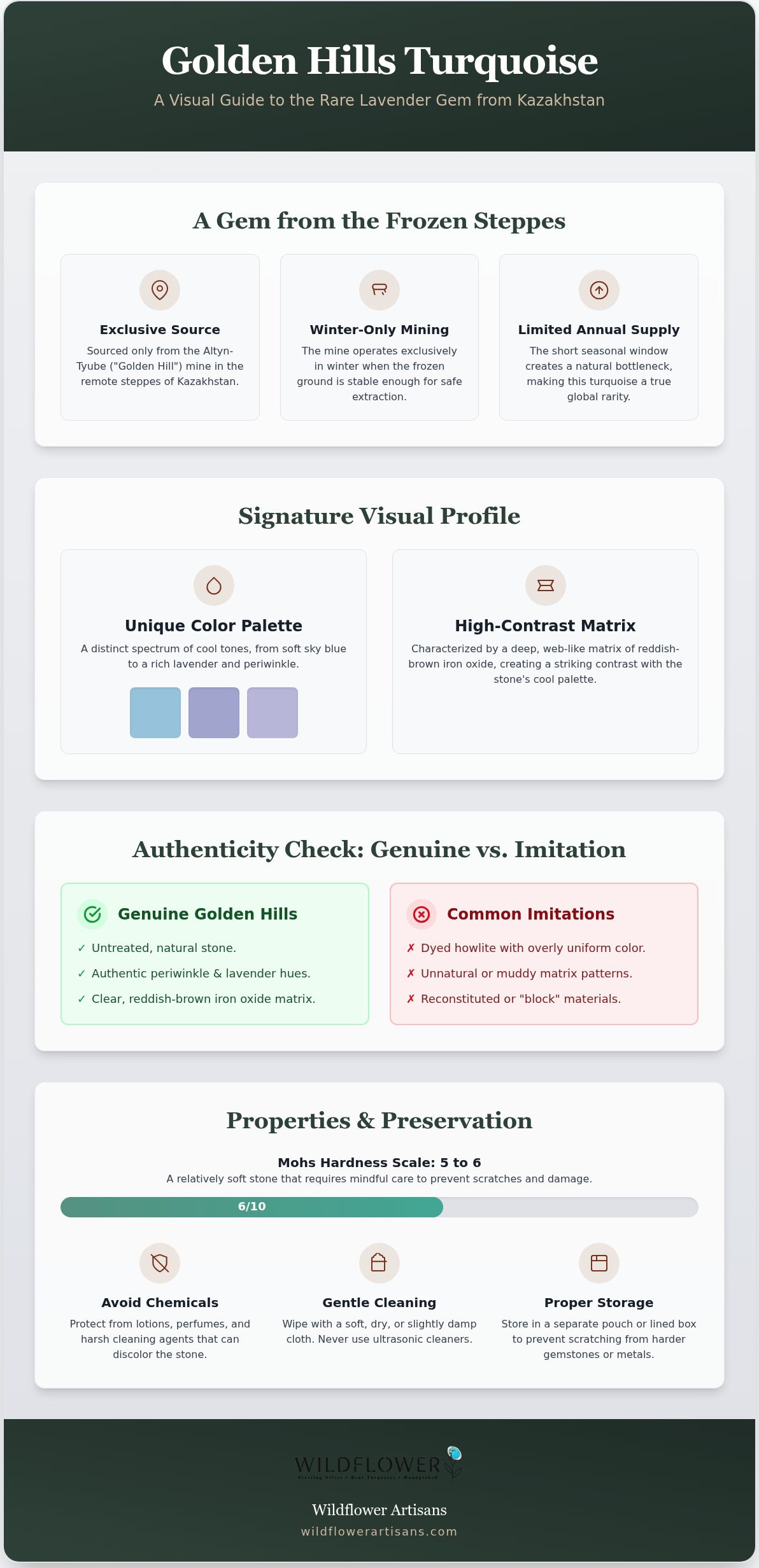
What if the most sought-after turquoise doesn't come from the American Southwest, but from the frozen steppes of Kazakhstan? Finding a stone that breaks the traditional mold of robin's egg blue can feel like uncovering a hidden secret in a high-desert canyon. Many collectors are surprised to learn that Golden Hills Turquoise: A Rare Gem for Jewelry Makers originates from the Altyn-Tyube mine, where it's only accessible during the harsh winter months when the ground is frozen solid. This seasonal rarity ensures that every hand-cut cabochon carries a story of resilience and natural wonder from a remote corner of the world.
At Wildflower Artisans (Wildflower), we understand that you value authenticity and the distinct character that only a genuine, untreated stone can provide. You might be wary of dyed howlite or mystery stones that flood the market, seeking instead the soft periwinkle hues that define this specific variety. In this guide, we'll explore the geological origins of these unique lavender undertones and the reddish-brown matrix that sets them apart. From the specific iron oxide levels in the host rock to the meticulous process of securing a stone in a sterling silver (.925) or solid 14K gold bezel, you'll gain the confidence to invest in a piece of jewelry that is as rare as the landscape it came from.
Key Takeaways
- Learn why the remote Altyn-Tyube mine in Kazakhstan makes Golden Hills Turquoise: A Rare Gem for Jewelry Makers a seasonal rarity that is only accessible during the frozen winter months.
- Identify the specific periwinkle and lavender color profiles that set these stones apart from traditional blue varieties, typically characterized by a contrasting reddish-brown matrix.
- Discover why studio artisans favor setting these hand-cut cabochons in sterling silver (.925) or solid 14K gold to complement their unique, cool-toned palette.
- Understand the differences between genuine, untreated specimens and common imitations like dyed howlite to ensure you are investing in an authentic artisan-made piece.
- Master the practical care techniques required for stones with a 5 to 6 hardness on the Mohs scale, helping you preserve the delicate beauty of your jewelry for years to come.
The Remote Origins of Kazakhstan Lavender Turquoise
Golden Hills turquoise is sourced exclusively from the Altyn-Tyube mine in the Kazakh Steppes, a location that produces a distinct periwinkle hue found nowhere else. This material is a chemically distinct phosphate of copper and aluminum that forms under specific geological conditions. Unlike the traditional deposits found in the American Southwest, these stones emerge from a landscape of vast, rolling plains and extreme temperature shifts. Understanding the origins of these stones is the first step in appreciating why they've become so prized by collectors and silversmiths alike.
The name Altyn-Tyube translates to Golden Hill, yet the stone it's famous for is celebrated for its cool, ethereal lavender tones. This mineral is a hydrous phosphate of copper and aluminium, often cited in Turquoise mineral properties for its unique crystalline structure and secondary formation. It's this specific chemical makeup, combined with the unique mineral content of the Kazakhstan soil, that allows the stone to achieve its signature pastel blue and periwinkle shades.
One of the most fascinating aspects of this gem is the way it's pulled from the earth. The Altyn-Tyube mine only operates during the freezing winter months when the ground is frozen solid. The surrounding earth is a soft, unstable clay that becomes prone to flooding and collapse during the warmer, wetter seasons. Freezing temperatures stabilize the ground, allowing miners to safely reach the veins of stone. This seasonal constraint creates a natural bottleneck in supply, making Golden Hills Turquoise: A Rare Gem for Jewelry Makers a true rarity in the global market.
The Altyn-Tyube Mine Environment
The Kazakh Steppes are known for their harsh conditions, with wind-swept plains that challenge even the most experienced mining teams. Geological pressure within this specific region compacts the mineral deposits over millions of years, resulting in a stone with a dense, high-quality structure. Because the annual yield is limited by such a short extraction window, high-grade rough material is difficult to secure. At Wildflower, we follow a stone-first philosophy, which means we wait for these seasonal harvests to find the perfect hand-cut pieces for our studio.
Why Geological Rarity Matters for Collectors
Collectors often view these stones as investment pieces because the Altyn-Tyube mine is the only known source for this specific lavender-periwinkle profile. While most turquoise leans toward green or deep blue, the presence of specific minerals in the Kazakhstan soil creates a soft palette that is impossible to replicate elsewhere. Artisans prioritize these stones for one-of-a-kind studio creations, often pairing a hand-cut cabochon with a custom sterling silver turquoise jewelry setting. This rarity ensures that your piece remains a distinct part of a limited geological narrative that won't be found in mass-produced jewelry.
Identifying the Unique Matrix and Color Profile of Golden Hills Cabochons
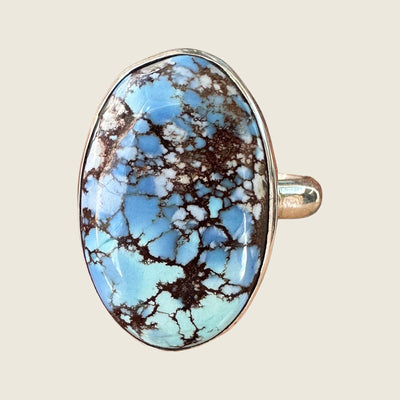
Golden Hills turquoise is defined by a color palette that shifts from a delicate sky blue to a rich lavender-periwinkle, anchored by a deep reddish-brown matrix. This iron oxide webbing creates a visual contrast that is a hallmark of authentic material from the Altyn-Tyube mine. For those who collect mine-specific pieces, Golden Hills Turquoise: A Rare Gem for Jewelry Makers offers a palette that challenges the traditional blue-green spectrum.
The matrix refers to the host rock that remains embedded within the turquoise stone during its formation. Composed primarily of iron oxide, these veins provide a burnt umber or rust-colored framework that winds through the lighter stone. This contrast is vital for identification, as the sharp reddish-brown tones are a signature of these specific Kazakhstan deposits. In our studio, we look for a balanced distribution of this host rock. Too much can make a stone brittle, while too little might lose that visual tension that makes Golden Hills Turquoise: A Rare Gem for Jewelry Makers so distinctive. You can learn more about these technical details in our turquoise glossary.
The Role of Iron Oxide in Matrix Design
The reddish-brown webbing found in these stones acts as a fingerprint for the mine. Matrix depth varies significantly across individual stones, appearing as fine, delicate spiderwebs in some and bold, earthy splotches in others. A cabochon is a gemstone that has been shaped and polished into a smooth, rounded surface rather than being faceted. Jewelry makers carefully select these hand-cut shapes to highlight natural inclusions, ensuring the matrix enhances the overall composition of a sterling silver (.925) setting. If you're looking for a piece that captures this natural harmony, you can explore our full range of handcrafted artisan jewelry to see how we've showcased these unique minerals.
Lavender vs Blue: Understanding the Hue
What truly sets this material apart is the periwinkle tint that separates it from common blue turquoise. This color is governed by turquoise quality factors like mineral composition and the environment of the host rock. High-grade stones maintain this lavender saturation without any artificial treatments or dyes. When you're examining a piece, look for consistent saturation across the surface of the stone. A genuine stone will have depth and life that dyed imitations simply cannot replicate.
Each of these hand-cut stones finds its home in a setting designed to respect its unique character. You can find these distinctive colors in our collection of authentic turquoise jewelry where every piece is chosen for its specific matrix and hue.
Why Studio Artisans Favor Golden Hills for Sterling Silver Settings
The cool, periwinkle undertones of lavender turquoise create a natural harmony when paired with the bright, reflective finish of sterling silver (.925). This combination highlights the unique color profile of Golden Hills Turquoise: A Rare Gem for Jewelry Makers while providing a durable foundation for daily wear. In our studio, we find that the white metal acts as a neutral canvas, allowing the subtle lavender tints to appear more vibrant than they might against darker or more textured backdrops.
Artisans often lean into the contrast provided by the reddish-brown matrix, using it as a guide for the silver work. Hand-stamped silver work, a process involving metal stamps hammered into the silver surface, adds a distinct Southwestern style to the finished piece. These patterns often draw the eye toward the center of the stone, emphasizing the natural variations in the cabochon. When we create handmade turquoise jewelry, the goal is to balance the organic rambling of the matrix with the structured elegance of polished silver.
The visual anchor created by this pairing is particularly effective in larger pieces like cuffs or pendants. The polished silver reflects light onto the surface of the stone, revealing the depth of the lavender hues that might otherwise go unnoticed. This relationship between metal and mineral is a core part of our design philosophy at Wildflower, where we prioritize the stone's narrative above all else. By selecting high-quality sterling silver (.925), we ensure that the jewelry remains a lasting vessel for the beauty of the Kazakh Steppes.
The Precision of the Bezel Setting
A bezel is a thin strip of metal that is hand-fitted to the circumference of a stone and then soldered to the jewelry base. This technique is the preferred method for setting Golden Hills cabochons because it protects the edges of the hand-cut stone from daily impact. Because these stones are relatively soft, a secure bezel ensures they remain firmly in place for years. Artisans may choose scalloped or serrated bezels to add a decorative frame, enhancing the botanical feel of the piece while maintaining structural integrity.
Pairing with Solid 14K Gold
While silver is a traditional staple, solid 14K gold offers a warm, luxurious contrast that speaks to a different aesthetic. Gold settings are often reserved for the highest grade of untreated stones, as the yellow metal brings out the hidden warmth in the reddish-brown matrix. Mixed metal designs, which combine silver and gold, are also becoming a favorite among silversmiths who want to highlight the complex color story of the stone. You can see this interplay of metals and minerals in our sterling silver jewelry collections, where each setting is chosen to celebrate the stone's unique personality.
Distinguishing Genuine Golden Hills from Treated Imitations
Authentic Golden Hills turquoise is prized for being untreated, meaning it arrives from the mine with its natural color and hardness intact. This lack of chemical intervention preserves the stone's organic character, ensuring that the lavender hues you see are a result of geological history rather than laboratory intervention. For those seeking Golden Hills Turquoise: A Rare Gem for Jewelry Makers, understanding these physical markers is the best defense against the influx of treated imitations.
Dyed howlite is one of the most common substitutes found in the market today. Howlite is a white mineral with grey veins that, when dyed, can mimic the periwinkle shades of Kazakhstan stones. However, these imitations often lack the depth and subtle color shifts found in a natural cabochon. Genuine stones will often have a matrix that is slightly recessed or textured, as the host rock and the turquoise mineral have different densities. You can find more tips on verifying your collection in our turquoise buying guide.
The Problem with Stabilized and Dyed Stones
Stabilization is a process where plastic resins are injected into porous, low-grade turquoise to prevent it from crumbling or changing color. While common in some parts of the industry, it can mask the true quality of a low-grade specimen. Dyed stones are even more deceptive, often showing color bleeding where the pigment has pooled in the cracks of the matrix. At Wildflower, our commitment to authenticity means we strictly exclude mystery metals and imitation stones from our studio, focusing only on untreated gems that stand on their own merit.
Visual Markers of Authenticity
When you're examining a piece, look closely at the matrix color. Authentic Golden Hills material features a sharp reddish-brown or burnt umber matrix, which is a specific signature of the Altyn-Tyube mine. If the webbing appears black or a flat grey, it's likely a different variety or a synthetic imitation. Natural stones also exhibit subtle variations in saturation across the surface, whereas fakes often look too uniform. Don't be afraid to ask the maker for the specific origin and treatment status of the stone. Professional silversmiths who work with high-quality materials will also include hallmarks on the sterling silver (.925) to verify the artisan origin and Southwestern style of the work.
Finding a piece that resonates with your personal style starts with trusting the hands that shaped it. Our studio focuses on one-of-a-kind artisan pieces that carry a documented history from the earth to the artisan's bench.
Shop authentic turquoise jewelry
Preservation and Care for Handcrafted Turquoise Jewelry
Turquoise is a relatively soft stone ranging from 5 to 6 on the Mohs scale, which is a standard system used to measure the scratch resistance of various minerals. Because Golden Hills Turquoise: A Rare Gem for Jewelry Makers is frequently left untreated to showcase its natural lavender beauty, it requires more intentional care than harder gemstones. Protecting the surface of a hand-cut cabochon ensures that the intricate matrix and periwinkle tones remain clear and vibrant throughout the life of the piece.
Chemical exposure represents a significant risk to the integrity of your jewelry. You should avoid exposing your pieces to harsh household chemicals, perfumes, or hairsprays, as these liquids can be absorbed by the porous stone and cause permanent discoloration. When you aren't wearing your jewelry, store each piece individually in a soft cloth pouch. This simple step prevents harder stones from scratching the turquoise or the polished sterling silver (.925) elements of the setting.
Daily Wear and Environmental Protection
We recommend removing your rings and cuffs before swimming in chlorinated water or engaging in heavy cleaning tasks. Over the course of many years, natural skin oils can slowly interact with untreated stones, occasionally leading to a slight deepening of the color. To maintain the original hue, wipe the stone with a clean, damp cloth after each wear to remove any accumulated residues. If you have questions about a specific piece, our care and repair guide offers further insights into maintaining artisan-made jewelry.
What to Avoid in Jewelry Maintenance
Never use ultrasonic cleaners or steam cleaners on turquoise jewelry, as the intense vibrations and heat can cause the mineral to crack or shatter. You should also avoid silver dips, which are aggressive chemical solutions that can strip the natural patina from the metal and harm the stone. Sudden temperature changes are equally dangerous, as they can cause micro-fractures to develop within the stone's structure. Instead, use a soft polishing cloth to clean the sterling silver (.925) portions of your jewelry, which keeps the metal bright without risking damage to the hand-set gem. Proper care ensures your piece remains a beautiful vessel for the natural world for generations to come.
Bringing the Spirit of the Kazakh Steppes Home
The journey from the Altyn-Tyube mine to your jewelry collection is one defined by extreme conditions and seasonal patience. You've discovered how the frozen ground of the Kazakh Steppes preserves these delicate minerals, resulting in a stone that breaks the traditional blue-green mold with its soft lavender-periwinkle hues. Choosing Golden Hills Turquoise: A Rare Gem for Jewelry Makers means embracing a piece of geological history that is as authentic as it is rare.
At Wildflower, we take pride in offering only guaranteed authentic untreated stones set in handcrafted sterling silver (.925). Every piece in our studio is expertly curated from independent silversmiths who honor a Southwestern style while highlighting the stone's unique narrative. By following the simple care steps of avoiding chemicals and storing pieces individually, you can ensure your investment remains a vibrant celebration of the natural world for years to come.
We invite you to find a piece that speaks to your own journey and honors the fleeting, organic wonders of the earth.
Frequently Asked Questions
Is Golden Hills turquoise naturally lavender?
Golden Hills turquoise naturally occurs in periwinkle and lavender shades due to the unique mineral composition found at the Altyn-Tyube mine. Unlike many commercial stones that rely on artificial treatments, these high-quality specimens don't require dyes to achieve their signature hue. This distinct color profile makes Golden Hills Turquoise: A Rare Gem for Jewelry Makers a standout choice for those seeking authenticity. The presence of specific minerals during formation creates a soft palette that contrasts beautifully with its host rock.
Where is the Golden Hills turquoise mine located?
The mine is located in the Altyn-Tyube region of Kazakhstan, nestled within the vast Kazakh Steppes. This remote environment is known for its extreme climate, which restricts all mining operations to the frozen winter months. The ground is too unstable during other seasons, making extraction a seasonal and difficult endeavor. This geographical isolation and the limited window for safe mining contribute significantly to the rarity and overall market value of every hand-cut cabochon produced there.
Is Golden Hills turquoise rare compared to American mines?
Golden Hills is considered a specialty rarity when compared to larger American operations like the Kingman or Royston mines. Because the material comes from a single remote location with challenging seasonal access, the global supply remains much lower than that of major commercial deposits. Its unique lavender tint offers a specific aesthetic that collectors of Southwestern style jewelry find particularly desirable. This limited availability ensures that each piece remains a distinct part of a very narrow geological narrative.
How can you tell if Golden Hills turquoise is real?
Real Golden Hills turquoise is identified by its signature reddish-brown iron oxide matrix and its soft lavender-blue coloration. You can verify authenticity by looking for natural depth and texture within the matrix, which often sits slightly recessed compared to the polished stone. Authentic pieces are typically set in high-quality materials like sterling silver (.925) or solid 14K gold. Wildflower guarantees that every stone in our collection is a genuine, untreated specimen sourced directly from reputable lapidary artists.
Does Golden Hills turquoise need to be stabilized?
High-grade Golden Hills material is naturally hard enough to be hand-cut and worn in its untreated state. While some lower-grade, chalky turquoise in the industry undergoes stabilization with plastic resins for durability, we focus on stones that retain their organic integrity. At Wildflower, our stone-first philosophy means we prioritize untreated gems that showcase the raw beauty of the mine. This approach ensures you receive a durable piece of jewelry that truly reflects the natural characteristics of the Kazakh Steppes.
Article by
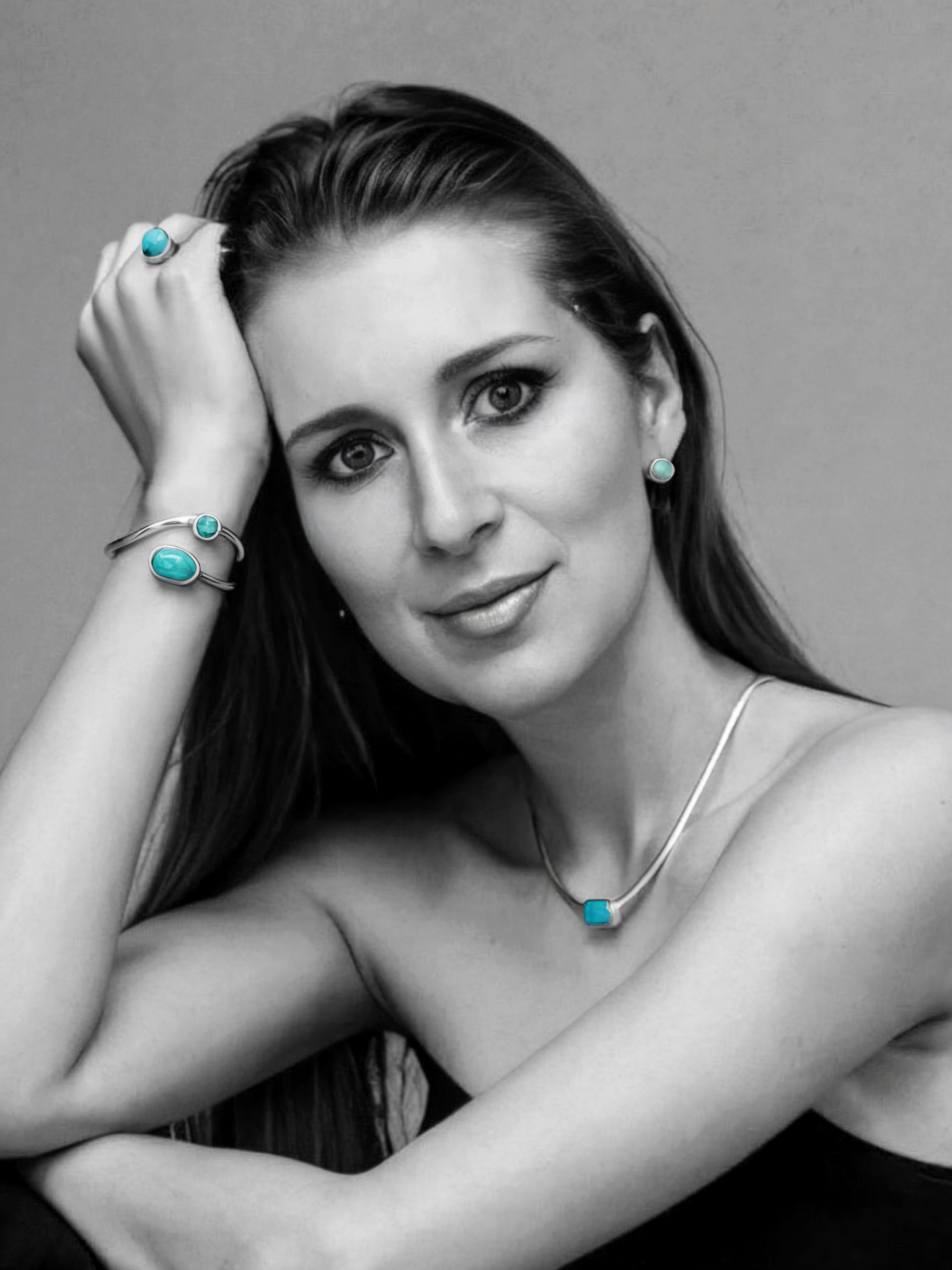
Kimberly Cordova
Kimberly Cordova is the founder and creative director of Wildflower Artisans, a handmade jewelry brand rooted in Santa Fe. Real turquoise, solid sterling silver, and a small line set in solid 14K gold. She built Wildflower around a simple belief: the best jewelry is the kind you actually reach for, not the kind you save for someday.
The collection is built three ways. Some pieces are made in-house, cut by her husband Greg from stones he sources himself, including rough from the family's King's Manassa Mine in Colorado and White Buffalo Mine in Nevada. Some are designed by Kimberly and fabricated by a trusted circle of Santa Fe silversmiths. And some are finished work she curates from artisan makers whose craft meets the same standard, because building a real collection means knowing when to make and when to look.
Turquoise leads, joined by White Buffalo, Wild Horse, Lapis Lazuli, Spiny Oyster, Black Onyx, Opal, and other genuine semi-precious stones. No shortcuts on the stone, the silver, or the story behind either.
Her writing covers everything she has learned along the way: how turquoise forms, how to tell natural from stabilized, what makes one mine different from another, how to read a bezel, and how to shop with confidence in a market that is not always straightforward. It is the kind of plainspoken information she wished someone had laid out for her when she was starting out.
Browse the collection at wildflowerartisans.com. Questions about a stone, a setting, or a specific piece are welcome any time.
0 comments