

A famous turquoise stone isn’t collectible simply because its color is striking. The stories behind famous turquoise collections and collectors matter when a distinctive stone is connected to a documented origin, a maker, or a traceable ownership history. Vivid blue color and unusual matrix may catch the eye, but appearance alone can’t verify a stone’s history.
If you’re wondering which collections and collectors are known, or how a turquoise piece earned its reputation, start with evidence rather than legend. Provenance is the documented history of an object, including details about its origin and ownership. It can help distinguish a well-supported account from a story repeated without documentation. This guide explains what can make a collection notable, how mine origin and distinctive stones shape a piece’s story, and what to check when assessing a claim. It also covers how to begin a personal collection by choosing genuine, handmade turquoise jewelry for its stone, silverwork, and documented details.
Key Takeaways
- A turquoise collection earns significance through a meaningful, documented connection, not fame or color alone.
- Understand famous turquoise collections and collectors by looking at the records, collecting focus, and objects themselves.
- Keep mine attribution, maker information, setting details, and ownership history separate when researching a piece.
- Choose a collecting theme, check documentation, compare pieces, and record what you learn.
- Start with a form, stone, or handcrafted silver setting that appeals to you, then build the collection’s story carefully.
What Makes a Turquoise Collection Famous?
A turquoise collection is a group of objects gathered around a meaningful, documented connection. Its significance may come from provenance, workmanship, stone origin, historical context, or the collector’s particular focus, rather than fame alone.
A museum collection is assembled and cared for by an institution; a private collection reflects an individual’s choices and records. A mine-focused group centers on stones attributed to a particular source, while a shop assortment brings together pieces for people to browse and buy. These categories can overlap, but they aren’t interchangeable. A retail assortment isn’t automatically a historical collection, and a famous name or popular design doesn’t establish a stone’s authenticity, value, or cultural attribution.
A useful definition is: A turquoise collection is a group of objects gathered around a shared interest, with documentation that helps explain their relationship. There is no single standard that makes every collection notable. Its story depends on what the objects share and how well that connection is supported.
What separates a collection from a group of turquoise pieces?
A shared theme, ownership record, or acquisition history gives individual pieces a thread to follow. For example, a collector might bring together jewelry attributed to one mine, or a family might keep pieces inherited over time. Either group could form a coherent collection if records, descriptions, or other evidence explain the connection. Provenance is the documented history of an object’s ownership and origin. A label or seller’s claim can be a useful starting point, but it isn’t the same as a traceable record.
Why do collectors focus on particular turquoise?
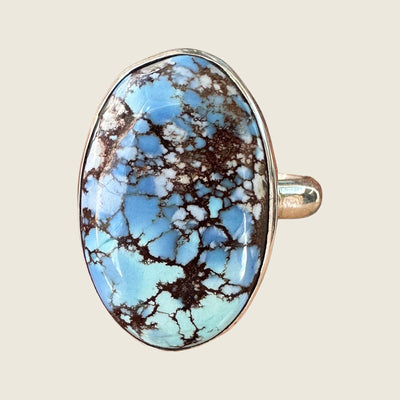
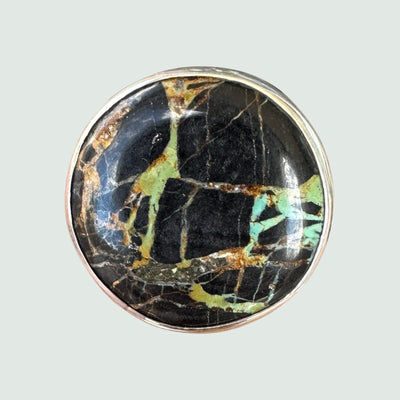
Collectors may be drawn to matrix, color variation, mine origin, lapidary work, or the way a stone is set. Matrix is the pattern or host material visible within or around a stone. One person may prefer fine web-like markings; another may look for a particular range of blue or green, a hand-cut cabochon, or a carefully made silver setting. Preference is personal. No single color or pattern is universally most desirable, and appearance by itself doesn’t confirm where a stone came from.
A retail assortment can still be a practical place to compare different stones and settings, as long as it isn’t mistaken for a documented historical collection. Wildflower Artisans brings together handcrafted turquoise jewelry in its Summer Coastal Turquoise collection. Consider each piece on its own details rather than treating the assortment as evidence of collection history.
Famous Turquoise Collections and Collectors: What the Record Can Show
Records can show why a turquoise group matters, but only when they identify the objects and support their connection. Institutional holdings, private collections, and mine-related groups tell different stories. Before attaching a name to a collection, clarify what kind of objects it contains and what documentation supports the connection.
How to research museum and public collections
For a museum example, start with the institution’s official catalog. Check the object description, material, attribution, date, and acquisition details. An archaeological object, a piece of jewelry, and a geological specimen are not interchangeable simply because each involves turquoise. If a catalog doesn’t identify the stone or explain its context, leave that gap open rather than filling it with a guess. Without a verified catalog record, don’t name an institution as holding a notable turquoise collection.
How to discuss notable private collectors responsibly
A collector’s reputation should be tied to evidence of collecting, not inferred from a career in jewelry or mining. Wayne Nelson is described as a contemporary figure with a personal turquoise collection and involvement with the Lone Mountain and Hidden Valley mines. Those details connect him to collecting and mining, but they don’t, by themselves, verify the identity or provenance of any particular piece in his collection.
Mine-related groups need the same care. A collection may be organized around stones attributed to one mine, but each attribution should be supported at the object level. King’s Manassa is a Colorado mine associated with the Cordova family. That connection offers context for mine-focused collecting, not proof that a particular stone came from there. A mine name, a collector’s name, and an ownership history are separate claims, each requiring its own support.
When reviewing a claim, ask what kind of object is being discussed, what evidence connects it to the named person, institution, or mine, and what the record actually says. Charles Loloma is known as an influential jeweler who worked with turquoise and other materials. That makes his work relevant to jewelry history, but it shouldn’t be confused with evidence of a turquoise collection unless collecting records support that description.
Wildflower Artisans’ shop-all jewelry collection is a retail assortment, not a historical archive. It brings together handmade jewelry, including turquoise and sterling silver pieces. You can explore individual stones and settings while keeping their descriptions separate from claims about collection history.
Why Mine Origin, Craft, and Provenance Shape a Turquoise Piece’s Story
A turquoise piece’s story has several distinct parts. Mine attribution concerns where the stone is said to come from, maker information identifies who shaped or set it, and provenance describes its documented origin and ownership history. Records can add useful context, but they don’t guarantee authenticity or value.
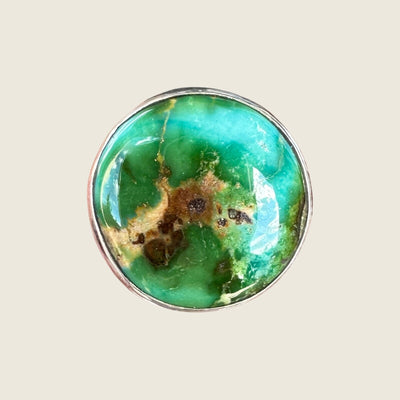
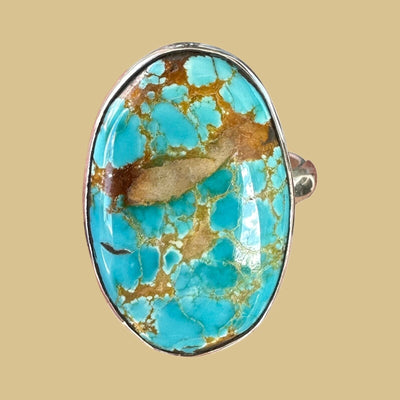
Documented provenance is a recorded history; matrix and color are visual clues, not proof of origin. A cabochon is a polished gemstone shaped with a smooth, rounded or domed top. A bezel is a metal rim that holds a stone around its edge. The cut and setting show choices made in the workshop, while a mine name or ownership claim needs its own supporting evidence.
What can a turquoise stone’s matrix and cut tell you?
Visible patterns can help describe a stone, but they can’t establish its mine or treatment status on their own. A lapidary artist studies a stone’s shape, color, and matrix, then cuts and polishes it to bring forward features suited to the finished piece. Compare visible features with what a record claims:
- Web-like matrix: describes a visible pattern, but doesn’t prove a specific mine.
- Color variation: shows the stone’s appearance, but can’t verify origin or treatment.
- Cut and polish: reveal lapidary choices, but don’t identify who did the work without supporting information.
- Bezel setting: shows how the stone is held in the jewelry, but doesn’t confirm its history.
Use these observations for what they are. A photograph may show a stone’s pattern and shape; separate records may identify its maker or reported source. Neither should be asked to prove something it doesn’t address.
What should provenance documentation include?
Useful documentation identifies what is known about the maker, stated stone origin, previous ownership, or collection history. Keep a seller’s description distinct from other records, and note who supplied each detail. If a record doesn’t support a claim, leave it unverified rather than filling the gap with an appealing story.
For more context on how mine names and stone origins are described, Wildflower Artisans shares its guide to turquoise stone origins. Use it to frame your questions, while assessing the details of each individual piece on their own. A careful record lets a stone’s visible character enrich its story without standing in for evidence.
How to Research and Begin a Turquoise Collection with Confidence
A confident turquoise collection begins with a clear focus and a habit of keeping useful records. Choose a theme you can recognize across pieces, compare each item based on its own details, and give yourself time to learn before making a purchase.
- Choose a collecting theme. You might focus on mine-specific stones, handcrafted silver settings, or a jewelry form such as rings or pendants. A theme gives you a practical way to compare pieces without requiring them to look alike.
- Learn the terms that fit your theme. Matrix describes the pattern or host material visible within or around a stone; a cabochon has a smooth, rounded or domed top; and a bezel is a metal rim that holds a stone around its edge. Stabilized turquoise has been treated to improve durability or appearance, so check how a stone is described rather than assuming its treatment status.
- Inspect the available details. Look for descriptions of the stone, metal, maker, and any stated origin. Notice whether a detail comes from the seller’s description or another record, and keep unconfirmed claims separate from documented information.
- Compare pieces by more than appearance. Notice differences in color, matrix, cut, and setting, then consider which features align with your collecting theme. Similar-looking stones don’t establish the same mine, treatment, maker, or cultural attribution. Treat visual impressions as observations rather than proof.
- Record each piece as you add it. Save its description and purchase documentation. Note the maker, stone details, known origin, and care information, and photograph the piece from several angles. Mark missing information as unknown instead of turning an assumption into a collection fact.
A simple record can include one entry for each piece, with confirmed details kept separate from your own observations. If a seller names a mine but provides no further supporting information, record it as the seller’s attribution. Your notes will make it easier to learn from each addition and see how your collecting focus develops.
If genuine turquoise set in sterling silver fits your theme, Wildflower Artisans’ turquoise jewelry collection offers handmade pieces to consider individually. Compare the stone and setting descriptions with the details that matter to your collecting interests.
Build a Personal Turquoise Collection Around Pieces with a Story
A personal turquoise collection can grow around a stone type, maker, jewelry form, or documented origin. Handmade sterling silver and genuine turquoise offer an approachable place to begin, not as a claim of historical significance, but as individual pieces to choose, learn about, and keep thoughtfully.
How can a collection reflect personal taste without losing focus?
Choose one guiding thread, then let the pieces vary within it. You might collect turquoise rings for their different silver settings, or focus on pendants while noticing how each stone’s color and matrix gives it a distinct character. A theme creates coherence without requiring every piece to match.
Rings, earrings, cuffs, and pendants can all express an interest in handcrafted silverwork or a particular kind of stone. The pleasure is in seeing how one idea takes different forms. A collection can remain personal without being judged by rarity, resale value, or what it might be worth later.
What should readers look for when browsing handmade turquoise jewelry?
Read each item’s description rather than relying on a broad category label. Look for clear information about the stone and metal, and check whether a mine origin or maker is specifically identified. If a detail isn’t provided, don’t assume it from a stone’s appearance or the style of its setting. Cultural attribution should also be stated for the individual piece, not inferred from a general collection name or design style.
At Wildflower Artisans, the focus is handmade jewelry featuring genuine stones and sterling silver. Each piece has its own combination of stone, setting, and available description, so consider it individually and keep track of the details that matter to your collecting theme. A growing collection can be a record of what draws your eye as well as a study of origin.
Explore shop all Wildflower jewelry.
Carry the Story Forward in Your Own Collection
The stories behind famous turquoise collections and collectors show why documentation matters. A stone’s appearance can invite curiosity, but records help clarify its origin, maker, and ownership history. For a personal collection, a clear theme and careful notes can make each new piece part of a story that is genuinely yours.
Wildflower Artisans offers artist-made sterling silver and genuine turquoise jewelry, including one-of-a-kind artisan pieces and mine-specific turquoise offerings. Wildflower Artisans excludes imitation turquoise, dyed howlite, and mystery metals. Consider each piece through its own description and available details, and collect at your own pace. Choose stones and silverwork that speak to you rather than chasing claims of fame or future value.
A thoughtful collection begins with one piece you understand and appreciate. Let your curiosity guide the next step.
Frequently Asked Questions
Who are some famous turquoise collectors?
Wayne Nelson is described as a contemporary figure with a personal turquoise collection and involvement with the Lone Mountain and Hidden Valley mines. That supports mentioning his collecting activity, but it doesn’t verify the provenance of every object associated with him. A jewelry designer, seller, or general art collector shouldn’t be called a turquoise collector unless reliable records directly support that description.
How can I tell whether a turquoise piece has documented provenance?
Look for records identifying the maker, stated stone origin, previous ownership, or collection history, and note who supplied each detail. A seller’s description is useful context, but distinguish it from other documentation and mark unsupported claims as unverified. Color and matrix can help you describe a stone’s appearance, but they can’t establish its ownership history, mine, treatment status, or authenticity by themselves.
Does a famous collection mean its turquoise jewelry is more valuable?
No. Fame can bring attention to a piece, but it doesn’t establish authenticity, condition, provenance, or market value, and it can’t guarantee future value. Assess the individual object and the evidence supporting its history. A well-known association may add context, but it should be documented and considered separately from the stone, workmanship, and condition.
Article by
Kimberly Cordova
Kimberly Cordova is the founder and creative director of Wildflower Artisans, a handmade jewelry brand rooted in Santa Fe. Real turquoise, solid sterling silver, and a small line set in solid 14K gold. She built Wildflower around a simple belief: the best jewelry is the kind you actually reach for, not the kind you save for someday.
The collection is built three ways. Some pieces are made in-house, cut by her husband Greg from stones he sources himself, including rough from the family's King's Manassa Mine in Colorado and White Buffalo Mine in Nevada. Some are designed by Kimberly and fabricated by a trusted circle of Santa Fe silversmiths. And some are finished work she curates from artisan makers whose craft meets the same standard, because building a real collection means knowing when to make and when to look.
Turquoise leads, joined by White Buffalo, Wild Horse, Lapis Lazuli, Spiny Oyster, Black Onyx, Opal, and other genuine semi-precious stones. No shortcuts on the stone, the silver, or the story behind either.
Her writing covers everything she has learned along the way: how turquoise forms, how to tell natural from stabilized, what makes one mine different from another, how to read a bezel, and how to shop with confidence in a market that is not always straightforward. It is the kind of plainspoken information she wished someone had laid out for her when she was starting out.
Browse the collection at wildflowerartisans.com. Questions about a stone, a setting, or a specific piece are welcome any time.
0 comments