

The soul of a jewelry piece lives in the tension between the strength of the silver and the delicate story of the stone. A heavy sterling silver cuff feels like an anchor on the wrist, grounded and certain, while a tiny needlepoint setting captures the light like a sudden bloom in the high desert. Many collectors find themselves drawn to these designs but feel a sense of uncertainty when trying to distinguish a piece of hand-stamped metal from a work of intricate stone inlay. Understanding the difference between Zuni and Navajo silverwork allows you to move past the fear of mass-produced imitations and connect deeply with the hand of the maker.
At Wildflower Artisans, we view each ring and pendant as a vessel for emotion and a celebration of natural, fleeting beauty. This exploration will guide you through the technical hallmarks of Navajo and Zuni silverwork so you can appreciate the value of handmade artisan pieces. We'll look at how the silver acts as a structural framework for Zuni lapidary masters and how Navajo smiths use hand-stamping to create rhythmic, meditative patterns. By the end, you'll have a refined eye for genuine turquoise jewelry and a deeper connection to the Santa Fe studio traditions we cherish.
Key Takeaways
- Appreciate the grounded strength of Navajo designs, where heavy gauge sterling silver serves as a bold, protective canvas for the natural beauty of the stone.
- Understand the technical difference between Zuni and Navajo silverwork by observing how Zuni artisans prioritize meticulous lapidary techniques like channel inlay and needlepoint.
- Identify genuine handcrafted pieces by evaluating the weight of the silver and the precision of the stone settings to distinguish between these two storied styles.
- Explore how the organic shape of a turquoise cabochon guides Navajo smiths, while Zuni creators masterfully cut stones to fit intricate, pre-planned geometric visions.
The Navajo Approach to Bold Silver and Natural Stones
Navajo silverwork, often referred to as Diné artistry, prioritizes the architectural strength of the metal itself. While every piece tells a story, the primary design element here is the heavy gauge sterling silver. This metal provides a grounded, durable foundation that feels substantial on the skin. Artisans frequently employ sandcasting, a process of pouring molten silver into hand-carved tufa stone molds. This creates a unique, porous texture that cannot be replicated by modern machines. When looking at the difference between Zuni and Navajo silverwork, you'll notice that Navajo pieces often lean into this bold, silver-forward aesthetic. This tradition is deeply rooted in the history of Southwestern Native American jewelry, where the metal was as much a medium for storytelling as the stones themselves.
The Use of Cabochons in Navajo Design
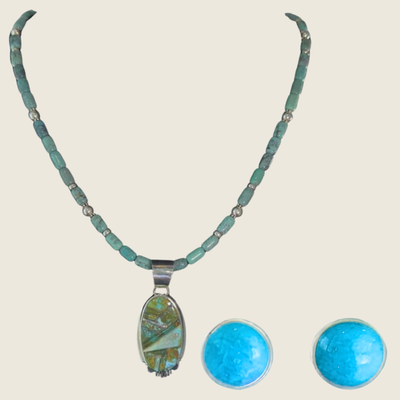
Navajo jewelry typically celebrates the stone in its most organic state. Artisans choose large, natural turquoise cabochons that proudly display the stone’s original matrix. A cabochon is a stone that has been shaped and polished into a smooth, rounded surface rather than faceted like a diamond. Matrix is the host rock that appears as a dark web or veins within the turquoise. These stones are held in place by thick, simple silver bezels. The bezel is the metal rim that surrounds and secures a stone. These bezels are not just functional; they are designed to protect the integrity of the larger turquoise nugget while framing its raw beauty. Every turquoise pendant necklace we curate at Wildflower Artisans reflects this respect for the stone’s natural silhouette.
Traditional Stamping and Textures
The metal surface of a Navajo piece is rarely left silent. Smiths use hand-made steel stamps to impress intricate patterns directly into the sterling silver. These marks might represent rain, mountains, or family lineages. Techniques like repoussé, where the metal is hammered from the back to create a raised relief, add physical depth to the work. To enhance these patterns, oxidization is often applied to the recessed areas. This intentional darkening creates a high-contrast look that makes the silver patterns pop against the bright polish of the metal. This rhythmic, meditative process allows the silver to tell a narrative alongside the genuine turquoise it holds. At Wildflower, we appreciate how these textures turn a simple cuff into a piece of wearable history.
Zuni Artistry and the Mastery of Intricate Lapidary
Zuni silverwork, crafted by the A:shiwi people, represents a profound shift toward the mastery of stone over metal. While Navajo artisans celebrate the bold presence of silver, the Zuni tradition treats sterling silver as a delicate framework or "channel" to hold complex, hand-cut stone arrangements. This meticulous prioritization of lapidary work is a fundamental difference between Zuni and Navajo silverwork. While early pieces from 1872 mirrored Navajo styles, the 1920s and 1930s saw the emergence of signature techniques like needlepoint and petit point. Every sliver of turquoise or coral is shaped with a level of precision that feels almost meditative.
When collecting these pieces, it's vital to recognize the protections provided by the Indian Arts and Crafts Act, which ensures that work marketed under specific tribal names is verified for its cultural origin. This transparency allows you to appreciate the soulful narrative of the maker without the shadow of doubt. You might find yourself drawn to the quiet elegance of a piece that values the collective beauty of many stones over a single large nugget. Perhaps you'll find your next treasure among our handcrafted artisan jewelry.
The Precision of Stone Inlay
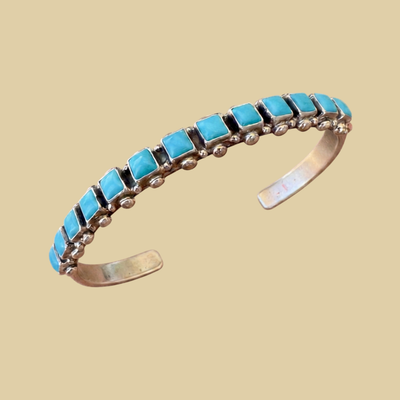
Inlay work is a signature of the Zuni studio, involving the fitting of hand-cut stones like turquoise, coral, and lapis lazuli tightly together. Channel inlay is a technique where thin strips of sterling silver separate each hand-cut stone, creating a rhythmic, geometric pattern. Stone-to-stone inlay requires even more dexterity, as each piece must be shaped to fit its specific neighbor perfectly, resulting in a seamless, glass-like surface. It's a testament to the artist's eye for detail and the organic growth of the design.
Zuni Petit Point and Needlepoint Traditions
Two of the most distinct Zuni techniques are needlepoint and petit point. Needlepoint is a lapidary technique where stones are cut into tiny, thin slivers pointed at both ends. Petit point involves cutting stones into small round, pear, or oval shapes to create intricate clusters. A single Zuni cuff or ring may contain dozens of individual stones arranged in radial patterns reminiscent of flowers or snowflakes. The labor-intensive nature of this work makes every verified Zuni piece a quiet celebration of patience and natural beauty.
The meticulous nature of these lapidary techniques ensures that no two pieces are ever identical. This dedication to craftsmanship is why our one-of-a-kind artisan pieces feature verified work from artists like Johnny Coonsis, capturing the soulful spirit of the Southwest.
Comparing Navajo and Zuni Stones and Settings
Navajo artisans typically allow the raw character of the earth to lead the way. If a piece of turquoise emerges from the mine as a sprawling, irregular nugget, the silversmith builds the metal around that specific silhouette. This stone-first approach is a key difference between Zuni and Navajo silverwork. In Zuni traditions, the artist usually starts with a geometric or figurative blueprint, such as a dragonfly or a sunface, and then cuts each stone to fulfill that specific vision. The artist cuts the stone to fit the design, rather than letting the stone dictate the silver.
The visual language of the stones also varies between these two styles. Navajo work often celebrates the matrix, which is the host rock that creates intricate spiderweb or veined patterns within the turquoise. These inclusions are viewed as a hallmark of the stone's natural journey. Conversely, Zuni lapidary work often prioritizes uniform color. When creating a complex needlepoint pattern, a Zuni artist might select stones with very little matrix to ensure the repeating shapes create a clean, rhythmic visual effect. For those beginning their journey, the Indian Arts and Crafts Board consumer tips provide excellent guidance on how to evaluate these technical details when purchasing genuine work.
Cabochon vs. Hand-Cut Stones
Navajo jewelry frequently centers on large, polished cabochons. A cabochon is a stone that has been shaped and polished into a smooth, rounded surface rather than faceted like a diamond. These stones are held in place by sterling silver bezels that follow the natural perimeter of the nugget. Zuni artisans use their lapidary skill to transform the same raw material into precise slivers, teardrops, or tiny dots. Whether it is a bold Navajo ring or a delicate Zuni cluster, the stones must be genuine and high-quality. Low-grade or stabilized materials often cannot withstand the intense pressure used during the silver-smithing process. Our turquoise jewelry is selected specifically for this structural integrity and natural beauty.
Setting Techniques and Durability
The way a stone is secured, or its setting, reveals much about its origin. A bezel is the thin strip of metal that wraps around the base of a stone to hold it in place. In Navajo work, these bezels are often made of thicker sterling silver and may feature serrated edges, often called sawtooth bezels, which provide rugged protection for larger stones. Zuni bezels are typically paper-thin. This allows the stones to be grouped very closely together, which is essential for the intricate look of needlepoint or petit point designs. While Zuni settings appear more delicate, they are engineered for a lifetime of wear. If you are ever unsure about the origin of a piece, we recommend reviewing our authenticity story to understand how we verify every artisan we represent.
How to Identify Hallmarks and Technical Signatures
To identify the difference between Zuni and Navajo silverwork, one must first listen to the weight of the piece in the palm. Navajo jewelry often feels substantial, a testament to the heavy gauge sterling silver used to ground the vibrant stones. This density provides a sense of permanence and strength that is felt as much as it is seen. In contrast, Zuni work feels lighter and more architectural, as the silver serves as a delicate cage for dozens of hand-cut stones. You should also run your thumb across the surface. A flush, smooth landscape of stone suggests Zuni inlay, while a single, prominent cabochon held by a sturdy bezel is a hallmark of Navajo design. Many of the pieces in our turquoise jewelry collection showcase these distinct physical traits.
Reading the Silver Work
Look closely at the decorative accents surrounding the stone to understand the maker's intent. Navajo silversmiths often use raindrops, which are tiny, hand-melted silver spheres, and twisted wirework to frame a central turquoise nugget. Deep, rhythmic patterns struck with hand-made steel stamps into the metal surface are another classic signature of the Navajo studio. These marks tell a story of the maker’s heritage and the natural world. Zuni work uses silver more sparingly, primarily to create the channels and paper-thin bezels that allow intricate needlepoint slivers to bloom in radial patterns. The metal here is a quiet servant to the brilliance of the lapidary work, acting as a structural framework rather than a primary visual anchor.
The Importance of Provenance
Authentic Southwestern jewelry is never a mystery. It carries the signature of its creator and the purity of its materials. Every piece should be marked with a .925 stamp for sterling silver and a verified artist hallmark. At Wildflower Artisans, we believe that provenance is the thread that connects you to the soul of the maker. We document every piece to ensure the artist and the stone origin are honored, protecting you from mass-produced imitations that lack the spirit of the hand-cut stone. Look for names like Rick Tolino or Harold Smith for verified Navajo work, or Johnny Coonsis for Zuni artistry. By observing these technical signatures, you can confidently identify the difference between Zuni and Navajo silverwork while building a collection that resonates with your personal aesthetic.
The matrix in a stone or the depth of a stamp is why a piece is unreadable from a photo alone. It is why every item in our one-of-a-kind artisan pieces is shot from several angles with the artist hallmark and mine origin clearly documented.
Building a Collection of Southwestern Silverwork
Building a collection of Southwestern silverwork is a journey of choosing pieces that resonate with your personal aesthetic and daily lifestyle. Whether you prefer the bold, durable presence of Navajo metalwork or the intricate, artistic mastery of Zuni lapidary, each selection adds a new chapter to your own narrative. Choosing between these two distinct styles is ultimately a matter of how a piece fits into the rhythms of your day. Navajo pieces are excellent for those seeking statement jewelry that stands up to frequent, active wear. The weight of the sterling silver and the sturdy bezels provide a sense of grounded durability that feels right for a life lived outdoors. Conversely, Zuni pieces offer a refined, artistic elegance that pairs beautifully with more formal or delicate styles. The intricate needlepoint and petit point clusters capture a fleeting, ethereal beauty that feels like a whisper of the high desert. Many collectors find that mixing these traditions creates a rich, storied look that celebrates the diversity of the American Southwest. By recognizing the difference between Zuni and Navajo silverwork, you can curate a collection that feels both intentional and deeply personal.
Selecting Your First Piece
For those beginning their journey, we suggest starting with a versatile foundation piece that can grow with you. A simple turquoise ring or a pair of turquoise stud earrings can serve as an everyday anchor for your collection. You might also look for mine-specific stones to add unique value and a deeper connection to the earth. Pieces featuring King’s Manassa turquoise or White Buffalo stone are particularly special. Greg Cordova, our lapidary expert, co-owns these mines, ensuring that every stone is hand-cut with a deep respect for its origin. When selecting, focus on the quality of the silverwork and the clarity of the stone setting, ensuring the sterling silver is marked .925 and the stones are genuine rather than mystery materials. Wildflower Artisans curates verified Navajo and Zuni silverwork on a piece by piece basis, so look for hallmarks from specific artists to ensure your piece is a true artisan creation.
Caring for Handcrafted Silver
Handcrafted jewelry is a living thing that matures alongside you. Sterling silver naturally patinas as it reacts to the air, a process that many collectors believe adds depth and character to the hand-stamped patterns. This oxidation highlights the rhythmic marks of the smith's tools and the organic textures of the metal. To maintain the brilliance of your jewelry, gently clean the metal with a soft polishing cloth. Avoid harsh chemicals, soaps, or ultrasonic cleaners, as these can damage the structural integrity of natural turquoise. We recommend storing your pieces individually in soft pouches to prevent the silver from scratching the softer stones. Following these simple steps for care and repair ensures that your artisan-made pieces remain cherished vessels for emotion for generations to come.
Honoring the Soul of Southwestern Craftsmanship
The journey into Southwestern artistry is a discovery of how the earth's raw beauty meets the human hand. Understanding the difference between Zuni and Navajo silverwork allows you to see beyond the surface of a sterling silver ring or cuff. You now know that Navajo work celebrates the architectural strength of the metal while Zuni artisans prioritize the meticulous mosaic of hand-cut stones. These traditions are not just styles; they are living narratives of heritage, landscape, and patience. Every piece we share at Wildflower Artisans is a celebration of these natural, fleeting beauties.
Wildflower Artisans is committed to preserving these stories through piece-by-piece verification of every artist hallmark and stone origin. Our collection is curated with the deep lapidary expertise of Greg Cordova, ensuring you receive only genuine stones and sterling silver. By choosing these works, you directly support independent silversmiths who continue these storied techniques in their Santa Fe studios. We hope this guide helps you find a treasure that resonates with your own spirit.
We invite you to find a piece that speaks to your own rhythm. There is a quiet wonder in wearing a creation that has been shaped by the sun, the soil, and the soul of a dedicated artist.
Frequently Asked Questions
What is the main difference between Navajo and Zuni jewelry?
The main difference between Zuni and Navajo silverwork lies in whether the artist prioritizes the metal or the stone. Navajo artisans create bold, substantial pieces using heavy gauge sterling silver and large turquoise cabochons. Zuni jewelry focuses on meticulous lapidary work, which is the art of cutting and polishing stones into tiny, precise shapes. In these designs, the silver acts as a delicate framework for needlepoint or petit point patterns rather than a primary visual anchor.
Is Zuni jewelry always made with turquoise?
While turquoise is a beloved staple, Zuni artisans also work extensively with coral, spiny oyster shell, and lapis lazuli to create vibrant, colorful patterns. These materials are often combined in multistone inlay, where hand-cut stones are fitted tightly together. The hallmark of this tradition is the technique of the precision cut rather than the specific stone used. Whether it is a single color or a rainbow of shells, the focus remains on meticulous lapidary work.
How can I tell if my Southwestern jewelry is real sterling silver?
Authentic artisan jewelry is crafted from .925 sterling silver and is almost always marked with a stamp to verify its purity. You should also look for a hallmark, which is the unique signature of the individual maker. Recognizing these marks is essential when evaluating the difference between Zuni and Navajo silverwork, as both traditions value clear attribution. At Wildflower Artisans, we provide genuine stones and silver documented piece by piece to ensure your confidence.
Why does some turquoise jewelry have a dark matrix?
The matrix is the host rock that appears as a dark web or veins within the turquoise, showing the remains of where the stone was formed over millions of years. Navajo jewelry often celebrates these spiderweb patterns because they prove the stone is natural and unique. Different mines produce distinct matrix colors, such as the golden brown host rock found in King’s Manassa turquoise. These inclusions tell the stone's journey, making our turquoise jewelry a unique vessel for emotion.
Article by
Kimberly Cordova
Kimberly Cordova is the founder and creative director of Wildflower Artisans, a handmade jewelry brand rooted in Santa Fe. Real turquoise, solid sterling silver, and a small line set in solid 14K gold. She built Wildflower around a simple belief: the best jewelry is the kind you actually reach for, not the kind you save for someday.
The collection is built three ways. Some pieces are made in-house, cut by her husband Greg from stones he sources himself, including rough from the family's King's Manassa Mine in Colorado and White Buffalo Mine in Nevada. Some are designed by Kimberly and fabricated by a trusted circle of Santa Fe silversmiths. And some are finished work she curates from artisan makers whose craft meets the same standard, because building a real collection means knowing when to make and when to look.
Turquoise leads, joined by White Buffalo, Wild Horse, Lapis Lazuli, Spiny Oyster, Black Onyx, Opal, and other genuine semi-precious stones. No shortcuts on the stone, the silver, or the story behind either.
Her writing covers everything she has learned along the way: how turquoise forms, how to tell natural from stabilized, what makes one mine different from another, how to read a bezel, and how to shop with confidence in a market that is not always straightforward. It is the kind of plainspoken information she wished someone had laid out for her when she was starting out.
Browse the collection at wildflowerartisans.com. Questions about a stone, a setting, or a specific piece are welcome any time.
0 comments