

What if the turquoise that looks most convincing is not the easiest to identify? A vivid blue, a dark web of matrix, or a perfectly even surface may catch your eye, but appearance alone can’t tell the whole story. Conflicting claims about the common myths about turquoise can make choosing a genuine stone feel uncertain.
This article separates persistent myths from useful facts about color, matrix, treatment, and care. It also offers practical questions to ask when you’re considering a piece. With clearer information, you can explore turquoise jewelry at your own pace and choose with greater confidence.
Key Takeaways
- The common myths about turquoise often reduce a varied stone to one supposedly “correct” look. No single shade or matrix pattern settles whether a piece is genuine.
- Color and spiderweb matrix can offer clues about a stone’s appearance, but they can’t prove its authenticity or quality on their own.
- Stabilized turquoise is real turquoise that has been treated to improve durability. Check whether a listing explains treatment rather than assuming treated means imitation.
- Turquoise benefits from thoughtful care, but it doesn’t have to stay unworn. Look for care guidance that applies to the particular stone and setting.
- Before buying, read the piece-specific description and ask about details that aren’t clear, including treatment and material information.
Common myths about turquoise begin with one mistake: treating every stone alike
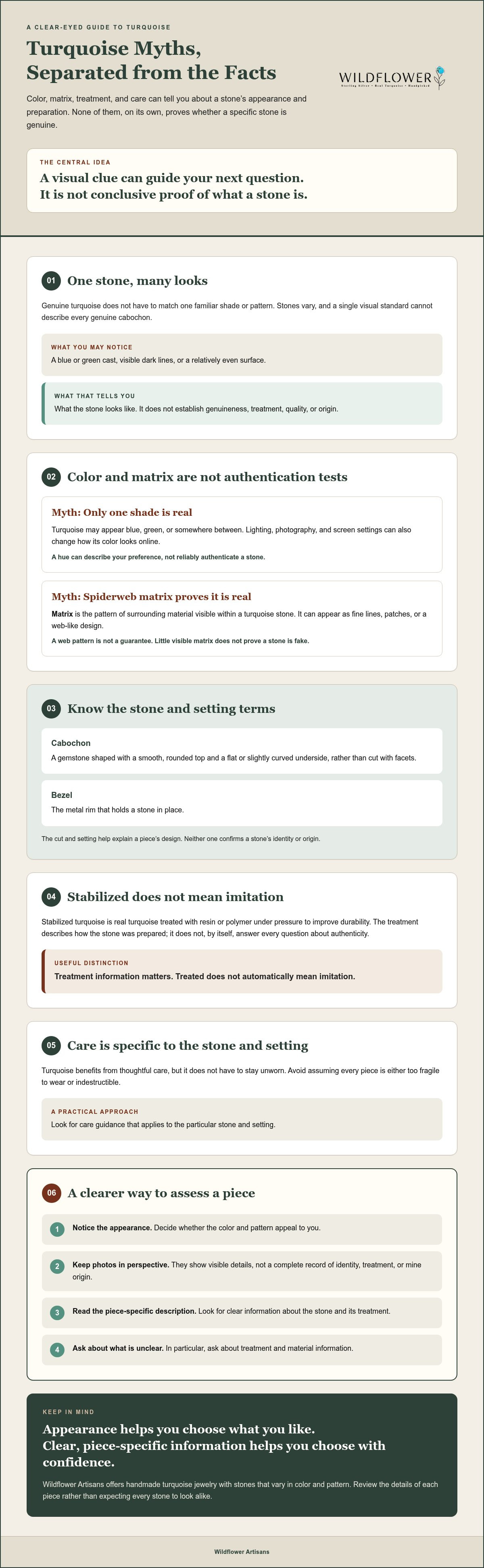
A turquoise myth often takes one feature and treats it as if it explains every stone. Turquoise varies in shade and pattern, and stones can be presented in many kinds of finished jewelry. No single visual standard describes every genuine cabochon.
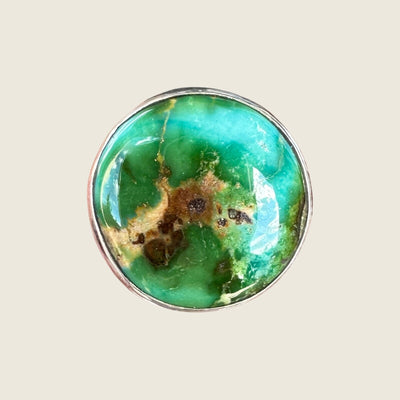
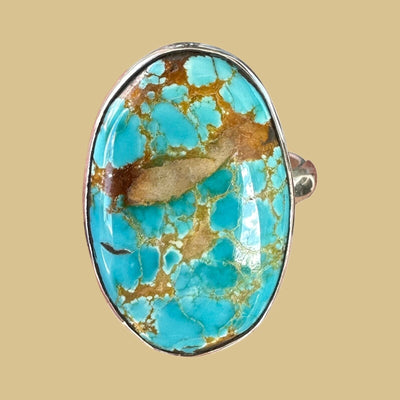
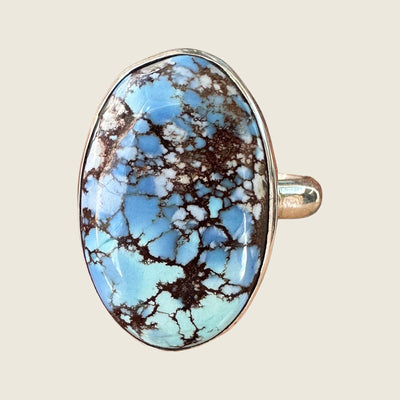
A bright blue stone and a greenish one may both catch your eye. One may show dark lines, while another looks relatively even. Those differences invite curiosity, but they don’t settle a stone’s identity. A visual clue can guide your next question, but it isn’t conclusive proof of what a stone is.
Myth: genuine turquoise always looks the same
Genuine turquoise doesn’t have to match one familiar shade or pattern. Color and visible markings can differ, and treatment can also affect appearance. A blue surface, green cast, or noticeable web of lines is not proof of genuineness or fakery by itself. For background on terms used to describe stones, consult a turquoise glossary.
This matters when comparing jewelry online. A photograph shows the stone’s appearance, not a complete record of its identity, treatment, or origin. Notice what appeals to you, then check the piece’s description for details a picture can’t establish.
What do matrix and cabochon mean?
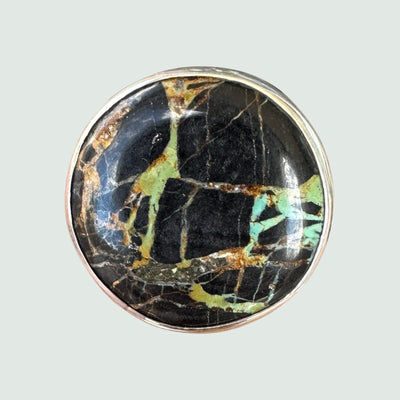
Matrix is the pattern of surrounding material visible within a turquoise stone. It can appear as fine lines, patches, or a web-like design. Its presence or absence alone doesn’t prove whether a stone is genuine. Spiderweb matrix is one pattern, not a universal test.
A cabochon is a gemstone shaped with a smooth, rounded top and a flat or slightly curved underside, rather than cut with facets. In turquoise jewelry, this familiar form displays the color and matrix within a bezel, the metal rim that holds a stone in place. The cut and setting help you understand the design, but neither confirms the stone’s origin.
When comparing pieces, keep the visual story separate from the written description. Wildflower Artisans offers handmade turquoise jewelry with stones that vary in color and pattern. Review the details of each piece rather than expecting every stone to look alike.
Turquoise color and matrix myths: why appearance cannot settle the question
A shade of blue or green, and the presence or absence of matrix, can’t prove that turquoise is genuine or superior in quality. The common myths about turquoise often turn visual preferences into rules, even though a photograph can’t confirm a stone’s identity or treatment.
Myth: only one shade of turquoise is real
Turquoise doesn’t have to match one shade to be genuine. A stone may appear blue, green, or somewhere between. Lighting, photography, and screen settings can also affect how its color looks online. Without a clear, piece-specific description, don’t treat a particular hue as proof of what the stone is or where it came from.
Color can still help you describe what you like. You might prefer the cool look of a blue cabochon or the earthier character of a green one. That’s a matter of appearance and personal taste, not a reliable authentication test.
Myth: matrix proves a stone is real or fake
A web of dark lines can draw the eye, while a stone with little visible matrix may look smooth and simple. Neither appearance establishes genuineness. Spiderweb patterns aren’t a guarantee, and a plainer stone shouldn’t be dismissed as fake based on that feature alone.
Photos help you see a stone’s visible details, but they can’t verify its identity, treatment, or mine origin. Use them to decide whether you like the color and pattern, then look for a clear description and ask about anything the listing leaves unclear. A turquoise glossary can help with terminology, but no visual checklist replaces reliable information about a specific piece.
Variation is part of what makes each stone distinct, not a shortcut to authentication. Wildflower’s turquoise jewelry collection includes genuine turquoise jewelry in a range of designs. Compare the details and choose the color and matrix that appeal to you.
If you’d like to explore more handmade jewelry while keeping those visual clues in perspective, browse Wildflower’s jewelry selection.
Stabilized turquoise myths: treatment does not answer every authenticity question
Stabilized turquoise is real turquoise treated with resin or polymer under pressure to make it more durable. The treatment describes how the stone was prepared, while “turquoise” describes what the stone is. These related details answer different questions.
This distinction matters because one common myth about turquoise is that any treatment makes a stone fake. That claim is too broad. Stabilization is a treatment used for turquoise, but treatment methods aren’t all identical. A stone’s appearance alone can’t tell you which method, if any, was used. A photograph may show color and surface pattern, but not treatment history.
Myth: every treated stone is fake
A treatment label doesn’t automatically mean a stone is an imitation. A piece can be turquoise and treated, so ask separately what the stone is and whether it has been treated. Don’t infer either answer from a bright color, an even surface, or a close-up image. If those details matter to your choice, look for a clear description of the specific stone.
Myth: a seller’s label tells the whole story
A short label may name a stone without explaining its treatment. Look for a description tied to the particular piece, and ask for clarification if the wording is unclear. A seller’s general statement may not explain every stone in a collection. The goal isn’t to assume the worst, but to understand what you’re considering.
For confidence, look for clear, piece-specific disclosure of both the stone’s identity and any treatment. If a listing doesn’t say whether turquoise is stabilized or otherwise treated, that absence isn’t proof either way. It’s a reason to ask before deciding, especially if you’re comparing pieces or buying a gift.
Wildflower shares information about turquoise authenticity to help customers understand its approach to genuine stones. That information describes Wildflower’s own practices. It shouldn’t be taken as a statement about another seller or as confirmation of the treatment of an individual piece unless that piece’s description says so.
Clear terminology takes some of the pressure out of shopping. Appreciate the color and shape, then check what the seller says about the stone and its treatment. If those details aren’t included, asking directly is more useful than trying to diagnose the stone from a photograph.
Turquoise care myths: understand the stone before assuming it is fragile or indestructible
Turquoise jewelry isn’t automatically too delicate to wear, and it shouldn’t be treated as indestructible. How a stone holds up depends on the particular stone, its setting, and how the jewelry is worn. Use guidance for the specific piece rather than relying on a blanket rule.
Myth: turquoise jewelry cannot be worn regularly
A stone set in a ring or pendant doesn’t have to stay tucked away. Consider how the jewelry will be used. A piece worn during ordinary daily routines may encounter different conditions than one worn during hands-on work or strenuous activity. Since stones and settings vary, don’t assume every turquoise piece is suited to the same situations.
A bezel is a metal rim that surrounds and holds a stone in place. It’s one part of the setting, not a promise that the piece can withstand every kind of wear. If you’re unsure how to wear a particular ring, pendant, or pair of earrings, check its description or ask the seller before exposing it to unfamiliar conditions.
Myth: every turquoise piece needs the same care
Care depends on more than the stone’s name. Treatment, setting, and other materials in a finished piece may affect what guidance is appropriate. Don’t automatically apply an instruction meant for one item to every piece in your jewelry box. Start with information for the specific jewelry you own, and don’t rely on a photograph to tell you how it was treated or what care it needs.
The common myths about turquoise often swing between fear and carelessness. A more useful approach is to wear a piece thoughtfully, follow its specific care instructions, and seek advice if you notice a change or aren’t sure how to clean or store it. That leaves room to enjoy the stone without assuming it’s too fragile to wear or needs no attention.
For more practical guidance, read Wildflower’s turquoise jewelry care and repair information. Follow advice that matches your particular piece, especially if its treatment or materials aren’t clear.
For handcrafted turquoise jewelry in a range of designs, explore Wildflower’s turquoise jewelry collection. Each piece has its own combination of stone and setting, so review its details as you choose.
How to question turquoise myths and shop with clearer information
Shop thoughtfully by reading the specific listing, checking the stone and metal details, asking about unclear treatment, and deciding whether the piece suits you. Appearance can help you understand a stone’s look, but it can’t confirm its mine, treatment, or cultural attribution.
The common myths about turquoise often offer quick visual rules where a clear description would be more useful. Take the process one step at a time:
- Read the listing. Note exactly what stone and metal the seller identifies for that piece.
- Check treatment details. Look for a clear statement about whether treatment is disclosed.
- Ask about gaps. If the description doesn’t answer a question that matters to you, ask before buying.
- Assess the piece. Consider its design, setting, and appearance after reviewing the written details.
Questions to ask before choosing turquoise jewelry
Ask what stone and metal the individual listing identifies, and whether treatment is disclosed. If a mine or artist is named, check that the attribution appears in that item’s own description. A style, setting, or collection name alone can’t establish cultural attribution, so don’t infer Navajo or Zuni origin from appearance or technique.
These questions aren’t a test you have to pass before choosing a stone. They help you understand what the listing does and doesn’t tell you. Clear, item-specific details make it easier to compare pieces without treating one shade, pattern, or photograph as proof.
A thoughtful next step after learning the myths
The useful distinction is simple: appreciate a stone’s appearance, but look to its description for identity and treatment information. Wildflower’s how to buy turquoise with confidence guide offers another place to explore questions that can help you assess a listing. Read it alongside the details for the piece you’re considering.
When you’re ready to browse, Wildflower Artisans offers handmade jewelry set with genuine turquoise. Explore the genuine turquoise jewelry collection at your own pace. Let the stone’s individual color and pattern draw you in, while the description provides the details.
Browse Wildflower’s turquoise jewelry collection
Choose turquoise with clearer eyes and a curious heart
The common myths about turquoise often turn a single clue into a rule. Color and matrix vary, and neither appearance nor a photograph can confirm a stone’s identity or treatment. A clear, piece-specific description is more useful: check what stone and metal are named, look for treatment details, and ask when something important is unclear.
Care deserves the same thoughtful approach. Turquoise isn’t automatically too fragile to wear or immune to attention. Consider the particular stone, setting, and guidance for the piece. With those details in hand, you can choose for the color and character you love without expecting every stone to tell the same story.
Wildflower Artisans offers artist-made sterling silver and genuine turquoise jewelry. Its selection excludes fake jewelry, dyed howlite, and mystery metals. Browse at your own pace and compare the details of each piece.
Let curiosity guide you, and choose the piece whose details feel right to you.
Frequently Asked Questions
Is all turquoise treated?
No single statement applies to every turquoise stone. Some turquoise is untreated, while other stones may be stabilized or otherwise treated. Treatment describes how a stone was prepared, not whether its identity is turquoise. Check the specific jewelry listing for a clear treatment description, and ask the seller if it’s unclear. A photograph or a general statement about a seller’s collection can’t confirm the treatment of an individual piece.
Can you tell if turquoise is real by its color or matrix?
No. Appearance alone isn’t conclusive proof that turquoise is real. Color can vary, and matrix, the pattern of surrounding material visible in a stone, may be prominent or subtle. A particular blue shade or spiderweb pattern doesn’t authenticate a stone by itself. The common myths about turquoise often turn these visual clues into rules, but a listing with specific stone and treatment details is more useful.
Does genuine turquoise always have a matrix?
Don’t use matrix as a universal test for whether turquoise is genuine. Some stones show visible lines or patterns, while others appear more even, and a photograph can’t establish what a particular stone is. Treat the pattern as part of the stone’s appearance, not a verdict. Check the item-specific description for the seller’s identification and ask for clarification if it doesn’t explain the stone clearly.
What does stabilized turquoise mean?
Stabilized turquoise is real turquoise treated with resin or polymer under pressure to make it more durable. The word “stabilized” describes treatment, not an imitation stone. Treatment status and stone identity are separate details, so look for both in the listing. Don’t try to determine treatment from color or a photograph alone, and don’t assume every treated stone has received the same process.
How can I shop for turquoise jewelry with confidence?
Start by checking the specific listing for the stone and metal it identifies. Look for treatment details, then ask about anything important that remains unclear. If a mine or artist is named, check that the attribution appears in the item’s own description instead of inferring it from the stone’s appearance or style. Wildflower shares turquoise authenticity information and a turquoise buying guide to help you know what details to look for. When you’re ready, browse Wildflower’s turquoise jewelry collection.
Article by
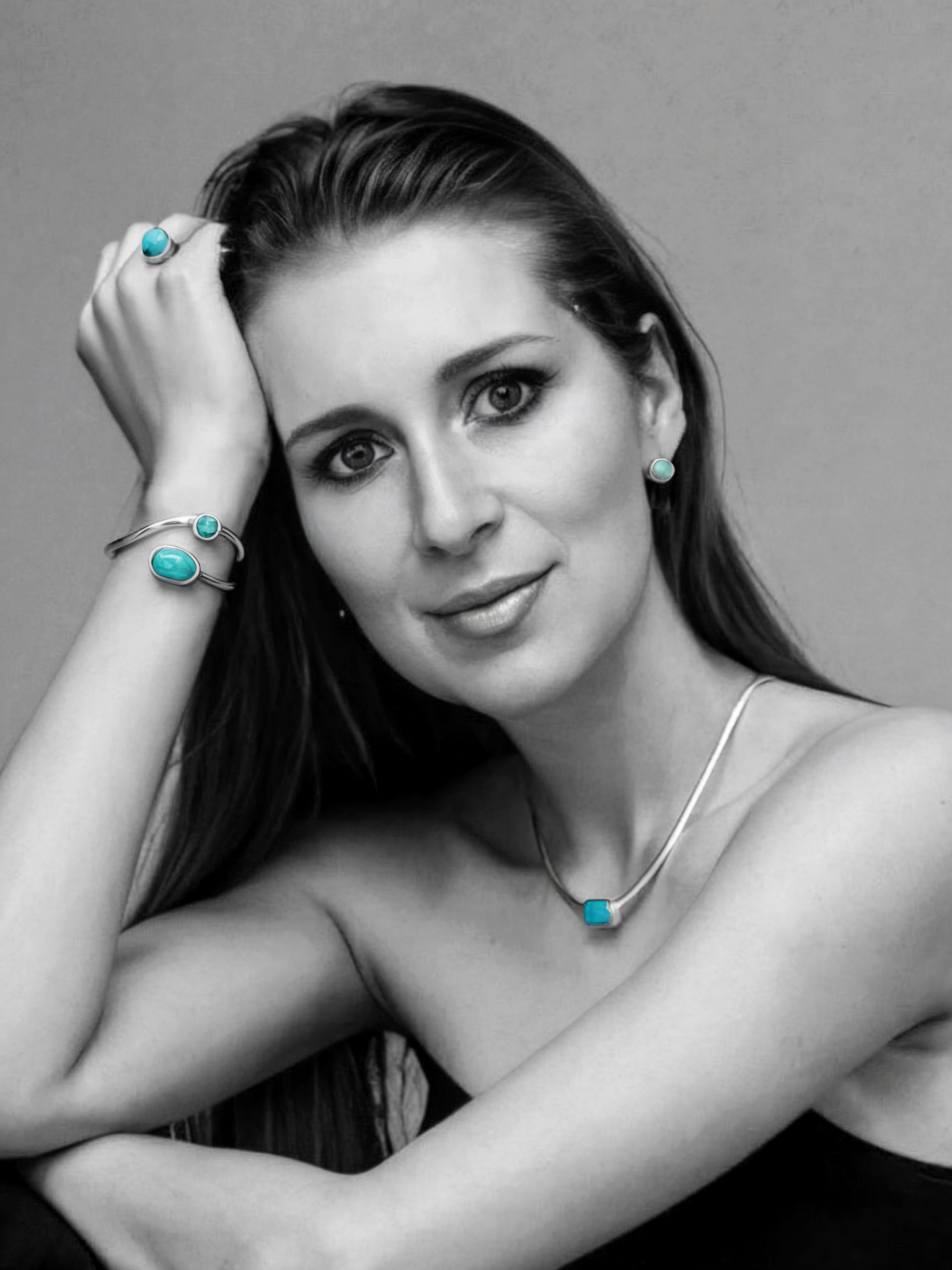
Kimberly Cordova
Kimberly Cordova is the founder and creative director of Wildflower Artisans, a handmade jewelry brand rooted in Santa Fe. Real turquoise, solid sterling silver, and a small line set in solid 14K gold. She built Wildflower around a simple belief: the best jewelry is the kind you actually reach for, not the kind you save for someday.
The collection is built three ways. Some pieces are made in-house, cut by her husband Greg from stones he sources himself, including rough from the family's King's Manassa Mine in Colorado and White Buffalo Mine in Nevada. Some are designed by Kimberly and fabricated by a trusted circle of Santa Fe silversmiths. And some are finished work she curates from artisan makers whose craft meets the same standard, because building a real collection means knowing when to make and when to look.
Turquoise leads, joined by White Buffalo, Wild Horse, Lapis Lazuli, Spiny Oyster, Black Onyx, Opal, and other genuine semi-precious stones. No shortcuts on the stone, the silver, or the story behind either.
Her writing covers everything she has learned along the way: how turquoise forms, how to tell natural from stabilized, what makes one mine different from another, how to read a bezel, and how to shop with confidence in a market that is not always straightforward. It is the kind of plainspoken information she wished someone had laid out for her when she was starting out.
Browse the collection at wildflowerartisans.com. Questions about a stone, a setting, or a specific piece are welcome any time.
0 comments