

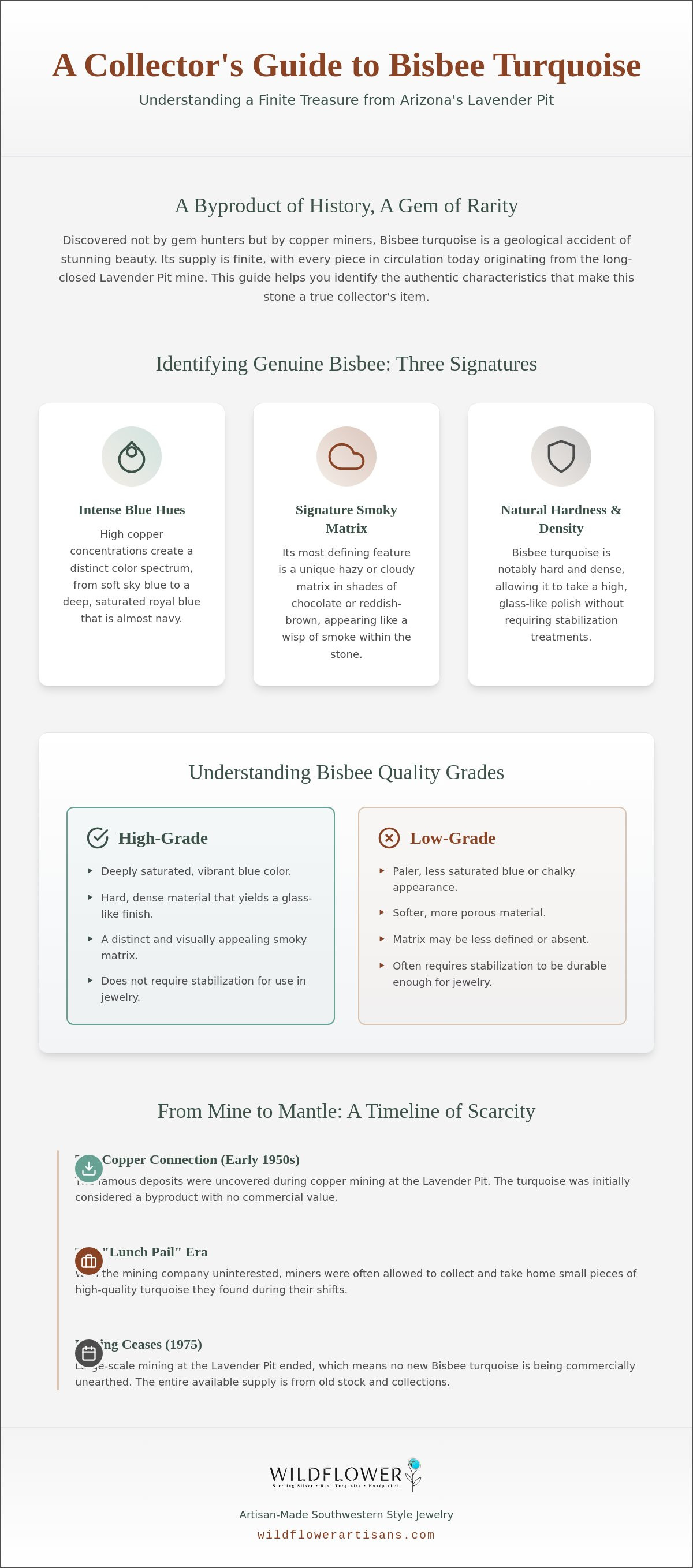
Bisbee turquoise is a finite geological accident, a byproduct of copper mining that can never be replicated or re-mined. In the late 1950s, miners at the Lavender Pit in Arizona often carried small, deep blue fragments home in their lunch pails, unknowingly preserving a treasure that would eventually vanish from the earth. At Wildflower Artisans, we understand the hesitation that comes with collecting such a rare stone, especially when the market is filled with stabilized materials or deceptive look-alikes that lack the soul of the original find. By learning the distinct characteristics of this legendary mine, you can build your collection with a sense of confidence and clarity.
This guide will help you identify the signature smoky matrix and deep blue hues that define authentic specimens in a Southwestern style. We will also walk through the history of the Bisbee mine, the factors that drive its current market value, and the essential steps for maintaining a handcrafted sterling silver setting so it remains a cherished part of your daily rhythm.
Key Takeaways
- Discover why bisbee turquoise is considered a finite geological treasure, originating as a rare byproduct of the historic Lavender Pit copper mine.
- Learn to identify the signature smoky matrix, which appears as a hazy, chocolate brown or reddish-brown cloud within the deep blue stone.
- Gain the tools to differentiate genuine Southwestern style stones from common look-alikes and understand the importance of choosing natural, untreated materials.
- Find guidance on selecting everyday essentials and caring for artisan-made sterling silver pieces to ensure your collection remains a vessel for your personal story.
What makes Bisbee turquoise unique among Southwestern stones?
Bisbee turquoise is a rare, high-grade stone that was discovered as a byproduct of copper mining in the Lavender Pit of Bisbee, Arizona. It is distinguished by its intense blue hues and a unique, smoky chocolate matrix that sets it apart from almost any other variety found in the American Southwest.
Local miners and collectors often refer to this material as blue gold because of its extreme rarity and the circumstances of its discovery. Unlike mines specifically excavated for gemstones, Bisbee was a massive copper operation where turquoise was found in small pockets of the host rock as miners moved through the earth. Because official mining for the stone ended decades ago, every piece of bisbee turquoise currently in circulation comes from old collections or material scavenged from the mine's waste piles. The color spectrum is vast, ranging from a soft, ethereal sky blue to a royal blue so deep it nearly borders on navy, providing a rich canvas for artisan-made jewelry.
The chemical signature of the Bisbee mine
Vibrant personality traits in Bisbee Blue turquoise are a direct result of the mineral rich earth where it formed. High copper concentrations in the soil create the deep, saturated blue hues that collectors crave. We define the matrix as the host rock or mother stone that remains trapped within the turquoise, appearing as veins or webs. In Bisbee material, this matrix is often a rich chocolate or reddish-brown. While copper drives the blue, the presence of iron and aluminum can shift the stone's character, occasionally introducing subtle green undertones that add to its organic beauty and visual complexity.
Why collectors prioritize Bisbee stones
A finite supply defines this material. Large scale mining at the Lavender Pit ceased in 1975, which means no new deposits are being unearthed. Collectors value this scarcity, but they also prize the physical integrity of the stone. On the Mohs scale, which measures mineral mineral hardness, Bisbee turquoise is notably hard and dense. This natural durability allows it to take a high polish without the need for stabilization. Within the mine, the quality varied significantly between high-grade and low-grade material:
- High-grade: Deeply saturated blue with a hard, glass-like finish and a distinct, smoky matrix.
- Low-grade: Paler, softer material that may require treatment to be used in jewelry.
At Wildflower, we focus on the higher grades that celebrate the stone's raw character. Owning a piece is like holding a fragment of Arizona history that can never be replicated. It is a celebration of a moment in time, captured in a bezel and worn as a personal narrative.
The history of the Lavender Pit and the copper connection
The story of Bisbee begins in the late 1800s with the Copper Queen mine, long before the world recognized the value of the vibrant blue stone hiding in its depths. For decades, this region was defined by its copper output, a heavy industrial pursuit that fueled the growth of the American Southwest. It wasn't until the opening of the Lavender Pit in the early 1950s that the most famous deposits of bisbee turquoise began to surface in significant quantities. This massive open pit operation changed the landscape of the Mule Mountains and the future of artisan jewelry forever.
The earth itself tells the story of this chemical bond. The geology of the Bisbee quadrangle reveals how copper rich solutions percolated through the host rock, depositing turquoise in cracks and fissures. During that era, the mining company viewed these blue veins as a distraction from the valuable copper ore. They were focused on the industrial demand of a growing nation, not the small pockets of color appearing in the rock walls.
Because the company had no commercial interest in the gemstone, they often allowed miners to keep what they found during their shifts. This led to the famous lunchbox era. Men would wrap raw chunks of turquoise in their work clothes or tuck them into their metal lunch pails to carry home at the end of the day. It was a humble beginning for a stone that would eventually become one of the most sought after materials in the world.
From copper byproduct to gemstone
In the early years, turquoise was often discarded on the mine's waste dumps. It was seen as a nuisance because it indicated lower copper yields in specific areas of the pit. Commercial interest only shifted as lapidaries began to cut and polish these discarded stones, revealing a depth of color and a unique smoky matrix that rivaled any other mine. By the time the Lavender Pit closed in 1975, the world had finally recognized the singular beauty of bisbee turquoise.
The rarity of modern Bisbee jewelry
Today, the Bisbee mine remains closed to active extraction, making every genuine stone a relic of a bygone era. Modern designers must source rough material from the private collections of former miners or the estates of old lapidary artists. These parcels are often passed down through generations, treated with a reverence usually reserved for family heirlooms. Because no new material is being unearthed, the supply is strictly finite. If you are looking to start your own collection, you might explore our handcrafted turquoise jewelry to find a piece of this dwindling history.
Identifying the signature smoky matrix and deep blue hues
The eye is first drawn to the color, but the soul of the stone lies in its matrix. When we examine high-grade bisbee turquoise, we look for a specific interplay between the mineral and the host rock that created it. In this material, the matrix typically presents as a rich chocolate brown or a deep, reddish-brown. This host rock tells the story of the stone's origin. One of the most recognizable features is the smoky matrix. We define the smoky matrix as a hazy or clouded pattern where the host rock appears to drift through the blue like a mist rather than forming sharp, distinct lines. This creates a soft, atmospheric quality that is highly prized by collectors.
While many Southwestern mines are known for sharp spiderweb patterns, these are actually quite rare in Bisbee stones. When a spiderweb does occur, it is often tighter and more intricate, which significantly increases the value of the piece. Experts often use these visual markers when to separate it from other regional varieties. The depth of the blue combined with these unique inclusions makes it unmistakable to the trained eye.
The importance of a professional cut
A raw stone only reveals its true character through the hands of a skilled lapidary. Most of the material we work with is finished as a cabochon. A cabochon is a stone that has been shaped and polished into a smooth, rounded form rather than being faceted with flat surfaces. The angle at which the stone is cut can dramatically change how the smoky matrix is revealed. We rely on Greg Cordova’s expert lapidary work to uncover the most compelling patterns in high-grade material. His process ensures that the natural beauty of the stone is honored while creating a durable shape for a secure bezel setting.
Blue shades and value
The color of this material is often described as electric, possessing a saturation that is rarely found in other mines. Unlike the pale, uniform sky blue of Sleeping Beauty turquoise, Bisbee often features a range of tones within a single stone. The most sought-after specimens are a deep royal blue paired with a dark, chocolate matrix. This contrast provides a sense of weight and history that defines a Southwestern style. The presence of the matrix isn't a flaw. Instead, it serves as a fingerprint, offering proof of origin and adding a rugged character that perfectly complements a sterling silver setting. You can see this variety in our bisbee turquoise collection, where every stone is selected for its unique visual narrative.
How to differentiate authentic Bisbee from common look-alikes
A true piece of the Southwest should carry a sense of place and history. Because genuine bisbee turquoise is a finite resource, the market is often populated with stones that mimic its appearance but lack its geological soul. Certain cuts of Chinese or Persian turquoise can display a similar deep blue, yet they rarely capture the specific atmospheric quality of the Arizona material. At Wildflower, we prioritize a stone first philosophy, ensuring that every cabochon we set has a documented origin and a natural character that hasn't been masked by mass production.
Understanding the difference between natural and treated stones is the first step toward a mindful collection. Natural turquoise remains exactly as it came from the earth, only cut and polished. In contrast, stabilized stones have been infused with clear resin to increase their hardness or deepen their color. While stabilization is a common industry practice for softer materials, it should always be disclosed. We also warn against dyed howlite or plastic imitations. These materials are often found in mass-market shops and lack the density, weight, and cool touch of a genuine mineral.
Visual cues for authenticity
The matrix acts as a geological fingerprint. In Bisbee material, look for a specific reddish-brown or deep chocolate color in the host rock. This hue is a result of the unique iron and copper concentrations in the Lavender Pit and is difficult to replicate. Beyond the stone, examine the setting. A high-quality bezel should wrap around the cabochon with precision, a sign of handcrafted work rather than a cast, mass-produced frame. You should also feel the weight. Because Bisbee is naturally hard, it feels substantial and dense in the hand, unlike porous or composite stones.
Questions to ask before buying
A reputable studio welcomes your curiosity. When you are considering a new piece, always ask for the specific origin of the stone and the name of the lapidary who cut it. Knowing if a stone was hand-cut in a small batch setting adds a layer of trust to your purchase. Inquire directly if the stone is natural or if it has undergone any stabilization. For a deeper look into what to look for, you can consult the Wildflower turquoise buying guide for a list of professional inspection tips. If you are ready to find a verified, artisan-made piece, we invite you to browse our current collection of authentic turquoise jewelry.
Selecting and caring for artisan-made Bisbee jewelry
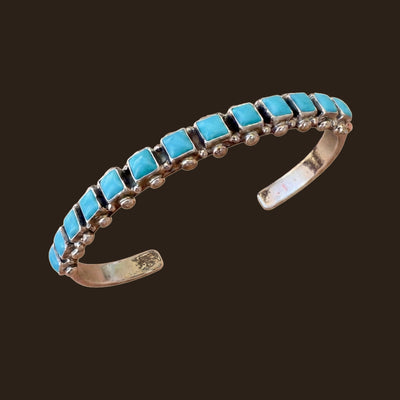
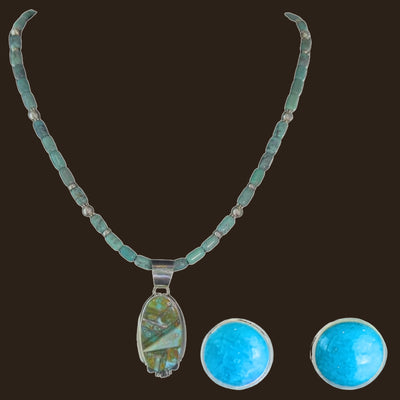
Selecting bisbee turquoise jewelry begins with choosing pieces that highlight the stone's deep blue saturation and chocolate matrix, such as simple rings or stud earrings. These everyday essentials allow the stone's natural character to speak for itself while serving as a foundation for a larger Southwestern style collection.
Starting with small batch pieces like turquoise rings or studs is a practical way to introduce this rare material into your daily life. We prefer setting high-grade Bisbee in sterling silver because the cool, bright metal provides a crisp contrast to the deep, smoky blues of the stone. Sterling silver is durable enough for daily wear and develops a soft patina over time that enhances the artisan-made feel of the piece. As you grow your collection, you might look toward one-of-a-kind jewelry like a turquoise cuff bracelet or a hand-cut pendant to serve as a visual anchor for your wardrobe.
Styling Bisbee in a modern wardrobe
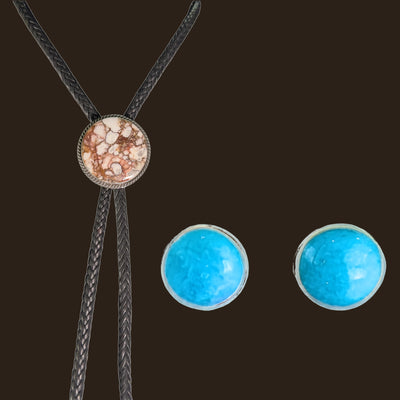
The intense blue of this material pairs best with neutral tones like cream, charcoal, or sand, which allow the stone to remain the focal point of an outfit. Because the matrix often contains reddish-brown or chocolate hues, these stones also look beautiful when layered with copper or gold accents. For a bolder look, a statement cuff or a bolo tie can serve as a conversation piece that ties a whole look together. The weight and presence of a larger stone in a hand-cut bezel setting creates a grounded, authentic feel that works just as well with a casual denim jacket as it does with more formal attire.
Long-term care and maintenance
Proper care ensures that your jewelry remains a vessel for your story for decades. You should never use ultrasonic cleaners or harsh chemicals on turquoise because the stone is porous and can be damaged by high-frequency vibrations or acidic solutions. To clean your jewelry, use a soft polishing cloth specifically designed for sterling silver, taking care to avoid rubbing the stone itself. If the silver requires a deeper clean, a damp cloth with mild soap is usually sufficient. For a detailed roadmap on keeping your bisbee turquoise pieces in top condition, visit our Wildflower care and repair page.
Building your collection of Arizona blue gold
Owning a piece of bisbee turquoise is more than just adding a gemstone to your jewelry box. It is an act of preserving a finite geological moment that began in the Lavender Pit and ended with the mine's closure in 1975. By recognizing the signature smoky matrix and deep blue hues, you can curate a collection that reflects the true, rugged spirit of the American Southwest. We believe that the combination of natural, high-grade stones and intentional craftsmanship creates a vessel for personal storytelling that mass-produced pieces simply cannot match.
We invite you to explore our latest collection of handcrafted Bisbee jewelry at Wildflower, where we feature authentic stones set in small batch sterling silver. Many of these pieces highlight the expert lapidary work of Greg Cordova, ensuring each cabochon is shaped to reveal its best character. You may also visit our Etsy shop for additional artisan-made pieces if you prefer that platform for your purchase. We look forward to helping you find a stone that resonates with your own journey.
Frequently Asked Questions
Is Bisbee turquoise still being mined?
Active mining for this material ended in 1975 when the Lavender Pit copper operations were halted. Because the supply is finite, every genuine piece of bisbee turquoise on the market today comes from old stock or private collections. This makes the stone a rare find for collectors who appreciate an authentic Southwestern style. Since no new deposits are being unearthed, the material currently in circulation represents the entirety of what will ever be available.
Why is Bisbee turquoise so expensive compared to other types?
Scarcity and exceptional mineral quality are the primary factors that drive the high cost of bisbee turquoise. Unlike mines that are still active, the Bisbee source is closed, meaning the market relies on a dwindling supply of old material. The deep, saturated blue hues and unique smoky matrix are also highly prized by artisan-made jewelry collectors. These stones are often viewed as a long-term investment because their value continues to rise over time.
What is the smoky matrix in Bisbee turquoise?
The smoky matrix is a hazy, clouded pattern where the chocolate brown host rock appears to drift through the blue mineral like a mist. Unlike the sharp, distinct lines of a spiderweb matrix, the smoky variety has a soft, atmospheric quality that adds depth to the stone. This characteristic is a geological signature of the Bisbee mine. It is one of the most reliable visual markers for identifying authentic material in a handcrafted sterling silver setting.
Can Bisbee turquoise change color over time?
Natural turquoise can shift in color over time as it absorbs oils from your skin or moisture from the air. However, high-grade bisbee turquoise is known for its exceptional density and hardness, which helps it resist these changes better than softer varieties. While a slight shift toward a greener hue is a natural part of the stone's life, keeping your jewelry clean and dry will help preserve the original deep blue saturation.
How can I tell if my Bisbee turquoise is natural or stabilized?
Natural stones generally feel cooler to the touch and possess a varied, organic luster that reflects light differently across the surface. Stabilized stones have been infused with resin, which can give them a slightly plastic feel and a very uniform, glass like sheen. You can also look for subtle color variations in the matrix. At Wildflower, we always disclose the state of our stones to ensure you are confident in the authenticity of your jewelry.
What is the best way to clean a Bisbee turquoise ring?
The best way to clean your jewelry is to use a soft, dry polishing cloth for the sterling silver bezel and a damp cloth with mild soap for the stone. You must avoid using ultrasonic or steam cleaners, as these can damage the internal structure of the mineral. For more specific instructions on maintaining your artisan-made pieces, you can visit our care and repair page to ensure your collection remains in beautiful condition.
Does all Bisbee turquoise have a chocolate matrix?
No, while the chocolate or reddish-brown matrix is the most famous trait, Bisbee material can also feature black, grey, or even no matrix at all. The specific color of the host rock depends on the mineral concentrations in the specific pocket where the stone formed. While the deep blue paired with a chocolate matrix is the most sought-after combination for collectors, these variations in color are a testament to the natural, organic origins of the mine.
Is Bisbee turquoise harder than other Southwestern stones?
Bisbee material is widely recognized as one of the hardest and densest types of turquoise found in the American Southwest. This natural hardness is a result of the unique geological conditions in the Lavender Pit. Because the stone is so dense, it can be cut and polished into a smooth cabochon without the need for chemical stabilization. We often rely on Greg Cordova’s expert lapidary work to shape these hard stones into artisan-made pieces.

Article by
Kimberly Cordova
Kimberly Cordova is the founder and creative director of Wildflower Artisans, a handmade jewelry brand rooted in Santa Fe. Real turquoise, solid sterling silver, and a small line set in solid 14K gold. She built Wildflower around a simple belief: the best jewelry is the kind you actually reach for, not the kind you save for someday.
The collection is built three ways. Some pieces are made in-house, cut by her husband Greg from stones he sources himself, including rough from the family's King's Manassa Mine in Colorado and White Buffalo Mine in Nevada. Some are designed by Kimberly and fabricated by a trusted circle of Santa Fe silversmiths. And some are finished work she curates from artisan makers whose craft meets the same standard, because building a real collection means knowing when to make and when to look.
Turquoise leads, joined by White Buffalo, Wild Horse, Lapis Lazuli, Spiny Oyster, Black Onyx, Opal, and other genuine semi-precious stones. No shortcuts on the stone, the silver, or the story behind either.
Her writing covers everything she has learned along the way: how turquoise forms, how to tell natural from stabilized, what makes one mine different from another, how to read a bezel, and how to shop with confidence in a market that is not always straightforward. It is the kind of plainspoken information she wished someone had laid out for her when she was starting out.
Browse the collection at wildflowerartisans.com. Questions about a stone, a setting, or a specific piece are welcome any time.
0 comments