

A machine can replicate a geometric pattern with cold precision, but it can never mimic the rhythmic, human breath found in a hand-stamped line or the intentional weight of a heavy silver gauge. When you search for authentic navajo cuff bracelets, you're seeking a connection to a specific moment where an artist transformed raw sterling silver (.925) into a vessel for a natural stone. It's common to feel a sense of hesitation when faced with the sea of mass-produced imitations. You might worry about whether that vibrant blue is a natural cabochon or merely dyed howlite, and whether the metal will stand the test of daily wear.
We believe that understanding the technical artistry behind these pieces is the best way to honor the work. This guide will walk you through the material standards that define genuine Southwestern style jewelry, helping you distinguish between machine-pressed patterns and the deep, irregular marks of hand-stamping while exploring the importance of a secure bezel and natural matrix. You will learn to identify the structural differences between sandcast and hand-fabricated silver, ensuring your next piece is a genuine work of art that you can maintain for a lifetime.
Key Takeaways
- Learn to identify the weight and feel of heavy-gauge sterling silver (.925) used in authentic navajo cuff bracelets to distinguish them from lighter, mass-produced copies.
- Discover how to recognize the subtle, beautiful irregularities in hand-stamped patterns and hand-cut stones that indicate a piece was made by an artisan rather than a machine.
- Understand the importance of a secure bezel and the unique beauty of a natural matrix when selecting genuine turquoise or spiny oyster jewelry.
- Master a verification checklist that includes looking for specific hallmarks and artist signatures on the interior of the silver.
- Gain practical knowledge on how to clean and store your handcrafted pieces to protect the integrity of both the metal and the natural stones.
Defining Authentic Navajo Cuff Bracelets and Their Artistic Significance
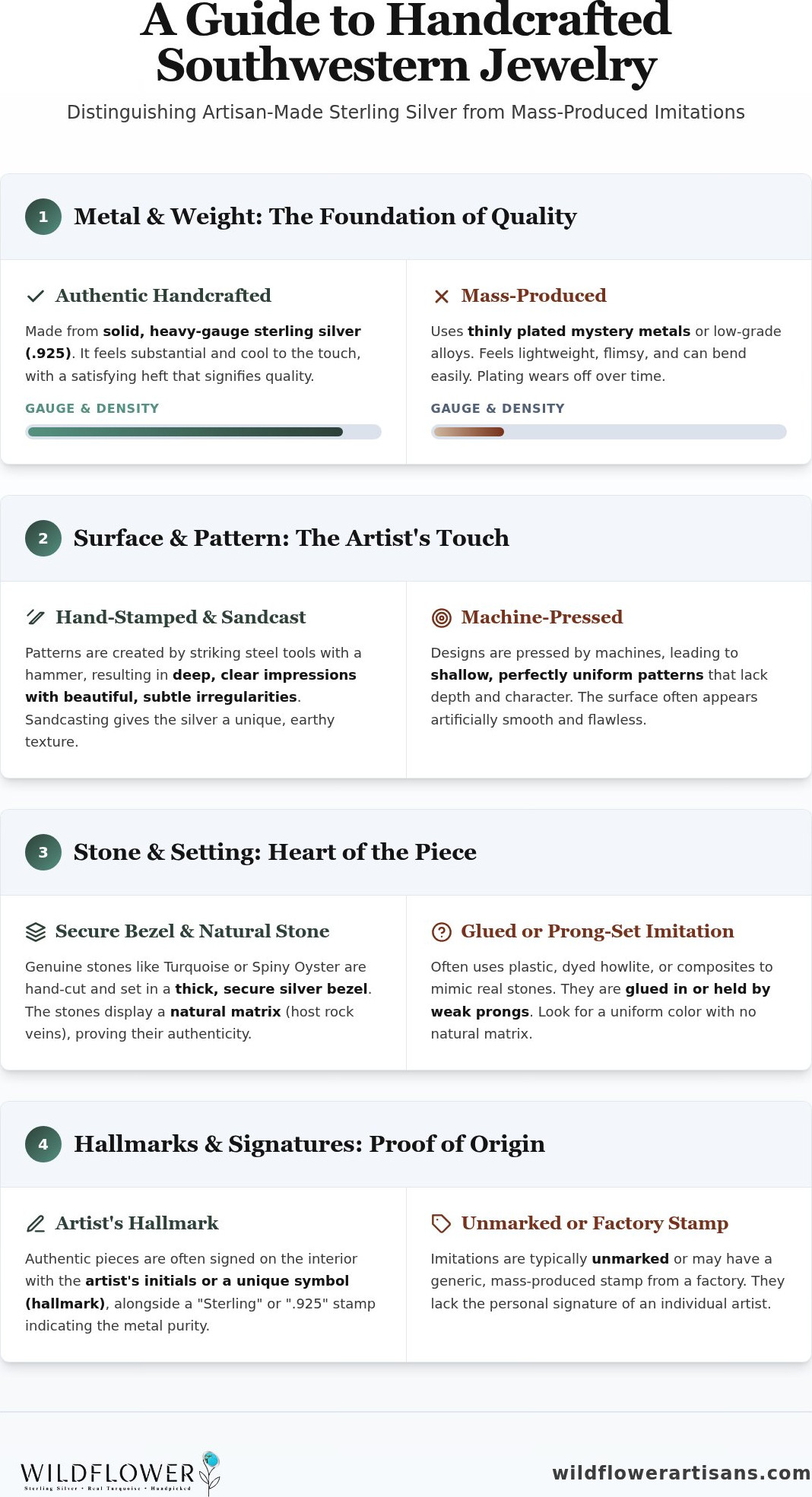
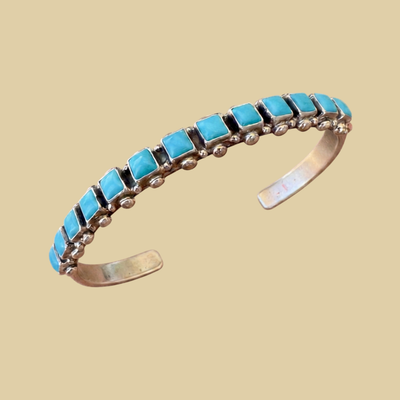
Authentic navajo cuff bracelets represent more than just adornment; they are a physical dialogue between the artist and the metal. A cuff bracelet is a rigid, open-ended bracelet that rests on the wrist without a clasp. Unlike the delicate, often flimsy chains found in commercial boutiques, these pieces are defined by their substantial weight and the use of heavy-gauge sterling silver (.925). This density provides a canvas for deep, intentional textures that machine-made alternatives simply cannot replicate. Mass-produced jewelry often relies on thin plating or mystery metals that lack the resonance of solid, handcrafted silver. When you hold a genuine turquoise cuff bracelet, the coolness and gravity of the materials speak to a standard of quality that transcends fleeting fashion trends.
The Distinction Between Navajo and Zuni Techniques
While both traditions share a deep love for the earth's minerals, their expressions differ in technical focus. Navajo-style work typically celebrates the silver foundation itself. You will see this through intricate stampwork or the textured, organic surface of sandcasting. In contrast, Zuni-style jewelry is often recognized for complex lapidary work, such as mosaic or channel inlay where stones are fit together with mathematical precision. While styles can overlap in a creative exchange, the Navajo tradition usually features larger, hand-cut cabochons held securely by a thick bezel. This focus on the stone as a central, bold anchor, often showcasing the natural matrix of the turquoise, creates a sense of grounded strength that is characteristic of Southwestern style artistry.
Southwestern Artistic Traditions in Modern Metalwork
The history of Navajo silversmithing is a story of adaptation and persistent skill. Traditional designs often utilize motifs like feathers or desert flowers, each detail hammered into the sterling silver (.925) with specialized steel stamps. Modern artisan-made pieces carry these foundations into the present, sometimes exploring contemporary geometric forms that feel fresh yet remain deeply connected to their roots. The true value of these creations lies in the manual labor of the silversmith. Each strike of the hammer is a deliberate choice, a sharp contrast to the cold automation of factory-molded jewelry. This human element ensures that no two pieces are identical, celebrating the beautiful asymmetry that only the hand of a maker can provide.
Technical Mastery in Navajo Style Silversmithing and Stone Setting
The creation of authentic navajo cuff bracelets requires a deep understanding of metal tension and lapidary precision to ensure every stone is housed securely within a hand-fabricated frame. This process begins with raw sheets or ingots of heavy sterling silver (.925). Unlike thin, factory-rolled metal, this heavy-gauge silver provides the structural foundation needed for deep textures and large stone settings. The artist must carefully calculate the dimensions of the silver to ensure the bracelet remains rigid yet comfortable for daily wear, balancing the physical weight with the natural beauty of the set stones.
The Precision of Hand-Stamped Silver Patterns
Hand-stamping involves striking a hand-carved steel tool into the silver with a hammer to create intricate, repeating patterns. This is a meditative process where the silversmith relies on muscle memory and a steady hand. Because each pattern is created by a human strike, you will often find slight variations in the depth and alignment of the stamps. These subtle irregularities are a hallmark of handcrafted origin and should be celebrated as proof of the artist's touch. The precision found in authentic navajo cuff bracelets is not about mechanical perfection but about the rhythmic consistency of the artist's hand. Often, these patterns are designed to frame a central stone, drawing the eye toward the natural matrix, which is the host rock veins found within the gemstone.
Sandcast Construction and Heavy-Gauge Sterling Silver
Sandcasting is an ancient technique where molten silver is poured into a hand-carved mold made of tufa stone, a porous volcanic rock. This method creates a unique, earthy texture on the silver surface that modern centrifugal casting machines simply cannot replicate. The tufa mold is often destroyed in the process, making many sandcast pieces unique in their texture and form. This construction method results in a piece with a substantial weight and a distinct, organic feel that speaks to the durability of Southwestern style jewelry. We value these pieces for their structural integrity, ensuring they meet the standards set by the Indian Arts and Crafts Act for genuine artisan labor.
Once the silver is shaped, the artist focuses on the bezel. A bezel is a thin strip of sterling silver (.925) that is soldered to the base and carefully folded over the edges of a cabochon, which is a stone that has been shaped and polished rather than faceted. This secure housing protects the stone from the rigors of daily life. The final stage is the polishing, where the artist may choose a high-shine finish to reflect the desert sun or a brushed satin finish for a more understated, grounded look. If you are looking for a piece that embodies this level of care, we invite you to browse our full selection of artisan jewelry.
Our studio honors these traditional methods by selecting pieces that reflect the genuine labor and skill of the silversmith. You can view our curated collection of handcrafted sterling silver cuffs to find a piece that carries this intentional weight and technical detail.
Genuine Turquoise and the Role of the Matrix in Artisan Cuffs
In the world of authentic navajo cuff bracelets, the stone is never an afterthought; it's the heart of the design. While silver provides the structural frame, natural stones like turquoise, spiny oyster, and white buffalo bring the narrative of the earth to the piece. Each stone is a cabochon, meaning it has been hand-cut and polished into a smooth, rounded shape rather than faceted. The lapidary process is a delicate balance of pressure and heat. Depending on the hardness of the mineral, an artisan must adjust their grinding wheel to preserve the stone's integrity without causing fractures. This manual labor ensures that the final piece is as durable as it is beautiful.
We hold a strict standard for every piece in our collection. You won't find dyed howlite, plastic blocks, or mystery synthetic materials at Wildflower Artisans. We believe that the beauty of a handcrafted cuff lies in its honesty. If a stone isn't genuine, it doesn't belong in our studio. This commitment to authenticity protects the value of your jewelry and honors the artisan who spent hours shaping the materials.
Turquoise Varieties and Mine Origins
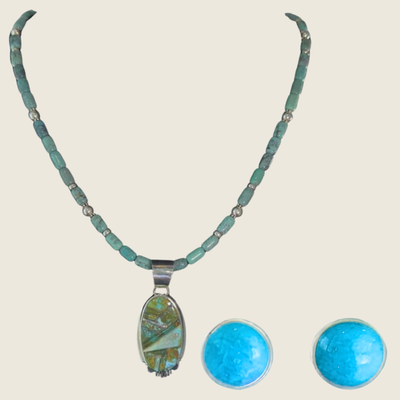
The personality of a turquoise stone is often tied to its birthplace. Mine-specific stones like Kingman turquoise from Arizona or Royston turquoise from Nevada offer distinct color profiles that collectors recognize instantly. Kingman is celebrated for its bright, sky-blue hues, while Royston often features a stunning gradient of greens and blues within a single cabochon. We prefer untreated stones because they maintain their natural variations and long-term stability. To understand the nuances between these different mines and how they affect the character of your jewelry, you can explore our turquoise buying guide. This knowledge is essential for appreciating the history of Navajo silverwork, where the relationship between the silversmith and the mine has always been one of deep respect and collaboration.
The Aesthetic Value of the Stone Matrix
For many, the most captivating part of a turquoise stone is its matrix. This term refers to the host rock veins that weave through the mineral, creating a complex web of black, brown, or golden lines. The matrix is the fingerprint of the stone. No two are ever identical. In authentic navajo cuff bracelets, the silversmith often chooses a stone where the matrix provides a sharp contrast to the primary color, highlighting the organic origins of the piece. This approach is central to our stone-first philosophy. We look for stones that tell a story of their own, allowing the host rock to remain visible as a testament to the stone's journey from the mine to the bezel. Each artisan-made cuff becomes a unique record of a specific geological moment.
A Checklist for Verifying Handcrafted Southwestern Jewelry
Verifying the integrity of a piece involves looking for physical evidence of the maker's hand and the purity of the materials used. When you are evaluating authentic navajo cuff bracelets, the first step is a physical inspection of the interior and the weight of the silver. Wildflower Artisans maintains a standard where every piece must show the hallmarks of genuine labor, including a sterling silver (.925) stamp and, in most cases, an artist's signature. A genuine cuff should feel substantial on your wrist, a result of using heavy-gauge silver rather than thin, industrial sheets that lack structural resonance.
Look closely at the stampwork for signs of manual tool use. Each mark is created by a human strike, leading to slight irregularities in depth and alignment that indicate a handcrafted origin. These subtle shifts are proof that a human hand guided the steel tool, creating a rhythmic texture that machine-pressed patterns cannot duplicate. Additionally, verify that the stone is held by a hand-fitted bezel. This silver frame should be folded tightly over the edges of the cabochon. If a stone appears to be held only by visible glue in a pre-cast setting, it lacks the technical mastery of true silversmithing.
Distinguishing Natural Stones from Plastic Block
Natural stones possess a specific thermal conductivity that makes them feel cold against your skin, warming slowly as they rest on your wrist. Plastic or resin imitations often feel lukewarm and lack the density of real minerals. A natural matrix provides a unique fingerprint for the stone, whereas synthetic blocks often show a uniform, flat color. Wildflower Artisans provides a guarantee of authenticity for every handcrafted piece. This commitment ensures that the stones in your collection are genuine gifts from the earth, strictly excluding stabilized plastic or dyed materials.
Evaluating the Quality of the Silver Bezel
A high-quality bezel is a sign of a silversmith who respects their medium and the stone it houses. It should be wrapped tightly around the cabochon with no visible gaps or jagged edges that could snag on clothing. Because every hand-cut stone is unique, a custom-fitted bezel is the only way to ensure a secure and elegant fit. This attention to detail represents a significantly higher level of artisanal value than factory-molded settings where stones are dropped into standard shapes. A secure bezel ensures that your authentic navajo cuff bracelets remain durable for decades of wear.
We apply these exact standards when selecting pieces for our studio, focusing on the weight of the silver and the honesty of the stones. You can explore our one-of-a-kind artisan pieces to find a cuff that meets this rigorous checklist.
Preserving the Beauty of Your Handcrafted Sterling Silver Bracelet
Owning authentic navajo cuff bracelets is an act of stewardship over a piece of living history. Because these pieces are crafted from heavy-gauge sterling silver (.925) and natural, often porous stones, they require a gentle hand to maintain their luster and structural integrity. Proper care begins with the environment. We recommend protecting your jewelry from prolonged exposure to moisture and harsh chemicals. This means removing your cuff before swimming in chlorinated pools or soaking in hot tubs, as these environments can lead to the rapid oxidation of the silver and potential damage to the set stones.
Chemicals found in everyday products are often the silent enemies of artisan jewelry. Lotions, perfumes, and hairsprays contain oils and alcohols that can settle into the recessed areas of hand-stamped patterns or be absorbed by the stone itself. To keep your bracelet in pristine condition, it should be the last thing you put on in the morning and the first thing you take off at night. This simple habit prevents the buildup of residue that can dull the brilliance of a hand-cut cabochon or the deep sheen of the silver foundation.
Daily Maintenance and Cleaning Tips
If your stones become dull from contact with natural skin oils, wipe them gently with a soft, dry cloth. Avoid the temptation to use ultrasonic cleaners or chemical jewelry dips. These aggressive methods are designed for hard, faceted gemstones and can be devastating to porous minerals like turquoise or spiny oyster. Instead, use a dedicated silver polishing cloth to remove oxidation from the sterling silver (.925) surfaces. For a more thorough look at maintaining your collection, we invite you to review our care and repair page, where we detail the nuances of long-term jewelry health.
Long-Term Preservation of Stone Settings
The security of your stone depends on the integrity of the silver housing. Periodically inspect the bezel to ensure it remains wrapped tightly around the cabochon. Over years of wear, the soft sterling silver (.925) can experience slight shifts. If you notice any movement in the stone, it may be time for a professional adjustment to prevent loss. It is also a natural part of the stone's narrative that some turquoise may change color over time. Because turquoise is a phosphate mineral, it can absorb oils or moisture, shifting from a bright sky blue to a deeper green. By storing your jewelry in a cool, dry place away from direct sunlight, you honor the work of the silversmith and preserve the unique matrix that makes your piece a one-of-a-kind treasure. This intentional care ensures that the beauty of authentic navajo cuff bracelets can be passed down through generations.
Embracing the Narrative of Artisan Silverwork
Finding a piece that resonates with your personal style involves looking beyond the surface to the technical markers of the maker's hand. By prioritizing heavy-gauge sterling silver (.925) and stones with a natural matrix, you ensure your collection is built on a foundation of genuine quality. These authentic navajo cuff bracelets are not just accessories but physical records of a silversmith's skill and the earth's geological history. The beauty of a handcrafted cuff lies in its honest imperfections, where a slightly deep stamp or a unique host rock vein tells a story that a machine could never whisper.
Choosing a piece with guaranteed artisan-made quality means you are honoring a legacy of technical mastery and mine-specific stones that has been passed down through generations. We believe that when you understand the lapidary details and material standards, your connection to the jewelry becomes as deep and enduring as the stones themselves. Each cuff is a vessel for emotion, designed to be worn as a celebration of natural, fleeting beauty that remains grounded in sophisticated artistry.
We invite you to find a piece that speaks to your own narrative, knowing that it has been selected for its integrity and its soul. May your chosen bracelet serve as a steady reminder of the human touch and the quiet strength found in the materials of the high desert.
Frequently Asked Questions
How can I tell if a Navajo-style cuff is made of real sterling silver?
You should look for the .925 hallmark stamped on the interior of the bracelet, which indicates the piece is made of genuine sterling silver (.925) rather than a plated base metal. Authentic navajo cuff bracelets always prioritize material purity to ensure long-term durability and value. Silver plating eventually wears away to reveal mystery metals beneath, but solid sterling maintains its integrity. Always check the physical weight, as heavy-gauge silver is a standard indicator of quality in artisan-made jewelry.
What is the difference between hand-stamped and machine-pressed silver?
Hand-stamping is characterized by slight variations in depth and alignment because each mark is made by an artist using a hammer and steel tools. In contrast, machine-pressed patterns are perfectly uniform and often appear shallow. Hand-stamping creates a rhythmic, organic texture that feels intentional and human. These subtle irregularities are a hallmark of handcrafted work, distinguishing a soulful, artisan-made piece from the cold, sterile perfection of mass-produced retail items found in many department stores.
Are the turquoise stones in these bracelets treated or dyed?
Wildflower focuses on genuine and often untreated stones, strictly excluding dyed howlite, plastic blocks, or synthetic imitations from our collection. Many mass-market items use block turquoise, which is essentially crushed stone mixed with resin and artificial dyes. Choosing untreated stones ensures that the cabochon you wear is a genuine mineral with its own unique physical resonance. This commitment to honesty protects the value of your jewelry and honors the natural beauty of the stones as they came from the mine.
How should I clean a cuff bracelet with turquoise settings?
Clean the silver areas with a dry polishing cloth and use a soft, barely damp cloth for the stones. You should never submerge your jewelry in water or use harsh chemical dips, as these can strip the intentional oxidation or damage porous minerals like turquoise. If a stone is held by a secure bezel, moisture can sometimes get trapped underneath, leading to discoloration over time. A gentle wipe after each wear removes skin oils and keeps the piece bright.
What does the term matrix mean in turquoise jewelry?
The matrix refers to the veins of host rock, such as iron or quartz, that are visible within the turquoise stone. This host rock provides a unique fingerprint for each cabochon, making every piece truly one of a kind. In authentic navajo cuff bracelets, the matrix often provides a beautiful contrast to the blue or green of the stone. It serves as a visual testament to the mineral's natural origin and its specific journey from the earth to the artist's studio.
Can a handcrafted cuff bracelet be resized?
Most heavy-gauge cuffs can be adjusted slightly for fit, but you must avoid excessive or repeated bending. Manipulating the silver too much stresses the metal and can cause the stone to loosen from its bezel housing. If you need to adjust the size, do so gently and only once. Constant bending leads to metal fatigue, which can eventually result in the sterling silver (.925) cracking or the cabochon falling out of its setting entirely.
Why do some Southwestern style cuffs have a dark finish in the recessed areas?
This dark finish is a deliberate oxidation process used by the silversmith to highlight the intricate detail of the stampwork. By darkening the recessed areas, the artist creates visual depth and contrast against the high-shine surfaces of the sterling silver (.925). This technique is a common feature of artisan-made jewelry, emphasizing the manual labor involved in the stamping process. It gives the piece a grounded, seasoned appearance that celebrates its handcrafted origins and technical complexity.
What is the benefit of a hand-cut cabochon over a factory-shaped stone?
A hand-cut cabochon is shaped specifically for a unique piece of jewelry, allowing the artist to highlight the best features of that individual stone. Unlike factory-shaped stones that are cut to standard, uniform sizes, an artisan-made cabochon follows the natural contours and matrix of the mineral. This ensures a custom fit within the silver bezel and a more harmonious visual composition. The result is a piece where the stone and metal are designed as a single narrative.
Article by
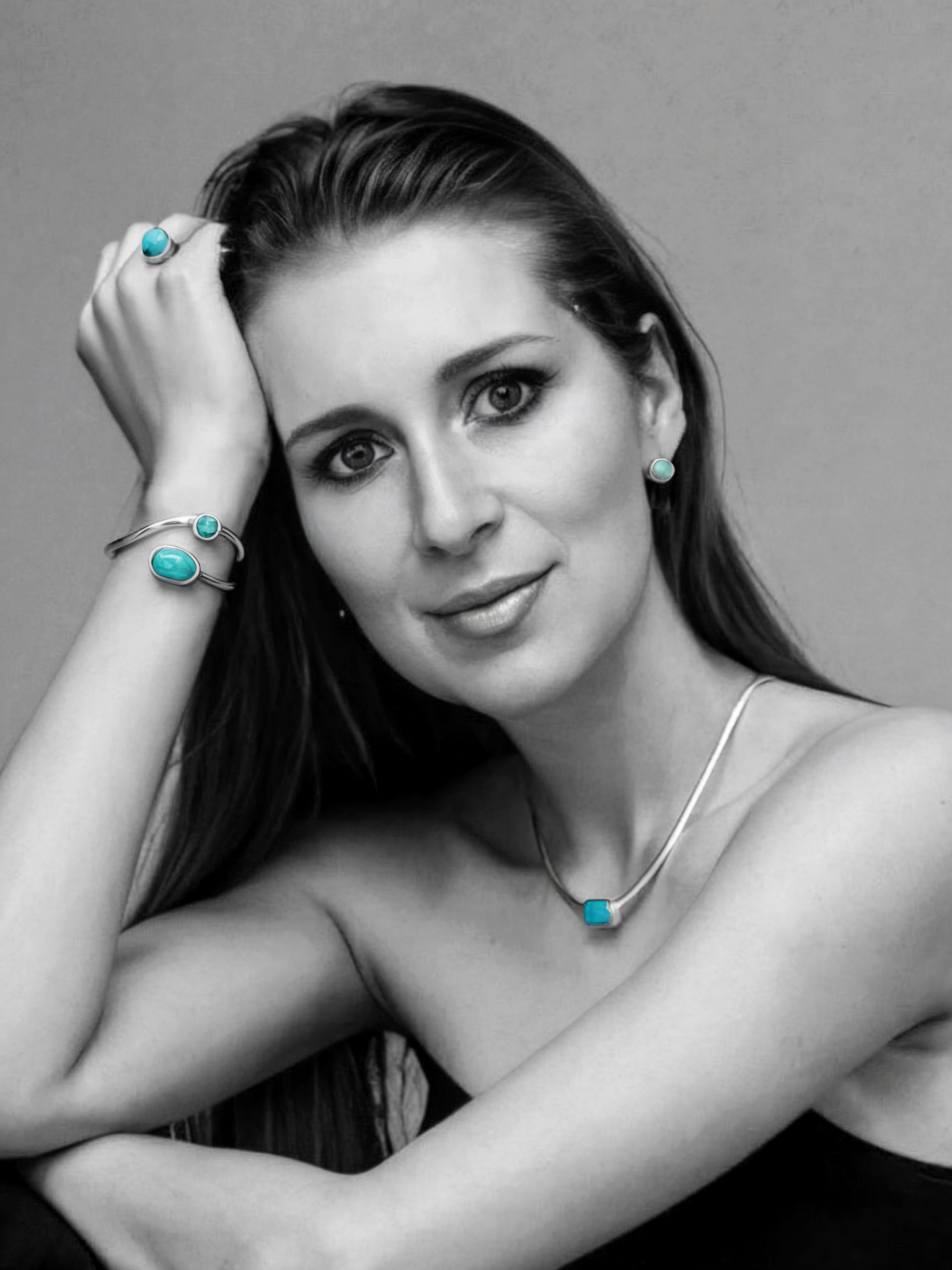
Kimberly Cordova
Kimberly Cordova is the founder and creative director of Wildflower Artisans, a handmade jewelry brand rooted in Santa Fe. Real turquoise, solid sterling silver, and a small line set in solid 14K gold. She built Wildflower around a simple belief: the best jewelry is the kind you actually reach for, not the kind you save for someday.
The collection is built three ways. Some pieces are made in-house, cut by her husband Greg from stones he sources himself, including rough from the family's King's Manassa Mine in Colorado and White Buffalo Mine in Nevada. Some are designed by Kimberly and fabricated by a trusted circle of Santa Fe silversmiths. And some are finished work she curates from artisan makers whose craft meets the same standard, because building a real collection means knowing when to make and when to look.
Turquoise leads, joined by White Buffalo, Wild Horse, Lapis Lazuli, Spiny Oyster, Black Onyx, Opal, and other genuine semi-precious stones. No shortcuts on the stone, the silver, or the story behind either.
Her writing covers everything she has learned along the way: how turquoise forms, how to tell natural from stabilized, what makes one mine different from another, how to read a bezel, and how to shop with confidence in a market that is not always straightforward. It is the kind of plainspoken information she wished someone had laid out for her when she was starting out.
Browse the collection at wildflowerartisans.com. Questions about a stone, a setting, or a specific piece are welcome any time.
0 comments