

A digital screen can easily mask the difference between a rare, hand-cut stone and a piece of dyed plastic. You likely feel that familiar hesitation when a price seems too good to be true or a stone looks a bit too perfect. Understanding what to look for when buying turquoise online is essential for anyone wanting to invest in genuine, artisan-made jewelry without the fear of being misled. It's about more than just color. It's about the story written in the matrix and the integrity of the silverwork.
This guide simplifies the technical side of stabilization and silver hallmarks so you can shop with a trained eye. You'll learn how to identify synthetic imitations at a glance, why stones from certain mines carry a higher value, and exactly which questions to ask a seller before you commit to a new piece. We want to help you build a collection that's grounded in authenticity and quietly timeless craftsmanship.
Key Takeaways
- Spot the telltale signs of synthetic block and dyed howlite to avoid common imitations found on digital marketplaces.
- Differentiate between natural, untreated stones and stabilized turquoise to ensure your investment matches the rarity of the material.
- Master what to look for when buying turquoise online by recognizing specific mine signatures and the hallmarks of high quality lapidary work.
- Learn to judge the integrity of silverwork through photos by looking for a clean bezel fit and substantial sterling weight.
- Identify the essential technical questions to ask a seller to confirm their expertise and the authenticity of their Southwestern style jewelry.
Identifying the difference between real stone and synthetic imitations
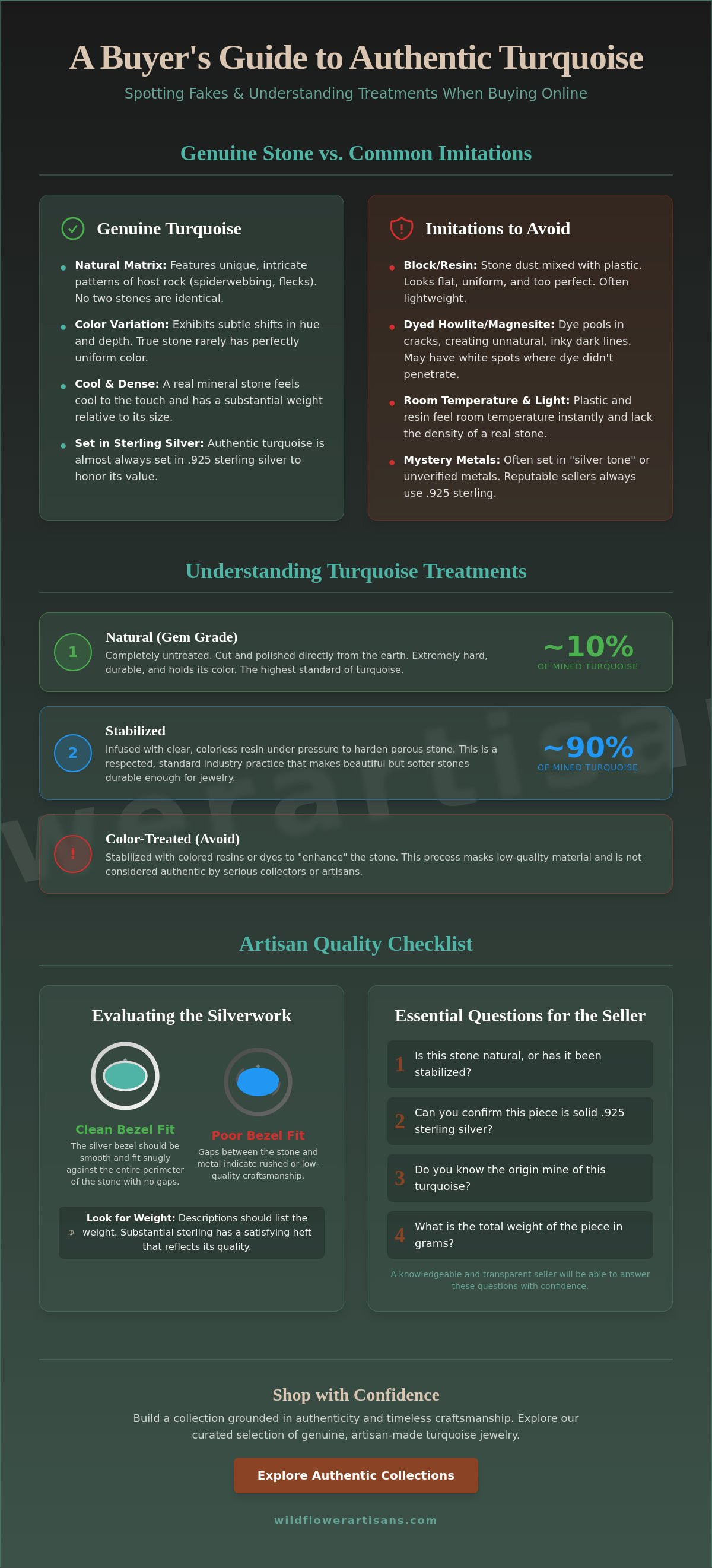
A digital screen can make a piece of blue plastic look remarkably like a rare gem from a Nevada mine. When you are learning what to look for when buying turquoise online, the first step is recognizing that the market is flooded with "block" turquoise and compressed resins. These materials are often made from stone dust mixed with plastic binders, resulting in a uniform color that lacks the depth of a genuine cabochon. Real stones have a soul and a history. Mass-produced imitations only have a mold. Greg Cordova, who manages our lapidary work at Cutting Edge Turquoise, often notes that the weight and grain of a hand-cut stone cannot be replicated by a machine.
To better understand how professionals distinguish these materials, watch this helpful video:
Spotting dyed howlite and magnesite
Dyed howlite is a common substitute because its natural grey matrix mimics the look of authentic turquoise once it is soaked in blue pigment. To spot this, look closely at the cracks and veins in high-resolution listing photos. Dye tends to pool in these depressions, creating dark, unnatural concentrations of color that look like ink bleeding into paper. You might also see white spots where the dye failed to penetrate the host rock. Truly understanding natural turquoise means recognizing that nature rarely produces perfectly uniform saturation across a porous surface. These imitations are often sold under misleading names to confuse buyers looking for rare materials.
The weight and temperature test
Real mineral stones are naturally cool to the touch and take time to warm up when held in your palm. Plastic or resin imitations feel room temperature immediately and lack the substantial density of a real cabochon. Since you cannot hold the piece through a website, look for the weight of the jewelry in the description. A one of a kind turquoise ring should have a specific heft that reflects both the stone and the sterling silver setting. Avoid listings that mention mystery metals or silver tone finishes. Genuine turquoise belongs in sterling silver. If a seller cannot confirm the metal is .925 sterling, the stone is likely an imitation as well. Kimberly Cordova focuses our curation on pieces where the stone is the star, ensuring the silverwork supports the weight of a genuine, earth-mined gem.
Understanding stabilization and the definition of natural turquoise
Understanding the terminology used by sellers is a vital part of knowing what to look for when buying turquoise online. You will see the word natural used in almost every listing, but in the world of professional lapidary, it has a very specific meaning. In our studio, we reserve that label for stone that has undergone zero chemical or resin alterations. It is stone exactly as it came out of the earth, cut and polished without any help from modern chemistry. Evaluating turquoise quality requires looking past the surface color to understand how the stone was handled from the moment it was mined.
When stabilization is a mark of quality
It is a common industry reality that roughly 90 percent of all turquoise pulled from the ground is too soft or porous to be used in jewelry. Without help, this chalk-like material would break under a jeweler's saw or absorb skin oils and change color over time. Stabilization is the process of pressure-infusing the stone with a clear, colorless resin to make it hard and durable. When done correctly, clear stabilization preserves the stone for a lifetime of wear and is a standard, respected practice. You should look for transparency in product descriptions; a reputable seller will always disclose if a stone is stabilized. Avoid any stones labeled as color-injected or treated with dyes, as these processes mask the true character of the mineral. Greg Cordova ensures all stones used in our studio are either high-grade natural or stabilized with the highest quality clear resins at Cutting Edge Turquoise.
The rarity of untreated natural stones
Natural, untreated stones are the crown jewels of any collection. These stones are dense enough to take a high polish without any resin, meaning their color and matrix are locked in by nature. Because they are rare, the price for these pieces is significantly higher. For example, high-quality blue turquoise that requires no treatment can cost between $7 and $10 per carat, while stabilized material often ranges from $1 to $30 depending on the mine. If you are looking for an investment piece, you can browse our stone origins page to see examples of natural slabs before they are cut into cabochons. Kimberly Cordova hand-selects these high-grade specimens for our one of a kind turquoise designs to ensure they meet our standards for authenticity. When you buy natural stone, you are buying a piece of the earth that needs no improvement.
Assessing mine origins and the role of cabochon backing
When you are scanning a shop page, a mine name is more than just a label. It is a trust signal that points to a specific history and a set of geological characteristics. Knowing the difference between a stone from the Kingman mine in Arizona and one from the Royston district in Nevada is a key part of what to look for when buying turquoise online. Each location produces a unique palette. While Sleeping Beauty turquoise is prized for its clear, robin's egg blue, Royston is known for its stunning transitions from deep emerald green to soft blue within a single stone. Greg Cordova handles our lapidary work and mine-direct sourcing through Cutting Edge Turquoise, ensuring that every cabochon we set has a documented lineage.
The way a stone is cut determines its final beauty and how it will sit in a silver bezel. Professional lapidary work is an art of subtraction. A skilled cutter looks at a raw slab and decides how to orient the matrix to best highlight the stone's character. Whether it is a tight spiderweb pattern or a bold, blotchy matrix, the cut should be intentional and smooth. According to the GIA's guide to turquoise quality, the texture and finish of the stone are just as important as the color when determining value. A well-cut cabochon will have a consistent dome and a polished surface free of pits or scratches.
Provenance and mine-direct sourcing
A reputable seller should be able to name the specific mine for every piece in their collection. This provenance is what separates a curated collection from a bin of mystery stones. Mine origin influences the price significantly. For instance, rare Lander Blue turquoise can command between $300 and $500 per carat, while stones from the now-closed Sleeping Beauty mine can range from $50 to $200 per carat for high-quality specimens. You can see how these colors vary by visiting our stone origins page. If a seller is vague about where the stone was mined, it is often a sign that the material is mass-produced or sourced from a large-scale commercial wholesaler rather than an artisan studio.
Why professional lapidaries use backing
One technical detail that often confuses buyers is the presence of backing. This is a thin layer of specialized epoxy applied to the bottom of a cabochon. Many people mistakenly believe this is a sign of a fake stone, but it is actually a standard professional practice for high-grade turquoise. Because turquoise is often found in thin veins, backing provides the structural support needed to prevent the stone from cracking during the setting process. It does not decrease the value of the turquoise as long as the seller is transparent about it. You can tell a stone is backed by looking at the underside; it will have a smooth, dark grey or black finish that feels different from the host rock. This practice ensures your one of a kind turquoise jewelry remains durable for generations of wear.
Evaluating the silverwork and evidence of handcrafted quality
The silver setting is the architecture that protects the stone. While the turquoise often draws your eye first, the silverwork tells you everything about the piece's longevity. When you are learning what to look for when buying turquoise online, you must look past the color of the stone and zoom into the edges of the metal. A mass-produced setting often feels thin and tinny. In contrast, a piece of Southwestern style jewelry from a small batch studio will have a substantial weight that feels balanced in your hand. Kimberly Cordova focuses our curation on these intentional designs, ensuring that the silver is never an afterthought. It is a quiet dialogue between the mineral and the metal.
The gauge of the silver refers to its thickness. High-quality artisan pieces use a heavier gauge for the backplate and the ring band to prevent the silver from warping or bending over time. When you hold a piece, it should feel cool and substantial. A thin, lightweight ring might be comfortable at first, but it won't survive the decades of wear that a properly forged piece will. We prioritize durability because we believe jewelry should be a vessel for stories that last. Every bezel and band is a commitment to quality.
The details of a well-set bezel
A bezel is the strip of silver that wraps around the stone to hold it in place. Because Greg Cordova hand-cuts every cabochon in our studio, each stone has a slightly unique footprint. This means the bezel must be custom-made for that specific stone. Look for a clean, tight fit where the silver meets the turquoise. There should be no visible gaps or jagged edges. If you see a gap, it is a sign that the stone was dropped into a pre-made, mass-market setting that didn't quite fit. Understanding how these settings are constructed helps you appreciate the care and repair requirements of fine jewelry as it ages.
Artisan signatures and hallmarks
Hand-forged jewelry often carries the quiet evidence of its creation. You might see very slight variations in the stamp work or subtle tool marks on the back of a pendant. These aren't flaws. They are the fingerprints of the artisan. Mass-market items designed with CAD software look perfect in a way that feels cold and clinical. Genuine sterling silver will always be marked with 925 or a known artisan hallmark. These marks are your guarantee that the metal is high-quality and will not tarnish into a mystery color. Selecting a piece with high-quality silverwork ensures your collection remains quietly timeless. Browse our latest handcrafted turquoise jewelry to see these details in practice.
Selecting a reputable studio for your Southwestern style collection
Choosing a piece of jewelry is an act of trust. When you're learning what to look for when buying turquoise online, the most important factor is the person behind the bench. A working studio that handles the entire process, from the raw slab to the finished setting, offers a level of accountability you won't find at a mass-market retailer. Greg Cordova manages our lapidary work and mine-direct sourcing through Cutting Edge Turquoise, which means we know the history of every cabochon we set. This direct line to the mine ensures that the stone you see on your screen is the stone that arrives at your door. Kimberly Cordova then brings her eye for curation and design to ensure every piece in our collection feels grounded and intentional.
Questions to ask a turquoise seller
A knowledgeable seller welcomes your curiosity. Before you commit, ask about the stone's treatment status and its specific mine of origin. You should also inquire about the artisan who crafted the silverwork and the gauge of the silver used. Our one-of-a-kind collections are designed with this transparency in mind, offering detailed descriptions that answer these questions upfront. If a seller can't tell you where a stone was mined or if it has been stabilized, they likely aren't close enough to the source to guarantee its authenticity. Reputable studios will often provide photos of the raw material or the cutting process to verify their claims.
Building a collection with confidence
Starting a collection doesn't have to be overwhelming. Many people begin with everyday essentials to get a feel for a studio's craftsmanship and the weight of their silver. Our turquoise rings are a popular starting point because they allow you to appreciate the stone's matrix up close every time you look at your hands. Look for professional photography that uses natural light rather than heavy filters. Clear, high-resolution images are essential for showing the true color and texture of the turquoise, ensuring there are no surprises when your package arrives. Building a collection is a slow, deliberate process of finding pieces that resonate with your personal style and values, and a good seller will be there to guide you through every step.
Building your collection with intentionality and trust
Collecting turquoise is a quiet journey into the geology and artistry of the Southwest. You now have the tools to look past a digital screen and identify the difference between a mass-produced imitation and a genuine, earth-mined stone. By paying attention to matrix patterns and insisting on mine-specific provenance, you can invest in pieces that carry real value. Authenticity is found in the details. It's in the weight of the sterling silver and the precision of the hand-cut cabochon.
Mastering what to look for when buying turquoise online allows you to shop with the same confidence you'd feel standing in our Santa Fe studio. We remain committed to this transparency in every piece we create. Greg Cordova personally cuts our mine-direct stones to highlight their natural character, while Kimberly Cordova curates each design to ensure it's both functional and beautiful. You can view our current collection of artisan-made jewelry to find your next favorite piece. Every stone has a story. We look forward to helping you find the one that speaks to yours.
Frequently Asked Questions
Is natural turquoise better than stabilized turquoise?
Natural turquoise is rarer and more valuable because it remains exactly as it was pulled from the earth, but stabilized turquoise is a practical choice for daily wear. Roughly 90 percent of turquoise is too soft for jewelry without being pressure-infused with clear resin. This stabilization makes the stone hard enough to resist breaking and prevents it from absorbing skin oils. If you are looking for a collector's investment, natural is the standard. If you want a durable piece for daily life, high-quality stabilization is a respected industry practice.
How can I tell if turquoise is real from a photo?
You can often spot imitations by looking for unnatural color concentrations in the matrix or white spots where dye failed to penetrate the host rock. Authentic stones show a depth of color and varied texture that plastic or block turquoise simply cannot replicate. When learning what to look for when buying turquoise online, pay attention to high-resolution photos that show the stone from multiple angles. Real stones often have slight surface pits or asymmetrical matrix patterns that mass-produced fakes avoid.
What does 'backed' turquoise mean and does it lower the value?
Backing is a thin layer of specialized epoxy applied to the underside of a cabochon to provide structural support during the setting process. This is a standard professional practice for high-grade stones found in thin veins and does not lower the value of the turquoise. It ensures the stone is strong enough to survive the pressure of being set into a silver bezel. Greg Cordova uses this technique for specific mine-direct stones at Cutting Edge Turquoise to ensure the longevity of the finished piece.
Can I wear my turquoise jewelry in the shower or pool?
You should avoid wearing turquoise in the shower, pool, or hot tub to protect the integrity of the stone. Turquoise is a porous mineral that can absorb chemicals, soaps, and chlorine, which may eventually dull the polish or alter the color. These substances can also damage the sterling silver setting over time. To keep your jewelry quietly timeless, remove it before any activity involving water or harsh cleaning agents. Proper care ensures the stone remains as vibrant as the day it was cut.
Why does the color of my turquoise ring seem to be changing?
Natural turquoise can change color over time as it absorbs skin oils, perfumes, or lotions due to its porous nature. This shift toward a greener hue is a natural process and is often seen as a mark of an authentic, untreated stone. Stabilized stones are less likely to change because the resin seals the pores and locks in the original color. If your ring is changing, it is likely a sign that the mineral is interacting with your daily environment, which adds a unique layer to its story.
What is the difference between Southwestern style and other turquoise jewelry?
Southwestern style jewelry is defined by its emphasis on substantial sterling silver and hand-cut stones from specific American or Mexican mines. Unlike mass-market jewelry that uses thin, CAD-designed settings, these pieces are often hand-forged in small batches. Kimberly Cordova curates our designs to honor this aesthetic by focusing on the relationship between heavy silver gauges and unique matrix patterns. It is a grounded, artisanal approach that prioritizes the raw character of the stone over commercial perfection.
How do I know if the silver is genuine sterling?
Genuine sterling silver will almost always be stamped with a 925 hallmark or a known artisan signature on the back or inside of the piece. This mark indicates that the metal consists of 92.5 percent pure silver mixed with copper for added durability. If a piece lacks a hallmark or is labeled as silver tone or mystery metal, it is likely a plated base metal that will tarnish quickly. We use only guaranteed sterling silver to ensure your jewelry remains a lasting part of your collection.
What should I look for in a turquoise seller's return policy?
A reputable seller should offer a clear return window and demonstrate a willingness to answer technical questions about stone origin and treatment. Because it is difficult to judge color perfectly through a screen, a fair policy allows you to see the piece in person before making a final commitment. Look for studios that provide detailed descriptions and multiple photos of the actual item you will receive. Transparency about their studio process is the best indicator that they stand behind the authenticity of their work.
Article by
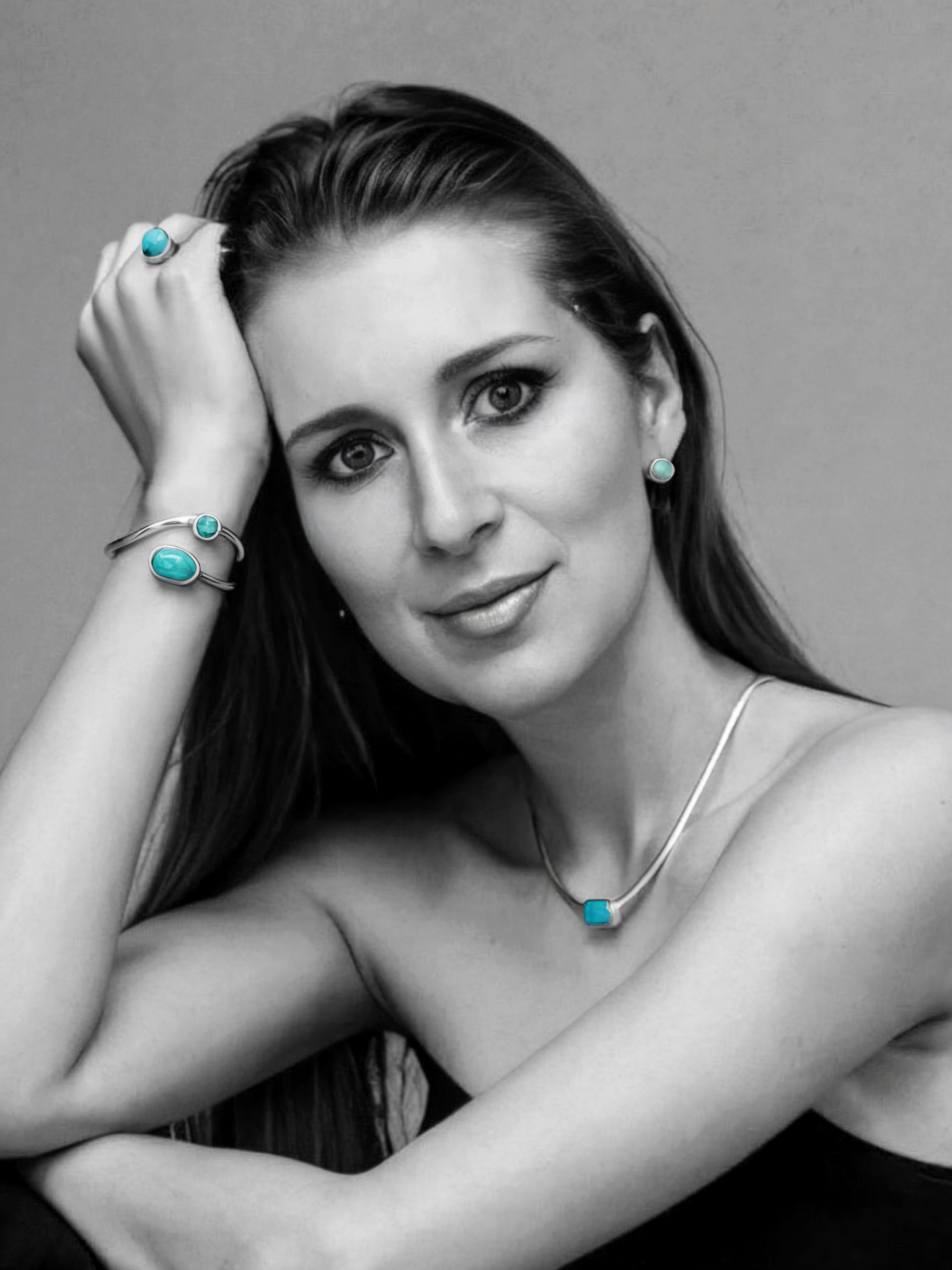
Kimberly Cordova
Kimberly Cordova is the founder and creative director of Wildflower Artisans, a handmade jewelry brand rooted in Santa Fe. Real turquoise, solid sterling silver, and a small line set in solid 14K gold. She built Wildflower around a simple belief: the best jewelry is the kind you actually reach for, not the kind you save for someday.
The collection is built three ways. Some pieces are made in-house, cut by her husband Greg from stones he sources himself, including rough from the family's King's Manassa Mine in Colorado and White Buffalo Mine in Nevada. Some are designed by Kimberly and fabricated by a trusted circle of Santa Fe silversmiths. And some are finished work she curates from artisan makers whose craft meets the same standard, because building a real collection means knowing when to make and when to look.
Turquoise leads, joined by White Buffalo, Wild Horse, Lapis Lazuli, Spiny Oyster, Black Onyx, Opal, and other genuine semi-precious stones. No shortcuts on the stone, the silver, or the story behind either.
Her writing covers everything she has learned along the way: how turquoise forms, how to tell natural from stabilized, what makes one mine different from another, how to read a bezel, and how to shop with confidence in a market that is not always straightforward. It is the kind of plainspoken information she wished someone had laid out for her when she was starting out.
Browse the collection at wildflowerartisans.com. Questions about a stone, a setting, or a specific piece are welcome any time.
0 comments