

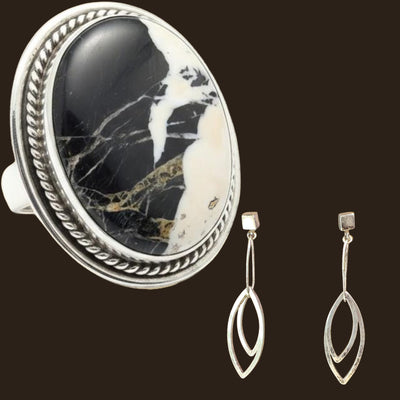
The striking contrast of a stark white stone against a deep black matrix often leads collectors to ask, what is white buffalo turquoise, only to find that the answer is more complex than a simple label. It gets grouped with blue and green turquoise in Southwestern jewelry, but it lacks the copper required to be classified as turquoise. Ours comes from our family's claim at the White Buffalo mine near Tonopah, Nevada.
You may have felt a sense of uncertainty when browsing for these pieces, wondering if the stone in that sterling silver bezel is an authentic discovery or a common imitation like howlite. We share that respect for the genuine, which is why we've put together this guide to help you understand what White Buffalo is. You'll discover the geological origins of these stones and the artisan labor involved in hand-cutting a cabochon to reveal its intricate spiderweb patterns. We'll provide the practical knowledge you need to identify authentic stones and care for their delicate surfaces, ensuring your collection remains as vibrant as the day it left the studio.
Key Takeaways
- Discover what is white buffalo turquoise by exploring where it comes from: the White Buffalo mine near Tonopah, Nevada, where our family holds a claim.
- Understand why the stone isn't turquoise: it lacks the copper that gives turquoise its blue and green color.
- Learn to identify authentic specimens by comparing matrix patterns and hardness against common imitations like dyed howlite or magnesite.
- Gain appreciation for the lapidary process, from selecting high-contrast rough material to hand-cutting cabochons that showcase unique spiderweb patterns.
- Find out how to select and care for artisan-made pieces by focusing on matrix style and proper cleaning techniques for the stone's specific hardness.
What is White Buffalo Turquoise and Why is it Rare?
When visitors ask what is white buffalo turquoise, here is the short answer. It is a striking, monochromatic stone that has become a staple of modern Southwestern style, prized for its stark white body and deep black matrix. It comes from the White Buffalo mine near Tonopah, Nevada, where our family holds a claim. It shares the look and the lapidary treatment of turquoise, but it is a different stone. True turquoise needs copper to turn blue or green, and White Buffalo has none.
To better understand the origins and unique nature of this stone, watch this helpful video:
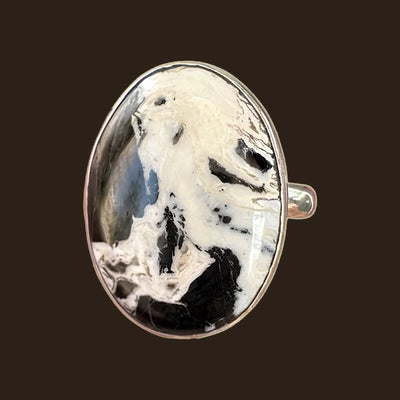
Because it lacks copper, the stone doesn't develop those familiar aquatic hues. Instead, it presents a clean, porcelain-like surface that serves as a perfect canvas for the dark, branching patterns of the matrix. This rarity makes it a favorite for small batch jewelry where contrast is the primary goal. Collectors often seek out specific patterns, ranging from fine spiderweb lines to bold, erratic blotches that make every cabochon a unique piece of natural art. When we explain what is white buffalo turquoise to new collectors, we emphasize that its beauty lies in this high-contrast simplicity.
Why White Buffalo Isn't Turquoise
The science behind the stone comes down to one missing ingredient. Turquoise gets its blue and green from copper. White Buffalo has none, so no blue ever forms and the stone stays white. That single difference is why it doesn't fit the definition of turquoise, even though it turns up in turquoise country and is cut and set the same way. It's a beautiful outlier that bridges the gap between traditional lapidary materials and rare mineral specimens.
The History of the Name
The name points to rarity. A white buffalo is famously rare, and so is a clean white stone with sharp black matrix. "White turquoise" has become a loose trade name, and that looseness is exactly why dyed howlite gets sold under it. The simplest protection is to ask where the stone came from. Ours comes from our family's claim near Tonopah, and we will tell you that on every piece we cut ourselves.
The Origins of the White Buffalo Stone in Tonopah, Nevada
This stone is rooted in the high desert of central Nevada, near Tonopah. When people ask what is white buffalo turquoise, they are often surprised to learn how much of its value is tied to that one place. The Nevada Bureau of Mines and Geology documents the mineral wealth of this region. The combination of a white host stone and crisp black matrix is what collectors look for, and it is what separates genuine White Buffalo from the white stones sold alongside it.
Mining here is a labor-intensive process. It isn't a matter of sifting through loose soil; it requires excavating hard rock veins to find the pockets of white stone. Today, high-grade material with a clean, white body and a tight matrix is increasingly difficult to pull from the earth. This scarcity has turned the stone into a collector's item, particularly for those who appreciate the story of its origin. You can learn more about the specific origins of our stones to see how we select these rare materials for our studio work.
Our Family's Claim
Our family holds a claim at the White Buffalo mine near Tonopah. Greg sources the rough from it, and the stones are cut at Cutting Edge Turquoise, our family's lapidary business. That means we see the stone from rough to finished cabochon, which is not how most White Buffalo reaches a buyer. It also means we can tell you plainly how a stone differs from look-alikes like Wild Horse magnesite, which carries a brown or reddish matrix instead of black.
Why Geological Context Matters for Value
In the world of Southwestern jewelry, mine-specific stones carry a weight of authenticity that mass-produced materials can't match. When a stone is tied to a single location, its value is dictated by the output of that specific mine. For White Buffalo, the market value is driven by the rarity of finding a "perfect" stone. We look for pieces with a clean, high-contrast spiderweb matrix, which is the most sought-after pattern. These patterns are created by the way the black chert fractured and filled in during the stone's formation millions of years ago. Because the mine is small and the high-grade pockets are limited, each cabochon represents a finite piece of Nevada's geological history.

Identifying Real White Buffalo vs. Common Imitations
Distinguishing between genuine material and the various substitutes on the market is a vital skill for any collector. Because this stone is found in such a limited geographic area, many look-alike gemstones are often mislabeled to capitalize on its rarity. When you are trying to understand what is white buffalo turquoise, the first thing to look for is the physical integrity of the stone. Authentic White Buffalo is notably hard, typically sitting between 5.5 and 7.5 on the Mohs scale, which allows it to take a high, porcelain-like polish that resists scratching. This durability is a hallmark of the high-quality stones we use in our Santa Fe studio.
One of the most frequent imitators is howlite, a much softer borate mineral that usually ranks around a 3.5 on the hardness scale. While howlite naturally occurs with a grey or black matrix, it has a chalkier texture and a more porous surface. Another common point of confusion is Wild Horse magnesite. While Wild Horse is a beautiful stone in its own right, it comes from Arizona and typically features a brownish-red matrix rather than the crisp, flint-like black chert found in White Buffalo. Understanding these subtle differences in density and color helps ensure you are investing in a genuine piece of Southwestern history.
Technical Differences: Hardness and Matrix
The matrix of an authentic stone is perhaps its most telling feature. In true White Buffalo, the matrix is made of black chert, a hard, silica-rich rock that cuts with sharp, clean edges. When a lapidary works with this material, they notice a specific resistance and density that softer stones lack. This chert often forms a spiderweb pattern that appears deeply embedded in the white host rock rather than sitting on the surface. To maintain the luster of such a hard stone, it is important to properly care for your jewelry by avoiding harsh chemicals that could dull the polish over time.
Common Industry Mislabeling
The term white turquoise is often used as a catch-all trade name, but it can be misleading. Many stones sold under this label are actually stabilized magnesite or dyed howlite from overseas sources. To protect yourself, always ask for the specific mine origin. Authentic stones will be linked back to the Tonopah district, a region detailed in the geological survey of Ore Deposits of Tonopah, Nevada. When buying, look for the following indicators of quality:
- Natural vs. Stabilized: Only stones that are untreated should be labeled as natural.
- Matrix Definition: Real chert matrix should have a slight luster, not a dull or painted appearance.
- Surface Texture: Authentic White Buffalo should feel cool and glass-like, not waxy or plastic.
By focusing on these concrete details, you can move past the marketing fluff and appreciate the true artisanal value of this rare Nevada treasure.
The Lapidary Process: Cutting and Setting White Buffalo
The journey from a raw mineral vein to a polished cabochon is where the true character of the stone is revealed. In our Santa Fe studio, the lapidary process begins with a careful examination of the rough material to find the story inside. We look for the most vibrant contrast between the white stone and the black chert inclusions. Understanding what is white buffalo turquoise requires an appreciation for this transformation. Because this material is naturally dense, it doesn't require the chemical stabilization often seen in softer stones, allowing the finished piece to maintain its natural integrity.
This inherent strength is a significant advantage during the polishing stage. While softer stones often have a matte or waxy appearance, a properly cut White Buffalo stone achieves a high-gloss finish through mechanical polishing alone. The result is a surface that feels as smooth as fine porcelain. This clarity is essential for highlighting the intricate spiderweb matrix that collectors value most. By avoiding artificial fillers, we ensure that the stone you wear is exactly as it was formed in the Nevada desert.
Expert Cutting with Greg Cordova
As a lapidary, Greg Cordova approaches each piece of rough stone with a specific plan. He must orient the stone to ensure the most pleasing patterns are centered on the face of the cabochon. This requires years of experience to predict how a matrix vein will travel through the stone's interior. When Greg explains what is white buffalo turquoise to other lapidaries, he emphasizes the importance of the flint-like chert and how it reacts to the wheel. You can explore the precision of these techniques by viewing Greg Cordova's lapidary work at CuttingEdgeTurquoise.com. His focus is always on preserving the natural narrative of the stone while creating a shape that fits comfortably in a handmade setting.
Handcrafting the Sterling Silver Setting
Once the stone is cut, the design process moves to the bench. We prefer using heavy-gauge sterling silver to frame these bold, monochromatic stones. Because White Buffalo is often cut into unique, one-of-a-kind shapes, each bezel must be handcrafted to fit the specific contours of the cabochon. This custom bezel isn't just for aesthetics; it provides a structural wall that protects the stone's edges from impact. Our designs remain plainspoken and grounded, ensuring the focus stays on the natural beauty of the Nevada stone. If you're looking for a piece that captures this artisanal process, you can browse our collection of one-of-a-kind artisan pieces today.
Choosing and Caring for Artisan-Made White Buffalo Jewelry
Selecting a piece of jewelry featuring this rare Nevada stone is a deeply personal process. Because every cabochon is unique, you aren't just buying a finished accessory; you're choosing a specific slice of geological history. When people ask what is white buffalo turquoise, we often point to the visual narrative of the matrix. Some collectors prefer a fine, delicate spiderweb pattern that covers the entire surface, while others are drawn to bold, erratic blotches of black chert that create a more modern, graphic look. Regardless of the pattern, look for stones with high contrast and a surface free of visible pits or cracks.
Authenticity is the most critical factor when making your choice. In a market where dyed stones are common, buy from someone who can name the source. For the White Buffalo we cut ourselves, that source is our family's claim near Tonopah. Investing in one-of-a-kind jewelry means owning a piece that can never be exactly replicated.
Selecting Your Piece
If you're just beginning to explore what is white buffalo turquoise, you might start with everyday essentials like simple stud earrings or a small pendant. These pieces allow the monochromatic beauty of the stone to complement almost any outfit without being overwhelming. For seasoned collectors, larger statement rings or wide cuff bracelets provide a bigger canvas for complex matrix patterns. Always ensure the stone is seated firmly within its setting, as a well-crafted bezel should wrap securely around the edge of the cabochon.
Long-Term Care and Cleaning
Proper maintenance ensures your jewelry remains a staple of your collection for years. Because White Buffalo is a natural stone, it requires a gentle touch. You should never use ultrasonic cleaners or harsh chemical dips, as these can penetrate the stone or damage the polished surface. Instead, use a soft, dry polishing cloth to keep the sterling silver bright. A simple maintenance routine will keep your piece in studio-quality condition. We recommend the following steps:
- Wipe after wearing: Use a soft cloth to remove skin oils from the silver and stone.
- Store properly: Keep your jewelry in a dry, cool place away from direct sunlight to prevent silver tarnish.
- Avoid moisture: Remove your rings or bracelets before swimming, showering, or using cleaning chemicals.
If the stone itself needs cleaning, a damp cloth with mild soap is usually sufficient. For more detailed instructions on preserving your investment, refer to our Wildflower care and repair guide. Taking these small steps will keep the black and white contrast as sharp as the day it was cut, ensuring your handcrafted piece remains a beautiful vessel for your personal story.
Find Your Piece of the Nevada High Desert
Understanding what is white buffalo turquoise helps you appreciate the intentionality behind every monochromatic stone. From its origin near Tonopah to the skill it takes to hand-cut a high-contrast matrix, this material rewards a careful eye. Focus on a named source and a clean black-on-white pattern, and you can build a collection without the uncertainty of mass-produced imitations.
At Wildflower, we treat every cabochon as a unique narrative. Every piece is artist-made in our Santa Fe studio, featuring stones that are guaranteed authentic and hand-cut by Greg Cordova to ensure the highest quality. We're proud to share these rare treasures with you and help you find a piece that resonates with your own aesthetic eye. Whether you're drawn to a bold statement cuff or a simple pair of studs, each piece is a celebration of the organic and the elegant.
Browse our collection of handcrafted White Buffalo jewelry at wildflowerartisans.com to find a piece that speaks to your style. You can also explore our latest one-of-a-kind artisan pieces to see our newest studio arrivals. We look forward to helping you find a stone you'll cherish for years to come.
Frequently Asked Questions
Is White Buffalo Turquoise actually turquoise?
No, it is not technically turquoise because it lacks the copper found in blue and green stones. It's a rare white stone found in the same mining country as turquoise. The jewelry industry uses the trade name because of its similar appearance and hardness, but with no copper, it stays stark white. It remains a prized gemstone for its high-contrast beauty and scarcity.
Where is White Buffalo Turquoise mined?
Authentic White Buffalo comes from the White Buffalo mine near Tonopah in central Nevada. Our family holds a claim there, and the White Buffalo we cut ourselves comes from it. Checking the source is the best way to know you are buying the real stone rather than an imitation.
How can I tell if my White Buffalo stone is real?
You can identify a real stone by its hardness and the character of its matrix. Genuine White Buffalo sits between 5.5 and 7.5 on the Mohs scale, allowing it to take a high-gloss, porcelain-like polish. Look for a black chert matrix that appears flint-like and sharply defined against the white host rock. If the stone feels chalky or the matrix looks blurred and grey, it's likely howlite, which is a much softer substitute.
Does White Buffalo Turquoise change color over time?
No, this stone is remarkably stable and generally doesn't change color with wear. While some blue turquoise is porous and absorbs skin oils, turning green over time, dense White Buffalo resists this process. It's a durable choice for everyday jewelry, though we still recommend keeping it away from harsh perfumes or cleaning chemicals to preserve the high-gloss finish of the hand-cut cabochon.
Why is White Buffalo Turquoise so expensive?
The price reflects how little of it there is and the work it takes to get it out of thin veins in hard rock. Good material with a clean black matrix is limited. The price also covers the lapidary work. The White Buffalo we cut ourselves is cut at Cutting Edge Turquoise to show off the best of each pattern.
How should I clean my White Buffalo jewelry?
Cleaning your jewelry is a simple process that requires only a soft, dry polishing cloth for the sterling silver components. For the stone itself, a damp cloth with a drop of mild soap is sufficient for removing surface dust or oils. Avoid using ultrasonic cleaners, steam, or chemical dips, as these can damage the integrity of the stone or dull its polish. Storing your pieces in a cool, dry place will keep the silver from tarnishing.

Article by
Kimberly Cordova
Kimberly Cordova is the founder and creative director of Wildflower, a handmade Turquoise and sterling silver jewelry brand based in Santa Fe. She built Wildflower around a simple belief: the best jewelry is the kind you actually reach for, not the kind you save for someday.
Kimberly designs pieces made by hand with a trusted circle of Santa Fe silversmiths, works alongside her husband Greg on in-house lapidary pieces cut from stones including the family's King's Manassa Mine in Colorado and White Buffalo Mine in Nevada, and sources finished work from artisan makers whose craft meets the same standard. The result is a collection with real range and no shortcuts on the stone, the silver, or the story behind either.
Her writing covers everything she has learned along the way: how Turquoise forms, how to tell natural from stabilized, what makes one mine different from another, how to read a bezel, and how to shop with confidence in a market that is not always straightforward. It is the kind of plainspoken information she wished someone had laid out for her when she was starting out.
Shop the Wildflower collection at wildflowerartisans.com, or find us on Etsy at wildflowersantafe.etsy.com. Questions about a stone, a setting, or a specific piece are welcome any time.


0 comments