

A turquoise stone that looks too perfect is often nothing more than dyed plastic or a piece of chalky howlite masquerading as the real thing. When you hold a piece of authentic turquoise in our Santa Fe studio, the weight and the cool temperature tell a different story than a mass-produced imitation, grounding you in the narrative of a stone formed over millions of years in the dry copper veins of the American Southwest. You want jewelry with a history you can trace back to the earth, not pieces hidden behind vague marketing terms or synthetic fillers. This guide will help you navigate those labels so you can confidently identify natural turquoise, understand why certain matrix patterns from the Number 8 or Royston mines command higher prices, and learn the specific lapidary techniques Greg Cordova has used for over 20 years to hand-cut every cabochon for the small batch, quietly timeless collections Kimberly Cordova curates.
Key Takeaways
- Understand how copper and iron deposits create the specific blue and green color palettes found in the high desert.
- Follow the lapidary process as Greg Cordova transforms raw nuggets into hand-cut cabochons ready for a silver bezel.
- Identify the distinct matrix patterns that help trace a stone back to its origin at the Kingman or Royston mines.
- Learn the difference between stabilized and natural turquoise to better understand how untreated stones interact with the world around them.
- Discover practical ways to preserve the character of your jewelry by protecting stones from oils and environmental changes.
The mineralogy and distinctive color profiles of turquoise
A raw nodule of turquoise rests on a heavy oak workbench, looking more like a common desert stone than a prized gem. Once we cut into it, the internal character reveals a complex story of copper and aluminum chemistry. This stone is a hydrated phosphate of copper and aluminum, a combination that requires very specific geological conditions to occur. In our Santa Fe workshop, we see how the chemistry of the earth dictates the final look of every cabochon. Copper is the primary architect of those sought after blue shades, while iron introduces a spectrum of sage and deep forest green.
Understanding turquoise mineralogy and color profiles is essential for any collector or artisan. The stone is defined by its opacity and a distinct waxy luster that sets it apart from transparent gemstones. On the Mohs scale, turquoise sits between 5 and 6. This rating means it is softer than quartz but durable enough for daily wear when protected by a well-constructed silver bezel. We often select harder, denser stones for rings to ensure they stand up to the rigors of hand movement.
To better understand the difference between high-quality stones and treated materials, watch this helpful video:
The science behind the robin egg blue
The specific saturation of color depends on the mineral environment of the parent mine. High concentrations of copper produce the vibrant robin egg blue that has defined Southwestern style for generations. If trace elements like zinc are present, the stone may develop rare yellow or lime green variants that offer a different aesthetic. These variations are a map of the earth's local chemistry. Turquoise is a sedimentary mineral formed by percolating groundwater. You can learn more about how these environments impact stone quality on our stone origins page.
Texture and luster in small batch jewelry
In our small batch production, the texture of the stone determines how we finish a piece. Fine-grained stones are naturally dense and allow for a high, reflective polish. Porous stones are less durable and often have a duller appearance unless they undergo stabilization. Greg Cordova handles the lapidary work for many of our pieces, sourcing high-grade material through CuttingEdgeTurquoise.com. He prioritizes stones that exhibit a natural, glass-like finish because a high polish indicates a dense, high-quality stone. Kimberly Cordova then curates these hand-cut pieces for our collections, ensuring each cabochon fits our quietly timeless aesthetic.
View our latest collection of handcrafted jewelry at wildflowerartisans.com. If you prefer the protections and reviews of a larger marketplace, we also maintain a curated selection at the Wildflower Etsy shop.
Geological formation within the arid American Southwest
Rainfall in the high desert is rare, but it's the catalyst for the turquoise we work with in our Santa Fe studio. When meteoric water trickles through aluminum-rich rocks and copper deposits, a slow chemical dance begins. This acidic water leaches minerals as it moves downward through the earth. It eventually settles in the voids and fractures of volcanic rock or limestone. This is why turquoise is considered a secondary mineral. It doesn't form at the same time as the host rock, it moves into the existing cracks much later. Arid climates are essential for this process. In wetter regions, these soluble minerals often wash away before they can harden into stone. The dry soil of the Southwest acts as a preservative for these delicate chemical bonds.
Greg Cordova, who oversees our lapidary work and sources raw material through CuttingEdgeTurquoise.com, notes that the shape of the deposit determines the final piece. Some stones form in thin veins, requiring a steady hand to cut into flat, delicate slabs. Others grow in concentrated pockets called nodules. These thicker formations allow for the high-domed cabochons that anchor many of our heavier rings. Understanding these Turquoise Quality Factors helps us select material that will remain stable and vibrant for decades.
The role of host rock and matrix
Matrix is the name we give to the remnants of the host rock that stay trapped within the finished stone. It's the literal fingerprint of the mine where the stone was found. When the host rock is rich in iron or limonite, you'll see dark brown or black webbing. Quartz deposits might leave behind pale or translucent patches. We find that a tight, interlocking pattern known as spiderweb matrix is currently the most prized by collectors. It provides a stark, organic contrast to the blue or green of the stone. You can see these varied patterns in our current stone origins collection.
Southwestern style and geological history
If you're looking for a piece that captures this geological story, browse our latest designs at wildflowerartisans.com or visit the Wildflower Etsy shop for more artisan-made selections.
The lapidary process of cutting and shaping turquoise cabochons
Transformation begins with a heavy piece of rough material. Greg Cordova, a lapidary expert who also manages mine operations at CuttingEdgeTurquoise.com, starts by evaluating the raw nugget. He looks for the most vibrant color and the most interesting matrix patterns hidden beneath the weathered exterior. The transition from a dusty rock to a finished cabochon involves moving through six distinct stages of grinding wheels. Every cut is a calculated risk that aims to reveal the stone's best character. It's a slow process of discovery.
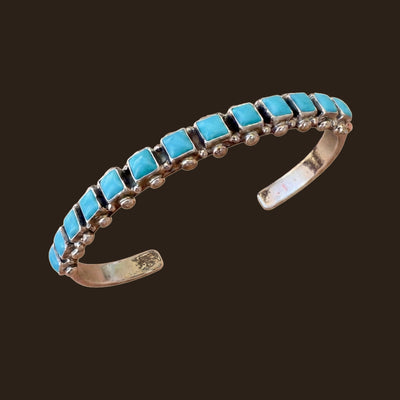
Stability is a practical concern in the studio. Certain varieties of turquoise are sliced into thin slabs to showcase their patterns, which can make them fragile. To prevent cracking during the setting process, these stones often receive a backing of high-strength jeweler's epoxy. This layer provides a flat, durable foundation that allows the stone to sit securely within its silver housing. Once the stone is ready, it's secured using a bezel. This thin strip of sterling silver is hand-fitted to the perimeter of the stone, then pushed over the edges to lock it in place. It's a functional choice that protects the edges of the stone from daily wear.
Hand-cut stones versus mass-produced calibrated gems
Mass-produced jewelry typically relies on calibrated gems, which are stones cut to uniform sizes like 10x8mm ovals. This makes manufacturing faster but strips away the individuality of the material. Our studio prioritizes hand-cut stones that follow the natural shape of the rough. Greg spends hours selecting the best face of a stone, often choosing asymmetrical forms that highlight a specific spiderweb pattern or color shift. You can learn more about this detailed stone origins work and how it influences the final piece. These organic shapes feel more human and grounded than a machine-cut circle. They tell a story of the earth.
Kimberly Cordova and the art of curation
The design process is a collaboration between the stone and the silver. Kimberly Cordova leads the curation and design, selecting which cabochon belongs in a specific cuff or pendant. She considers how the weight of a bezel setting will balance the visual density of the stone's matrix. A heavy matrix might require a simpler silver frame to let the turquoise speak for itself. It takes a specific kind of quiet persistence to hand-polish a stone through every grit for 40 minutes or more. This slow progression ensures the surface is smooth and the luster is authentic. The goal isn't a glassy, artificial shine.
Identifying mine origins through matrix and color
Identifying the source of a stone requires a trained eye for the specific host rock and color saturation. In our Santa Fe studio, we look closely at the matrix, which is the remnant of the mother stone where the turquoise formed. This host material acts like a fingerprint, revealing the geological history of the Southwest. Greg Cordova, who manages our lapidary work and sources high-grade material through CuttingEdgeTurquoise.com, often identifies stones by the hardness and the specific chemical impurities that create these unique palettes.
The famous blue of the Kingman mine
The Kingman mine is one of the oldest and largest operations in the United States, located in the Cerbat Mountains of Arizona. It's known for a high-blue color that defines the classic Southwestern style. This mine has been a commercial operation since the 1880s, though evidence suggests it was utilized as early as 600 AD. The matrix in Kingman material is typically a deep black or dark brown. Sometimes this appears in a fine spiderweb pattern that is highly prized by collectors. Because the mine produces a consistent volume of high-quality material, it remains a staple for artisans who value durability and a recognizable aesthetic.
Royston and the appeal of variegated color
The Royston mine in Nevada produces stones that look like a landscape trapped in a cabochon. Royston isn't just one hole in the ground; it's a district that has been producing since the early 1900s. You'll see a range from deep emerald greens to soft, sky blues within a single stone. The matrix here is typically a heavy brown or gold, creating a "toasted" look that complements the green hues. This variegated quality makes each piece distinct. Kimberly Cordova frequently selects these stones for our one-of-a-kind collections because they offer a movement and depth that solid blue stones lack.
Beyond these well-known mines, we occasionally work with rarer materials like King Manassa turquoise. This stone comes from the King mine in Conejos County, Colorado, first discovered by Ancestral Puebloans. Our family holds claims there, and Greg cuts the rough himself. It's characterized by forest green tones and a golden-brown matrix. In contrast, White Buffalo is a distinct white stone often paired with blue turquoise in our silver work. While frequently called white turquoise, it is not turquoise. Ours comes from our family's claim at the White Buffalo mine near Tonopah, Nevada. It features a stark white base with black chert matrix, providing a sharp, modern look when set in a hand-cut bezel.
Explore our curated gallery of handcrafted jewelry at wildflowerartisans.com. If you prefer the protections and reviews of a larger marketplace, you can also view our latest pieces at the Wildflower Etsy shop.

Preservation and care for natural turquoise stones
Owning a piece of handcrafted jewelry is a bit like tending a garden. It requires a gentle touch and an understanding of the materials to keep it looking its best over the decades. In our Santa Fe studio, we focus on the longevity of every bezel and cabochon we set. Because turquoise is a relatively soft, porous phosphate mineral, it reacts to its environment in ways that harder gemstones do not. Whether your piece features a stone that is untreated or one that has been stabilized for durability, knowing how to handle it will ensure the silver and stone age gracefully together.
Understanding stabilization and treatments
Greg Cordova, who handles our lapidary work and sources material through CuttingEdgeTurquoise.com, often works with stones that require stabilization. This is a standard industry process where a porous stone is infused with a clear, colorless resin under high pressure. This treatment hardens the stone, making it durable enough for everyday wear in a ring or cuff without changing its natural color. It's a practical necessity for many varieties of turquoise that would otherwise be too fragile to cut or wear. We always disclose when a stone has been stabilized. In contrast, natural stones are completely untreated. These natural specimens are prized for their purity, but they are more sensitive. Over several years of wear, a natural stone may absorb oils from your skin or moisture from the air, causing the color to shift from a bright blue to a deeper, organic green. This change is a physical history of your time with the jewelry.
Daily care for your artisan-made jewelry
- Use a soft, dry polishing cloth specifically designed for sterling silver to clean the metal components.
- Avoid submerging the jewelry in water, especially if the stone is natural and untreated.
- Never use ultrasonic cleaners, as the high-frequency vibrations can shatter the stone or damage the stabilization resin.
- Keep your jewelry away from harsh household chemicals, including bleach and ammonia.
- Wipe the stone gently with a microfiber cloth to remove surface oils after a long day of wear.
If your jewelry ever needs a deeper cleaning or if a stone feels loose in its bezel, it's best to consult an expert. You can find more detailed steps on maintaining different silver finishes in our care and repair guide. Taking these small steps preserves the quiet beauty of the artisan's work for the next generation.
Browse our current selection of one of a kind turquoise jewelry at WildflowerArtisans.com. If you prefer to shop through a platform with established community reviews, you can also view our curated pieces on the Wildflower Etsy shop.
Carrying the desert's story home
The character of a stone is written in its matrix and the specific mineral chemistry of the mine where it formed millions of years ago. Understanding how to identify these traits and care for natural, untreated stones ensures your piece remains a quiet heirloom for decades. At our Santa Fe studio, Greg Cordova selects and hand-cuts each cabochon to highlight its unique pattern, while Kimberly Cordova designs the silver settings that hold them. Every stone has a documented origin, moving directly from the mine to Greg's lapidary wheel and finally to our workbench. This transparency allows you to know exactly which part of the American Southwest you're wearing. We believe the process of shaping these minerals is just as important as the final design. It's a slow, intentional practice that honors the geological history of the high desert.
You can browse our collection of artisan-made turquoise jewelry at wildflowerartisans.com to find a piece that resonates with your own style. For those who value verified feedback, we also maintain a selection in the Wildflower Etsy shop where you can read reviews from our community of collectors. We look forward to helping you find a stone that speaks to you.
Frequently Asked Questions
How can I tell if my turquoise is real or dyed howlite?
You can distinguish genuine turquoise from dyed howlite by wiping a small area with a cotton swab dipped in acetone. If the blue color transfers to the swab, the stone is dyed. Natural turquoise has a Mohs hardness between 5 and 6, while howlite sits at a softer 3.5. Greg Cordova notes that dyed stones look too uniform in color compared to the nuanced shifts found in stones from the Kingman or Royston mines.
What is the difference between natural and stabilized turquoise?
Natural turquoise refers strictly to stones that have not been treated with any resins or dyes after being pulled from the earth. Only about 10 percent of mined turquoise is hard enough to be used in jewelry without help. Stabilized stones undergo a process where clear epoxy is pressurized into the pores. This makes the stone harder and prevents it from absorbing oils, which is a practical choice for daily wear.
Why does some turquoise have a black or brown web-like pattern?
These dark patterns are called matrix, which is the host rock where the turquoise originally formed. In the Southwest, this is often composed of iron oxide or limonite. When the matrix forms thin, intersecting lines across the surface, we call it a spiderweb pattern. It is a signature of the stone's geological history. Greg Cordova selects specific cuts to highlight these organic maps of the earth in his lapidary work at CuttingEdgeTurquoise.com.
Is White Buffalo actually a type of turquoise?
White Buffalo is not a type of turquoise, though it is often found in the same mines. It is a combination of calcite and dolomite, lacking the copper or aluminum required for turquoise to form. Ours comes from our family's claim at the White Buffalo mine near Tonopah, Nevada, and it has become a staple of Southwestern style. We treat it with the same artisanal respect as our blue stones, often setting it in a hand-cut bezel for a quietly timeless look.
How should I store my turquoise jewelry to prevent damage?
Store your jewelry in a cool, dry place away from direct sunlight or high humidity. Turquoise is a porous phosphate mineral that can be scratched by harder gemstones like diamonds or sapphires. Keeping your pieces in individual soft pouches prevents the silver and stones from rubbing against one another. Kimberly Cordova suggests a simple dedicated jewelry box to keep your collection organized and protected from household chemicals.
Does turquoise change color as it gets older?
Untreated turquoise can change color over several years as it absorbs skin oils, perfumes, or lotions. This process often shifts the hue from a bright blue to a deeper green. It is a natural evolution of the stone's character. Stabilized turquoise is less likely to change because the resin seals the pores. Many collectors value this shift as a sign of a piece that has been lived in and loved for decades.
What does it mean when a stone is described as a cabochon?
A cabochon is a stone that has been shaped and polished into a smooth, domed top with a flat back. Unlike faceted gems that rely on light refraction, this cut highlights the color and matrix of the turquoise. Most of the stones Greg Cordova cuts for our studio are cabochons. This shape is ideal for a secure bezel setting, which protects the edges of the stone from impact during daily wear.
Can I wear my turquoise jewelry in the shower or pool?
You should remove your turquoise jewelry before entering a shower or pool. Chlorine and harsh soaps can strip the natural oils from the stone or cause the silver to tarnish prematurely. Repeated exposure to water can also weaken the bond if the stone was set with a backing. To keep your handcrafted pieces in top condition, put your jewelry on last, after you have applied any hairspray or perfume.
View our latest small batch collections at wildflowerartisans.com. You can also explore a curated selection of our work in the Wildflower Etsy shop for those who prefer the protections of that platform.

Article by
Kimberly Cordova
Kimberly Cordova is the founder and creative director of Wildflower Artisans, a handmade jewelry brand rooted in Santa Fe. Real turquoise, solid sterling silver, and a small line set in solid 14K gold. She built Wildflower around a simple belief: the best jewelry is the kind you actually reach for, not the kind you save for someday.
The collection is built three ways. Some pieces are made in-house, cut by her husband Greg from stones he sources himself, including rough from the family's King's Manassa Mine in Colorado and White Buffalo Mine in Nevada. Some are designed by Kimberly and fabricated by a trusted circle of Santa Fe silversmiths. And some are finished work she curates from artisan makers whose craft meets the same standard, because building a real collection means knowing when to make and when to look.
Turquoise leads, joined by White Buffalo, Wild Horse, Lapis Lazuli, Spiny Oyster, Black Onyx, Opal, and other genuine semi-precious stones. No shortcuts on the stone, the silver, or the story behind either.
Her writing covers everything she has learned along the way: how turquoise forms, how to tell natural from stabilized, what makes one mine different from another, how to read a bezel, and how to shop with confidence in a market that is not always straightforward. It is the kind of plainspoken information she wished someone had laid out for her when she was starting out.
Browse the collection at wildflowerartisans.com. Questions about a stone, a setting, or a specific piece are welcome any time.

0 comments