

A piece of raw Kingman turquoise rests on our studio bench, its deep blue surface interrupted by a web of dark matrix that looks exactly like the parched veins of the High Desert. You've likely felt that quiet pull toward a specific stone without knowing why, only to be met with mass-produced imitations or generic descriptions that fail to capture the soul of the work. Understanding the symbolism of turquoise in Native American jewelry requires looking past the surface to the specific mines and artisans who treat the stone as a living narrative of the land.
In our Santa Fe studio, we see these stones as more than just components for silver settings; they are small, tangible pieces of the earth's history. We believe every hand-cut cabochon is a vessel for the landscape it came from, carrying stories of rare water and expansive Southwestern skies. This article explores how authentic Southwestern style uses different shades and matrix patterns to reflect the natural world, helping you identify true cultural narratives in your favorite handcrafted pieces. From the specialized lapidary work of Greg Cordova to the intentional design curation of Kimberly Cordova, we'll show you how a stone becomes a bridge between the earth and the wearer.
Key Takeaways
- Learn why turquoise is regarded as the sky stone and how its presence in the high desert shaped historical Southwestern style.
- Understand how specific hues and matrix patterns serve as a unique thumbprint for each stone, linking it back to the water and earth of its origin.
- Discover the deeper symbolism of turquoise in Native American jewelry by exploring how natural stones change color over time through oxidation.
- Identify the protective associations and meanings behind common handcrafted forms like the turquoise cuff bracelet.
- See how the studio process and intentional lapidary work by makers like Greg Cordova transform raw stones into meaningful pieces of art.
Symbolism of Turquoise in Native American Jewelry: The Sky Stone Heritage
The arid stretches of the Southwest are often defined by their starkness, yet beneath the sun-baked crust lies a stone that mirrors the infinite blue above. For generations, turquoise has been revered as the sky stone, a name that reflects its visual kinship with the high desert horizon. This isn't just a poetic metaphor. When you hold a piece of authentic turquoise, you're holding a mineralized history of the land itself. The symbolism of turquoise in Native American jewelry is rooted in this physical connection, where the stone serves as a bridge between the dusty earth and the expansive sky.
We think of jewelry as a vessel for stories that are still being written. A stone that formed millions of years ago in a copper deposit becomes part of your life today. It carries the weight of the mountain and the clarity of the sky, acting as a physical anchor for the wearer. This duality is why the stone is so deeply cherished; it represents a balance between the grounded, heavy elements of the earth and the light, ethereal quality of the air. It’s a quiet reminder of the harmony found in the natural world.
The High Desert Connection
Turquoise forms in specific arid regions where copper-rich groundwater seeps through limestone or shale, leaving behind deposits that we eventually pull from the ground as rough nuggets. This environment is harsh and dry, making the stone’s water-like appearance feel like a small miracle of the landscape. Early artisans didn't just see a pretty color; they saw a fragment of the sky that had fallen to earth. In our studio, we treat each piece as a vessel for these natural narratives. Whether it's a deep blue cabochon from the Kingman mine or a pale green stone from Royston, the color is a direct result of the specific minerals present in that patch of desert. This Turquoise mineral and cultural history shows us that the stone has been a constant companion in the Southwest for over a millennium, surviving shifts in climate and culture alike.
Traditional Significance in Southwestern Style
In Southwestern style, turquoise has never been a static accessory. It was historically woven into the fabric of daily life and ceremonial tradition, often serving as a form of currency or a marker of significant life events. The symbolism of turquoise in Native American jewelry often centers on the idea of continuity and the preservation of heritage. A turquoise pendant or a set of silver studs isn't just a purchase; it's a way of carrying a piece of the desert's quiet strength with you. While we focus on the design and curation at Wildflower under the eye of Kimberly Cordova, we also look back at the regional history that turned these stones into such powerful cultural anchors. You can find more about the evolution of these designs in the Wildflower journal, where we explore the deep roots of our local craft. Each piece we create is intended to honor that history while remaining a contemporary, wearable part of your own story.
Earth and Water: How Color and Matrix Inform Artisan Symbolism
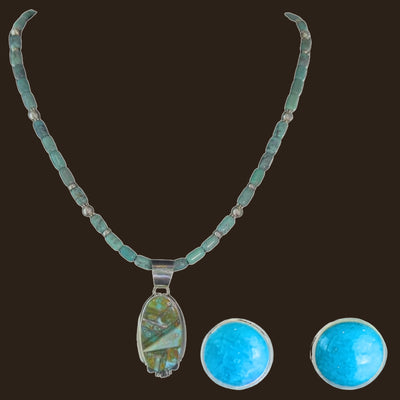
The specific shade of a turquoise stone is a direct map of the minerals present during its formation. High copper content yields those bright, robin egg blues, while iron or aluminum shifts the palette toward deep mossy greens. In the symbolism of turquoise in Native American jewelry, these colors aren't merely decorative choices. They represent the two most vital elements of the high desert: the sky and the water that brings life to the earth. When you look at a collection of Southwestern style pieces, you're seeing a spectrum of the natural world captured in mineral form.
The Language of Color
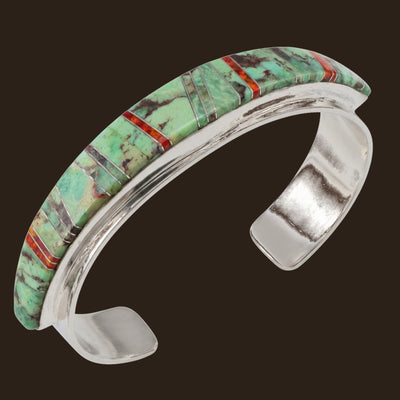
Artisans often select stones based on the specific narrative they want to tell. A bright blue stone from the Kingman mine might be chosen to represent the clarity of a summer sky, while a forest green stone speaks to the resilience of desert plant life. We often work with King Manassa turquoise, which is known for its incredible range of greens and golds. These earthy tones feel grounded and quiet, offering a different emotional weight than the traditional sky blue varieties. It's a way for the maker to anchor a piece in a specific seasonal or environmental mood, making the jewelry feel like a personal extension of the landscape.
The Story in the Matrix
The matrix is the remnants of the host rock where the turquoise originally grew. It can appear as delicate spiderwebbing, bold splotches of chocolate brown, or metallic flecks of pyrite. Rather than seeing these as imperfections, we view them as the stone's thumbprint. This host rock symbolizes the mother or the earth, providing the necessary foundation for the turquoise to form. This Turquoise folklore and history reminds us that the combination of stone and matrix has been valued for centuries as a symbol of the interconnectedness of all things. It's the physical proof that the beauty of the stone cannot exist without the grit of the mountain.
When Greg Cordova cuts a new batch of rough stone, he looks for how the matrix flows through the mineral. A rare spiderweb pattern, where the host rock creates a fine, tight net across the surface, is highly prized because of its scarcity in high grade deposits. These patterns often dictate the final shape of the cabochon and the silver bezel that Kimberly Cordova designs to hold it. The result is a piece of one of a kind turquoise jewelry that can never be replicated, because the earth only wrote that specific story once. You can explore our latest studio finds and authentic turquoise jewelry to find a matrix pattern that speaks to your own journey.

The Living Stone: Symbolizing Growth through Natural Oxidation and Change
One of the most misunderstood aspects of this mineral is its ability to change. Because turquoise is a porous phosphate, it naturally interacts with its environment. Over years of wear, a hand-cut sky-blue cabochon might slowly shift toward a deeper teal or even a rich forest green. This process, known as oxidation, occurs as the stone reacts to the air and the oils from your skin. In the context of the symbolism of turquoise in Native American jewelry, this shift isn't seen as a degradation of value. Instead, it symbolizes a stone that is alive, evolving alongside the person who wears it.
Greg Cordova often notes that natural, untreated stones are the only ones capable of this honest evolution. When a stone is stabilized with plastic resins or dyed, its story is essentially frozen. It becomes a static object rather than a participant in your daily life. A quietly timeless silver setting allows the stone to take center stage as it gains character over the decades. This organic transition makes the jewelry a true companion, reflecting the time spent in the sun or the simple passage of the seasons. It's a reminder that beauty isn't a fixed point but a journey of change.
This concept of the living stone also touches on the relationship between the maker and the wearer. When we work in the studio, we aren't just assembling materials. We're preparing a stone for its next chapter. The symbolism of turquoise in Native American jewelry is strengthened by this commitment to untreated materials, where the stone's physical integrity mirrors the authenticity of the artisan's hand.
Authenticity and the Living Quality
We prioritize natural turquoise because we value the integrity of the material. Many mass-produced items use dyed howlite or mystery metals that mimic the look but lack the soul of the real thing. For us, a handcrafted piece must begin with a stone that hasn't been chemically altered. This commitment to natural materials ensures that the symbolism remains grounded in reality rather than marketing hype. It keeps the connection to the earth direct and honest, just as the stone was when it was first pulled from the mountain.
White Buffalo: A Modern Symbol of Rarity
While traditional blue and green stones are the most recognized, White Buffalo has carved out its own place in Southwestern style. Found in the Dry Valley mine near Tonopah, Nevada, this monochromatic stone is prized for its stark white background and black chert matrix. It carries a different kind of weight, symbolizing the rare and the unexpected in a landscape dominated by color. Because it is found in such limited quantities, these stones are often the centerpiece of a one of a kind collection. Kimberly Cordova curates these specific stones for their visual contrast, ensuring each ring or pendant highlights the unique patterns within the silver bezel.
Traditional Forms and Meanings in Handcrafted Southwestern Jewelry
The physical architecture of a piece of jewelry influences how we perceive its intent. In Southwestern style, the way a stone is held and where it rests on the body creates a specific dialogue between the wearer and the land. The symbolism of turquoise in Native American jewelry is often amplified by these traditional forms, where the silver work isn't just a container but a deliberate extension of the stone's narrative. A stone resting against the pulse of the wrist or the knuckle of a finger carries a different weight than one worn at the throat.
The bezel is a quietly timeless element of our studio process. It serves as a protective wall for the stone, hand-fitted to the unique contours of every cabochon Greg Cordova cuts. This silver border honors the stone, securing its place within the larger composition while keeping the focus on the natural matrix and color. It acts as a silver boundary that protects the fragile edges of a hand-cut cabochon while elevating it, ensuring the stone’s narrative remains the focal point of the piece.
Cuffs and Rings for Protection
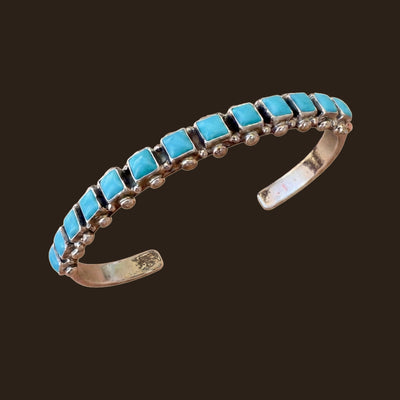
There is a long-standing association between turquoise worn on the hands and the idea of a personal shield. Because the hands are our primary tools for interacting with the world, placing a stone there is seen as a way to carry the mountain's resilience into every action. A heavy turquoise cuff bracelet or a wide-band ring provides a sense of groundedness. The sterling silver frames the stone, acting as a sturdy guardian for the delicate mineral within. If you're looking for a piece to wear as a daily companion, you can explore the Wildflower shop for everyday essentials that bridge the gap between art and utility.
The Bolo Tie as a Southwestern Staple
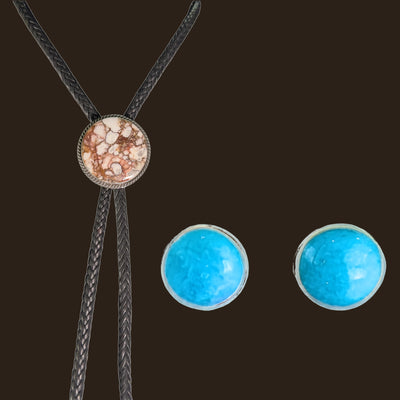
The bolo tie has evolved from a practical western accessory into a sophisticated medium for artisan expression. In a custom bolo slide, a large, high-grade cabochon usually takes center stage. This placement at the center of the chest makes the stone a literal focal point, representing the heart of the wearer’s connection to the landscape. Kimberly Cordova curates these larger stones for their visual impact, often selecting pieces with intricate spiderweb matrix or bold color shifts. The artisanal process of creating a bolo slide involves balancing the weight of the silver with the specific geometry of the stone, resulting in a piece that feels both substantial and refined. You can view our latest collection of handcrafted bolo ties to find a piece that speaks to your own style.
The Artisan Perspective: Honoring Symbolism through Studio Process
The symbolism of turquoise in Native American jewelry is a living narrative, but it relies on the integrity of the maker to survive the transition from raw nugget to finished piece. When a stone is mass-produced or treated with chemicals, that connection to the earth's history is severed. In our Santa Fe studio, we believe the artisan's intention is the final layer of symbolism. It's the human element that respects the stone's origin while preparing it for a new life. Every choice made at the workbench, from the angle of the cut to the thickness of the silver bezel, is a way of honoring the stone's inherent story.
This collaborative effort between the lapidary artist and the designer ensures that the jewelry remains a vessel for emotion rather than just a product. We source our material from known, reputable mines to maintain a clear line of custody from the mountain to the wearer. By focusing on small batch production, we can give each cabochon the individual attention it requires to truly shine. This process isn't about speed or efficiency; it's about a quiet, meditative appreciation for the raw beauty provided by the high desert landscape.
Lapidary Work by Greg Cordova
The process begins at the saw. Greg Cordova handles the lapidary work, a role that requires a deep understanding of mineralogy and a refined eye for the "face" of a stone. He selects rough material from specific mines, ensuring the stone's identity is known from the moment it's pulled from the ground. Cutting and polishing raw turquoise is a slow process of discovery. As the outer crust is removed, the matrix and color are revealed, and Greg decides how to shape the cabochon to highlight its unique thumbprint. You can find technical stone details and more about his specialized process at CuttingEdgeTurquoise.com. This level of care ensures that the symbolism of turquoise in Native American jewelry remains grounded in the physical reality of the stone.
Curation and Design by Kimberly Cordova
Once the stones are hand-cut, the focus shifts to design and curation. Kimberly Cordova approaches each piece with a commitment to intentional, handcrafted jewelry making. Her goal is to create a setting that doesn't compete with the stone but rather emphasizes its natural beauty and narrative. This might mean a simple, clean bezel for a complex spiderweb matrix or a more detailed frame for a clear, sky-blue cabochon. By curating artist-made pieces that prioritize the stone's character, we maintain the authentic spirit of Southwestern style. We find the most beauty in the asymmetrical and the organic, projecting a persona that is both humble and highly skilled. Our pieces are designed to be quietly timeless, serving as a bridge between the artisan's hand and your own personal journey.
Finding Your Connection to the Sky Stone
Every turquoise stone carries a piece of the high desert's quiet strength, from the robin egg blue of a Kingman cabochon to the deep mossy greens of a Royston find. When you understand the symbolism of turquoise in Native American jewelry, these pieces become more than just accessories; they are living records of the land and the artisan's process. We focus on natural, untreated stones because they age honestly, gaining character as they oxidize and evolve alongside you. Whether it is a hand-cut ring or a heavy silver cuff, the connection between the maker and the wearer is what gives these pieces their enduring weight.
In our Santa Fe studio, we take pride in maintaining this direct link to the earth. Greg Cordova ensures every stone is sourced from reputable mines and hand-cut with precision, while Kimberly Cordova curates each setting to honor the stone's unique narrative. This intentional approach preserves the integrity of Southwestern style for years to come. We believe that jewelry should be a vessel for emotion, reflecting both the beauty of the mineral and the skill of the hand that shaped it.
If you are ready to find a piece that speaks to your own story, explore our collection of artist-made sterling and turquoise jewelry. You can also visit our Wildflower Etsy shop. We look forward to helping you find a quietly timeless piece of the Southwest.
Frequently Asked Questions
What does the color of turquoise represent in Southwestern style?
In Southwestern style, the color of the stone is a direct reflection of the natural elements that sustain life in the desert. Blue hues are generally associated with the expansive sky, while green tones represent water and the resilience of plant life in the arid landscape. Artisans often select specific shades to mirror the environment where the stone was formed. This color choice creates a visual narrative that connects the wearer to the earth.
Why is turquoise often referred to as a living stone?
Turquoise is called a living stone because its porous structure allows it to interact with its environment over time. As the stone absorbs oils from the skin or reacts to the air, it undergoes natural oxidation, which can shift its color from bright blue to deep green. This process is a key part of the symbolism of turquoise in Native American jewelry, representing a piece that grows and changes alongside its owner.
What is the significance of the matrix in a turquoise cabochon?
The matrix is the host rock that remains within the turquoise, and it symbolizes the stone's physical connection to the earth. These patterns, whether they are chocolate brown chert or metallic pyrite, act as a unique thumbprint for every cabochon. In the studio, Greg Cordova cuts stones to highlight these patterns because they represent the mother rock that allowed the turquoise to form in the first place. It is the grit that makes the beauty possible.
Is turquoise traditionally believed to offer protection to the wearer?
Many traditions in the Southwest associate turquoise with a sense of personal strength and a shield against the world. It is often believed that wearing the stone on the hands or wrists, such as in a cuff bracelet or ring, offers a protective companion for the wearer. This is why so many handcrafted pieces are designed with sturdy sterling silver bezels that emphasize the stone's role as a grounded, durable anchor in daily life.
What is the difference between natural and treated turquoise symbolism?
The difference lies in the authenticity of the stone’s story and its ability to evolve. Natural, untreated turquoise is valued for its ability to change and age, which symbolizes an honest, living connection to the landscape. Treated stones are often stabilized with plastic resins, which essentially freezes the stone’s appearance and prevents it from ever changing. For a piece to carry true artisan symbolism, it should be a natural stone that hasn't been chemically altered.
Does the specific mine origin of a turquoise stone change its meaning?
While the underlying symbolism of turquoise in Native American jewelry remains consistent, the specific mine origin provides a unique regional identity. A stone from the Sleeping Beauty mine, known for its clear sky blue color, tells a different story than a forest green stone from the Royston mine. These origins help define the stone’s character and connect the jewelry to a specific patch of desert, making the mine source a vital part of the piece's narrative.

Article by
Kimberly Cordova
Kimberly Cordova is the founder and creative director of Wildflower, a handmade Turquoise and sterling silver jewelry brand based in Santa Fe. She built Wildflower around a simple belief: the best jewelry is the kind you actually reach for, not the kind you save for someday.
Kimberly designs pieces made by hand with a trusted circle of Santa Fe silversmiths, works alongside her husband Greg on in-house lapidary pieces cut from stones including the family's King's Manassa Mine in Colorado and White Buffalo Mine in Nevada, and sources finished work from artisan makers whose craft meets the same standard. The result is a collection with real range and no shortcuts on the stone, the silver, or the story behind either.
Her writing covers everything she has learned along the way: how Turquoise forms, how to tell natural from stabilized, what makes one mine different from another, how to read a bezel, and how to shop with confidence in a market that is not always straightforward. It is the kind of plainspoken information she wished someone had laid out for her when she was starting out.
Shop the Wildflower collection at wildflowerartisans.com, or find us on Etsy at wildflowersantafe.etsy.com. Questions about a stone, a setting, or a specific piece are welcome any time.
0 comments