

What if the weight of the piece around your neck tells a story of a factory floor rather than a quiet studio? Many discerning collectors seek out authentic sterling silver bolo ties, yet they often worry about unknowingly purchasing stabilized stones or dyed howlite at natural prices. It's a valid concern when the market is crowded with mass-produced imitations that mimic the look but lack the spirit of intentional, small batch work. We understand the hesitation that comes with technical terms like matrix or bezel when you're simply looking for a piece that resonates with your own narrative.
We believe that a bolo tie is more than an accessory (it's a vessel for rich cultural history and the maker's hand). In this guide, you'll learn how to distinguish genuine bench-made sterling silver from factory castings while discovering the technical artistry behind authentic artisan bolo ties. We'll explore the nuances of a hand-soldered bezel, the intricate patterns of a natural stone matrix, and how to integrate these traditional pieces into a modern wardrobe with quiet confidence. By understanding the lapidary process and the metalsmith's touch, you can choose a piece that feels as grounded and enduring as a treasured heirloom.
Key Takeaways
- Learn to identify the subtle tool marks of bench-made jewelry that distinguish it from industrial casting and mass production.
- Understand the technical skill required for a lapidary to transform raw minerals into a perfectly polished cabochon for a hand-soldered bezel.
- Discover how to verify the authenticity of natural stones like King's Manassa when selecting sterling silver bolo ties Santa Fe.
- Gain insights on how to build a functional jewelry collection by pairing statement pieces with simple, everyday essentials.
- Recognize why sourcing directly from a working studio ensures your jewelry is a genuine expression of small batch artistry.
Defining sterling silver bolo ties Santa Fe in a world of mass production
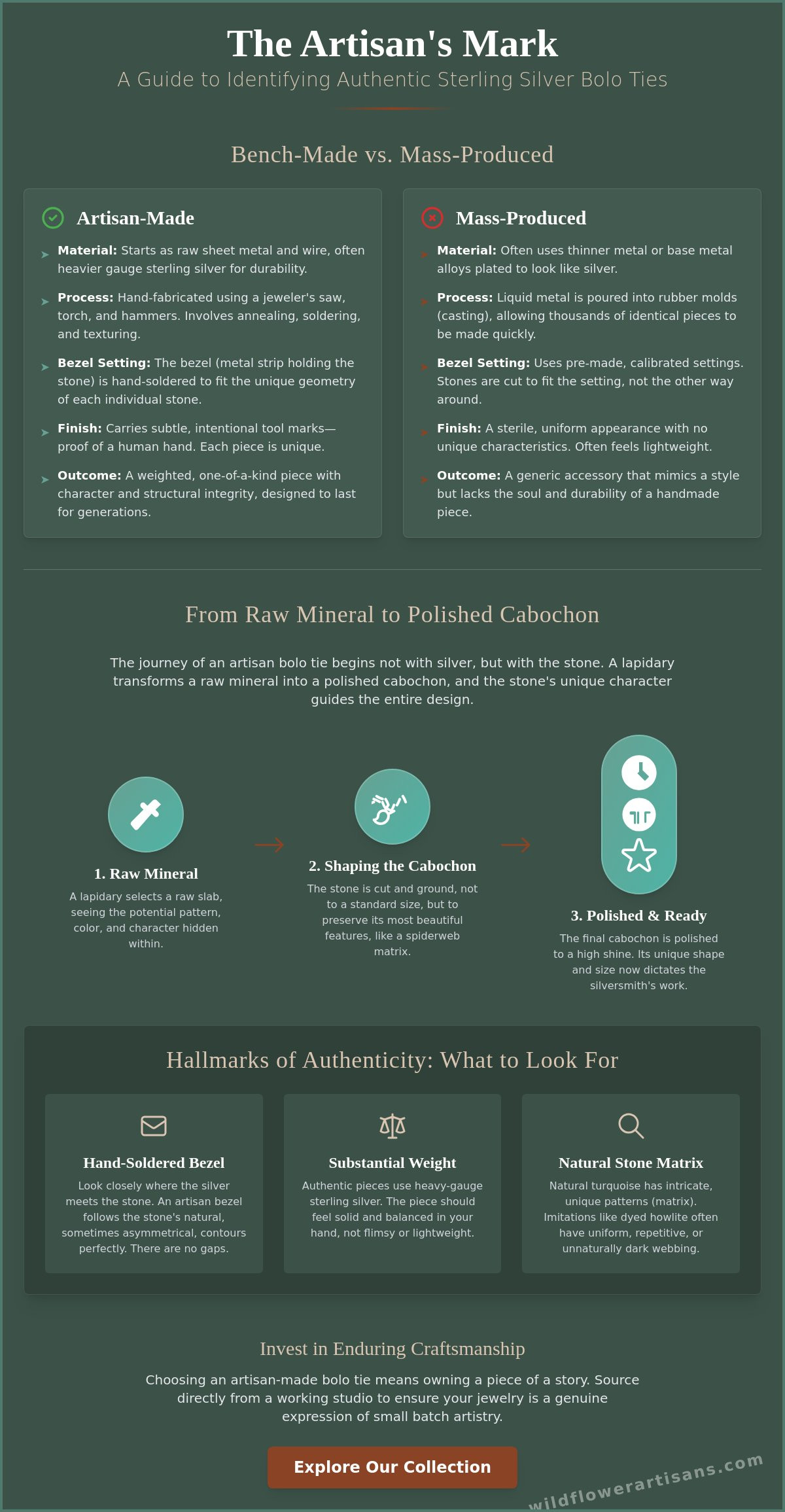
Authentic jewelry starts with a raw sheet of metal and a jeweler's saw. In a market often crowded with industrial castings, finding genuine sterling silver bolo ties Santa Fe requires an eye for the intentional marks of the bench. Mass production relies on rubber molds where thousands of identical pieces are poured in a single day. This lacks the soul of a piece born from a jeweler's bench. Our studio focuses on small batch production where we use torches to flow silver and hammers to texture surfaces. We start by annealing the silver to make it workable, then we carefully saw out the backplate that will anchor the stone. It's a physical, dusty process that contrasts sharply with the sterile environment of a factory. This process ensures that no two pieces are exactly alike. Each one carries the subtle, intentional variations that prove a human hand guided the tool.
To better understand the physical reality of this craft, watch this helpful video:
The technical reality of bench-made sterling
Bench-made sterling is a technical partnership between heat and pressure. We don't use pre-made settings or "find-and-fit" components. Instead, we hand-solder every bezel (the thin silver ribbon that holds the stone) to fit the specific, often asymmetrical geometry of a cabochon. This hand-fabrication allows us to adjust the bezel height for a low-profile stone or a high-domed cabochon, ensuring the silver perfectly frames the mineral's natural beauty. When we fabricate sterling silver bolo ties Santa Fe, we prioritize heavy-gauge sterling silver for the bolos. This provides a satisfying weight and ensures the piece won't warp or thin over decades of wear. Forming silver wire by hand allows for a level of detail that factory machines simply can't replicate. It's a slow, rhythmic process that values structural integrity over the speed of a production line.
Why artisan-made pieces stand the test of time
Artisan jewelry isn't about chasing a seasonal trend that will feel dated by next year. It's about creating a vessel for personal history that remains relevant as it develops a natural patina. When you look into the history of the bolo tie, you find a legacy of functional art designed for the rugged landscape of the Southwest. A handmade bolo tie is balanced. The weight of the silver slide should feel secure against the leather cord without pulling or shifting. We often suggest starting a collection with everyday essentials like simple bands before moving into larger statement pieces. Choosing sterling silver bolo ties Santa Fe means investing in a piece that can be passed down precisely because it was made with intention and care.
The lapidary process and the art of the cabochon
The lapidary is the first artist to touch the stone. They see the potential in a raw chunk of mineral. In the world of artisan jewelry, the stone isn't forced into a specific shape. Instead, the lapidary transforms raw slabs into polished cabochons that preserve the natural story of the mine. Unlike mass-produced pieces where stones are calibrated to fit pre-made settings, our process is entirely dictated by the mineral's natural shape. The stone speaks, and the silver follows.
This is where Greg Cordova’s lapidary work becomes essential to our studio. As a mine owner and stone cutter, Greg understands how to reveal the specific character of each piece. Whether it's a tight spiderweb matrix or a clear, sky-blue surface, his cuts prioritize the stone's integrity. For those seeking authentic sterling silver bolo ties Santa Fe, this direct connection between the mine and the jeweler is the hallmark of quality. It ensures that every stone is natural and cut with the final design in mind.
Cutting and polishing in the studio
The journey begins with a raw slab of turquoise or magnesite. Using diamond wheels and varying grits of polishing compounds, the lapidary shapes the stone into a smooth cabochon. It takes technical skill to highlight a specific pattern without grinding it away. Unlike industrial cutting that often strips away "imperfections" for the sake of uniformity, we celebrate the host rock and unique inclusions. These details are rooted in Southwestern silversmithing traditions, where the materials are respected as much as the final form. A high luster is achieved through patience, moving from coarse wheels to fine polishing buffs until the stone glows.
From raw stone to finished bezel
Once the stone is polished, the collaboration between the cutter and the designer begins. In our studio, the bezel is hand-fitted to the unique contours of the cabochon. We don't use industrial adhesives or glues to keep a stone in place. Instead, we rely on mechanical tension. The silver bezel is carefully pushed over the edge of the stone, securing it permanently through traditional metal-smithing techniques. This ensures the piece remains stable for a lifetime of wear. You can see how these natural elements and technical skills come together in our collection of artist-made jewelry.
Recognizing authentic stones from Kings Manassa to White Buffalo
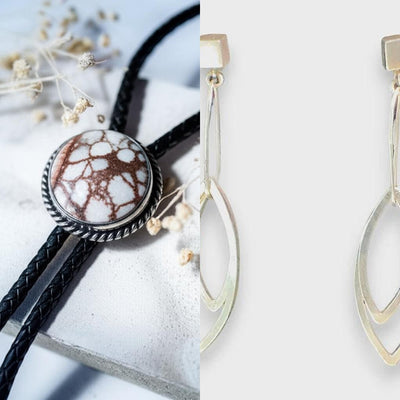
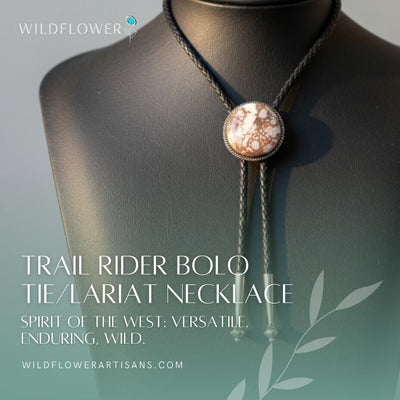
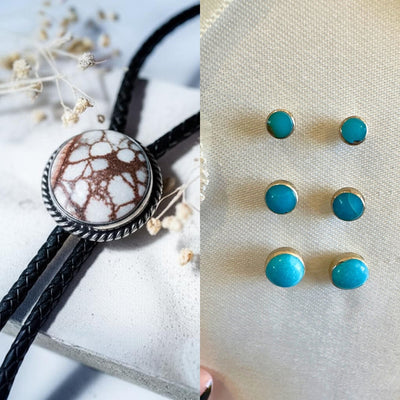
Identifying a stone is about reading its geological fingerprint. When you're searching for sterling silver bolo ties Santa Fe, the matrix tells you exactly where the mineral lived before it reached the jeweler's bench. King's Manassa turquoise is a favorite in our studio. It's prized for vibrant greens and a rich, golden brown matrix that provides a warm, earthy contrast. Because the mine is not currently operational, these stones are finite. We source them from older collections to ensure our pieces carry a genuine piece of Colorado history. White Buffalo is another distinct stone we often feature. While many mistake it for turquoise, it's actually a white magnesite with black chert inclusions found in a single mine in Tonopah, Nevada. It offers a stark, monochromatic elegance that pairs beautifully with hand-stamped silver.
Mine-specific turquoise and its characteristics
Every mine in the Southwest produces a unique aesthetic profile. Royston turquoise is known for its incredible range of greens and blues often found in the same stone. Sleeping Beauty is famous for its clear, robin's egg blue with little to no matrix. You can explore our guide to stone origins and mine locations to see how different environments shape the character of the mineral. The matrix is the best proof of a stone's geological journey. We only work with natural, untreated stones in our studio. Stabilized turquoise has been treated with resins to harden soft material. While this makes the stone cheaper and easier to cut, it lacks the depth of a natural stone. Greg Cordova's expertise as a mine owner and lapidary ensures that every stone we set is authentic and of the highest grade.
Spotting common imitations in the market
The market is unfortunately crowded with dyed howlite and plastic composites. One major red flag is color pooling. If you notice darker blue or green concentrated in the cracks of the stone, it's likely a dye. Natural matrix should feel integrated into the stone's structure. Recognizing authentic stones is a vital skill for any collector. It's about protecting the integrity of the craft and ensuring you receive what you pay for. Avoid mystery metals at all costs. These base metal alloys are often plated with a thin layer of silver that eventually wears away to expose copper or nickel. This can lead to skin irritation and a lack of durability. When shopping for sterling silver bolo ties Santa Fe, always ask for the specific mine name and the artist's name. A transparent studio will always be happy to share the story behind the stone and the silver.
How to choose Southwestern style jewelry for daily wear
Wearable art shouldn't stay hidden in a velvet box. It's meant to be lived in and weathered by the sun. For those investing in sterling silver bolo ties Santa Fe, the goal is often to find pieces that transition from a morning in the studio to a dinner out with friends. We recommend mixing textures to add visual depth to your look. Pairing heavily oxidized silver (where we intentionally darken the recessed areas of the metal) with high-polish finishes creates a contrast that feels intentional. It mimics the natural shadows and highlights found in the high desert landscape, allowing the jewelry to feel like a part of your own story rather than an after-thought.
Building a foundation with everyday essentials
Start with the pieces you'll never want to take off. A collection often grows from a few everyday essentials like simple silver bands or small turquoise studs. Small batch rings and earrings are perfect for a professional wardrobe because they offer a hint of character without being distracting. We prioritize smooth bezels for these daily pieces. A well-set, smooth bezel prevents the silver from snagging on your favorite knit sweater or catching in your hair during a busy day. Using a single statement piece can anchor your entire outfit. It provides a focal point that draws the eye without cluttering your silhouette, keeping the look grounded and sophisticated.
Styling bolo ties and pendants with intention
Bolo ties are a versatile accessory that works with various necklines. They don't require a traditional western shirt to look right. You can wear them over a simple linen tunic or a high-necked dress with equal ease. When adjusting your bolo, check the tension of the slide. It should be snug enough to stay put but loose enough to prevent unnecessary wear on the leather cord. If you're wearing a large pendant featuring one of Greg's hand-cut stones, pair it with a simple silver chain. A busy chain can detract from a beautiful spiderweb matrix or a unique stone shape. We also love the look of layering silver cuffs. Mixing a wide, hand-stamped cuff with a thin, twisted wire bangle allows you to create a personal narrative through your jewelry. The weight of the silver should feel balanced against your chest or wrist, providing a grounded sensation as you move through your day.
Ready to find your next staple piece? You can explore our artist-made jewelry to find a design that fits your daily rhythm.
Sourcing artisan-made jewelry from a Santa Fe studio
Sourcing directly from a working studio changes the relationship between the object and the owner. When you look for sterling silver bolo ties Santa Fe, you aren't just buying a product; you're supporting a lineage of craft that values the maker's hand over the machine's speed. At Wildflower, our commitment to small batch artistry means we handle every component with intention. We don't hide behind corporate labels or vague descriptions. This transparency is the foundation of trust. We want you to know exactly which mine your stone came from and whose hands shaped the silver. Each tool mark on the back of a bolo slide is a signature of a moment spent at the jeweler's bench.
The Wildflower approach to curation
We balance our own in-house designs with pieces curated from other trusted artisans who share our values. For in-house work, Greg Cordova manages the lapidary process while Kimberly handles the design and silverwork. You can read more about Greg's mine-to-market turquoise process to understand the depth of this connection. We refuse to use synthetic stones, mystery metals, or dyed howlite. Every piece is an investment in genuine materials. Because we focus on the unique character of each stone, we often produce one of a kind pieces that cannot be replicated. For those who can't visit us in person in the high desert, we offer reliable national shipping to ensure our community of collectors can access these intentional works from anywhere.
Long-term care for your silver and turquoise
Authentic materials require specific care to last for generations. Turquoise is a porous stone (it's essentially a record of the earth's minerals). It should be protected from harsh chemicals, hairsprays, and prolonged exposure to water, as these can seep into the stone and alter its color over time. Sterling silver also has a life of its own. It develops a natural patina that settles into the recessed areas of a hand-stamped design or a textured bezel, adding character and history to the piece. This darkening isn't a flaw; it's a sign of a piece being worn and loved. If you prefer a brighter finish, our jewelry care and repair guide offers practical steps for maintaining luster without damaging the delicate cabochon. By treating these pieces with respect, you ensure they remain as vibrant as the day they left our studio.
Investing in the hand of the maker
Selecting a piece of wearable art is about finding a connection to the landscape and the intention of the artist. You now know how to look for the subtle tool marks of bench-made silver and the rich geological history revealed in a natural matrix. These details separate genuine sterling silver bolo ties Santa Fe from the hollow imitations found in mass-produced markets. By choosing artist-made jewelry from our Santa Fe studio, you're investing in small batch sterling silver and guaranteed natural stones that will develop a beautiful patina over a lifetime of use. We hope you find a piece that resonates with your own story.
Explore our collection of authentic artisan jewelry at wildflowerartisans.com.
Frequently Asked Questions
How can I tell if my silver jewelry is truly handmade?
You can identify truly handmade jewelry by looking for subtle tool marks on the back or interior of the piece. Industrial casting creates thousands of identical items (each one a perfect replica), but a bench-made piece will have unique variations in its stamping or soldering. These small signs of a jeweler's hand prove the piece wasn't popped out of a mold.
What is the difference between natural and stabilized turquoise?
Natural turquoise is stone that is exactly as it came out of the ground, whereas stabilized turquoise has been treated with resin or plastic to make it harder. We only use natural stones in our studio because they maintain their depth and geological story. Stabilized stones often have a plastic-like feel and don't develop the same character over time.
Why is King’s Manassa turquoise highly valued by collectors?
King's Manassa turquoise is highly prized because the mine in Colorado is no longer operational. Its signature vibrant green color and golden brown host rock matrix make it easily recognizable to collectors. Since no new material is being pulled from the earth, every cabochon cut by lapidary Greg Cordova comes from finite older collections.
How do I care for a sterling silver bolo tie with stones?
To care for your jewelry, keep it away from water, lotions, and harsh household chemicals. Turquoise is porous and can absorb oils or liquids, which might change its color permanently. Simply wipe the silver with a soft polishing cloth to maintain the luster of your sterling silver bolo ties Santa Fe without disturbing the stones.
What is White Buffalo stone and is it considered turquoise?
White Buffalo stone is a white magnesite with a black chert matrix, and it is not technically turquoise. It is found at a single mine in Tonopah, Nevada. While it is often grouped with Southwestern stones due to its similar matrix patterns, it has a distinct mineral composition that sets it apart from traditional blue or green turquoise.
Can I wear handmade silver jewelry every day without damaging it?
You can certainly wear artisan-made jewelry every day if the piece is constructed with structural integrity. We use heavy-gauge sterling silver and hand-soldered bezels specifically so our jewelry can withstand daily movement. Choosing a well-balanced piece, such as our sterling silver bolo ties Santa Fe, ensures the jewelry remains comfortable and secure throughout your routine.
Article by
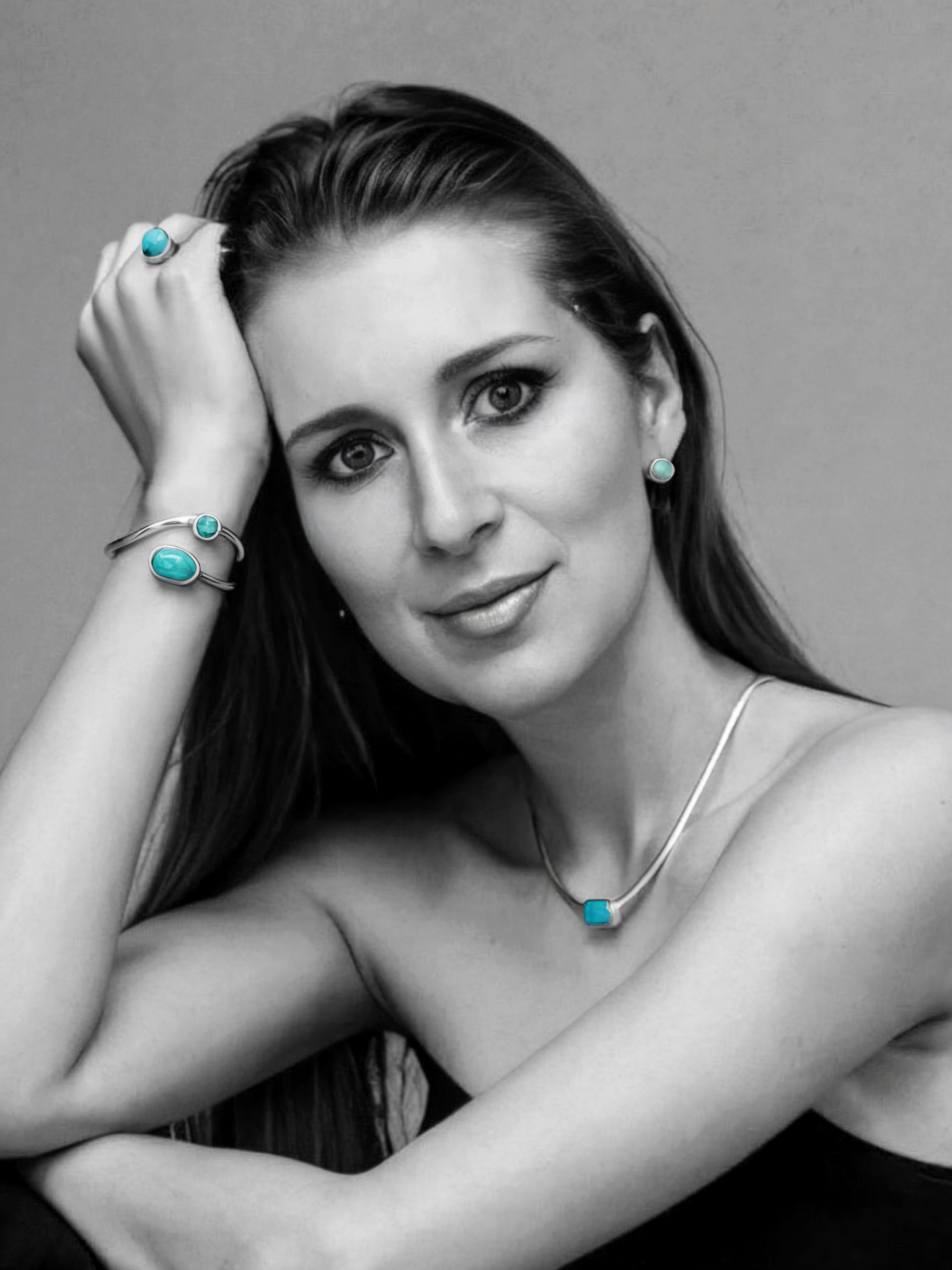
Kimberly Cordova
Kimberly Cordova is the founder and creative director of Wildflower, a handmade Turquoise and sterling silver jewelry brand based in Santa Fe. She built Wildflower around a simple belief: the best jewelry is the kind you actually reach for, not the kind you save for someday.
Kimberly designs pieces made by hand with a trusted circle of Santa Fe silversmiths, works alongside her husband Greg on in-house lapidary pieces cut from stones including the family's King's Manassa Mine in Colorado and White Buffalo Mine in Nevada, and sources finished work from artisan makers whose craft meets the same standard. The result is a collection with real range and no shortcuts on the stone, the silver, or the story behind either.
Her writing covers everything she has learned along the way: how Turquoise forms, how to tell natural from stabilized, what makes one mine different from another, how to read a bezel, and how to shop with confidence in a market that is not always straightforward. It is the kind of plainspoken information she wished someone had laid out for her when she was starting out.
Shop the Wildflower collection at wildflowerartisans.com, or find us on Etsy at wildflowersantafe.etsy.com if you prefer shopping there. Questions about a stone, a setting, or a specific piece are welcome any time.
0 comments