

A heavy, hand-cut cabochon of Kingman or Royston turquoise feels distinct when it rests against your skin. It carries a cool, grounded weight that factory-pressed imitations simply cannot replicate. You've likely felt the frustration of finding a beautiful piece only to worry it might be dyed howlite or a mystery metal that will tarnish or break within a month. It's a common concern when looking for a necklace & pendants that are meant to last for years rather than a single season.
We believe that understanding the journey from the mine to the studio changes how you see your jewelry. In this guide, we'll walk through the technical details of artisan-made pieces, including the lapidary work of Greg Cordova, the curation of Kimberly Cordova, and the specific value of different Southwestern mines. You'll learn how to identify genuine sterling silver and the importance of a hand-cut bezel in creating jewelry that remains quietly timeless. We want to give you the confidence to distinguish between mass-produced fashion accessories and small batch, handcrafted art that tells a real story.
Key Takeaways
- Learn to identify genuine turquoise by examining its unique matrix and color variations, distinguishing hand-cut cabochons from machine-molded substitutes.
- Understand the technical difference between solid sterling silver and mystery metals to avoid skin irritation and ensure your jewelry lasts.
- Discover how to pair different necklace & pendants with your lifestyle, from lightweight everyday essentials to bold statement pieces on Navajo pearls.
- Master the simple visual checks used to spot dyed howlite and other common imitations found in the market.
- Gain insight into the studio process where raw stones and silver sheets are transformed into intentional, artisan-made jewelry.
The Art of the Handcrafted Necklace and Pendant
The studio workbench is often cluttered with the quiet evidence of a long day. A flat sheet of .925 sterling silver sits beside a handful of hand-cut cabochons, waiting for the torch. This is where every necklace & pendants in our collection begins. We don't rely on pre-cast settings or mass-produced components that feel hollow in your hand. Instead, we focus on the weight and the texture of the metal. A handmade piece carries a narrative that machine-molded jewelry can't replicate. It is a marriage of mineral and metal that feels personal from the moment you put it on.
Greg Cordova handles the lapidary work, selecting stones for their specific matrix and character. He often sources directly from mines he knows well, ensuring the authenticity of the material. To appreciate the value of these stones, it helps to understand the history and properties of turquoise and how it has been cherished for centuries. Kimberly Cordova then designs the final piece, curating the silver work to highlight the stone's natural beauty. This collaborative process ensures that the jewelry doesn't just follow a trend. It becomes a quietly timeless addition to your collection.
Understanding the Silversmithing Process
The bezel is the most critical part of the construction. It's a thin ribbon of silver that is hand-fitted to the exact circumference of the cabochon. In our small batch studio, we don't force a stone into a standard size. We build the silver around the stone. Once the stone is set, the bezel is burnished down to create a tight, seamless seal. You should also look for hand-stamped details on the reverse of the piece. These marks signify the purity of the silver and the hand of the maker. They are small anchors of quality that mass-produced pieces usually skip to save time.
Southwestern Style for a National Audience
While our studio is based in Santa Fe, the appeal of a well-crafted necklace & pendants is universal. You don't need to live in the high desert to appreciate the contrast of blue stone against bright silver. Solid .925 sterling silver is the only choice for jewelry intended to last for decades. It has a durability and a luster that plated metals simply can't match. A solid silver pendant has a quiet strength. It works just as well with a white linen shirt as it does with a heavy winter coat. It’s an investment in a piece of art that remains relevant regardless of changing seasons.
Evaluating Stone Quality and Silver Construction
When you hold a piece of authentic jewelry, the first thing you notice is the stone's personality. Genuine turquoise isn't perfectly uniform. It contains a landscape of color and texture that tells the story of its formation. When selecting necklace & pendants, look for the subtle shifts in hue and the presence of a matrix. This matrix is the host rock where the turquoise formed; it creates the dark or golden veins that give each stone its unique fingerprint. We prefer hand-cut cabochons because they preserve these natural features. Machine-molded stones often look flat or overly polished, losing the soul of the original mineral.
The silver construction is just as vital as the stone. Every piece should be hallmarked with .925 to confirm it's solid sterling silver. This isn't just a formality. It's a guarantee of metal purity that prevents the skin irritation often caused by mystery metals. Pay attention to the bail as well. A sturdy, hand-soldered bail ensures the pendant stays secure on its chain. It should be wide enough to accommodate different chain thicknesses, from a delicate sterling link to a heavier strand of Navajo pearls.
The Importance of Stone Origins
The specific mine where a stone was pulled determines its value and aesthetic. Kingman turquoise often shows vibrant blues with a dark matrix, while Royston is known for its stunning range of greens and browns. Greg Cordova spends hours in the lapidary shop hand-cutting each stone to highlight these specific traits. The origin matters because it defines the rarity and the narrative of the piece. You can explore our stone origins page to learn more about the history of these specific Southwestern mines.
Matrix and Color Patterns
Patterns like spiderweb matrix are highly prized for their intricate, web-like appearance. Other stones might be completely clear, offering a pure wash of color. These variations are exactly what you want to see in a high-quality piece. According to GIA's guide to turquoise quality, the distribution and balance of these patterns are key factors in assessing a stone's rarity. We also work with White Buffalo, a monochromatic stone often found in the same mines as turquoise but with a distinct black and white contrast. It offers a quietly timeless look while maintaining that artisan-made feel. If you are searching for a piece that balances these technical details with a refined aesthetic, take a look at our latest handcrafted turquoise pendants.

Matching Necklace Styles to Your Daily Life
Choosing the right necklace & pendants involves more than just picking a stone that catches your eye. It is about how the piece moves with you throughout the day. A machine-made chain often feels flighty and tangles easily, but artisan-made sterling silver has a deliberate weight. This physical presence anchors the piece against your chest, ensuring the stone doesn't flip or slide out of place as you walk or work. When a pendant has the right proportions of silver to stone, it sits flat and stays centered, providing a reliable focal point for your outfit.
Layering multiple pieces is a common way to show off a collection, but it requires an intentional mix of textures. Pairing a high-polish silver bezel with a stone that has a heavy spiderweb matrix creates a visual depth that flat, mass-produced sets lack. You should also consider the neckline of your clothing. A deep V-neck provides the perfect frame for a medium-sized cabochon on a shorter chain, while a high collar or a thick sweater acts as a canvas for a much larger, heavier pendant. The goal is to let the jewelry complement the fabric rather than compete with it.
The Everyday Essential Pendant
Small, simple turquoise drops are the backbone of a functional jewelry collection. These pieces are designed for comfort and longevity. They are light enough that you might forget you're wearing them, yet they carry enough solid silver to feel substantial. We often recommend a fixed-length chain for these daily pieces to prevent the clasp from migrating to the front. You can browse our everyday essentials collection to find hand-cut stones that transition easily from a morning meeting to a quiet dinner at home.
Statement Pieces and One-of-a-Kind Designs
Some days require a more intentional presence. Large-scale pendants featuring rare stones from mines like Number 8 or Carico Lake deserve a sturdier foundation. These statement pieces work best when paired with thick Navajo pearls or a heavy-gauge sterling chain that can support the weight of the silver work. Kimberly Cordova curates these designs to ensure the silver details enhance the stone's natural character without overwhelming it. Owning a one-of-a-kind artisan creation means your jewelry is a specific piece of history, hand-cut and set with a level of care that machine-made items can't offer.
Avoiding Common Pitfalls in Turquoise Jewelry Shopping
A green stain on the neck or a stone that suddenly pops out of its setting is a disappointing end to a jewelry purchase. These issues often stem from "mystery metals" or base metals plated in a thin layer of silver that quickly wears away. When you are browsing for necklace & pendants, the weight should be your first clue. Genuine sterling silver has a specific, grounded density. If a piece feels suspiciously light or lacks a clear .925 hallmark, it likely won't survive daily wear. We focus on solid construction because jewelry should be a permanent part of your collection, not a disposable accessory.
Identifying dyed howlite is another essential skill for any collector. This common substitute is a white stone injected with blue dye to mimic the look of turquoise. You can usually spot it by looking for unnaturally uniform color or dark dye pooling in the cracks of the matrix. Real turquoise has a depth and variation that dye cannot replicate. Mass-produced imports also tend to use very thin, fragile bezels that can't protect the stone from hard impacts. A hand-cut bezel from a small batch studio is thicker and more intentional, ensuring the stone remains secure for decades.
The Truth About Treated Stones
Understanding the difference between stabilized and natural turquoise is vital for making an informed investment. Many stones on the market are stabilized, which means they've been treated with a clear resin to improve their hardness and preserve their color. While this is a standard industry practice, it should always be disclosed. We reserve the word "natural" strictly for confirmed untreated stones. These are rare and require a skilled hand during the lapidary process. When Greg Cordova cuts a natural stone, he works with the mineral's inherent properties to maintain its integrity without the need for artificial fillers.
Proper Care for Your Necklace
Turquoise is a porous mineral that requires a bit of mindfulness. It's best to put your jewelry on after you've applied perfumes, lotions, or hairspray, as these chemicals can seep into the stone and alter its color over time. If your sterling silver begins to tarnish, a soft polishing cloth is usually all you need. Avoid ultrasonic cleaners or harsh dips that can strip the natural oils from the stone or damage the silver's finish. For more detailed instructions on keeping your pieces in top condition, consult our care and repair guide. If you're ready to invest in a piece built with technical precision, you can view our current collection of authentic turquoise jewelry.
Standout Pieces from the Wildflower Studio Collection
Within our Santa Fe studio, we see each piece as a culmination of specific lapidary choices and technical silversmithing. The Kingman Turquoise Heart Pendant is a clear example of this focus. It is a study in vibrant blue and clean bezel work, where the silver is burnished tightly against the hand-cut stone to create a secure, seamless frame. Greg Cordova selects these Kingman cabochons for their clarity and depth, ensuring the heart shape remains a sophisticated focal point rather than a simple charm. It is a piece that carries a deliberate weight, hanging exactly where it should on the chest.
For a different aesthetic, we offer White Buffalo sterling pendants. These pieces provide a monochromatic elegance that is ideal for modern layering. The stark contrast of the white stone against its dark matrix creates a visual rhythm that pairs well with other silver accessories. We also produce hand-stamped sterling silver crosses, which serve as a grounded nod to traditional Southwestern motifs. These are not thin, stamped-out pieces; they carry the physical presence and texture of solid .925 silver that has been worked by hand. Each mark on the silver is an intentional choice made at the workbench.
Royston turquoise pendants are another studio staple. These stones are known for their mossy greens and deep browns, capturing the earthy palette of the Nevada desert. Because Greg Cordova hand-cuts each cabochon, we can highlight the specific landscape within the stone, making every necklace & pendants in this series a unique artisan creation. The variations in the matrix ensure that your piece is the only one of its kind in existence.
Featured Artisan-Made Pendants
The pricing for our necklace & pendants collection is determined by the rarity of the stone and the labor involved in the studio. A stone from a closed mine or a particularly fine spiderweb matrix requires a higher investment because of its scarcity. Every piece we send out is a small batch production, meaning we have spent hours at the bench ensuring the bezel is perfect and the silver is polished to a soft, lasting luster. We include a guarantee of authenticity with every order to confirm that your jewelry is exactly what we claim it to be. It is a straightforward promise from our studio to your collection.
Completing the Look
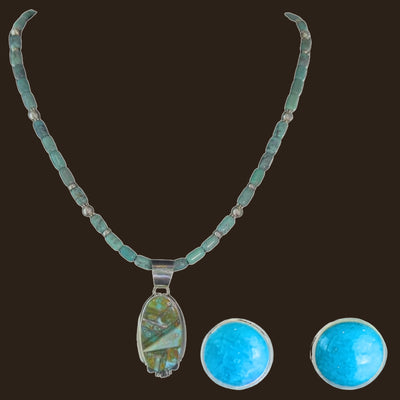
Building a jewelry collection is a slow, intentional process. We often find that pairing a new pendant with turquoise earrings creates a more balanced look than wearing a single piece alone. Instead of looking for an exact match, try to find stones with a similar hue or matrix style. This creates a curated feel that is far more sophisticated than a mass-market suite. Adding a turquoise cuff can anchor your ensemble, providing a weight and presence that ties the silver elements together. This method of styling celebrates the organic variations in the stones while maintaining a quietly timeless aesthetic.
Investing in Artisan Quality
Finding a piece of jewelry that resonates with you is a process of discovery. You now have the tools to identify the technical markers of quality silversmithing, from hand-fitted bezels to the grounded weight of solid .925 sterling silver. These details ensure that your jewelry will remain a reliable part of your wardrobe for years to come. By focusing on stone origins and the intentional lapidary work of Greg Cordova, you can avoid the pitfalls of mass-produced imitations and mystery metals that often fail or tarnish over time.
Every piece in our Santa Fe studio is curated by Kimberly Cordova to balance a refined aesthetic with the rugged beauty of the high desert. We believe that jewelry should feel as good as it looks, carrying a texture that only small batch, artisan-made art can provide. If you're ready to find a piece that tells a real story, browse our collection of handcrafted necklace & pendants at wildflowerartisans.com. You can also visit the Wildflower Etsy shop if you prefer to shop on that platform. We look forward to helping you find a piece that feels quietly timeless and uniquely yours.
Frequently Asked Questions
What is the difference between a necklace and a pendant?
A pendant is the specific ornament that hangs from a chain, while a necklace refers to the entire piece of jewelry including the chain and the stone. In our studio, we focus on the relationship between the two. The pendant is where the hand-cut stone and the silver bezel work are showcased, while the necklace provides the structure and length to display that centerpiece properly. Many of our pieces are sold as a complete set to ensure the weight of the silver and the size of the stone are perfectly balanced.
How can I tell if the turquoise in my necklace is real?
Authentic turquoise is identified by its natural color variations and a matrix that isn't perfectly uniform. You can often spot fakes like dyed howlite by looking for dye pooling in the cracks or a surface that feels too consistent and plastic. As of May 2026, high-quality natural turquoise typically ranges from $50 to $200 per carat. If the price seems suspiciously low for a large stone, it is likely treated or synthetic. We provide a guarantee of authenticity for every stone Greg Cordova cuts in our shop.
Is sterling silver good for everyday wear in a necklace?
Solid .925 sterling silver is an excellent choice for daily wear because it is durable and easy to maintain. Unlike plated jewelry that eventually wears down to a base metal, sterling silver is the same high-quality material all the way through. It is the standard we use for every necklace & pendants we create because it withstands the rhythms of daily life. While silver can tarnish over time, a quick buff with a soft cloth restores its original luster without damaging the metal.
What chain length is best for a turquoise pendant?
The best length usually depends on your clothing, but 18 to 20 inches is the most versatile range for most people. A 16-inch chain works well for small, everyday drops that sit right at the collarbone. For larger statement pieces, we often recommend a longer chain or a strand of Navajo pearls to give the pendant enough space to hang properly. Kimberly Cordova curates our collections with these proportions in mind, ensuring the bail of the pendant is wide enough for various chain thicknesses.
Can I wear my turquoise pendant in the shower?
It is best to remove your turquoise jewelry before showering or swimming. Turquoise is a porous mineral, which means it can absorb chemicals from soaps, shampoos, and chlorinated water. Over time, these substances can seep into the stone and cause its color to shift or dull. Keeping your necklace & pendants dry is the simplest way to preserve the integrity of the natural stone and the finish of the sterling silver for decades.
What does the matrix in a turquoise stone mean for its value?
The matrix is the host rock that appears as veins within the turquoise, and its pattern is a major factor in the stone's rarity. Intricate spiderweb patterns are highly prized by collectors and often increase the value of a piece. However, the value isn't just about the pattern; it also depends on the hardness of the stone and the specific mine it came from. Greg Cordova hand-cuts each cabochon to highlight these natural features, ensuring the matrix adds to the unique narrative of the jewelry.

Article by
Kimberly Cordova
Kimberly Cordova is the founder and creative director of Wildflower, a handmade Turquoise and sterling silver jewelry brand based in Santa Fe. She built Wildflower around a simple belief: the best jewelry is the kind you actually reach for, not the kind you save for someday.
Kimberly designs pieces made by hand with a trusted circle of Santa Fe silversmiths, works alongside her husband Greg on in-house lapidary pieces cut from stones including the family's King's Manassa Mine in Colorado and White Buffalo Mine in Nevada, and sources finished work from artisan makers whose craft meets the same standard. The result is a collection with real range and no shortcuts on the stone, the silver, or the story behind either.
Her writing covers everything she has learned along the way: how Turquoise forms, how to tell natural from stabilized, what makes one mine different from another, how to read a bezel, and how to shop with confidence in a market that is not always straightforward. It is the kind of plainspoken information she wished someone had laid out for her when she was starting out.
Shop the Wildflower collection at wildflowerartisans.com, or find us on Etsy at wildflowersantafe.etsy.com. Questions about a stone, a setting, or a specific piece are welcome any time.


0 comments