

A true masterpiece is born when the stone dictates the silver, rather than being forced into a generic, pre-made mold. In our Santa Fe studio, we believe that one of a kind turquoise rings should begin with the character of the earth itself, where a unique matrix or a rare spiderweb pattern leads the hand of the maker. You likely know the frustration of browsing rows of identical mall jewelry or the lingering worry that a bright blue stone is actually dyed howlite or a mystery metal.
We share that appreciation for authenticity and the desire to own wearable art that feels as intentional as it is beautiful. This guide explores our artisanal process and the specific origins of the stones we select for our handmade pieces. We will help you navigate the often confusing labels of natural versus stabilized stones and explain the meticulous lapidary work involved when Greg Cordova cuts a raw cabochon. By understanding these fine details, you can find a piece of Southwestern style jewelry that is as genuine as the landscape it came from.
Key Takeaways
- Learn how small batch production ensures that one of a kind turquoise rings feature stones with unique matrix patterns that cannot be replicated.
- Understand the lapidary process of transforming rough material from specific mines into polished cabochons.
- Discover the technical differences between natural, untreated turquoise and stabilized stones to ensure you are buying an authentic piece.
- Find the ideal setting for your lifestyle by evaluating different bezel styles and cabochon shapes.
- Master a simple care routine to protect porous turquoise stones and sterling silver from damage caused by oils or chemicals.
Why One of a Kind Turquoise Rings Stand Apart
A one of a kind turquoise ring starts with a story that began millions of years ago in the copper-rich soil of the American Southwest. Unlike factory-made pieces that use calibrated stones to fit pre-cast molds, an artisan piece is built around the specific dimensions of a single cabochon. This means the silver follows the stone. It's a slower, more intentional way of working that honors the raw material rather than forcing it into a standardized shape. In our Santa Fe studio, we see this process as a collaboration between the earth and the artist.
Each piece of turquoise is a fingerprint of the landscape where it formed. You can find Turquoise mineral facts that explain how copper and aluminum phosphate create these colors, but the visual result is pure art. No two stones share an identical color profile or matrix. This natural variation is the foundation of one of a kind turquoise rings, ensuring that the piece you wear belongs only to you. It's a celebration of the unique and the unrepeatable.
To better understand the depth of this craftsmanship, watch this helpful video:
The Character of the Stone
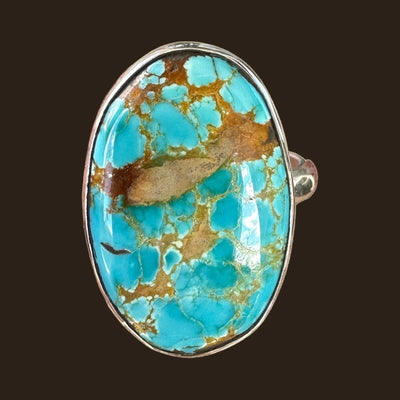
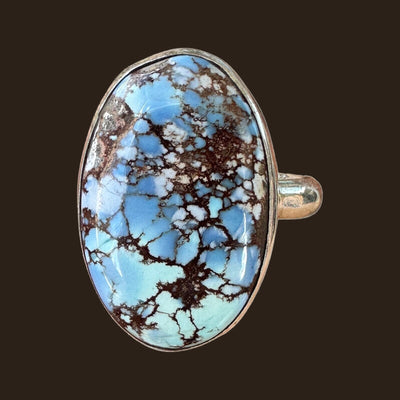
Turquoise ranges from the clear, high-desert sky blue of the Sleeping Beauty mine to the mossy, deep greens found in the Royston district. The matrix, which is the host rock that remains within the turquoise, creates patterns like delicate spiderweb lines or bold, dark blotches. These aren't flaws. They're signatures. Because these stones are hand-cut by a lapidary like Greg Cordova, the final cabochon shape is often freeform or asymmetrical. This organic silhouette makes it impossible to mass-produce a matching setting, as each bezel must be hand-fitted to the stone's specific edge.
Artisan Versus Mass Production
Most commercial jewelry is made through a process called lost-wax casting, where thousands of identical rings are poured from a single master mold. Artisan-made jewelry takes the opposite path. We use a small batch approach, hand-fabricating each bezel from sterling silver to hug the specific curves of a stone. This results in a sturdy, protective mount that a factory machine simply cannot replicate. You might notice small tool marks or slight variations in the silver. These aren't mistakes. They're the evidence of a human hand at work in a Southwestern style tradition. Choosing a piece from our one of a kind collection means prioritizing this soulful, intentional craftsmanship over the sterile perfection of a machine. It's about finding one of a kind turquoise rings that feel like they were made specifically for the person wearing them, honoring a heritage of making things by hand in Santa Fe.
The Lapidary Art: From Raw Stone to Polished Cabochon
The lapidary acts as a silent storyteller, uncovering the patterns hidden beneath a dusty, weathered exterior. While many jewelry brands buy pre-cut stones from wholesalers, our process begins much earlier. A skilled lapidary looks at a piece of rough material and decides how to orient the cut to highlight the most striking matrix or the deepest pocket of color. This expertise is essential because turquoise grows in veins and nodules, often following the unpredictable cracks in the host rock. When we design one of a kind turquoise rings, we begin by looking at the stone's unique personality as revealed by the cutter's wheel.
The Process of Shaping a Masterpiece
Transforming raw earth into a finished cabochon requires a series of deliberate steps. First, the cutter inspects the rough stone for stability and color depth, ensuring the material is solid enough for jewelry. Next, they use a diamond saw to slice the turquoise into manageable slabs, much like slicing a loaf of bread. This stage is where the hidden spiderweb patterns or bold color shifts first come to light. Finally, the process of cabbing begins. This involves grinding the slab into a smooth, domed shape and polishing it until the natural luster of the mineral shines through. Greg Cordova at Cutting Edge Turquoise brings a unique perspective to this work as both a mine owner and lapidary, ensuring that every stone is cut with an intimate knowledge of its source.
Mine Specific Patterns and Colors
Each mine produces turquoise with a distinct visual signature. Kingman turquoise, for example, is famous for its vibrant, high-contrast blues often paired with a dark, dramatic matrix. In contrast, stones from the Royston district in Nevada are known for their earthy greens and warm browns, sometimes appearing in the same cabochon to create a landscape-like effect. Understanding these differences helps you appreciate why a specific stone was chosen for a setting. You can explore our stone origins page for a deeper look at the history of these Southwestern mines. This careful attention to detail is what makes one of a kind turquoise rings truly distinct from mass-produced jewelry. If you are ready to find a piece that speaks to you, feel free to browse our latest handmade turquoise rings in the shop.

Recognizing Quality in Natural and Artisan-Made Turquoise
Integrity is the most important element of any piece of jewelry. When you are looking for one of a kind turquoise rings, you are often navigating a market filled with vague labels and misleading terms. True quality begins with transparency about the stone itself. In our studio, we prioritize the honest story of each mineral, from its geological formation to the final polish. This means understanding exactly what you are holding, whether it is a rare, untreated nugget or a stone that has been carefully stabilized for daily wear. You should feel confident that the piece you choose is as authentic as the earth it came from.
Natural Versus Stabilized Stones
We use the term natural with strict precision. To us, natural turquoise means the stone is exactly as it came out of the ground, untreated by any chemicals or resins. These stones are rare because they must be naturally hard enough to withstand the grinding and polishing process without crumbling. Most turquoise found in one of a kind turquoise rings is stabilized. This is a common and necessary process where clear resin is pressured into the pores of softer stones to improve their durability and lock in their color. It doesn't make the stone fake, but it is a distinction that should always be disclosed. We avoid reconstituted or composite stones, which are essentially turquoise dust mixed with plastic, as they lack the soul of a solid cabochon.
Beyond the stone, you should be wary of dyed howlite or magnesite. These are often passed off as turquoise in mass-market fashion jewelry. These imitations lack the depth and varied matrix of a genuine mineral. Authentic artisan pieces will always be set in quality metals, typically marked with a .925 hallmark to indicate sterling silver. We never use mystery metals or plated finishes that wear away over time, as these materials don't hold their value or stand up to the test of years.
Identifying High Grade Silver Work
The quality of the silver work is just as vital as the stone it holds. A well-made ring should feel substantial on your finger. Look for a heavy gauge silver shank, which is the band of the ring, to ensure it won't bend or thin out after years of use. The bezel, the thin strip of silver that wraps around the stone, should hug the cabochon tightly with no visible gaps. This hug is a hallmark of handmade precision. You might also find hand-stamped patterns or saw-cut textures that reflect the individual style of the maker. When Greg Cordova cuts a stone, the silver setting is built to protect that specific shape for a lifetime of wear. High-grade silver work isn't about machine-made perfection. It's about a sturdy, intentional construction that honors the materials and the wearer.
Choosing the Right Setting for Your Unique Style
Selecting a piece from a collection of one of a kind turquoise rings is a deeply personal decision that balances the beauty of the stone with the practicalities of your daily life. A ring should feel like a natural extension of your hand, moving with you through the day. When you look at a cabochon, consider how its shape influences the overall look. Oval stones offer a traditional, balanced appearance, while teardrop shapes tend to elongate the finger. Freeform cuts, often favored by lapidaries like Greg Cordova, celebrate the asymmetrical growth of the mineral and serve as a reminder of the stone's organic origin. These irregular shapes require a hand-fabricated bezel that follows every unique curve of the stone.
Statement Rings and Everyday Essentials
Your choice often depends on whether you are looking for a centerpiece or a subtle accent. Large statement rings usually feature high-grade stones with intricate silver work, perhaps including hand-sawed details or layered bezels. These are pieces designed to stand alone as the focal point of an outfit. For a more minimalist approach, our everyday essentials offer a scaled-back artisan look that pairs easily with other Southwestern style jewelry like silver cuffs or bead necklaces. This versatility allows you to build a cohesive look over time. If you are searching for something that truly breaks the mold, you can browse our one of a kind collection to find stones with rare spiderweb matrix or unusual color shifts that invite conversation.
Finding the Perfect Fit
Comfort is just as vital as the visual impact of the ring. The width of the ring shank, or the band itself, significantly affects how the piece feels on a daily basis. Wide bands distribute weight more evenly across the finger but often require you to go up a half size for a proper fit. It's important to choose correctly from the start. Resizing one of a kind turquoise rings is difficult because the heat required to solder sterling silver can crack or discolor the sensitive turquoise stone. We always prioritize a secure, handmade construction that lasts. We recommend checking our rings collection page to find your specific size and see how different band styles vary. For a perfect addition to your jewelry box, you can shop our current artisan rings here.
Preservation and Care for Handcrafted Sterling Silver
Turquoise is a porous phosphate mineral, which means it behaves differently than a diamond or a sapphire. Because it is chemically active, it can absorb oils from your skin, perfumes, or household cleaners over time. This absorption can actually shift the color of the stone, often turning a bright blue toward a duller green. Protecting your one of a kind turquoise rings requires a gentle approach that respects the natural chemistry of the cabochon and the sterling silver setting. It's a living stone that responds to its environment.
Always remove your jewelry before swimming in chlorinated pools or using cleaning products like bleach. Chlorine is particularly harsh on the copper content in sterling silver and can permanently damage the surface of the turquoise. It's best to make your jewelry the last thing you put on in the morning and the first thing you take off at night. This simple habit prevents hairspray and lotions from building up on the stone's surface and clouding its natural luster. By treating these pieces with a bit of mindfulness, you ensure they remain vibrant for years to come.
Cleaning Your Artisan Jewelry
For routine maintenance, a soft, dry polishing cloth is the only tool you need. Gently rub the silver parts of the ring to remove tarnish caused by sulfur in the air, but try to avoid rubbing the stone itself too vigorously. You should never use ultrasonic cleaners or liquid jewelry dips. These harsh methods can strip away the natural luster of the stone or even dissolve the resins used in stabilized turquoise. If the silver around the bezel becomes particularly dark, a slightly dampened cloth with a tiny amount of mild soap can be used, but you must dry the piece immediately. If your piece needs deeper attention or professional cleaning, you can find more detailed advice on our care and repair page.
Long-Term Storage and Maintenance
When you aren't wearing your one of a kind turquoise rings, store them in a cool, dry place away from direct sunlight. Prolonged exposure to heat and light can cause some stones to fade or become brittle over time. It's helpful to keep each item in its own soft pouch or a separate compartment in your jewelry box. This prevents the harder metal of one piece from scratching the surface of a turquoise cabochon. Even a sturdy Southwestern style ring can be marred by a stray silver chain or a harder gemstone.
Periodically, take a moment to inspect the setting in your Santa Fe studio pieces. Check the silver bezel to ensure it still fits snugly against the stone. You can do this by gently pressing on the edge of the cabochon with a fingernail to see if there is any movement. If you notice a loose fit, it may be time for a professional tightening to prevent the stone from falling out. Taking these small steps ensures that your handmade jewelry remains a beautiful, secure part of your collection for decades.
Finding a Piece That Tells Your Story
Selecting a piece of jewelry is a personal decision that connects you to the history of the stone and the hand of the maker. One of a kind turquoise rings are defined by the stone leading the design, resulting in a piece of wearable art that is as authentic as the landscape it came from. By prioritizing handcrafted, small batch collections and recognizing the difference between natural and stabilized stones, you can feel confident in the quality of your investment. We guarantee authentic stones and produce every piece in our Santa Fe studio to ensure it stands the test of time.
We invite you to explore our latest work and find a ring that resonates with you. You can explore our one of a kind turquoise ring collection on our main website. For those who prefer the platform, we also maintain a selection in the Wildflower Etsy shop. We look forward to helping you find a piece of the Southwest that you'll cherish for years.
Frequently Asked Questions
What makes a turquoise ring one of a kind?
A ring is truly unique when the setting is hand-fabricated to fit the specific, organic shape of a single cabochon. Because no two stones share the same spiderweb matrix or color profile, the final piece is unrepeatable. Unlike mass-produced jewelry that uses calibrated stones, one of a kind turquoise rings are designed around the mineral's natural edges to honor the stone's character.
Is natural turquoise better than stabilized turquoise?
Natural turquoise is untreated and hard enough to be cut and polished in its raw state, making it rare and highly valued by collectors. Stabilized turquoise is also genuine stone, but it has been treated with clear resin to improve durability and lock in color. Both are authentic materials, but stabilization makes the stone better suited for the rigors of everyday wear without risking color shifts from skin oils.
How can I tell if my turquoise ring is authentic?
Authentic turquoise displays a varied matrix and subtle color shifts that plastic imitations or dyed howlite cannot replicate. Look for a .925 hallmark on the band to confirm the piece is sterling silver rather than a plated mystery metal. Genuine artisan-made jewelry will feature a hand-fitted bezel rather than a generic, machine-made mount. A professional lapidary like Greg Cordova can identify a stone's origin based on its specific mineral signature.
Can I resize a one of a kind turquoise ring?
Resizing is difficult because the heat from a jeweler's torch can easily crack or discolor a sensitive turquoise stone. Most one of a kind turquoise rings require the stone to be removed from the bezel before any soldering can happen, which is a risky and technical process. It's always best to verify your size before purchasing to ensure a proper fit that maintains the integrity of the original silver work.
How do I clean my sterling silver and turquoise jewelry?
Use a dry, soft polishing cloth intended for sterling silver to gently remove tarnish from the band and bezel. Avoid ultrasonic cleaners, steam, or chemical dips, as these can permanently damage the porous turquoise. If the ring is particularly dirty, use a slightly damp cloth with mild soap and dry it immediately. Proper storage in a cool, dry place away from direct sunlight also helps protect the stone's natural luster over time.

Article by
Kimberly Cordova
Kimberly Cordova is the founder and creative director of Wildflower, a handmade Turquoise and sterling silver jewelry brand based in Santa Fe. She built Wildflower around a simple belief: the best jewelry is the kind you actually reach for, not the kind you save for someday.
Kimberly designs pieces made by hand with a trusted circle of Santa Fe silversmiths, works alongside her husband Greg on in-house lapidary pieces cut from stones including the family's King's Manassa Mine in Colorado and White Buffalo Mine in Nevada, and sources finished work from artisan makers whose craft meets the same standard. The result is a collection with real range and no shortcuts on the stone, the silver, or the story behind either.
Her writing covers everything she has learned along the way: how Turquoise forms, how to tell natural from stabilized, what makes one mine different from another, how to read a bezel, and how to shop with confidence in a market that is not always straightforward. It is the kind of plainspoken information she wished someone had laid out for her when she was starting out.
Shop the Wildflower collection at wildflowerartisans.com, or find us on Etsy at wildflowersantafe.etsy.com. Questions about a stone, a setting, or a specific piece are welcome any time.


0 comments