

The weight of a heavy sterling silver cuff feels different when you know the metal was shaped by hand rather than poured into a generic mold. For those seeking the work of Navajo silversmiths, the search often begins with a desire for something real, yet it often ends in the frustration of navigating mass-produced imitations and mystery stones. It is difficult to feel a connection to a piece when you are unsure if that vibrant blue cabochon is a natural gift from the earth or merely a piece of dyed howlite.
We believe jewelry is a vessel for emotion, a way to hold onto the fleeting beauty of the high desert. This guide explores the technical mastery and lapidary precision required to create authentic Southwestern jewelry. You will learn to identify specific matrix patterns from celebrated mines, understand the structural role of a hand-set bezel, and gain the confidence to distinguish small batch artisan work from cast imports. Our goal is to offer a clear path to finding genuine sterling silver that honors the slow, intentional rhythms of the studio.
Key Takeaways
- Recognize the difference between mass-produced fashion and the intentional design of small batch, artisan-made jewelry.
- Understand how Navajo silversmiths in Santa Fe collaborate with lapidaries to ensure each cabochon is cut to highlight its natural character.
- Gain confidence in identifying the distinct matrix patterns of King's Manassa turquoise and the high-contrast beauty of White Buffalo stone.
- Learn how technical details like a secure bezel setting and purposeful oxidation protect natural stones while adding depth to the silver work.
- Discover the curation process that balances in-house studio creations with carefully sourced pieces from trusted Southwestern artists.
What distinguishes Navajo silversmiths in Santa Fe from commercial styles?
The difference between a factory floor and a working bench is written in the silver itself. When you look at the work of Navajo silversmiths in Santa Fe, you're seeing a rejection of the high-volume, standardized manufacturing that dominates much of the Southwestern jewelry market. Commercial styles often rely on casting hundreds of identical pieces from a single master mold. In contrast, an artisan-made piece begins with a sheet of sterling silver and a specific stone. The silversmith doesn't just fill a space; they build an architecture around the unique character of a cabochon. This shift from mass-produced fashion to small batch work ensures that every piece carries a distinct weight and soul.
Understanding the history of Navajo silversmithing reveals how these techniques evolved from necessity and creative adaptation. It's a craft defined by technical mastery, where a maker's bench skills dictate the longevity of the jewelry. Rather than prioritizing speed, these artists focus on the intentional design of every element, from the gauge of the silver to the placement of the stamp work.
Handmade character vs. standardized production
Standardized production prioritizes speed and uniformity, which often leads to the use of mystery metals or thin, silver-plated components. Authentic Southwestern style pieces prioritize the integrity of the material. You can see the hand of the maker in the slight asymmetry of a hand-stamped border or the organic curve of a silver wire. These aren't flaws. They are the hallmarks of a piece that wasn't stamped out by a machine. By focusing on one of a kind creations, artists can maintain a cohesive aesthetic while ensuring no two items are exactly alike. It's a commitment to quality over quantity.
The role of the studio in jewelry curation
A working studio is more than just a place where tools are kept. It's a specialized environment where the narrative of the stone meets the vision of the designer. Curation in this context isn't about following commercial trends or seasonal fads. It's about recognizing the partnership between the stone cutter and the silversmith. We look for pieces where the silver work serves the stone, rather than overwhelming it. This relationship is central to finding jewelry with lasting value. It moves the conversation away from generic marketing fluff and toward a deeper appreciation for the raw materials and the hands that shaped them. When a designer understands the specific hardness of a stone or the way light moves through a spiderweb matrix, the resulting piece feels balanced and intentional. This studio perspective allows us to identify quality that might be missed in a standard retail setting.
The lapidary foundation of Southwestern artisan jewelry
The artistry of Navajo silversmiths in Santa Fe begins long before a torch touches the silver. It starts with the lapidary process, the slow and deliberate act of revealing the beauty hidden within a rough piece of earth. In a world of mass-produced, calibrated stones, the artisan path prioritizes the individual character of the material. This foundation dictates everything that follows. The curve of a cabochon or the intricate spiderweb matrix of a turquoise stone isn't just a decorative choice. It is the blueprint for the entire sterling silver architecture. Raw earth transformed into a vessel for emotion.
Stone cutting with Greg Cordova
A master lapidary acts as a translator for the stone. When master lapidary Greg Cordova evaluates a piece of rough turquoise or White Buffalo, he isn't looking for a standardized shape. He looks for the narrative held within the matrix. Cutting rare materials like White Buffalo presents a specific technical challenge due to its hardness and the need to balance the high-contrast black and white sections. This partnership between the stone cutter and the jewelry designer is what separates generic fashion from true artisan work. Greg’s ability to reveal the most vibrant eyes or the most delicate spiderweb patterns ensures that the jewelry designer has a superior foundation to build upon. Precise. Intentional. Soulful.
From rough stone to sterling silver bezel
Once a stone is transformed into a polished cabochon, the journey to the workbench begins. The designer doesn't reach for a pre-made setting. Instead, they must construct a custom bezel that matches the exact, often irregular, dimensions of the hand-cut stone. This process is a hallmark of quality. It ensures the stone is held securely and protected for decades of wear. For those following the work of Navajo silversmiths in Santa Fe, understanding this lapidary foundation is essential to appreciating the technical skill involved in every piece. The Wheelwright Museum's Center for Southwestern Jewelry highlights how this stone-first approach has defined regional artistry for generations.
Collectors often look for mine-specific turquoise, such as Royston or Kingman, because these stones carry a pedigree of origin that cannot be faked. The choice of a specific stone influences the jewelry style, whether it’s a heavy, traditional cuff or a delicate pendant. The stone dictates the silver. If you are looking for pieces that honor these lapidary traditions, you can explore our collection of artist-made sterling and turquoise. Each piece reflects a commitment to the raw, natural beauty of the Southwest.

A collector guide to stones used by Southwestern artists
For those seeking the work of Navajo silversmiths in Santa Fe, the stone is often the first point of deep emotional connection. It is the center of the story. While silver provides the structure, the stone provides the soul, carrying the history of the earth within its matrix. Collectors often find themselves drawn to specific mines, not just for their color, but for the distinct personality each location imparts to the material. Whether it is the classic blue of an Arizona sky or the mossy greens of a high mountain meadow, the stone dictates the rhythm of the piece.
King's Manassa turquoise is prized for its deep, rich greens and golden-brown host rock. Mined in Colorado, these stones have a historical significance that resonates with those who appreciate the legacy of Southwestern design. In contrast, White Buffalo stone offers a striking, high-contrast black and white matrix. While technically not turquoise, it is a favorite among artisans for its bold, graphic presence. Other collectors search for the intricate spiderweb patterns found in Kingman or Royston turquoise, where the matrix creates a delicate, lace-like web across the surface of the cabochon. For a solid, robin's egg blue, Sleeping Beauty turquoise remains the standard, though its 2012 mine closure has made natural, untreated specimens increasingly rare and valuable.
Natural vs. treated turquoise
Understanding the state of your stone is vital for any collector. We only use the term "natural" when a stone is completely untreated and chemically unaltered from the way it left the ground. Many stones in the market are stabilized, a process where clear resin is pressured into the stone to make it hard enough for jewelry use. While stabilized stones are common and durable, this treatment must always be disclosed. We avoid dyed howlite or composite materials, which are often used in mass-produced fashion to mimic the look of genuine stone. You can learn more about these distinctions on our turquoise stone origins page.
Exploring the matrix and host rock
The matrix is the thumbprint of a mine. It is the remains of the host rock where the turquoise formed over millions of years. This matrix can range from a light tan to a deep, obsidian black.
- Spiderweb Matrix: A tight, interconnected web of thin lines.
- Calico Matrix: Large, patchy areas of host rock that create a bold, painterly effect.
- Clear Stones: Turquoise with little to no visible matrix, prized for purity of color.
Technical hallmarks of handcrafted sterling silver design
The structure of a piece tells you as much about its origin as the stone itself. While the stone provides the emotional center, the silver work provides the architecture that protects and presents it. When evaluating the work of Navajo silversmiths in Santa Fe, the first thing to look for is the bezel. A hand-fabricated bezel isn't just a silver ring. It's a custom-fitted wall rolled carefully over the stone's edge. It should be smooth to the touch, without gaps or jagged edges that might catch on clothing. This secure fit is essential for protecting natural stones, which can be vulnerable to chips if the setting is loose or poorly constructed.
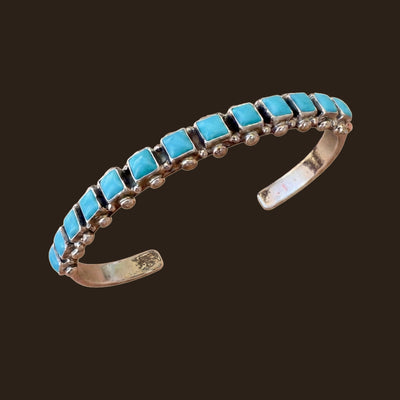
Artisans also use intentional oxidation to add depth and narrative to their designs. This isn't just tarnish; it's a controlled process where the silver is darkened and then polished back to highlight recessed areas. This contrast makes hand-stamped patterns and custom silver wire work stand out. You can see the rhythm of the maker's hammer in the depth of each stamp. These patterns are often unique to the artist, acting as a silent signature of their bench skills and aesthetic eye. Professional craftsmanship is also evident in the weight and balance of the piece. A cuff shouldn't feel like a thin strip of tin; it should have a grounded, substantial presence on the wrist.
Evaluating rings and earrings
A well-finished ring should feel substantial. Look at the ring shank, the part that circles the finger, and the bezel join. In small batch work, these connections are seamless and sturdy. Mass-produced castings often feel hollow or thin, lacking the weight of hand-forged silver. Our everyday essentials are designed with this balance of durability and style in mind. Earrings should hang straight and have secure findings, ensuring they can be worn comfortably from morning until sunset without feeling flimsy. It's about how the jewelry moves with you.
Architecture of statement pieces
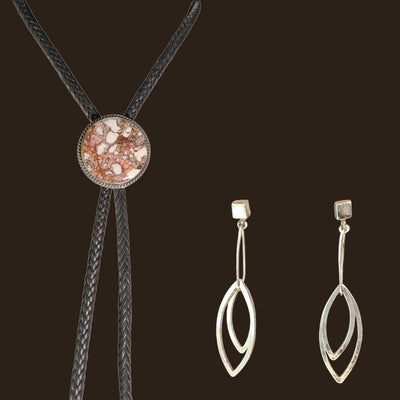
Larger stones require a more complex foundation. You'll often see Navajo silversmiths in Santa Fe using multi-wire constructions for cuff bracelets to support the weight of a significant cabochon. This architecture prevents the silver from flexing too much, which could eventually pop the stone out of its setting. Statement jewelry, like a heavy bolo tie or a wide cuff, represents the peak of an artist's technical skill. A reliable bolo tie should have a high-quality clasp that doesn't slip and a leather cord that feels supple yet strong. These details are the difference between a souvenir and a piece of wearable art. If you're ready to find your next piece, shop our artisan collection for jewelry that prioritizes these technical standards.
Curation and the Wildflower studio philosophy
We view our studio as a bridge between the raw earth and the collector. Our approach to Navajo silversmiths in Santa Fe is rooted in a deep respect for the bench skills that define this region. Unlike volume-based retailers who prioritize inventory turnover, we focus on the narrative of the individual piece. Every item in our collection is selected because it reflects the genuine spirit of Southwestern design. This means prioritizing material transparency and ensuring that the silver work is as honest as the stone it holds. We believe that jewelry should be a vessel for emotion, not just a commodity.
The balance in our studio is a delicate dance between in-house creations and carefully sourced artisan work. While we take pride in pieces where master lapidary Greg Cordova cuts the stone and Kimberly designs the setting, we also curate works from other talented makers. When we source work from Navajo silversmiths in Santa Fe, we look for the same technical mastery we apply to our own bench. This allows us to offer a broader perspective on modern Southwestern style while maintaining a strict standard for quality. Whether a piece is crafted within our walls or curated from a trusted peer, the goal remains the same: to connect you with one-of-a-kind jewelry that feels like a discovery rather than a purchase.
Kimberly's vision for the collection
Kimberly’s process is intentional and slow. She looks for beauty in the asymmetrical and the organic, favoring stones with character over those that are perfectly uniform. This grounded approach to retail means we treat our audience like guests in our creative space. We don't rely on generic marketing fluff. Instead, we speak plainly about the matrix of a stone or the gauge of a silver wire. It is a conversation about craft. We believe that the slight irregularities in a hand-cut cabochon or a hand-stamped bezel are what give a piece its humanity and soul.
Building your artisan jewelry collection
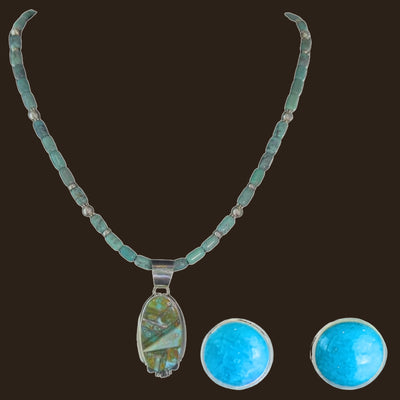
Starting a collection doesn't have to be overwhelming. We often suggest beginning with foundational items that can be worn daily. Turquoise earrings are an excellent entry point, offering a touch of desert color that works with any style. From there, many collectors move toward investing in one-of-a-kind rings featuring rare, mine-specific stones. These pieces hold their value because they are handmade with high-quality materials that stand the test of time. A well-made sterling silver ring is more than an accessory; it is a small piece of history you carry with you. Each stone has a story that began in the earth, was revealed by a lapidary, and was finally finished by the hands of an artisan who respects the medium.
Finding your piece of the high desert
Authentic Southwestern jewelry is more than a simple accessory. It's a quiet conversation between the earth and the artist. When you seek out the work of Navajo silversmiths in Santa Fe, you're looking for a standard of technical mastery that machines can't replicate. We've explored how a hand-fabricated bezel protects a stone's narrative and why the partnership between a lapidary and a designer is essential for creating pieces with lasting value. By prioritizing guaranteed authentic natural stones and small batch artisan designs, you're investing in a vessel for emotion that will endure for generations.
Our studio remains dedicated to material transparency and the slow, intentional process of the bench. From hand-cut lapidary work by Greg Cordova to our carefully curated sourced pieces, every item reflects the grounded beauty of our Santa Fe home. Explore our curated collection of handcrafted sterling silver and turquoise jewelry today. We hope you find a piece that resonates with your own story.
Frequently Asked Questions
How can I tell if a Southwestern jewelry artist is using real turquoise?
Authentic turquoise is identified by its weight, temperature, and the presence of a natural matrix. Real stones feel cool to the touch and show organic variations in color that dyed howlite or plastic imitations cannot replicate. Many Navajo silversmiths in Santa Fe provide specific mine origins for their stones and will clearly disclose if a stone has been stabilized for durability or left in its natural, untreated state.
What is the difference between King's Manassa and other turquoise types?
King's Manassa is prized for its rich, mossy green colors and golden-brown host rock. While many Arizona mines are known for bright, sky-blue stones, this Colorado mine produces a distinct earthy palette. It is a favorite for collectors who prefer the deep, forest-like tones that contrast beautifully against polished sterling silver.
Is White Buffalo jewelry actually considered turquoise?
White Buffalo is not technically turquoise; it is a combination of calcite and aragonite. Ours comes from our family's claim at the White Buffalo mine near Tonopah, Nevada, and it lacks the copper content that creates blue or green hues. Its striking black and white matrix has made it a staple in Southwestern style jewelry, offering a bold, graphic look that complements traditional silver work.
Why is sterling silver the preferred metal for artisan Southwestern jewelry?
Sterling silver provides the necessary strength and malleability for complex bench techniques like stamping and bezel setting. It is a guaranteed alloy of 92.5 percent pure silver, which ensures the piece won't flake or peel like silver-plated mystery metals. This durability is essential for creating jewelry that can be worn for a lifetime and eventually passed down as a family heirloom.
How should I care for my handcrafted turquoise and silver pieces?
Keep your jewelry away from water, perfumes, and harsh chemicals. Turquoise is a porous stone that can absorb oils and soaps, which may cause the color to shift over time. Clean the silver parts with a soft polishing cloth to maintain the shine, but be careful not to scrub away the intentional oxidation that adds depth to the stamped patterns.
What does the term 'natural' mean when describing a turquoise stone?
The term natural is reserved for stones that are untreated, unheated, and chemically unaltered from the moment they were mined. Most turquoise in the market is stabilized with clear resin to make it hard enough for cutting and daily wear. Natural stones are much rarer and are highly valued by collectors for their raw, pure state.
Can I find everyday jewelry that is still artisan-made?
Yes, many Navajo silversmiths in Santa Fe create smaller, lightweight designs that are perfect for daily wear. These everyday essentials feature the same hand-cut cabochons and hand-fabricated bezels as larger statement pieces but are scaled for comfort. Choosing small batch work over mass-produced fashion ensures that even your simplest pieces have a unique, human touch.
What makes a bolo tie a significant piece in Southwestern design?
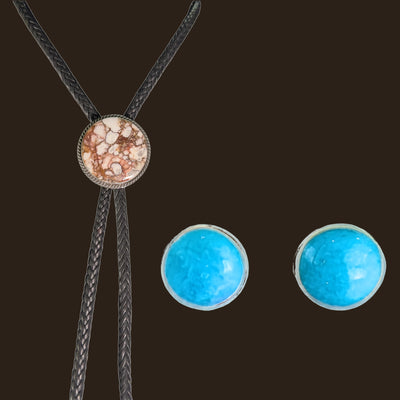
A bolo tie is a functional canvas that showcases the peak of an artist's technical skill. It often features a significant, high-grade stone, such as those cut by master lapidary Greg Cordova, paired with heavy silver work and hand-braided leather. It is a centerpiece of regional style that represents a deep connection to the materials and traditions of the Southwest.

Article by
Kimberly Cordova
Kimberly Cordova is the founder and creative director of Wildflower, a handmade Turquoise and sterling silver jewelry brand based in Santa Fe. She built Wildflower around a simple belief: the best jewelry is the kind you actually reach for, not the kind you save for someday.
Kimberly designs pieces made by hand with a trusted circle of Santa Fe silversmiths, works alongside her husband Greg on in-house lapidary pieces cut from stones including the family's King's Manassa Mine in Colorado and White Buffalo Mine in Nevada, and sources finished work from artisan makers whose craft meets the same standard. The result is a collection with real range and no shortcuts on the stone, the silver, or the story behind either.
Her writing covers everything she has learned along the way: how Turquoise forms, how to tell natural from stabilized, what makes one mine different from another, how to read a bezel, and how to shop with confidence in a market that is not always straightforward. It is the kind of plainspoken information she wished someone had laid out for her when she was starting out.
Shop the Wildflower collection at wildflowerartisans.com, or find us on Etsy at wildflowersantafe.etsy.com. Questions about a stone, a setting, or a specific piece are welcome any time.
0 comments