

What if your jewelry felt less like an afterthought and more like a deliberate narrative of the high desert? We understand the frustration of chains that tangle before lunch or a collection that feels cluttered rather than curated. It is a common struggle to find the balance between a bold turquoise pendant and the delicate shimmer of a handmade sterling chain without the look appearing messy.
This layering silver necklaces guide provides a practical framework for mixing varied lengths, textures, and turquoise focal points to create a cohesive layered look. We will walk through the specific geometry of lengths, from the close fit of a choker to the grounded weight of a matinee length anchor. You will learn how to pair different silver finishes and incorporate stones like King's Manassa or White Buffalo with confidence. By understanding how to mix textures and bezel styles, you can build a stack that stays in place and reflects your personal aesthetic from morning until the sun sets over the Jemez Mountains.
Key Takeaways
- Master the three-tier system by using a 16-inch chain as a frame and adding longer layers to create a balanced, cascading effect.
- Combine high-polish sterling with oxidized finishes and handmade silver beads to add visual depth and contrast to your daily stack.
- Use this layering silver necklaces guide to select a turquoise pendant in a silver bezel as a central anchor that grounds your entire collection.
- Prevent tangling by mixing necklaces of different weights and utilizing practical tools like layering clasps for comfortable, all-day wear.
- Build a curated set of artisan-made essentials over time, treating your collection like a garden that grows with one-of-a-kind pieces.
Establishing a foundation with varied necklace lengths
Building a collection starts with the architecture of the pieces themselves. In this layering silver necklaces guide, we view the process as a study in balance and verticality. A three-tier system provides the most reliable framework for a curated look. This involves a base layer, a mid-layer, and a final anchor. By selecting specific lengths, you ensure each piece has the room to breathe and tell its own story without crowding the others.
The base usually begins with a 16 inch chain. This length serves as a frame for the throat, sitting just above the collarbone to provide a bright, silver perimeter near the face. From there, an 18 to 20 inch mid-layer adds necessary visual volume. This middle piece acts as the bridge in your collection. Finally, a 24 inch or longer chain creates a strong vertical line that draws the eye downward. This elongation grounds the entire stack, making the jewelry feel like a natural extension of your silhouette rather than a heavy addition.
To better understand how these lengths work together in practice, watch this helpful video:
The standard hierarchy of lengths
A successful cascade effect typically utilizes two inch increments, such as 16, 18, and 20 inches, to maintain a clear descent. It is helpful to remember that neck circumference significantly changes how a standard chain drapes. A chain that sits at the princess length on one person might feel like a choker on another. We often suggest using adjustable extenders to fine-tune the spacing. This allows you to account for different types of jewelry chains and how they settle against the skin during movement.
Spacing for visual clarity
Clarity is the difference between a curated look and a tangled mess. We recommend maintaining a minimum of two inches between each necklace to prevent a crowded appearance. Thinner chains, like a simple cable or curb, require less physical spacing than heavy, handmade silver beads. The neckline of your clothing also dictates your available canvas. A deep V-neck provides ample room for a long turquoise pendant necklace, while a high collar might require you to shorten your base layer to keep the jewelry visible and intentional.
Mixing textures between sterling beads and handmade chains
While length provides the structure, texture provides the soul of a collection. In this layering silver necklaces guide, we look beyond the shine to see how different finishes interact with one another. High-polish sterling silver reflects the bright New Mexico sun, while oxidized finishes offer a quiet, shadow-like depth. This interplay creates a visual rhythm that prevents a stack from looking like a single, indistinguishable mass of metal. It's about finding the balance between the smooth surface of a bezel and the rugged character of the chain it hangs from.
Mixing small batch artisan pieces with simple everyday essentials is a practical way to build your look without it becoming overwhelming. A handmade pendant featuring a detailed cabochon shouldn't always compete with a similarly complex chain. Sometimes, a plain curb or figaro chain provides the geometric foundation needed to let a more intricate piece shine. These flatter link styles add a modern edge to the organic shapes of natural stones, bridging the gap between traditional Southwestern style and contemporary design. You can explore these textures in our artist-made sterling and turquoise collection to find your own starting point.
The role of oxidized silver
Oxidation is a purposeful darkening of the silver, often used to highlight the fine details of a handmade piece. It mirrors the dark matrix found in many types of turquoise, creating a visual bridge between the stone and the metal. If you have a pendant with deep recessed areas or a complex spiderweb pattern, a darker patina makes those artistic choices pop. Using one oxidized piece can ground a stack of bright silver. It provides a necessary visual anchor that makes the brighter pieces look even more luminous by comparison.
Varying chain weights
Visual weight is just as important as physical length when you are putting a set together. A 1mm cable chain is delicate and airy, whereas a 4mm strand of handmade silver beads carries significant presence. Varying these weights is what keeps a stack looking deliberate rather than accidental. This layering silver necklaces guide suggests that the heaviest necklace should typically be either the shortest or the longest. This intentional placement prevents the "clumping" effect where multiple chains of the same weight tangle together during the day. Texture acts as a spacer, ensuring each element of your curated collection remains distinct and readable.
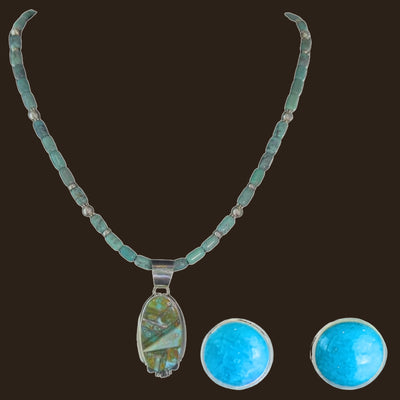
Every layered collection needs a center of gravity. In this layering silver necklaces guide, we prioritize the focal point as the visual anchor that prevents a stack from feeling adrift. A turquoise cabochon, held securely in a silver bezel, provides a natural center for the eye to rest. This piece should be the most substantial element in your arrangement, sitting at the lowest point of the 'V' shape created by your chains. This geometry naturally guides the eye downward, creating a sense of intentionality and poise. Choosing the right stone involves more than just color. Understanding the history of turquoise reveals why high-grade natural stones are so prized in artisan work. Unlike stabilized or composite stones, natural turquoise is untreated, retaining the exact color and hardness it possessed when pulled from the earth. These pieces carry a weight and authenticity that mass-produced jewelry lacks. When you select a pendant, look for a stone that reflects your own narrative, whether that is the sky-blue clarity of a Sleeping Beauty cabochon or the rugged character of a stone with a heavy matrix.Integrating turquoise and natural stones
Your choice of stone sets the mood for the entire layered set. A White Buffalo stone, with its sharp contrast of white and black, offers a neutral but striking focal point that pairs easily with any outfit. If you prefer more color, the intricate spiderweb matrix found in pendants from the Kingman or Royston mines adds a layer of organic detail that feels like a landscape in miniature. To help you decide which mine resonates with you, we have compiled a guide to stone origins that details the unique characteristics of each location.
Balancing multiple pendants
While it is tempting to wear every favorite piece at once, we generally advise using only one large pendant to avoid visual competition. If you want to add more elements, smaller silver charms or tiny turquoise drops can complement the primary focal point without overwhelming it. These secondary pieces should sit higher up on the shorter tiers of your layering silver necklaces guide framework. This hierarchy ensures that the largest stone remains the undisputed star, while the smaller accents provide the subtle details that make a collection feel truly curated and personal.

Practical techniques to prevent chain tangling
Even the most thoughtfully curated set can lose its charm if the chains become a knotted mess by noon. In this layering silver necklaces guide, we focus on the physics of the pieces to keep them separate. Tangle-free wear relies on varying the weights of your chains. When necklaces have identical weights and lengths, they tend to migrate toward each other, eventually twisting into a single strand. By mixing a heavier curb chain with a lighter cable link, you create different tensions that help each piece maintain its own space.
Using a layering clasp is a straightforward process that effectively manages multiple pieces. First, lay your necklaces out on a flat surface in the order you want to wear them. Attach each necklace's clasp to the corresponding loop on the detangler. Finally, use the detangler's main clasp to secure the entire set at once. This method ensures your spacing remains exactly as you intended throughout the day. The order in which you put on your jewelry also matters. If you are not using a detangler, start with your shortest, lightest piece and work your way down to the heaviest anchor. This sequence helps the chains settle naturally against one another.
Mixing weights and styles
A heavy pendant, such as a large turquoise cabochon in a thick sterling bezel, acts as a plumb bob. It keeps the chain taut and reduces side-to-side movement that leads to knots. Be cautious when mixing smooth snake chains with highly textured rope or wheat chains. The tiny teeth of a textured link can easily snag the smooth surface of a snake chain. A quick mirror check before you leave the house helps you ensure the hang of each layer is even and the spacing is consistent.
Daily care for layered silver
Maintaining the surface of your silver is a practical step in preventing tangles, as clean links glide over each other with less friction than tarnished or oily ones. Always store your necklaces separately when they are not in use to avoid the frustration of untangling knots before you can get dressed. You can find detailed instructions on keeping your pieces bright in our care and repair guide. We also suggest removing your jewelry before physical activity or sleep to protect delicate bezels and prevent the chains from kinking under pressure. To find pieces designed with both durability and style in mind, you can shop our handmade turquoise jewelry for your next daily essential.
Curating a cohesive set of artist-made essentials
Think of your jewelry collection as a garden that grows seasonally rather than a set to be completed in a single day. This layering silver necklaces guide is intended to help you curate a look that evolves alongside your personal style. We believe the most compelling stacks are those built with intention, mixing pieces that carry their own history. A one-of-a-kind artisan piece has a soul that mass-produced items cannot mimic. Knowing that a lapidary like Greg hand-cut the cabochon or that the silver was forged in a small-batch studio in Santa Fe adds a layer of connection to the work that goes beyond mere decoration.
Transitioning your layered look from morning errands to an evening event is often a matter of shifting the visual weight. For a quiet afternoon, a simple pairing of two light chains provides a subtle shimmer. As the day turns to evening, adding a substantial anchor pendant or a strand of oxidized silver beads creates the drama needed for a more formal setting. This versatility is the hallmark of a well-curated collection. It allows you to move through your day with confidence, knowing your jewelry reflects the intentionality of your life.
Building a collection over time
We often advise starting your journey with a high-quality mid-length chain as your first serious investment. This piece serves as the versatile workhorse of your collection, sitting comfortably between shorter base layers and longer anchors. Once you have established this foundation, the second step is to find a one-of-a-kind turquoise pendant that resonates with you. This becomes the heart of your stack. Later, a simple silver bead strand can be introduced to tie diverse textures together, bridging the gap between delicate links and bold stones.
The artisan difference
There is a tactile satisfaction in owning jewelry made in a small-batch studio where every detail is considered. Hand-stamped designs on a silver bezel add a layer of organic texture that machines simply cannot mimic. These slight variations are not flaws but markers of a human hand at work. In our Santa Fe studio, we prioritize these artisanal details because they celebrate the beauty of the asymmetrical. We invite you to browse our everyday essentials to find the base layers that will support your growing collection for years to come.
Starting your artisan jewelry journey
Building a layered look is an act of intentional curation that rewards patience and a keen eye for detail. By following this layering silver necklaces guide, you can create a stack that feels balanced and secure throughout your day. Remember to prioritize the hierarchy of lengths and the interplay of textures to ensure every piece has its own voice. We focus on small-batch studio production to ensure every bezel and cabochon meets our standards for quality and authenticity.
Our work utilizes guaranteed authentic sterling silver and natural turquoise sourced from American mines. Whether you are drawn to the deep blue of a Kingman stone or the intricate spiderweb matrix of a Royston pendant, each piece is a celebration of the high desert landscape. We invite you to browse our collection of handcrafted silver and turquoise necklaces to begin your stack, or visit the Wildflower Etsy shop for more artisan-made designs. Your collection is a living narrative, and we look forward to seeing how it grows with you.
Frequently Asked Questions
How many necklaces should I layer at one time?
Three necklaces often provide the best balance for a layered set. This number allows you to establish a clear hierarchy using a short base layer, a mid-length piece, and a longer anchor pendant. While you can wear more, three pieces are usually enough to create visual depth without the chains becoming overly heavy or prone to excessive tangling during the day.
Can I mix silver and gold necklaces in the same stack?
You can certainly mix silver and gold necklaces to create a more dynamic and personalized look. A common guideline is to follow a two to one ratio where one metal remains dominant. For example, pairing two sterling silver chains with one gold piece ensures the stack feels intentional rather than accidental. This approach adds warmth to your collection while maintaining a cohesive aesthetic.
How do I stop my necklaces from turning and the clasps moving to the front?
Using a layering clasp or detangler is the most effective way to keep your jewelry in place. These tools secure multiple chains to a single unit, preventing them from rotating around your neck. If you don't have a detangler, ensure your longest piece is also your heaviest. The weight of a substantial turquoise pendant helps provide the tension needed to keep the chains from shifting as you move.
What is the best way to clean my layered sterling silver jewelry?
A soft polishing cloth is the safest way to maintain the shine of your silver without damaging the stones. For deeper cleaning, use a small amount of mild, fragrance free soap and warm water, but avoid soaking the pieces. This is particularly important for this layering silver necklaces guide because many natural stones are porous and can be damaged by harsh chemical cleaners or ultrasonic machines.
Should I choose a natural or stabilized turquoise for a daily wear necklace?
Natural turquoise is the preferred choice for an artisan collection because it remains untreated and retains its original color and hardness. While stabilized turquoise is often used in mass produced jewelry to make the stone less porous, natural stones carry a higher value and authenticity. A high quality natural stone held in a secure bezel will withstand daily wear beautifully as long as it is kept away from harsh perfumes and oils.

Article by
Kimberly Cordova
Kimberly Cordova is the founder and creative director of Wildflower, a handmade Turquoise and sterling silver jewelry brand based in Santa Fe. She built Wildflower around a simple belief: the best jewelry is the kind you actually reach for, not the kind you save for someday.
Kimberly designs pieces made by hand with a trusted circle of Santa Fe silversmiths, works alongside her husband Greg on in-house lapidary pieces cut from stones including the family's King's Manassa Mine in Colorado and White Buffalo Mine in Nevada, and sources finished work from artisan makers whose craft meets the same standard. The result is a collection with real range and no shortcuts on the stone, the silver, or the story behind either.
Her writing covers everything she has learned along the way: how Turquoise forms, how to tell natural from stabilized, what makes one mine different from another, how to read a bezel, and how to shop with confidence in a market that is not always straightforward. It is the kind of plainspoken information she wished someone had laid out for her when she was starting out.
Shop the Wildflower collection at wildflowerartisans.com, or find us on Etsy at wildflowersantafe.etsy.com. Questions about a stone, a setting, or a specific piece are welcome any time.


0 comments