

Finding a high quality large turquoise ring often feels like a gamble when the market is saturated with dyed howlite and plastic imitations that lack the soul of a genuine cabochon. You want a statement piece that carries the weight of history without the physical discomfort of a poorly balanced band. It's frustrating to invest in jewelry only to realize the stone origin is a mystery or the silver work feels flimsy. We believe you deserve transparency and craftsmanship that stands up to close inspection in our Santa Fe studio.
This guide offers a plainspoken look at our studio process, from the moment Greg Cordova hand-cuts a raw stone to the final polish in Kimberly Cordova's curated collection. You will learn the difference between treated and natural turquoise, how a specific matrix tells the story of a mine, and why a well designed bezel ensures your ring remains comfortable for all day wear. We focus on small batch production where every spiderweb pattern is preserved and every edge is smoothed by hand. Earth made. Studio finished. You will gain the knowledge needed to find a quietly timeless piece of wearable art that fits your hand as well as it fits your personal style.
Key Takeaways
- Understand why a large turquoise ring is defined by a hand-cut cabochon exceeding twenty millimeters and how these pieces anchor a Southwestern style wardrobe.
- Follow Greg Cordova’s lapidary process of reading fracture lines in raw slabs to source and cut stones from specific mines.
- Learn to identify the unique matrix and color signatures of stones from different origins, such as the deep greens of Kings Manassa.
- Find out how to choose a silver setting with a wide band or split-shank design to ensure a heavy ring stays balanced on your finger.
- See how Kimberly Cordova curates each small batch piece at the studio with intentional silver details and a focus on craftsmanship.
Why a large turquoise ring remains a quietly timeless choice
A heavy stone rests against the skin with a specific, cooling weight that reminds you it came from the earth. We define a large turquoise ring as a piece centered on a hand-cut cabochon that usually measures over 20 millimeters in length. These aren't just accessories. They are anchors for a wardrobe, serving as a permanent focal point for Southwestern style that ignores the noise of seasonal fashion trends. At our Santa Fe studio, Kimberly Cordova curates these stones for their individual stories while Greg Cordova cuts them to preserve their natural integrity. The physical presence of a substantial sterling silver band paired with a dense stone provides a grounded feel that smaller pieces simply cannot replicate.
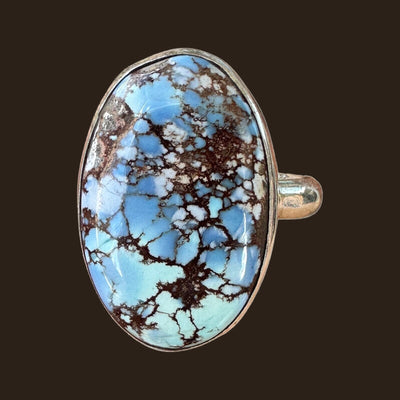
Natural turquoise offers a unique matrix pattern that cannot be replicated in mass-produced items. Because the stone formed over millions of years through the interaction of groundwater, copper, and aluminum, every specimen carries a distinct signature. You can find more details on Turquoise mineralogy and history to understand how these geological processes create the variations we see in the studio. Each piece we produce is a small-batch creation, reflecting the specific environment of the mine where the stone was found.
The appeal of the statement stone
A larger surface area gives the stone room to breathe. It allows the intricate spiderweb or host rock matrix to be fully visible to the naked eye. When Greg works at the lapidary wheel, he focuses on the unique character of each piece rather than trying to force a uniform look. This artisan approach ensures that the large turquoise ring you wear is the only one of its kind. Substantial stones require substantial silver. We use a heavy gauge of sterling silver to provide the structural support needed for a dense cabochon, ensuring the bezel and band can handle the physical weight for decades. Greg often sources these materials through his work at CuttingEdgeTurquoise.com, where the focus remains on high-grade material.
Moving past the bohemian clichés
Quality in jewelry isn't about being loud. It's about the gauge of the silver and the mirror-like polish of the stone. Much of the fashion market is saturated with dyed stones and mystery metals that lack the soul of genuine materials. We avoid those shortcuts. True Southwestern style relies on the raw beauty of the earth rather than over-designed ornaments that feel cluttered. A well-made piece feels grounded. It doesn't rely on "bohemian" labels to find its value. Instead, the value is found in the thickness of the bezel and the clarity of the matrix. We believe jewelry should be a quiet conversation between the wearer and the artisan who spent hours shaping the material. Every stone we set has been handled with intention, ensuring that the final polish reflects the light in a way that highlights the natural history of the mineral itself.
The lapidary art of cutting large turquoise cabochons
Greg Cordova handles the lapidary work for our studio, often sourcing raw material directly from the mines he owns or manages. You can see his specialized work at CuttingEdgeTurquoise.com. When Greg approaches a raw turquoise slab, he isn't just looking for size. He's looking for the story inside the stone. Cutting a stone destined for a large turquoise ring requires an intimate understanding of the rock's internal structure. He identifies fracture lines that could compromise the piece later, ensuring only the most stable sections become finished jewelry.
The shaping happens on a series of diamond wheels. The process is slow and deliberate. It starts with an 80-grit wheel for the heavy lifting and moves through progressively finer grits, often reaching 3000-grit or higher for a professional finish. Greg monitors the temperature of the stone constantly. If the turquoise gets too hot from friction, it can suffer from thermal shock or color shifts. It's a patient rhythm that respects the material's limits.
From raw slab to polished cabochon
Before the first cut is made, Greg maps out the stone to highlight the best color and matrix patterns. He relies on decades of hand-eye coordination to guide the slab against the blade. Sometimes the goal is a perfect, symmetrical oval. Other times, the stone dictates an intentionally organic, freeform shape that follows the natural flow of the matrix. Regardless of the silhouette, the back of the cabochon must be ground perfectly flat. This ensures the stone sits securely within its silver bezel without rocking or gapping. A stable fit is the foundation of any quality large turquoise ring.
Greg Cordova’s approach to stone cutting
Greg works to maintain the integrity of the natural stone through every stage of processing. He avoids heavy-handed treatments, preferring to let the authentic character of the turquoise show through. He often focuses on material from the Kings Manassa mine in Colorado. This mine is famous for its distinct range of forest greens and deep, watery blues that look striking in a wide silver setting. You can visit our stone origins page to learn more about where we source our materials and the history of these specific locations. This careful attention to detail results in a piece that feels grounded and authentic.
Comparing mine origins for high-quality statement stones
The character of a large turquoise ring begins long before the silver is ever melted or the bezel is formed. It starts in the specific chemistry of the earth at a single mine site. Each location across the American Southwest offers a distinct visual language, dictated by the presence of minerals like copper, iron, or zinc. When we select stones in our Santa Fe studio, we look for these specific "fingerprints" that tell the story of the high desert. A collector who understands these origins gains a deeper connection to the piece, knowing that the specific shade of teal or the pattern of the matrix is a result of geological events that happened millions of years ago.
Every stone we work with is hand-cut to highlight its best features. Greg Cordova, who manages our lapidary work and mine sourcing at CuttingEdgeTurquoise.com, focuses on preserving the natural integrity of the host rock. This process ensures that the stone remains the focal point of the design. By studying the origins of these materials, you can better appreciate the subtle differences between a deep forest green and a bright, sky blue. It is this knowledge that transforms a piece of jewelry into a documented piece of history.
The green hues of Kings Manassa
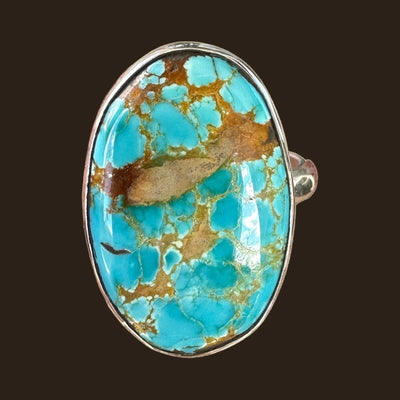
Sourced from a historic site in Manassa, Colorado, this mine has provided stones for Southwestern artisans for generations. Kings Manassa is famous for its rich, grassy greens and deep teals rather than the standard blues found in many Nevada mines. A large turquoise ring featuring a Manassa stone often showcases a heavy, golden-brown matrix that winds through the green like a riverbed. These stones feel grounded and organic. They are the preferred choice for those who appreciate the traditional, earthy spectrum of the stone. Because this mine is no longer actively producing in large quantities, these stones are increasingly gathered through private collections and specialized lapidaries like Greg’s studio.
White Buffalo and the power of contrast
White Buffalo is a striking material found near Tonopah, Nevada, that has become a staple in modern Southwestern design. While it is technically a calcite rather than a turquoise, it is often grouped with the stone because it is found in the same veins and worked with the same lapidary techniques. Kimberly Cordova curates these stones for their stark, high-contrast look. The pure white background is interrupted by jagged patterns of black chert, creating a visual that is both bold and sophisticated. Each cabochon is unique; no two patterns of black and white will ever be identical. This makes White Buffalo an excellent choice for a one-of-a-kind statement piece that leans toward a monochrome palette while maintaining an artisan soul.
Choosing between these origins is a matter of personal resonance. You might find yourself drawn to the lush greens of Colorado or the sharp, clean lines of Nevada white stone. Either way, the origin of the stone is the foundation of the piece's identity. To see how these different mine origins translate into finished designs, you can explore our full collection of artisan-made rings or visit our Etsy shop to read reviews from our community of collectors.
How to choose a comfortable setting for a heavy silver ring
A heavy silver ring sits differently on the finger than a delicate band. When Kimberly Cordova designs a piece around a substantial stone, she considers how the weight will shift as you move through your day. A large turquoise ring requires a wider band to distribute that weight evenly across the skin, preventing the silver from digging in or feeling top-heavy. This physical balance is what transforms a statement piece from something you wear for an hour into something you wear for a lifetime. When the proportions are correct, the jewelry moves with you rather than against you.
Stability is the primary goal for any setting housing a significant cabochon. We often utilize split-shank designs, which feature a band that divides into two or three branches as it approaches the stone. This wider footprint on the back of the setting provides a mechanical advantage, gripping the finger more securely and preventing the ring from spinning toward the palm. Additionally, the height of the stone matters. A high-domed cabochon is striking, but it must be set low enough to ensure it does not catch on jacket pockets, tote bags, or knit sweaters during winter months in Santa Fe.
The importance of the bezel and shank
The bezel is more than a frame; it is a protective wall. In our studio, we use heavy gauge sterling silver, typically 20-gauge or 22-gauge for the bezel wall, to ensure the stone remains secure for decades. A hand-stamped or serrated bezel adds a layer of artisanal detail that catches the light while shielding the edges of the turquoise from the inevitable bumps of daily life. A well-fitted shank, often crafted from 8-gauge or 10-gauge half-round wire, makes a large stone feel almost weightless. This structural integrity is a hallmark of Southwestern style jewelry that prioritizes longevity over mass production.
Sizing for substantial rings
Choosing the right size for a wide band is a specific process that differs from sizing a thin wire ring. Because these bands cover more surface area on the finger, they create more friction and take up more space. Most collectors find they need a size roughly a half-step larger than their standard measurement. To get the most accurate fit, measure your finger in the late afternoon, specifically after 4:00 PM, when your hands have reached their maximum daily volume due to temperature and activity. You can see our Rings Collection for sizing options and to see how different shank widths look on the hand.
View our current gallery of hand-cut turquoise rings to find a piece that balances bold scale with daily comfort. If you prefer to browse our shop through a platform that offers independent buyer reviews, you can also find our work at the Wildflower Artisans Etsy shop.

Curation and design at the Wildflower studio
Kimberly Cordova oversees the design and curation of every piece that leaves our Santa Fe studio. We focus on small batch production where every silver detail is intentional. Each large turquoise ring we create starts with a direct conversation between the designer and the stone. This process ensures the silver work supports the unique character of the cabochon rather than overwhelming it. We prioritize an authentic Southwestern style that honors the raw materials Greg Cordova cuts at Cutting Edge Turquoise. This direct connection to the lapidary process allows us to understand the physical history of every specimen before the first piece of silver is soldered. We don't believe in rushing the benchwork. We might spend an entire afternoon refining the fit of a single bezel to ensure it matches the curve of a hand-cut cabochon perfectly.
The Wildflower design philosophy
We want our jewelry to feel like a discovery for the wearer. It isn't just a purchase; it's an acquisition of a specific moment in geological history. We balance the organic, often asymmetrical shape of the stone with precise silver work. Our style is rooted in the high desert landscape. We look for ways to frame the stone that feel grounded and honest, avoiding the excessive ornamentation found in commercial jewelry. This approach avoids mass-market trends that often prioritize speed over substance. We prefer a quietly timeless aesthetic that relies on the natural matrix and color of the stone to tell the story. Choosing a large turquoise ring means committing to a piece that carries weight and presence. We design these rings to sit comfortably on the hand, ensuring the bezel and shank provide a secure foundation for the stone without feeling bulky or unbalanced.
Quality and authenticity guarantees
Our studio standards are strict to ensure every piece lasts through generations of wear. We exclude dyed howlite and mystery metals from our workbench entirely. Every stone is checked for structural stability and natural color before it's set in silver. We use high-quality sterling silver that we hand-finish to a soft luster. We believe that transparency about our materials is the only way to build a lasting relationship with our collectors. If you've found a piece that speaks to you, maintaining its appearance is a simple process. Review our Care and Repair guide to keep your silver bright and your stones secure for years to come. Our focus remains on the integrity of the material, ensuring the stone you see is the stone you receive, without artificial enhancements or hidden fillers.
Browse our current selection of artisan-made jewelry at wildflowerartisans.com. You can also find a curated variety of our work and read collector reviews at the Wildflower Etsy shop.
Finding a stone that speaks to you
A large turquoise ring is a quiet anchor for the hand, a piece of the high desert landscape shaped by careful human touch. This journey begins with the raw stone, where Greg Cordova hand-cuts each cabochon to highlight its unique spiderweb matrix or deep color. He sources these authentic stones directly from verified mines, ensuring that the material is as honest as the craftsmanship. Kimberly Cordova then curates these stones into solid .925 sterling silver settings designed for balance and ease. We prioritize a comfortable fit so that a substantial piece of jewelry never feels like a burden during your daily rhythms.
Our studio process is slow and intentional, focusing on the small-batch quality that defines Southwestern style. Every bezel is hand-soldered and every edge is polished with the wearer in mind. If you're ready to find a piece that reflects your own connection to the earth, you can browse our collection of artisan-made turquoise rings on our website. We also offer a curated selection through our Wildflower Etsy shop for those who prefer that platform's interface. We hope you find a stone that feels like it was meant for you all along.
Frequently Asked Questions
How can I tell if a large turquoise ring is real or dyed howlite?
You can identify genuine turquoise by looking for natural variations in the matrix and testing the stone's reaction to acetone. Dyed howlite is a soft white mineral that often shows white patches if you scratch the surface or rub it with a cotton swab dipped in nail polish remover. Greg Cordova sources our rough material directly from known mines to ensure every large turquoise ring we produce features authentic, untreated stone.
Will a large ring be too heavy for everyday wear?
A typical large turquoise ring weighs between 15 and 30 grams, which is substantial but comfortable when balanced correctly on the finger. Kimberly Cordova designs our settings with wide or split-shank bands to distribute this weight and prevent the stone from sliding. This thoughtful construction allows the jewelry to sit low against the hand, making it practical for a full day of activity.
What is the best way to clean a sterling silver and turquoise ring?
The safest way to clean your jewelry is with a dry polishing cloth and a very small amount of lukewarm water if necessary. Turquoise is a porous mineral that ranks between 5 and 6 on the Mohs scale, meaning it can easily absorb chemicals, soaps, or oils that cause permanent discoloration. Avoid ultrasonic cleaners or harsh silver dips, as these can strip the natural luster from the hand-cut cabochon and damage the silver finish.
Can a large turquoise ring be resized after purchase?
Resizing a finished turquoise ring is rarely possible because the high heat from a jeweler's torch can crack or burn the stone. Since the cabochon is held securely by a silver bezel, any attempt to solder the band risks destroying the mineral's structure. We recommend using a wide-band ring sizer to confirm your fit before ordering one of our small batch pieces.
Why does the color of turquoise vary so much between different rings?
Turquoise color is determined by the specific minerals present in the soil, with copper creating blue tones and iron producing green hues. A single mine like Royston can produce a palette ranging from sky blue to deep emerald depending on the exact vein being worked. Greg Cordova selects each stone for its unique character, ensuring the matrix and color reflect the geological history of the Southwestern landscape.
Is White Buffalo turquoise actually a type of turquoise?
White Buffalo is technically a mixture of calcite and quartz rather than turquoise because it lacks the copper and phosphorus required for that classification. Ours comes from our family's claim at the White Buffalo mine near Tonopah, Nevada, and it is prized for its stark white color and black chert matrix. We use this material in our Southwestern style designs because it offers a clean, monochrome look that complements our traditional artisan-made silver work.

Article by
Kimberly Cordova
Kimberly Cordova is the founder and creative director of Wildflower Artisans, a handmade jewelry brand rooted in Santa Fe. Real turquoise, solid sterling silver, and a small line set in solid 14K gold. She built Wildflower around a simple belief: the best jewelry is the kind you actually reach for, not the kind you save for someday.
The collection is built three ways. Some pieces are made in-house, cut by her husband Greg from stones he sources himself, including rough from the family's King's Manassa Mine in Colorado and White Buffalo Mine in Nevada. Some are designed by Kimberly and fabricated by a trusted circle of Santa Fe silversmiths. And some are finished work she curates from artisan makers whose craft meets the same standard, because building a real collection means knowing when to make and when to look.
Turquoise leads, joined by White Buffalo, Wild Horse, Lapis Lazuli, Spiny Oyster, Black Onyx, Opal, and other genuine semi-precious stones. No shortcuts on the stone, the silver, or the story behind either.
Her writing covers everything she has learned along the way: how turquoise forms, how to tell natural from stabilized, what makes one mine different from another, how to read a bezel, and how to shop with confidence in a market that is not always straightforward. It is the kind of plainspoken information she wished someone had laid out for her when she was starting out.
Browse the collection at wildflowerartisans.com. Questions about a stone, a setting, or a specific piece are welcome any time.


0 comments