

While the Kingman mine produced nearly 80,000 pounds of stone in 1973, only about 3% of the material pulled from the Arizona earth today is hard enough to remain natural and untreated. You've likely felt the pull of that vibrant sky-blue hue that defines kingman turquoise, yet felt a bit of hesitation when terms like stabilized or matrix enter the conversation. It's a common hurdle for anyone who values authenticity but fears the prevalence of dyed imitations or plastic-filled substitutes found in the wider market.
We want to help you move past that confusion by sharing the specific markers we look for in our Santa Fe studio. This guide explores the history of the Colbaugh family's mine and the artisan processes that turn raw earth into wearable art. You'll learn to identify genuine matrix patterns, understand the lapidary work Greg Cordova performs at CuttingEdgeTurquoise.com, and see how Kimberly Cordova curates these stones into artisan-made jewelry that honors the heritage of the Southwest. By the end, you'll have the knowledge to select a quietly timeless piece with genuine provenance and a stone that will last for generations.
Key Takeaways
- Learn how raw blue stone is pulled from the Cerbat Mountains of Arizona, where the Colbaugh family has managed production for generations.
- Confidently identify kingman turquoise by recognizing its wide color spectrum and the specific matrix patterns that define stones from this region.
- Gain a clear understanding of the stabilization process, which uses clear resin to ensure softer stones are durable enough for daily wear.
- See how Kimberly Cordova curates each stone for our studio collections, paired with the expert lapidary work of Greg Cordova.
- Learn to evaluate artisan-made jewelry by inspecting bezel settings and verifying stone provenance to avoid dyed imitations.
The Heritage and History of the Kingman Turquoise Mine
Rough chunks of kingman turquoise emerge from the sun-bleached earth of the Cerbat Mountains like fragments of a fallen sky. This specific pocket of Arizona has been a source of blue stone for centuries, and today, kingman turquoise remains the last commercially producing turquoise mine in the United States. The site's history stretches back over a thousand years. Ancient pit mines and stone hammers found in the area suggest that people were extracting these gems as early as 600 AD. It's a place where geological time meets human craftsmanship.
The Colbaugh family has managed the mining rights here for several generations. Their stewardship is the reason the mine remains operational while so many others in the American West have shuttered. They've perfected the balance between high-volume production for the broader market and the careful extraction of rare, investment-grade nuggets. This continuity of ownership provides a level of provenance that is rare in the gemstone world. When we talk about a stone's history, we aren't just talking about the earth; we are talking about the families who guard it.
To better understand the journey from raw earth to finished jewelry, watch this helpful video:
The Cerbat Mountains and Modern Mining
The mine is located just outside Kingman, Arizona, nestled in a landscape defined by rugged peaks and mineral-rich soil. The mineral-rich veins of the Cerbat range contain a unique combination of copper and aluminum that produces the signature blues and greens we recognize. In the early days, mining was a slow, manual process involving hand-held tools and sheer persistence. Today, heavy machinery allows for larger scale extraction, yet the final sorting of the stones still requires a human eye and a steady hand. Greg Cordova sources much of his material through these direct channels, ensuring that the lapidary work at CuttingEdgeTurquoise.com begins with genuine Arizona rough.
Southwestern Style and the Kingman Influence
This stone has essentially become the visual language of Southwestern style jewelry. Because of its reliable availability and striking color palette, it is a staple in small batch sterling silver collections. Collectors often view it as a quietly timeless choice because its matrix patterns are so recognizable. In our Santa Fe studio, we see how this stone bridges the gap between traditional techniques and modern aesthetics. It isn't just a material; it's a piece of regional identity. Kimberly Cordova curates specific cuts of this stone for our one-of-a-kind collections, focusing on pieces that highlight the natural character of the Arizona landscape. It offers a sense of permanence in a world of fleeting trends.
Identifying Visual Markers of Kingman Turquoise
Identifying kingman turquoise requires looking beyond a single shade of blue. This Arizona mine produces a vast color palette that ranges from a pale, soft baby blue to deep, mossy forest greens. The diversity is largely due to the mineral concentration in specific pockets of the Cerbat Mountains. Copper creates the classic sky-blues we often associate with the Southwest; while iron content pushes the stone toward those earthy green tones. Each cabochon carries a distinct visual signature based on where it was pulled from the earth.
The matrix, or the host rock that threads through the turquoise, acts as a fingerprint for the mine. In Kingman stones, this matrix can be stark white, light tan, or a deep, chocolate brown. Occasionally, you'll find black matrix that provides a sharp contrast against a bright blue stone. These patterns aren't just aesthetic details; they tell the story of the stone's formation over millions of years. In our studio, we treat these patterns as a guide for the silver work that follows.
The Famous Water Web and Spiderweb Patterns
Experts often look for specific patterns like the water web or spiderweb matrix to determine a stone's value. A water web pattern consists of fine, light-colored lines that create a dappled effect, similar to sunlight reflecting off a shallow pool. It's subtle and often found in lighter blue stones. Contrast this with the spiderweb matrix, which features dark, interconnected lines that web across the surface of the cabochon. High-grade kingman turquoise with a tight spiderweb pattern is highly sought after by collectors, as it often rivals the appearance of stones from much more expensive, closed mines. Greg Cordova performs the precise lapidary work at CuttingEdgeTurquoise.com to reveal these hidden webs within the raw material.
Color Variations and Mineral Inclusions
The mineral makeup of Kingman rough often includes more than just turquoise. You might notice small flecks of pyrite, which add a metallic, silver-like shimmer to the stone. These inclusions are particularly striking when set in a hand-cut bezel. The color of the matrix also dictates the design direction in the studio. A stone with a dark, heavy matrix often pairs well with oxidized silver, while a clean, pale blue cabochon might call for a high-polish finish. Kimberly Cordova carefully selects each stone based on these visual markers, ensuring the stone origins are respected in every design. This careful curation ensures that our small batch collections remain quietly timeless and grounded in the landscape of the West.
Understanding Natural vs. Stabilized Kingman Turquoise
The distinction between natural and stabilized stone is often the source of most questions in our studio. When we talk about stabilized kingman turquoise, we are referring to a stone that has been infused with a clear, liquid resin under high pressure. This is a standard industry practice because approximately 95% of the turquoise pulled from the Kingman mine is naturally too soft or chalky to be cut into a cabochon. Without this process, the stone would simply crumble when it touched the lapidary wheel. We reserve the term natural strictly for the 3% to 5% of stones that are hard enough to be cut, polished, and set without any chemical intervention.
For everyday items like handcrafted rings, stabilization offers a practical advantage. Turquoise is a porous mineral. Untreated stones can absorb skin oils, lotions, or soaps over time, which eventually causes the color to shift from blue to a duller green. Stabilized stones are sealed. They maintain their original color and structural integrity through years of daily wear. This makes them an ideal choice for pieces that see heavy use.
The Process of Stabilization
The stabilization process used by the Colbaugh family involves placing rough turquoise in a pressurized environment with clear epoxy. This resin fills the microscopic pores of the stone, deepening the color and significantly increasing the hardness. It turns a fragile mineral into a durable gem. Beyond durability, this method makes artisan-made jewelry more accessible. While retail prices for stabilized Kingman rough sit around $150 per pound, natural high-grade rough can cost significantly more. This allows Kimberly Cordova to curate a wider variety of stones for our everyday collections without sacrificing the visual character of the Arizona landscape.
The Rarity of High-Grade Natural Stone
Finding a piece of natural, untreated kingman turquoise is a rare occurrence for any collector. These stones represent the top tier of the mine's output and are highly sought after for their purity and investment value. Because they are so scarce, they are typically reserved for one-of-a-kind statement pieces where the raw beauty of the mineral is the primary focus. The price disparity reflects this rarity. A small cabochon might retail for $84, but a large, natural spiderweb stone can easily reach several hundred dollars. Greg Cordova sources these rare finds through his work at CuttingEdgeTurquoise.com, providing the foundation for our most exclusive designs. Understanding these stone origins helps you choose a piece that fits both your lifestyle and your collection goals.

Selecting Quality Kingman Turquoise Jewelry
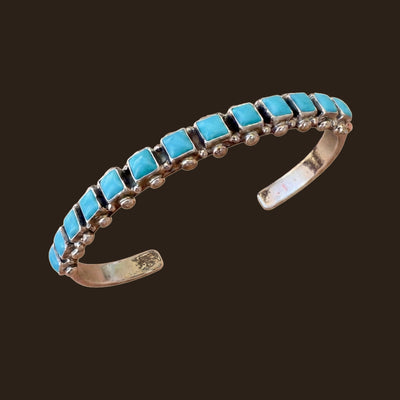
When you are looking to add a piece of kingman turquoise to your collection, the first thing to inspect is the bezel. This is the silver rim that secures the stone. In artisan-made jewelry, the bezel should be smooth and tight against the cabochon with no visible gaps. A well-set stone won't wiggle or rattle. Mass-produced pieces often use thin silver or glue to hide poor craftsmanship, but a quietly timeless piece relies on the physical tension of the metal. Sterling silver should feel substantial in the hand, providing a grounded weight that matches the stone's character.
You should also verify the source of the stone. Dyed howlite is a common substitute that mimics the look of blue stone but lacks the mineral complexity of genuine kingman turquoise. Howlite is naturally white with dark veins; it is easily dyed to fool unsuspecting buyers. Checking the stone origins is a necessary step to ensure you are purchasing a piece with genuine provenance. We focus on small batch production to maintain this level of transparency for every collector. You can explore our current studio work at wildflowerartisans.com to find a piece that resonates with your personal narrative.
Evaluating the Cut and Polish
A hand-cut cabochon should have a balanced symmetry and a high-quality surface finish. Greg Cordova handles the lapidary work for our studio through CuttingEdgeTurquoise.com, focusing on how the matrix is positioned within the cut. You want the patterns to feel intentional. While a mirror-like polish is common, don't be alarmed by minor surface pits or slight irregularities. These are often signs of a genuine, natural stone that hasn't been heavily filled with plastic or artificial sealants. They are the birthmarks of the Arizona earth.
Daily Wear and Care
Turquoise is a living stone that requires a bit of mindfulness. Avoid exposing your jewelry to harsh household chemicals, hairsprays, or high heat, as these can damage the delicate mineral structure. For detailed guidance on maintaining the luster of your silver and stones, visit our care and repair page. If you are just beginning your collection, we suggest starting with our everyday essentials. These pieces are designed for durability and offer a perfect introduction to the beauty of Southwestern style jewelry.
Browse our full collection of kingman turquoise jewelry at wildflowerartisans.com or visit the Wildflower Etsy shop to see our latest artisan-made designs.
The Wildflower Studio Process with Kingman Stones
In our Santa Fe studio, we view the journey of kingman turquoise as a thoughtful collaboration between the raw earth and the jeweler's bench. Kimberly Cordova leads the design and curation for each collection, personally selecting stones that carry a specific narrative or visual weight. Greg Cordova provides the technical foundation for our work through his expertise in lapidary and mine sourcing. By maintaining a close relationship with the mine and managing the cutting process at CuttingEdgeTurquoise.com, we ensure that every stone in our studio has a documented history and genuine provenance.
Our commitment to small batch production means we don't rush the process. We treat each stone as a vessel for the landscape it came from. This grounded approach allows us to focus on the details that mass production often overlooks. It is a practice rooted in respect for both the material and the artisan-made traditions of the West.
From Rough Stone to Finished Cabochon
Greg Cordova begins his process by sorting through rough material to find pieces with the most potential for our jewelry collections. He looks for specific matrix density and color stability that will translate well into a finished cabochon. Unlike mass-produced jewelry that relies on factory-cut stones shaped by automated machines, our stones are hand-cut to honor the natural shape of the mineral. This approach allows us to preserve rare spiderweb patterns or unique mineral inclusions that might otherwise be ground away. It is a slower process, but it results in a level of detail that defines true artisan-made quality.
Designing Around the Stone
Kimberly Cordova approaches each piece of jewelry by letting the stone dictate the silver work. She observes the movement of the matrix and the depth of the blue before deciding on the bezel style or the texture of the sterling silver. A stone with a heavy, dark matrix might be paired with an oxidized finish to create a grounded, earthy feel. A clean, bright sky-blue stone often calls for a minimalist setting that highlights its clarity. This focus on one-of-a-kind designs ensures that the unique character of kingman turquoise is always the center of the story, resulting in pieces that are quietly timeless. We invite you to explore these unique pairings in our latest new arrivals.
You can find our current collection of handcrafted jewelry at wildflowerartisans.com. For those who prefer the community and protections of a marketplace, we also maintain a curated selection in the Wildflower Etsy shop.
Bringing the Arizona Sky to Your Collection
Choosing a piece of jewelry is about finding a connection to the earth and the hands that shaped it. You now have the tools to distinguish between stabilized stones and rare, natural specimens. Each piece is intentional. By focusing on the specific matrix patterns and the quality of the hand-cut bezel, you can avoid the pitfalls of dyed howlite and poor craftsmanship. Our studio process honors the raw character of the Arizona desert.
Greg Cordova ensures genuine stone provenance through his expert lapidary work at CuttingEdgeTurquoise.com, while Kimberly Cordova curates each stone to match our quietly timeless silver designs. We guarantee authentic kingman turquoise in every setting, using only high-quality sterling silver and stones with a clear history. Explore our collection of artisan-made Kingman turquoise jewelry at Wildflower to find a piece that resonates with your own story. For those who prefer the protections of a marketplace, you can also visit the Wildflower Etsy shop. We look forward to helping you find a stone that feels like home.
Frequently Asked Questions
Is Kingman turquoise real turquoise?
Yes, kingman turquoise is a genuine mineral composed of hydrous phosphate of copper and aluminum mined from the Cerbat Mountains in Arizona. It is one of the most recognized and longest-producing sources of authentic turquoise in the United States. While much of the material is stabilized for durability, it remains a real gemstone pulled directly from the earth by the Colbaugh family.
Does Kingman turquoise change color over time?
Natural, untreated stones can shift in color as they absorb skin oils or environmental moisture, but stabilized stones are designed to remain colorfast. The stabilization process seals the microscopic pores of the mineral. This prevents the chemical reaction that typically turns sky-blue stones into a duller green over years of wear. If you prefer a stone that stays true to its original palette, stabilized options are the most reliable choice.
Why is some Kingman turquoise bright blue and other stones green?
The color of the stone is determined by the specific mineral concentration in the pocket where it formed. High copper content produces the classic sky-blue shades, while the presence of iron or zinc pushes the stone toward earthy green and yellow tones. This natural variety allows Kimberly Cordova to curate a diverse range of stones for our small batch jewelry collections, matching each unique cabochon to a specific silver design.
What is the difference between stabilized and treated Kingman turquoise?
Stabilization is a specific industry-standard process that involves infusing the stone with clear resin to increase hardness, whereas "treated" can refer to more invasive methods like dyeing. We only use stones that have been stabilized with clear epoxy or left in their natural state. We avoid stones that have been dyed or reconstituted from dust, as these lack the structural integrity and genuine character of a stone hand-cut by Greg Cordova at CuttingEdgeTurquoise.com.
How can I tell if my Kingman turquoise is natural?
Identifying a natural, untreated stone often requires a jeweler's loupe to look for minor surface pits and a specific luster that resin-infused stones lack. Since only 3% to 5% of the turquoise from the Kingman mine is hard enough to be sold as natural, these stones are quite rare and usually come with a higher price and documented provenance. The most reliable way to verify a stone is to purchase from a studio that provides clear information on stone origins.
Is Kingman turquoise considered high quality?
Kingman is highly regarded in the industry for its durability and the rare spiderweb matrix patterns found in its high-grade rough. While the mine produces a vast amount of material for the global market, its top-tier stones are world-class and frequently used in investment-grade, artisan-made jewelry. It is a staple of Southwestern style because it offers both accessibility for everyday wear and extreme rarity for serious collectors.
How should I clean my Kingman turquoise jewelry?
The best way to clean your jewelry is with a soft, dry microfiber cloth to remove dust and skin oils. Never use ultrasonic cleaners, steam, or harsh chemicals, as these can damage the stone or the silver bezel. If the silver setting needs polishing, use a dedicated polishing cloth and take care to avoid rubbing the stone itself. For more detailed maintenance, you can always refer to our care and repair guide for professional advice.

Article by
Kimberly Cordova
Kimberly Cordova is the founder and creative director of Wildflower, a handmade Turquoise and sterling silver jewelry brand based in Santa Fe. She built Wildflower around a simple belief: the best jewelry is the kind you actually reach for, not the kind you save for someday.
Kimberly designs pieces made by hand with a trusted circle of Santa Fe silversmiths, works alongside her husband Greg on in-house lapidary pieces cut from stones including the family's King's Manassa Mine in Colorado and White Buffalo Mine in Nevada, and sources finished work from artisan makers whose craft meets the same standard. The result is a collection with real range and no shortcuts on the stone, the silver, or the story behind either.
Her writing covers everything she has learned along the way: how Turquoise forms, how to tell natural from stabilized, what makes one mine different from another, how to read a bezel, and how to shop with confidence in a market that is not always straightforward. It is the kind of plainspoken information she wished someone had laid out for her when she was starting out.
Shop the Wildflower collection at wildflowerartisans.com, or find us on Etsy at wildflowersantafe.etsy.com. Questions about a stone, a setting, or a specific piece are welcome any time.
0 comments