

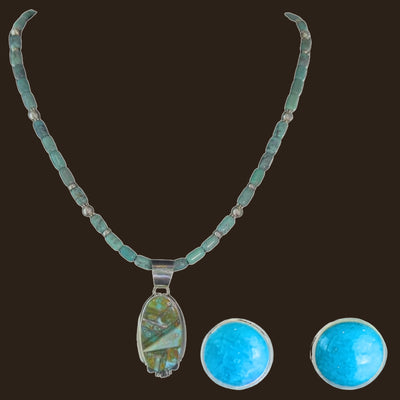
The closure of the Sleeping Beauty mine in 2025 shifted the entire landscape of Southwestern style jewelry, making the search for a genuine Kingman turquoise necklace for sale more than a simple purchase. It’s a hunt for a finite piece of Arizona history, a search for the authentic. We understand the hesitation you feel when looking at bright blue stones online, wondering if the color is real or the silver is pure. You deserve a piece that is quietly timeless and verified in its origin.
In this guide, we will show you how to evaluate the intricate spiderweb matrix and the technical precision of artisan work. You will learn to recognize the specific lapidary work of Greg Cordova and the small batch design curation of Kimberly Cordova. We will explore the nuances of bezel settings and color grades so you can choose a one-of-a-kind piece with total confidence.
Key Takeaways
- Learn to distinguish the diverse color spectrum of the Mineral Park district, ranging from deep greens to the sky-blue hues that define this Arizona mine.
- Understand how to identify professional lapidary work by looking for hand-cut cabochons and specific matrix patterns that verify a genuine kingman turquoise necklace for sale.
- Discover the technical markers of high-quality Southwestern style jewelry, including silver gauge weight and the importance of an artist signature or sterling mark.
- Get practical advice on pairing different pendant sizes with the correct sterling silver chain lengths to ensure your jewelry remains comfortable and secure.
- Master the simple steps needed to protect porous stones from oils and chemicals to keep your one-of-a-kind piece looking its best for years.
Understanding the Spectrum of Kingman Turquoise Colors
Kingman turquoise is a bit of a chameleon. While many people picture a single shade of sky blue, the stones coming out of the Mineral Park district near Kingman, Arizona, actually span a massive spectrum. You might see a piece that looks like the clear desert sky at noon, while the next stone in the studio has deep mossy greens or teals. These variations aren't flaws. They are the geological signature of the specific vein where the stone formed.
When you're looking for a kingman turquoise necklace for sale, the classic high-blue remains the most sought-after variety. Since the Sleeping Beauty mine closed in 2025, the market has leaned heavily on Kingman to provide that vivid, clear blue that defines so much of the Southwestern style. We work closely with Greg Cordova, who often sources rough material directly from the mine owners at Cutting Edge Turquoise. This direct connection ensures we know exactly where each cabochon started its journey.
To better understand the artistry behind these stones, watch this helpful video showing the process of creating a handcrafted piece:
The Significance of Matrix Patterns
The host rock, or matrix, tells the story of the stone's life in the earth. A fine black spiderweb matrix is incredibly rare and highly valued for its intricate, lace-like appearance. Other stones feature heavy copper-toned splotches or silver-colored inclusions, which are distinct markers of the Mineral Park district. If you prefer a cleaner look, some stones are cut to be almost entirely clear blue. These work well for a minimalist bezel setting.
Tracing the Origins of Your Stone
Knowing the history of your jewelry adds a layer of depth to the piece. Much like the Native American jewelry traditions that have shaped the region's aesthetic for generations, modern artisan-made work relies on transparency. We recommend that you verify the stone origins before making a purchase. This protects you from buying dyed howlite or mystery metals. Always look for a sterling mark on the back of the setting to ensure you are investing in quality materials. Kimberly Cordova curates each stone for its unique character, ensuring the finished necklace is a one-of-a-kind piece.
The Role of Lapidary Excellence in Southwestern Style Jewelry
When you browse for a kingman turquoise necklace for sale, the quality of the lapidary work is the first thing you should notice. The beauty of a stone is often locked away inside a dusty, unremarkable rock until a lapidary artist intervenes. In our Santa Fe studio, Greg Cordova handles this transition from earth to art. He often cuts stones from rough material he owns, which he sources through his mine-direct connections at Cutting Edge Turquoise. This isn't just about grinding a rock into a shape. It's about seeing the potential in a piece of rough Kingman and deciding exactly how to orient the cut to highlight a specific spiderweb matrix or a patch of deep teal. Every slice of the saw is a choice that affects the final character of the jewelry.
From Rough Stone to Finished Cabochon
Hand-cutting a cabochon requires a steady hand and a deep understanding of mineralogy. Greg uses specialized saws and wheels to reveal the hidden character of the stone. Some Kingman stones require stabilization, a process that ensures the turquoise is durable enough for daily wear without losing its color over time. Because each stone is hand-cut, they come off the wheels with unique heights and curves. This is why a kingman turquoise necklace for sale from a small batch studio feels different than a mass-produced one. The silver isn't a pre-made mold. It's a home built specifically for that one stone. We don't force a stone into a setting; we build the setting to honor the stone.
Why Artisan-Made Details Matter
Southwestern style jewelry relies on this marriage of stone and silver. Unlike factory pieces where stones are dropped into generic settings, our artisan-made pieces feature a bezel that is hand-fitted to the stone's exact perimeter. This custom work protects the turquoise and ensures it stays secure for decades. Kimberly Cordova curates this selection, looking for the perfect balance between the lapidary work and the final silver design. You can see the influence of historical Southwestern Indian jewelry styles in the hand-stamped details and the weight of the sterling silver we use. These small batch production methods mean each pendant receives individual attention from start to finish. It's a slower way of working, but the result is a piece that feels grounded and intentional. If you're ready to find a piece that speaks to you, you can explore our one-of-a-kind pendants to see the results of this process firsthand.

Evaluating a Kingman Turquoise Necklace for Sale
When you pick up a kingman turquoise necklace for sale, the first thing you should notice isn't the color, but the weight. A quality Southwestern style piece has a certain heft that comes from using heavy-gauge sterling silver. If a pendant feels flimsy or hollow, it's likely mass-produced or made from a plated base metal. Turn the piece over. You should see a .925 stamp or an artist's signature. This mark is a promise of material purity and a connection to the person who spent hours at the bench.
Look closely at the bezel, the thin strip of silver that wraps around the stone. In a well-crafted piece, that silver should sit perfectly flush against the turquoise cabochon. There shouldn't be any gaps or sharp edges. If you can see light between the stone and the silver, it's a sign of a generic setting rather than a custom-built one. Genuine Kingman turquoise will also feel cool to the touch when you first pick it up, unlike plastic imitations that hold room temperature. Each stone should have natural variations in color, even within a single cabochon, showing the organic growth of the mineral.
Sterling Silver Standards
Southwestern style necklaces typically use .925 sterling silver for durability. High-quality silver won't flake or peel like plated base metals. It develops a soft patina over time that tells the story of how often it's been worn. You can browse our necklace and pendants collection to see how we use heavy-gauge silver to anchor our stones. This thickness ensures the setting won't warp or bend, protecting the lapidary work for years to come. It's a quietly timeless approach to construction that prioritizes longevity over speed.
Identifying Treated vs Natural Stones
The word "natural" is often misused. In our studio, we only use it for turquoise that is completely untreated, which is increasingly rare for Kingman. Because turquoise is a relatively soft stone, most of it is stabilized. This is a standard process where a clear resin is pressurized into the stone to make it hard enough for cutting and daily wear. It's still genuine stone, just more durable. To help consumers understand these distinctions, the Indian Arts and Crafts Board provides excellent resources on authenticity. Avoid stones with unnaturally bright color concentrated in the cracks, as this is usually a sign of dyed howlite. Kimberly Cordova curates our stones specifically to ensure every piece meets these high standards of authenticity.
Matching Pendants with the Right Necklace Length
A beautiful stone is only half the story. How that stone sits against your skin or clothing determines how the piece feels throughout the day. When you find a kingman turquoise necklace for sale, the length of the chain or beads is just as important as the lapidary work itself. A large, heavy statement pendant will pull a thin chain taut, which can be uncomfortable and risks breaking the links. These larger artisan-made pieces usually require a heavier sterling silver chain or a strand of hand-strung beads to balance the visual and physical weight.
Your choice of neckline also plays a role in where the turquoise should land. A high turtleneck or a deep V-neck requires different lengths to ensure the stone isn't hidden or clashing with the fabric. If you find that standard necklace lengths don't suit your style, consider a bolo tie. These offer an adjustable alternative that allows you to move the slide to the exact position that works for your outfit, providing a completely different silhouette than a traditional pendant.
Choosing Your Length
Selecting the right length depends on both your frame and the size of the stone. We find that most people prefer one of three standard ranges:
- 16 to 18 inches: This length sits near the collarbone. It's the ideal choice for small pendants or everyday essentials that you never want to take off.
- 20 to 24 inches: These chains fall to the chest and work well for mid-sized artisan pieces that need a bit more room to breathe.
- 30 inches and longer: These are dramatic lengths often reserved for one-of-a-kind statement jewelry that you want to be the center of your ensemble.
Pearl and Bead Alternatives
Sometimes a simple chain isn't enough to support the character of a hand-cut Kingman stone. Hand-strung silver beads provide a textured look that complements the natural matrix of the turquoise. Layering different lengths is another way to create a personalized Southwestern style that feels intentional rather than cluttered. Just remember that heavier pendants need the structural support of a sturdy clasp and thicker jewelry wire. We pay close attention to these finishing details in our studio to ensure your piece is as durable as it is beautiful. You can explore our complete collection of pendants to see how we pair different stones with their ideal necklace companions.
Caring for Your Handcrafted Turquoise Jewelry
Once you bring a piece of the high desert home, it's helpful to remember that turquoise is a porous, living stone. It breathes. Because of this, it's susceptible to absorbing the world around it. Perfumes, hairsprays, and even the natural oils from your skin can gradually seep into the stone, potentially shifting its color from a bright sky blue to a deeper green. If you have recently acquired a kingman turquoise necklace for sale, you likely want to preserve that specific Mineral Park hue for as long as possible. We always recommend that your jewelry be the last thing you put on in the morning and the first thing you take off at night.
Protecting your investment means keeping it away from harsh environments. Never wear your turquoise while swimming in chlorinated pools or using household cleaners. Chemicals can strip the polish from the cabochon or damage the integrity of the silver. If the stone gets dusty, a quick wipe with a damp, soft cloth is enough. Avoid liquid silver dips, as these are far too aggressive for the stone. A simple polishing cloth is the best tool for maintaining the luster of the sterling silver without risking the turquoise.
Professional Maintenance
Even the most robust artisan-made settings need a check-up every now and then. Greg Cordova builds these bezels to endure, but sterling silver is a malleable metal that can shift with years of heavy wear. We suggest examining the bezel periodically to ensure the stone remains secure. If you notice a slight wiggle or a gap, it's time for a professional adjustment. Our care and repair guide offers more detail on preserving the life of your pieces. One critical rule is to avoid ultrasonic cleaners. The intense vibrations can cause natural fissures in the turquoise to expand, leading to cracks or even shattering the stone entirely.
The Patina of Silver
Sterling silver has a personality of its own. Over time, it naturally develops a darker patina in the recessed areas of the design, which adds depth and highlights the hand-stamped details Kimberly Cordova curates for our collections. Many collectors find this aged look more beautiful than a high-shine finish. Interestingly, the best way to prevent excessive tarnish is simply to wear your jewelry. The constant, gentle friction against your skin acts as a natural polisher. When you aren't wearing your pendant, store it in a cool, dry place away from direct sunlight. A lined box or a small cloth pouch will prevent the stone from being scratched by other pieces in your collection. This mindful approach ensures your one-of-a-kind piece remains a quietly timeless part of your story for decades.
Finding a Piece to Carry Your Story
Choosing a stone is ultimately about the connection between the landscape of the Mineral Park district and the technical skill of the maker. You're now equipped to look past the surface and evaluate the structural integrity of a custom bezel and the weight of a heavy-gauge sterling silver setting. By focusing on the lapidary excellence of Greg Cordova and the intentional curation of Kimberly Cordova, you ensure that your investment is a genuine piece of Southwestern style. Finding a kingman turquoise necklace for sale that resonates with you is a process of discovery. It’s about finding that one stone whose matrix and color tell a story you want to carry.
Discover your next heirloom in the Wildflower jewelry shop.. We hope you find a stone that feels grounded and brings a bit of Southwestern light into your everyday life.
Frequently Asked Questions
How can I tell if a Kingman turquoise necklace is real?
Real Kingman turquoise feels cool to the touch and has a distinct, irregular matrix pattern that isn't printed on the surface. When evaluating a kingman turquoise necklace for sale, check for a sterling silver mark (.925) and an artist's signature on the back of the setting. Authentic stones often show slight color variations within the same cabochon; unlike plastic or dyed howlite imitations which look too uniform or have color concentrated only in the cracks.
Is Kingman turquoise always blue?
No, Kingman turquoise comes in a vast range of hues including deep greens and teals. While the vivid sky blue is the most famous shade from the Mineral Park district, many veins produce stones with high iron content that results in beautiful green tones. These variations are a natural part of the mine's geological story. Kimberly Cordova curates our collection to showcase this full spectrum, from the classic blue to the earthy greens.
What does stabilized turquoise mean for my necklace?
Stabilization is a process where clear resin is pressurized into the stone to make it hard enough for lapidary work. Most Kingman turquoise is stabilized because the raw stone is often too soft to be cut into a cabochon or worn daily without breaking. This treatment is a standard industry practice that preserves the stone's color and ensures your jewelry is durable. It remains genuine turquoise, just physically reinforced for longevity.
Can I wear my turquoise necklace in the shower?
You should avoid wearing turquoise in the shower because it is a porous stone that can absorb soaps and oils. Over time, exposure to water and chemicals in body wash or shampoo can cause the stone to change color or lose its luster. It's best to remove your jewelry before bathing or swimming in chlorinated pools to keep the hand-cut stones in their original condition for as long as possible.
How do I clean tarnished sterling silver without damaging the stone?
The safest way to clean your jewelry is with a dry, soft polishing cloth made specifically for sterling silver. Never use liquid silver dips or ultrasonic cleaners, as these can permanently damage the porous turquoise stone or strip the natural patina from the silver's recessed details. A gentle rub with a cloth will remove tarnish while protecting the lapidary work Greg Cordova has carefully shaped in our Santa Fe studio.
What is the most common necklace length for a turquoise pendant?
An 18-inch chain is the most popular choice because it allows the pendant to sit just below the collarbone for most people. If you are choosing a kingman turquoise necklace for sale that features a large statement stone, you might prefer a 20 or 24-inch length to give the piece more visual space. Shorter 16-inch chains work best for small, everyday essentials that sit higher on the neckline.
Why does some Kingman turquoise have silver or copper matrix?
Kingman turquoise is unique because the Mineral Park district is rich in minerals like copper and iron pyrite. These minerals form the host rock that creates the matrix patterns you see in the stone. Copper often leaves reddish or golden splotches, while iron pyrite creates shiny, silver-colored inclusions. These metallic markers are prized by collectors because they verify the stone's origin and add a distinct character to the Southwestern style.
How should I store my Southwestern style jewelry when not in use?
Store your jewelry in a cool, dry place away from direct sunlight, which can eventually fade some stones. It's best to keep each piece in a separate lined box or a soft cloth pouch to prevent the sterling silver from scratching the surface of the turquoise. Keeping your necklaces separate also prevents chains from tangling and ensures the hand-cut cabochons remain protected until the next time you decide to wear them.

Article by
Kimberly Cordova
Kimberly Cordova is the founder and creative director of Wildflower, a handmade Turquoise and sterling silver jewelry brand based in Santa Fe. She built Wildflower around a simple belief: the best jewelry is the kind you actually reach for, not the kind you save for someday.
Kimberly designs pieces made by hand with a trusted circle of Santa Fe silversmiths, works alongside her husband Greg on in-house lapidary pieces cut from stones including the family's King's Manassa Mine in Colorado and White Buffalo Mine in Nevada, and sources finished work from artisan makers whose craft meets the same standard. The result is a collection with real range and no shortcuts on the stone, the silver, or the story behind either.
Her writing covers everything she has learned along the way: how Turquoise forms, how to tell natural from stabilized, what makes one mine different from another, how to read a bezel, and how to shop with confidence in a market that is not always straightforward. It is the kind of plainspoken information she wished someone had laid out for her when she was starting out.
Shop the Wildflower collection at wildflowerartisans.com, or find us on Etsy at wildflowersantafe.etsy.com. Questions about a stone, a setting, or a specific piece are welcome any time.


0 comments