

A perfectly matched set of turquoise jewelry often feels static, lacking the soul of a collection built over time. While the instinct is to seek identical shades, the most compelling arrangements thrive on the tension between a deep green Royston cabochon and the bright, clear blues of a Sleeping Beauty stone. You might worry that your favorite pieces look cluttered rather than curated, especially when trying to balance heavy sterling silver cuffs with delicate, everyday rings. Each stone carries its own history, from the iron-rich hills of Nevada to the copper-laden earth of Arizona, and these narratives should complement rather than compete.
We understand the hesitation that comes with pairing a dense spiderweb matrix alongside a clean, bezel set stone from a different mine. This guide explains how to mix and match turquoise jewelry by applying the same composition principles we use in our Santa Fe studio. You'll learn to navigate varying silver weights and stone textures to create a personal collection that feels intentional. We'll show you how to anchor a bold statement piece with simple essentials, ensuring your jewelry tells a cohesive story of the high desert.
Key Takeaways
- Balance the visual weight of your collection by pairing heavy gauge sterling silver with varied stone sizes for a grounded, intentional look.
- Discover how to mix and match turquoise jewelry by using unique matrix patterns to create a visual bridge between different mine colors.
- Establish a clear hierarchy when layering necklaces and stacking cuffs to ensure each piece remains distinct and comfortable for daily wear.
- Incorporate high-contrast stones like White Buffalo to add depth and break up monochromatic blue or green palettes.
- Combine small-batch everyday essentials with one-of-a-kind statement pieces to build a collection that avoids a mass-produced appearance.
Understanding the visual weight of turquoise and sterling silver
Visual weight is the secret to a curated collection. It combines the physical size of the cabochon with the thickness, or gauge, of the sterling silver. A thick 10-gauge bezel adds a structural frame to a stone, making it feel substantial and grounded. This concept is the foundation of how to mix and match turquoise jewelry. When you understand how weight occupies space on your body, you can combine pieces from different mines without them feeling like a random assortment.
In our Santa Fe studio, we often prioritize heavy gauge silver because it provides a sense of permanence. Mass-produced jewelry typically uses thin, 24-gauge sheets to reduce costs, especially as the price of silver has risen significantly in recent years. These lighter pieces often feel "tinny" and lack the presence of a hand-forged cuff. A heavy bezel doesn't just hold the Turquoise stone; it adds a silver halo that increases the perceived size and value of the jewelry. We suggest choosing one "anchor" piece to set the tone for your entire look, allowing its weight to dictate the rest of your accessories.
To better understand how these elements come together in a stack, watch this helpful video on layering:
Balancing statement pieces with everyday essentials
Success lies in the contrast between bold and subtle. If you are wearing a large cabochon ring with a heavy spiderweb matrix, pair it with everyday essentials like simple sterling silver bands. This creates a visual resting place for the eye. Similarly, if you choose a heavy squash blossom necklace, use small turquoise stud earrings to ground the look. Maintaining a consistent silver finish, whether it is a bright high polish or a soft brushed satin, helps tie these different weights together into a singular, intentional aesthetic.
The importance of handmade hallmarks
Artisan-made jewelry carries a specific texture that machine-pressed pieces cannot replicate. Look for the "chatter" of a hand-stamped pattern where the steel tool has met the silver. These slight variations give one-of-a-kind pieces their soul. In Southwestern style, intentional asymmetry is a hallmark of quality. A stack of cuffs that features different textures, from twisted wire to deep stamp work, feels more personal and sophisticated than a uniform set. These small details ensure that even when you mix stones from multiple mines, the silver work provides a common language that connects the collection.
Mixing matrix patterns and mine-specific colors
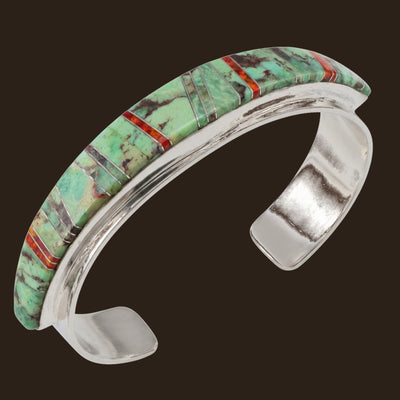
The earth dictates the palette of every stone we set. Turquoise color is a result of the minerals present during its formation over millions of years. When copper is the primary mineral, the stone leans toward a brilliant sky blue; however, when aluminum or iron is present, the stone shifts toward the verdant greens found in King's Manassa turquoise. Understanding this chemistry is the first step in how to mix and match turquoise jewelry. You don't need to stick to one shade to look polished. In fact, a collection that spans the spectrum from deep forest green to robin's egg blue feels more authentic and historically grounded.
Matrix patterns act as the visual thread that ties a varied collection together. The matrix is the host rock, often appearing as chocolate brown limonite or black iron and manganese. A high-matrix stone, such as a busy spiderweb pattern, can feel overwhelming if every piece in your stack is equally detailed. We recommend balancing a heavily patterned cabochon with a "clear" stone that has little to no matrix. This contrast allows the intricate details of the host rock to stand out without making the jewelry look cluttered. You can explore our studio-cut stones to see how different patterns interact.
The role of the lapidary in stone composition
The character of a stone is often revealed by the person behind the grinding wheel. Our lapidary artist Greg Cordova selects rough material based on the unique stories hidden within the matrix. It is important to distinguish between natural, untreated stones and stabilized turquoise. While an estimated 85% to 90% of turquoise on the market is stabilized to increase hardness, natural stones remain the most prized by collectors because their color is entirely organic. For every 100 pounds of turquoise mined, only about 1 pound is considered high-grade gem quality. The slight "flaws" or inclusions in a natural matrix aren't defects; they are signatures of the stone's origin and authenticity.
Pairing blue and green turquoise mines
Creating a cohesive look often involves finding a "bridge piece." This is a piece of jewelry that contains both blue and green tones, or a matrix color that appears in other items you own. For example, the deep greens of a Royston stone often feature brown host rock that matches the matrix in a bright blue Kingman cabochon. The history of turquoise in jewelry shows that Southwestern style has long embraced this organic variety. To keep the look deliberate, group your stones by saturation. Pairing a pale, milky blue with a deep, saturated emerald green creates a sophisticated depth that feels curated over a lifetime rather than bought as a set.

Layering techniques for necklaces and cuff bracelets
Layering isn't just about adding more pieces; it's about creating a visual landscape. When learning how to mix and match turquoise jewelry, think of your body as a canvas where different heights and textures interact. This tradition is rooted deeply in the history and lore of turquoise, where jewelry has long been worn as a layered expression of personal identity. To avoid jewelry fatigue, where individual pieces blend into a single cluttered mass, you must vary the scale and weight of each item in your arrangement.
In our studio, we emphasize the importance of visual "breathing room." If you wear three necklaces of the exact same length, they will inevitably tangle and hide the unique matrix of your stones. Instead, establish a clear hierarchy. This allows a heavy gauge silver pendant to sit comfortably alongside a delicate strand of beads without either piece losing its character. Mastering how to mix and match turquoise jewelry on your wrist or neck means understanding how to distribute this visual weight effectively.
Building a necklace stack from the neck up
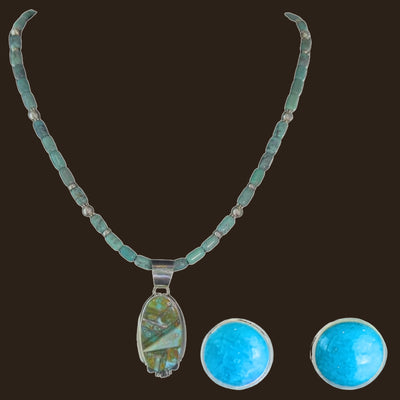
Start with a base at the collarbone. A 16-inch strand of smooth sterling silver beads, often called Navajo pearls, provides a clean metallic frame. Next, add a mid-length 18-to-20-inch pendant featuring a prominent cabochon. This serves as your focal point. Finish the stack with a longer 24-inch thin chain or a vertical bar pendant. This staggered approach creates vertical movement and ensures that a high-matrix Royston stone doesn't compete for space with a clear Kingman blue pendant higher up.
The art of the cuff stack
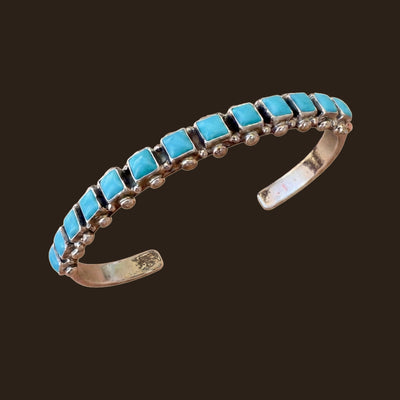
Stacking turquoise cuff bracelets requires a bit of practical engineering. If you place two stone-heavy cuffs directly next to each other, the bezels may rub, or the silver might pinch your skin. We recommend the "spacer" method. Place your widest statement cuff in the center of your forearm and flank it with thin, hand-stamped silver bangles or low-profile cuffs. This protects the settings and adds a rhythmic texture to your wrist. Ensure all layered cuffs have a similar diameter; if one is significantly larger, it will slide over the others and disrupt the composition. Mixing smooth silver surfaces with stone-heavy pieces prevents the stack from feeling too dense or heavy for daily wear.
Pairing turquoise with White Buffalo and organic materials
While the vibrant blues and greens of traditional mines often take center stage, adding monochromatic stones can transform a collection from a simple set into a sophisticated, multi-dimensional display. White Buffalo turquoise jewelry is perhaps the most striking companion for high-grade blue stones. It's a common misnomer in the industry; White Buffalo is technically a dolomite mineral rather than a member of the turquoise family. Ours comes from our family's claim at the White Buffalo mine near Tonopah, Nevada, and this stone features a stark white body with a deep black or chocolate brown matrix. When considering how to mix and match turquoise jewelry, using White Buffalo provides a neutral anchor that allows the saturation of a Kingman or Sleeping Beauty stone to truly resonate.
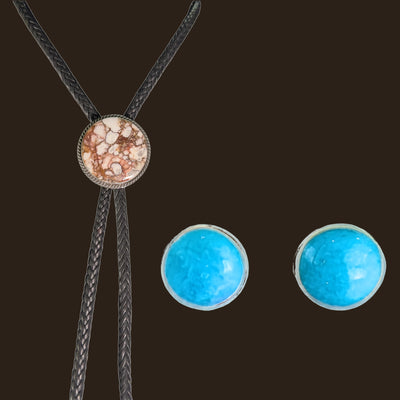
In our studio, we often pair these white stones with Wild Horse magnesite to create an earthy, desert-inspired palette. Wild Horse is another non-turquoise material, characterized by its creamy white base and reddish-brown matrix. Mixing these minerals with traditional turquoise adds a layer of visual interest that breaks up the "all-blue" look that can sometimes feel dated. It's about building a narrative through color and texture. If you're looking to expand your collection with these unique pairings, you can browse our artisan-made jewelry for inspiration.
Creating a high-contrast jewelry palette
The monochrome nature of White Buffalo acts as a palate cleanser for the eyes. By balancing the cool, electric tones of blue turquoise with the neutral, stark tones of white stones, you create a high-contrast look that feels modern yet grounded. Sterling silver serves as the unifying metal here. Because both stone types are typically set in a handmade bezel with similar silver work, they feel like they belong together despite their different chemical compositions. This is a professional technique for how to mix and match turquoise jewelry without needing to find a perfect color match; the silver work provides the necessary continuity.
Mixing textures beyond the stone
A true Southwestern style often incorporates organic materials that provide a tactile contrast to polished metal. Consider adding shell, coral, or even wood accents to your stack. These materials have a matte finish that absorbs light, making the high-polish shine of a sterling silver cuff or a glassy cabochon stand out even more. When selecting these pieces, focus on the "small batch" feel. Machine-made accents often look too uniform; instead, look for hand-cut beads or hand-stamped silver that shares the same artisanal DNA as your primary turquoise pieces. This intentional mixing of textures ensures your collection feels curated by a person, not a factory.
Selecting artisan-made pieces for a cohesive collection
Building a jewelry collection is an act of storytelling that happens over years. While the impulse might be to buy a pre-matched set, true character comes from selecting everyday essentials that you can layer and evolve over time. These foundation pieces, such as simple stud earrings or low-profile silver bands, provide the structural quiet needed to let your larger stones shine. When you focus on how to mix and match turquoise jewelry, look for pieces that share a similar silver gauge. A heavy, hand-forged cuff paired with a very thin, machine-made ring often feels unbalanced; maintaining a consistent weight across your silver work creates a sense of intentionality. By investing in one-of-a-kind pieces, you ensure that your look remains personal rather than following a cookie-cutter mold found in mass retail.
Knowing the origin of your stone adds a layer of depth to your collection that transcends simple aesthetics. Each mine has a signature. When you can identify the tight black spiderweb of a Number 8 stone or the clear, electric blue of a Campitos cabochon, you become a steward of the land's history. We believe the artist's process is just as vital as the stone itself. When our lapidary, Greg Cordova, cuts a stone in his studio, he preserves the natural narrative of the mine, ensuring the matrix is showcased rather than hidden. This connection to the maker is what transforms a piece of jewelry into a future heirloom.
Identifying quality in artist-made turquoise
Quality is found in the small details that a machine cannot replicate. Examine the bezel; it should be pushed tight against the stone with no visible gaps or jagged edges. The cabochon itself should be polished to a smooth finish without pitting that might compromise the stone's integrity. Small batch studios often use hallmarks on the back of the silver to identify the maker and the purity of the metal. Natural stones, while more rare and representing only about 10% of the market, hold their character better over decades of wear. They carry a density and a depth of color that stabilized stones often lack.
Starting your mix and match journey
The best way to learn how to mix and match turquoise jewelry is to start with a single anchor. Begin with a pair of earrings or a ring that resonates with a specific memory or a place you love. Trusting your eye is more important than following rigid fashion rules. Organic beauty is inherently asymmetrical and imperfect. As you add to your collection, look for pieces that speak to one another through their matrix color or the texture of the silver work. This slow, deliberate process ensures that every piece you wear feels like a natural extension of your own style.
If you are ready to find your next foundation piece, you can explore our latest work at wildflowerartisans.com. For those who prefer the Etsy platform, you can also find our handmade turquoise jewelry in our Etsy shop.
Building your personal Southwest narrative
Developing a curated collection is a slow, intentional process that mirrors the natural growth of the high desert. By focusing on the visual weight of your silver and the unique matrix patterns of each stone, you can move past the need for identical colors. Successful styling relies on creating a hierarchy within your stacks, allowing bold statement pieces to sit comfortably alongside everyday essentials. Mastering how to mix and match turquoise jewelry isn't about following rigid rules; it's about trusting the organic harmony found in diverse mines and handcrafted textures.
Every piece we create is handcrafted in our Santa Fe studio, ensuring that your collection is built on a foundation of authenticity. We never use dyed howlite or mystery metals, providing you with genuine stones that carry their own history. Explore our collection of artist-made sterling and turquoise jewelry at Wildflower to find your next anchor piece. If you prefer, you can also browse our Wildflower Etsy shop for unique artisan designs. We look forward to seeing how you layer these stories into your own style.
Frequently Asked Questions
Can I wear blue and green turquoise jewelry together?
You can absolutely wear blue and green turquoise together, as these colors often occur naturally within the same mine. The key to how to mix and match turquoise jewelry across the color spectrum is finding a common matrix color, such as a warm chocolate brown, to unify the pieces. This creates a layered, organic look that feels more authentic than a perfectly matched set.
Is it okay to mix turquoise with other gemstones like White Buffalo?
Mixing turquoise with White Buffalo is a professional technique for adding high contrast to your collection. While White Buffalo is technically an opalized calcite, its black and white matrix grounds the vibrant blues of a Kingman or Sleeping Beauty stone. This combination breaks up monochromatic palettes and adds a modern, sophisticated edge to traditional Southwestern style arrangements.
How many turquoise rings are too many for one hand?
There is no strict limit on the number of rings you can wear, though comfort and visual balance should guide your choices. We suggest pairing one large cabochon ring with two or three simple sterling silver bands to prevent the hand from looking cluttered. Learning how to mix and match turquoise jewelry on your fingers is about balancing the visual weight of each piece.
Do I need to match the silver finish of all my turquoise pieces?
You don't need to match silver finishes. Mixing a bright high polish with a soft satin or oxidized finish adds desirable texture. This variety highlights the handmade nature of each piece and prevents your jewelry from looking like a mass-produced set. A consistent silver gauge is often more important for cohesion than the specific level of shine.
Should I wear turquoise with gold or is sterling silver the only option?
Sterling silver is the traditional choice for Southwestern style jewelry, but turquoise also pairs beautifully with gold for a warmer aesthetic. While our Santa Fe studio focuses on artist-made sterling silver, many collectors mix metals to bridge the gap between different jewelry styles. If you choose to mix, try to keep the design elements, like the bezel type or stamp work, similar.
How do I know if my turquoise jewelry is authentic or dyed howlite?
Authentic turquoise shows natural variations in matrix and color, while dyed howlite often has unnaturally uniform saturation. Price is a major indicator. High-quality natural stones can cost $5 to $50 per carat, while imitation stones are significantly cheaper. It is also important to remember that about 85% to 90% of genuine turquoise on the market is stabilized for durability. Always look for the hallmark of a small batch studio.

Article by
Kimberly Cordova
Kimberly Cordova is the founder and creative director of Wildflower, a handmade Turquoise and sterling silver jewelry brand based in Santa Fe. She built Wildflower around a simple belief: the best jewelry is the kind you actually reach for, not the kind you save for someday.
Kimberly designs pieces made by hand with a trusted circle of Santa Fe silversmiths, works alongside her husband Greg on in-house lapidary pieces cut from stones including the family's King's Manassa Mine in Colorado and White Buffalo Mine in Nevada, and sources finished work from artisan makers whose craft meets the same standard. The result is a collection with real range and no shortcuts on the stone, the silver, or the story behind either.
Her writing covers everything she has learned along the way: how Turquoise forms, how to tell natural from stabilized, what makes one mine different from another, how to read a bezel, and how to shop with confidence in a market that is not always straightforward. It is the kind of plainspoken information she wished someone had laid out for her when she was starting out.
Shop the Wildflower collection at wildflowerartisans.com, or find us on Etsy at wildflowersantafe.etsy.com. Questions about a stone, a setting, or a specific piece are welcome any time.
0 comments