

What if the very thing that makes your White Buffalo stone so striking, that crisp white surface, is also its greatest vulnerability? Many collectors worry that the stone will eventually yellow or that silver polish might permanently stain the dark matrix. It's a valid concern because White Buffalo isn't actually turquoise. It's a different, more porous stone that requires its own set of rules. Understanding how to care for White Buffalo stone is the only way to ensure your jewelry remains a vessel for the stories you attach to it.
We believe that fine jewelry should be worn and enjoyed, not tucked away in a box for fear of damage. You'll learn the specific, studio-tested methods we use to keep these pieces striking. This includes lapidary insights Greg Cordova shares from his years of working with this Nevada-sourced material and the curation standards Kimberly Cordova applies to every design. We'll walk you through a simple cleaning routine that distinguishes between the needs of the stone and the silver setting. By the end of this guide, you'll have the confidence to wear your favorite pieces daily while preserving their quiet, authentic beauty for a lifetime.
Key Takeaways
- Understanding that White Buffalo is a natural white stone from the White Buffalo mine near Tonopah, Nevada, helps you treat the material with the right level of caution.
- Learn a simple routine using a microfiber cloth and mild soap to safely clean your cabochons without damaging the stone or the bezel.
- Master how to care for White Buffalo stone by protecting it from everyday hazards like perfumes, oils, and harsh ultraviolet light that can dim its brightness.
- Discover the difference between intentional patina and accidental tarnish, and why a polishing cloth is better than liquid dips for your sterling silver settings.
- Identify when your piece needs professional maintenance from a lapidary expert like Greg Cordova to restore its original luster and structural integrity.
Understanding the composition of White Buffalo stone
White Buffalo stone comes from a single area in the high desert of Nevada, the White Buffalo mine near Tonopah, where our family holds a claim. Greg sources the rough from our family's claim, and he spends hours in the studio cutting each cabochon to ensure the structural integrity of the stone remains intact. On the Mohs scale of mineral hardness, White Buffalo typically ranks between 5.5 and 6. This makes it significantly harder and more durable than softer stones like variscite or chrysocolla, which can be prone to crumbling if handled roughly.
Because of its density, this stone holds a high polish that can last for years with minimal effort. However, its pale color and mineral structure mean that learning how to care for White Buffalo stone is different than maintaining your other Southwestern style pieces. While it's tough, it's still a porous material that can absorb oils or chemicals over time. Knowing exactly what you're wearing helps you make better decisions about when to keep it on and when to set it aside in your jewelry box.
Why White Buffalo is not technically turquoise
There's a common misconception that this stone is a white variety of turquoise. Scientifically, turquoise must contain copper and phosphorus. Copper is what gives turquoise its famous blue and green hues. Since White Buffalo lacks these specific minerals, it remains a brilliant, stark white. It's often grouped with turquoise in our collections because it's found in the same geological veins and looks stunning in a sterling silver bezel. Because it's often confused with other white stones, knowing what White Buffalo is and where it comes from is the first step in long-term preservation. You can learn more about where our materials come from on our stone origins page.
The role of the black chert matrix
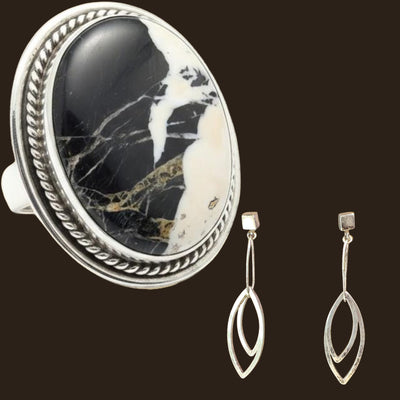
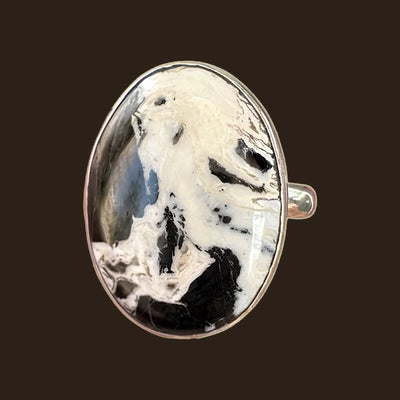
The beauty of this stone lies in the contrast between the white host rock and the black chert matrix. This matrix creates the spiderweb or blotchy patterns that Kimberly Cordova looks for when curating stones for our rings and pendants. In White Buffalo, the black matrix is often just as hard as the white stone itself. This is a benefit for durability, but it presents a unique aesthetic challenge. Any surface scratches or scuffs are much more visible on a high-contrast stone than they would be on a solid-colored cabochon. Keeping that surface smooth is the key to maintaining the "quietly timeless" look of your handcrafted jewelry.
Studio-approved cleaning steps for White Buffalo jewelry
Cleaning jewelry in our Santa Fe studio is a deliberate process that starts with the simplest tools possible. For most daily wear, a dry, lint-free microfiber cloth is all you need to lift away dust or skin oils that might dull the stone's surface. If the piece requires a deeper touch, we recommend using a soft cloth dampened with a single drop of mild, phosphate-free soap. It's vital to wipe only the surface of the cabochon rather than submerging the entire piece in a bowl of water. Following these Studio-approved cleaning steps ensures that you aren't introducing unnecessary chemicals to the stone's pores.
After wiping the stone, use a fresh, dry cloth to remove any moisture immediately. This prevents water spots from forming on the polished surface. You should also take care to avoid rubbing the dampened cloth against any intentional oxidation on the silver. Many of our pieces feature a dark patina in the recessed areas to make the silver work pop. If you accidentally scrub this away, the piece loses its depth and contrast. If you're ever unsure about a specific piece, you can always check our care and repair guide for more tailored advice.
The danger of moisture absorption
In the world of Southwestern style jewelry, many stones are set with a small layer of sawdust or cork behind them to provide a cushion and ensure the stone sits perfectly level in the bezel. While this is a standard lapidary practice, it creates a hidden risk. If you soak your jewelry or wear it while swimming, water can seep behind the stone and be absorbed by that backing. As the material expands, it can put pressure on the White Buffalo cabochon from the inside out. This pressure can loosen the stone in its setting or, in rare cases, cause the stone to crack. This is why we always tell our collectors to remove their jewelry before showering or stepping into a pool.
Safe tools for domestic care
When dust settles into the deep crevices of a matrix or around the edge of a bezel, a cloth might not reach every spot. In these cases, a soft-bristled baby toothbrush is an excellent tool. The bristles are gentle enough not to scratch the stone but firm enough to clear away buildup. Never use toothpaste or abrasive kitchen cleaners on your jewelry. These contain gritty particles that can dull the high polish of the stone or scratch the sterling silver. If you live in an area with hard water, consider using distilled water for cleaning. The minerals in tap water can leave a cloudy residue on the white surface of the stone that is difficult to remove without professional buffing. Learning how to care for White Buffalo stone is mostly about being gentle and keeping things dry.

Common hazards that damage White Buffalo stones
Because White Buffalo is a porous mineral, you should think of it as a quiet observer of your environment, absorbing a little bit of everything it touches. This is why knowing how to care for White Buffalo stone involves more than just cleaning. It's about prevention. Common household items like perfumes, hairsprays, and even the natural oils from your skin can settle into the stone's microscopic pores. Over time, these substances can cause the crisp white surface to take on a dull, yellowish tint that is nearly impossible to reverse. We always suggest making your jewelry the last thing you put on in the morning and the first thing you take off at night.
Temperature and light also play a role in the stone's longevity. While White Buffalo doesn't contain the copper that causes turquoise to shift color, extreme ultraviolet light can still impact the brightness of the white stone over several decades. High-heat environments are an even more immediate threat. Leaving a ring on a hot car dashboard in the New Mexico sun or wearing a pendant into a sauna can cause thermal shock. This rapid expansion and contraction can lead to internal fractures or even cause the stone to pop out of its silver bezel entirely.
Professional cleaning tools like ultrasonic cleaners should be avoided at all costs. These machines use high-frequency sound waves to shake dirt loose, but those same vibrations can find tiny, invisible fissures in a natural stone. In our studio, we've seen stones that survived decades of wear only to shatter in seconds inside an ultrasonic bath. Stick to the manual methods we've shared to keep your collection safe.
Chemical sensitivity and discoloration
Discoloration is the most common concern we hear from our customers. Beyond cosmetic products, harsh household chemicals like bleach or ammonia are permanent stone killers. These acids can actually eat into the stone, leaving the surface pitted and grey. If you're doing deep cleaning or swimming in a chlorinated pool, leave your jewelry in a safe spot. It's much easier to prevent a stain than it is to buff one out later. We focus on these details in our care and repair guide to help you avoid these common pitfalls.
Mechanical risks and structural integrity
While White Buffalo is relatively hard, it still possesses mineral cleavage, meaning it can split along specific planes if it hits a hard surface at the right angle. Dropping a ring on a tile floor is often enough to cause a clean break. When you aren't wearing your pieces, store them in individual soft pouches to prevent the stones from scratching each other. We also recommend removing your rings before hitting the gym or starting heavy manual labor. Protecting the structural integrity of the stone is a key part of how to care for White Buffalo stone over the long haul.
Maintaining the sterling silver setting
Sterling silver is a living metal that changes with its environment, but the silver frame around your stone requires a different approach than the cabochon itself. When you are learning how to care for White Buffalo stone, it's easy to forget that the silver setting has its own set of rules. Most of our pieces are crafted with a specific visual balance between the bright metal and the dark matrix of the stone. Over time, silver naturally reacts with sulfur in the air to create tarnish. This is a common process, but it shouldn't be confused with the intentional oxidation we apply in the studio to give the piece its depth. We recommend using a Sunshine polishing cloth for targeted cleaning because it allows you to remove tarnish from high points without disturbing the recessed shadows.
Liquid silver dips are strictly prohibited for any jewelry featuring White Buffalo. These chemicals are far too aggressive for porous stones and can permanently damage the mineral structure. A dip will also strip away the intentional patina that Kimberly Cordova carefully curates to highlight the small batch details of the silver work. To keep your jewelry looking its best, you can view our collection of handmade silver jewelry to see how we use contrast to anchor each design. When you polish the bezel, use the edge of your cloth to work around the stone. This prevents the polishing compound from building up in the matrix or the gap between the stone and the silver.
Preserving the artist's intentional patina
The dark areas you see in the crevices of your jewelry aren't dirt. They are a deliberate choice. Kimberly Cordova designs each piece to have specific shadow effects that mirror the organic patterns found in the stone. This creates a visual relationship between the dark silver and the black chert matrix. Over-polishing these recessed areas will make the piece look flat and mass-produced. By focusing your polishing cloth only on the raised surfaces, you maintain that "quietly timeless" aesthetic that defines Southwestern style work. It's a simple habit that keeps the artisan's vision intact for years.
Storing silver to prevent tarnish
Prevention is much easier than correction. Sterling silver thrives in low-humidity environments, so avoid storing your jewelry in a bathroom where steam can accelerate tarnishing. We suggest using small anti-tarnish strips inside your jewelry box to absorb the gases that cause darkening. If you are traveling or storing a piece for a long period, a small airtight bag is a practical and effective solution. It keeps the air away from the metal and ensures your piece is ready to wear when you pull it out. If you're looking for more tips on long-term storage, our frequently asked questions page covers the basics of jewelry organization.
Professional maintenance and the Wildflower guarantee
Even with a dedicated home routine, a piece of jewelry that is loved and worn daily will eventually show the marks of its journey. There is a limit to what a soft cloth and mild soap can achieve. If your stone has lost its original luster or developed surface scratches that feel deep to the touch, it probably needs professional buffing. In our Santa Fe studio, we use specialized lapidary equipment to gently restore the high polish of the cabochon without removing too much material. Understanding how to care for White Buffalo stone means knowing when to set the toothbrush aside and let an expert handle the restoration.
Our commitment to quality starts long before the stone is set in silver. We prioritize structural longevity by working with high-grade material that can withstand the test of time. Every piece we create is a celebration of the relationship between the earth and the artist. We don't use mass-produced components or mystery metals. Instead, we focus on small batch production where every bezel and solder joint is inspected for strength. Reaching out to the studio for a check-up is the best way to ensure your collection remains quietly timeless for the next generation.
Lapidary expertise in every piece
The foundation of a durable piece of jewelry is the way the stone is cut and seated. Greg Cordova handles the lapidary work for our studio, bringing decades of experience to the saw and grinding wheels. He selects only the most stable material from the mine, discarding any slabs that show signs of crumbling or internal instability. You can learn more about our process and the mines we work with on our stone origins page. A well-seated cabochon isn't just about aesthetics. It ensures that the stone is protected by the silver bezel on all sides, reducing the risk of chips or cracks from daily impacts.
When to contact the studio for repair
We recommend a quick self-inspection of your jewelry every few months. If you notice the stone moving slightly within its setting or hear a faint clicking sound when you tap the surface, the bezel may have loosened. Silver is a soft metal, and over years of wear, the thin edge of a bezel can wear down or pull away from the stone. If you see signs of thinning or if the stone feels insecure, please visit our care and repair page to start the process of a professional tune-up. Kimberly Cordova oversees the curation and design of every piece, and she ensures that any repairs maintain the original artistic intent and patina of the work. For statement pieces that you wear every day, an annual inspection in our studio can prevent a minor issue from becoming a lost stone.
Keeping your stone striking for a lifetime
Maintaining the contrast of a White Buffalo piece is a practice in mindfulness. You now know that keeping the stone dry and away from harsh chemicals is the foundation of long-term beauty. By using a soft cloth for the stone and targeted polishing for the silver, you honor both the raw mineral and the artisan's work. Learning how to care for White Buffalo stone ensures that the high-contrast matrix stays as vivid as the day it left our Santa Fe studio. These simple habits protect the porous surface from yellowing while preserving the intentional patina of the silver work.
Every piece we offer features stones hand-cut by Greg Cordova and designs curated by Kimberly Cordova to ensure structural integrity and authentic Southwestern style. We invite you to explore our collection of handcrafted White Buffalo jewelry and see the care we put into every bezel.. Wear your jewelry with confidence, knowing it's built to accompany you through every season.
Frequently Asked Questions
Can I use an ultrasonic cleaner for my White Buffalo jewelry?
You should never use an ultrasonic cleaner for this material. The high frequency vibrations can find hidden fissures in the mineral structure and cause the stone to shatter or crack instantly. In our studio, we only recommend manual cleaning methods to ensure the structural integrity of the piece remains intact for a lifetime. It's much safer to use a soft cloth and a gentle touch than to risk the mechanical stress of a machine.
Will my White Buffalo stone turn yellow over time?
White Buffalo can yellow over several years if it absorbs skin oils, perfumes, or lotions. Because the stone is porous, it acts like a sponge for the chemicals it encounters daily. You can prevent this by making your jewelry the last thing you put on after your beauty routine has dried. If a stone has already shifted color, it usually requires a professional lapidary like Greg Cordova to buff away the top layer.
Is White Buffalo stone the same thing as Howlite?
No, White Buffalo is a distinct stone from a specific Nevada mine. Howlite is a much softer calcium borosilicate that is frequently dyed to mimic other stones. While they may look similar to an untrained eye, White Buffalo is harder and more durable. We never use dyed howlite or synthetic stones in our Southwestern style jewelry, focusing instead on authentic materials from known sources.
How do I remove heavy tarnish from the silver without hurting the stone?
The best way to remove tarnish is with a Sunshine polishing cloth. These cloths allow you to target the silver bezel and band without touching the stone's surface. You should avoid liquid silver dips entirely because they will strip the intentional patina Kimberly Cordova uses in her designs and can damage the porous stone. Simply rub the silver until the luster returns while being careful to stay away from the matrix crevices.
Can I wear my White Buffalo ring while washing my hands?
It's best to remove your rings before washing your hands. While a splash of water won't immediately ruin the piece, soap residue can build up in the matrix and dull the stone's polish over time. Moisture can also get trapped behind the stone in the bezel, which might lead to structural issues with the setting. Developing a habit of setting your jewelry aside during chores is a key part of how to care for White Buffalo stone.
What should I do if my White Buffalo stone gets scratched?
If your stone develops surface scratches, it needs professional attention in a lapidary studio. You shouldn't try to sand or polish the stone at home with household abrasives as this will likely ruin the finish permanently. A professional can use specialized diamond wheels to gently resurface the cabochon. This restorative process is a vital part of how to care for White Buffalo stone when daily wear begins to show on the surface.
Is it safe to use baking soda to clean my jewelry?
You should avoid using baking soda or any other abrasive powders on your jewelry. While some home remedies suggest it for silver, the grit can easily scratch the polished surface of a White Buffalo stone. It can also get stuck in the matrix crevices and be difficult to remove without professional tools. Stick to a soft, damp microfiber cloth and mild, phosphate free soap for the safest results when cleaning at home.
How can I tell if my White Buffalo stone is natural or treated?
Authentic White Buffalo is almost always natural because it's hard enough to take a high polish without chemical stabilization. You can tell a stone is natural by its unique, non-repeating matrix and the cold, dense feel of the mineral. Treated or synthetic stones often have a uniform, plastic-like appearance and lack the depth of real White Buffalo. We prioritize mine-to-studio transparency so you always know you're wearing an authentic, untreated piece.

Article by
Kimberly Cordova
Kimberly Cordova is the founder and creative director of Wildflower, a handmade Turquoise and sterling silver jewelry brand based in Santa Fe. She built Wildflower around a simple belief: the best jewelry is the kind you actually reach for, not the kind you save for someday.
Kimberly designs pieces made by hand with a trusted circle of Santa Fe silversmiths, works alongside her husband Greg on in-house lapidary pieces cut from stones including the family's King's Manassa Mine in Colorado and White Buffalo Mine in Nevada, and sources finished work from artisan makers whose craft meets the same standard. The result is a collection with real range and no shortcuts on the stone, the silver, or the story behind either.
Her writing covers everything she has learned along the way: how Turquoise forms, how to tell natural from stabilized, what makes one mine different from another, how to read a bezel, and how to shop with confidence in a market that is not always straightforward. It is the kind of plainspoken information she wished someone had laid out for her when she was starting out.
Shop the Wildflower collection at wildflowerartisans.com, or find us on Etsy at wildflowersantafe.etsy.com. Questions about a stone, a setting, or a specific piece are welcome any time.


0 comments