

Only about one percent of the turquoise pulled from the earth reaches high-grade gem quality, yet many commercial outlets are often overflowing with perfectly uniform stones. It's understandable to feel overwhelmed or even a bit skeptical when you're looking for authentic handmade turquoise rings. You're likely searching for a piece of wearable art that carries a narrative, not a mass-produced imitation or a piece of dyed howlite.
We believe a ring should be a vessel for emotion, reflecting the organic beauty of the high desert through intentional, artisanal design. A celebration of natural, fleeting beauty. This guide explores the technical artistry behind our small batch process and explains how a raw stone becomes a polished cabochon. We'll introduce the lapidary work of Greg Cordova of Cutting Edge Turquoise, a second-generation artisan who cuts stones from his own mines, and show you how to find a ring with a secure bezel and a storied matrix that fits harmoniously into your daily life.
Key Takeaways
- Learn how the partnership between a lapidary and a jeweler creates a piece of wearable art that transcends generic tourist options.
- Discover how to identify authentic handmade turquoise rings Santa Fe by looking for specific matrix patterns and secure, hand-finished bezels.
- Understand the importance of sourcing natural, untreated stones and how to verify the origin of high-grade turquoise.
- Follow the journey of a stone from the mine to the studio, including the specific lapidary techniques used by Greg Cordova.
- Find a ring that balances organic stone shapes with intentional design to reflect your own personal narrative.
The significance of handmade turquoise rings in Santa Fe style
Santa Fe sits at a unique intersection of history and craft. Here, the dusty hues of the Sangre de Cristo Mountains find their way into the metal and stone through a process that's as much about listening as it is about making. Creating handmade turquoise rings Santa Fe is an act of quiet rebellion against the fast-paced world. It's a slow, intentional process where each piece begins with a stone that took millions of years to form and ends with a design that honors that journey. The artisan acts as a translator for the earth, finding the hidden rhythm within the mineral before the first hammer strike even lands.
While a factory might see a raw material to be standardized, we see a story waiting to be told. Santa Fe remains the global epicenter for this tradition because the community here respects the stone's lineage. This craft is deeply rooted in the historical development of Southwestern Native American jewelry, which established the foundational techniques of silversmithing in this region. Every ring becomes a vessel for emotion, capturing the essence of the high desert and the seasonal beauty of the land.
To better understand the tactile reality of this process, watch this look at the metalsmithing journey:
Distinguishing artisan-made from mass-produced jewelry
You can feel the difference the moment a ring rests in your palm. Cast jewelry often feels hollow or light, a ghost of a piece. In contrast, hand-forged sterling silver has a density and warmth that only comes from being worked by hand. Small batch production means we can focus on the fine details of the bezel, ensuring it hugs the cabochon perfectly. These one of a kind creations celebrate the asymmetrical and the organic. There is no cold uniformity here. Only the honest marks of the maker and the weight of genuine silver that's built to last for generations.
The emotional narrative of Southwestern style
Wearing a natural stone is a way to ground oneself. It's a physical connection to a specific patch of earth, whether it's the deep blues of a Nevada mine or the green reaches of a Colorado claim. These handmade turquoise rings Santa Fe serve as philosophical anchors. They remind us of the slow growth of the natural world and the beauty found in imperfection. In a world of digital noise, a handmade ring is a quiet, sensory experience. It's a piece of the landscape you can carry with you, a reminder of the intentional life we strive to build in the heart of the Southwest.
From the mine to the bezel: The lapidary art of Greg Cordova
Greg Cordova understands the stone from the moment it leaves the earth. As a second-generation lapidary and mine owner, he brings an intimacy to the craft that defines the quality of handmade turquoise rings Santa Fe. He co-owns the Kings Manassa mine in Colorado and holds claims at the White Buffalo mine in Nevada, ensuring a direct line from the source to our studio. This connection is why turquoise has become synonymous with New Mexico, representing a legacy of trade and artistry that spans generations. For those who want to see the technical side of his work, Cutting Edge Turquoise offers a window into the world of a professional stone cutter.
The value of a ring is anchored in its Stone Origins. When Greg cuts a stone, he's preserving the natural state of the mineral. He doesn't use stabilized or dyed materials. He works with natural turquoise, which accounts for only a small fraction of the material mined. This dedication to authenticity ensures that the ring you wear is a true piece of the landscape. The relationship between the stone cutter and the jeweler is a silent dialogue. When Greg finishes a cabochon, its unique height and curve dictate how the silver bezel must be formed. This collaboration ensures the stone is not just held, but showcased.
Selecting raw turquoise for character and matrix
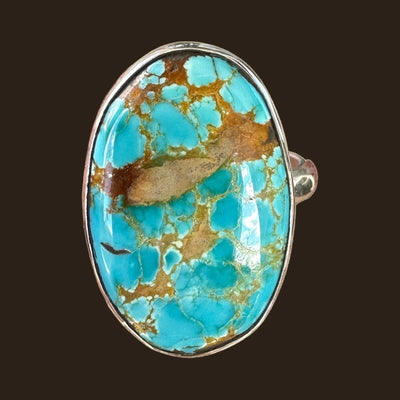
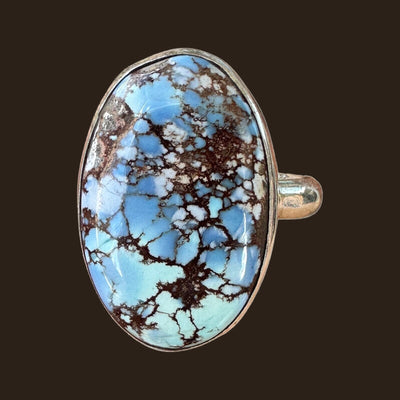
Matrix is the host rock that threads through the turquoise, telling the story of the stone's formation. Some collectors seek out the intricate spiderweb patterns, where the matrix creates a fine, interconnected web across the surface. Mines like Kings Manassa are known for their rich greens and golden matrix, while Royston often produces a striking range of blues and emerald tones. These distinctive traits are what make handmade turquoise rings Santa Fe so recognizable to those who value authentic Southwestern style. Every rough stone is evaluated for its hardness and color depth before Greg ever touches it to the wheel.
The precision of hand-cutting cabochons
Shaping a cabochon is a rhythmic and highly sensory process. Greg uses a series of diamond-grit wheels to grind, shape, and polish the raw stone into its final form. It's a balance of mechanical precision and artistic intuition. He feels for the sweet spot in the rock where the color is most vibrant and the matrix is most balanced. By avoiding stabilization, he allows the natural hardness and luster of the stone to shine through. This process is slower than mass production, but it results in a gem that feels alive. If you're ready to see how these stones look once they're set, you can browse our collection of hand-cut turquoise jewelry.
How to identify authentic natural stones and quality silver
Authenticity is the cornerstone of handmade turquoise rings Santa Fe. In a market where imitation is common, understanding the technical markers of a quality piece is essential. Natural turquoise is stone in its raw, untreated state, exactly as it was pulled from the earth. It hasn't been injected with resins or dyed to mimic a higher grade. This purity is what gives a stone its soul. When you're looking at a ring, observe the color and matrix closely. Natural stones often show subtle variations in tone that feel organic rather than uniform.
Look for a matrix that has depth and texture. In a natural stone, the matrix often sits at a slightly different level than the turquoise itself, creating a subtle, tactile landscape. Dyed howlite or plastic composites feel warm and "soft" to the touch, whereas real stone has a distinct, cool density. We strictly exclude mystery metals or synthetic stone jewelry from our studio. Every piece we offer is built on the foundation of genuine materials and transparent sourcing.
Natural versus stabilized turquoise
Natural stones are rarer and more difficult to work with. Only a small percentage of mined turquoise is hard enough to be used without treatment. Stabilization involves pressure-injecting clear resin into soft, "chalky" turquoise to make it durable for jewelry. While this process is widely used, it changes the stone's value and character. This mineral has been sacred to Indigenous people for centuries, and part of honoring that history is respecting the stone's natural state. Always ask for the specific mine origin. Knowing if a stone is from Kingman or Royston helps verify its story and ensures you're getting exactly what you pay for.
Hallmarks of quality sterling silver construction
Beyond the stone, the silver work must be sound. Inspect the bezel, the thin ribbon of silver that holds the stone. It should be smooth and tight against the cabochon, without gaps or jagged edges. Quality handmade turquoise rings feature clean solder joints where the band meets the setting. Look for the .925 stamp, indicating sterling silver, alongside an artisan's hallmark. Heavy-gauge silver provides longevity. It won't bend or thin over time, ensuring the ring remains a staple in your daily life. A well-constructed ring feels balanced and substantial on the finger, a testament to the skill of the jeweler who forged it.
Choosing a ring that reflects your personal story
Selecting a piece of jewelry is often an exercise in self-recognition. You aren't just choosing a mineral; you're finding a mirror for your own aesthetic. In our studio, we see handmade turquoise rings Santa Fe as a balance between the raw, organic geometry of the stone and the structured strength of the silver work. A ring should feel like a natural extension of your hand, moving with you through the quiet moments and the milestones alike. To ensure your piece remains a part of your story for decades, understanding proper care and repair is just as important as the initial selection.
Authentic Southwestern jewelry is built to be lived in, but natural stones require a gentle touch. They are porous and can change color if exposed to harsh chemicals or prolonged moisture. By choosing a ring that resonates with your lifestyle, you create a connection that deepens over time. Each scratch on the silver and each subtle shift in the stone's hue becomes a part of your shared history. It's a celebration of natural, fleeting beauty that stays grounded in the present.
Everyday essentials versus one of a kind statement pieces
Some days call for a whisper, others for a shout. Our everyday essentials are designed with a lower profile, allowing them to rest comfortably under gloves or alongside other bands. They are the quiet companions for morning coffee and studio work. In contrast, our one of a kind statement rings are intentional works of art. They demand attention with their larger cabochons and intricate silver details. Consider how different turquoise colors suit your mood:
- Pale green stones from the Manassa mine often evoke a sense of spring growth and renewal.
- Deep blue Kingman turquoise feels like the vastness of a high desert sky at midday.
- White Buffalo stones offer a striking, monochromatic contrast for a modern, grounded look.
Ensuring a comfortable fit for lifelong wear
A ring that pinches or slides will eventually find its way into a drawer. We want your jewelry to be worn; it shouldn't be a burden. When measuring at home, use a piece of string or a flexible tape. Remember that fingers swell slightly in the heat of a Santa Fe summer or after a long day of walking the plaza. The width of the band matters significantly. A wider band covers more surface area and usually requires a half-size larger than a thin band for the same comfort level. We focus on hand-finishing the interior of every band to ensure a silky, smooth fit against the skin. This attention to detail is what makes handmade turquoise rings Santa Fe truly wearable art. If you are ready to find your next companion, you can shop our latest artisan-made rings here.
The Wildflower studio approach to handmade jewelry
Our Santa Fe studio is a place where the rhythmic hum of the lapidary wheel meets the steady strike of the jeweler's hammer. We view every piece of jewelry as a vessel for emotion, a way to capture the fleeting beauty of the high desert in a form that lasts. Creating handmade turquoise rings Santa Fe requires a deep respect for both the medium and the maker. It's a collaborative environment where we prioritize the narrative of the stone over the efficiency of the machine. We don't believe in the cold uniformity of mass production; we believe in the soul of the small batch.
In our studio, the roles are clearly defined yet deeply intertwined. Greg Cordova, a second generation lapidary and mine owner, handles the stone work. You can find more about his specific techniques at Greg Cordova of Cutting Edge Turquoise. Kimberly then takes these hand-cut cabochons and builds the silver architecture around them. This partnership ensures that every in-house piece we create is a true reflection of the land. We invite you to explore the latest new arrivals to see the results of this seasonal, intentional work.
Kimberly’s design philosophy and in-house creations
Inspiration for our designs often comes from the rambling growth of a garden or the jagged silhouette of the Southwestern landscape. Kimberly doesn't force a stone into a pre-made setting. Instead, the specific height, curve, and matrix of a cabochon dictate the final design of the ring. Every hammer strike and file mark is a deliberate choice, leaving behind the honest marks of the human touch. We find beauty in the asymmetrical and the organic, allowing the silver to flow around the stone like water.
Sourcing unique stones with integrity
While Greg cuts many of our stones in-house, we sometimes source unique cabochons from other trusted lapidary artists. Our vetting process is strict. We only use natural turquoise that is explicitly confirmed to be untreated; we never offer dyed howlite, composite stones, or mystery metals. Transparency is vital in an industry where treatments are often hidden. When we source a stone, we look for a clear history and a verified mine origin. This commitment to integrity means you can wear your Wildflower piece with confidence, knowing it represents a celebration of natural authenticity. We treat our materials with the same appreciation we have for the botanical world, ensuring each ring is built for a lifetime of daily wear.
If you're looking for a piece that carries a story, we invite you to browse our full collection at wildflowerartisans.com.
Carry a piece of the high desert with you
A ring is more than a simple accessory; it's a tangible connection to the landscape and the hands that shaped it. When you choose handmade turquoise rings Santa Fe, you're investing in a collaboration between nature and craft. We've explored how identifying natural, untreated stones and understanding the precision of a hand-finished bezel ensures your piece remains a lifelong companion. Finding a ring that balances an organic cabochon with durable silver work allows the jewelry to fit harmoniously into your daily life.
In our studio, every ring begins with a stone hand-cut by Greg Cordova and ends with a design that honors its unique character. We don't believe in mass production or mystery metals. Every piece is designed and finished in our Santa Fe studio using guaranteed natural and authentic turquoise. This intentional approach creates jewelry that carries a story, grounded in the rhythms of the Southwest.
Explore our collection of artisan-made turquoise rings to find a piece that resonates with your own narrative. If you prefer that platform, you can also find our work at the Wildflower Etsy shop. We look forward to helping you find a ring that feels like home.
Frequently Asked Questions
Is the turquoise in your rings natural or stabilized?
We work only with natural, untreated turquoise to ensure the stone's integrity remains intact. Many of our stones are hand-cut by lapidary Greg Cordova, who selects material with sufficient natural hardness to avoid the stabilization process. This dedication to natural materials means the color and texture you see are exactly as the earth intended.
What is the best way to clean my handmade sterling silver ring?
Use a soft polishing cloth specifically for silver and avoid dipping the piece in liquid jewelry cleaners. Natural turquoise is porous and can absorb chemicals or soaps, which eventually alters the color of the stone. A dry cloth is usually enough to maintain the brightness of the sterling silver without disturbing the cabochon or the bezel setting.
Can a turquoise ring be worn every day without damaging the stone?
You can certainly wear your ring daily, but it's best to remove it during activities that involve hard impacts or chemicals. While we build our handmade turquoise rings Santa Fe with heavy-gauge silver and secure bezels, the stone itself is a mineral that can scratch. Treating it with care allows the silver to develop a beautiful patina over time while keeping the stone secure.
What is the difference between Kings Manassa and White Buffalo stones?
Kings Manassa is a Colorado turquoise known for its vibrant green hues and warm, golden matrix. White Buffalo is a distinct white stone with black chert matrix found in Nevada. While both are staples in Southwestern style jewelry, White Buffalo is technically a dolomite, offering a high-contrast look that differs from the classic blue and green tones of traditional turquoise.
How do I find my correct ring size for a wide-band artisan ring?
Artisan rings with wide bands require more space on the finger because they don't allow the skin to displace as easily as a thin band. We typically recommend sizing up by a half size for these designs. A handmade band with a smooth, hand-finished interior will always feel more comfortable and substantial than a mass-produced cast piece of the same width.
Article by
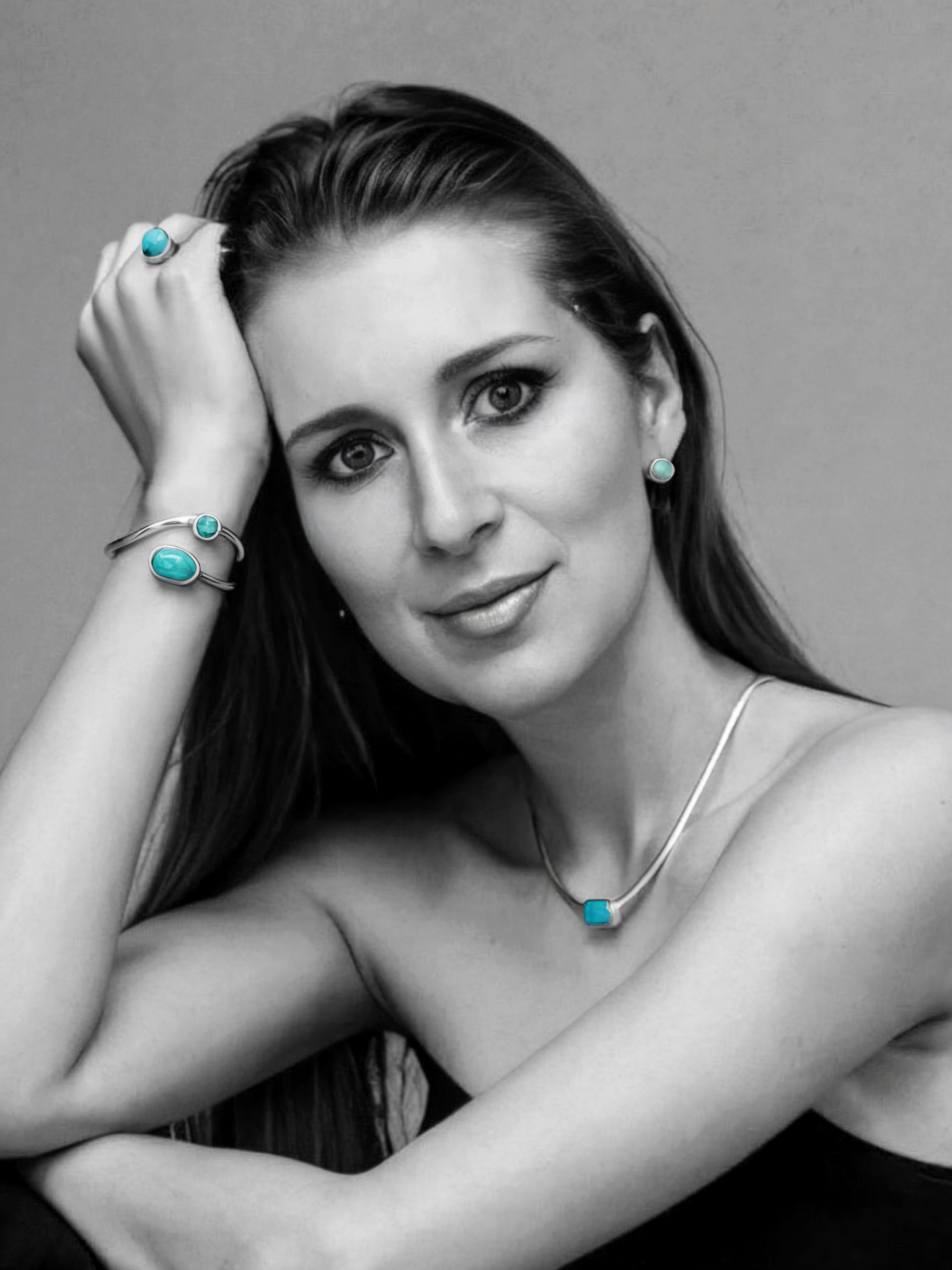
Kimberly Cordova
Kimberly Cordova is the founder and creative director of Wildflower Artisans, a handmade jewelry brand rooted in Santa Fe. Real turquoise, solid sterling silver, and a small line set in solid 14K gold. She built Wildflower around a simple belief: the best jewelry is the kind you actually reach for, not the kind you save for someday.
The collection is built three ways. Some pieces are made in-house, cut by her husband Greg from stones he sources himself, including rough from the family's King's Manassa Mine in Colorado and White Buffalo Mine in Nevada. Some are designed by Kimberly and fabricated by a trusted circle of Santa Fe silversmiths. And some are finished work she curates from artisan makers whose craft meets the same standard, because building a real collection means knowing when to make and when to look.
Turquoise leads, joined by White Buffalo, Wild Horse, Lapis Lazuli, Spiny Oyster, Black Onyx, Opal, and other genuine semi-precious stones. No shortcuts on the stone, the silver, or the story behind either.
Her writing covers everything she has learned along the way: how turquoise forms, how to tell natural from stabilized, what makes one mine different from another, how to read a bezel, and how to shop with confidence in a market that is not always straightforward. It is the kind of plainspoken information she wished someone had laid out for her when she was starting out.
Browse the collection at wildflowerartisans.com. Questions about a stone, a setting, or a specific piece are welcome any time.


0 comments