

A hand-cut cabochon of Kingman turquoise rests on the studio bench, its surface marked by a delicate copper matrix that mirrors the sun-drenched paths of the high desert. Finding a pair of authentic turquoise earrings should feel like this quiet moment of connection, but the search is often clouded by dyed howlite and mass-produced metals. We want to help you find a piece that carries a documented history rather than a mystery.
It is difficult to trust big-box retailers when the market is flooded with synthetic stones and vague origins. We believe in the value of the small-batch process, where every bezel is set with intention and every stone has a name. This guide will help you understand the nuances of Southwestern artistry, from the specific characteristics of different mines to the impact of the 162.61 percent rise in silver prices over the last year. We will clarify the difference between natural stones and common imitations so you can invest with confidence.
We will explore the lapidary work of Greg Cordova and the design curation of Kimberly Cordova to show you what goes into a truly unique piece. You will discover how to find jewelry that is quietly timeless, supporting independent artisans while owning a fragment of the earth that is yours alone.
Key Takeaways
- Learn how artisan-made jewelry combines raw earth with intentional sterling silver metalwork to create a piece that feels personal and grounded.
- Discover how to verify the provenance of your turquoise earrings by tracing stones back to specific mines like Manassa or White Buffalo.
- Understand how to choose between studs, hoops, and dangles based on the weight and rhythm of your daily life.
- Master the simple steps to keep your porous stones and silver bright by avoiding harsh chemicals and oils.
- See why small batch, hand-cut jewelry offers a quiet timelessness that mass-produced factory items cannot replicate.
Finding the soul in handcrafted turquoise earrings
There is a specific, grounding sensation when you hold a pair of sterling silver turquoise earrings in your palm. The metal is cool to the touch, carrying a weight that tells you it was forged with intention rather than stamped out by a machine. We see artisan-made jewelry as a marriage of the earth’s raw minerals and the focused hand of a maker. Every piece reflects a dialogue between the stone and the silver, resulting in something that feels alive.
To better understand how these elements come together in a working studio, watch this look at the silversmithing process:
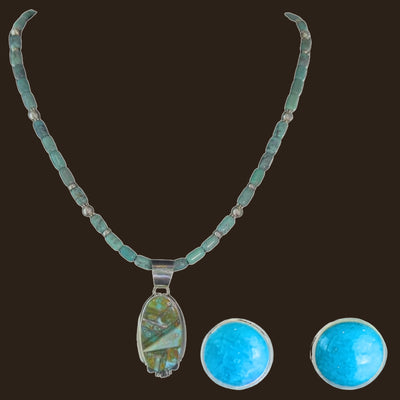
In our Santa Fe studio, we work in small batches. This isn't just a business choice; it's a commitment to ensuring that no two settings are ever exactly the same. When Greg Cordova hand-cuts a cabochon, he follows the natural geometry of the rough stone. Kimberly Cordova then curates the design to highlight that specific shape. This approach honors the history of Native American jewelry and the broader Southwestern style as a living tradition of craftsmanship that evolves with every hammer blow. Finding a unique pair of turquoise earrings means choosing a piece with a documented history.
The difference between real stone and mystery metals
Buying jewelry shouldn't feel like a gamble. Mass-market retailers often sell turquoise earrings that are actually dyed howlite or plastic composites. These materials lack the density and color depth of the real thing. Authentic .925 sterling silver has a distinct durability and luster that plated base metals cannot match. Over time, plated metals chip or cause skin irritation, while sterling silver only grows more beautiful with a light patina. We strictly exclude fake materials because the integrity of the craft depends on the honesty of the components.
Why the matrix tells a story
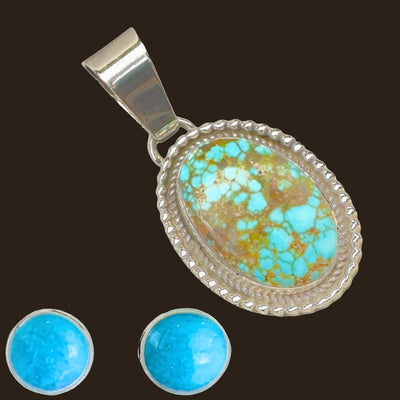
The matrix is the host rock that threads through the blue or green of the turquoise, appearing as delicate veins or bold patches. These patterns are formed by minerals like iron or copper that were present when the stone grew millions of years ago. Collectors often look for specific patterns, like the intricate spiderweb matrix, which adds character and value to a piece. The matrix serves as the geological fingerprint of the specific mine where the stone was born.
The story of the stone from Manassa to White Buffalo
Authenticity in jewelry starts long before the silver is polished. It begins at the source. When you choose a pair of turquoise earrings, you are wearing a piece of geological history that took millions of years to form. Most mass-market retailers cannot tell you which mine their stones came from, but we believe that knowing the exact patch of earth where a stone was pulled is essential for true value. This direct line of provenance ensures you aren't just buying a color; you're buying a documented narrative.
The Turquoise History and Lore provided by the Gemological Institute of America highlights how this stone has been prized for centuries. Today, that legacy continues through small-batch artisans who prioritize mine-specific stones. We invite you to explore our stone origins page to see the deep history behind the materials we use in our studio. Understanding the specific mineral conditions of a mine helps you appreciate why a stone from Colorado looks nothing like one from Nevada.
The legacy of King’s Manassa turquoise
The King’s Manassa mine in Southern Colorado holds a special place in our studio. The Cordova family has maintained stewardship of these claims for generations, providing a rare level of transparency in the industry. Although the mine is not currently in operation, we work from family-held stock that offers vibrant greens and a characteristic golden-to-brown matrix. Greg Cordova handles the lapidary work personally, using his deep knowledge of these specific claims to bring out a natural luster. Every cabochon reflects a tradition of careful extraction and hand-cutting.
White Buffalo and the beauty of contrast
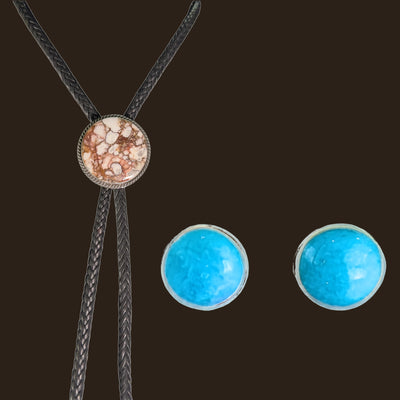
While many seek the classic blue, there is a striking beauty in the high-contrast look of White Buffalo. It is a rare white stone with a stark black chert matrix, often found in the same veins as turquoise but composed of calcite and dolomite. Because it is so rare, setting these stones requires an intentional design approach. Kimberly Cordova curates each setting to balance the bold patterns with clean sterling silver work. Since Greg Cordova also holds the claims to this unique mine, we can guarantee the authenticity of every piece. If you're looking for something that stands out, you can browse our current collection of handcrafted earrings to find a pair that speaks to you.

Choosing between studs dangles and hoops
Selecting the right pair of turquoise earrings depends on the rhythm of your day. A heavy dangle might be perfect for an evening out, but it can feel cumbersome if you're busy in a workshop or traveling. We think about the balance between the stone's weight and the sterling silver setting to ensure every piece is wearable. Kimberly Cordova curates our designs to include small-batch details like hand-stamped patterns and saw-cut bezels. These elements provide a tactile quality that mass-produced jewelry lacks. You can explore how these styles vary in our earring collection.
The quiet charm of turquoise studs
Studs are the everyday essential of the jewelry world. When we sit at the bench to assemble a pair, the first step is color matching. Greg Cordova looks through his hand-cut cabochons to find two stones that share a similar hue and matrix density. We finish them with sturdy sterling silver posts and butterfly backs to ensure they stay secure. These are ideal for a subtle Southwestern style that transitions easily from a morning meeting to a casual dinner.
Dangle and drop earrings for movement
Dangle and drop earrings are designed for movement. They capture the light as you turn your head, making the blue or green of the stone more dynamic. Using larger stones in these styles allows more of the matrix to be visible, which is a great way to showcase a beautiful piece of Kingman or Royston turquoise. We prefer using French hooks because they offer a comfortable, floating feel. The combination of a well-proportioned cabochon and a clean bezel setting creates a grounded, intentional look.
The structural appeal of hoops
Hoops offer a different structural appeal. We often incorporate turquoise as a small, focused detail on a sterling silver hoop to keep the weight manageable. This style bridges the gap between the simplicity of a stud and the drama of a dangle. By focusing on small-batch production, we can ensure the silver work is smooth and the stone is set firmly. It’s about creating a piece that feels right for the person wearing it, matching their personal style with their lifestyle.
Keeping your sterling silver and turquoise bright
Turquoise is a porous mineral. It breathes and reacts to its environment in ways that harder gemstones don't. Because of this cellular structure, it can absorb oils, soaps, and chemicals that eventually shift its natural hue. Owning a pair of turquoise earrings requires a simple but disciplined approach to handling. We see many pieces come back to the studio for repair because they were exposed to harsh cleaners or swimming pool chlorine, which can permanently damage the stone's surface.
Sterling silver also requires attention. It naturally develops a patina over time as it reacts with oxygen. While some collectors prefer this darkened, antique look, others want to maintain a high-polish finish. With the spot price of silver reaching approximately $86.74 per troy ounce in May 2026, keeping your jewelry in top condition is a practical way to protect the value of your collection. You can find more detailed instructions in our care and repair guide.
The gentle art of cleaning
Avoid liquid jewelry dips at all costs. These aggressive chemicals can strip the intentional oxidation from the silver work and seep into the stone, causing discoloration. A soft polishing cloth is your most reliable tool for maintaining the metal's luster. If dust or skin oils settle around the bezel, use a dry, soft toothbrush to gently clear the crevices. Water should be used sparingly to avoid loosening the stone setting or trapping moisture behind the cabochon.
Storage for longevity
Where you leave your jewelry at night affects its lifespan. A fabric-lined box is the best choice to prevent the sterling silver from scratching against other harder pieces. Don't store your collection in a humid bathroom. Moisture in the air accelerates the tarnishing process, turning bright silver dark much faster than in a dry environment. Make it a ritual to put your jewelry on last, after you've finished applying perfumes and hairsprays. This prevents chemical buildup on the stone and metal. If you're looking for a new piece to add to your rotation, you can browse our everyday essentials for durable, wearable designs.
Why small batch jewelry matters for your collection
Choosing small batch jewelry is an investment in human skill and intentionality. Factory-made items offer a cold precision that can feel sterile; they lack the subtle hammer marks or the slight asymmetry that tells you a person was actually behind the work. In our Santa Fe studio, we prioritize the warmth of the handmade. Every pair of turquoise earrings we produce is the result of a slow, deliberate process. We don't rush the bench work because the integrity of the sterling silver and the stone is what matters most to the longevity of the piece. When you own a piece from a working studio, you aren't just buying an accessory; you're supporting a lineage of craftsmanship.
The contrast between mass production and artisan work is palpable in the weight and finish of the metal. A machine-stamped earring is often hollow or thin to save on material costs, especially with the recent surge in silver prices. Our pieces maintain a solid, grounded feel. This commitment to quality ensures that the jewelry survives daily wear and becomes a quietly timeless part of your rotation. We believe that the objects we surround ourselves with should have a soul and a story that begins at the jeweler's bench.
Curated by Kimberly designed for you
Transparency is a core value in our workshop. We categorize our pieces into three types so you know exactly what you're buying. Type 1 jewelry is entirely hand-fabricated from sheet and wire, making it a true one-of-a-kind item where every solder joint is handled with care. Type 2 pieces are cast from our own handmade originals to keep them accessible while maintaining our studio's unique design language. Type 3 represents our curated collection of finished artisan pieces that meet our strict quality standards. Kimberly Cordova oversees this curation, selecting stones that mirror the muted palettes of the high desert. You'll never find mystery metals or plated base metals here; we only work with authentic .925 sterling silver and natural stones.
A personal connection to the craft
We want you to find a piece that resonates with your own aesthetic palette. Jewelry shouldn't just be a purchase. It should feel like an extension of your own history. If you're curious about a specific matrix pattern or want to know more about the lapidary work of Greg Cordova, we are always here to talk shop. We believe that a pair of earrings becomes a vessel for the wearer's story, evolving as you wear them through the seasons. Finding your next favorite pair is about discovery. We invite you to browse our new arrivals to see what we've recently pulled from the bench. Every piece is a celebration of the Southwestern landscape and the artisans who call it home.
Choosing jewelry with a documented story
Authenticity isn't a marketing buzzword; it's a matter of geological fact and human effort. By understanding the specific origins of stones like King's Manassa or White Buffalo, you move past the uncertainty of mass-market retail and mystery metals. We've seen how the right setting honors the stone's matrix and the artisan's intent while ensuring the weight is comfortable for your daily rhythm. Every piece should reflect a dialogue between the earth and the maker.
Your search for authentic turquoise earrings should end with a piece that feels personal and grounded. We focus on small-batch designs that exclude fake stones and synthetic composites, ensuring that what you wear is as real as the landscape that inspired it. Proper care and mindful storage will keep your sterling silver and stones bright for years to come. We hope this guide helps you feel more confident as you build a collection that reflects your own aesthetic palette.
Find a pair of handcrafted turquoise earrings that speaks to your own wild beauty. For those who prefer the review system of a larger marketplace, you can also explore our Wildflower Etsy shop. Take your time finding the stones that resonate with you; there's a quiet joy in owning jewelry that carries a documented history.
Frequently Asked Questions
How can I tell if my turquoise earrings are real or dyed howlite?
You can identify dyed howlite by looking for dye pools in the stone's crevices or a color that is too uniform. Genuine turquoise earrings will show natural variations in hue and a matrix that is integrated into the stone rather than painted on. If you're unsure, a simple scratch test on an inconspicuous area can reveal the white interior of a dyed substitute.
Is it safe to wear turquoise earrings in the shower or pool?
You should not wear your jewelry in the shower, pool, or hot tub. The porous nature of the stone means it can absorb chemicals like chlorine or the fatty acids in soaps, leading to permanent discoloration. Taking them off before you step into the water is the best way to ensure the stones remain in their original state.
What is the difference between stabilized and natural turquoise?
Natural turquoise is stone that is hard enough to be cut and polished without any chemical treatment. Stabilized turquoise has been infused with a clear resin or epoxy to increase its durability, which is necessary for softer stones that would otherwise crumble on the lapidary wheel. We only use the term natural for stones that are completely untreated and confirmed to be in their raw state.
Why does some turquoise have a brown or black matrix while others are clear?
The color and pattern of the matrix are determined by the host rock where the turquoise formed millions of years ago. Iron creates the brown and golden tones found in mines like Royston, while manganese or chert results in the stark black patterns seen in other varieties. A clear stone simply grew in an environment where the host rock didn't bleed into the mineral during the formation process.
What does it mean when jewelry is called Southwestern style?
Southwestern style refers to a specific regional aesthetic characterized by the use of sterling silver and semi-precious stones. It is a living tradition of craftsmanship that focuses on hand-fabricated details like saw-cut bezels and stamped patterns. This style honors the history of the region through intentional metalwork and small-batch production rather than mass-produced factory designs.
How do I clean tarnished sterling silver without damaging the turquoise stone?
A dry, soft polishing cloth is the safest tool for removing tarnish from your sterling silver. Avoid using liquid jewelry dips or ultrasonic cleaners because these can strip the stone of its natural luster or loosen the bond between the cabochon and the bezel. If you need to reach small details, a soft, dry toothbrush works well for a gentle mechanical cleaning around the edges of the setting.
What makes White Buffalo different from traditional blue turquoise?
White Buffalo is a rare white stone with a black chert matrix that is technically a combination of calcite and dolomite. While it is often found near turquoise mines in Nevada, it doesn't contain the copper or aluminum that gives turquoise its blue and green colors. We treat it with the same care as our turquoise, ensuring Greg Cordova handles the lapidary work to preserve its high-contrast beauty.
Are these earrings heavy to wear all day?
We design our pieces to be comfortable for the daily rhythm of the wearer. While a large pair of dangle earrings will have more weight due to the solid sterling silver and stone, we balance the proportions to ensure they don't pull on the earlobe. Our studs and smaller hoops are specifically crafted to be lightweight everyday essentials that you can wear comfortably from morning until evening.

Article by
Kimberly Cordova
Kimberly Cordova is the founder and creative director of Wildflower, a handmade Turquoise and sterling silver jewelry brand based in Santa Fe. She built Wildflower around a simple belief: the best jewelry is the kind you actually reach for, not the kind you save for someday.
Kimberly designs pieces made by hand with a trusted circle of Santa Fe silversmiths, works alongside her husband Greg on in-house lapidary pieces cut from stones including the family's King's Manassa Mine in Colorado and White Buffalo Mine in Nevada, and sources finished work from artisan makers whose craft meets the same standard. The result is a collection with real range and no shortcuts on the stone, the silver, or the story behind either.
Her writing covers everything she has learned along the way: how Turquoise forms, how to tell natural from stabilized, what makes one mine different from another, how to read a bezel, and how to shop with confidence in a market that is not always straightforward. It is the kind of plainspoken information she wished someone had laid out for her when she was starting out.
Shop the Wildflower collection at wildflowerartisans.com, or find us on Etsy at wildflowersantafe.etsy.com. Questions about a stone, a setting, or a specific piece are welcome any time.

0 comments