

You see a turquoise cuff with a complex spiderweb matrix and wonder if the color is as honest as the artist claims. It is a common moment of doubt when you are looking for something more than just a mass-produced accessory. You want a piece that feels grounded and real, but the world of mystery metals and stabilized stones makes it hard to trust your eyes. Knowing the right questions to ask when buying artisan jewelry can turn that hesitation into a confident investment in a piece that will last a lifetime.
We believe that every piece of jewelry should be a celebration of the maker's hand and the stone's unique history. We'll show you how to look for quality in the benchwork and how to verify the origin of materials like King's Manassa or Royston turquoise. This guide covers how to talk to a jeweler about their process, from the initial curation by Kimberly Cordova to the precision of hand-cut stones by lapidaries like Greg Cordova. You will learn to identify natural, untreated stones and fine silverwork, ensuring you walk away with a piece that is quietly timeless.
Key Takeaways
- Identify natural, untreated stones by asking about mine origin and avoiding stabilized or dyed substitutes.
- Use specific questions to ask when buying artisan jewelry to verify sterling silver purity and find the required 925 hallmarks.
- Learn why the partnership between a designer and a lapidary artist is the foundation of high quality benchwork.
- Protect your investment by understanding stone porosity and the specific cleaning needs of artisan-made Southwestern style pieces.
- Distinguish between small batch collections and one of a kind jewelry created around a single, non-replicable cabochon.
Where did this turquoise originate and is it natural?
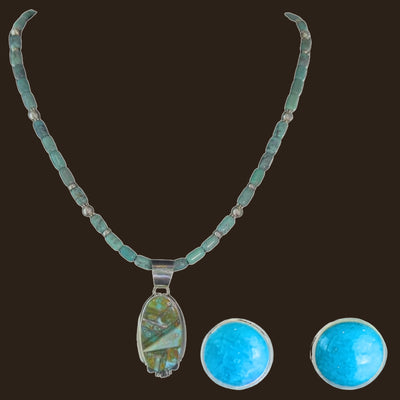
When you hold a piece of Southwestern style jewelry, the first thing you likely notice is the stone. Understanding the difference between a raw rock from the earth and a finished, polished cabochon is central to knowing the value of your collection. One of the most important questions to ask when buying artisan jewelry is whether the turquoise is truly natural. In our Santa Fe studio, natural means the stone is untreated. It hasn't been soaked in plastic resins or dyed to mimic a higher grade. It is simply the stone, hand-cut and polished to reveal its own internal landscape.
This level of transparency is what separates a true maker from a high-volume reseller. When we explore What is art jewelry? we are looking at pieces where every material choice is intentional and documented. An honest artisan will tell you exactly what has been done to a stone before it was set in a silver bezel. If a stone is too soft to be cut without help, it undergoes stabilization. There is nothing wrong with stabilized stones for certain designs, but that treatment should always be disclosed upfront as it affects both the price and the long-term character of the piece.
The difference between natural and stabilized stones
Most turquoise found in the earth is chalky and porous. To make it hard enough for daily wear, many cutters use a process called stabilization. This involves pressing clear resin into the stone under high pressure. While this makes the jewelry durable and keeps the color from fading, it isn't the same as a natural stone that is hard enough to take a high polish on its own. Natural turquoise is exceptionally rare. It represents a tiny fraction of the total yield from any given mine. Because it's untreated, it can slowly change color over many years as it reacts to the air and the oils of your skin. We see this as a living history of the piece.
Why mine-specific origin matters
A stone's matrix, which is the host rock that threads through the blue or green mineral, acts like a mineral fingerprint. You might see the deep, mossy greens of King's Manassa or the intricate black spiderweb patterns found in high-grade Royston. Knowing the specific mine name adds historical context and helps you understand the rarity of your piece. Greg Cordova, who handles our lapidary work and manages specific mine claims, often sources stones directly to ensure they meet our standards for quality and authenticity. You can see his specialized cutting process at CuttingEdgeTurquoise.com. When you take the time to research stone origins, you begin to see why a piece from a closed mine or a specific vein carries a different weight. Mine-specific information is a sign that the artist knows their materials and values the story of the earth.
What specific metals and construction methods were used?
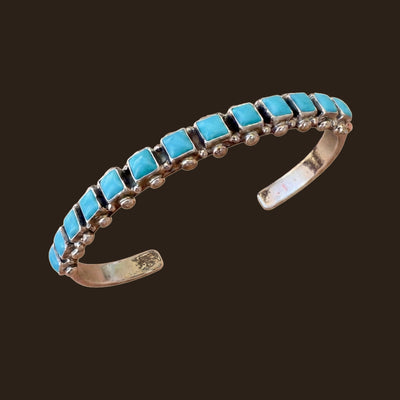
The weight of a silver cuff against your wrist tells a story of its own. When you are building a collection, one of the most practical questions to ask when buying artisan jewelry is what specific metal was used and how it was put together. You aren't just buying a look. You're buying benchwork. We use sterling silver because it has the strength to hold a stone for decades while developing a soft, beautiful patina. Always check the back of a piece for a 925 hallmark. This small stamp is a standard requirement for silver purity. It ensures you aren't paying artisan prices for a mystery metal or a thin layer of plating that will eventually flake away to reveal copper or brass.
Construction methods are just as vital as the materials themselves. A piece might be part of a small batch where a design is carefully repeated, or it might be a one of a kind creation. In our Santa Fe studio, Kimberly Cordova curates specific stones for these unique pieces, ensuring the silverwork follows the natural curves of the cabochon. This level of focus is what distinguishes handcrafted work from items found in a typical retail setting.
Evaluating the bezel and stone setting
The bezel is the thin ribbon of silver that wraps around the stone. It's the most critical point of contact. In high quality Southwestern style work, the bezel should be folded tightly and evenly over the edge of the stone. There shouldn't be gaps where the stone can rattle or move. While some mass-produced items rely on excessive adhesives to keep a stone in place, a skilled artisan uses the metal itself to secure the gem. When judging turquoise quality and its setting, look for the subtle marks of the hand. A hand-cut bezel might have tiny, intentional variations that show it was fitted to that specific stone rather than popped out of a machine.
Silver gauge and durability for daily wear
The thickness, or gauge, of the silver determines how the piece will stand up to the rigors of life. A thin, flimsy ring might bend out of shape within months. Heavier gauge silver provides a grounded, quietly timeless feel that feels substantial in your hand. For cuff bracelets, a thicker gauge is necessary to allow the metal to be adjusted slightly without cracking. We often use oxidation, a controlled darkening of the silver, to pull the details of the matrix and metalwork into focus. This contrast highlights the texture of the silver and makes the design pop. If you are looking for something to wear every single day, don't be afraid to ask about the durability of the setting and the weight of the metal used.

Who designed the piece and who performed the lapidary work?
When you look at a finished ring or pendant, it is easy to assume one person did everything from start to finish. In a professional studio, the process is often more nuanced. One of the most insightful questions to ask when buying artisan jewelry is whether the piece was a collaboration between a designer and a lapidary artist. This distinction is important because stone cutting and silverwork are two different disciplines that require different tools and temperaments. Understanding this partnership helps you appreciate the history of jewelry craftsmanship as a collective effort to honor natural materials.
Knowing the specific hands involved in the creation of your jewelry establishes a level of authority and trust that mass-produced items cannot match. It transforms a simple purchase into a connection with a working studio. When an artist can name the person who cut the stone and the person who soldered the bezel, it proves the piece has a clear and honest provenance. This transparency is a hallmark of the Southwestern style we value in Santa Fe.
The importance of the lapidary artist
The lapidary artist is the person who takes a rough stone from the earth and turns it into a cabochon. This is a highly specialized task that requires an eye for detail and a deep understanding of mineralogy. Greg Cordova, who handles the lapidary work for our studio, often works with stones from mines he owns or manages. You can see his focus on hand-cut quality at CuttingEdgeTurquoise.com. A master lapidary doesn't just cut a shape. They look for the best part of the stone to showcase a specific spiderweb matrix or a unique color shift. Buying from a studio that has a direct connection to the lapidary process ensures the stones are natural and handled with respect from the moment they leave the ground.
The vision of the jewelry designer
While the lapidary focuses on the stone, the designer focuses on the silver composition and the overall aesthetic. Kimberly Cordova leads the design and curation at our studio, choosing stones that speak to a specific narrative. Her role is to balance the organic, sometimes asymmetrical nature of the stone with the refined structure of the metalwork. A designer decides whether a stone needs a simple, clean bezel or a more complex silver frame to highlight its character. When you are looking for a new piece, ask about the inspiration behind the design. A designer who is deeply connected to their work will be able to explain why they chose a specific stone and how the silverwork was intended to complement its natural beauty. This intentionality is what gives artisan jewelry its quietly timeless feel.
How should I care for this specific stone and setting?
A piece of handcrafted jewelry is meant to be lived in, but its longevity depends on how you treat the materials. One of the most practical questions to ask when buying artisan jewelry is how the specific stone and metal will react to your daily environment. Unlike mass-produced fashion jewelry, natural materials are often reactive. They breathe and change. Understanding the porosity of a cabochon or the temper of sterling silver ensures your investment remains a quietly timeless part of your collection for decades.
Silver naturally tarnishes when exposed to oxygen and moisture, but the way you clean it matters. Avoid harsh liquid chemical dips, as these can strip away intentional oxidation and damage the surface of certain stones. A simple polishing cloth is usually all you need to keep the silver bright. When you aren't wearing your jewelry, store it in a cool, dry place, ideally in a small airtight bag. This prevents the heavy, dark tarnish that can be difficult to remove without professional help.
Turquoise-specific maintenance
Natural turquoise is a phosphate mineral that is naturally porous. This means it can absorb whatever it touches, including the oils from your skin, soaps, and perfumes. We always recommend putting your jewelry on last, after you've applied lotions or hairspray. Over time, some stones may shift in color, perhaps deepening from a bright blue to a soft green. This is not a defect; it's a natural characteristic of untreated stone. If you want to keep your pieces in top condition, we've put together a detailed care and repair guide that covers everything from cleaning to long-term storage.
Studio support and repairs
Before you commit to a piece, ask if the studio stands behind their construction. Hand-fabricated jewelry is often much easier to repair than cast, mass-produced pieces because the maker understands the exact gauge and temper of the metal used. If a stone ever becomes loose in its bezel, a working studio can usually tighten it without issue. Resizing is another critical factor. Because of the heat required to solder silver, some rings with heat-sensitive stones cannot be resized once they are finished. It is always better to confirm your size or ask about resizing options before the piece leaves the bench. If you have questions about a specific fit, you can always contact us directly to discuss the details of a piece before you buy.
Is the piece a one of a kind creation or part of a small batch?
Choosing a new piece for your collection often comes down to how much of yourself you see in the work. One of the most telling questions to ask when buying artisan jewelry is whether the item is a unique, one of a kind creation or part of a small batch. In a world where machines can stamp out thousands of identical rings in an hour, the choice to buy handmade is a choice for individuality. Even in a limited series, no two pieces are ever truly identical because the human hand cannot, and should not, act like a factory press. This lack of uniformity is exactly what gives artisan work its character.
The distinction between these two categories helps you understand the intent of the studio. A one of a kind piece is usually born from a stone that demands its own stage. A small batch collection, on the other hand, allows an artist to explore a specific theme or aesthetic across a few similar pieces. Both approaches have their place in a well-rounded collection. One offers a singular statement, while the other provides a reliable, quietly timeless foundation for daily wear. Knowing which one you are buying helps you appreciate the labor and curation behind the silverwork.
The value of unique stones
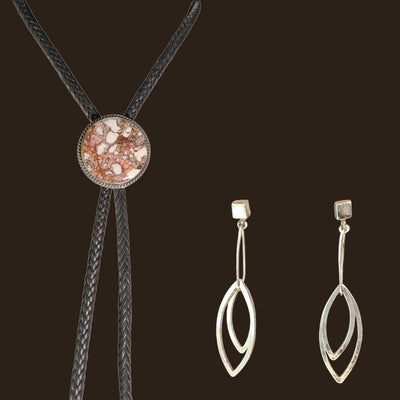
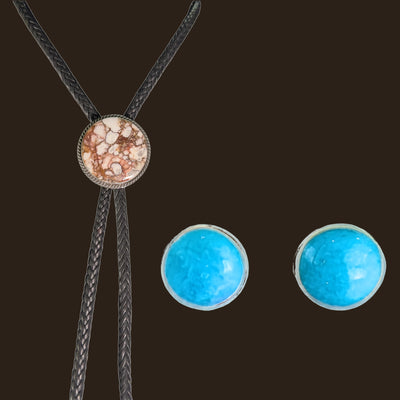
Some stones possess such a specific character that they cannot be part of a series. Rare finds like high-grade White Buffalo or a particularly complex spiderweb turquoise matrix are usually set aside for special projects. Kimberly Cordova curates these stones specifically for our one of a kind collection, where the silverwork is built entirely around the unique footprint of that single, natural cabochon. Owning a piece like this means you have a part of the earth that can never be replicated. It represents the height of artisan skill, combining Greg Cordova's precision hand-cut lapidary work with a design that will never be seen on another person's wrist. This exclusivity is a significant part of the value in Southwestern style art jewelry.
Choosing everyday artisan essentials
While unique pieces are the focal points of a collection, everyday essentials provide the quality you need for constant wear. These designs are often produced in limited quantities, ensuring they remain specialty items rather than mass-market products. When you are looking at these pieces, ask how many were made in that particular run. Even in a small batch, you should still see the signs of hand-finishing. Look for the subtle variations in the bezel or the way the silver has been hand-polished to a soft glow. This evidence of the maker's touch is what ensures that your everyday studs or simple rings carry the same soul as a major statement piece. A small batch piece is a way to own artisan quality in a more accessible, wearable design.
Building your collection with confidence
Finding a piece that resonates with you is a personal journey, but ensuring its quality is a matter of knowing what to look for. You now have the tools to identify natural, untreated stones and the hallmarks of high-quality benchwork. By keeping these specific questions to ask when buying artisan jewelry in mind, you can feel certain that your investment is grounded in authentic materials and skilled labor. Every stone in our studio is hand-cut by Greg Cordova, and each design is carefully curated by Kimberly Cordova to ensure it meets our standards for durability and Southwestern style.
True artisan-made jewelry is meant to be worn and loved for a lifetime. When you choose pieces made with sterling silver and natural turquoise, you are choosing a legacy of craftsmanship that avoids the uniformity of mass production. Explore our latest handcrafted silver and turquoise jewelry to see these artisanal details in person, or visit the Wildflower Etsy shop for more reviews from our community. We look forward to helping you find a piece that feels like it was made just for you.
Frequently Asked Questions
What is the most important question to ask when buying turquoise jewelry?
The most vital question is whether the stone is natural and untreated. This inquiry determines if the turquoise has its original hardness and color or if it has been stabilized with plastic resins. Knowing the mine origin is also a key part of the questions to ask when buying artisan jewelry because it establishes the stone's rarity and historical context.
How can I tell if a piece of jewelry is actually artisan-made or mass-produced?
Look for subtle variations in the metalwork and the presence of a registered maker's mark. Artisan pieces are hand-fabricated, so you will often see evidence of the hand, such as a hand-cut bezel that was fitted to a specific cabochon. Mass-produced items usually look too uniform and lack the weight and density of high-quality, hand-finished silver.
Does the specific mine of a turquoise stone affect its value?
Yes, the mine of origin significantly impacts the rarity and market value of a piece. Stones from closed mines or specific claims like King's Manassa are harder to find and highly prized by collectors. Greg Cordova often sources from specific mines to ensure we are working with high-grade, authentic materials that have a documented provenance.
What should I look for in a silver hallmark to ensure it is genuine?
You should look for a 925 stamp which is often accompanied by a unique maker's mark on the back of the piece. The 925 signifies that the metal is sterling silver, containing 92.5 percent pure silver. We ensure every piece is stamped correctly to protect you from mystery metals or plated base metals that will eventually flake or irritate the skin.
Is it okay to ask a jeweler if their turquoise has been stabilized?
It is absolutely appropriate and encouraged to ask about stabilization before you invest. While most turquoise on the market is stabilized to make it durable enough for jewelry, natural stones that require no treatment are much rarer and more valuable. An honest artisan will be transparent about these details because they want you to understand how to care for your specific piece.
Why does artisan jewelry cost more than standard retail jewelry?
The price reflects the specialized labor of the lapidary and the designer along with the high quality of the raw materials. Instead of using mass-produced cast parts, Kimberly Cordova curates each design to complement hand-cut stones, which takes significantly more time and skill. You are paying for a quietly timeless piece that is built for daily wear rather than a disposable fashion accessory.

Article by
Kimberly Cordova
Kimberly Cordova is the founder and creative director of Wildflower, a handmade Turquoise and sterling silver jewelry brand based in Santa Fe. She built Wildflower around a simple belief: the best jewelry is the kind you actually reach for, not the kind you save for someday.
Kimberly designs pieces made by hand with a trusted circle of Santa Fe silversmiths, works alongside her husband Greg on in-house lapidary pieces cut from stones including the family's King's Manassa Mine in Colorado and White Buffalo Mine in Nevada, and sources finished work from artisan makers whose craft meets the same standard. The result is a collection with real range and no shortcuts on the stone, the silver, or the story behind either.
Her writing covers everything she has learned along the way: how Turquoise forms, how to tell natural from stabilized, what makes one mine different from another, how to read a bezel, and how to shop with confidence in a market that is not always straightforward. It is the kind of plainspoken information she wished someone had laid out for her when she was starting out.
Shop the Wildflower collection at wildflowerartisans.com, or find us on Etsy at wildflowersantafe.etsy.com. Questions about a stone, a setting, or a specific piece are welcome any time.
0 comments