

Out of every 100 pounds of turquoise pulled from the earth, only one single pound is typically considered high-grade gem quality. This stark rarity is why understanding the different types of turquoise stones is essential for anyone looking to build a meaningful collection. It's natural to feel a sense of hesitation when faced with a wide range of prices, or perhaps you worry about accidentally purchasing dyed howlite instead of a genuine mineral. Authenticity matters.
We believe that every stone tells a story of the specific pocket of earth where it formed. This guide explores the geological origins and unique mine characteristics of authentic stones to help you distinguish between a natural cabochon and a stabilized one. We will look at the distinct personalities of mines like Kingman and Royston, providing the technical grading knowledge you need to choose Southwestern style jewelry with absolute confidence.
Key Takeaways
- Learn how mineral ratios like copper and iron define the different types of turquoise stones and their unique color palettes.
- Identify the visual signatures of specific Southwestern mines to help you recognize the distinct matrix patterns of Royston or Kingman varieties.
- Understand the technical difference between natural and stabilized turquoise, noting that only about 10 percent of mined material is hard enough to remain untreated.
- Discover how the lapidary process transforms rough stone into a polished cabochon while preserving the natural character of the matrix.
- Gain the confidence to choose authentic, artisan-made jewelry where the unique shape and hue of the stone dictate the final sterling silver design.
How Geology Shapes Different Types of Turquoise Stones
Turquoise is a geological record of the earth, formed by a slow and patient process. It is a hydrated phosphate of copper and aluminum. This secondary mineral takes shape when rainwater percolates through host rock, leaching out copper and other elements over millions of years. This chemical interaction is what creates the different types of turquoise stones we see in our Santa Fe studio. The specific environment of the mine dictates the durability and visual character of the final gem. Understanding these Turquoise mineral properties helps you appreciate why every stone is a unique piece of the landscape.
The Chemistry of Turquoise Color
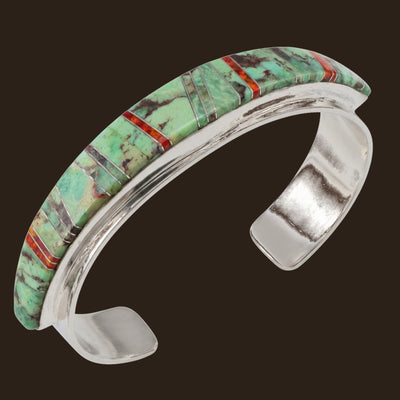
The specific palette of a stone depends on the minerals present during its long formation. Copper is the primary source of the classic sky blue hues. In mines like Sleeping Beauty, high copper concentrations and low iron levels produced a pure, consistent blue that became world famous. When iron or magnesium replaces a portion of the aluminum, the stone shifts toward apple green or deep forest shades. In rare instances, zinc can introduce vibrant lime green colors. The sheer variety of these different types of turquoise stones is what makes lapidary work so rewarding. These variations aren't flaws. They are signatures of the earth's chemistry at a specific moment in time.
Identifying Matrix Patterns and Spiderweb Veining
Matrix is the host rock that remains within the turquoise. It acts as a skeleton, holding the mineral together and providing a visual map of its origin. This host material might be limonite, quartz, chert, or even pyrite. While some collectors prefer "clear" stones with no visible host rock, others value the character of a heavy matrix. A spiderweb pattern occurs when thin, delicate lines of host rock crisscross the stone in a dense, web-like formation. These patterns are highly sought after in the Southwestern style because they are difficult to replicate. When we curate stones for our one of a kind turquoise jewelry, we often let these natural patterns dictate the final design of the sterling silver setting.
Regional Mine Varieties and Their Visual Signatures
Collectors and artisans categorize the different types of turquoise stones primarily by their mine of origin. This is not just about geography; it is about the unique mineral thumbprint of each location. While a single mine might yield several different grades of material, the most prized pieces show the "signature" look that the mine is famous for. Understanding stone origins is essential for recognizing rarity, especially as famous deposits become exhausted. Expert lapidaries like Greg Cordova spend years learning how to read rough material, selecting and cutting stones to ensure the most vibrant color and matrix patterns are preserved in every cabochon.
Arizona Classics: Kingman and Sleeping Beauty
Arizona has long been the heart of American turquoise production. The Kingman mine is celebrated for its bright, punchy blue color, often accompanied by a delicate "water web" matrix. In contrast, the Sleeping Beauty mine, which ceased operations at the end of 2025, produced a pure sky-blue stone with little to no matrix. This clean look set a global standard for turquoise quality. Because these mines are so well documented, they provide an excellent baseline for evaluating color and texture using GIA's guide to turquoise quality. These Arizona stones define the look of many authentic Southwestern style pieces.
Nevada Gems: Royston and Carico Lake
Nevada is a diverse producer with over 100 mines documented in the last century. The Royston district is famous for its stunning color gradients. It's common to find deep forest greens and light blues swirling together in a single stone. Carico Lake turquoise is another Nevada standout, prized for its high zinc content which creates a rare lime green shade. Many Nevada mines produce high-grade, hard material that allows for a natural polish without the need for chemical stabilizers. If you're looking for a specific palette, you can explore our latest handmade turquoise jewelry to see these Nevada varieties in person.
Special Varieties: King Manassa and White Buffalo
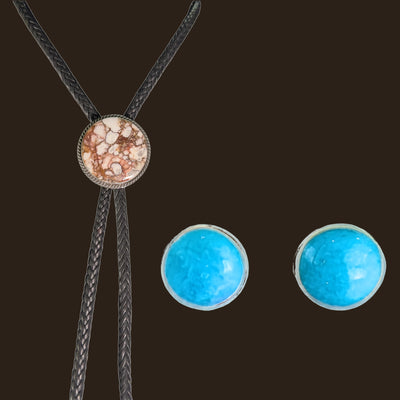
Beyond Arizona and Nevada, other pockets of the West offer unique treasures. King's Manassa turquoise from Colorado is loved for its rich, grassy greens and heavy golden-brown matrix. Another popular stone often found in these circles is White Buffalo. While frequently grouped with turquoise because it's found in the same mines, it is technically a dolomite and calcite mix. White Buffalo is a striking white stone with a black chert matrix found specifically in Tonopah, Nevada. Whether it is a traditional blue or a rare green, the variety found in these mines ensures that no two pieces of jewelry are ever exactly alike.

Natural vs. Stabilized: Comparing Stone Treatments and Quality
In our Santa Fe studio, we use the word natural with precision. It isn't a vague descriptor for anything that came out of the ground. In the jewelry industry, natural turquoise refers specifically to stone that has been mined, cut, and polished without any chemical alteration or resin infusion. This distinction is vital because the vast majority of material pulled from a mine is too soft or porous for use in jewelry. In fact, only about 10 percent of the turquoise found globally is dense enough to be finished in its natural state. The rest requires some form of intervention to become wearable.
We believe in transparency. This is why Wildflower strictly excludes mystery metals and dyed howlite from our collections. Understanding the different types of turquoise stones means knowing exactly what has been done to the material before it reaches your hand. Natural stones are the rarest and most valuable, but they also require a lapidary with a deep understanding of mineral density to cut them properly without fracturing the rough material.
Stabilization and the Zachary Process
Stabilization is a common and legitimate practice where porous turquoise is infused with clear epoxy or resin. This process hardens the stone and prevents it from absorbing oils or changing color over time. It makes many beautiful but soft different types of turquoise stones durable enough for everyday rings or cuffs. Another treatment is the Zachary process. Unlike resin stabilization, this method uses a chemical bath to improve the stone's hardness and color. It's often harder to detect because it doesn't leave a plastic-like residue. While these treatments have their place in the market, they should always be disclosed to the collector as they impact the stone's long-term value.
Spotting Reconstituted and Synthetic Materials
Some materials on the market aren't stones at all. Reconstituted turquoise is made by grinding low-quality "chalk" turquoise into powder and mixing it with epoxy and dye to form a solid block. It often feels lightweight and warm to the touch, lacking the cool density of real stone. You should also watch for dyed howlite or magnesite. These minerals are naturally white but are frequently dyed blue to mimic the look of more expensive mines. They are often marketed under misleading names like "white turquoise" or "blue howlite." Real turquoise has subtle shifts in hue and a distinct weight. If a stone looks too perfect or feels like plastic, it likely isn't genuine. We prefer the honest character of the mineral, which is why we focus on authentic turquoise jewelry that celebrates the stone as it was found.
The Lapidary Process: Transforming Rough Stone into Jewelry
The journey of turquoise begins in the rough. When it comes out of the mine, it often looks like a common desert rock covered in dirt or host rock. It takes a skilled lapidary to see the potential within that raw material. Greg Cordova is a specialist in this field, focusing on cutting high-grade American turquoise to reveal the hidden beauty of the different types of turquoise stones. He must carefully orient each piece of rough, deciding exactly where the blade should fall to highlight a striking spiderweb matrix or a particularly vibrant patch of color. A lapidary must also manage the heat generated by diamond-tipped saws and grinding wheels, as excessive heat can cause the stone to crack. This initial decision determines the character of the finished gem.
Cutting Cabochons for Southwestern Style Jewelry
Turquoise in Southwestern style jewelry is almost always cut into a cabochon. Unlike faceted diamonds that rely on multiple angles to reflect light, a cabochon is a stone that is shaped and polished into a smooth, rounded form with a flat back. The dome height of a cabochon is a deliberate choice. A higher dome can make the color appear deeper and more saturated, while a lower profile might be necessary for a delicate ring. Because many high-grade stones are found in thin veins, lapidaries often use a backing material. This thin layer of steel-reinforced resin provides the structural stability needed during the grinding and setting process without changing the untreated state of the turquoise itself. It is a slow, methodical process of moving through progressively finer grits until the stone achieves a glass-like polish.
Selecting the Right Stone for Bezel Settings
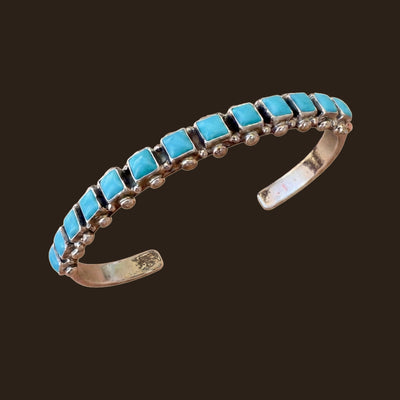
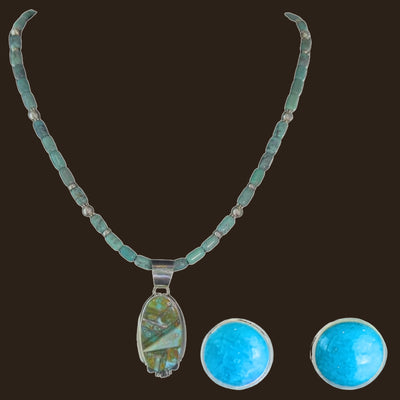
Once the stone is polished, the jeweler must decide its final destination. A large, heavy-matrix cabochon might be the perfect centerpiece for a bold cuff, while a pair of clear, sky-blue stones are better suited for matched earrings. The precision required to fit a hand-cut stone into a custom sterling silver bezel is immense. Every bezel is handmade to the exact dimensions of that specific stone. The bezel is more than a decorative frame; it is a structural necessity. By rolling the silver over the edge of the cabochon, the jeweler creates a mechanical bond that keeps the stone secure for decades of wear. Our artist-made sterling and turquoise pieces rely on this perfect marriage of stone and metal. If you want to see how these stones look once they are set, shop our collection of handmade turquoise jewelry.
Choosing Authentic Southwestern Style Turquoise Jewelry
When you decide to add a piece to your collection, look for the hand of the maker. Mass-produced items often use standardized stones that feel sterile and lack a connection to the landscape. In contrast, handcrafted jewelry allows the organic shape of the mineral to dictate the final form. This is especially true when dealing with the different types of turquoise stones we have discussed, from the deep greens of Royston to the sky blue of Kingman. A collector should always feel comfortable asking about the mine origin and whether the stone is natural or stabilized. Transparency is the foundation of a good relationship between an artisan and a collector.
If you are just beginning your journey, consider starting with everyday essentials. A simple pair of studs or a delicate ring can be a wonderful way to experience the weight and texture of genuine material without the commitment of a large statement piece. These smaller items still carry the narrative of the earth. We find that once someone experiences the character of a real stone, they rarely go back to factory-made alternatives.
The Value of Artisan-Made Pieces
There is a distinct soul in jewelry that is made one at a time. Machine-made pieces lack the subtle variations that give a piece its character. When a jeweler works in a small batch, they can pay attention to the way a specific bezel hugs the curves of a unique cabochon. High-quality turquoise deserves a partner that will last, which is why authentic sterling silver is the standard for Southwestern style work. We distinguish between curated sourced pieces and our in-house designs to give you a clear understanding of where every component originated. Every choice we make in the studio is intentional.
Connecting with Sourced and In-House Designs
Our studio in Santa Fe operates on two levels of creative connection. Kimberly curates sourced pieces that reflect a specific Southwestern aesthetic, ensuring every item meets our standards for material and craftsmanship. Our in-house pieces represent a deeper collaboration. These items feature stones cut by lapidary Greg Cordova and are designed by Kimberly to highlight the specific matrix and hue of that individual stone. You can explore the Wildflower shop to see these distinctions for yourself. Every piece is an invitation to appreciate the different types of turquoise stones through a lens of artisanal care and geological wonder.
Finding Your Own Piece of the Southwest
Building a collection starts with an appreciation for the earth's slow, geological work. By understanding the chemistry and mine origins behind different types of turquoise stones, you can move beyond the confusion of the mass market. Whether you're drawn to the clear sky blue of an Arizona mine or the deep, mossy greens of a Nevada matrix, the right stone is the one that speaks to your personal aesthetic. Authenticity is found in the details of the lapidary cut and the precision of a handmade bezel.
Every piece we offer is handcrafted in our Santa Fe-based studio with a commitment to quality. We strictly exclude fake jewelry, dyed stones, or mystery metals from our work. Every stone is guaranteed authentic, ensuring that your jewelry remains a lasting record of the landscape it came from. We invite you to explore our curated collection of artisan-made turquoise jewelry at wildflowerartisans.com to find a piece that resonates with you. We hope this guide helps you choose your next stone with confidence.
Frequently Asked Questions
What is the rarest type of turquoise stone?
Lander Blue is widely considered the rarest variety. The deposit in Nevada was very small and was mined out in the 1970s. Because of this scarcity, high-grade Lander Blue can reach prices of $500 per carat. Other rare varieties include high-grade Bisbee or Sleeping Beauty, especially since the latter closed in 2025. This closure caused an estimated 20 percent contraction in the global turquoise supply.
How can I tell if my turquoise is real or dyed howlite?
You can often identify dyed howlite by looking closely at the matrix and color uniformity. Howlite is a naturally white, porous mineral that absorbs dye easily, but the color often looks flat or sits only on the surface. Real turquoise has a natural depth and feels cooler to the touch. If you see white spots where the stone has been scratched, it is likely dyed howlite.
What causes the different colors in turquoise stones?
The color of different types of turquoise stones is determined by the specific mineral content present during formation. Copper creates the classic sky blue shades, while iron or magnesium introduces green and yellow tones. In rare cases, zinc can create a vibrant lime green. The specific ratio of these minerals at a single mine site creates the stone's unique visual signature.
Is White Buffalo technically a type of turquoise?
No, White Buffalo is not technically turquoise. It is a combination of dolomite and calcite with black chert matrix. It is found in the same mines as turquoise in Tonopah, Nevada, which is why it is often grouped with the gemstone in Southwestern style jewelry. While it is a popular stone, it lacks the copper and aluminum required to be classified as turquoise.
What does spiderweb turquoise mean?
Spiderweb turquoise refers to a specific matrix pattern where thin, delicate lines of host rock crisscross the stone in a web-like formation. This pattern is highly valued by collectors because it is difficult to find and impossible to replicate perfectly. The matrix can consist of various minerals like limonite or quartz, providing a striking contrast against the blue or green of the turquoise cabochon.
Does natural turquoise change color over time when worn?
Natural, untreated turquoise is porous and can change color over time as it absorbs skin oils, perfumes, or lotions. This process usually causes the stone to shift toward a greener hue. Understanding how different types of turquoise stones react to wear is important for maintaining your collection. While some collectors appreciate this aging as a sign of authenticity, others prefer stabilized stones treated with resin to lock in the color.

Article by
Kimberly Cordova
Kimberly Cordova is the founder and creative director of Wildflower, a handmade Turquoise and sterling silver jewelry brand based in Santa Fe. She built Wildflower around a simple belief: the best jewelry is the kind you actually reach for, not the kind you save for someday.
Kimberly designs pieces made by hand with a trusted circle of Santa Fe silversmiths, works alongside her husband Greg on in-house lapidary pieces cut from stones including the family's King's Manassa Mine in Colorado and White Buffalo Mine in Nevada, and sources finished work from artisan makers whose craft meets the same standard. The result is a collection with real range and no shortcuts on the stone, the silver, or the story behind either.
Her writing covers everything she has learned along the way: how Turquoise forms, how to tell natural from stabilized, what makes one mine different from another, how to read a bezel, and how to shop with confidence in a market that is not always straightforward. It is the kind of plainspoken information she wished someone had laid out for her when she was starting out.
Shop the Wildflower collection at wildflowerartisans.com, or find us on Etsy at wildflowersantafe.etsy.com. Questions about a stone, a setting, or a specific piece are welcome any time.
0 comments