

Less than 1% of the turquoise circulating in the global market today is considered true gem grade. When you're looking for authentic turquoise jewelry, it's easy to feel overwhelmed by a sea of dyed howlite and plastic imitations that lack any real connection to the earth. Most people just want a piece that feels honest, something that carries the quiet weight of the high desert and holds its value over time.
We understand the frustration of trying to decode confusing labels like reconstituted or stabilized while searching for a genuine connection to the stone. This guide explains how to identify high quality stones, the reality of rising prices for rare materials like Lander Blue, and the specific ways Greg Cordova approaches lapidary work at CuttingEdgeTurquoise.com. You'll learn to spot the difference between mass market filler and handcrafted Southwestern style pieces that prioritize geological truth. We'll also cover how to care for untreated natural turquoise and maintain the luster of your collection for years to come.
Key Takeaways
- Learn how to distinguish between common treated stones and natural untreated material by understanding the mineral's specific chemical composition.
- Understand the studio process of transforming rough rock into hand-cut cabochons through the expertise of Greg Cordova at CuttingEdgeTurquoise.com.
- Identify the specific matrix and color profiles of famous mines like King Manassa to ensure you are choosing authentic turquoise jewelry.
- Recognize the structural importance of heavy gauge sterling silver and professional bezel settings in high quality artisan-made work.
- Discover how Kimberly Cordova curates small batch designs that prioritize the unique character of the stone over mass market trends.
Defining authentic turquoise jewelry in a crowded market
At its most basic level, turquoise is a mineral. It is a hydrated phosphate of copper and aluminum that forms in arid regions when mineral-rich water trickles through host rock. When we talk about authentic turquoise jewelry, we're looking for stones that haven't been altered by dyes or heavy chemical processing. This Turquoise gemstone overview explains the geological conditions needed to create these vibrant blues and greens over millions of years.
The national market is currently flooded with lookalikes. Dyed howlite and magnesite are often sold as genuine material because they share a similar veining pattern, but these are fundamentally different minerals. In our Santa Fe studio, we use Southwestern style as a design framework to highlight the stone's inherent character. Kimberly Cordova leads our design and curation process, ensuring that every piece honors the geological reality of the material rather than following mass-produced trends.
To better understand the visual differences between genuine stones and imitations, watch this helpful guide:
The difference between stabilized and reconstituted stones
We often get asked about treatments. Stabilization is a standard industry practice where clear resin is infused into the stone's pores. It prevents the turquoise from absorbing skin oils and changing color. Greg Cordova selects stones for CuttingEdgeTurquoise.com based on their structural integrity, whether they're natural or stabilized. We reserve the term natural strictly for stones that are completely untreated, which accounts for less than 10% of the turquoise mined today. Reconstituted material is different. It's essentially a turquoise-flavored plastic brick made from dust and epoxy. Choosing authentic turquoise jewelry means knowing exactly which one you're holding, and we prioritize transparency on our stone origins page.
Visual cues for identifying genuine matrix
Genuine matrix is the fingerprint of the mine. It's the host rock that grew alongside the turquoise. In authentic pieces, you'll see transitions in color and texture. Look for variations in the host rock rather than uniform, repeating patterns. Real stones often have tiny metallic inclusions of pyrite or copper that catch the light. You might also notice natural pits or subtle surface textures. These aren't flaws; they're evidence of the stone's journey from the earth. When Kimberly Cordova curates stones for our small batch collections, she looks for these specific markers of authenticity that synthetic stones simply can't replicate.
Lapidary expertise and the art of the hand cut cabochon
The studio floor is often covered in a fine mist of water and rock dust when Greg Cordova is at the wheels. At CuttingEdgeTurquoise.com, Greg manages the entire lifecycle of the stone, from sourcing raw nuggets at the mine to the final polish. This hands-on approach is what defines authentic turquoise jewelry produced in a working studio. Most commercial jewelry uses stones that are cut to standard sizes by machines in large factories. We do things differently. Greg studies the geological formation of turquoise within the rough material to decide how to orient each cut. He uses diamond-bladed saws to slab the rock and silicon carbide wheels to shape the cabochon. This process requires a steady hand and an eye for the hidden beauty inside the crusty exterior of the rough stone.
Understanding matrix and spiderweb patterns
Matrix is simply the host rock that remains tucked inside the turquoise. It isn't a defect; it's the story of where the stone lived. Different minerals in the surrounding soil create distinct colors in the matrix. Iron might produce deep browns or golds, while manganese often results in sharp black lines. The most sought-after variety is spiderweb matrix. This occurs when the turquoise forms in small, interconnected nuggets, leaving a thin, delicate web of host rock between them. These patterns are rare and highly valued because they're impossible to fake with any degree of realism. Identifying these details is the first step in collecting authentic turquoise jewelry that lasts a lifetime.
The technical precision of the hand cut stone
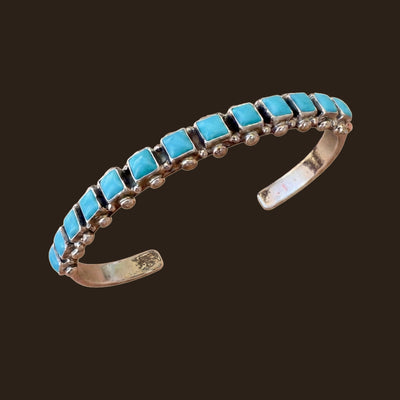
Every stone Greg cuts is a one-of-a-kind shape. We don't use calibrated stones because they lack the character of an artisan piece. A hand-cut cabochon requires a custom-built bezel, which is the silver ribbon that holds the stone in place. This perfect fit is a hallmark of high-quality artisan work. If a bezel is loose or uneven, the stone will eventually rattle or fall out. Kimberly Cordova takes these finished stones and begins the design process, letting the specific curve and height of the cabochon dictate the silverwork. For many stones, we apply a thin layer of backing for structural stability. This isn't about adding weight. It's about ensuring a thin, high-grade stone can withstand the pressure of being set into a ring or cuff without cracking.
If you're curious about the specific stones Greg is currently working on, you can explore our latest stone origins to see the journey from raw rock to finished piece.
Exploring mine specific varieties in Southwestern style jewelry
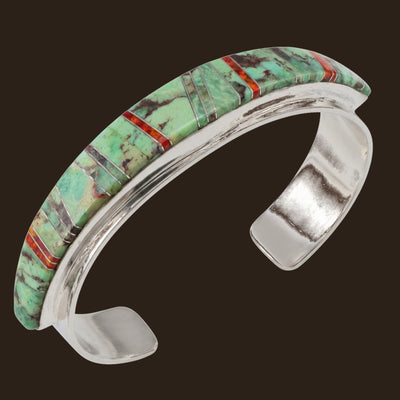
When we look at a tray of rough stones, the diversity of color is staggering. King Manassa turquoise, pulled from a historical site in Colorado, is famous for its vibrant greens and golden brown matrix. This mine has a long presence in the history of Southwest silverwork, providing stones that defined early regional aesthetics. While many people associate turquoise only with blue, these deep greens are highly prized by collectors who value the mineral's varied chemistry. You can find more details about these specific geological traits on our stone origins page.
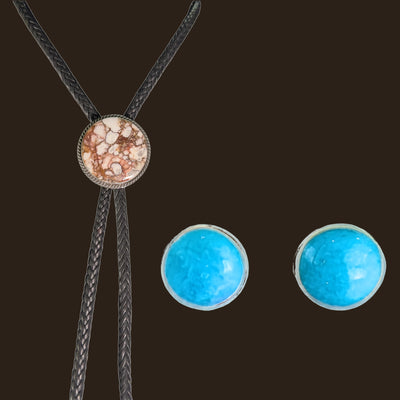
In contrast to the greens of Colorado, White Buffalo stone offers a stark, monochromatic look. It is often found in Nevada and features a white background with sharp black chert matrix. It is technically not turquoise because it lacks copper, but it is frequently included in authentic turquoise jewelry collections because of its unique presence. Similarly, Wild Horse is a magnesite with reddish brown hematite matrix that Greg Cordova often cuts to complement the cooler tones of traditional blue stones. These variations allow for a broader palette in the studio while maintaining a connection to the earth.
The color spectrum from Sleeping Beauty to Royston
The chemical makeup of a stone determines its final shade. High copper content creates the clear robin egg blue we see in Sleeping Beauty turquoise. This mine in Arizona was famous for producing material with almost no matrix, making it a staple for clean, minimalist designs. When iron is present in the soil, the stone shifts toward the greens and browns found in Royston turquoise. Royston is a Nevada mine known for producing stones with incredible color zoning. A single cabochon might transition from a deep forest green to a bright sky blue within a few millimeters. This natural movement is something we celebrate in our small batch work.
Why mine specific knowledge matters for collectors
Knowing where a stone was pulled from the ground is about more than just a name. It is about scarcity. The Sleeping Beauty mine ceased turquoise operations in 2012, which caused the market value for that specific blue to rise significantly. When Greg Cordova sources rough material for CuttingEdgeTurquoise.com, he prioritizes provenance. This direct access to specific mine roughs ensures that the authentic turquoise jewelry Kimberly Cordova designs holds its value over time. Collectors look for these specific origins because as mines close, the availability of certain colors and matrix patterns becomes finite. This makes every hand-cut stone a snapshot of a specific geological moment that cannot be replicated.
Structural integrity and care for sterling silver settings
Sterling silver is more than just a shiny backdrop. It's the skeleton of the piece. To meet the .925 industry standard, the metal must be 92.5% pure silver mixed with 7.5% copper for strength. This alloy provides the durability needed to hold a stone securely for decades. We don't use thin, flimsy silver that bends during daily wear. Kimberly Cordova selects heavy gauge silver for our small batch rings and cuffs, often utilizing 14 gauge plate. This thickness ensures the band keeps its curve and the stone stays put. High quality authentic turquoise jewelry relies on this structural foundation to survive the years.
The textures you see on the silver aren't machine-pressed. They come from steel stamps and jeweler's saws. Each mark is an intentional choice made at the bench. This hand-work creates a depth you can feel with your thumb. It also creates valleys where natural patina can settle, highlighting the design as the silver ages. If you're wondering how to keep that silver bright without hurting the stone, check our care and repair guide for the specifics. Maintaining the bond between the metal and the mineral is a simple process once you know the rules.
Protecting the stone from chemicals and oils
Turquoise is a thirsty stone. Because it's a porous mineral, it absorbs whatever it touches. You should never drop your rings into a liquid silver dip or ultrasonic cleaner. That liquid will soak into the cabochon and can potentially ruin the color forever. The same goes for your morning routine. Lotions, hairsprays, and perfumes can dull a stone's luster or turn a bright blue into a muddy green over several months of wear. It's best to put your jewelry on last. When the silver needs a refresh, use a dedicated polishing cloth for the metal, but keep it clear of the stone's surface to avoid scratches.
Common repairs for handcrafted silver pieces
Check your settings once in a while. If you tap the stone and hear a soft click, it's time for a tune-up. A loose bezel is an easy fix in the studio, but a lost stone is a heartbreak. You should check your pieces for movement every few months, especially if they've been dropped. If a cabochon does come loose, the repair involves Greg Cordova checking the stone's backing and carefully re-pressing the silver bezel. It's a delicate process that keeps the piece wearable for another generation. We see many pieces that have been worn daily for 20 years and only need a minor bezel tightening to be good as new.
Take a look at our artisan-made silver cuffs to see the difference that heavy gauge construction makes for long-term wear.

Intentional design at the Wildflower studio
In our Santa Fe studio, the design process starts long before the torch is lit. Kimberly Cordova leads our design and curation, selecting each stone from the trays Greg has finished at the lapidary wheels. Her approach is rooted in a small batch philosophy that avoids the frantic pace of the mass market. We focus on creating everyday essentials that feel quietly timeless. These aren't pieces designed to fit a fleeting seasonal trend. Instead, they're meant to be worn for decades, eventually becoming part of your personal history. Choosing authentic turquoise jewelry from an artisan studio means you're getting a piece that was considered from every angle before the silver was even cut.
Our one of a kind collections represent the peak of this intentionality. In these pieces, Kimberly allows the specific character of a stone to dictate the entire silver composition. If a cabochon has a unique taper or an unusual matrix inclusion, the silverwork wraps around those features rather than hiding them. This method ensures that the final jewelry remains grounded in the geological truth of the material Greg sourced through CuttingEdgeTurquoise.com. We don't force stones into pre-made settings. We build the setting to fit the stone.
Balancing raw beauty with refined silver work
The studio atmosphere is one of steady, deliberate creation. Kimberly often utilizes asymmetrical designs to highlight the natural variations found in the stones. We believe that beauty is found in the organic. A hand-cut stone doesn't need a perfectly symmetrical frame to be valuable. It needs a bezel that respects its origin. This balance between raw earth and refined silver work is what gives our jewelry its distinct voice. By letting the stone lead, we ensure that the silver serves as a vessel for the mineral's story. It is a quiet, meditative process that happens one piece at a time.
Building a collection of artisan made jewelry
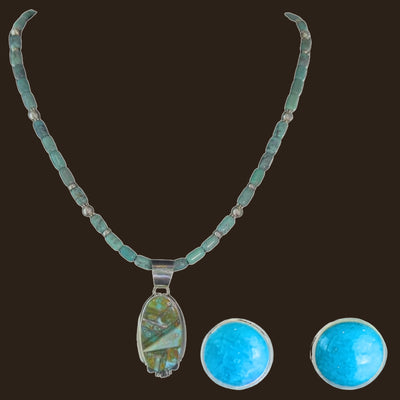
Starting a collection doesn't require a massive investment all at once. We often advise starting with simple pieces like studs or a single band ring. These become your daily anchors. As you become more comfortable with the weight of quality silver, you might transition to statement pieces like wide cuffs or bolo ties. If you're looking for a specific mine or a particular shade of blue, you can always contact the studio. We have access to a deep inventory of rough material and enjoy matching the right stone with the right collector. Building a collection of authentic turquoise jewelry is a slow, intentional process, much like the formation of the stones themselves.
While artisan-made turquoise is a significant investment in geological history, many collectors also enjoy complementing their statement pieces with versatile fashion accessories.
Choosing stones that stand the test of time
Finding a piece that resonates with you is about more than just color. It's about knowing the hands that shaped the stone and the intentionality behind the silverwork. We believe that authentic turquoise jewelry should be a transparent connection to the earth, free from the ambiguity of mass-market imitations. By focusing on the specific matrix of a hand-cut cabochon and the structural strength of heavy gauge .925 sterling silver, you ensure your collection remains a source of quiet confidence for years. Each piece we create is a small batch effort designed to bypass fleeting trends.
This commitment to authenticity often extends to how we care for ourselves.
Greg Cordova continues to source and cut rough material with geological truth in mind, while Kimberly Cordova curates each design to honor the stone's unique narrative. There are no mystery metals or factory-calibrated stones in our studio; just honest materials and professional craftsmanship. We invite you to find a piece that carries the weight and history of the high desert.
Explore our latest collection of authentic turquoise jewelry at Wildflower Artisans to find your next heirloom. We look forward to helping you find a stone that fits your story.
Frequently Asked Questions
Does authentic turquoise jewelry change color over time?
Natural turquoise can shift in color because it is a porous phosphate mineral. When the stone absorbs skin oils, soaps, or lotions, the chemical reaction can turn a bright blue stone toward a green or teal shade over several years. This is a natural process for untreated material. Stabilized stones are less likely to change because the pores are sealed with clear resin during the studio process.
How can I tell if my turquoise is dyed howlite or plastic?
You can often identify imitations by looking closely at the matrix. Dyed howlite usually has ink that pools in the cracks, making the veins look unnaturally dark and uniform. Plastic imitations feel warm and light in your hand, while real stone stays cool to the touch. Greg Cordova sources rough material directly from mine owners to ensure every piece we sell is authentic turquoise jewelry.
What is the difference between stabilized and natural turquoise?
Natural turquoise is completely untreated and represents less than 10% of the material on the market today. It is rare and requires a skilled lapidary hand to cut without breaking. Stabilized turquoise has been infused with a clear epoxy under pressure to increase its hardness and durability. Both are genuine stones, but natural material is significantly more valuable and sensitive to environmental changes.
Is White Buffalo considered a type of turquoise?
White Buffalo is technically not turquoise because it contains no copper or aluminum. It is a rare mineral found in Nevada that features a white background with black chert matrix. While it is often grouped with Southwestern style collections, it is its own distinct geological occurrence. Kimberly Cordova often includes it in our studio designs for its stark, monochromatic appeal and durable structure.
Why does the price of authentic turquoise vary so much between mines?
Price is driven by rarity and mine production status. For example, stones from the Lander Blue mine can reach $500 per carat because the mine produced less than 100 pounds of total material. In contrast, Kingman turquoise is still actively being mined, which keeps it more accessible. When a famous mine like Sleeping Beauty closes, the value of that specific blue material increases as the global supply shrinks.
Can I wear my turquoise jewelry in the shower or pool?
You should avoid wearing your jewelry in the shower or pool. Chlorine and harsh soaps can strip the natural luster of the stone and cause it to turn a dull color. Prolonged moisture can also weaken the backing material inside the bezel, potentially causing the stone to loosen over time. It is a good rule of thumb to put your jewelry on last and take it off first.
What should I look for in a high quality sterling silver setting?
Look for heavy gauge silver that doesn't bend under light pressure. A high quality setting should have a perfectly fitted bezel that wraps tightly around the cabochon with no visible gaps. Check for the .925 hallmark, which confirms the silver is 92.5% pure. Kimberly Cordova prioritizes 14 gauge silver plate for our rings to ensure the structural integrity of every piece of authentic turquoise jewelry we create.
What is a spiderweb matrix and why is it valuable?
Spiderweb matrix is a rare pattern where fine lines of host rock create a delicate web across the turquoise. This occurs when the mineral forms in small, interconnected nodules rather than large veins. It is highly valuable because it is difficult to find and nearly impossible to replicate in a lab. Greg Cordova focuses on cutting these stones to highlight the contrast between the matrix and the blue or green mineral.

Article by
Kimberly Cordova
Kimberly Cordova is the founder and creative director of Wildflower Artisans, a handmade jewelry brand rooted in Santa Fe. Real turquoise, solid sterling silver, and a small line set in solid 14K gold. She built Wildflower around a simple belief: the best jewelry is the kind you actually reach for, not the kind you save for someday.
The collection is built three ways. Some pieces are made in-house, cut by her husband Greg from stones he sources himself, including rough from the family's King's Manassa Mine in Colorado and White Buffalo Mine in Nevada. Some are designed by Kimberly and fabricated by a trusted circle of Santa Fe silversmiths. And some are finished work she curates from artisan makers whose craft meets the same standard, because building a real collection means knowing when to make and when to look.
Turquoise leads, joined by White Buffalo, Wild Horse, Lapis Lazuli, Spiny Oyster, Black Onyx, Opal, and other genuine semi-precious stones. No shortcuts on the stone, the silver, or the story behind either.
Her writing covers everything she has learned along the way: how turquoise forms, how to tell natural from stabilized, what makes one mine different from another, how to read a bezel, and how to shop with confidence in a market that is not always straightforward. It is the kind of plainspoken information she wished someone had laid out for her when she was starting out.
Browse the collection at wildflowerartisans.com. Questions about a stone, a setting, or a specific piece are welcome any time.
0 comments